Free tools Windows power users keep installed
One-click scans. No signup required.
Low-carbon cement can perform as well as conventional cement in many applications, but “low-carbon” is not a performance grade. The result depends on the formulation, concrete mix, curing, exposure conditions, local standards and the specific product’s evidence. Limestone calcined clay cement (LC3), for example, can reduce carbon dioxide emissions by up to 40% compared with Portland cement according to the LC3 Project, yet that is a technology-level potential rather than a guaranteed saving for every bag, batch or building. Specify a product with an environmental product declaration (EPD), verify equivalent performance and obtain local approval before substituting it.
What low-carbon cement means
“Low-carbon cement” describes a family of cements made with less greenhouse-gas-intensive clinker or with production methods that reduce emissions. It is not one globally standardized product name. The comparison therefore has to be made between named products, concrete mixtures and declared functional performance, not between two labels alone.

As an Amazon Associate I earn from qualifying purchases.
Conventional Portland cement contains a relatively high proportion of clinker. Clinker is the kiln-made component that gives cement its binding properties, but making it requires high-temperature processing and releases carbon dioxide both from fuel and from the chemical transformation of limestone. Lowering the clinker fraction is the central strategy behind many blended cements.
Recommended Free Tools
LC3: limestone calcined clay cement
LC3 combines clinker with calcined clay, limestone and gypsum. Calcined clay is clay heated enough to activate its cementitious minerals; it is not the same as simply adding raw soil. The LC3 Project’s guide explains that Portland cement can be blended with calcined clay and unburnt limestone to reduce the clinker factor. The project states that “LC³ can reduce CO2 emissions by up to 40%” compared with Portland cement. The percentage depends on the materials, proportions, energy sources and accounting boundary used for a particular product.
#1 Best Overall
Portland-limestone and other blended cements
Portland-limestone cement (PLC) is another established blended-cement type. The American Cement Association describes PLC and other blended cements as construction cements; its U.S. industry page reported that total PLC shipments exceeded Portland cement shipments in mid-2023. That statistic is historical U.S. context, not a current global market share and not proof that every PLC product has the same emissions profile.
Other clinker-substitution options include supplementary cementitious materials, volcanic ash and industrial by-products. UNIDO’s 2025 decarbonization explainer identifies these pathways and notes that LC3 production can be implemented with minor modifications to existing cement plants. Availability and quality of each material vary by region, so a formulation that works in one supply chain may not be transferable to another.
How clinker reduction lowers emissions
Replacing part of the clinker with calcined clay, limestone or another suitable material avoids some kiln-related emissions while retaining a cementitious binder. The environmental benefit is measured against a defined reference cement and boundary. A plant-level claim may include kiln fuel and process emissions; an EPD may additionally account for electricity, transport, packaging and other stages. Two products can therefore report different carbon values even when their cement names sound similar.
What’s actually slowing this PC down?
Pick the symptom - the matching free tool is one click away.
The LC3 “up to 40%” figure is best read as an upper potential for the LC3 technology relative to Portland cement, not as a promise for a specific project. A purchaser should request the product’s EPD and check that the declared unit and life-cycle boundary are comparable with the conventional option. Compare the same quantity of cement or, preferably, the same concrete performance and functional output.
Is low-carbon cement as strong as conventional cement?
There is no universal yes-or-no answer. Strength depends on cement composition, water-to-binder ratio, aggregate, admixtures, curing temperature and moisture, and the age at which the concrete must meet its specification. A low-clinker cement may meet the required later-age strength while developing strength at a different rate from the conventional cement it replaces. The relevant question is whether the proposed cement and mix meet the project’s specified strength at every required age.
Rank #2

- MULTIPURPOSE: Basic building material for crafts, pavement, sidewalks, reinforced concrete buildings, masonry units, and more
- MIX AND USE: Use to create concrete, mortar, and stucco mixes
- GREAT FOR DIY PROJECTS: Ideal for small crafts with forms and silicone molds
- HIGH STRENGTH: Solid once dry, dry in 48 hours
- LESS IS MORE: One bag yields approximately .16 cu. ft.
Early-age and later-age strength
Check the ages written into the project specification: a requirement for early stripping, rapid traffic opening or prestress transfer is different from a requirement assessed only at a later design age. Obtain the supplier’s test data for the proposed cement, then confirm the performance in trial concrete using the project aggregates and admixtures. Do not infer strength from a “low-carbon” label or from a result achieved with a different mix.
Workability and admixture compatibility
Changing the binder changes the interaction with water-reducing admixtures and the amount of paste available to coat aggregates. The practical test is a project-specific trial that measures slump or other specified workability, air content where relevant, setting behavior if specified, and strength development. If the trial requires a different admixture dose, record that change in the cost and performance comparison rather than treating it as incidental.
Curing requirements
Curing keeps the concrete moist and at a suitable temperature while hydration develops the intended structure. A mix that reaches its target under one curing regime may not do so under another. The RILEM review on calcined-clay and limestone cements emphasizes that performance is affected by formulation, mix design and curing. Follow the cement supplier’s data and the engineer’s curing specification; do not shorten curing solely because the cement is marketed as a drop-in replacement.
Durability and exposure
Durability must be checked against the actual exposure class: for example, the project may face freezing, chlorides, sulfates, carbonation, abrasion or other defined actions. The RILEM TC 282-CCL review notes that prescriptive cement and concrete standards can restrict clinker substitution in some exposure classes. This is a standards and evidence issue, not a finding that low-carbon cement is inherently unsafe. Require durability data relevant to the exposure and the proposed concrete, not only a generic cement datasheet.
Where low-carbon cement is used
General construction
The LC3 Project presents LC3 as a general-use cement. That indicates a broad intended application, not automatic approval for every structural, civil or infrastructure use. The designer still has to confirm the local cement standard, concrete code, exposure classification, strength schedule and project acceptance process.
Rank #3

- Multifunctional Expert for High-Temp Applications: Mold custom fireplace/stove parts via vibrocasting, pour seamless brick linings, or expertly repair pizza ovens, kilns, forges & stoves. (Achieves full strength and performance ONLY through proper post-installation heat treatment & curing).
- Product Function: For use in forming non-standard bricks (e.g., in irregular oval, tapered, hexagonal, square, cylindrical, trapezoidal, diamond-shaped positions, etc.). Also suitable for repairing large fissures and deep holes (performs best on holes deeper than 1.2 inches / 3 cm). ⚠️ WARNING:Not suitable for use as a bricklaying mortar. (If this is your intended use, please do not purchase.);Perfect for both professional contractors and DIY enthusiasts.
- Withstands Extreme 3200°F Heat - Superior Insulation: Engineered for maximum thermal efficiency in pizza ovens & forges. Resists sustained temperatures up to 3200°F (1760°C) to lock in heat, ensure even cooking, and boost energy savings.
- Combats Cracking & Thermal Stress: Forms durable, high-strength bonds that actively minimize cracks and gaps caused by thermal expansion/contraction. Guarantees structural integrity and significantly extends the lifespan of your high-heat appliance.
- Adhesive included in a separate pouch. Combine with the main mix, add water, and stir – it’s that easy! Crucial Benefit: Each 11 lbs bag comes with an airtight-sealed, separate pouch of powerful enhancer - protecting its active properties from moisture/air exposure to unlock peak.
Concrete mixes specified by performance
Low-carbon cement is easiest to evaluate where the specification is performance-based: the project defines strength, durability, workability, curing and service requirements, then accepts a cement and mix that demonstrate compliance. A prescriptive specification that names a narrow cement composition may require a formal deviation or alternative-material approval.
Projects with local calcined-clay or limestone supply
LC3 can be attractive where suitable clay and limestone are available near an existing cement plant. UNIDO’s account of minor plant modifications does not remove the need to verify clay mineralogy, processing capacity, quality control and consistent supply. Transport can change the delivered carbon and cost, so local sourcing must be part of the assessment.
Does low-carbon cement cost more?
There is no supported universal premium or discount for all low-carbon cements. Production route, plant utilization, raw-material availability, transport, admixtures, testing, curing and approval work can all change the delivered project cost.
What the 75–150% figure means
The International Energy Agency’s Breakthrough Agenda Report 2025 estimates that production costs for early commercial plants making near-zero-emissions cement with carbon capture and storage (CCS) are 75–150% higher than today’s conventional plants, varying by region. This is a benchmark for an early CCS pathway at plant level. It is not a retail price, a delivered-concrete premium or a claim about every blended cement such as LC3 or PLC.
A study-specific lower-cost result
A 2025 Scientific Reports study tested strength-equivalent concrete mixes in which 50% of the binder was replaced with metakaolin-limestone powder. In that study, carbon emissions fell 29.9% and cost fell 12.4%. Those figures belong to the study’s materials, mix design, location and assumptions; they cannot be generalized to a market-wide price reduction or to every LC3 formulation.
Do these 3 things before closing this tab:
1Repair Windows errors before they cause bigger problems2Fix the driver behind crashes, sound loss and screen glitches3Clear out junk files and repair common Windows errorsRank #4
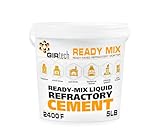
- 🔥 Versatile Application: GIRtech READY MIX Refractory Mortar excels in laying firebricks for fireplaces, pizza ovens, woodstoves, coalstoves, barbecue stoves, and fire pits. It's a must-have for setting chimney systems, repairing broken firebrick, and enhancing firebox chambers.
- 🛠️ Easy Application and Color Transformation: This liquid brown-colored mortar, odorless and user-friendly, transforms to gray after firing. Carefully mix before use, and if separation occurs during storage, remix for optimal performance. It is important drying and heating processes undergo in accordance with the prescribed procedure.
- ❄️ Storage Guidelines and Shelf Life: Store indoors at temperatures of 45'F to 95'F, protecting it from freezing. With a guaranteed shelf life of 1 year under standard storage conditions, use within 6-8 hours after opening the bucket for peak specifications.
- 🏠 Safe and Non-Toxic Application: Suitable for both indoor and outdoor use, this refractory mortar is safe and non-toxic. Thoroughly clean bonded surfaces, wet before gluing, and achieve the best results with thin joints. After drying, small cracks can appear in the joints, which is completely normal, as the clay material expands during the heat treatment. The appearance of the cracks has по negative affect оп the integrity of the masonry.
- 🚧 Masonry and Brickwork Excellence: Designed for lining heating units such as stoves, fireplaces, and fireboxes, GIRtech READY MIX is a ready-to-use product that simplifies construction. Mix before use, wet surfaces for improved adhesion, and dry masonry under ambient temperature before exposing it to fire.
What to include in a procurement comparison
- Supplier quotations for cement and all additional blended-binder components.
- Transport from plant to batching site and any storage or handling changes.
- Admixture dosage and price needed to achieve the specified workability.
- Trial-batch, laboratory and third-party testing costs.
- Curing duration, temporary works and programme effects if strength develops at a different rate.
- Any engineering, certification or approval fees.
- EPD results for equivalent functional performance rather than price per tonne alone.
Comparison: what is established and what must be verified
| Comparison point | Low-carbon cement examples | Conventional Portland cement reference | What a project must verify |
|---|---|---|---|
| Typical composition | LC3: clinker, calcined clay, limestone and gypsum; PLC and other blended cements use different supplementary materials. | Higher clinker proportion; exact composition depends on the product standard. | Declared composition, clinker factor and applicable product standard. |
| Potential emissions | LC3 Project reports up to 40% lower CO2 than Portland cement for the technology. | Reference used for the LC3 comparison. | Product-specific EPD, life-cycle boundary and declared functional unit. |
| Strength | Not a single established value; depends on formulation, mix, curing and age. | Not a single established value; depends on product and mix. | Early- and later-age results in the project’s concrete. |
| Workability and admixtures | Not stated as a universal value. | Not stated as a universal value. | Trial-mix workability, admixture compatibility and dosage. |
| Durability | Exposure-specific evidence required; prescriptive rules may limit some uses. | Must also satisfy the same exposure and durability requirements. | Durability data, curing plan and code compliance. |
| Cost | No universal premium established; one 2025 study reported a 12.4% reduction under its test assumptions. | Used as the project’s local price reference. | Delivered quotes for equivalent performance. |
| Approval | May require additional acceptance where standards are prescriptive. | Usually follows the locally recognized conventional route, subject to the project specification. | Local code, certification, engineer and client acceptance. |
How to decide whether a project can use it
- Define the required outcome. Record specified strength at each age, exposure class, durability limits, workability, placing method, curing regime and programme milestone.
- Shortlist named products. Ask suppliers for the exact cement designation, composition, technical datasheet, certificate and current EPD. A generic “eco” or “low-carbon” description is not sufficient evidence.
- Check the governing standard. Confirm that the cement and proposed concrete fall within the jurisdiction’s recognized standards. Ask the building-control authority, engineer or client whether an alternative-material submission is needed.
- Screen the exposure class. Compare the proposed binder with the prescriptive limits and durability requirements for the structure’s actual environment. If the rule is composition-based, identify the approval path before ordering material.
- Run a representative trial. Use the project’s aggregates, water, admixtures and batching equipment. Measure fresh workability, strength at all specified ages and any durability indicators required by the design.
- Set the curing and quality plan. Document temperature and moisture controls, sampling frequency, acceptance criteria, storage and traceability. A change in curing can change the comparison.
- Compare carbon on an equivalent basis. Place the low-carbon and conventional options side by side using comparable EPD boundaries and the same concrete performance. Include transport and admixtures where the EPD or project assessment requires them.
- Compare delivered cost and schedule. Use firm local quotes and include testing, approvals, curing, programme effects and any rejected-batch risk. Do not substitute a plant-level CCS estimate for a supplier quote.
- Obtain written acceptance. Keep the engineer’s, authority’s and client’s approval with the specification and inspection records before placing structural concrete.
Standards, codes and approval barriers
RILEM TC 282-CCL’s 2023 review, with a correction noted in 2024, identifies prescriptive requirements and approval processes as major barriers to wider use of low-clinker calcined-clay cements. Even when a composition fits a cement standard, project approval can take years in some jurisdictions. This is why a technically promising cement can still be impractical for a time-critical project.
Performance-based durability requirements offer a possible route to adoption while maintaining safety, because they evaluate what the concrete must achieve rather than relying only on a prescribed clinker composition. Whether that route is available depends on the local code, contract and authority. Treat the approval pathway as a design task, not as paperwork after procurement.
Independent reader supportYour contribution helps us test, update, and keep practical guides available for everyone.How to read an EPD for this comparison
- Identify the product. The EPD should name the manufacturer, cement type, manufacturing site or applicable production scope and validity period.
- Check the declared unit. A value per tonne of cement is not automatically comparable with a value per cubic metre of concrete. Use the same unit or convert through a documented mix design.
- Match the boundary. Confirm whether raw materials, plant energy, transport, packaging and later life-cycle stages are included. Different boundaries can make two numbers appear more different than they are.
- Preserve performance equivalence. A lower-carbon cement that requires substantially more cement, a different strength class or a different service life is not an equivalent comparison unless the functional unit accounts for it.
- Record uncertainty. Keep the EPD version, production location and assumptions in the project file so a future supplier change does not silently change the carbon claim.
Common problems and practical responses
The trial does not reach early strength
First check batching accuracy, curing temperature and moisture, test age and specimen handling. Then consult the cement supplier and engineer about mix proportions, admixture compatibility and the required programme. Do not solve a failed trial by changing one variable without recording its effect on later-age strength and durability.
Workability is outside the specification
Confirm water content, aggregate moisture and admixture dosage before adding water. Re-run the trial with a controlled adjustment approved by the mix designer. Any increase in admixture or cement content belongs in the delivered-cost and carbon calculation.
The product is not accepted for the exposure class
Ask the authority and engineer whether an approved alternative standard, performance demonstration or project-specific assessment exists. If no route is available within the programme, use a cement that is already accepted rather than placing unapproved concrete.
Best Value
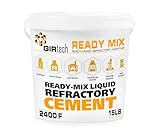
- 🔥 Versatile Application: GIRtech READY MIX Refractory Mortar excels in laying firebricks for fireplaces, pizza ovens, woodstoves, coalstoves, barbecue stoves, and fire pits. It's a must-have for setting chimney systems, repairing broken firebrick, and enhancing firebox chambers.
- 🛠️ Easy Application and Color Transformation: This liquid brown-colored mortar, odorless and user-friendly, transforms to gray after firing. Carefully mix before use, and if separation occurs during storage, remix for optimal performance. It is important drying and heating processes undergo in accordance with the prescribed procedure.
- ❄️ Storage Guidelines and Shelf Life: Store indoors at temperatures of 45'F to 95'F, protecting it from freezing. With a guaranteed shelf life of 1 year under standard storage conditions, use within 6-8 hours after opening the bucket for peak specifications.
- 🏠 Safe and Non-Toxic Application: Suitable for both indoor and outdoor use, this refractory mortar is safe and non-toxic. Thoroughly clean bonded surfaces, wet before gluing, and achieve the best results with thin joints. After drying, small cracks can appear in the joints, which is completely normal, as the clay material expands during the heat treatment. The appearance of the cracks has по negative affect оп the integrity of the masonry.
- 🚧 Masonry and Brickwork Excellence: Designed for lining heating units such as stoves, fireplaces, and fireboxes, GIRtech READY MIX is a ready-to-use product that simplifies construction. Mix before use, wet surfaces for improved adhesion, and dry masonry under ambient temperature before exposing it to fire.
The claimed carbon saving cannot be substantiated
Request the current EPD and its declared boundary. If the supplier provides only a marketing percentage, treat the reduction as unverified. Compare a documented conventional product from the same market and report the assumptions used.
Supply consistency is uncertain
Confirm production site, lead time, minimum order, storage life, batch certification and contingency supply. A lower-carbon specification that cannot be delivered consistently can create more waste and schedule risk than the nominal carbon calculation suggests.
What the available numbers do—and do not—prove
The available evidence supports three bounded conclusions. First, reducing clinker can materially reduce cement-production emissions, and LC3 has a reported potential of up to 40% below Portland cement. Second, performance must be demonstrated for the actual formulation and project conditions; no universal strength, durability or workability equivalence has been established. Third, cost outcomes vary: CCS-based near-zero-emissions plants may cost 75–150% more to produce than conventional plants, while one strength-equivalent metakaolin-limestone study found lower cost. Neither figure predicts the delivered price of a particular cement in a particular country.
For a construction project, the defensible choice is therefore evidence-led: select a named cement, compare equivalent concrete performance, verify the EPD boundary, satisfy exposure and code requirements, and use local delivered quotations. When those checks are complete, low-carbon cement can be specified confidently where its documented performance and approval status match the job.
Quick Recap
Sources used for the technical claims
- LC3 Project, “LC3 – Limestone Calcined Clay Cement,” current project page.
- LC3 Project, LC3 Digital Version Final 26th July, 2024 guide.
- RILEM TC 282-CCL, “Standardisation of low clinker cements containing calcined clay and limestone: a review,” 2023, with a correction noted in 2024.
- International Energy Agency, Cement and concrete – Breakthrough Agenda Report 2025.
- American Cement Association, “Blended Cements and Sustainability of Concrete Construction.”
- UNIDO, Decoding Industrial Decarbonization: A snapshot of cement and concrete decarbonization technologies, 2025.
- Scientific Reports, “Mechanical, workability, economic and environmental properties of concrete with limestone calcined clay cement and recycled aggregates,” 2025.
Product prices and availability are accurate as of the date/time indicated and are subject to change. Any price and availability information displayed on Amazon at the time of purchase will apply.

