The Tool Desk
Outbyte Driver Updater FREEFix the driver behind crashes, sound loss and screen glitchesFind Drivers →Outbyte PC Repair FREEClear out junk files and repair common Windows errorsFree Scan →A good laundry room should make the weekly routine easier, not just look good for a photo. The best ideas solve real problems: where dirty clothes land, where clean clothes get folded, how wet items dry, how supplies stay organized, how the dryer vents, and how quickly you can shut off water in an emergency.
On our job sites, we treat laundry rooms as compact utility spaces. They combine water supply, drainage, electrical loads, lint, heat, vibration, moisture, cabinetry, flooring, and storage in a small footprint. That is why a simple cosmetic refresh might cost $1,800 to $5,000, while a full remodel commonly lands around $6,000 to $17,000 in 2026. A major relocation, second-floor build, mudroom combination, or addition can run $30,000 to $65,000 or more.
Use the ideas below as a planning list. Some are weekend upgrades. Others require a licensed plumber, electrician, mechanical contractor, or remodeling crew. The difference matters because moving a drain, changing a dryer vent path, or adding dedicated circuits can turn a decorating project into construction.
As an Amazon Associate I earn from qualifying purchases.
Start With the Layout
1. Build the room around the actual laundry sequence
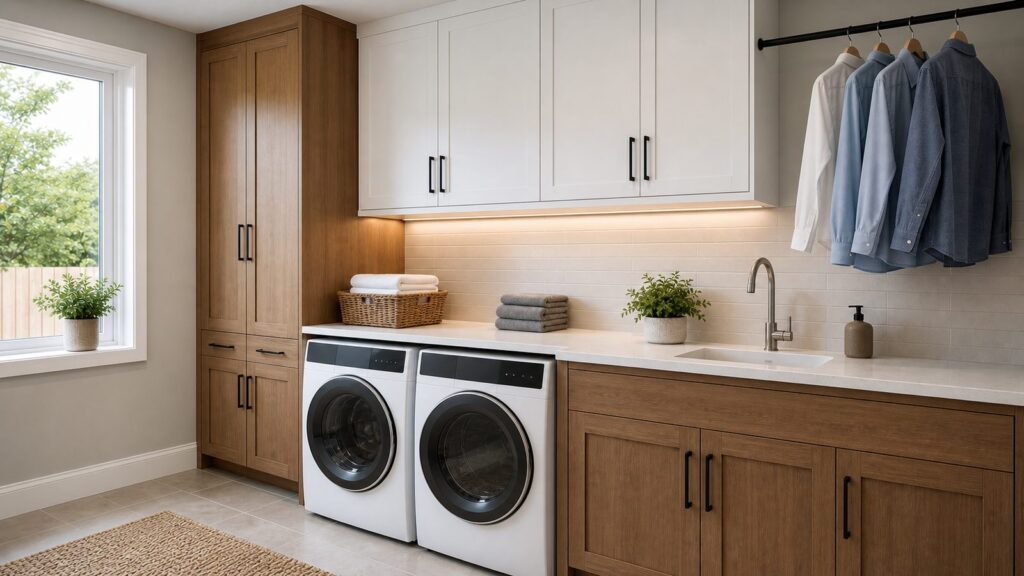
Plan zones in this order: sort, wash, dry, hang, fold, store, and overflow. A 6-foot-wide wall can often hold side-by-side appliances plus a 24-inch hamper cabinet or a narrow supply tower. If the room is less than 5 feet wide, prioritize appliance access, ventilation, and a place to set a basket before adding decorative storage.
2. Use side-by-side front-load machines for a folding counter
A front-load washer and dryer pair is the easiest way to gain a continuous countertop. Most pairs need roughly 56 to 60 inches of width, plus side and rear clearances from the appliance manual. A counter at about 36 inches high works well for folding. We like removable counter sections or access panels so hoses, valves, and plugs can still be reached.
3. Choose stacked machines for tight rooms
Stacking can reduce the appliance footprint to about 27 to 30 inches wide and 30 to 34 inches deep. That can free up space for a utility sink, tall cabinet, or walking clearance. Before stacking, confirm ceiling height, dryer vent routing, electrical or gas hookups, and whether the washer structure and kit are rated for the dryer above.
#1 Best Overall
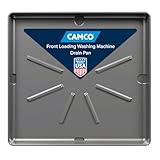
- Compatibility: Works with front-loading washing machines; Measurements: 31-inches x 35-inches (OD); 29-inches x 33-inches (ID) and 1.6-inches tall
- Includes: 1-inch/1 ½-inch PVC drain fitting, locknut, and washer; Pre-formed cut lines make installation easier
- Protects your Floors: The drain pan sits under your washing machine, protecting your floor from leaks; Low Lip Design: Allows for clearance when opening pedestal drawers
- Durable Construction: Constructed of injection molded, resilient plastic; Color: Pewter
- Made in the USA: Product is made in the USA
4. Do not trap a top-load washer under a fixed counter
Top-loaders need lid clearance, often 18 to 24 inches above the machine depending on the model. Use high wall cabinets, a side counter, a rolling folding cart, or a hinged/fold-down surface instead of a permanent counter over the lid.
Recommended Free Tools
5. Keep plumbing and venting in place when budget matters
One of the biggest cost decisions is whether the washer drain, water lines, electrical, gas line, and dryer vent stay where they are. A paint-and-storage refresh may cost $1,500 to $5,000. Once you move plumbing, open walls, patch floors, and pull permits, many projects move into the $8,000 to $20,000 range quickly.
6. Add a compact second laundry zone where it truly helps
Micro laundry rooms are useful near bedrooms, guest suites, pool areas, or aging-in-place layouts. A small stacked pair in a closet can work, but it needs proper electrical service, water shutoffs, drain planning, leak detection, ventilation, and service access. Do not treat a closet installation like furniture.
7. Combine laundry and mudroom functions carefully
A laundry/mudroom can be excellent for families, pets, sports gear, and dirty shoes. Plan a minimum 36-inch traffic path where possible, keep wet boots away from clean folding surfaces, and use closed storage so coats and cleaning products do not overwhelm the room visually.
8. Give garage laundry areas real protection
Garage laundry zones need more durability than indoor rooms. Use sealed concrete, epoxy, porcelain tile, or quality luxury vinyl where conditions allow. Protect appliances from vehicle contact with a curb, bollard, cabinet end panel, or layout change. Enclosed cabinets also help control dust, pests, and temperature swings.
Free tools Windows power users keep installed
One-click scans. No signup required.
Storage Ideas That Actually Work
9. Install a tall utility cabinet
If we can fit only one major storage upgrade, we often choose a tall cabinet. A 24-inch-wide by 24-inch-deep cabinet can hold a vacuum, broom, mop, ironing board, bulk detergent, paper goods, and cleaning tools better than shallow open shelves.
10. Use closed cabinets for visual clutter
Detergent bottles, stain sprays, dryer sheets, lint rollers, batteries, pet supplies, and cleaning chemicals rarely look tidy in the open. Closed wall cabinets 12 to 15 inches deep keep the room calm and protect supplies from dust.
11. Reserve open shelves for daily-use items
Open shelves work best for baskets, towels, glass jars, or the detergent you use every day. Keep shelf depth around 10 to 12 inches so small items do not disappear in the back. For heavy bulk storage, use cabinets or base drawers instead.
12. Add pull-out hampers
Pull-out hampers reduce floor piles. A 15-inch or 18-inch base cabinet can hold one hamper; a 24-inch or 30-inch cabinet can often hold two. Labeling by whites, darks, towels, or delicates helps the system survive daily use.
13. Build a sorting counter over hamper bays
A counter above open hamper cubbies gives you a landing surface without wasting vertical space. Use durable laminate, quartz, solid surface, butcher block with a strong finish, or sealed plywood in utility-grade spaces.
14. Add a slim supply pull-out
A 6-inch to 9-inch pull-out between appliances and a wall can store detergent, stain sticks, mesh bags, and dryer balls. This is useful in narrow rooms where a full cabinet will not fit.
15. Use deep drawers for towels and linens
Base drawers are easier than low shelves because you can see the full contents. For laundry rooms that double as linen storage, 24-inch-deep drawers handle towels, sheets, and cleaning cloths well.
16. Create a lost-and-found tray
Every laundry room collects coins, hair ties, receipts, screws, and pocket items. A shallow drawer, small tray, or wall cup keeps those pieces from spreading across the counter.
17. Plan storage for items in transition
Most laundry clutter is not detergent. It is clothing waiting for stain treatment, donation, mending, ironing, air drying, or return to another room. Assign a bin, rod, drawer, or shelf for each category you actually use.
18. Put cleaning chemicals above child reach or behind locks
For homes with children, grandchildren, or frequent guests, store bleach, pods, solvents, and sprays in high cabinets or lockable storage. Laundry pods are especially risky because they look harmless and are highly concentrated.
Drying, Folding, and Clothing Care
19. Add a real hanging rod
A 24-inch to 48-inch hanging rod over a counter or sink is one of the highest-value upgrades. Leave enough clearance so shirts and pants do not drag on the work surface. A rod mounted 60 to 66 inches above the floor works for many households.
20. Use a wall-mounted drying rack
Fold-out racks are ideal for delicates and athletic wear. Choose a model rated for wet weight, anchor it into studs or blocking, and keep it out of the appliance door swing.
21. Install a ceiling airer in tall rooms
A ceiling-mounted drying rack frees wall space. It works best with 8-foot-6-inch or taller ceilings and good air movement. In humid climates, pair it with ventilation or a dehumidifier strategy.
22. Add a pull-out drying rack inside cabinetry
Pull-out racks hide away when not in use. They are best for small loads, sweaters, and delicates. Do not overload them; wet clothing is heavier than it looks.
23. Create a stain-treatment station
A useful stain area needs a small counter, good light, a water source if possible, and nearby storage for brushes, sprays, oxygen cleaner, gloves, and white cloths. A 24-inch counter section is enough if it is well lit.
24. Put a utility sink where it earns the space
A laundry sink is useful for soaking, hand-washing, cleaning paint brushes, rinsing muddy gear, and pet care. Common sizes range from 18 by 18 inches to 24 by 24 inches. Adding a sink where plumbing already exists may be moderate; adding new drain and supply lines can add thousands depending on access.
What’s actually slowing this PC down?
Pick the symptom - the matching free tool is one click away.
Rank #2

- Floor Protection & Leak Containment:Catches leaks and spills from washers and dryers to protect wood, tile, and laminate floors. The 0.8” (2 cm) raised waterproof edge helps contain water and prevent overflow.Fits washer base up to 32” x 30” (pan size 33” x 31”); please measure before ordering.
- Anti-Vibration & Non-Slip Stability:The soft silicone washer pan absorbs vibration and reduces operating noise, while the textured non-slip base helps keep the appliance stable during spin cycles and protects floors from scratches and shifting
- Durable Food-Grade Silicone:Made from thickened, BPA-free, food-grade silicone, this washing machine tray is odorless, heat resistant, tear resistant, and flexible enough to support heavy appliances for long-term floor protection
- Easy to Clean & Compact Shipping:One-piece seamless construction wipes clean or rinses off in seconds. To reduce shipping volume, the washer drain pan may arrive folded—simply lay it flat for up to 48 hours to fully restore its shape
- Large Size & Multi-Purpose Use:Measures 33” x 31” and fits most standard and large washers (approx. 4.0–5.0 cu. ft.).Also great for use under refrigerators, dishwashers, pet bowls, plant pots, or other appliances needing floor protection.Some oversized washers may not fit—please measure your appliance base before purchase.
25. Use a fold-down ironing board
A wall-mounted or cabinet ironing board saves floor space. Make sure there is an outlet nearby, heat-safe storage for the iron, and enough swing clearance to use the board comfortably.
26. Add a pull-out folding shelf
A pull-out shelf above front-load machines or inside a tall cabinet gives you a temporary surface without filling the room. It is especially useful in laundry closets.
27. Make room for a full-size basket
A standard laundry basket is roughly 24 to 28 inches long. Plan at least one open landing spot where a basket can sit without blocking the washer door, dryer door, or room entry.
Durable Materials and Finishes
28. Choose water-resistant flooring first
Laundry flooring should handle splashes, leaks, vibration, and cleaning. Good choices include porcelain tile, ceramic tile, luxury vinyl plank or tile, sheet vinyl, sealed concrete, and some waterproof laminate products. Avoid carpet and be cautious with unsealed hardwood.
Do these 3 things before closing this tab:
1Clear out junk files and repair common Windows errors2Scan for outdated or missing drivers - takes under a minute3Repair Windows errors before they cause bigger problems29. Seal the flooring edges
Water often damages the edges first: baseboards, door casing, cabinet kicks, and floor transitions. Use PVC or tile base, sealed shoe molding, waterproof transitions, and quality caulk where appropriate. Second-floor laundry rooms deserve extra attention here.
30. Use washable paint
Use a durable satin or semi-gloss paint on walls that see splashes, lint, and scuffs. A paint refresh may cost $300 to $2,000 depending on room size, prep, trim, and whether cabinets are included.
31. Add tile where water and abrasion happen
A tile backsplash behind a sink, counter, or pet-wash area protects drywall and improves cleanability. Simple ceramic tile is often the better value than complicated patterns because laundry rooms have many wall interruptions.
32. Pick cabinet materials for humidity
Painted wood, plywood boxes, quality thermofoil, and moisture-resistant panels can all work if detailed correctly. In hard-working rooms, avoid ultra-cheap particleboard cabinet boxes directly against damp floors.
33. Use a practical countertop
Laminate is budget-friendly and easy to clean. Quartz and solid surface cost more but resist stains and water better. Butcher block looks warm, but it needs sealing and maintenance. For most laundry counters, durability beats luxury.
34. Add a backsplash lip behind counters
A short 4-inch backsplash or full-height backsplash prevents detergent drips and sink splashes from soaking the wall. It also simplifies cleaning behind appliances and folding areas.
Lighting, Ventilation, and Safety
35. Use bright general lighting
Laundry rooms need enough light to see stains, colors, and lint. A target of roughly 50 foot-candles at work surfaces is a useful planning benchmark. In simple terms, use bright ceiling lighting, not one dim decorative fixture.
36. Add task lighting under cabinets
Under-cabinet LEDs over the counter, sink, or stain station prevent shadows. We prefer hardwired fixtures during remodels and plug-in strips only when cord routing is clean and safe.
Quick wins for a faster PC:
Scan for outdated or missing drivers - takes under a minuteDriver Scan →Repair Windows errors before they cause bigger problemsFix Now →37. Keep the dryer vent short and cleanable
Dryer ducts should be smooth metal, properly sized for the appliance, and routed as directly as possible. Long runs, crushed flex duct, excess elbows, and lint buildup reduce performance and increase fire risk. Many codes limit dryer exhaust duct length and reduce the allowable run for elbows, so verify the appliance manual and local code before framing or cabinet work.
38. Consider a recessed dryer box
A recessed dryer box can recover several inches behind the dryer and reduce crushed ducting. It must still allow a code-compliant duct route and service access. This is a small detail that can make a narrow laundry room feel much better.
39. Put shutoff valves within reach
Do not hide washer valves behind fixed panels, deep cabinets, or heavy appliances. In an emergency, the homeowner should be able to shut water off quickly. A recessed washer supply box above or beside the machine is usually better than valves buried low behind the unit.
40. Add leak detection
Smart leak sensors are inexpensive compared with water damage. Put sensors near the washer, sink base, pan, and any second-floor laundry location. Some systems can also close a motorized shutoff valve.
Outdated Drivers Are Slowing You Down
One free scan finds every outdated or missing driver and matches the right update for your exact hardware.Free scan · exact hardware matchPC Slower Than It Used to Be?
A free scan shows the junk files, broken settings and background clutter dragging Windows down - then fixes them in one click.Free scan · Windows 10 & 1141. Plan electrical protection correctly
Laundry areas commonly require GFCI protection, and many circuits also require AFCI protection under modern electrical codes. Appliance circuits, outlet locations, and dedicated circuit needs should be confirmed by a licensed electrician and local code. Do not assume an old outlet is acceptable because the machine turns on.
42. Control vibration
A washer needs a level, solid floor and correctly adjusted feet. anti-vibration pads can help, but they do not fix weak framing or an unleveled appliance. Avoid flimsy raised platforms unless they are engineered for appliance weight and movement.
43. Use a drain pan where appropriate
In upper-floor laundry rooms, a drain pan may reduce damage if a washer leaks, but it only works when properly drained and allowed by local code. A pan without a drain is still useful for minor leaks, but it is not a complete water-damage plan.
44. Ventilate laundry closets
Laundry closets need appliance clearances and air movement. Depending on the appliance and local requirements, that may mean louvered doors, transfer grilles, clearances at the door, or a different appliance choice. Always check the washer and dryer installation manuals before ordering doors.
Small Laundry Room Ideas
45. Use vertical space aggressively
In a small room, wall cabinets, tall towers, over-door storage, and high shelves matter more than floor baskets. Keep heavy items at reachable height and reserve the highest shelves for light bulk goods.
46. Install pocket or barn-style doors only when they fit the construction
A swinging door can waste 8 to 10 square feet of usable movement. Pocket doors solve that, but the wall must be clear of plumbing, wiring, and venting. Surface-mounted doors are easier, but they need wall space beside the opening.
47. Use shallow shelves behind the door
A 4-inch to 6-inch shelf system can hold stain sticks, lint rollers, clothespins, and small supplies without stealing aisle width. Do not overload shallow shelves with heavy detergent jugs.
48. Choose compact appliances carefully
Compact washers and ventless heat-pump dryers can solve space and venting problems. They still need electrical planning, condensate handling, filter maintenance, and owner education because dry times can be longer than with traditional vented dryers.
49. Keep the aisle usable
Try to maintain at least 36 inches of clear working depth in front of appliances where possible. In closets, the clear area may be outside the closet, but doors, trim, and nearby cabinets still need to allow appliance doors to open.
Rank #3

- Soft Mat, Not Hard Tray: Flexible silicone washing machine pan mat with no drain hole or fitting. Soft and foldable, not rigid like plastic or metal. Pick a hard pan with drain to pipe water out.
- For Small Drips Only: 1-inch raised edge helps hold condensation, hose drips and splashes. Not for burst hoses or tub failure. For major leaks use a rigid pan with drain fitting.
- Anti-Vibration, Non-Slip: Thick 2mm BPA-free silicone sits under washers and dryers to dampen spin vibration, cut noise, grip hard floors and help prevent shifting and scratches.
- 30x32 Fit, Measure First: Fits most standard front-load and top-load washers and dryers. Ships folded; lay flat to recover. Measure appliance base and laundry space before ordering.
- Easy to Clean, Multi-Use: Seamless waterproof surface wipes clean or rinses off, dishwasher safe. Also works under fridges, freezers, pet bowls or plants.
Comfort, Accessibility, and Daily Use
50. Raise front-load machines for easier access
Pedestals or built platforms can reduce bending. Factory pedestals are often 10 to 16 inches tall and may include drawers. Custom platforms must be strong, level, moisture-resistant, and built for vibration.
51. Use lever handles and easy pulls
Lever handles, D pulls, and wide cabinet pulls are easier to use with wet hands or limited grip strength. This is a small upgrade that helps children, older adults, and anyone carrying a basket.
52. Lower one hanging rod
A rod at 48 to 54 inches can be easier to reach than a standard high rod. If the room serves multiple users, combine one lower rod with higher seasonal storage.
53. Add a bench in laundry/mudroom combinations
A 16-inch to 18-inch-high bench helps with shoes, bags, and folded items. Use durable materials and leave shoe storage below or beside it so the bench does not become a pile zone.
54. Build in pet or utility functions only if they have drainage
A pet wash, litter area, or dog-towel station can be useful, but wet pet areas need waterproof surfaces, a drain plan, ventilation, and washable wall protection. Without those details, the room can develop odor and moisture problems.
55. Add a recycling or rag station
A small pull-out bin for dryer lint, packaging, used cleaning cloths, and donation items keeps the room from collecting loose bags. Use washable bins and avoid blocking vents or appliance access.
56. Use finishes that match the rest of the house
Laundry rooms do not need to feel sterile. Natural wood accents, colored cabinets, patterned floor tile, wallpaper above a backsplash, or a painted ceiling can make the room pleasant. Just put durability first near water, heat, and cleaning chemicals.
Do these 3 things before closing this tab:
1Clear out junk files and repair common Windows errors2Fix the driver behind crashes, sound loss and screen glitches3Repair Windows errors before they cause bigger problems57. Leave service access on purpose
The most beautiful laundry room fails if a technician cannot pull an appliance, reach a valve, clean the vent, remove a panel, or replace a hose. Plan removable panels, adequate clearances, and shutoff access before the cabinets are ordered.
What Laundry Room Ideas Cost in 2026
Costs vary by region, room condition, and how much utility work is involved. As a planning range, most US laundry room remodels in 2026 fall around $6,000 to $17,000, with an average near $11,000. Minor refreshes can start around $1,500 to $2,000. High-end remodels, additions, second-floor builds, and laundry/mudroom combinations can reach $30,000 to $65,000 or more.
| Project Type | Typical 2026 Cost Range | Best For |
|---|---|---|
| Paint, decor, hooks, small organizers | $300-$2,000 | Cosmetic refresh with no utility changes |
| Shelving and basic storage | $200-$2,500 | Improving function in an existing room |
| Stock cabinets and counter | $1,000-$5,000 | Cleaner storage and folding space |
| Custom built-ins | $4,000-$15,000+ | Precise storage, hampers, tall cabinets, mudroom features |
| Average laundry remodel | $6,000-$17,000 | Flooring, cabinets, lighting, sink, minor utility updates |
| Major remodel or relocation | $15,000-$42,000+ | New layout, plumbing, electrical, venting, tile, premium finishes |
| Laundry room addition | $8,000-$30,000 average | Adding dedicated square footage |
| High-end mudroom/laundry or upper-floor build | $30,000-$65,000+ | Complex construction, custom cabinetry, waterproofing, structural work |
The biggest cost drivers are utility relocation, room size, cabinet quality, countertop material, tile complexity, floor preparation, water-damage repair, permits, local labor rates, and whether the room also functions as a mudroom, pantry, pet wash, or garage utility zone.
When to DIY and When to Hire a Pro
Good DIY projects
Painting, peel-and-stick wallpaper above dry areas, freestanding shelving, labeled bins, hooks, simple wall-mounted drying racks, replacing cabinet hardware, and adding non-hardwired lighting are reasonable DIY projects for many homeowners. Even then, use proper anchors, keep shelves out of appliance clearances, and avoid blocking dryer airflow.
Light carpentry projects
Stock cabinets, counters over front-load machines, open cubbies, trim, and bench seating can be DIY or handyman work if the utilities stay put. Measure appliance door swings, hose access, valve locations, and dryer vent routing before building anything permanent.
Hire licensed pros for utility work
Bring in qualified trades for new washer drains, supply lines, gas dryer work, electrical circuits, GFCI/AFCI upgrades, dryer vent rerouting, exterior penetrations, structural changes, second-floor waterproofing details, and any work requiring a permit. Laundry rooms are small, but mistakes can cause fires, leaks, mold, or expensive floor and ceiling damage.
Final Planning Advice From the Job Site
Before choosing cabinet colors or tile, do a utility audit. Confirm appliance dimensions, door swings, shutoff access, drain location, vent path, outlet type, circuit capacity, floor levelness, wall structure, and any signs of past moisture. Then decide what the room must do every week.
The best laundry room ideas are not the fanciest. They are the ones that remove friction: a counter where baskets land, a rod where shirts can hang, a cabinet for the vacuum, flooring that can handle water, lighting that reveals stains, and utility connections that are safe and serviceable. Build those basics well, and the room can still be beautiful.
Free tools Windows power users keep installed
One-click scans. No signup required.
Frequently Asked Questions
What is the best layout for a laundry room?
For most homes, side-by-side front-load machines with a counter above are the most useful layout because they create a folding surface. In small rooms, stacked machines can free space for storage or a sink. Top-load washers need overhead clearance, so they work better with side counters or high wall cabinets.
How much does a laundry room remodel cost in 2026?
Most US laundry room remodels cost about $6,000 to $17,000 in 2026, with an average near $11,000. Minor refreshes may cost $1,500 to $5,000, while major remodels, additions, relocations, or high-end laundry/mudroom combinations can reach $30,000 to $65,000 or more.
What flooring is best for a laundry room?
Porcelain tile, ceramic tile, luxury vinyl plank or tile, sheet vinyl, sealed concrete, and waterproof laminate are practical choices. The best laundry flooring is water-resistant, easy to clean, and detailed with sealed edges or durable base trim.
Can I add a laundry room upstairs?
Yes, but upper-floor laundry rooms need extra planning. Focus on vibration control, leak detection, accessible shutoff valves, waterproof flooring details, drain pan strategy where allowed, and strong service access. Because water damage risk is higher, this is usually a professional remodeling project.
Recommended Free Tools
Do laundry rooms need permits?
Cosmetic updates usually do not require permits, but new plumbing, electrical circuits, gas work, dryer vent changes, exterior penetrations, structural changes, and room additions often do. Requirements vary by local jurisdiction, so confirm before opening walls or moving utilities.
What is the most useful laundry room storage upgrade?
A tall utility cabinet is often the best single upgrade. It can hold a vacuum, broom, mop, ironing board, bulk supplies, and cleaning tools in one organized place, which solves more real clutter than shallow decorative shelving.
Quick Recap
Product prices and availability are accurate as of the date/time indicated and are subject to change. Any price and availability information displayed on Amazon at the time of purchase will apply.

