Kolkata’s post-collapse construction stoppage became a project-by-project safety and compliance audit, not a continuing blanket ban. In a report published October 4, 2026, the Hindustan Times said all but 26 of the projects it tracked had been cleared; that is a reported snapshot, not a live government register.
Why construction work was suspended
After an under-construction warehouse collapsed in Taratala, Kolkata, in June 2026, West Bengal ordered construction work suspended while authorities checked plans and inspected sites. The initial order, as described by The Indian Express on June 25, applied through July 31. It was an emergency response to a specific collapse, distinct from the municipal approval and enforcement rules that apply routinely.
As an Amazon Associate I earn from qualifying purchases.
The casualty figures in early coverage changed as rescue and reporting continued. The Indian Express reported at least five labourer deaths on June 25 and at least 15 on June 27. The sources available here do not establish a final authoritative toll or the final findings of the collapse investigation.
What the “700-project” figure means
The headline figure is approximate, and it describes an audit population—not 700 confirmed violations. In its October 4, 2026 account, the Hindustan Times reported that the West Bengal government had ordered audits of 706 projects across 18 urban local bodies and block areas; after exclusions, 604 projects came under scrutiny. The same report said 26 projects remained uncleared. It described those as suburban projects by small developers who were not CREDAI members. This is the newspaper’s account of the status at publication, not a continuously updated official list or evidence that every uncleared project was unsafe or illegal.
#1 Best Overall

- 【Comfortable Fit】: SAFEBUILDER Work Hard Hat with 6-points suspension, Good at Shock Impact when workers work in danger, Protection For Head. Y-Type Chinstrap to keep Hard Hat Fixed on the head and Adjustable to be good feeling. Head size adjustable range is 53-63cm/ 20.87-24.80 inch.
- 【Humanized Design】: SAFEBUILDER Work Hard Hat design is humanized, with multiple adjusting devices, which can adjust the size and depth of the Hat shell according to the size and contour of the workers' head, so that the Hat fits the workers' head more closely and improves the comfort and stability of wearing.
- 【Quality Material】:SAFEBUILDER Work Hard Hat is made of high strength ABS (Acrylonitrile butadiene Styrene) material, which can provide reliable protection for workers in dangerous operating environments.
- 【Certificates Approved】: SAFEBUILDER Work Hard Hat meet ANSI Z89.1-2014 ,Type 1 Class C Standards, Also meet CE EN397-2012 ,-20℃. Can be used in Construction, Industrial,Decoration, Outdoor Work ,Rescue,Electricity, Mining and other places To get Head Protection, Improve the work safety Level and workers Get Happy daily working time.
- 【Accessories of SAFEBUILDER】SAFEBUILDER Brand Safety Hard Hats Support Ear Muffs mounted to get Hearing Protection, Safety Visor installed Inside & Outside of Hat Shell ,Clear visor & Tinted Visor for choices help workers get Clear vision In Daily work or at Night. Choose Safebuilder Choose a full set Head Protection.
Earlier figures refer to a different point in the process. On July 16, The Times of India reported that 344 of about 700 high-rise projects were in the Kolkata Municipal Corporation (KMC) area and that 11 of 136 visited sites had been cleared. Those numbers are an earlier inspection snapshot; they should not be read as the October tally.
How projects could be rejected, corrected or cleared
The state’s reported approach had three project-level outcomes. As The Indian Express reported on June 27, projects with gross violations could be rejected, fixable problems could require rectification, and projects with proper plans and permissions could be cleared. Clearance depended on the findings for that project; the July 31 date was not a mandatory waiting period for every construction site.
| Audit outcome | What it meant |
|---|---|
| Rejection | Gross violations could result in rejection, according to The Indian Express’s June 27, 2026 report. |
| Rectification | Fixable issues could require correction before work proceeded, according to the same report. |
| Clearance | Projects whose plans and permissions were found proper could be cleared; the state said satisfactory projects could restart before July 31, according to the same report. |
Chief minister Suvendu Adhikari put the timing plainly: “Everyone does not have to wait till July 31. As and when a ward or project is examined and found satisfactory, clearance will be issued, and work can begin.” That statement, quoted by The Indian Express on June 27, describes the intended project-by-project process rather than a guarantee that every site would pass.
The Tool Desk
Outbyte Driver Updater FREEFix the driver behind crashes, sound loss and screen glitchesFind Drivers →Outbyte PC Repair FREEClear out junk files and repair common Windows errorsFree Scan →Rank #2

- Low profile design
- Tested and marked for reverse donning
- Shell constructed from high density polyethylene materials
- The Package Weight Of The Product Is 3 Pounds
What inspectors were checking beyond structural safety
The audit was broader than a structural inspection. The Indian Express described plan verification and site inspections, while The Times of India reported on July 16 that inspections could also flag labour or water-use non-compliance. KMC reportedly withheld provisional restarts in some cases even when teams had not identified a safety issue. Other reported concerns included groundwater use and structural calculations; Jadavpur University was expected to carry out structural or soil testing where required.
That distinction matters: a project might have an issue that prevents a restart without that issue itself being a finding of structural danger. Conversely, a clearance records a decision based on the checks performed; it does not establish that a building is risk-free for all time.
Separately, the state assigned a 90-day audit of high-rise fire-safety systems and lightning arresters, according to The Indian Express in 2026. This was a statewide safety exercise reported alongside the post-collapse response, not a duration that should be confused with the July 31 construction-work order.
Rank #3
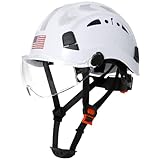
- Hard Hats Construction Osha Approved:AOLAMEGS safety helmet made of high impact penetration resistant ABS materials,lightweight,strong and comfortable. A good choice to protect heads against falling objects, impacts, bumps, and scrapes.AOLAMEGS safety hard hats meet ANSI Z89.1-2014 Type I Class C standards,visors meet ANSI Z87.1-2015 standards
- Package Including :1pc White Reflective Construction Hard Hats with Clear Visor + 1 Pack Hi-Viz Reflective Stickers .The construction hard hat Kit help complete comprehensive above-the-neck safety systems
- More Humanized Design:Rapid-Dial ratcheting headgear,one-handed adjustment design allows workers to modify fit without removing work helmet.Helmet size range from 53-63cm/ 20.86-24.80 inch.Sliding vent holes allow easy opening and closing based on weather conditions .Universal slots design ensures that safety hardhats to install attachments.And the safety helmet has Hi-Viz design on the front-rear-and sides of the helmet allows the user increased visibility under low light conditions
- Adjustable & Comfort Fit:Adjustable 6-point suspension system for improved shock absorption and overall comfort.Comfortable and convenient soft cup style chinstrap for extra security and stability, remove freely.Equipped with a pack of hard hat reflctive stickers ,provide a safe protection on dark outdoor work .Easy flip-up clear visor provides eye protection in debris protection
- Applicable Environment:Safety helmet with the clear visor,Suitable for construction,tree climbing work,woodworking,mechanics, forestry,manufacturing,height and scaffolding work, in any trade that requiring general head protection
How the audit relates to ordinary KMC approvals
The temporary audit did not replace the regular municipal sanction process. KMC’s building-sanction guidance says applicants must have the right to erect or ownership documents, including deed and mutation documentation, and must have no municipal tax dues. It also warns: “Any construction work carried out without a valid sanction plan is liable to demolition.”
KMC’s guidance describes stop-work notices and proceedings under sections 400(1) and 400(8) of the Kolkata Municipal Corporation Act, 1980. Those are routine municipal powers for dealing with unauthorised construction; they are separate from the exceptional post-collapse audit. For builders and property owners, a restart under the audit should therefore not be treated as a substitute for holding the required sanctioned plan and complying with other applicable permissions.
Independent reader supportYour contribution helps us test, update, and keep practical guides available for everyone.What the reported progress does—and does not—show
The October 4 Hindustan Times report said scrutiny had lasted nearly 45 days and that all but 26 of the projects in its account had been cleared. It also reported CREDAI’s claim that 100% of audited projects belonging to its members were structurally sound and compliant. That is an association’s claim about its member projects that underwent the audit, not an independently verified engineering finding about all projects under scrutiny.
Rank #4

- Country Of Origin : United States
- The Package Height Of The Product Is 9 Inches
- The Package Length Of The Product Is 14 Inches
- The Package Width Of The Product Is 13 Inches
CREDAI West Bengal president Sushil Mohta welcomed a proposed state standard operating procedure, saying: “We welcome the state government’s proposed Standard Operating Procedure (SOP) to improve building safety and regulatory compliance.” The same report said CREDAI had asked for an eight-month extension of approvals and completion validity. That was an association request; the report does not establish that the extension was approved.
The published figures and statements show movement through a changing review, but they do not settle the quality of every inspection or the long-term safety of cleared buildings. No final audit report, live government list of the uncleared projects, or final collapse-investigation findings is established in the sources cited here.
Reducing safety risk without leaving projects in limbo
The process described by the state points to a practical way to balance public safety and regulatory certainty: assess projects individually, state the finding and required action clearly, and distinguish serious violations from problems that can be corrected. A published standard operating procedure could help make that process more predictable, but the October report records a proposal, not a confirmed final procedure.
- Give each project a recorded outcome—rejection, required rectification, or clearance—rather than leaving builders to infer what an inspection means.
- Identify the specific plan, site, labour, water-use or technical issue that must be resolved, and what evidence will satisfy the authority.
- Separate a safety finding from other compliance issues that may still block a restart.
- Keep ordinary sanctioned-plan requirements and municipal enforcement in force after the temporary audit ends.
These steps follow the audit’s own distinctions and the compliance issues reported during inspections; they do not assume that an audit clearance guarantees future safety.
Quick Recap
Product prices and availability are accurate as of the date/time indicated and are subject to change. Any price and availability information displayed on Amazon at the time of purchase will apply.

