There is no universal winner. Choose a kiosk when a stable, approved site and repeat foot traffic matter most; choose a food truck when mobile food service fits your menu and you can satisfy vehicle, health, parking, and vending rules; choose a pop-up shop when you need a temporary, lower-commitment way to test demand or sell through a host venue. The right choice depends on your exact location, product, preparation method, operating logistics, upfront commitment, and local approvals—not on a generic claim that one format is always cheapest.
The examples below come from U.S. federal, state, and county guidance. Rules, fees, zoning definitions, and permit names vary by city, county, and state. Confirm feasibility with the property owner and the relevant planning, licensing, fire, and health authorities before signing a lease, buying a vehicle, or announcing an event.
As an Amazon Associate I earn from qualifying purchases.
Quick comparison: kiosk vs. food truck vs. pop-up shop
| Decision factor | Kiosk | Food truck | Pop-up shop |
|---|---|---|---|
| Location pattern | Usually a fixed site such as a shopping center, market, transit area, or other managed property. Confirm property permission, zoning, lease or concession terms, utilities, and site-specific permits. | A mobile vehicle or trailer, but mobility does not mean you can vend anywhere. Check vehicle, parking, route, event, health, fire, and commissary rules. | A temporary site or event. Confirm host permission and whether the host’s approvals cover your business, activity, equipment, and dates. |
| Best fit to investigate | A business that benefits from consistent visibility, predictable operating hours, and repeat or passing traffic. | A food business that needs mobile service and can operate within vehicle, food-safety, and local vending requirements. | A business testing demand, launching a product, or selling for a defined period through a host venue or event. |
| Main commitment | Rent or concession fees, construction or build-out, utilities, storage, insurance, and site-specific costs. | Vehicle purchase or lease, kitchen and service equipment, maintenance, insurance, parking, fuel, commissary access, and permits. | Event or short-term site fees, transport, setup and teardown, temporary equipment, staffing, inventory handling, and permissions. |
| Rules to check first | Zoning, property permission, building and utility requirements, and local food-establishment rules if food is served. | Food permit and inspection, vehicle and fire requirements, allowed vending locations, parking restrictions, and any commissary requirement. | Event or site rules, temporary vending permits, food rules if applicable, insurance requirements, and duration limits. |
| What the evidence establishes | Local regulators may include kiosks in mobile-food guidance, but there is no universal kiosk cost model. | Official agencies define vehicles and food handling differently by jurisdiction; a historical city index is not a current national startup benchmark. | There is no single national pop-up permit category or universally applicable approval path. |
These labels are planning categories, not legal classifications. A food kiosk, temporary booth, trailer, or truck can be treated differently depending on construction, menu, equipment, site, and service method.
Start with the business, not the structure
Before comparing spaces, write down what you sell, how customers receive it, and where each preparation step occurs. A packaged-goods seller has different facility needs from a business that cooks raw ingredients, serves unpackaged food, or uses refrigeration and hot holding. The same concept can require different approvals when it moves from a permitted kitchen to a vehicle or temporary booth.
#1 Best Overall
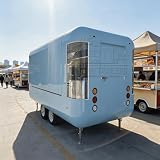
- Commercial Towable Food Trailer Unit: Designed as a professional mobile catering trailer for daily food service operations, easily towed by trucks or SUVs for flexible business locations.
- Custom Concession Trailer Configuration: Interior layout and equipment can be customized to support coffee service, fast food, ice cream, snacks, and catering businesses.
- Built for Commercial Use and Mobility: Durable structure engineered for long-term outdoor operation, frequent transport, and continuous food service environments.
- Flexible Pricing Based on Equipment Setup: Listed price reflects a basic trailer shell. Final pricing varies depending on kitchen equipment, size, and customization requirements.
- One-Year Warranty: We stand behind our food trailer with a one-year warranty. Our team is always here to help if you need support or have questions.
For a nonfood business, identify inventory volume, electrical loads, display fixtures, payment equipment, customer queue space, storage, and whether sales require demonstrations or fitting rooms. For food, document every preparation and storage step, including where ingredients are received, refrigerated, cooked, cooled, transported, and cleaned.
The U.S. Food and Drug Administration explains that requirements depend on the product and facility. Retail food establishments such as restaurants and food trucks are generally regulated by state and local governments, while FDA regulates foods and ingredients in interstate commerce subject to stated exceptions. Do not assume that every small retail food seller needs FDA facility registration; start with your state and local health authority. FDA guidance on starting a food business
When a kiosk is the better fit
Advantages of a fixed footprint
- A consistent address makes repeat visits, deliveries, staffing, and regular hours easier to plan.
- A managed property may provide established customer flow, security, common-area maintenance, and access to utilities, subject to the agreement.
- A permanent counter can justify durable millwork, refrigeration, signage, point-of-sale wiring, and accessibility improvements that would be impractical to move daily.
Questions to settle before signing
- Ask the property owner for written permission describing the business activity, operating hours, signage, deliveries, storage, waste handling, and any exclusivity restrictions.
- Confirm zoning and certificate-of-occupancy requirements with the local planning or building department. The U.S. Small Business Administration advises checking zoning before buying, renting, or building because local rules can restrict or prohibit a business at a particular property. SBA launch guidance
- Verify electrical capacity, water supply, drainage, ventilation, fire protection, restroom access, grease management, and internet or cellular coverage before pricing a build-out.
- If food is served, ask the health department whether the kiosk is a fixed food establishment, a mobile unit, or another category, and whether preparation must occur in an approved kitchen.
King County, Washington, illustrates why the label alone is not enough: its mobile-food information includes food trucks, carts, trailers, and food kiosks, and requires plans for review before construction, remodeling, or a change of ownership. It also identifies approved commissary kitchens as an option for rented preparation space. These are county-specific requirements, not a nationwide checklist. King County mobile-food permit guidance
Crashes, No Sound, or Screen Glitches?
Random freezes, missing sound and display glitches usually trace back to one bad driver. Find and replace yours safely.Free scan · under a minutePC Slower Than It Used to Be?
A free scan shows the junk files, broken settings and background clutter dragging Windows down - then fixes them in one click.Free scan · Windows 10 & 11Rank #2

- Video Factory Tour & On-Site Visit Available: For valuable custom-made orders, we value customer confidence and product transparency. Buyers are welcome to arrange a video factory tour before ordering to learn about our production environment, craftsmanship process, and customization details. On-site visits can also be scheduled in advance to better understand our manufacturing capabilities and customization services
- Dot Certified & Street Legal: Built to strict FMVSS standards and includes an official VIN and DOT certification, ensuring seamless vehicle registration and legal towing on U.S. roads for your mobile food business
- Fully Equipped Catering Setup: Ready for daily operation with a double sink, hot water faucet, fresh & waste water tanks, stainless steel worktables, cash drawer, trailer hitch, stabilizing jacks, and commercial-grade tires
- Us Electrical Compliant: Features a standard North American 110V/125V power system (220V configuration available), high-safety breaker box, multiple GFCI outlets, integrated lighting system, and external power inlet
- Heavy-Duty & Insulated Body: Built with a reinforced frame, high-density insulation for all-weather temperature control, and anti-slip aluminum flooring for long-term commercial durability and safety
When a food truck is the better fit
What mobility really provides
A truck or trailer can bring service to offices, festivals, construction sites, campuses, and neighborhoods, allowing you to change locations as demand changes. That flexibility comes with a vehicle that must be designed, maintained, insured, parked, supplied, cleaned, and inspected. Travel time, fuel, weather exposure, breakdowns, and setup at each stop become operating costs and scheduling risks.
Menu and preparation determine the regulatory burden
Local agencies often distinguish between selling sealed products and preparing food on board. Texas Department of State Health Services, for example, defines a food vending vehicle to include self-enclosed food-service establishments such as catering trucks and trailers and pushcarts, while distinguishing an FVV from a stand or booth. Its 2026 licensing framework assigns vendor types according to food preparation activity, with examples ranging from prepackaged snacks to coffee trucks and vehicles that prepare and cook food. The page states that licensing changes began July 1, 2026; check the live state page for current applications, fees, and implementation instructions. Texas DSHS mobile-food vendor guidance
Vehicle and site checks
- Confirm the vehicle or trailer’s construction, plumbing, electrical, ventilation, fire suppression, handwashing, refrigeration, and hot-holding specifications with the inspecting authority before purchase.
- Determine whether a commissary is required for preparation, storage, water filling, wastewater disposal, or cleaning.
- List every city, county, event organizer, or private property where you plan to operate; a permit in one jurisdiction may not authorize vending in another.
- Check parking, maximum dwell time, noise, generator, signage, sidewalk, and traffic-control rules at each location.
- Budget for commercial auto and general liability insurance, routine maintenance, repairs, fuel, secure overnight parking, and replacement of high-use equipment.
New Jersey’s official starter kit demonstrates how extensive a local process can be. Its checklist includes a location evaluation, food-truck license, location contract, zoning or overnight-parking approval where required, insurance, vehicle registration, fire permit, food-safety training, and additional business approvals. Its sequence and timing apply to New Jersey, not every state. New Jersey food-truck starter kit
Rank #3

- What's inside the food trailer?:The food Trailer includes a basic water system,electrical wiring, operator's workbench,and concession window.More equipment is available for additional customization, such as hoods, refrigerators,fryers and more.
- Designed for Professional Operators:Suitable for street vendors,catering teams,and event operators seeking a mobile solution for temporary or semi-permanent food service.
- How do I customise my food truck trailer? :We offer two different customisation options for hot dog cart.Fully customized or space reserved for proprietary equipment of food cart.Whether starting fresh or integrating existing gear for your burger venture,we provide renderings to visualize your success before we build.
- How can I be sure the truck is Real?:Benefit from 15 years of specialized expertise in food trucks for sale manufacturing.From durable catering trailers to efficient compact units,we build to withstand daily commercial use.You can request a visit to our factory,also you can always watch the progress of your food trucks production on video.
- What's the starting price?:The listed price for mobile food truck is only a portion of the total price; prices vary depending on the configuration. We will provide a complete pro forma invoice based on your specific needs for the food truck!
When a pop-up shop is the better fit
Use a pop-up to answer a specific question
A pop-up is useful when you need evidence before making a long lease or vehicle purchase. Define the test in advance: will customers pay the target price, which products sell, what hours produce demand, how much inventory is needed, or whether a neighborhood or event audience is a fit? A short run can expose operational problems while the financial commitment is still reversible.
Do these 3 things before closing this tab:
1Fix the driver behind crashes, sound loss and screen glitches2Clear out junk files and repair common Windows errors3Scan for outdated or missing drivers - takes under a minuteTemporary does not mean permit-free
The host may have an event permit, but that does not automatically cover your business, food preparation, equipment, sales tax obligations, insurance, or individual vendor registration. Ask the host and authorities, in writing, who is responsible for each approval and whether the permission covers your exact dates, location, menu or merchandise, tent or fixture, cooking method, and sales activity.
Plan the physical setup
- Measure the allocated footprint, queue area, exits, accessible routes, ceiling height, loading path, and storage limits.
- Confirm available power, water, lighting, internet, waste collection, and overnight security; price generators, battery systems, tanks, or temporary sinks if they are not provided.
- Specify setup and teardown windows, vehicle access, weather procedures, tent anchoring, and responsibility for surface damage.
- Use modular counters, displays, and signage that can be reused at later events instead of treating one temporary installation as a permanent build-out.
Which format costs less to start?
No responsible national price comparison establishes that one format is always cheapest. The SBA notes that rent, insurance, utilities, wages, and government fees vary by region, and local zoning can change whether a site is usable at all. SBA cost and location guidance
Rank #4
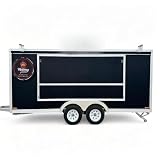
- 【Tailored to Your Vision】 As your direct factory partner with over a decade of experience, we bring your unique concept to life. Customize your food trailer's dimensions, layout, color, and exterior materials to fit your brand and operational workflow. Please message us before ordering to discuss your specific requirements.
- 【The Direct Factory Advantage】 By working directly with our facility, you eliminate middlemen. This allows for more competitive pricing, rigorous hands-on quality control, and seamless communication. We could offer live video calls and progress updates throughout the manufacturing process.
- 【Adaptable Layout for Various Equipment】 Configure your ideal workspace. The trailer is designed with a versatile layout and multiple electrical access points to accommodate a wide range of appliances, from griddles and freezers to coffee makers and blenders, perfect for food, beverages, or a mobile bar.
- 【Proven Global Reliability】 Our food truck trailers are trusted by entrepreneurs worldwide. We have successfully delivered units to customers across the USA, Europe, Australia, and Southeast Asia, building a reputation for dependable performance and consistent quality.
- 【Dedicated Support with 1-Year Warranty】 We provide a comprehensive 1-year warranty on our trailers. If any issues arise, our dedicated support team is ready to assist you, ensuring a reliable partnership.
Build a quote-based budget for each viable option using the same assumptions. Include the items below and identify one-time, recurring, and per-event costs.
| Cost category | Kiosk | Food truck | Pop-up |
|---|---|---|---|
| Site or access | Rent, concession percentage, common-area charges, deposit, and utilities. | Parking, route or event fees, commissary access, and location commissions. | Event or short-term rent, deposit, application fee, and host commission. |
| Construction and equipment | Millwork, counters, plumbing, electrical, refrigeration, ventilation, signage, and code upgrades. | Vehicle or trailer, cooking and refrigeration equipment, plumbing, power, fire systems, and service hardware. | Transportable counters, displays, tents, temporary power, refrigeration, cooking equipment, and storage. |
| People and operations | Staffing, cleaning, waste, inventory deliveries, repairs, and security. | Staffing, fuel, maintenance, repairs, cleaning, waste, inventory loading, and secure parking. | Setup and teardown labor, transport, event staffing, cleaning, waste, and unsold-inventory handling. |
| Compliance and risk | Insurance, business registration, zoning, building, health, fire, and renewal fees. | Commercial auto and liability insurance, vehicle registration, health, fire, vending, commissary, and renewal fees. | Insurance, temporary permits, health or fire approvals, event rules, and sales-tax or business registrations. |
A historical U.S. Chamber of Commerce Foundation study of 20 U.S. cities reported an average of 45 government-mandated procedures, 37 business days, and $28,276 in permits, licenses, and ongoing legal compliance for starting and maintaining a food truck for one year. It also reported 32 permit-and-license procedures in Boston and San Francisco compared with 10 in Denver. These figures describe a 2017-era study model and selected cities; they are not current typical costs, a national average for today, or a comparison with kiosks and pop-ups. Food Truck Nation study
What’s actually slowing this PC down?
Pick the symptom - the matching free tool is one click away.
Obtain written estimates from the actual landlord, event organizer, fabricator, insurer, equipment suppliers, and government offices. Do not substitute a headline online estimate for a local quote.
Best Value

- What's inside the food trailer?:The food Trailer includes a basic water system,electrical wiring, operator's workbench,and concession window.More equipment is available for additional customization, such as hoods, refrigerators,fryers and more.
- Designed for Professional Operators:Suitable for street vendors,catering teams,and event operators seeking a mobile solution for temporary or semi-permanent food service.
- How do I customise my food truck trailer? :We offer two different customisation options for hot dog cart.Fully customized or space reserved for proprietary equipment of food cart.Whether starting fresh or integrating existing gear for your burger venture,we provide renderings to visualize your success before we build.
- How can I be sure the truck is Real?:Benefit from 15 years of specialized expertise in food trucks for sale manufacturing.From durable catering trailers to efficient compact units,we build to withstand daily commercial use.You can request a visit to our factory,also you can always watch the progress of your food trucks production on video.
- What's the starting price?:The listed price for mobile food truck is only a portion of the total price; prices vary depending on the configuration. We will provide a complete pro forma invoice based on your specific needs for the food truck!
A practical decision process
- Define the offer. Record products, preparation, serving method, storage temperatures, equipment, staffing, hours, and delivery or pickup requirements.
- Select a target jurisdiction and site. Compare the exact city, county, property, event, or route rather than comparing abstract formats.
- Verify permission before spending. Get written confirmation of zoning, property use, vending rights, event participation, parking, utilities, health classification, fire requirements, and any commissary obligation.
- Collect local quotes. Price rent or event fees, vehicle or construction, equipment, utilities or commissary access, insurance, labor, transport, maintenance, waste, and every application and renewal fee.
- Model operations. Compare setup time, storage, weather exposure, travel, utility access, customer flow, queue capacity, staffing, cleaning, and repeat-visit potential.
- Run a conservative break-even calculation. Use the same assumptions for each format: sales days, average transaction value, gross margin, labor hours, site or vehicle costs, insurance, maintenance, and permit renewals. Calculate how many transactions are required to cover fixed and variable costs.
- Choose the smallest reversible commitment that answers your next question. A pop-up may validate demand, a kiosk may validate repeat traffic, and a truck may validate route-based service—but only if the local authority confirms the format is permitted.
- Commit last. Sign the lease, purchase the vehicle, or announce the event only after the site owner and authorities confirm feasibility in writing.
Construction and design issues that can change the decision
For a kiosk, early code review can prevent an attractive but unusable layout. Draw customer and staff circulation, accessible approach and service height, emergency egress, equipment clearances, electrical loads, plumbing runs, ventilation, grease or wastewater handling, and delivery access before requesting a build price. Ask who owns improvements at the end of the lease and who pays to remove them.
For a truck, design around inspection access and serviceability rather than squeezing in the maximum equipment. Confirm axle and payload limits, generator or battery capacity, water and wastewater volumes, fire-suppression coverage, ventilation discharge, refrigeration redundancy, and a safe loading sequence. A vehicle that passes an inspection but cannot be restocked or repaired efficiently can still undermine the business.
For a pop-up, use a site plan that shows the footprint, queue, accessible route, exits, equipment, electrical distribution, fire extinguishers, cooking or heating devices, tent anchoring, waste stations, and loading route. Confirm whether the venue prohibits open flame, generators, adhesives, stakes, or cooking. Design components to pack, transport, clean, and reuse without damaging the host property.
Common mistakes and how to avoid them
- Assuming a familiar label guarantees a permit path: ask the authority how it classifies your actual structure, menu, equipment, and site.
- Buying before confirming the location: verify zoning, vending rights, parking, utilities, and health classification first.
- Using a host’s approval as your own: obtain written confirmation of which vendor, activity, dates, and equipment the approval covers.
- Comparing only purchase prices: include recurring rent, labor, fuel, maintenance, insurance, utilities, commissary, waste, renewals, and downtime.
- Ignoring preparation details: changing from packaged goods to cooking or from a permitted kitchen to on-site preparation can change the requirements.
- Underestimating logistics: map storage, deliveries, cleaning, wastewater, weather, setup, teardown, and secure overnight parking before launch.
- Treating old statistics as current: date any historical city study and verify live fees and procedures with the issuing authority.
Bottom-line choice
Choose a kiosk when you have a genuinely suitable fixed site and the economics support a durable build-out. Choose a food truck when mobility is central to the concept and you can manage vehicle, food-safety, parking, maintenance, and location permissions. Choose a pop-up when the immediate goal is a time-limited test or event and the host arrangement clearly covers the required approvals. In every case, the decisive comparison is a site-specific operating budget and written compliance confirmation—not the format’s name.
Quick Recap
Product prices and availability are accurate as of the date/time indicated and are subject to change. Any price and availability information displayed on Amazon at the time of purchase will apply.

