John Deere did unveil an autonomous battery-electric mower for commercial landscaping at CES on January 6, 2025. But as of August 18, 2026, there is no public evidence that the machine is broadly available to buy. Deere has not published a product name, price, cutting width, acreage rating, release date, or ordinary customer-order process for the mower.
The technology could reduce the number of human operator-hours needed for repetitive mowing. That is different from replacing landscapers. Trimming, edging, cleanup, horticultural work, irrigation repairs, transport, maintenance, supervision, and customer service would still require people.
As an Amazon Associate I earn from qualifying purchases.
What John Deere actually announced
Deere described the machine as an “Autonomous Battery Electric Mower for Commercial Landscaping.” It is intended for professional landscape operators, not homeowners looking for a small robotic lawnmower.
Recommended Free Tools
Deere said the mower uses cameras and computer vision to navigate its surroundings. The announcement described two front cameras, cameras on the left and right, and rear cameras providing stated 360-degree visual coverage. Operators would manage the machine through the John Deere Operations Center Mobile platform.
#1 Best Overall

- Centimeter-Level RTK Cloud Accuracy: Commercial-grade RTK Cloud technology delivers centimeter-level positioning for this robotic lawn mower with no local antenna installation and no additional cloud costs.
- Auto Mapping for More Complete Coverage: Vision AI helps the robot lawn mower understand lawn shapes and boundary types, then automatically maps your yard for smooth paths, closer edge-following, and fuller coverage from day one.
- AI Obstacle Avoidance with Neural Processing: Vision AI recognizes and understands common yard objects, using a trained neural network and up to 10 trillion operations per second to help mowing stay smooth, safe, and uninterrupted.
- Infinite Zone Mowing & App Remote Control: Create unlimited mowing zones, set custom paths, define no-go areas, edit your map, and monitor your remote control lawn mower from the app anytime.
- Reliable Navigation Even in Shade: RTK Cloud provides centimeter-level accuracy in open areas, while V-SLAM sensor fusion with Vision AI helps maintain precise navigation in shaded or partially covered lawn spaces.
The app was described as supporting remote starting, live video and images, machine data, speed adjustments, and alerts about job-quality or machine-health issues. In practical terms, this is supervised autonomy—not a machine that eliminates every human responsibility.
Can landscapers buy it now?
Not through a clearly published public product channel, based on Deere’s available information as of August 18, 2026. Deere’s current electric-equipment lineup lists electric ZTrak ride-on mowers and other battery-powered equipment, but does not identify the CES autonomous commercial mower as a named, orderable product.
That means readers should not confuse Deere’s announcement with a confirmed mass-market launch. The company has not publicly supplied the details a contractor would need to make a purchase decision:
- Product name and final configuration
- Price, lease terms, or financing
- Cutting width and cutting-height range
- Battery capacity, charging time, and acreage per charge
- Maximum slope and weather restrictions
- Required connectivity or positioning services
- Human-intervention rate
- Safety certification, insurance, and liability guidance
- Dealer availability and delivery schedule
Deere also said selected machines would be autonomy-ready from the factory and that a second-generation perception system could be retrofitted to certain existing machines. That statement does not establish that the autonomous commercial mower itself is available as a retrofit, or identify compatible models and pricing.
Rank #2

- KIDS LAWN MOWER: This Lawn Mower toy lets your child get in on the action and help out around the yard
- FUN TOY FOR KIDS: Kids love seeing the rotating grass clippings and spinning grass blade as they get the yard work done
- INTERACTIVE TOY: Features a voice that prompts your child to check the oil and gas; Each button on the mower features its own unique sound
- EASY STORAGE: The extendable handle of lawn mower toy adjusts easily for storage
- Suitable for Ages 2 and up
What work could the robot automate?
The strongest use case is repetitive mowing on large, contiguous, relatively predictable turf areas. A suitable property might have broad open grass, clear boundaries, few obstacles, limited pedestrian traffic, secure storage, and convenient access to charging and service.
In that setting, an autonomous mower could potentially handle scheduled mowing cycles while a worker monitors several machines or performs other work. The likely measure of impact is not “one robot replaces one landscaper,” but fewer operator-hours per acre.
Less suitable sites include small or fragmented lawns, steep or uneven ground, narrow passages, dense tree cover, public areas with frequent foot traffic, and properties containing many beds, benches, hoses, irrigation heads, pets, toys, drainage channels, or temporary obstacles. Moving equipment between properties, loading it into vehicles, and completing edges would also remain human tasks.
PC Slower Than It Used to Be?
A free scan shows the junk files, broken settings and background clutter dragging Windows down - then fixes them in one click.Free scan · Windows 10 & 11Outdated Drivers Are Slowing You Down
One free scan finds every outdated or missing driver and matches the right update for your exact hardware.Free scan · exact hardware matchHow autonomous is autonomous?
A human would still be needed to:
- Map or establish boundaries and work zones.
- Position the mower and start the job.
- Monitor the Operations Center Mobile app.
- Respond to alerts and unexpected stops.
- Remove branches, hoses, toys, animals, or other obstructions.
- Recover a machine stuck near a slope, curb, ditch, or soft area.
- Maintain blades, batteries, tires, decks, cameras, and other systems.
- Secure the equipment against theft, vandalism, or unauthorized access.
- Inspect the finished work and complete trimming or cleanup.
Camera coverage does not by itself prove complete collision avoidance or safe operation around people and animals. Deere’s announcement did not specify detection performance, stopping distances, night-operation capability, rain restrictions, positioning technology, or connectivity requirements.
Rank #3
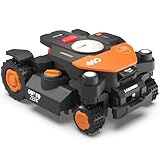
- Centimeter-level RTK Cloud Accuracy: Vision Cloud robot lawn mower uses commercial-grade RTK technology delivered straight from the cloud—no local antenna installation required and, above all, without additional cloud costs!
- Built for Extreme Terrain, Landscape-Friendly by Design: Vision Cloud 4WD robot mower delivers confident traction on steep slopes up to 84% (~40°). Its terrain-adaptive chassis keeps all four wheels planted over uneven ground, raised borders, and transitions, while true front-wheel steering delivers smooth, precise turns without tearing turf.
- Auto Mapping that Covers More: Vision AI enables this robot mower to understand any lawn shape and boundary types, automatically mapping your yard with smooth paths, closer edge-following, and fuller coverage from day one.
- AI Obstacle Avoidance: Vision AI not only recognizes objects, but understands them. Powered by a well-trained neural network and processing power up to 10 trillion operations per second, WORX lawn mower robot responds intelligently to keep mowing smooth, safe, and uninterrupted.
- Infinite Zone Mowing & App Remote Control: Manage unlimited mowing zones with custom pathways, define no-go areas, edit your map, and monitor your remote control lawn mower anytime—all under control at your fingertips.
Will it replace landscaping jobs?
Some mowing work could be displaced; wholesale replacement of landscaping crews is not established.
The workers most exposed would be those whose primary duty is repetitive mowing on large, uncomplicated commercial properties. A company might use one employee to supervise multiple machines, reduce the number of dedicated mowing operators, or redeploy workers to additional contracts.
But landscape maintenance is broader than mowing. Human workers would still commonly be needed for:
Do these 3 things before closing this tab:
1Clear out junk files and repair common Windows errors2Fix the driver behind crashes, sound loss and screen glitches3Repair Windows errors before they cause bigger problems- String trimming and edging
- Blowing sidewalks and hard surfaces
- Weeding, planting, mulching, pruning, and bed maintenance
- Irrigation inspection and repair
- Leaf removal, litter pickup, and pet-waste cleanup
- Equipment transport, charging, repairs, and recovery
- Site inspections, quality control, and customer communication
Automation could therefore change crew composition rather than eliminate the occupation. It may also create or expand work involving fleet supervision, route management, robotics service, turf-quality inspection, and equipment maintenance. New tasks do not automatically mean a one-for-one increase in total employment.
Rank #4
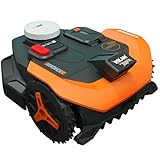
- Centimeter-level RTK Cloud Accuracy: Vision Cloud robot lawn mower uses commercial-grade RTK technology delivered straight from the cloud - no local antenna installation required and, above all, without additional cloud costs!
- Auto Mapping that Covers More: Vision AI enables this robot mower to understand any lawn shape and boundary types, automatically mapping your yard with smooth paths, closer edge-following, and fuller coverage from day one.
- AI Obstacle Avoidance: Vision AI not only recognizes objects, but understands them. Powered by a well-trained neural network and processing power up to 10 trillion operations per second, WORX lawn mower robot responds intelligently to keep mowing smooth, safe, and uninterrupted.
- Infinite Zone Mowing & App Remote Control: Manage unlimited mowing zones with custom pathways, define no-go areas, edit your map, and monitor your remote control lawn mower anytime - all under control at your fingertips.
- Reliable Navigation Even in the Shade: RTK Cloud delivers centimeter-level accuracy. In shaded or partially covered areas, V-SLAM–based sensor fusion with Vision AI seamlessly takes over, maintaining precise navigation.
The business case is still unproven
A contractor would need to compare the machine’s eventual purchase or lease cost with the fully loaded cost of human mowing. That calculation should include payroll taxes, insurance, travel, supervision, charging infrastructure, battery replacement, software or connectivity fees, maintenance, theft prevention, downtime, and the labor still required for intervention and finishing.
The company should also ask whether automation would reduce headcount or instead allow it to accept more contracts. Deere has not published enough information about price, capacity, uptime, or intervention frequency to support a reliable payback calculation.
Commercial autonomous mowing is already competitive
Deere is not entering an empty market:
- Husqvarna Automower 560 EPOS: Husqvarna announced this professional mower for municipalities, facilities, parks, schools, universities, office parks, and government properties. The company says it uses satellite-based EPOS positioning with virtual boundaries and can maintain up to 1.5 acres in 24 hours, depending on conditions. It also promotes fleet management, radar sensing, and compatibility with a separately sold AI-powered Vision accessory. Husqvarna details.
- Husqvarna CEORA: This larger commercial system is marketed for green spaces and sports-turf operations, with Husqvarna advertising coverage of up to six acres depending on configuration and conditions. CEORA details.
- Toro PROLINE AMI: Toro markets this as an autonomous commercial mower for landscape contractors and advertises GNSS/RTK guidance and radar obstacle detection. Toro details.
These products do not prove that Deere’s mower has launched. They do show that commercial autonomous mowing is moving beyond a purely speculative concept.
Quick wins for a faster PC:
Fix the driver behind crashes, sound loss and screen glitchesFind Drivers →Clear out junk files and repair common Windows errorsFree Scan →Scan for outdated or missing drivers - takes under a minuteDriver Scan →Questions a landscaping business should ask
Site suitability
- Is the turf large, contiguous, and relatively open?
- Are boundaries, slopes, drainage features, trees, beds, and irrigation heads reliably mapped?
- How often do pedestrians, pets, vehicles, or temporary obstacles enter the area?
- Is there secure overnight storage and a practical charging location?
- Can the machine be serviced locally?
Labor and quality
- How many operator-hours are currently required per acre?
- How much time will workers spend monitoring, rescuing, resetting, and finishing?
- Does the mower handle edges, wet or tall grass, and clipping-distribution requirements?
- Will a human trimming pass still be necessary?
- Will the added capacity generate more revenue, or only reduce staffing?
Safety and liability
- What happens when the machine encounters a person, pet, vehicle, hose, branch, or irrigation component?
- What are the required supervision and emergency-stop procedures?
- Who bears responsibility for property damage or injury?
- Are theft tracking and remote immobilization available?
- Do local rules, insurers, or customers restrict remotely supervised equipment?
Do not confuse Deere’s electric ZTrak mowers with the robot
Deere’s Z370R and Z380R Electric ZTrak models are battery-powered, operator-driven zero-turn mowers. They are not autonomous robots. Deere lists the Z370R at up to two acres per charge and the Z380R at up to 3.5 acres per charge, but those figures do not describe the CES autonomous mower and their prices should not be used as a proxy for its eventual cost. See Deere’s electric equipment lineup.
Best Value
- Die-cast chassis.
- Authentic decoration.
- Free rolling wheels.
- Perfect for recreating popular farm scense.
- Ages 3+.
The bottom line
John Deere is targeting a genuine problem: commercial landscaping companies need to complete repetitive mowing work despite labor shortages. Its CES demonstration shows how cameras, computer vision, electric propulsion, and remote fleet monitoring could reduce mowing labor on suitable properties.
But the public evidence still describes an announced system, not a broadly available product proven to replace landscaping jobs. Until Deere publishes specifications, pricing, availability, safety data, and real-world intervention figures, the most accurate description is task automation under human supervision—not the end of landscaping crews.
Frequently Asked Questions
When did John Deere reveal the autonomous mower?
John Deere unveiled its autonomous battery-electric commercial mower at CES on January 6, 2025.
The Tool Desk
Outbyte PC Repair FREERepair Windows errors before they cause bigger problemsFix Now →Outbyte Driver Updater FREEFix the driver behind crashes, sound loss and screen glitchesFind Drivers →Is John Deere’s autonomous commercial mower available to buy?
As of August 18, 2026, Deere had not publicly listed a product name, price, detailed specifications, or normal ordering path for the CES autonomous mower.
What landscaping work is most likely to be automated first?
Repetitive mowing on large, open, predictable turf areas is the clearest early use case. Trimming, edging, cleanup, horticulture, repairs, transport, and customer-facing work still require people.
Are Deere’s electric ZTrak mowers autonomous?
No. The Z370R and Z380R Electric ZTrak models are battery-powered ride-on mowers that still require a human operator.
Quick Recap
Product prices and availability are accurate as of the date/time indicated and are subject to change. Any price and availability information displayed on Amazon at the time of purchase will apply.
What’s actually slowing this PC down?
Pick the symptom - the matching free tool is one click away.

