Some links on this page are affiliate links: if you buy through them we may earn a commission, at no extra cost to you.
Usually, but only for a defined water-quality problem or a specific drinking-water taste goal. An under-sink reverse osmosis (RO) system can reduce many dissolved contaminants at the kitchen tap, but it also wastes water, occupies cabinet space, removes some beneficial minerals and creates ongoing filter costs. It is a point-of-use appliance for drinking and cooking—not a substitute for whole-house treatment.
The sensible decision is to identify the contaminant or taste issue first, confirm that a particular model is certified for it, then compare the system’s total ownership cost and reject-water rate with simpler filtration.
As an Amazon Associate I earn from qualifying purchases.
What’s actually slowing this PC down?
Pick the symptom - the matching free tool is one click away.
What does an under-sink reverse osmosis system do?
RO pushes water under pressure through a semipermeable membrane. Treated permeate goes to a small storage tank and dedicated faucet, while concentrated reject water flows to the drain. Because it is installed at one fixture, it treats water used for drinking and cooking without processing water for toilets, laundry or bathing.
The U.S. Environmental Protection Agency (EPA) says RO can improve taste and odor and reduce sodium, dissolved inorganic compounds and organic compounds. The Centers for Disease Control and Prevention (CDC) says RO may remove or reduce parasites, bacteria, viruses, lead, copper, chromium, chloride and sodium. EPA also identifies potential reductions for lead, volatile organic compounds, PFAS and arsenic. Actual performance depends on the model, membrane, incoming water and maintenance; no single system removes every contaminant.
Popular on Amazon

- PATENTED DESIGN – The top-mounted fastener allows for easy countertop installation entirely from above, eliminating the hassle of tightening the nut from underneath the sink.
- MINERAL BOOST – The patent-pending natural mineral AK stage delivers spring water with a balanced, healthy pH and multiple essential minerals.
- SEE WHAT’S CAUGHT – The transparent first-stage filter housing makes it easy to monitor contaminant buildup, ensuring timely filter changes.
- NSF 58 CERTIFIED RO SYSTEM – Unlike other brands that lack NSF certification or full system certification, our RCC7AK is certified to NSF/ANSI 58 standards for the entire water filtration system.
- EFFECTIVE FILTRATION – Reduces TDS (93-98%), PFAS (96-99%), Chlorine (95-99%), Asbestos (>99.7%), Barium (>98.4%), Cadmium (>98.8%), Chromium (>99.2%), Copper (>97.8%), Fluoride (>97.4%), Lead (>98.9%), Selenium (>99.0%), and over 1,000 other contaminants.
RO also removes calcium and other beneficial minerals and can lower treated-water pH. Some installations add a remineralization stage for taste, but that does not replace checking the system’s certified performance claims.
When is an under-sink RO system worth it?
It is most defensible when a water test or utility report identifies contaminants that a certified RO system is designed to reduce, or when broad dissolved-contaminant reduction is needed for drinking and cooking.
A documented contaminant concern
Start with your water utility’s Consumer Confidence Report if you receive public water. Private-well owners should use a laboratory test appropriate to local risks. Match the result to the exact contaminant-reduction claim on the product’s performance data sheet.
A persistent taste or odor problem
RO can improve taste and odor, especially when dissolved salts or several contaminants are involved. If the issue is limited to chlorine taste, a certified carbon filter may solve it with less expense and no reject-water stream.
Also popular on Amazon

- [Trusted certifications]: Waterdrop G3P600 reverse osmosis system is certified against NSF/ANSI 58 for TDS reduction and NSF/ANSI 372 certified for lead-free material. Also it has been tested and certified against NSF 42 to reduce chlorine, bad taste and odor. The tankless reverse osmosis system is also certified by the Federal Communications Commission. Besides, it meets the EU Standards and UKCA Standards for safety
- [8-stage filtration]: Tested by official third-party laboratory (SGS), the reverse osmosis system can effectively reduce TDS, chromium, PFAS, radium, fluoride, arsenic salt, iron, calcium, particles, chloride, chlorine and radioactive substances in your tap water. And our RO water filter system can reduce chemicals such as vinyl chloride, ethylhexyl acrylate, isobutylene, ethylene glycol, according to the reverse osmosis membrane technical manual
- [Smart display faucet]: The tankless reverse osmosis system is built with a smart display faucet. For instance, the TDS monitor tells you the quality of your filtered water, while the filter life tracker shows how soon you need to replace your filter
- [High capacity, 2:1 low drain ratio]: As an upgraded reverse osmosis system, this reverse osmosis water system produces 600 gallons of filtered water per day. By its low drain ratio, this system can produce only one cup of waste water for every two cups of pure water produced. Furthermore, with a fast and stable water flow rate, this RO system fills a 8 oz cup of water in 8 seconds, which is ideal for drinking and washing vegetables
- [Tankless design]: Waterdrop G3P600 reverse osmosis system has a stylish look. This tankless design saves 70% under sink space. You can change a filter in 3 seconds without moving the system or using any tools. Note: This reverse osmosis system requires under-sink electricity
Only one tap needs treatment
CDC guidance supports point-of-use treatment when a household needs safer or better-tasting water only for drinking and cooking. Treating one faucet avoids the cost and water use of whole-house RO.
What are the main benefits?
- Broad treatment: RO and nanofiltration can achieve high removals across mixed contaminant groups without tuning the process to each trace chemical.
- Targeted installation: A kitchen system supplies treated water where it is consumed while leaving ordinary household uses on the existing supply.
- Potential pathogen and metal reduction: Depending on certification and design, systems may reduce lead, arsenic, PFAS, VOCs, bacteria and viruses.
- Improved drinking water: Removing dissolved substances can improve taste and odor.
How much water does an RO system waste?
Reject water is the central trade-off. EPA WaterSense information says a typical point-of-use RO system can send at least five gallons to the drain for every gallon treated; inefficient units can reach 10 gallons per gallon. WaterSense-labeled systems are limited to 2.3 gallons or less of reject water per gallon treated.
Do these 3 things before closing this tab:
1Scan for outdated or missing drivers - takes under a minute2Clear out junk files and repair common Windows errors3Fix the driver behind crashes, sound loss and screen glitchesEPA estimates that replacing a typical point-of-use unit with a WaterSense-labeled model can save more than 3,100 gallons per year and 47,000 gallons over the system’s lifetime. A separate EPA technology overview describes RO and nanofiltration as rejecting 15%–30% of feed water; that broader figure uses a different scope, so use the product-specific reject ratio when comparing models.
Reject water may be suitable for some non-potable uses, such as cleaning, if local plumbing and hygiene practices allow, but never assume it is appropriate for drinking or a particular appliance.
Also popular on Amazon
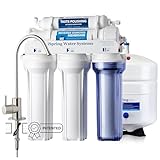
- EFFECTIVELY REDUCES CONTAMINANTS - The iSpring RO system delivers clean, pure, and great-tasting drinking water by removing up to 99% of over 1,000 harmful contaminants, including PFAS, chlorine, fluoride, lead (up to 98%), arsenic, asbestos, calcium, and sodium. It also reduces TDS by 80-90% and reduces hard water minerals that cause scale buildup.
- CERTIFIED TO NSF/ANSI 58 - Produced to strict American quality standards, this iSpring reverse osmosis system is NSF/ANSI 58 certified. For over 15 years, it has provided American families with unlimited, crisp, and refreshing water, superior to bottled water
- LOW MAINTENANCE & LEAK-FREE DESIGN - Engineered with premium components for long-term reliability and minimal upkeep. The transparent first-stage filter housing allows for quick inspections. This compact system fits under most kitchen sinks, requires no power source, and features a check valve to prevent backflow, ensuring safety and leak prevention. The AS-material filter housing offers impact resistance while making filter condition checks effortless.
- HIGH-QUALITY DESIGN & GREAT TASTE - Enjoy clean, safe, and fresh-tasting water with the iSpring under sink RO system. It includes a 100% lead-free designer faucet and food-grade tubing, ensuring crystal-clear ice cubes, fresher tea and coffee, better-tasting food, and healthier baby formula. The system’s advanced filtration reduces contaminants down to 0.0001 microns, while a fine GAC filter provides final polishing for exceptional water quality.
- 100% CUSTOMER SATISFACTION - The RCC7-BN is one of America’s highest-rated under sink reverse osmosis systems. It comes with a 1-year limited manufacturer warranty upon registration, lifetime personalized support from GA, USA, and premium-quality components to deliver bottled-quality drinking water for years to come—helping reduce plastic waste
What does an under-sink RO system cost?
Purchase price is only the first expense. EPA’s 2025 PFAS filter overview lists RO systems at approximately $150–$1,000 before maintenance. Consumer Reports lists tested under-sink filter prices from $86 to $700, with replacement filters ranging from $80 to more than $320. These figures cover different products and dates, so they are not interchangeable quotes for one model.
| Cost item | What to include |
|---|---|
| System | Membrane housing, pre-filters, storage tank, faucet and fittings |
| Installation | Plumbing labor, drain connection and possible countertop drilling; professional installation may be needed |
| Recurring filters | Pre-filter cartridges, post-filter and any remineralization cartridge |
| Membrane | Replacement every one to five years, depending on water quality, use and the manufacturer |
| Water and sewer | Charges associated with reject water, especially with inefficient units |
| Optional protection | Leak sensor, shutoff valve, pressure regulator or service visits |
How often do RO filters and membranes need maintenance?
EPA says pre-filters commonly require replacement about every six months. Membranes commonly last one to five years. Follow the manufacturer’s schedule because sediment, hardness, chlorine exposure, pressure and household demand can shorten those intervals.
Quick wins for a faster PC:
Clear out junk files and repair common Windows errorsFree Scan →Fix the driver behind crashes, sound loss and screen glitchesFind Drivers →Repair Windows errors before they cause bigger problemsFix Now →- Record the installation date and set calendar reminders for pre-filter changes.
- Replace cartridges with the specified dimensions and model-compatible parts.
- Drain the storage tank about every two weeks, as EPA WaterSense advises, so fresh water cycles through the system.
- Sanitize the tank and housings on the schedule in the manual; annual sanitizing may be appropriate for some systems.
- Investigate a constant drain flow, sudden taste change or falling production rate instead of allowing the system to run unattended.
EPA WaterSense states that a well-maintained RO system can last 15 years, but that lifespan assumes timely maintenance and serviceable components.
What installation and space issues should you check?
- Cabinet clearance: Measure the tank, filter housings and tubing, leaving room to remove cartridges.
- Faucet position: Confirm an unused faucet hole or verify whether drilling the countertop is permitted.
- Drain access: The reject line normally connects to the sink drain with an air-gap or equivalent fitting required by local rules.
- Water pressure: Check the manufacturer’s pressure range; a booster pump may be needed for low pressure.
- Leak planning: Keep shutoff access clear and consider a leak detector or automatic shutoff.
Under-sink plumbing can require professional installation, particularly with stone countertops, unusual drain assemblies or local code requirements.
Also popular on Amazon
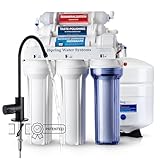
- ALKALINE FILTRATION WITH SLEEK BLACK FAUCET - This advanced 6-stage RO system restores natural alkalinity and essential minerals, delivering better-tasting water compared to standard 5-stage systems. The included black RO faucet enhances your kitchen’s style with a modern, sophisticated touch.
- EFFICIENT IMPURITY REDUCTION - Reduces up to 99% of over 1,000 harmful contaminants, including sediment, vinyl chloride, chlorine, fluoride, lead (98%), arsenic, PFAS, asbestos, calcium, and sodium, ensuring clean, pure drinking water.
- LOW MAINTENANCE - Features a transparent first-stage filter housing for quick visual inspection. Three pre-filters protect the RO membrane, which filters contaminants down to 0.0001 microns, while a fine GAC filter provides a finishing touch. The AK filter restores minerals and alkalinity for fresh, great-tasting water.
- DIY INSTALLATION WITH LEAK PROTECTION - Designed for hassle-free installation with all necessary parts included. Backed by a clear manual, instructional videos, and lifetime technical support. Quick-fitting connectors ensure a leak-free setup without the need for threading pipes. Note: Please check under-sink space before purchasing.
- 100% SATISFACTION GUARANTEED - Register for a 1-year limited manufacturer warranty and enjoy dedicated support from our team in GA, USA. Built with premium components for a long-lasting supply of bottled-quality drinking water, promoting a plastic-free future.
How does RO compare with a carbon filter?
Carbon is generally cheaper, uses no treatment water and is often sufficient for chlorine taste and odor or contaminants covered by its certification. RO is more capable for many dissolved salts, metals and mixed contaminant concerns, but costs more, wastes water and removes minerals.
| Decision factor | Carbon filtration | Reverse osmosis |
|---|---|---|
| Best fit | Specific certified contaminants, chlorine taste or odor | Broad dissolved-contaminant reduction at one tap |
| Reject water | None | At least 5:1 for many typical units; 2.3:1 or better for WaterSense-labeled units |
| Minerals | Often retained, depending on media | Beneficial minerals such as calcium may be removed |
| Maintenance | Cartridge replacement on the product schedule | Pre-filters, membrane, post-filter, tank draining and sanitation |
| Certification check | Standard relevant to the claimed contaminant | NSF/ANSI 58 is the applicable RO standard cited by EPA, plus model-specific claims |
How should you choose an RO system?
- Define the goal. Obtain the utility report or a private-well laboratory test before shopping.
- Name the contaminant. Ignore stage-count and “alkaline” labels unless the model provides a certified, contaminant-specific reduction claim.
- Compare simpler options. Choose carbon or another technology if it meets the documented need without RO’s reject water and mineral removal.
- Verify certification. Look for NSF/ANSI 58 or another standard appropriate to the claim, and read the model’s performance data rather than relying on a generic product category.
- Calculate lifetime cost. Add installation, cartridges, membrane changes, water and sewer charges, and optional accessories.
- Compare efficiency and capacity. Check reject-water ratio, flow rate, storage-tank size, cabinet dimensions and local service availability.
What problems indicate an RO system needs attention?
Continuous water at the drain
EPA WaterSense identifies persistent drain discharge as a possible failed automatic shutoff device. Close the feed-water valve if safe, check tubing and pressure, and arrange service; otherwise the unit can waste water and increase bills.
New or unpleasant taste
Confirm filter age, tank cycling and sanitation. Replace overdue cartridges and inspect for incorrect installation. If taste persists, test the treated water and contact the manufacturer or a qualified technician.
Low production
Clogged pre-filters, low feed pressure, a fouled membrane or a full tank can reduce flow. Check the manual’s pressure and replacement requirements before changing parts.
Also popular on Amazon

- [8-Stage precise filtration] The reverse osmosis system features an advanced 8-stage filtration process that reduces harmful contaminants such as PFOA, PFOS, chlorine, lead, fluoride, heavy metals, and other impurities. Meanwhile, Waterdrop G5P500A delivers clean, safe water free from unpleasant tastes or odors
- [0.0001 μm RO +added minerals] The Waterdrop G5P500A combines a precision 0.0001μm RO membrane with Alkaline mineralization technology, effectively reducing particles larger than 0.0001μm while enriching water with essential minerals like Ca²⁺, Mg²⁺, Na⁺ and K⁺
- [Compact tankless design] Say goodbye to large tank systems. The tankless RO system’s modern tankless design frees up to 70% of your under-sink space, making it ideal for today's household spaces. Its slim and stylish build perfectly matches any kitchen style
- [500 GPD steady flow] With a robust 500 GPD (gallons per day) capacity, the Waterdrop G5P500A provides a consistent and rapid water flow, filling a 6-ounce cup in just 8 seconds. Enjoy immediate access to purified water, ideal for busy households
- [2:1 Pure to drain ratio] This RO water filtration system system offers an impressive 2:1 purified water ratio, generating 400% more clean water compared to conventional systems. This not only reduces costs but also supports environmental sustainability by minimizing water wastage
Is an under-sink RO system right for your household?
Choose RO when a documented contaminant or mixed dissolved-water problem warrants its capability and you accept the water, space and maintenance trade-offs. Choose a simpler certified filter when it solves the identified issue at lower cost and with no reject-water stream. In either case, certification for the contaminant you care about matters more than the number of filtration stages.
Frequently Asked Questions
Can reverse osmosis make well water safe to drink?
It can reduce several well-water contaminants, but it does not replace well testing or disinfection planning. Test for locally relevant hazards and select a model whose certified claims match the results.
The Tool Desk
Outbyte Driver Updater FREEScan for outdated or missing drivers - takes under a minuteDriver Scan →Outbyte PC Repair FREEClear out junk files and repair common Windows errorsFree Scan →Does RO water need a remineralization cartridge?
Not automatically. RO removes minerals and may lower pH, so remineralization can change taste or chemistry, but its value depends on the finished water and the cartridge’s certified claims.
Can I install an under-sink RO filter without drilling the countertop?
Sometimes, if an unused faucet hole or compatible dispenser opening is available. Otherwise the dedicated faucet may require drilling, which can be unsuitable for some stone or composite countertops.
Is reject water from an RO system safe to reuse?
It is concentrated reject water, not treated drinking water. Reuse for a non-potable purpose only when the manufacturer and local plumbing guidance allow it, and keep it away from food preparation.

