Recommended Free Tools
Some links on this page are affiliate links: if you buy through them we may earn a commission, at no extra cost to you.
Yes—but only in a narrowly defined materials-science sense. TU Delft’s bioconcrete places dormant bacterial spores and their nutrients inside small carriers mixed into fresh concrete. When water and oxygen enter a crack, the bacteria become active, consume calcium lactate and help precipitate calcite, a limestone-like mineral that can fill the opening over several weeks. Laboratory work on a related biogranule formulation has shown complete visual closure of a 400 μm crack and an 83% drop in water permeability after 28 days of water treatment. Those results demonstrate mineral sealing under test conditions, not unlimited healing or proven restoration of the concrete’s original structural strength.
What TU Delft means by “bioconcrete”
The term describes concrete that contains a biological healing agent rather than ordinary cement, aggregate and chemical admixtures alone. TU Delft’s technology description uses Bacillus spores and calcium-lactate nutrients. The two ingredients are stored in expanded-clay pellets or compressed powder granules that are a few millimetres in size, then mixed into wet concrete before it hardens.
As an Amazon Associate I earn from qualifying purchases.
The approach is often called “self-healing concrete,” but the concrete is not living in the everyday sense. The hardened material is an alkaline, mineral matrix. Bacterial cells are protected in a dormant spore state inside carriers until a crack creates the conditions they need. A useful description is bacteria-assisted mineral formation inside concrete.
TU Delft summarizes the inspiration as: “The inspiration for self-healing concrete comes from nature – limestone producing bacteria, to be specific.” The practical objective is to close pathways through which water can enter, not to make a damaged beam or slab biologically grow back into its original form.
Popular on Amazon

- FIX FOUNDATION WALL CRACKS EASILY: Our Concrete Crack Repair Kit offers a reliable solution for foundation crack repair injection kit and concrete crack repair. Homeowners can address concrete cracks and cement crack filler issues efficiently, preventing water infiltration and protecting the basement from potential water damage. Whether you’re facing rainstorms or just trying to maintain your basement, it provides a hassle-free solution, saving you the cost and trouble of hiring professionals.
- LONG-LASTING WATERPROOF PROTECTION AND SEALING: Our Hydra Stop 300 Polyurethane Foam expands to fill cracks, acting as a concrete crack filler that creates a durable, waterproof concrete sealer barrier. This foam sealant gap filler helps prevent moisture entry, providing long-lasting protection concrete patch to your basement and foundation. Homeowners worried about water damage and basement flooding can rely on this effective solution.
- PRESERVE YOUR HOME’S VALUE AND STRUCTURAL INTEGRITY: In addition to offering a practical foundation cement crack filler solution, our kit helps maintain the structural integrity of your foundation. Sealing cracks with concrete crack sealer reduces the risk of foundation cement crack repair issues, helping to protect your home from further damage and providing lasting concrete crack repair. With an easy-to-apply system, this kit allows DIY homeowners to feel confident in their repair work.
- INCLUDES COMPLETE REPAIR SOLUTION: Our concrete crack filler and sealer kit includes 2-Hydra Stop 300 Polyurethane Foam, 2-Poxy Paste crack sealant, 15-surface ports, caulk gun, 2 pairs nitrile gloves, safety glasses, drop cloth, 10-wooden sticks, 10-corner ports, wire brush and a flexible injection hose assembly. This simplifies foundation cement crack filler repairs, making it easy for DIY homeowners to handle large cracks with the help of clear instructions and video tutorials.
- WHY CHOOSE APPLIED TECHNOLOGIES: Applied Technologies has been a trusted name in waterproofing and foundation repair solutions for over two decades. Our Hydra Stop 300 Polyurethane Foam provides effective foundation crack repair and concrete crack filler performance, ensuring a reliable seal. With easy-to-follow instructions for concrete crack sealer application and durable cement crack filler materials, we offer products designed to help protect your home and provide lasting results.
How the crack-sealing mechanism works
1. Spores and food are embedded during mixing
Concrete is mixed while wet, so the carriers can be distributed through the batch. The carrier protects the spores from the highly alkaline environment that develops as cement hydrates. Calcium lactate is held as a separate nutrient source in the described system. Keeping the spores and food in protected particles is important: bacteria exposed directly to fresh cement paste would have to survive conditions that are hostile to ordinary microbial life.
2. A crack admits water and oxygen
A crack changes the local environment. Water can reach a carrier that was previously isolated from moisture, and oxygen can enter through the opening. TU Delft identifies that water-and-oxygen access as the activation condition. Until then, the spores can remain dormant in the concrete.
Free tools Windows power users keep installed
One-click scans. No signup required.
3. Bacterial metabolism produces carbonate
Once activated, the bacteria consume the incorporated lactate. Their metabolism changes the local chemistry and provides carbonate ions. In the university’s account, those products combine with calcium to form calcite, a crystalline form of calcium carbonate and a major constituent of limestone.
4. Calcite narrows or fills the opening
Calcite deposits grow on the crack surfaces and within the void. Over a period TU Delft describes as several weeks, the mineral can bridge the opening enough to seal it against water. The result is mineral precipitation triggered by crack exposure, not a polymer film or a mechanical sealant that is applied from the outside.
That sequence also explains why the technology has a finite scope. Healing requires an intact carrier near the crack, sufficient moisture, available nutrient and a crack geometry that allows the process to reach the damaged zone. A crack that is too wide, too dry or outside the distribution of carriers may not close.
What the best-quoted laboratory result actually shows
A 2018 peer-reviewed study by Ersan and colleagues tested mortar containing non-axenic biogranules with a denitrifying core. The formulation and metabolic pathway are related to the broader bacteria-based concept, but they are not the same formulation as the Bacillus-and-calcium-lactate description on TU Delft’s technology page.
Crashes, No Sound, or Screen Glitches?
Random freezes, missing sound and display glitches usually trace back to one bad driver. Find and replace yours safely.Free scan · under a minuteWindows Errors? Fix Them Before They Spread
Repair common Windows errors and clear accumulated junk for a smoother, more stable PC - no reinstall needed.Free scan · no reinstallAlso popular on Amazon
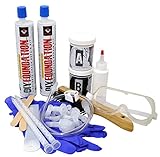
- Drill-Free Injection: Repair basement wall cracks effortlessly without drilling, ensuring minimal disruption to your home's structure.
- Simple Application: Use a standard caulking gun to inject the low-viscosity, 2-component urethane, making the process accessible for any homeowner.
- Effective Hairline Crack Repair: Seal even the smallest cracks permanently with the specialized urethane, preventing further water seepage and damage.
- Interior Repair Advantage: Save on costly excavation by repairing cracks from inside your basement, maintaining exterior aesthetics and structural integrity.
- Comprehensive Protection: This solution not only protects against water but also acts as a barrier against radon and soil gases, safeguarding your basement environment.
The researchers made a defined 400 μm crack and treated the specimens with tap water for 28 days. Their reported measurements were:
| Measurement | Result | What it means |
|---|---|---|
| Initial crack width | 400 μm | The result applies to a deliberately defined laboratory crack, not every crack size found in a structure. |
| Water exposure | 28 days of tap-water treatment | The healing period and water chemistry were controlled test conditions. |
| Visual closure | Complete visual crack closure | The opening could no longer be seen under the study’s inspection method. |
| Calcite sealing layer | 10 mm thick | The authors reported a mineral layer associated with the sealed region. |
| Healed crack volume | 6% | A measured fraction of the crack volume was reported as healed in that experiment. |
| Water permeability | 83% reduction | Water flow through the specimen fell substantially compared with the relevant unhealed condition. |
These are useful, quantitative indicators that mineral deposition can reduce a crack’s hydraulic pathway. They are not universal performance guarantees for all bacterial concrete. The specimen geometry, crack width, biogranule composition, water treatment and laboratory procedure all matter.
Why “closed” does not mean “structurally restored”
Concrete damage has several dimensions. A crack may be visible at the surface, open to water, or associated with a loss of load-carrying capacity. A calcite deposit can address the first two without recreating the original cement-paste and aggregate bond throughout the damaged section.
- Visual closure: the surface opening is no longer visible by the study’s inspection method.
- Hydraulic sealing: less water can pass through the crack, measured as reduced permeability.
- Mechanical recovery: stiffness, tensile capacity, shear capacity or other structural properties return toward their pre-crack values.
The 2018 report provides visual-closure, calcite-layer, healed-volume and permeability results. It does not establish that the mortar recovered its original structural strength. A design engineer therefore cannot substitute a reported 83% permeability reduction for a structural repair calculation. Load capacity, crack-driving stresses, reinforcement condition and the applicable concrete design code still have to be assessed independently.
The two formulations should not be conflated
Readers often encounter the TU Delft description and the 2018 experiment as if they were one product test. They are better understood as two pieces of evidence about a research direction.
| Aspect | TU Delft technology description | 2018 biogranule experiment |
|---|---|---|
| Bacteria and chemistry | Bacillus spores with calcium-lactate nutrients; bacteria help precipitate calcite. | Non-axenic biogranules with a denitrifying core; the study reports calcite sealing in its tested formulation. |
| Carrier | Expanded-clay pellets or compressed powder granules a few millimetres in size. | Biogranules designed for the experimental mortar. |
| Activation | Water and oxygen entering a crack awaken dormant spores. | Specimens were exposed to tap water for the stated test period. |
| Reported timing | TU Delft says sealing can take a few weeks. | Measurements followed 28 days of water treatment. |
| Reported outcomes | Mechanism and intended application are described; no numerical field-healing result is supplied on the located page. | Complete visual closure, a 10 mm calcite layer, 6% healed crack volume and 83% lower water permeability. |
| Strength recovery | Not established by the technology description. | Not reported as restored structural strength in the cited results. |
The distinction matters whenever a number is quoted. The 400 μm crack and 83% permeability figure belong to the 2018 experiment; they should not be presented as a specification for every TU Delft carrier formulation or for concrete placed on a building site.
Also popular on Amazon

- FAST & EASY CRACK REPAIR: Quickly seal leaks with this advanced 10' foundation crack repair injection kit designed for fast results and minimal effort. Sets rapidly and helps homeowners fix structural cracks in minutes without waiting hours or calling professionals
- COMPLETE ALL-IN-ONE REPAIR KIT: This premium concrete crack filler includes everything you need, such as urethane foam, injection ports, adhesive, gloves, and tools, so you can start immediately. Offers more material than standard kits for better coverage and value
- NO SPECIAL TOOLS REQUIRED: Designed for easy DIY foundation repair, this system works with a standard caulking gun; no drilling or special equipment needed. Quick and effective concrete crack repair, making it a hassle-free solution for homeowners
- DURABLE WATERPROOF SEAL: The expanding urethane creates a durable barrier that blocks water intrusion and prevents future damage. Excellent for foundation leak repair and reliable concrete wall leak repair, ensuring your basement stays dry and protected over time
- FIX, SEAL & PREVENT FUTURE DAMAGE: Engineered to restore structural integrity, this solution seals existing cracks and helps prevent future leaks, protecting your home's foundation for the long term
What healing time and exposure conditions imply
Healing is not instantaneous. TU Delft’s description gives a timescale of several weeks, while the 2018 experiment evaluated specimens after 28 days of tap-water treatment. Water is therefore both the trigger and part of the test environment. A permanently dry crack may not activate the spores, whereas repeated wetting could provide multiple opportunities for mineral growth if nutrients and viable spores remain.
Temperature, oxygen availability, water chemistry, crack width, carrier proximity and the amount of surviving nutrient can all influence the result. The cited evidence does not define a single healing rate that can be applied to every climate, cement mix or exposure class. It also does not show that one activation event exhausts or preserves the healing capacity indefinitely.
What’s actually slowing this PC down?
Pick the symptom - the matching free tool is one click away.
Potential durability value—and its limits
Small cracks are important because they can provide pathways for water and dissolved substances. If mineral precipitation blocks much of that pathway, a self-healing additive could reduce leakage or slow the movement of fluids through a crack. That is the durability rationale behind the technology: preventing ingress may reduce maintenance needs in situations where a conventional surface repair is difficult.
However, the available results do not directly measure reinforcement-corrosion rates, freeze-thaw service life, chloride penetration in a field structure, fatigue performance or long-term crack cycling. An 83% reduction in permeability in one mortar experiment is encouraging evidence of sealing, but it is not a service-life prediction for a bridge, tunnel, basement or water-retaining structure.
Independent reader supportYour contribution helps us test, update, and keep practical guides available for everyone.What has been tried outside a small laboratory specimen?
TU Delft’s technology page mentions a building in the south of the Netherlands that was covered with bioconcrete for a planned two-year monitoring period. The located description gives the monitoring plan but does not provide the monitoring results. That means the building is evidence of a field demonstration or observation program, not published proof of a particular long-term performance level.
Historical context helps explain the project’s visibility. The European Patent Office associates Delft microbiologist Hendrik Jonkers with adding limestone-producing bacteria to concrete, and TU Delft’s research portal records a 2015 CNN feature by Andrew Stewart about the “living concrete” project. Those references establish interest and provenance; they do not replace controlled measurements of the specific mix in a real structure.
Also popular on Amazon
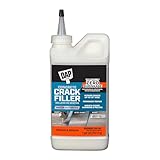
- Concrete crack filler repairs horizontal cracks in concrete, stone and other masonry materials
- Water activated dry powder repairs cracks up to 1/2”W x 1/2”D a single pass
- Ready for light foot traffc in 4 hours, return to full service (including vehicles) within 48 hours
- Ready to use formula, no shaking or mixing: prep surface, fill crack and mist
- DAP Concrete Crack Filler resists shrinkage, UV fading, and cracking
How to evaluate a bacteria-based concrete claim
When a paper, specification or project announcement reports “self-healing,” check the following before comparing it with another result:
- Identify the formulation. Record the bacterial species or consortium, nutrient, carrier and whether the culture is axenic (single strain) or non-axenic.
- Check the crack definition. Note the initial width, depth, whether the crack was engineered or naturally formed, and how many cracks were tested.
- Read the exposure conditions. Look for water type, wetting and drying cycles, oxygen access, temperature and duration.
- Separate the measurement. Determine whether the claim is based on photographs, crack-volume analysis, permeability, microscopy or a mechanical test.
- Look for strength data. A claim about restored load capacity requires direct mechanical measurements, not just a sealed surface.
- Ask about scale and repetition. Results from mortar prisms do not automatically predict performance in reinforced concrete members, and one healing cycle does not establish lifetime durability.
This checklist prevents a common error: combining the strongest number from one formulation with the mechanism described for another and presenting the combination as a single product specification.
Open engineering questions
Several practical questions remain unresolved by the cited material. The current commercial availability, price and licensing terms of the specific TU Delft formulation are not established. The sources also do not document a current deployment footprint or publish the two-year building-monitoring results.
- How many viable spores and how much nutrient remain after mixing, placing and curing?
- What maximum crack width can be sealed reliably, and how does performance change with crack depth?
- How does repeated cracking affect the carriers and the supply of calcium lactate?
- Does mineral sealing persist through freeze-thaw cycles, drying, chemical exposure and structural movement?
- What mechanical recovery, if any, occurs after calcite deposition?
- How should the material be specified, inspected and accepted under local concrete standards?
Until those questions are answered for a particular mix and application, bioconcrete is best treated as a durability-oriented research technology, not a substitute for crack-control detailing, waterproofing design or structural repair procedures.
Bottom line for contractors and specifiers
TU Delft’s concept is technically plausible and supported by laboratory evidence that bacteria can trigger calcite deposition inside a defined crack. The related 2018 study gives concrete numbers—400 μm crack, 28 days of tap-water treatment, complete visual closure, a 10 mm calcite layer, 6% healed volume and 83% lower permeability—but those values belong to that tested biogranule formulation and conditions. They show sealing, not unlimited self-repair or proven recovery of structural strength. For a real project, verify the exact formulation, require application-specific durability and mechanical data, and continue to design for cracking and maintenance as if ordinary engineering controls still matter.
Quick Recap
Product prices and availability are accurate as of the date/time indicated and are subject to change. Any price and availability information displayed on Amazon at the time of purchase will apply.

