What’s actually slowing this PC down?
Pick the symptom - the matching free tool is one click away.
The safest way to work at height is not to climb. First redesign the job so it can be completed from the ground. If that is not possible, use equipment that prevents a fall—such as a properly guarded platform—before considering equipment that only limits the consequences of a fall. A ladder is a limited choice for low-risk, short-duration work, not a default way to reach a roof. Treat rooflights and any surface that may be fragile as fall-through hazards, and bring in a qualified contractor when the access, surface or rescue arrangements exceed ordinary low-risk work.
This approach follows the Health and Safety Executive (HSE) sequence: “Can you avoid working at height in the first place? If no, go to prevent”. HSE also reports that over 60% of deaths during work at height involve falls from ladders, scaffolds, working platforms or roof edges, or through fragile roofs or rooflights. The figure is a UK work-at-height statement; the cited page does not state a year, and it is not a statistic about DIY homeowners specifically.
As an Amazon Associate I earn from qualifying purchases.
Start with a no-climb decision
Do not begin by choosing a ladder. Begin by challenging the need to leave the ground. Many home-improvement tasks can be redesigned so the person, rather than the person and the access equipment, stays at ground level.
PC Slower Than It Used to Be?
A free scan shows the junk files, broken settings and background clutter dragging Windows down - then fixes them in one click.Free scan · Windows 10 & 11Crashes, No Sound, or Screen Glitches?
Random freezes, missing sound and display glitches usually trace back to one bad driver. Find and replace yours safely.Free scan · under a minuteUse an extendable tool or lower the work
- Use an extendable cleaning, painting or inspection tool where it gives adequate control from a stable standing position.
- Remove a fitting, sign, light cover or other item and lower it to ground level before cleaning, repairing or replacing it.
- Complete assembly, preparation and tool setup on the ground, then lift only the finished, manageable item.
- Reconsider the specification: a ground-level repair or replacement may be safer than preserving an installation that requires repeated climbing.
HSE specifically gives extendable tools used from ground level as an example of avoiding work at height. If the tool cannot be controlled without excessive force, twisting or reaching, it has not solved the risk; choose another method.
#1 Best Overall

- Reduced Wobble: After repeated tests, we added two new triangle stabilizers on the telescopic ladder, which can reduce the shaking amplitude from 30° to 10° and effectively improve the stability by 36% compared with the same product.
- Safety of Use: The high quality construction of the telescoping ladder ensures that each part retracts safely. Smart locking pins hold the parts in place and prevent sliding, and the ladder will retract smoothly and slowly.
- Quality Material: The sturdy frame of the telescopic ladder is made of high-quality aluminum alloy, which is resistant to wear and corrosion, rust, high and low temperatures and aging, and can withstand up to 330 pounds of weight.
- Multi-Scene Application: Changing light bulbs and going up to the attic indoors, or repairing roofs or climbing into RVs outdoors, our aluminum retractable ladders can be used in any scenario where you need a ladder.
- Easy Portability and Storage: Retractable ladder, tied with a fixed belt, easily pick up, no matter where to take it is very convenient. The ladder 19 * 33 size can also be placed in the trunk or in various corners of the house at will.
Assess the task, not just the height
Before selecting access equipment, record the factors that change the risk:
- Height and fall path: Where could a person land, and could the fall be through a rooflight or another opening?
- Duration and frequency: Is this a brief intervention or repeated, prolonged work?
- Effort and load: Will the task require force, two hands, bulky materials or repeated handling?
- Surface condition: Is the standing area known to be sound, level and stable, or is its strength uncertain?
- Access and exit: Can the worker reach the position and return without a hazardous transition?
- People and objects below: Could tools, materials or removed parts fall onto someone?
- Emergency arrangements: How will help be summoned, and how could an injured person be rescued?
HSE identifies task height, duration, frequency and surface condition as factors in assessing risk. A task that looks small can become unsuitable for a ladder when it involves force, awkward posture, repeated trips or an uncertain surface.
Apply the control hierarchy
- Avoid: Stay on the ground or change the work so no climb is needed.
- Prevent: If height work remains, use an existing safe work area or equipment that keeps a person from falling, such as a properly guarded platform or scaffold.
- Minimize: Only when a residual fall risk remains, use measures that reduce fall distance or consequences. These controls require correct selection, competent use and a rescue plan.
Collective protection—guardrails, edge protection and guarded platforms—normally protects everyone using the area. Personal systems protect an individual only when the harness, connection, anchor, clearance and rescue arrangements are all correct. Do not improvise an anchor or assume that wearing a harness makes an unsuitable roof safe.
Match the access method to the job
| Method | When it can fit | How it controls a fall | Important limits |
|---|---|---|---|
| Ground-level method | Cleaning, inspection, painting or removal that can be reached with an extendable tool or by lowering the item | Removes the work-at-height exposure | Stop if control, visibility or force becomes unacceptable |
| Guarded scaffold or platform | Work needing a stable standing area, materials or more time | Collective edge protection prevents a person reaching an unprotected edge | Must be correctly selected, erected, inspected and used; arrange safe access and exit |
| Mobile elevating work platform | Access where a suitable platform can be positioned and operated safely | Provides a guarded work platform when used as designed | Requires appropriate equipment, a competent operator, suitable ground and an emergency procedure |
| Ladder | Low-risk, short-duration work when an assessment supports it | Does not provide a guarded work area; stability and user technique are critical | Not an automatic choice for roofs, prolonged work, heavy loads, forceful work or tasks needing both hands |
| Specialist roof-access system | Work near roof edges, rooflights or surfaces that may be fragile | Uses engineered collective or personal protection selected for that roof | Assessment, installation, competent users and rescue planning are specialist matters |
The table is a decision aid, not a product specification. Equipment must be suitable for the particular building, load, surface and task, and must be used according to its manufacturer’s instructions and local requirements.
When a ladder is acceptable—and how to use one safely
Use the narrow HSE case for ladder work
HSE does not ban ladders under UK workplace health and safety law. It describes them as a sensible, practical option for low-risk, short-duration tasks when a risk assessment supports that choice. That is not a blanket approval for domestic roof work. A ladder becomes a poor fit when the job is prolonged, strenuous, exposed to a fragile surface, involves substantial materials or requires both hands and significant force.
Rank #2
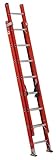
- NON-CONDUCTIVE: Crafted with fiberglass for non-conductive safety assurance, this extension ladder combines strength and durability.
- MAXLOCK RUNG LOCK: Engineered with your safety in mind, custom engineered specifically for our extension ladders from a patented, advanced molecular polymer.
- QUICKLATCH SYSTEM: Seamlessly offers a straightforward and intuitive solution for our extension ladders, securing both the fly and base sections during extension.
- SAFE AND STABLE: Steel Swivel Safety Shoe with metal shield specifically designed for extension ladders, ensures stability and safety even on uneven surfaces.
- STURDY AND STRONG: With its 300-Pound capacity, elegant design and smooth finish, you won’t find a more durable, reliable 16-foot Extension Ladder.
Choose the right type and length for the task. Follow the ladder manufacturer’s instructions, including limits on standing positions, load, set-up and use. Do not extend a short ladder with makeshift supports or place it on boxes, loose blocks or another unstable base.
Set up a stable access point
- Inspect the ladder before use. Look for damaged stiles, rungs, feet, locks, hinges or other parts that could affect stability. Remove defective equipment from service.
- Place it on a firm, level surface. Keep the base away from openings, vehicle routes, doors that could open into it and areas where people may knock it.
- Prevent slipping. HSE’s construction guidance says securing the ladder is preferable to footing it; footing is described as a last resort. Use the securing method specified for the ladder and location.
- Make the top contact secure and stable. Do not rest the ladder against a surface that can break, slide or cannot take the load.
- Keep the area below controlled. Prevent people from walking beneath or moving the ladder while it is occupied.
These are workplace/construction principles. Homeowners should also follow the exact manufacturer’s instructions and any local requirements; a generic setup rule cannot make an unsuitable location safe.
The Tool Desk
Outbyte PC Repair FREERepair Windows errors before they cause bigger problemsFix Now →Outbyte Driver Updater FREEFix the driver behind crashes, sound loss and screen glitchesFind Drivers →Climb and work with three points of contact
HSE’s construction FAQ describes three points of contact while climbing. Keep two hands and one foot, or two feet and one hand, in contact whenever practicable. Carry only light items that do not compromise your grip; use a belt, hoist or another ground-to-level method instead of carrying bulky materials in your hands.
A brief reach for a handhold is different from working in a position where the hand cannot be maintained. HSE notes that additional measures are needed if a handhold cannot be maintained except briefly. If the task needs force, side loading, twisting or both hands for more than a moment, descend and change the access method rather than stretching farther.
Know when to stop using the ladder
- The ladder moves, slips, flexes unexpectedly or cannot be secured.
- The work area is wet, contaminated, uneven or of uncertain strength.
- You need to stand in an unapproved position, overreach or lean sideways.
- You must carry a heavy, long or awkward item while climbing.
- The job is taking longer or requiring more effort than the original assessment allowed.
- You cannot keep people clear below or cannot summon and receive help in an emergency.
Any one of these changes can move the job out of the low-risk, short-duration category. Stop, descend carefully and reassess; do not continue because the ladder is already in place.
Rank #3

- NON-CONDUCTIVE: Crafted with fiberglass for non-conductive safety assurance, this extension ladder combines strength and durability.
- MAXLOCK RUNG LOCK: Engineered with your safety in mind, custom engineered specifically for our extension ladders from a patented, advanced molecular polymer.
- QUICKLATCH SYSTEM: Seamlessly offers a straightforward and intuitive solution for our extension ladders, securing both the fly and base sections during extension.
- SAFE AND STABLE: Steel Swivel Safety Shoe with metal shield specifically designed for extension ladders, ensures stability and safety even on uneven surfaces.
- STURDY AND STRONG: With its 300-Pound capacity, elegant design and smooth finish, you won’t find a more durable, reliable 16-foot Extension Ladder.
Roofs, rooflights and fragile surfaces
Assume uncertainty is hazardous
A roof can look solid while containing sheets, panels, coverings or rooflights that will not support a person. A fall-through hazard may exist even where there is no visible opening. If you cannot establish that the surface is designed and maintained to carry the intended load, do not step onto it.
Quick wins for a faster PC:
Fix the driver behind crashes, sound loss and screen glitchesFind Drivers →Clear out junk files and repair common Windows errorsFree Scan →Scan for outdated or missing drivers - takes under a minuteDriver Scan →Roof edges add a separate fall risk. A ladder that reaches the eaves does not create a safe roof-working area, and a visible rooflight is not the only possible fragile point. Treat the entire access route and work position as part of the assessment.
Prefer work from below or a guarded platform
HSE advises avoiding fragile-roof access where possible. Examples include working from underneath with a suitable platform or using a mobile elevating work platform. A properly designed scaffold or guarded platform can keep the worker away from an unprotected edge and provide space for tools and materials.
If access cannot be avoided, HSE guidance discusses controls such as edge protection, staging and additional protection. These are specialist arrangements: they must be selected for the roof construction, load and work sequence. Do not make a temporary walkway from loose boards, rely on a domestic ladder across a roof, or improvise a harness anchor to a chimney, pipe or roof fitting.
Recognize roof jobs that are not ordinary DIY access
Leave the access design and work to a qualified contractor when the job involves a fragile roof or rooflight, an unverified surface, a roof edge without existing protection, repeated or prolonged roof access, significant materials or force, or a personal fall-protection system requiring engineered anchors and trained users. The contractor should be able to explain how workers will enter, work, leave and be rescued.
Rank #4
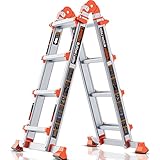
- REINFORCED AND THICKENED UPGRADE, More secure and reliable aluminum ladders, aluminum thickness of 2mm, is double the thickness of other Multi Position Ladders on the market, the weight therefore increased but will not affect its portability, more secure security escort to you
- PRACTICAL AND FLEXIBLE, Multi Position Ladder can be quickly converted into different types of ladders: extended A frame ladder, stair ladders, tall ladders, outdoor long ladders, Storable folding ladders, thus improving efficiency for different work needs
- BALANCE UPGRADE, With 2 Anti-slip balance bars, effectively strengthen the stability of the ladders, with sloping mesh design, more grip, more stable and solid than other Multi Position Ladder, and the soft pad will not wear the floor and walls
- DETAILS UPGRADE, The whole body of the ladder aluminum manufacturing, we use high-strength plastic components wrapped local metal, metal edge polishing and plastic protection, effectively prevent the use of being cut
- SAFETY CERTIFICATION, EN131 standards and ANSI standards. ISO9001 BSCI GS TUV facility certification. our reinforced thickened aluminum Multi Position Ladder easily load 300 pounds, experimental testing load up to 450KG, please pay attention to identify other inferior ladders, responsible for safety
Plan the whole job before anyone climbs
Safe access is more than reaching the work position. HSE and OSHA materials emphasize planning the complete operation, including the conditions before, during and after the task.
Prepare the work area
- Define the work zone and keep household members, visitors and tradespeople outside areas where tools or materials could fall.
- Secure or lower tools and materials so they cannot be knocked from a platform, ladder or roof.
- Keep access and exit routes clear. Do not block the only route needed to leave the building or summon help.
- Check that the selected equipment is in good condition, suitable for the task and used within its instructions.
Write a simple rescue plan
Decide who will call for help, how they will communicate, how emergency responders will reach the property and how an injured person could be brought to a safe place. A person working alone may be unable to make a call after a fall; the plan must account for that possibility. A personal fall-arrest system is incomplete without a prompt, realistic rescue arrangement.
Brief everyone involved
Explain the access route, exclusion zone, hand signals or communication method, stopping rules and who has authority to stop the work. Everyone should know not to move a ladder, platform or barrier while it is occupied. Reassess if the task, weather, surface condition, equipment or people below change; if the controls no longer match the job, stop.
Independent reader supportYour contribution helps us test, update, and keep practical guides available for everyone.Apply the framework to common home-improvement tasks
Cleaning high windows, soffits or gutters
First try an extendable tool from ground level. If visibility or control is inadequate, do not solve the problem by leaning a ladder farther sideways. A guarded platform may be appropriate for a job requiring repeated positions or both hands; a ladder may fit only a brief, low-force intervention that can be completed while maintaining secure contact.
Do these 3 things before closing this tab:
1Repair Windows errors before they cause bigger problems2Scan for outdated or missing drivers - takes under a minute3Clear out junk files and repair common Windows errorsPainting eaves or upper walls
Painting usually involves repeated movement, materials and time, which can make a ladder unsuitable even when the height seems modest. Prepare paint and tools at ground level, then consider a stable guarded platform that allows the work to be done without overreaching. Keep containers and tools from falling onto people below.
Best Value

- 🏗️【High-Strength Aluminum, Holds Up to 330 lb】Built with high-strength 6063 aluminum alloy with an oxidized surface, holds up to 330 lb. Resists wear, corrosion, rust, and aging. Reinforced nylon fiber in plastic parts enhances strength. Features 40 cm (15.7 inch) step spacing. Lightweight at only 35 lb.
- 🔗【Detachable Top Hooks & Non-Slip Feet for Secure Fixing】Equipped with 2 detachable hooks that securely grip roof edges, gutters, or wall tops — greatly increasing stability on attics, lofts, roofs, RVs, and trees. Non-slip bottom caps and angled feet protect your safety during use. For indoor use, simply turn the hooks toward you. Need more storage space? Remove the hooks in seconds.
- 🔒【Two Locks Per Rung, Prevents Pinching & Collapse】Each rung features two independent auto-locking mechanisms. You’ll hear a solid “click” when they lock — your clear signal that the ladder is secure. Helps prevent accidental collapse and pinching, while allowing flexible height adjustment.
- 🧳【Lightweight & Portable, Fits Anywhere】Lightweight at only 35 lb and folds down to just 19″×3.7″×42″. Includes storage straps and a carrying handle for easy transport. Toss it in your car trunk, slide it under your bed, or stand it in a closet corner. No more bulky ladders eating up your space.
- 🏠【One Ladder for Roof, Attic, and Job Site】From roof repairs and second-story window cleaning to warehouse shelving and RV roof access — this ladder reaches up to 20.3FT, going where others can‘t. Need something mid-height? Just extend the bottom few sections where you stand, no need to open it all the way.
Replacing a roof tile or repairing flashing
Do not treat this as a ladder-only task. The work involves roof access, an edge and potentially fragile coverings, as well as handling materials. If the roof cannot be positively assessed and protected, arrange a qualified roofing contractor rather than stepping onto it.
Inspecting or cleaning a rooflight
Assume a fall-through hazard. Look for a way to work from below or from a guarded platform designed for the location. Never stand on the rooflight, use it as a handhold or cover it with an improvised board and treat that as protection.
When professional help is the safer choice
HSE says work at height must be properly planned and carried out by competent people. For a homeowner, that means choosing a contractor who can demonstrate a method for safe access, fall prevention, equipment inspection, exclusion of people below and emergency rescue—not simply someone who owns a tall ladder.
- Roof access, roof edges or fragile surfaces are involved.
- The surface strength, roof construction or safe anchor points are unknown.
- The work is prolonged, strenuous, repetitive or requires substantial materials.
- A scaffold, guarded platform or mobile elevating work platform must be selected, erected or operated.
- Personal fall protection is proposed and requires engineered anchors, clearance calculations, training and rescue.
- You cannot maintain a safe access and exit route or keep others clear of falling objects.
Ask the contractor to identify the equipment, how it prevents a fall, how the work area will be controlled and what happens after an incident. Do not accept a harness, lanyard or anchor as a substitute for a complete method statement and rescue plan.
Understand the legal scope of the guidance
The HSE material cited here concerns UK workplace and construction safety. OSHA’s residential fall-protection material concerns US employers and residential construction; it states that the document does not create new legal obligations. OSHA identifies falls as the leading cause of death for workers engaged in residential construction, but that scope is workers and employers, not ordinary homeowner DIY.
Neither source establishes one universal legal rule for homeowners in every country or region. Local building, occupational-safety and consumer rules can differ, as can requirements for rented access equipment and contractors. Use the safety principles here alongside local requirements, the equipment manufacturer’s instructions and advice from a qualified professional. Do not infer that every roof task legally requires a contractor—or that a task is legal merely because a ladder can reach it.
Quick Recap
A practical stop/go workflow
- Describe the task: note the height, duration, frequency, effort, load and surface.
- Remove the climb: use an extendable tool, lower the item or change the design if possible.
- Select prevention: choose a guarded platform or another safe work area before considering personal protection.
- Check access: verify a stable route in and out, equipment condition and safe positioning.
- Control falling objects: establish an exclusion zone and secure tools and materials.
- Plan help and rescue: set communication, emergency access and recovery arrangements.
- Stop when conditions change: if the surface, equipment, task or people below no longer match the plan, descend and reassess.
- Escalate early: use a qualified contractor for roofs, fragile surfaces, prolonged or forceful work, or engineered fall-protection systems.
Product prices and availability are accurate as of the date/time indicated and are subject to change. Any price and availability information displayed on Amazon at the time of purchase will apply.

