Some links on this page are affiliate links: if you buy through them we may earn a commission, at no extra cost to you.
Winterize an in-ground sprinkler system before the first freeze that could freeze the soil or exposed plumbing—not on a fixed calendar date. Finish any final watering, shut off the irrigation water supply, drain the system, and use a properly regulated compressed-air blowout only if the system is designed for it. Pay special attention to backflow preventers, pumps, above-ground valves, and separate drip-irrigation zones.
Winterize an in-ground sprinkler system before the first freeze that could freeze the soil or exposed plumbing—not on a fixed calendar date. Finish any final watering, shut off the irrigation water supply, drain the system, and use a properly regulated compressed-air blowout only if the system is designed for it. Pay special attention to backflow preventers, pumps, above-ground valves, and separate drip-irrigation zones.
As an Amazon Associate I earn from qualifying purchases.
What’s actually slowing this PC down?
Pick the symptom - the matching free tool is one click away.
Water expands by roughly one-eleventh when it freezes. That expansion can split underground pipe, crack sprinkler bodies and fittings, damage valve assemblies, and rupture backflow devices, filters, regulators, pumps, and drip tubing. A controller set to Off or Rain does not remove water from the plumbing.
When to winterize your sprinkler system
Use your local forecast and soil conditions as the trigger. Winterize before the first freeze that could leave the ground frozen or expose water-filled components to sustained freezing temperatures. The correct date varies substantially by region: some colder areas commonly winterize in October, while milder regions may wait longer or need to respond to an unusual cold snap.
Popular on Amazon
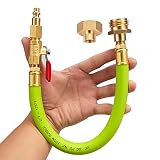
- Brass Material: Brass, for your health and safety, certified to contain less than 0.25% lead. Hose Material: EPDM Rubber, EXTRMELY durable, more excellent corrosion resistance
- Max Pressure rating: 300 PSI. Temperature ranging: -22℉ ~ +250℉. Hose Pipe Length: 12 inches (approximate)
- Adapter to easily winterize underground irrigation sprinkler systems, outdoor pipes, water lines, plumbing, homes, cabins, faucets, spigots, garden hoses, sillcocks, and hose bibbs by blow out method
- Flexible hose allows the adapter to access tight spaces and minimizes stress on pipes and fittings. Easily connects to air compressor and garden faucet to winterize lawn sprinkler systems, faucets, and plumbing to prevent damage due to freezing. Compatible with standard garden hose threading and air compressor quick-connect commonly found in North America
- If you are looking for a heavy duty tool that lasts a longtime, this one is for you. Always wear safety goggles when handling or using compressed air
Do not shut the system down too early if the landscape still needs water. Give the lawn or planting beds their final watering first, then begin winterization. Once you start draining or blowing out the system, do not continue normal irrigation.
What you need before starting
- The irrigation shutoff location and any separate shutoff for the backflow preventer
- The controller or timer instructions
- The system’s drain valves, low-point drains, and designated blowout connection, if present
- Eye protection and gloves
- A bucket or towels for draining accessible components
- Manufacturer instructions for the backflow preventer, pump, filters, and other specialized equipment
- A properly regulated air compressor with sufficient air volume, if compressed-air blowout is appropriate
If the system has no obvious blowout port, an unfamiliar backflow assembly, a pump, unusual elevation changes, unknown pipe material, or inaccessible components, hiring an irrigation professional is usually safer than improvising.
Do these 3 things before closing this tab:
1Repair Windows errors before they cause bigger problems2Scan for outdated or missing drivers - takes under a minute3Clear out junk files and repair common Windows errorsStep-by-step sprinkler winterization checklist
1. Water the landscape one last time
If the lawn or plants are dry, complete the final watering before shutting down. Do not leave an automatic schedule running while you are draining or blowing out the system.
2. Turn off the irrigation water supply
Close the dedicated irrigation main shutoff valve. This is different from turning off the controller. The controller only tells electric valves when to open; it does not isolate or empty the water supply.
If there is a separate shutoff around the backflow preventer, identify it but do not change its position until you understand the device’s winter procedure. Some backflow assemblies must be isolated and drained in a particular sequence.
3. Relieve water pressure
Before opening a manual drain or attaching compressed air, relieve pressure in the irrigation line. You may be able to open a zone manually through the controller or use the system’s specified pressure-relief procedure.
Pressurized drains and backflow components can release water, debris, or air unexpectedly. Open valves cautiously and stand clear of outlets.
4. Identify how the system drains
Most systems use one or a combination of these methods:
- Manual drains: drain valves are installed at low points and must be opened by hand.
- Automatic drains: the system discharges water when pressure falls, but automatic drainage may not empty every pocket.
- Compressed-air blowout: an air compressor pushes water out through each zone.
Electric zone valves and systems with elevation changes can retain water even when the main supply is shut off. A gravity drain is adequate only when the system was designed so that all vulnerable sections can actually drain.
Also popular on Amazon

- ALL-IN-ONE WINTERIZATION SOLUTION – Blow out adapter for sprinkler systems, outdoor faucets, RVs, campers, and travel trailers. Includes male-to-male fitting for RV use. Safer alternative to antifreeze
- UNIVERSAL QUICK-CONNECT COMPATIBILITY – ¾"-11 NH hose threads fit standard garden hoses. ¼" Industrial Interchange quick-connect plug works with common air compressor fittings in North America
- FLEXIBLE AND DURABLE CONSTRUCTION – Kink-free Insta-Grip hose (made in USA) accesses tight spaces and reduces stress on fittings. 250 PSI rated. 100% outdoor rated, impervious to water and oil
- LEAD-FREE BRASS WITH USA CRAFTSMANSHIP – All metal parts are solid lead-free brass (less than 0.25% lead). Made in USA with domestic and global parts. Includes sprinkler winterization instructions
- FORGED LEAD-FREE BRASS SHUT-OFF VALVE – Valve is forged brass (not cast) for added strength. Also suitable for winterizing boats, drip irrigation, soaker hoses, and various plumbing applications
5. Drain accessible low points and exposed plumbing
Open manual drains, low-point drains, drain caps, and other designated outlets. Drain exposed pipework and any pump casing or above-ground plumbing that can hold water. Allow sufficient time for water to stop flowing.
Free tools Windows power users keep installed
One-click scans. No signup required.
Some sprinkler heads contain check valves. If the system design requires it, lift those heads so water can escape from the sprinkler bodies. Do not remove components simply because they look like a drain; follow the installation or manufacturer instructions.
6. Protect the backflow preventer
The backflow preventer is often one of the most freeze-sensitive parts of an irrigation system because water can remain inside its body and internal passages. The correct procedure depends on the device, including whether it is a pressure-vacuum breaker or a reduced-pressure assembly.
Depending on the installation, winterization may involve isolating the device, opening test cocks or drain points, loosening specified plugs, or removing the assembly. Use the manufacturer’s instructions or have an irrigation professional perform the work.
Insulation is not a substitute for draining. If you use outdoor pipe insulation or insulation tape on exposed pipe and valves, never cover a backflow preventer’s air vents, test cocks, or drain outlets. A sealed covering can prevent drainage and create the very freeze risk it is meant to reduce.
7. Winterize pumps and other equipment
If the irrigation system has a pump, turn off its electrical power before servicing it. Drain the pump casing and exposed pump plumbing according to the pump manufacturer’s instructions.
Larger or agricultural systems may also require separate attention to tanks, booster pumps, filters, flow meters, manifolds, and other above-ground equipment. A lawn-zone blowout does not automatically protect these components.
8. Shut down the controller
After the water has been drained or the zones have been blown out, set the controller to Off, Rain, or the manufacturer’s Winter mode.
Rain mode usually preserves the programmed schedule while preventing the valves from opening. If the controller operates a pump, follow the manufacturer’s directions for disabling the master valve or common control so the pump cannot start accidentally. Disconnect power only when the controller’s instructions call for it.
9. Secure and label the system
Close the controller enclosure, secure exposed access covers, and label the irrigation shutoff and drain valves. Leave drains, test cocks, and valves in the manufacturer-recommended winter position. Insulate appropriate exposed pipe sections without blocking vents or outlets.
Also popular on Amazon
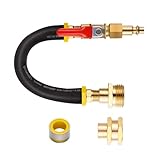
- MULTIPURPOSE:The winterizing kit with shut off valve come with 3/4 male and female garden hose connector,When with male garden hose end is typically used to winterize recreational vehicles(RV), watercraft, garden hose, camper, boat and travel trailer. The fitting with female garden hose end is typically used to winterize sprinkler systems, garden hoses, and outdoor plumbing.
- FLEXIBLE hose allows the adapter to access tight spaces and minimizes stress on pipes and fittings. 100% outdoor rated, virtually indestructible, impervious to water and oil. Easily connects to air compressor and garden faucet to winterize lawn sprinkler systems, faucets,plumbing and winterizing RV to prevent damage due to freezing. Compatible with standard garden hose threading and air compressor quick-connect commonly found in North America.
- LENGTH:The sprinkler blowout kit Pre-assembled length: 12.8 inches (approximate). Longer length than other manufacture,provide extra strength and durability.Easy to do winterize,Blowout water from sprinkler system & RV water line.
- STRONGER:This winterization tool is made from the highest quality parts.All matel parts are solid lead-free brass.Hose is 3/8" nominal diameter InstaGrip,Flexible Reinforced Synthetic Rubber, water and oil resistant, made in USA. Assembled with global parts.
- PROTECTION: Using these sprinkler winterization kit can avoid expensive damage caused by waterline freezing, and save yours headache in the spring.healthier, and environmentally friendlier winterization tool when compared with those winterizing kits that use antifreeze.
Choosing between draining and compressed-air blowout
The right method depends on the system’s design, climate, pipe material, valves, and equipment. Do not assume that one method is safe for every sprinkler system.
Manual drains
Manual draining can work when the installer provided drains at all necessary low points and confirmed that they empty every vulnerable section. The general sequence is to shut off the water, relieve pressure, open the manual drains, and drain the section between the irrigation shutoff and backflow device as required.
Manual drains are not automatically sufficient just because water comes out of one valve. Water can remain above valve diaphragms, inside sprinkler bodies with check valves, or in low spots that are not connected to a drain.
Automatic drains
Automatic drains may discharge water whenever the system pressure falls after the supply is shut off. Inspect the system for unusual puddling, a stuck drain, or sections that remain full. Automatic drainage is not proof that every zone and component is empty, especially in systems with complex layouts or specialized equipment.
Compressed-air blowout
A blowout is commonly preferred in cold climates and in systems with electric zone valves, but it is not simply a matter of connecting any compressor to a pipe. Air volume matters as much as pressure. A small compressor may reach a high headline PSI yet lack the cubic feet per minute needed to move water through a full irrigation zone.
General guidance sometimes places irrigation blowout pressure in the range of 40–80 PSI, with lower limits for flexible polyethylene pipe. One manufacturer’s homeowner procedure specifies regulating the compressor to 50 PSI and limiting each zone to no more than two minutes. These numbers are not universal settings. The irrigation manufacturer’s instructions, pipe material, sprinkler-head rating, fittings, and professional advice take priority.
Safe high-level blowout sequence
- Close the irrigation main shutoff and relieve water pressure.
- Confirm that the compressor connection is the system’s designated blowout port.
- Attach the hose through a correctly sized sprinkler system blowout adapter. Match the adapter to the system’s thread and quick-connect sizes; an adapter does not make an incompatible connection safe.
- Open one zone before starting the compressor. Keep that zone open while air is being introduced.
- Regulate pressure instead of relying on the compressor’s unrestricted output.
- Blow out one zone at a time. Repeat short cycles only as needed until the discharge changes from water to a fine mist.
- Do not run a zone continuously for more than about two minutes unless the system manufacturer specifically directs otherwise.
- Stop the compressor, let pressure dissipate, and disconnect the hose only after the system is no longer pressurized.
- Set the controller to Off or the appropriate winter mode.
Wear eye protection and never stand over a sprinkler head, valve, pipe, or other irrigation component while compressed air is flowing. Flying debris and pressurized fittings can cause serious injuries.
Outdated Drivers Are Slowing You Down
One free scan finds every outdated or missing driver and matches the right update for your exact hardware.Free scan · exact hardware matchPC Slower Than It Used to Be?
A free scan shows the junk files, broken settings and background clutter dragging Windows down - then fixes them in one click.Free scan · Windows 10 & 11Do not start the compressor with every zone closed. Do not blow several zones at once unless the documented system procedure and compressor capacity specifically support it. Excessive pressure, air velocity, or heat can damage plastic components.
How to winterize outdoor drip irrigation
Do not assume that blowing out lawn sprinklers winterizes a separate drip zone. Drip tubing, emitters, filters, pressure regulators, timers, and fittings can hold water and may freeze even where the lawn system appears empty.
Also popular on Amazon

- Blow out plug adapter fitting to winterize underground irrigation sprinkler systems, outdoor pipes, RV, boat, watercraft, motorhome, camper, travel trailer, water lines, homes, cabins, faucets, spigots, garden hoses, sillcocks, and hose bibbs by blow out method.
- Its short and stubby design allows access to tight spaces. Quick-connect attaches to air compressor. Compatible with standard 3/4 inch garden hose threading and air compressor 1/4 inch quick-connect commonly found in North America
- For your health and safety, this sprinkler winterizer is made of lead-free brass. Always wear safety goggles when handling or using compressed air
- Easily connects to air compressor and garden faucet to winterize lawn sprinkler systems, drip irrigation system, soaker hoses, faucets, and plumbing to prevent damage due to freezing
- This heavy duty winterization tool is machined from a solid lead-free brass casting. This blow out plug may also be used to winterize sprinkler systems, drip irrigation systems, soaker hoses, faucets, pipes, spigots, sillcocks, water garden hoses, waterlines, and hose bibbs where applicable
- Shut off the drip system’s water source.
- Open flush caps or remove end caps at low points.
- Encourage water toward the drains and allow enough time for the tubing to empty.
- Disconnect, drain, clean, and store removable filters, pressure regulators, timers, backflow components, and above-ground tubing indoors where practical.
- Inspect emitters, fittings, and thin tubing for trapped water or damage.
- Replace end caps loosely when the system design calls for room for residual water to expand; do not force a sealed configuration that traps water.
If inspection finds a cracked filter or regulator, use compatible drip irrigation filter or pressure regulator replacement parts rather than assuming a lawn-sprinkler component is interchangeable.
What not to do
- Do not rely on the controller’s Off setting. It prevents scheduled operation but does not drain the pipes.
- Do not start the compressor with every zone closed. Trapped pressure can damage the system.
- Do not exceed the pressure allowed for the pipe, fittings, sprinkler heads, and valves.
- Do not stand above a sprinkler head or valve during blowout.
- Do not blow multiple zones simultaneously unless the system documentation and compressor capacity specifically allow it.
- Do not cover backflow vents or drain outlets with insulation.
- Do not treat fine mist as absolute proof of safety. Pumps, drip zones, check valves, inaccessible low points, and unusual elevations need separate inspection.
When to hire an irrigation professional
Arrange professional sprinkler winterization when any of these conditions apply:
The Tool Desk
Outbyte Driver Updater FREEFix the driver behind crashes, sound loss and screen glitchesFind Drivers →Outbyte PC Repair FREERepair Windows errors before they cause bigger problemsFix Now →- There is no obvious or documented blowout port.
- You cannot identify the backflow preventer type or its drain procedure.
- The system has a pump, booster pump, tank, complex manifold, or extensive above-ground equipment.
- Pipe material, pressure limits, or zone flow requirements are unknown.
- Your compressor is undersized or lacks a reliable regulator.
- You cannot remain safely clear of pressurized components.
- The system includes separate drip irrigation, unusual elevations, or components that cannot be drained and inspected.
Professional service is particularly sensible when the cost of a damaged backflow preventer, pump, or buried pipe would exceed the cost of a correctly performed seasonal shutdown. Verify that the provider is qualified for irrigation systems and available in your area before booking.
Spring restart: do not skip the inspection
Winterization protects the system but does not confirm that it survived the season. In spring:
- Inspect exposed pipe, valves, the backflow preventer, pump, filters, and regulators for cracks or splits.
- Open the water supply slowly.
- Check for leaks before pressurizing the system fully.
- Run one zone at a time and inspect sprinkler heads, fittings, valve boxes, and low areas.
- Confirm that the backflow preventer is reassembled and operating correctly.
- Restore controller programming only after the system passes the inspection.
Starting zones individually makes it easier to hear leaks, spot broken heads, and avoid flooding an area before you know the system is sound.
Frequently Asked Questions
Does turning my sprinkler controller to Off winterize the system?
No. Setting the controller to Off, Rain, or Winter mode stops scheduled valve operation, but it does not remove water from pipes, valves, sprinkler bodies, backflow preventers, or drip components. The water supply must be shut off and the system drained or blown out using the correct procedure.
Quick wins for a faster PC:
Clear out junk files and repair common Windows errorsFree Scan →Scan for outdated or missing drivers - takes under a minuteDriver Scan →Are automatic sprinkler drains enough for winterization?
Not necessarily. An automatic-drain system may still retain water in low spots, above electric valve diaphragms, inside check-valve sprinkler heads, or in separate equipment such as pumps and drip filters. Inspect and drain the system according to its design.
Can I winterize my sprinkler system with any air compressor?
Only if the system has a suitable blowout port and you know the pressure limits, pipe material, zone requirements, and backflow procedure. Air volume matters as much as PSI, and an undersized compressor may be ineffective. When those details are unknown, hire an irrigation professional.
Does blowing out the lawn zones winterize drip irrigation too?
No. A lawn-sprinkler blowout does not automatically empty separate drip tubing, filters, pressure regulators, emitters, timers, or above-ground tubing. Drain and disconnect those components using their own winterization procedure.
The Bottom Line
Winterize before the first damaging freeze by shutting off and depressurizing the irrigation supply, draining every accessible low point, protecting or draining the backflow preventer and pump, and blowing out compatible zones only with regulated pressure and sufficient air volume. If the system or equipment is unfamiliar, professional winterization is the safer choice.
Recommended Free Tools
Quick Recap
Product prices and availability are accurate as of the date/time indicated and are subject to change. Any price and availability information displayed on Amazon at the time of purchase will apply.

