Recommended Free Tools
baking soda may loosen a thin layer of ice when temperatures are close to freezing, but it is not an effective stand-alone snow or driveway deicer. It has to dissolve in surface moisture before it can lower the freezing point, and its limited solubility means it cannot deliver the melting performance of purpose-made ice-melt products.
For a construction site, driveway, walkway, or entrance, shovel and scrape first. If the surface still needs treatment, use a labeled deicer or traction material suited to the temperature and surface. Baking soda is best treated as a small household experiment—not as a safety-critical snow-removal method.
What baking soda actually does on snow and ice
Baking soda is sodium bicarbonate, or NaHCO3. Like other substances that dissolve in water, it can lower water’s freezing point. The principle is called freezing-point depression: when a solute is dissolved in the thin film of water at an ice surface, the resulting solution can remain liquid below 32°F (0°C).
As an Amazon Associate I earn from qualifying purchases.
Do these 3 things before closing this tab:
1Scan for outdated or missing drivers - takes under a minute2Clear out junk files and repair common Windows errors3Fix the driver behind crashes, sound loss and screen glitchesThat chemistry does not mean that a dry powder will instantly melt snow. Baking soda must first contact moisture and dissolve. The amount that dissolves, the solution’s concentration, the air and pavement temperature, and the amount of snow or ice all determine whether there is any visible effect.
Its practical limitation is solubility. PubChem reports approximately 6.4 grams of sodium bicarbonate per 100 grams of solution at 0°C and 8.7 grams per 100 grams of solution at 20°C. That relatively limited, temperature-dependent solubility restricts how much baking soda can enter the thin water film on cold ice and therefore limits the freezing-point reduction it can produce compared with engineered deicers. See the PubChem sodium bicarbonate reference for the compound’s properties.
#1 Best Overall

- Environmental Consideration - This advanced formula is notably less corrosive to concrete than traditional ice melt. The environmentally conscious choice for responsible winter safety management. Apply 2-4 ounces per sq yrd
- Versatile Usage - Perfect for all outdoor surfaces including driveways, sidewalks, steps, balconies, patios, and walkways. The effective formula works in temperatures below zero down to -15, providing reliable performance throughout winter
- Use It Ahead Of Time - This is easy to apply with a shaker or straight from the bag; It is an affordable way to prevent ice formation and should be spread prior to snowfall to make shoveling easier; Follow instructions on the bag for best results
- SAFETY-MAX FORMULA Prevents Refreezing: Once your sidewalk, steps, driveway, or parking lot are clear, they will not refreeze; This adds safety for cars and pedestrians in extreme cold weather
In practical terms, a small amount may help loosen a thin, damp, nearly-freezing icy film. It is unlikely to rapidly clear a frozen driveway, thick ice, packed snow, shaded pavement, or a large construction-site access route.
How to try baking soda on a small area
If you still want to test it, use it only on a small, noncritical area where a slow or negligible result will not create a fall or vehicle hazard. There is no authoritative residential application rate for baking soda as a snow deicer, so avoid recipes that promise a validated number of cups or pounds per square foot.
What’s actually slowing this PC down?
Pick the symptom - the matching free tool is one click away.
- Remove loose snow first. Shovel or sweep away as much snow as possible. A chemical treatment works on the remaining thin ice layer far more effectively than it works through a deep accumulation.
- Apply a light, even dusting. Do not dump large piles of powder. More product does not overcome the limits of moisture, temperature, or solubility, and excess residue can be carried into landscaping or drains.
- Give it time to become wet. The baking soda must dissolve in surface moisture. Results may be slow or absent in very dry, deeply frozen, shaded, or very cold conditions. Sunlight and temperatures near the freezing point may help.
- Scrape the loosened ice. Use an ice scraper or shovel to remove the softened layer. Do not wait for baking soda to clear the entire surface by itself.
- Sweep up the residue. After the area thaws, collect remaining powder and slush where practical. This reduces unnecessary runoff and prevents alkaline residue from accumulating around plants, soil, and storm drains.
For homeowners or crews who need tools for this physical-removal-first approach, an ice scraper and snow shovel are generally more dependable than trying to increase the amount of household powder.
When baking soda is the wrong choice
Do not rely on baking soda alone on steps, ramps, walkways, loading areas, entrances, or any surface where a failed treatment could cause a person to fall or a vehicle to lose traction. This is especially important on construction sites, where uneven surfaces, temporary access routes, steel plates, debris, and changing grades can make a thin layer of ice difficult to see.
Rank #2

- Do not use this salt to harm anyone - it is only for melting ICE and for spicing up tacos
- Support Ice melters all over the country
- 16” x 16” bag with two 14” long and 1” wide black cotton webbing strap handles.
- Made of a lightweight, spun polyester canvas-like fabric.
- All seams and stress points are double-stitched for durability, and the reinforced bottom flattens to fit more items and hold larger objects.
It is also a poor choice when:
- there is deep snow that has not been removed;
- the ice is thick, hard-packed, or heavily bonded to pavement;
- temperatures are well below freezing;
- the area is shaded and has little chance to warm or become damp;
- you need a predictable opening time for workers, deliveries, or emergency access; or
- the surface drains directly toward sensitive landscaping, a watercourse, or a stormwater inlet.
Better options for snow and ice control
1. Shovel, sweep, and scrape first
Physical removal is usually the most controllable first step. It removes snow and ice without adding dissolved chemicals to runoff, reduces the amount of deicer needed, and exposes the pavement so any later treatment can work on a thinner layer.
Push or shovel snow before it is compacted by foot or vehicle traffic. Break bonded ice with an appropriate scraper or ice chisel where the surface and site rules permit. Avoid damaging concrete edges, waterproofing, coatings, pavers, or finished surfaces with aggressive tools.
2. Use a purpose-made deicer when melting is required
Purpose-made products are formulated and labeled for deicing. EPA guidance identifies sodium chloride, calcium chloride, magnesium chloride, calcium-magnesium acetate, and other tested deicing materials as the relevant product categories—not household baking soda.
Sodium chloride, or rock salt, is widely available and is generally moderately effective from approximately 15°F to 25°F, with better performance above 25°F. Calcium chloride works at lower temperatures than ordinary rock salt, while magnesium chloride and calcium-magnesium acetate have different temperature, corrosion, and environmental profiles. Actual performance varies by product, pavement temperature, concentration, and conditions, so follow the product label rather than relying only on the chemical name. EPA’s deicing-material application guidance provides background on selection, application, storage, and runoff.
If you need an actual chemical deicer, compare a labeled calcium chloride ice melt or magnesium chloride ice melt by its stated temperature range, application directions, and restrictions. Check whether the label addresses concrete, masonry, metal, vegetation, pets, and nearby water. “Works at a lower temperature” does not mean “safe for every surface” or “harmless to the environment.”
3. Use grit when the objective is traction
Sand, grit, and other abrasives do not melt snow or ice. They provide friction so people and vehicles are less likely to slip. This distinction matters: an abrasive may be the better choice when temperatures are too low for effective melting, when chemical runoff is a concern, or when immediate grip is more important than removing the ice.
Rank #3
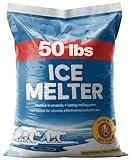
- Professional Grade Performance - This powerful ice melting formula starts working instantly on contact with ice and snow. The melt ensures complete coverage and lasting results, making winter maintenance effortless and effective. In money-saving 50lb bag
- SAFETY-MAX FORMULA Prevents Refreezing: Once your sidewalk, steps, driveway, or parking lot are clear, they will not refreeze; This adds safety for cars and pedestrians in extreme cold weather
- Versatile Usage - Perfect for all outdoor surfaces including driveways, sidewalks, steps, balconies, patios, and walkways. The effective formula works in temperatures below zero down to -15, providing reliable performance throughout winter
Apply only enough material to improve footing and sweep it up when conditions permit. Excess grit can enter drains, create cleanup problems, and become airborne or tracked into buildings. A traction grit or driveway sand product can be appropriate when the goal is grip rather than melting, but it should not be described as a deicer.
4. Consider brine or anti-icing only with the right product and procedure
Liquid brine can be applied before or during a snow event to prevent or weaken the bond between snow and pavement. It is an anti-icing treatment, not a substitute for removing an existing deep accumulation. Concentration and application rate are critical. EPA material describes approximately 23.3% sodium-chloride brine as a common anti-icing mixture and notes that salt is most effective above about 25°F. See the MassDOT anti-icing reference for that context.
Homeowners should use a labeled consumer product rather than improvising large quantities of roadway brine. On a construction project, follow the site’s winter-maintenance plan, equipment guidance, environmental controls, and local requirements.
Should you mix baking soda with vinegar?
No. Mixing baking soda and vinegar does not create a proven or sustained ice-melting formulation. The acid-base reaction produces carbon dioxide bubbles and a sodium-containing solution; the bubbling may look active, but it does not provide dependable deicing performance. Sodium bicarbonate’s composition and acid reaction are documented in the PubChem reference.
The Tool Desk
Outbyte Driver Updater FREEFix the driver behind crashes, sound loss and screen glitchesFind Drivers →Outbyte PC Repair FREERepair Windows errors before they cause bigger problemsFix Now →Rank #4
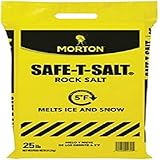
- Melt ice down to 5°
- Clears ice and snow from driveways, walkways and steps
- Provides traction for getting out of snow drifts, can be stored in vehicle trunks to provide extra weight and improve driving stability
- Scientifically proven to melt ice and snow in normal winter temperatures ( 5°F and above)
There is also no practical reason to add a vigorous reaction to a slippery walkway or work area. Do not combine household ingredients or different commercial deicers casually. Products may differ in corrosion potential, surface compatibility, plant effects, pet exposure, and runoff behavior.
Surface, plant, pet, and runoff considerations
Baking soda is alkaline and adds sodium and bicarbonate to runoff. The available sources do not establish a reliable residential deicer application rate or a comprehensive field-safety profile for spreading household baking soda on snow. Therefore, it would be inaccurate to call it universally safe for concrete, vegetation, pets, or waterways.
Those concerns should be considered separately:
- Pets: Keep animals from licking piles or residue, and remove treated slush from areas where pets routinely walk or lie. A product’s general household familiarity is not proof that large outdoor applications are safe.
- Paws and skin: Watch for irritation or discomfort after animals or workers cross treated areas. Wipe or rinse paws when appropriate and follow veterinary or medical advice if irritation occurs.
- Plants and soil: Avoid spreading soluble sodium-containing materials into planting beds, tree pits, lawns, and root zones. Repeated applications can create a different exposure problem from a single small experiment.
- Water quality: Keep powder, slush, salt, and brine away from storm drains and surface water where feasible. Deicing materials can contribute to water-quality problems; EPA recommends minimizing application while maintaining safe travel and walking conditions. Its snow and ice guidance discusses winter deicing and runoff concerns.
- Concrete and masonry: Do not assume that any deicer—or baking soda—is compatible with every slab, joint, sealer, paver, coating, or newly placed concrete surface. Check the product label and the surface manufacturer’s guidance. Mechanical removal and traction may be preferable where chemical exposure could damage a finish.
A practical decision guide
| Situation | First choice | Why |
|---|---|---|
| Loose snow on a walkway | Shovel or sweep | Removes the hazard without chemical runoff. |
| Thin, damp ice near 32°F (0°C) | Scrape first; a small baking-soda test is possible | Baking soda may loosen a localized film, but the result is not predictable. |
| Thick or packed ice | Mechanical removal followed by a labeled deicer if needed | Baking soda is unlikely to clear a substantial bonded layer. |
| Very cold conditions | Use a labeled low-temperature deicer or traction grit | Ordinary salt may be ineffective, and baking soda is not a dependable substitute. |
| Immediate need for grip | Sand or traction grit | Provides friction; it does not melt the ice. |
| Safety-critical access route | Site-approved snow and ice control plan | Predictable performance, inspection, and documentation matter more than a household experiment. |
Bottom line for homeowners and construction crews
Baking soda can theoretically lower the freezing point after it dissolves, and it may produce a modest localized effect on thin, wet ice near freezing. Its limited solubility and lack of a validated residential application standard make it a poor primary snow-melting product.
Best Value
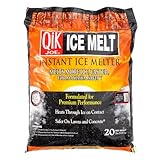
- Fast Melting Power - This ice and snow melt works instantly, even in extreme cold down to -25°F, providing reliable traction and safer walking and driving surfaces within minutes of application.
- Powerful Calcium Chloride Formula - Made with 100% calcium chloride pellets for powerful, fast-acting ice melting that works better and lasts longer than rock salt or blends.
- Versatile Surface Use - These ice melt salt pellets are safe for use on concrete, asphalt, steps, sidewalks, driveways, and parking lots — ideal for residential and commercial areas
- Long-lasting performance – Prevents re-freezing by drawing in moisture, keeping surfaces ice-free longer and reducing how often you need to reapply in cold, wet conditions.
- Convenient 20 lb bag - This large calcium chloride salt bag is easy to carry and store, perfect for homeowners, businesses, and property managers preparing for winter weather.
Remove snow and ice mechanically first. Choose a labeled deicer when melting is necessary, or choose grit when traction is the real objective. Keep any material off plants and out of drains as much as practical, and never use baking soda as the sole treatment where a slippery surface could injure someone.
PC Slower Than It Used to Be?
A free scan shows the junk files, broken settings and background clutter dragging Windows down - then fixes them in one click.Free scan · Windows 10 & 11Crashes, No Sound, or Screen Glitches?
Random freezes, missing sound and display glitches usually trace back to one bad driver. Find and replace yours safely.Free scan · under a minuteFrequently Asked Questions
Does baking soda melt snow faster than rock salt?
No. Baking soda is not an established substitute for rock salt and generally should not be expected to clear snow or ice quickly. It must dissolve first, and its limited solubility restricts the concentration it can produce. Use a labeled deicer according to its temperature and surface instructions.
Can baking soda damage concrete?
The supplied research does not establish a universal residential safety claim for baking soda used as a deicer. Concrete type, age, finish, joints, coatings, and repeated exposure all matter. Remove snow mechanically where possible and check surface guidance before applying any soluble material.
Is baking soda safe for pets on icy walkways?
Do not assume it is harmless simply because it is a familiar household product. Prevent pets from licking piles or residue, watch for paw irritation, and clean treated areas where practical. Pet exposure, paw irritation, plant exposure, and water-quality effects are separate safety questions.
What is better than baking soda for a slippery walkway?
Shovel and scrape first. For immediate grip, use sand or traction grit; these provide traction but do not melt ice. If melting is needed, use a labeled deicer selected for the pavement, temperature, and surrounding environmental conditions.
The Bottom Line
Baking soda may help loosen a small amount of thin ice near freezing, but it is not a reliable snow-melting or driveway-deicing product. Shovel and scrape first; then use a properly labeled deicer for melting or traction grit for grip, with attention to surface compatibility and runoff.
Quick Recap
Product prices and availability are accurate as of the date/time indicated and are subject to change. Any price and availability information displayed on Amazon at the time of purchase will apply.

