Free tools Windows power users keep installed
One-click scans. No signup required.
Some links on this page are affiliate links: if you buy through them we may earn a commission, at no extra cost to you.
Start with a sink plunger—not a chemical drain opener. For most single-sink clogs, remove visible debris, seal any second basin, and plunge. If that fails, try a cautious hot tap-water flush; reserve baking soda and white vinegar for a light clog or slow drain. A stubborn blockage usually calls for cleaning the P-trap or using a hand auger.
The safest order is mechanical first: remove visible debris, plunge the sink, try a cautious hot-water flush, and use baking soda and white vinegar only for a light clog or slow drain. If those steps fail, clean the P-trap or use a small hand auger. These methods can clear many kitchen-sink blockages, but no homemade mixture reliably dissolves every clog.
Before you start: important safety precautions
- Wear rubber gloves. eye protection is sensible when plunging or snaking because standing water and debris can splash.
- Never combine a commercial drain opener with baking soda, vinegar, bleach, ammonia, or another cleaning product. If chemical drain cleaner has already gone down the sink, do not plunge, remove the trap, or snake the drain until the product label—and, where appropriate, a qualified professional—establishes that it is safe. Residual caustic liquid can splash.
- Use hot tap water as the conservative general-purpose option. Boiling water can soften or damage some PVC plumbing and should not be used in a garbage-disposal drain unless the plumbing and appliance manufacturer specifically approves it. Drano’s guidance specifically warns about boiling water in PVC pipes and garbage-disposal drains.
- If a garbage disposal is involved, turn it off and unplug it before inspecting or servicing it. Never put your hands into the disposal.
Quick diagnosis: which method should you use?
| What you notice | Best starting point |
|---|---|
| The sink drains slowly, but water still moves | Plunge first; then try a hot-water flush or the baking-soda-and-vinegar method. |
| Water is completely standing in one basin | Remove visible debris and plunge with a sealed drain opening. |
| A double-bowl sink backs up into the other basin | Seal the second basin firmly before plunging. |
| The sink stopped draining after greasy food or soft scraps went down | Plunge, followed by a cautious hot tap-water flush. |
| The clog returns, or plunging does nothing | Clean the P-trap or use a hand auger. |
| Several fixtures are slow or backed up | Stop DIY work and contact a licensed plumber; the blockage may be farther down the branch line or main drain. |
1. Plunge the sink
Plunging is usually the best first method for a partial or nearby kitchen-sink blockage. It uses pressure to move the obstruction without introducing caustic chemicals into the plumbing. The EPA identifies a plunger or plumber’s snake as a safer alternative to chemical drain cleaner. (EPA guidance)
Quick wins for a faster PC:
Fix the driver behind crashes, sound loss and screen glitchesFind Drivers →Clear out junk files and repair common Windows errorsFree Scan →Scan for outdated or missing drivers - takes under a minuteDriver Scan →As an Amazon Associate I earn from qualifying purchases.
What you need
- A flat-bottomed cup or sink plunger, not a toilet plunger with a projecting flange
- rubber gloves and, preferably, eye protection
- A rag or sink stopper for sealing a second basin or overflow opening
A flat-bottomed sink plunger is the right shape for creating a seal over a kitchen drain. Choose a product designed for sinks rather than assuming a toilet flange plunger will seal correctly.
How to plunge a kitchen sink
- Remove the stopper, strainer basket, and any visible food or debris. Do not reach into a garbage disposal; use tongs or another safe method only when the unit is switched off and unplugged.
- If there is not enough water in the basin to cover the plunger cup, add a small amount. The water helps transmit pressure.
- On a double sink, seal the other drain completely with a stopper or wet rag. Without this seal, pressure escapes into the second bowl instead of reaching the clog.
- Place the plunger squarely over the drain and press down gently at first to remove trapped air and establish a seal.
- Pump rapidly for several strokes while keeping the cup sealed. Avoid violent force that could damage an old or loose connection.
- Lift the plunger and check whether the water begins to move. If it does, run water gradually to confirm that the drain is clearing.
Try several careful cycles rather than repeatedly forcing pressure after no improvement. If the sink remains blocked, move to the P-trap or a hand auger instead of escalating to a chemical opener.
2. Flush with hot tap water
Hot water can help soften and carry away a fresh grease film or soft food residue. It is less useful against a solid object, compacted food, or a blockage located well beyond the trap.
Popular on Amazon
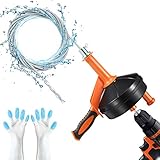
- Professional: This professional plumbers snake comes complete with 25 ft Steel, more than enough for most household clog, keeping your drains flowing smoothly. In addition, the pipe snake comes with a pair of gloves, which help to keep your hands clean and safe. What's more the springs can be stored in the drum to keep it tidy than conventional drain cleaner.
- Easy to Use: The sewer snake spring is both flexible and tough to enable you to easily take tight bends, and the large crank knob and grip handle makes it easy to use, our drain snake with drill attachment could Use Manually or Powered(not included drill), which help to remove the blockages more convenient and effective. (NOTE: Need to pull the spring out or feed it back by hand. For sticky and hard clog, please pour in liquid clog remover to loose the blockage before operate the drain auger which will help a better dredging.)
- Multiple Uses for Tackling Clogs: This snake drain clog remover is professional using for various drains such as kitchen, bathroom, utility sinks, bathtubs, and shower drains, sewer and floor drains. The drain clog hair remover is equipped with special tips for clearing downspouts and even central vacuum lines. (NOTE: For pipe diameter from 1/2" to 3". Not for clog for toilets)
- Premium Quality: The sink drain clog remover is made of high-impact ABS drum housing for long-lasting durability. The springs are made of high-quality 72A Mn-steel, our shower drain clog remover also offers an upgraded metal mouth to reduce wear, an easy to use stop screw to secure the cable in place.
- Life Time Support: Suggest to unblock the drain 2-3 month/time to keep it clean. It is better than to spending over hundreds of dollars in liquid drain removals or calling a plumber every time when you meet a clogged drain in your house. This drain cleaner tool is reusable and saving your money and time.
- Remove as much standing water as practical so the flush is not immediately diluted.
- Run or pour hot tap water into the drain gradually. Do not dump a full kettle into a completely blocked sink.
- Pause between additions and watch whether the water level falls.
- Once the drain moves, continue with a moderate flow for a short time, checking underneath the sink for leaks.
Boiling-water advice varies with the plumbing and appliance. Because PVC and garbage-disposal drains may be damaged by very high temperatures, hot tap water is the safer default unless the pipe and appliance manufacturers explicitly permit boiling water. Do not treat heat as a universal clog remover.
3. Try baking soda and white vinegar for a light clog
This is appropriate for a lightly clogged or slow drain when no commercial drain opener has been used. The reaction may loosen residue and reduce odor, but the fizzing is not dependable mechanical removal of a serious blockage. EPA’s Safer Choice program notes that homemade cleaners generally do not perform as well as specially formulated commercial products. (EPA Safer Choice)
Steps
- Remove standing water if possible.
- Pour approximately 1/2 cup of baking soda into the drain.
- Follow with approximately 1/2 cup of white vinegar.
- Cover the drain opening so the reaction is directed into the pipe rather than bubbling back into the sink.
- Let it sit for about 15 to 30 minutes.
- Rinse cautiously with warm water, then test the drain.
EPA publishes a version of this household approach, but it should be viewed as a low-chemical experiment for minor residue—not a guarantee. Never mix vinegar with bleach, ammonia, a commercial drain opener, or any other cleaning product.
4. Clean the P-trap or use a hand auger
Use this method when plunging and gentle flushing fail, or when the blockage is likely inside the curved P-trap or immediately beyond it. The P-trap is the curved section of pipe beneath the sink and a common place for food residue and sludge to collect.
Also popular on Amazon

- 【Efficient Auto-feed Function】Drain auger has the function of the semi-automatic forward and backward control of the drain cord. With a flexible air-activated footswitch, drain cleaner machine allows professional plumbers to carry out intensive unblocking jobs efficiently. The rocker switch makes it easy to change the cable's rotation direction. In addition, for those who are used to left-handed use, we have innovated a double switch control by switching the rocker to the left socket
- 【50Ft Premium Steel Core Cable】The 50ft cable is made of high quality steel mn65, and designed to resist breakage, tangling, kinking, corrosion and toughness. It can ensure easy navigation through complex curved pipes. The sewer drain auger easily enters and exits the downspout through multiple 90 degrees.
- 【Economical Versatile Cleaner】 This electric drain cleaning machine can quickly pass through complex pipes and clean drains from 2 to 3 inches in diameter. Designed for commercial or residential applications, this versatile cleaner can be used for sinks, showers, and outdoor drains. To ensure safety, it has a built-in GFCI to protect the operator from electric shock
- 【6 Interchangeable Cutters & After-service】The electric drain auger features 6 different alternative cutters for you : Drop Head Auger, Boring Bulb Cutter, C-Cutter, Side Cutter, Spade cutter, Saw Tooth Cutter, which makes the clog remover versatile.We have added a pair of gloves. Simplify trouble maintenance and eliminate bad smell—ideal for home, properties, and restaurant. We offer you a 2 year warranty, please contact us in the first instance if you have any questions
- 【Durable & Convenient Design】Closed cable drum allows the machine to remain clean and the cable to be less likely to run out and become tangled. In addition, soft rubber is added to the handrail to make the transfer more convenient. Its ergonomic handle provides a comfortable grip, making it ideal for both professionals and DIY enthusiasts tackling plumbing tasks
Clean the P-trap
You will need a bucket, gloves, and possibly slip-joint pliers. Plastic slip nuts are often hand-tight, so do not apply excessive force.
- Put a bucket beneath the curved trap. Keep towels nearby; water and debris will come out when the connection is opened.
- Loosen the slip nuts at both ends of the curved section and remove the trap.
- Empty and clean the trap. Inspect the washers for damage or distortion.
- Look into the exposed pipe and sink tailpiece for additional debris, but do not push material farther into the wall.
- Reinstall the trap and washers in their original positions. Tighten plastic fittings firmly by hand without overtightening.
- Run water slowly and check every connection for leaks. Tighten slightly if necessary.
Home Depot’s kitchen-sink unclogging guidance also recommends placing a bucket beneath the trap before removal.
Use a small hand auger beyond the trap
If the trap is clear, the obstruction may be in the short pipe leading into the wall. Feed a small hand drain auger into that pipe. Advance the cable while turning the handle, stop when you meet resistance, and work the cable gently until the resistance changes. Withdraw it and clean the cable before repeating if needed.
Follow the auger manufacturer’s instructions and avoid forcing the cable against fragile or damaged plumbing. Afterward, flush with hot tap water and inspect the trap and connections for leaks. A snake is generally more effective than a homemade treatment for stubborn sludge or material farther down the drain.
Garbage-disposal sinks: what changes?
A disposal that runs but leaves water standing may have a clogged drain line rather than a failed motor. On a double-bowl sink, seal the other opening and plunge the clogged side as described above. After the clog is dislodged, run water and the disposal for one or two minutes. InSinkErator provides similar instructions for a disposal-related clog. (InSinkErator support)
- Never put your hands into the disposal.
- Never pour grease or fat down the drain.
- Do not use boiling water unless the appliance and plumbing manufacturer specifically approves it.
- Follow the manual for your particular disposal; designs and reset procedures differ.
If the disposal does not run, switch it off first. Check the circuit, allow the overload protector to cool, and use the manufacturer’s reset procedure only after confirming that the unit is off. For push-button units, InSinkErator recommends unplugging the unit before servicing or resetting it. (InSinkErator reset instructions)
Also popular on Amazon

- 25 Ft of Flexible Steel Wire Easier to Reach Deeper Clogs: This professional plumbing snake drains auger comes with 25 ft of heavy-duty spring steel cable that goes beyond traps to remove most common household clogs. Highly effective drum auger for unclogging drains and keeping your drains flowing smoothly
- Easy Operation and Detailed Operating Instructions: The drain snake has an ergonomic pistol grip that simplifies use and makes for more comfortable handling. The flexible spring enable you to reach the sink clogs efficiently. Besides, if you don't know how to use it, the detailed operating instruction will teach you how to do (Warm Note: The spring need to be pulled out and fed back by hand, turn the knob won't extend or retract the spring)
- Professional and Multiple Use to Clear Most of Clogs: You can flexibly adjust different lengths to adapt to various depths of drain pipes by whirling the screw switch and pulling the springs back and forth. Hence, the plumbing snake drain can be widely used in kitchen sinks, bathtubs, bathroom drains, sewers, and floor drains to solve most of the household clog problem. (Warm Note: Suitable for the pipe diameter from 1/2" to 2.5" and recommended not to use it in the toilet)
- Easy Storage in Durable ABS Drum Housing: The drain clog remover is made of High-impact ABS drum housing for long-lasting durability. The springs are made of durable carbon steel and can be easily stored in the drum to keep it tidy than others sink auger drain. Besides, the upgraded metal mouth reduces wear and it is simple to secure or loosen cable by adjusting stop screw
- Reusable Drain Auger Perfect for The Average Household: The drain auger can clear clogged drains easily and safely. Effectively to remove sink clogs which usually caused by grease or overworked garbage disposers. It is better than to spending over hundreds of dollars in liquid drain removals or calling a plumber every time when you meet a clogged drain in your house. It is reusable and saving your money and time
When to stop and call a plumber
DIY clearing is reasonable when the problem is limited to one sink and you can reach the likely blockage safely. Arrange a licensed plumber or appropriate local drain-clearing service when:
- Several sinks, tubs, or toilets are backing up or draining slowly.
- The clog returns soon after you clear it.
- The blockage appears to be beyond the accessible branch line.
- You find a cracked pipe, persistent leak, sewage odor, or water damage.
- The P-trap is seized, corroded, or damaged.
- A chemical drain opener has already been used and you cannot confirm that the plumbing is safe to handle.
- The sink remains blocked after reasonable plunging, trap cleaning, and augering.
A licensed professional may be needed when the clog is far down the plumbing, as InSinkErator also notes. If you rent, check with the property manager before disconnecting the trap or hiring a contractor.
Do these 3 things before closing this tab:
1Repair Windows errors before they cause bigger problems2Scan for outdated or missing drivers - takes under a minute3Clear out junk files and repair common Windows errorsHow to prevent another kitchen-sink clog
- Install and use a kitchen sink drain strainer to catch food scraps and debris before they enter the pipe.
- Collect grease, oil, and fat in a container and discard it in accordance with local waste rules. Do not pour it down the sink or disposal.
- Keep coffee grounds, fibrous scraps, and large food pieces out of the drain.
- Do not overload a garbage disposal. Feed small amounts at a time.
- Run cold water while the disposal operates and briefly afterward, following the appliance manufacturer’s instructions. InSinkErator specifically recommends cold water during operation and for a short period afterward.
- Do not rely on lemon peels as a guaranteed cleaning or clog-prevention treatment; they can add fibrous material and do not replace proper disposal care.
Bottom line: Start with a properly sealed sink plunger. Use hot tap water or baking soda and white vinegar only when the symptoms suggest soft residue or a light slowdown. For a stubborn clog, mechanical access—cleaning the P-trap or using a hand auger—is usually the more dependable next step. Never mix cleaning products, and escalate to a plumber when the blockage is recurrent, widespread, leaking, chemically contaminated, or beyond your safe reach.
Frequently Asked Questions
What is the fastest way to unclog a kitchen sink?
A sink plunger is usually the best first choice because it can move a nearby blockage without introducing chemicals into the plumbing. On a double sink, seal the second basin first so pressure reaches the clog.
Also popular on Amazon
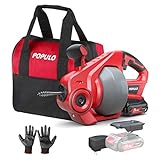
- Tired of dealing with clogged drains? Our 25-foot cordless drain snake makes cleaning quick and effortless—5 times faster than manual tools and 90% less effort. With up to 60 minutes of runtime on a single charge and a fully retractable cable in just 2 minutes, this powerful and durable tool is perfect for tackling common household clogs. Say goodbye to traditional methods and choose a drain snake that’s truly practical and efficient.
- All-in-One Plumbing Solution:25 Ft(1/4”) flexible cable is replaceable !Clears clogs with ease from drains from ¾ up to 2 in diameter including sinks, bathtubs,Drainage pipes and showers. Powered forward and reverse feeding mechanism make the cable down or back drains automatically and cable lock setting holds cable in place while tackling tough clogs.
- Simple Operation & Easy Setup:Designed for beginners and pros, our cordless plumbing snake features step-by-step video tutorials via QR code for a quick learning process. Access replacement parts (cables, batteries, chargers) and after-sales support for maintenance tips—keeping your tool in top shape for years, hassle-free!
- Pro Tip: Act Early, Save Big!The best time to clear a clog is when water flow slows down. Our drain snake quickly restores functionality, saving you costly repairs up to $200 or more per visit. It’s a reusable, cost-effective solution for routine maintenance, but not for solid blockages like tree roots or rocks. Prevent major issues—act now!
- Enhanced Comfort and Visibility:Enjoy ergonomic comfort with the rubberized grip handle, designed for long hours of use. The built-in LED work light provides clear visibility in dark or hard-to-reach areas. Additionally, the rear drain port prevents water buildup, keeping the drum clean and ready for the next task.
Can I pour boiling water down a kitchen sink?
Only use boiling water when the plumbing and appliance manufacturer explicitly approves it. Hot tap water is the safer general-purpose choice because very high temperatures can soften or damage some PVC plumbing and garbage-disposal components.
Do baking soda and vinegar really unclog a sink?
They may loosen light residue and reduce odor, but they are not a dependable solution for a solid object, compacted food, or a deep blockage. Never use them after a commercial drain opener or mix them with bleach, ammonia, or other cleaners.
What’s actually slowing this PC down?
Pick the symptom - the matching free tool is one click away.
When should I call a plumber for a clogged kitchen sink?
Stop DIY work and contact a licensed plumber if multiple fixtures are affected, the clog returns quickly, there is a leak or sewage odor, the blockage is beyond the accessible branch line, or chemical drain cleaner has already been used.
The Bottom Line
Best sequence: plunge first, try a cautious hot tap-water flush, reserve baking soda and vinegar for a light clog, then clean the P-trap or use a hand auger. Avoid chemical mixtures and boiling water unless the plumbing and appliance manufacturers approve it. Call a licensed plumber for recurring, multi-fixture, leaking, chemically treated, or inaccessible blockages.
Quick Recap
Product prices and availability are accurate as of the date/time indicated and are subject to change. Any price and availability information displayed on Amazon at the time of purchase will apply.

