The Tool Desk
Outbyte Driver Updater FREEFix the driver behind crashes, sound loss and screen glitchesFind Drivers →Outbyte PC Repair FREERepair Windows errors before they cause bigger problemsFix Now →To trellis an apple tree, train a young tree’s selected branches along a sturdy support—most often as a flat espalier or horizontal cordon. Install the support before planting, guide flexible shoots into position with loose ties, and plan for regular pruning and tie checks over several seasons. The method saves space and can make fruit easier to reach, but it takes more setup and maintenance than growing a freestanding tree.
What trellising an apple tree means
For home gardeners, “trellising” usually means training an apple into a supported shape. An espalier is a canopy kept in a flat plane against a wall, fence or freestanding wire structure. A cordon is a related form with branches trained horizontally from a central trunk. The specific pattern can be simple or formal, and the more symmetrical designs generally take more effort to establish and maintain, according to the University of Wisconsin–Madison Division of Extension.
| # | Preview | Product | Price | |
|---|---|---|---|---|
| 1 |

|
Apple Tree | Seed Grow Kit | The Jonsteen Company | $10.99 | Buy on Amazon |
Training is not the only way to shape an apple tree. A freestanding central-leader tree develops a tiered canopy without the same flat, wall-like arrangement. The right choice depends on the space, the shape you want, and whether you are prepared to build and maintain a support. Sources describe different uses and objectives, not a controlled comparison showing that one system produces more fruit than another.
Choose a suitable tree and training form
Pick for manageable growth and local conditions
A young tree with few unwanted branches is easier to train than an established, heavily branched one. Dwarf or spur-bearing selections are often manageable choices, but suitability depends on the local climate, cultivar and rootstock. The University of California Agriculture and Natural Resources advises considering chilling-hour needs and whether another compatible variety is needed for pollination. Ask a local nursery or extension service to confirm that the selection suits your area and that compatible varieties bloom at overlapping times if cross-pollination is required.
Quick wins for a faster PC:
Repair Windows errors before they cause bigger problemsFix Now →Fix the driver behind crashes, sound loss and screen glitchesFind Drivers →Clear out junk files and repair common Windows errorsFree Scan →#1 Best Overall
- Grow your own apple, a tree of legend that has been cherished and cultivated for thousands of years by people of many cultures from every corner of the world
- Includes absolutely everything you need to grow an apple tree from seed: seeds, growing medium, a mini-greenhouse, and detailed instructions
- 100% guaranteed: If your seed fails to germinate or your seedling perishes, we are happy to provide free replacement seed
- Great for kids and adults, amateurs to experts
- A universal symbol of life, regrowth and recovery, enduring friendships and new beginnings, a tree is a wonderful gift that will only grow in value, meaning, and beauty
Decide on the shape before planting
- Horizontal cordon: A simple option with a central trunk and one or more tiers of lateral branches. It suits a narrow strip, fence or wire support.
- Formal espalier: A flat, tiered pattern designed to fill a plane. It can make good use of a wall or narrow garden, but precise symmetry adds training work.
- Fan or another informal form: Branches spread across the support without the same strict tiered geometry. Choose a pattern suited to the site and the tree’s growth.
More formal patterns generally need more time and attention. Decide how much width and height the structure can accommodate before choosing the tree and pattern.
Build the support before planting
Use a sturdy support, such as a strong wooden framework or galvanized wires secured to suitable posts. Install it before planting so you can position the tree correctly and avoid disturbing its roots later. For a flat surface such as a wall, Wisconsin Extension recommends leaving at least 8 inches between the support and the surface to allow for growth and air movement.
Wire spacing is design- and region-dependent; the published examples below are not interchangeable construction specifications. Choose a support appropriate to the span and site, and do not treat a garden article’s wire example as structural-load advice.
| Source and context | Example support layout |
|---|---|
| Ask Extension, in a response dated October 18, 2019 | Posts 8 feet apart; 12-gauge or heavier galvanized wire; first wire 18 inches above ground, with later wires typically 18 inches apart. |
| Royal Horticultural Society, UK guidance | Horizontal wires 35–45 cm apart, with the first wire 40 cm above ground. |
These are examples from different sources and contexts, not a universal standard. Your pattern, structure and local conditions may call for a different layout.
PC Slower Than It Used to Be?
A free scan shows the junk files, broken settings and background clutter dragging Windows down - then fixes them in one click.Free scan · Windows 10 & 11Crashes, No Sound, or Screen Glitches?
Random freezes, missing sound and display glitches usually trace back to one bad driver. Find and replace yours safely.Free scan · under a minuteTrain the tree in stages
- Plant the young tree at the support. Position it so the trunk can be trained against the intended plane without forcing or sharply bending it.
- Choose the shoots that fit the pattern. For a simple horizontal tier, select suitable side branches and guide them in opposite directions. Keep a central leader if your chosen form calls for one. The exact selection and sequence depend on the training pattern.
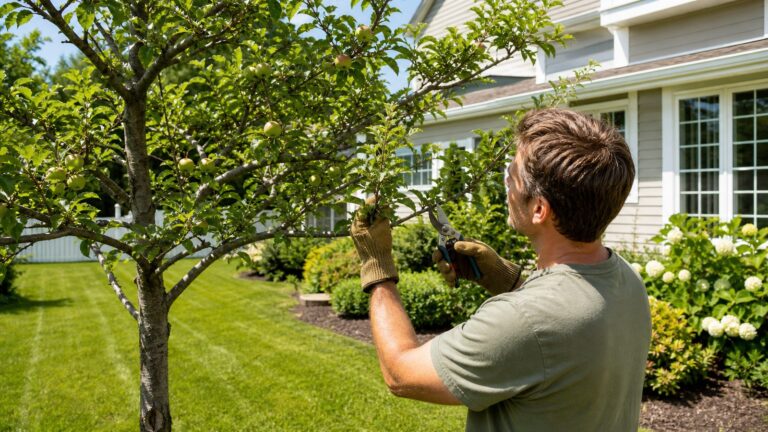
- Guide branches while they are flexible. Use soft, adjustable ties to hold young growth in place. Do not force a woody branch into a sharp bend; the RHS describes initially guiding side shoots at an angle and lowering them to horizontal after growth slows.
- Add tiers as the tree grows. In the Ask Extension example, two opposing laterals are trained along the first wire, with additional tiers added in following years. Treat this as one staged approach, not a required layout for every espalier.
- Inspect ties regularly. Loosen or replace any tie that begins to press into the bark as the trunk and branches thicken. Wisconsin Extension emphasizes checking ties so they do not constrict growing branches.
Expect establishment to take several seasons. Keep the intended form in mind, but adjust your choices to the tree’s actual growth rather than trying to force every branch into a fixed position at once.
When and how often to prune
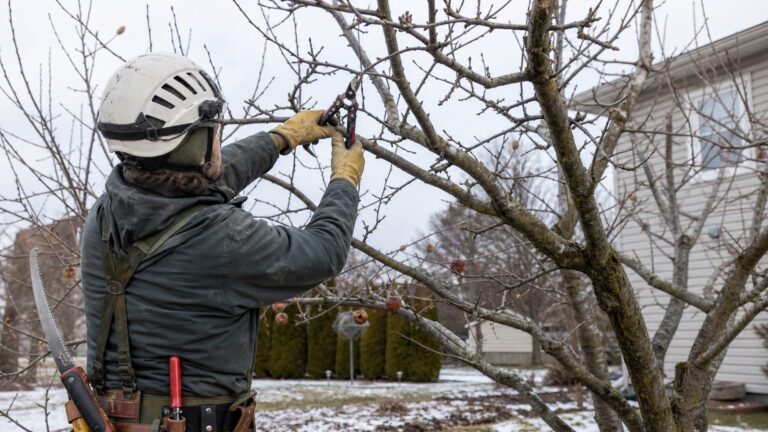
Pruning is central to maintaining an espalier: it helps preserve the framework and keep growth in the intended plane. The calendar depends on region, tree stage and growth. Do not combine regional schedules into one universal rule.
- While forming the framework: Wisconsin Extension discusses dormant-season framework pruning and regular minor maintenance. The RHS recommends winter-to-early-spring pruning as well as late-summer pruning when forming a tree or adding tiers under its UK guidance.
- After the form is established: Iowa State University Extension says espalier pruning may be needed several times each year. The RHS recommends late-summer pruning for established espaliers under its UK guidance.
Follow timing advice from your local extension service or another regionally appropriate horticultural authority. Growth and seasonal timing differ by climate, so a UK calendar may not transfer directly to a garden elsewhere.
What to expect from the trade-off
A trained apple can fit a narrow space and keep much of its fruit within easier reach. In exchange, you take on the work of installing and maintaining a support, selecting and tying branches, inspecting ties, and pruning repeatedly. The result is not a maintenance-free tree once it reaches its intended shape: ongoing pruning is part of keeping that shape.
Some trained trees can be exceptionally long-lived: Wisconsin Extension notes that some espaliered apple trees are still producing after 150 years. That is an example, not a typical lifespan or a prediction for a particular tree. The available sources do not establish a typical yield increase, lifespan, or quantified labor difference for espalier compared with an untrained apple tree.
Quick Recap
Product prices and availability are accurate as of the date/time indicated and are subject to change. Any price and availability information displayed on Amazon at the time of purchase will apply.