Train every crew to recognize a possible opioid overdose, activate 911 immediately, use the naloxone formulation stocked on that site, provide only the supportive care they are trained to give, and protect themselves from scene hazards. Naloxone can temporarily reverse opioid effects, but it does not replace emergency medical care; symptoms can return even after a person wakes up.
What the training must accomplish
A construction naloxone program is an emergency-response system, not a one-time product demonstration. Workers need to make the same decisions under pressure: identify a possible overdose without waiting for a perfect diagnosis, summon professional help, retrieve the site’s naloxone, give it according to the stocked product’s instructions, provide trained supportive care, and keep the scene safe.
As an Amazon Associate I earn from qualifying purchases.
The employer should fit the program into its existing first-aid and emergency-response structure. NIOSH’s workplace fact sheet states that staff must be able to recognize symptoms of a possible opioid overdose and call 911 for immediate professional emergency medical assistance. Local law, product labeling, access rules and emergency-response arrangements can change, so the written plan should be reviewed with local safety, public-health and EMS contacts.
Teach workers to recognize a possible overdose
Recognition is an action trigger, not a diagnostic test. A worker should treat the following combination of signs as a possible overdose and begin the response rather than trying to determine which substance was used:
#1 Best Overall
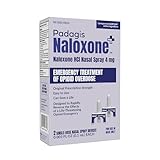
- QUICK & EFFECTIVE: Padagis Naloxone HCl Nasal Spray delivers a dose of naloxone, designed to provide quick and effective reversal of opioid overdose symptoms.
- SIMPLE TO USE: With a simple nasal spray mechanism, Padagis Naloxone HCI Nasal Spray is user-friendly, allowing for ease of use in emergency situations. Safe to use even when Opioids aren’t present.
- COMPACT & CONVENIENT: Each packet contains a nasal spray device and can be easily carried in pockets, purses, or emergency kits, ensuring life-saving intervention is always within reach.
- TRUSTED BY PROFESSIONALS: By equipping individuals with the means to respond to opioid overdoses, Padagis Naloxone HCI Nasal Spray empowers communities to help save lives, offering support in critical moments. Naloxone is trusted by first responders.
- The person is unresponsive or cannot be awakened.
- Breathing is very slow, very weak or has stopped.
- Lips or fingernails look blue or purple.
- The body is limp.
- There is vomiting, gurgling or another indication that the airway may be obstructed.
- Skin is extremely pale or clammy.
- The person cannot speak.
Use plain language in toolbox talks and posted response cards. “Not waking up” and “not breathing normally” are easier to apply than a long medical definition. A worker does not need to see drug use, identify a pill or powder, or prove that opioids are involved before calling 911. SAMHSA lists these warning signs as reasons to seek emergency help; they should never be used to delay the call while someone investigates the cause.
Make 911 activation automatic
Every suspected overdose requires 911 activation, even when naloxone is available. Naloxone may wear off while an opioid remains in the body, and the person may deteriorate again. NIOSH states that emergency medical assistance is still necessary even if the person wakes up or appears to improve significantly after one or two doses.
The site plan should specify exactly what the caller says and how responders reach the patient:
Do these 3 things before closing this tab:
1Clear out junk files and repair common Windows errors2Fix the driver behind crashes, sound loss and screen glitches3Repair Windows errors before they cause bigger problems- State that an unresponsive or barely breathing person may be experiencing an opioid overdose.
- Give the project name, street address, entrance or gate, building or floor, grid or area designation, and the safest access route.
- Send a worker to meet EMS if the site layout, gate controls, noise or changing work areas could cause delay.
- Keep the caller on the line and follow the dispatcher’s instructions.
- Tell arriving responders about naloxone doses given, changes in breathing and any known hazards or substances.
Do not make a supervisor’s approval, a drug test or a search for a family member a prerequisite for the call. The first person who recognizes the emergency should start the process while another worker retrieves the kit.
Match instruction to the naloxone stocked on site
NIOSH describes nasal-spray and injectable naloxone. The employer should choose a formulation with local legal, safety and emergency-response input, then train workers on that exact product. A demonstration with one device does not automatically prepare a worker to use another.
| Selection question | What the employer should verify |
|---|---|
| Formulation | Is the site stocking a nasal spray, an injectable product or both? Training, practice devices and response cards must match. |
| Access | Can a worker locate and reach the kit quickly during the current phase of construction, including after hours? |
| Storage | Is the storage location consistent with the product label, protected from site conditions and clearly marked? |
| Expiry control | Who checks expiration dates, records the check and replaces used or expired doses? |
| Local requirements | Have the employer’s safety and emergency contacts confirmed applicable access, administration and documentation rules? |
| Practice | Can trainees rehearse with a training device that has the same steps as the stocked product? |
Teach workers to follow the product label and their hands-on instruction. Do not improvise administration steps from memory or transfer instructions from a different device. A workplace may refer to a naloxone nasal spray as one component of its program, but the product cannot substitute for training, PPE, 911 activation or medical care.
Protect responders before they enter
Construction sites contain changing hazards, and an overdose scene can add blood, vomit, body fluids, needles or drug residue. The first trained worker should pause long enough to assess whether entry is safe. NIOSH advises not entering when visible drug powder or residue, or another unsafe condition, could expose responders. In that situation, keep others away and wait for professional responders.
Crashes, No Sound, or Screen Glitches?
Random freezes, missing sound and display glitches usually trace back to one bad driver. Find and replace yours safely.Free scan · under a minutePC Slower Than It Used to Be?
A free scan shows the junk files, broken settings and background clutter dragging Windows down - then fixes them in one click.Free scan · Windows 10 & 11When the scene is safe to approach:
- Use nitrile gloves and other PPE required by the employer’s hazard assessment.
- Watch for sharps, broken materials, moving equipment, electrical hazards, traffic, falls and unstable work areas.
- Avoid touching unknown powders or sweeping, blowing or otherwise dispersing residue.
- Do not create a second casualty by entering a confined, contaminated or otherwise uncontrolled area without the equipment and training to do so.
- Remove contaminated gloves safely and perform hand hygiene after care.
Scene safety is part of the overdose lesson, not an optional add-on. A worker who cannot safely enter can still call 911, direct others away and provide responders with the location and hazard information they need.
Rank #2

- Original Prescription Strength: Two 4 mg single-dose devices. Available over the counter without a prescription. Works quickly, reversing an opioid overdose in minutes.
- A Staple For Medical Supplies & Equipment: NARCAN Nasal Spray is an addition to any emergency first aid kit. It's designed for opioid emergencies and can help save a life in case of an opioid overdose.
- Used by First Responders: Naloxone nasal spray is carried by first responders and commonly employed in emergency situations. NARCAN Nasal Spray is designed to rapidly reverse the effects of a life-threatening opioid overdose. Use as directed.
- Easy to Use: Easy to use nasal spray opioid overdose treatment. No nasal swabs or injections are needed. Safe to use even if opioids are not present.
- First Aid Kit Item: this naloxone overdose medicine can help complete your first aid kit. Designed to rapidly reverse the effects of opioid overdose No training required.
Provide supportive care within the crew’s training
Naloxone is one intervention in a broader response. SAMHSA advises CPR when breathing has stopped or is very weak, preferably from someone trained to provide it. OSHA’s September 24, 2026 release describes training workers to safely position a person and provide supportive care while waiting for first responders.
The employer’s written procedure should tell workers what their existing first-aid or CPR training permits them to do. It should also make clear that supportive care must not be delayed while someone waits for naloxone to work. Follow the dispatcher’s instructions and the worker’s level of training. If the person is breathing but not responsive, maintain a safe position that protects the airway as trained and continue monitoring until EMS takes over.
Naloxone does not reverse overdoses caused by alcohol, benzodiazepines, cocaine or amphetamines. Those substances may be involved at the same time as an opioid, however, so a lack of immediate improvement is not a reason to stop the response. Continue 911 coordination and trained supportive care.
Recommended Free Tools
Use a simple response sequence
Post a short sequence at the first-aid station, in the naloxone kit and in the site emergency plan. The following order keeps the critical actions visible without asking a worker to diagnose the person.
- Look before entering. Identify traffic, machinery, falls, sharps, powder, residue, fire, electrical or other hazards. Do not enter an unsafe scene.
- Call out and check responsiveness. Follow the worker’s first-aid training for checking breathing and responsiveness. Treat inability to awaken or abnormal breathing as an emergency.
- Call 911. Give the exact site location, access route and known hazards. Keep the dispatcher informed.
- Assign the retrieval task. Send a specific person for the naloxone kit and another to meet EMS when the site layout requires it.
- Use the stocked naloxone. Administer it only as taught for that formulation and according to its label. Record the time and dose for EMS.
- Provide trained supportive care. Follow dispatcher instructions and the responder’s CPR or first-aid training. Do not wait passively for naloxone to work.
- Reassess continuously. Watch breathing and responsiveness. A person who improves still requires emergency evaluation because symptoms may return.
- Hand off to EMS. Report observations, suspected substances if known, naloxone formulation, number and timing of doses, CPR or other care, and any scene hazards.
The procedure should not tell workers to transport the person in a private vehicle, leave the person alone or declare the emergency over after awakening. Those decisions can delay professional care.
Build the plan around the actual construction site
A generic office policy is not enough for a project with multiple buildings, changing access points, subcontractors and remote work areas. Use the employer’s existing first-aid and emergency-response structure, then adapt it to the current site map and crew composition.
Assign roles before an emergency
| Role | Responsibility to define |
|---|---|
| 911 caller | Activates emergency services, gives the precise location and stays available for dispatcher questions. |
| Naloxone retriever | Knows the kit location, brings the stocked formulation and reports back when it is available. |
| Scene lead | Controls access, identifies hazards and prevents untrained workers from entering. |
| Care provider | Performs CPR, positioning and other supportive care within current training. |
| EMS guide | Meets responders at the gate or access point and guides them to the patient. |
| Supervisor or safety lead | Documents the event, protects privacy, starts restocking and initiates follow-up. |
One person may hold more than one role on a small crew, but the plan should still name the tasks. Include a backup for each role when the primary person is absent.
Place and identify kits
Choose locations that are visible, accessible during all shifts and protected according to the product label. Show the kit on the site map and in orientation materials. Recheck the location whenever the project moves, a building is enclosed or access routes change. A locked cabinet, distant office or supervisor-only location can create a delay if workers cannot reach it immediately; any access control must be reconciled with the emergency plan and local requirements.
Rank #3

- Used by first responders
- Original prescription strength
- Safe and easy to use
- Designed to rapidly reverse the effects of an opioid emergency
Coordinate with local responders
Ask local EMS or the employer’s emergency coordinator to review the address format, gate procedures, radio or phone coverage, and the time needed to reach active work areas. NIOSH recommends clear roles, coordination with local emergency responders and review of how quickly professional help can reach the workplace. Do not claim that federal guidance supplies a construction-specific course or a one-size-fits-all site plan; the employer must build the plan around its own hazards and response times.
Include contractors and changing crews
Explain the response during site orientation and make the emergency number, location instructions and kit locations available to subcontractors. Keep the policy focused on care and safety rather than assumptions about who uses drugs. A worker should be able to report an emergency without first identifying a person’s medical history or employment status.
Deliver the training as practice, not just a lecture
A practical course can be organized into modules. The employer can use an established first-aid or CPR provider, a public-health or EMS partner, or an internal instructor who is qualified under applicable rules. Compare providers on local availability, hands-on practice with the actual formulation, scene assessment, responder safety, integration with first aid and CPR, and coordination with local EMS. No source establishes a universal construction training curriculum.
Module 1: Recognition and decision-making
Show the warning signs and give workers short scenarios: an unresponsive person in a trailer, a worker with gurgling respirations near equipment, or a person who wakes briefly and then becomes drowsy again. In each scenario, require the trainee to say when they will call 911. Correct the misconception that a worker must identify an opioid before starting the response.
Module 2: Scene assessment and PPE
Use photographs, a mock work area or a walk-through to identify sharps, residue, moving equipment, falls and access problems. Practice the decision to stop at a safe distance and wait for professional responders when visible powder, residue or another hazard makes entry unsafe. Demonstrate nitrile gloves and the site’s required PPE.
Module 3: The stocked naloxone device
Let each trainee handle the same training device that corresponds to the product kept on site. Explain where it is stored, how to check that it is available and how to follow its label. If the employer changes formulation, repeat the hands-on instruction rather than assuming the old lesson transfers.
Module 4: Supportive care and handoff
Integrate the site’s CPR and first-aid instruction. Practice positioning, monitoring, dispatcher communication and reporting the number and timing of naloxone doses. Emphasize that apparent recovery does not end the emergency.
Module 5: Site logistics
Walk the route from likely work areas to the kit and from the gate to the patient. Have trainees state the project address, access point and meeting location. Test radio or phone coverage and identify who will guide EMS.
Rank #4

- Full prescription strength: Nasonex 24HR provides effective allergy relief with mometasone furoate (glucocorticoid) 50 mcg per spray; available over the counter, without a prescription
- 24-hour relief: This nasal spray temporarily relieves allergy symptoms including nasal congestion, runny nose, sneezing, and itchy nose caused by hay fever or other upper respiratory allergies
- Non-drowsy, scent-free mist: Multi-symptom allergy and congestion relief nasal spray without the drowsiness, so your day stays on track
- How Nasonex works: A trusted choice designed for targeted multi-symptom control; You may start to feel relief within 12 hours and full effect after several days of regular, once-a-day use
- Dosing: Adults 12+: 2 sprays per nostril once daily; Children 2-11: 1 spray per nostril once daily (adult supervision required); Do not use under age 2; See package insert for full directions
Module 6: Scenario drill and debrief
Run a realistic drill without using a live medication or exposing anyone to residue. Evaluate whether workers recognized the signs, called 911 promptly, avoided an unsafe scene, retrieved the correct device, provided trained care and communicated the location. Discuss delays and revise the plan while the details are fresh.
Maintain the program after training day
NIOSH recommends planning for documentation and privacy, follow-up medical care and support, restocking and expiry checks, periodic program review and annual refresher training. Assign each task to a named role rather than leaving it as a general promise.
- Kit checks: Keep a dated log of inventory, expiration dates, package condition and location. Replace used or expired doses promptly.
- Training records: Record who completed instruction and the formulation covered. Protect medical and incident information according to the employer’s privacy practices.
- Post-incident care: Ensure the affected person receives professional evaluation and that responders know where to obtain follow-up support.
- Responder support: Offer a private process for workers who witnessed a traumatic event or administered care.
- Annual refreshers: Rehearse the response at least annually and whenever the product, site layout, emergency number or local requirements change.
- Program review: After a drill or real event, examine call activation, access time, kit availability, PPE, communication and EMS handoff without blaming individuals.
Keep incident records limited to what is necessary for safety, medical coordination and required reporting. Do not post a person’s name, medical information or suspected substance in a toolbox notice.
Quick wins for a faster PC:
Repair Windows errors before they cause bigger problemsFix Now →Fix the driver behind crashes, sound loss and screen glitchesFind Drivers →Clear out junk files and repair common Windows errorsFree Scan →Measure readiness without inventing a success rate
There is no current construction-specific overdose rate or construction-only training-effectiveness figure established by the sources used here. Avoid promising that a particular course will prevent a stated percentage of deaths. Instead, measure whether the system performs its defined tasks:
| Readiness check | Evidence to review |
|---|---|
| Recognition | In a drill, workers identify abnormal breathing or unresponsiveness and treat it as an emergency. |
| 911 activation | The caller provides the exact address, access route and hazard information without waiting for a supervisor. |
| Kit access | A designated worker can locate and retrieve the correct formulation from the current work area. |
| Responder safety | Workers identify unsafe entry conditions and use the site’s PPE procedure. |
| Supportive care | Trained personnel follow dispatcher and CPR or first-aid instructions while waiting for EMS. |
| Handoff | The team can report observations, care provided and naloxone doses to responders. |
| Maintenance | Inventory, expiry and refresher records are current. |
Common training failures and corrections
Waiting to confirm opioid use
Failure: Workers search for a prescription bottle or ask witnesses to identify a drug before calling.
Correction: Teach that the listed warning signs are sufficient to activate 911 and begin the trained response.
Treating naloxone as a cure
Failure: The crew leaves when the person wakes up.
Correction: Repeat that emergency care remains necessary because improvement can be temporary and the cause may include substances naloxone does not reverse.
What’s actually slowing this PC down?
Pick the symptom - the matching free tool is one click away.
Training on a different device
Failure: The class demonstrates one formulation while the site stocks another.
Best Value

- Ridiculously Fast Relief: Unblock your nose in seconds with Afrin No Drip Severe Congestion Nose Spray Decongestant, a fast-acting sinus spray providing sinus pressure and congestion relief with cooling menthol in a convenient twin pack nasal spray bottle
- Effective for Severe Nasal Congestion: This maximum strength nasal spray decongestant is perfect for relieving severe nasal congestion and sinus pressure caused by colds and allergies, offering quick and effective decongestants for adults and children 6 years and older
- No Drip Technology: Afrin's No Drip sinus medicine ensures the medicated mist stays where it's sprayed, providing effective nasal decongestion without the mess or discomfort of it dripping from your nose or down your throat
- Cooling Menthol Formula: Experience the soothing and cooling sensation of menthol while the powerful nasal decongestant works to constrict blood vessels in the nasal passages and reduce swelling to help you breathe easier
- 12-Hour Non-Drowsy Decongestion: Experience long-lasting relief for up to 12 hours without drowsiness, perfect for both day and night use to alleviate nasal congestion and provide sinus pressure relief
Correction: Match practice devices, labels and response cards to the product actually available; retrain after a change.
Ignoring scene hazards
Failure: A worker enters a contaminated or unstable area to reach the patient.
Correction: Put scene assessment first and teach workers to wait for professional responders when powder, residue or another hazard makes entry unsafe.
The Tool Desk
Outbyte Driver Updater FREEScan for outdated or missing drivers - takes under a minuteDriver Scan →Outbyte PC Repair FREEClear out junk files and repair common Windows errorsFree Scan →Leaving logistics vague
Failure: The plan says “call emergency services” but does not identify the gate, access route, kit location or EMS guide.
Correction: Walk the current site, assign roles and drill the route after every major layout change.
Failing to replace supplies
Failure: A kit is empty or expired when needed.
Correction: Assign dated inventory and expiry checks, with a named backup and a process for immediate replacement.
What the available evidence does—and does not—show
CDC and NIOSH reported that 95% of 70,237 U.S. drug-overdose deaths in 2017 occurred among people aged 15 to 64. That is a historical national statistic, not a current rate for construction workers or a prediction for a particular employer. NIOSH’s workplace bulletin discusses construction among sectors with workplace overdose deaths, but it does not establish a construction-only risk percentage in the material summarized here.
Free tools Windows power users keep installed
One-click scans. No signup required.
The available guidance supports a practical employer program covering recognition, 911 activation, formulation-specific naloxone use, supportive care, responder safety and follow-up. It does not establish a standardized construction-specific curriculum or prove that one training format is superior. Employers should therefore document their local assumptions, test the response on the actual site and revise it when conditions change.
Quick Recap
A one-page crew checklist
- Recognize unresponsiveness, abnormal breathing, blue or purple lips, limpness, vomiting, gurgling, pale or clammy skin or inability to speak.
- Assess the scene and do not enter visible powder, residue or another unsafe area.
- Call 911 immediately and give the exact construction-site location and access route.
- Send a designated worker for the stocked naloxone formulation.
- Use the product according to its label and the hands-on training provided.
- Give CPR, positioning and other supportive care only within current training and dispatcher instructions.
- Continue monitoring; improvement does not cancel the need for EMS.
- Tell responders what was observed, what care was given and how many naloxone doses were administered.
- Afterward, protect privacy, arrange follow-up support, replace supplies and review the response.
Product prices and availability are accurate as of the date/time indicated and are subject to change. Any price and availability information displayed on Amazon at the time of purchase will apply.

