Recommended Free Tools
Some links on this page are affiliate links: if you buy through them we may earn a commission, at no extra cost to you.
To tell what’s eating your garden plants, match the damage pattern with physical evidence and timing: slime trails suggest slugs, frass or webbing suggests caterpillars, low clean cuts suggest rabbits or rodents, and higher ragged browsing suggests deer. Inspect after dusk, confirm the culprit, and choose a barrier or treatment that fits the diagnosis.
Holes are only one symptom. The location of the damage, whether tissue is chewed or sucked dry, and traces left around the plant usually reveal more than the hole shape alone.
As an Amazon Associate I earn from qualifying purchases.
Key takeaways
- Holes alone do not identify the culprit; slime, frass, eggs, webbing, tooth marks, tracks, and droppings are stronger confirming clues.
- Nighttime flashlight inspections are especially useful for finding slugs, snails, cutworms, and some caterpillars.
- Low, clean angled cuts suggest rabbits or rodents, while higher ragged browsing points more toward deer.
- Established plants may tolerate some leaf damage, but lost seedlings, severe defoliation, damaged growing points, and injured edible parts justify faster action.
- Start with identification, monitoring, handpicking, sanitation, habitat changes, and physical barriers before considering a labeled pesticide.
How do you tell what is eating your garden plants?
Identify the damage pattern before treating. Photograph the whole plant and close-up damage, note whether leaves, stems, roots, fruit, buds, or seedlings are affected, inspect both leaf surfaces and nearby soil, and search at the time the damage occurs. A university Extension diagnostic tool can help narrow the possibilities, but a local diagnosis may be needed when damage is severe or ambiguous.
UC IPM summarizes the central rule clearly: “Identify your pest to be sure the management method you choose will be effective.” UC IPM’s integrated pest management guidance recommends identification as the first step because different pests require different controls.
Popular on Amazon
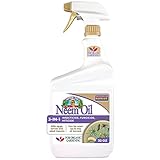
- Protect your oasis with 3 garden products in 1 from Captain Jack’s; Bonide Captain Jack’s Ready-to-Use Neem Oil spray for plants is a multi-purpose fungicide, insecticide and miticide for your lawn & garden
- Clarified Hydrophobic Extract of Neem Oil protects your garden from common fungal diseases including rust, powdery mildew and more; apply to house plants, roses, trees, shrubs, fruits, nuts & vegetables for effective protection against garden diseases
- Captain Jack’s Neem Oil kills eggs, larvae and adult stages of insects to provide full range protection against pests and insects; this is effective against spider mites, aphids, whiteflies & more
- Approved for organic gardening, Neem Oil spray is suitable for the production of organic produce and can be used up until the day of harvest
- This product arrives conveniently ready-to-use in a trigger spray bottle; to use, shake well and completely cover affected plants. Reapply as needed every 7-14 days. Please see product label for full instructions
What should you inspect first?
- Photograph the evidence. Take one picture of the entire plant and several close-ups showing the damage, leaf edges, stems, soil surface, and nearby plants.
- Record the damaged plant part. Damage to seedlings, roots, growing points, fruit, and flowers usually calls for more urgent attention than a few holes in older leaves.
- Check both sides of leaves. Look for insects, larvae, eggs, shed skins, webbing, honeydew, frass, and feeding scars.
- Search the ground. Examine mulch, cracks, the soil line, droppings, tracks, and holes near damaged stems.
- Inspect after dark. Use a flashlight after dusk for slugs, snails, cutworms, and some caterpillars that hide during the day.
- Compare before controlling. The UC IPM vegetable diagnostic results for irregular holes and notching include cutworms, darkling beetles, earwigs, loopers, slugs, and snails. That range shows why a hole by itself is not a diagnosis.
Which pest matches the damage pattern?
The most useful diagnosis combines the shape of the damage, its height on the plant, the affected crop, physical traces, and the time of day when feeding occurs.
| Damage pattern | Likely suspects | Confirming clues | First response |
|---|---|---|---|
| Irregular holes through leaves, flowers, or fruit | Slugs, snails, caterpillars, earwigs, beetles | Slime trails suggest slugs or snails; frass, eggs, webbing, or a caterpillar suggest caterpillars | Inspect after dusk, under hiding places, and among dense foliage |
| Tiny holes or shotgun-like leaf damage | Flea beetles or cucumber beetles | Small adult beetles visible on susceptible crops during daylight | Consider a row cover installed before pests arrive |
| Leaves stripped between veins | Beetle larvae, pear slugs, thrips, or caterpillars | Larvae or insects on leaf undersides; skeletonization alone is not specific | Inspect both leaf surfaces before selecting treatment |
| Seedlings severed at the soil line | Cutworms | Night feeding, a nearby soil hole, or a caterpillar that curls into a C-shape when disturbed | Search around the stem after dark and use a physical collar |
| Clean, low cuts at roughly a 45-degree angle | Rabbits or rodents | Broad tooth marks suggest rabbits; narrower marks suggest rodents; tracks and droppings strengthen the diagnosis | Install a small-mesh barrier and inspect the perimeter |
| Higher, ragged or shredded browsing | Deer | Damage on branches or twigs, tracks, droppings, trampled plants, and browsing above rabbit height | Use a properly designed deer barrier |
| Curled, puckered, sticky, stippled, or yellowing leaves | Aphids, whiteflies, scales, leafhoppers, mealybugs, thrips, or mites | Clusters of small insects, honeydew, ants, shed skins, or fine webbing | Inspect stems and undersides; identify the pest before using a spray |
Are slugs or snails eating the plants overnight?
Slugs and snails are strong suspects when irregular holes appear overnight in cool, damp, shaded conditions and a dried, shiny slime trail is present. Slugs are soft-bodied mollusks that commonly feed at night, and their rasping mouthparts can make holes that cross leaf veins.
What’s actually slowing this PC down?
Pick the symptom - the matching free tool is one click away.
Check beneath leaves, boards, stones, containers, mulch, and other protected surfaces. A nighttime flashlight search is often more productive than looking during the day. The University of Minnesota Extension guide to slugs recommends reducing cool, damp hiding places by improving drainage, increasing airflow, thinning crowded growth, watering in the morning, and removing excess debris.
Handpicking and flat-board traps can reduce slug numbers. Copper barriers may help around a small garden bed or container, but the copper strip must be wide enough for the slug to contact it; copper is not a universal solution for a large garden. Appropriately placed slug bait is another option, provided the product is labeled for the intended site and pest.
Are caterpillars eating the leaves?
Caterpillars chew leaves, flowers, shoots, and fruit. Look for irregular feeding holes, green or dark droppings called frass, eggs, rolled or webbed leaves, and the caterpillar itself. Some caterpillars hide among foliage or inside a rolled leaf during the day.
Do not automatically treat every caterpillar. Many established plants tolerate substantial leaf loss, and natural enemies can provide useful control. Handpick visible caterpillars, remove badly affected rolled or webbed leaves when practical, and continue monitoring. The UC IPM guide to leaf-feeding caterpillars provides a useful identification and management reference.
Also popular on Amazon
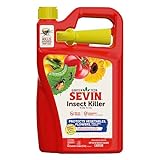
- Plant insecticide to protect your roses and edibles from listed damaging pests
- This insecticide sprayer won't harm plants or blooms
- Kills on contact - This plant bug spray kills over 700 listed insects
- This garden insect spray also kills ants, Japanese beetles, whiteflies, aphids and many more pests
- Simply shake and spray this highly effective plant bug killer
What causes tiny holes or skeletonized leaves?
Tiny, scattered, shotgun-like holes often point toward flea beetles or cucumber beetles, especially when small adult beetles are visible during daylight. Oregon State University Extension describes flea beetles as small blue-black beetles that chew holes in many garden vegetables and notes that cucumber beetles can both damage plants and spread disease. Oregon State University’s Growing Your Own guidance discusses row covers and other crop-protection practices.
Skeletonized leaves are a clue, not a complete identification. Beetle larvae, pear slugs, thrips, and some caterpillars can consume tissue between the veins. Turn leaves over and search for larvae or other evidence before treating. A plant can look severely damaged even when the responsible pest is no longer present, so inspect fresh damage as well as old leaves.
Why are seedlings cut off at the soil line?
Cutworms are a leading suspect when young seedlings are severed close to the ground. Some cutworms hide in or just below the soil and feed at night. Look for a hole beside the damaged plant and inspect the soil surface and stem base after dark; a disturbed cutworm may curl into a C-shape.
Handpicking cutworms in the evening can work when the affected area is small. A physical stem collar placed around a vulnerable seedling can prevent the caterpillar from reaching the stem. Continue checking new seedlings because a barrier around one plant does not remove cutworms elsewhere in the bed.
Are rabbits, rodents, or deer browsing the plants?
Animal browsing is easier to distinguish when you consider both the height and the quality of the cut. Rabbits and rodents usually feed low on plants and may leave clean angled cuts, whereas deer grasp and tear plant tissue, leaving rough, shredded edges higher on the plant.
Also popular on Amazon

- KILLS LISTED INSECTS THROUGH CONTACT: Spinosad-based formula controls aphids, caterpillars, mealybugs, spider mites, thrips, and 30 listed pests on edible and ornamental plants
- CURATIVE POWDERY MILDEW CONTROL: Apply at first signs of powdery mildew and repeat every 7–10 days for curative protection on vegetables, fruits, and ornamentals
- OMRI LISTED FOR ORGANIC GARDENING: Listed by the Organic Materials Review Institute, making this spray suitable for use in certified organic home gardens
- BROAD USE-SITE COVERAGE: Labeled for vegetables, fruit and nut trees, citrus, berries, herbs, lawns, outdoor ornamentals, and non-commercial greenhouses
- READY-TO-USE CONVENIENCE: Shake, spray all plant surfaces including leaf undersides to wetting – no mixing needed for fast, thorough coverage of listed pests
Rabbits have relatively broad tooth marks; rodent tooth marks can be narrower. Tracks and droppings strengthen either diagnosis. Deer may also leave tracks, droppings, trampled plants, and damage to branches and twigs. These are useful clues rather than guarantees because multiple animals can visit the same garden.
University of Minnesota Extension identifies fencing as the most effective broad method for protecting gardens from animals. Small-mesh chicken wire or similar fencing suits rabbits and other small animals, taller or electric fencing can deter deer, and netting can exclude birds, squirrels, and other climbers. Choose the barrier according to the animal rather than buying one generic net.
| Animal | Typical damage location | Cut or browse appearance | Barrier priority |
|---|---|---|---|
| Rabbit | Low leaves, stems, and seedlings | Relatively clean, broad tooth marks; often angled cuts | Small mesh with a securely anchored lower edge |
| Rodent | Low stems, seedlings, roots, or fruit near the ground | Narrower tooth marks and clean cuts | Chew-resistant small mesh and perimeter inspection |
| Deer | Higher leaves, branches, twigs, and growing tips | Ragged, torn, or shredded tissue | Tall or otherwise properly designed deer fencing |
| Bird or climber | Fruit and exposed upper growth | Pecking, missing fruit, or scattered damage above ground | Protective netting that is anchored and checked regularly |
Deer exclusion expectations should be realistic. According to University of Minnesota Extension’s deer-management guidance, a 50 percent reduction in deer browse is considered very successful, while a 30 percent reduction is a more likely result. The result depends on the barrier, landscape, deer pressure, and available food.
The Tool Desk
Outbyte Driver Updater FREEFix the driver behind crashes, sound loss and screen glitchesFind Drivers →Outbyte PC Repair FREEClear out junk files and repair common Windows errorsFree Scan →Could insects be damaging the leaves without eating holes?
Curled, puckered, stippled, distorted, yellowing, or sticky leaves often indicate piercing-sucking insects rather than a chewing pest. Aphids, whiteflies, scales, leafhoppers, mealybugs, thrips, and mites can feed from plant tissues without leaving large holes.
Inspect stems and leaf undersides for clusters of insects, shed skins, honeydew, ants tending aphids, or webbing. On a sturdy plant, a strong stream of water can dislodge some soft-bodied pests, but identify both the plant and the pest first. A spray that works against one pest may be ineffective or harmful against another.
What is the safest way to stop something from eating the garden?
Use integrated pest management, or IPM: identify the culprit, monitor the damage, decide whether control is warranted, begin with low-risk measures, and use a selective labeled treatment only when necessary.
1. Identify before intervening
Match the crop, damage pattern, damaged plant part, timing, and physical evidence. UC IPM’s diagnostic program covered more than 650 arthropod, disease, and abiotic problems across more than 300 plant species in 2016, illustrating why a broad symptom such as “holes in leaves” can have many causes. UC IPM’s 2016 diagnostic-tool description says the goal is to increase confidence in identifying a plant problem so the most effective management information can be found.
Crashes, No Sound, or Screen Glitches?
Random freezes, missing sound and display glitches usually trace back to one bad driver. Find and replace yours safely.Free scan · under a minutePC Slower Than It Used to Be?
A free scan shows the junk files, broken settings and background clutter dragging Windows down - then fixes them in one click.Free scan · Windows 10 & 11Also popular on Amazon

- LAB PROVEN TO KILL & REPEL BUGS. Plant powered pest protection with natural essential oils that works. This pest repellent spray is proven to protect your pets and family from mosquitoes, ants, ticks, fleas, and other common yard bugs. Meets the same effectiveness standards required for conventional flea and tick yard treatment and preventatives. An alternative to conventional pesticide sprays, baits, ant granules, zappers or foggers.
- SPRAY & PLAY CONVENIENCE! NO DRY TIME NEEDED. Safe around pets and the whole family when used as directed with no wait time for drying or reentry into sprayed yard areas. Pre mixed and ready to use. Just attach directly to a garden hose, spray your backyard, and enjoy. Keep the bottle & refill the sprayer with Wondercide Outdoor Pest Control concentrate.
- TREATS UP TO 5,000 SQUARE FEET. Treats up to 5,000 square feet to kill mosquitoes, ants, gnats, fleas, Japanese beetles, no-see-ums, and crickets. Treats up to 2,500 square feet to kill and repel ticks and repel mosquitoes. When used as directed, this bug control spray can be safely used on lawns, gardens, grass, patios, dog kennels, vegetables, flowers, siding, brick, paint, and more. Treat an existing pest infestation or use for prevention.
- PLANT POWERED INGREDIENTS YOU CAN FEEL GOOD ABOUT. No artificial colors, dyes, or fragrances. Made with plant based active ingredients like steam-distilled cedarwood essential oil. The residue is safe beneficial insects and pollinators like bees and butterflies when used as directed. Cruelty free.
- POWERFULLY EFFECTIVE. We know you will love our Outdoor Pest Control Spray, especially for flea, tick, and mosquito removal. Woman founded. Mom approved. USA Made with US and global components. Application coverage depends on water pressure and walking speed.
2. Monitor before deciding
Recheck the plant at different times of day and record whether fresh damage is increasing. A few cosmetic holes on an established plant may not justify treatment, while repeated seedling loss, severe defoliation, damage to growing points, or injury to edible parts may require prompt action.
3. Start with physical and cultural controls
- Handpick slugs, caterpillars, beetles, or cutworms when the pest is easy to find.
- Remove heavily infested leaves or badly affected rolled and webbed foliage when doing so will not harm the plant.
- Improve drainage and airflow, thin crowded vegetation, and remove boards, stones, containers, and excess leaf debris that shelter slugs.
- Use a stem collar for cutworm-prone seedlings.
- Use crop covers for suitable flying insects and properly anchored fencing or netting for animals.
4. Use a product only when the diagnosis and label match
Before applying any pesticide, check the label for the specific crop, site, pest, application method, protective directions, and harvest restrictions. UC IPM’s pesticide guidance warns that incorrect pesticide use can injure plants, fail to control the pest, harm human health, and pollute soil, air, or water.
Independent reader supportYour contribution helps us test, update, and keep practical guides available for everyone.Do floating row covers stop garden pests?
Floating row covers and insect netting can exclude some flying pests, including flea beetles, cabbage butterflies, and certain other insects, when installed before or as pests arrive. Row covers do not treat pests already trapped underneath and do not solve slug, deer, or rabbit problems.
For crops that need insect pollination, remove or open the cover when flowers must be reached by pollinators. This limitation is particularly important for cucumbers, melons, and squash. If you need one, a floating row cover for garden plants is a practical prevention tool to compare by mesh or fabric type, crop coverage, anchoring method, weather resistance, and ease of removal. Oregon State University Extension recommends row covers for several crop pests but also explains the need to manage covers around pollination.
Free tools Windows power users keep installed
One-click scans. No signup required.
How should you choose a garden barrier?
Choose a barrier based on the animal or insect being excluded, not on the product name alone. Compare mesh opening size and shape, height and length, resistance to chewing and tearing, weather durability, anchoring, access for harvesting, appearance, and whether pollinators or beneficial insects need to enter.
Small mesh is appropriate for rabbits and other small animals; tall or electric fencing addresses deer; and netting can protect fruit from birds, squirrels, and other climbers. Covers for flying insects must be installed at the right time, while barriers for animals must be secured at the ground and checked for gaps.
Also popular on Amazon

- 3-in-1 FORMULA: Aphid spray for outdoor plants for use on roses, flowers, shrubs and trees to control listed insects, disease and mites
- DISEASE CONTROL: Plant fungicide controls Black Spot, Powdery Mildew, and other listed diseases
- INSECT KILLER: Insect spray kills Aphids, Spider Mites, adult Japanese Beetles, Caterpillars, and other listed pests
- RAINPROOF PROTECTION: Fungicide for plants offers rainproof protection lasting up to 14 days
- COVERAGE AREA: Treats up to 192 roses with outdoor bug spray
When should you ask for a local diagnosis?
Ask a local Extension office, horticultural diagnostic service, or qualified plant professional when damage is rapidly worsening, several pests appear possible, valuable plants are affected, or the crop and region make identification uncertain. Pest identity and seasonal timing vary with crop, location, weather, and year, so authoritative general guidance cannot replace local examination in every case.
Frequently Asked Questions
Can you identify what is eating a plant from holes alone?
Holes alone cannot identify the pest because irregular leaf holes may come from slugs, snails, caterpillars, beetles, earwigs, loopers, or cutworms. Confirm the culprit by checking for slime, frass, eggs, webbing, insects, tooth marks, tracks, or droppings.
What is eating my garden plants overnight?
Inspect plants after dusk with a flashlight, especially beneath leaves, boards, containers, mulch, and near the soil line. Slugs, snails, cutworms, and some caterpillars are more visible at night than during the day.
How can I tell whether rabbits or deer are eating my plants?
Low, clean cuts at about a 45-degree angle suggest rabbits or rodents, while higher ragged or shredded browsing suggests deer. Tooth-mark width, tracks, droppings, trampled plants, and the height of the damage can strengthen the diagnosis.
Do row covers protect garden plants from every pest?
Floating row covers can exclude some flying insects, including flea beetles and cabbage butterflies, but they do not control slugs, rabbits, or deer. Remove or open covers when pollinators need to reach flowers on crops such as cucumbers, melons, and squash.
The Bottom Line
The reliable way to tell what is eating your garden plants is to match the damage pattern with physical evidence and timing before choosing a treatment. Inspect at night when necessary, distinguish chewing from piercing-sucking damage, use barriers and sanitation first, and read the label whenever a pesticide is genuinely needed.
Quick wins for a faster PC:
Repair Windows errors before they cause bigger problemsFix Now →Fix the driver behind crashes, sound loss and screen glitchesFind Drivers →Quick Recap
Product prices and availability are accurate as of the date/time indicated and are subject to change. Any price and availability information displayed on Amazon at the time of purchase will apply.

