Quick wins for a faster PC:
Clear out junk files and repair common Windows errorsFree Scan →Scan for outdated or missing drivers - takes under a minuteDriver Scan →Repair Windows errors before they cause bigger problemsFix Now →Condensation on the indoor coil is normal; water on the floor, wall, cabinet, vent or duct is not. In cooling mode, a heat pump pulls warm, moist air across a cold indoor heat exchanger. Water vapour reaches its dew point, turns into liquid and should run into a drain pan and out through a correctly installed condensate drain. Damp appears when the room contains too much moisture, a surface is unusually cold, airflow is restricted, or the condensate system cannot carry water away.
Start by closing windows, using bathroom and kitchen exhaust fans, and measuring humidity with a digital hygrometer. Then check the filter and airflow, inspect the visible drain and pan for safe-to-see problems, and make sure the controls are not over-cooling the space. A persistent leak, frozen coil, failed pump, cracked pan, suspected refrigerant fault or recurring blockage needs a qualified HVAC technician.
As an Amazon Associate I earn from qualifying purchases.
Why a heat pump makes water during cooling
Although it can heat as well as cool, an air-source heat pump uses the same refrigeration principles as an air conditioner when cooling. The indoor coil becomes cold. A blower moves room air across it, and moisture in that air condenses on the coil. The droplets should fall into a pan and leave through a drain line; this is the normal process described in residential guidance from LG and Trane.
The Tool Desk
Outbyte PC Repair FREEClear out junk files and repair common Windows errorsFree Scan →Outbyte Driver Updater FREEScan for outdated or missing drivers - takes under a minuteDriver Scan →Condensation forms on any surface whose temperature is below the dew point of the surrounding air. The dew point rises when indoor air contains more moisture, so a humid room can make a supply grille, uninsulated duct, pipe, wall corner or unit cabinet sweat even when the equipment itself is operating normally. The U.S. Environmental Protection Agency frames the design objective as keeping indoor dew point low enough to reduce condensation on cool surfaces and moisture absorption by organic materials.
#1 Best Overall

- MAKE YOUR HOME YOUR SANCTUARY: 4-pack of 3-month pleated Filtrete 16x25x1 MERV 11 MPR 1000 AC Furnace Air Filter helps capture unwanted particles from your household air to contribute to a cleaner, fresher home environment
- EXCLUSIVE TECHNOLOGY: Designed with Filtrete 3-in-1 technology to pull in and trap unwanted particles, allowing cleaner air to flow through (Compared to MERV 11 minimum filter requirements; microparticles are 0.3 – 1.0 in size)
- COUNTLESS MICROPARTICLES: With a 1000 MPR and MERV 11 rating, your Filtrete Filter will help capture many microparticles from the air passing through it
- CERTIFIED: This furnace filter is CERTIFIED asthma and allergy-friendly (2) and helps capture dust, lint and other allergens in your household air
- CHANGE YOUR FILTER OFTEN: For optimal performance, make sure to change your filter at least once every 90 days
Normal condensate versus a fault
| What you see | Usually means | Action |
|---|---|---|
| Water forming on the indoor coil and disappearing through the drain | Normal cooling operation | Keep the filter, coil and drain maintained. |
| Occasional sweating on a cold vent or exposed duct in a humid room | Surface temperature below room dew point; insulation or moisture control may be inadequate | Reduce moisture, check insulation and inspect ductwork. |
| Water dripping from the indoor unit, ceiling or wall | Possible blocked or poorly sloped drain, full or cracked pan, failed pump, frozen coil or installation fault | Stop investigating beyond safe visual checks and arrange HVAC service. |
| Ice on the coil or refrigerant pipe | Restricted airflow, low refrigerant, control fault or another operating problem | Turn the system off and obtain qualified diagnosis. |
Condensate outside the intended drain path is not something to solve by simply lowering the thermostat. Lower settings can make surfaces colder while failing to remove enough latent moisture, and they can worsen icing or sweating.
Do this first: a safe troubleshooting sequence
Work through these checks in order. They separate a high moisture load from a local airflow or drainage defect and avoid opening the sealed refrigeration circuit.
- Stop extra moisture entering the room. Close windows and exterior doors while cooling. Run kitchen and bathroom exhaust fans during cooking, bathing and showering, and continue long enough to clear visible steam. Do not dry laundry indoors while diagnosing the problem. Panasonic identifies open windows, cooking steam and indoor laundry as common contributors to condensation.
- Measure instead of guessing. Place a digital hygrometer in the affected room, away from a supply grille, window, radiator or direct sunlight. Record the reading during cooling, after a shower, after cooking and at different times of day. Compare it with a nearby room. The pattern matters: high readings throughout the home suggest a moisture-load or ventilation problem, while normal readings elsewhere point toward a local duct, surface or drain issue. There is no single relative-humidity percentage that is appropriate for every climate, building and system, so use the measurement with the symptoms rather than treating one number as universal.
- Check the return and supply airflow. Make sure furniture, curtains and storage do not block the return grille or supply outlets. Listen for unusual whistling and look for weak airflow. A blocked return can starve the coil of air; a blocked supply can make a grille or nearby duct unusually cold. Replace a dirty filter only with the exact size and a rating approved by the equipment manufacturer.
- Look for safe, visible water-management problems. Without removing panels or touching wiring, look for water in or around the indoor unit, a visibly full or cracked pan, a kinked hose, a pinched drain and signs that a condensate pump is not running when water is present. A drain line should maintain a continuous fall and must not have a rise that traps water. Do not pour chemicals into an unknown drain, bypass a float switch or dismantle the unit.
- Use moisture-friendly controls. Avoid an unnecessarily low cooling setpoint that keeps surfaces colder than needed. If the unit has an internal-dry, coil-dry or self-clean cycle, let it finish; Panasonic warns that interrupting internal cleaning can leave moisture inside the unit. Do not repeatedly switch the system off and on to force a short cycle.
- Protect the building while you arrange help. Place a container or absorbent material under a safe drip point, move furniture and electronics away, and protect flooring and ceilings. Do not operate a leaking indoor unit if water can reach electrical parts.
Use the symptom to narrow the cause
| Symptom | Likely mechanisms | What to check first |
|---|---|---|
| Supply vent or exposed duct is sweating | High room dew point, missing or damaged insulation, duct leakage or a very cold, low-airflow register | Measure room humidity, check airflow and inspect accessible insulation. Keep humid air away from cold metal. |
| Water drips from the indoor unit | Blocked or kinked drain, inadequate slope, full or cracked pan, failed pump, frozen coil melting or installation fault | Turn off cooling, protect the area and book an HVAC inspection. |
| Water appears after the system stops | Ice formed during operation and is melting, or residual pan water cannot drain | Check for a dirty filter or weak airflow, then have the coil and drain professionally checked if it recurs. |
| Room remains clammy even though it reaches the set temperature | High moisture load, inverter operation at low output, oversized equipment, duct leakage or inadequate ventilation control | Log humidity and run time; investigate sizing, ductwork and dehumidification. |
| Musty smell or damp patch near the unit | Standing condensate, dirty pan or coil, wet insulation or concealed drain leakage | Stop the source promptly and have the unit and surrounding materials inspected. |
| Ice is visible on the coil or pipe | Restricted airflow, low refrigerant, sensor or control problem, or another fault | Switch off cooling and call a qualified technician; do not chip off the ice. |
Lower the moisture load entering the home
The simplest way to prevent a cold surface from sweating is to lower the amount of water vapour in the air around it. This is especially important in kitchens, bathrooms, utility rooms, basements and homes with frequent door opening.
Recommended Free Tools
Control everyday sources
- Keep windows and outside doors closed while the heat pump is cooling, particularly during humid weather.
- Use a range hood that exhausts outdoors when cooking. A recirculating hood removes odour but does not remove the moisture produced by boiling and steaming.
- Run the bathroom exhaust fan during showers and bathing. Keep the door closed while steam is being produced so it is not distributed through the home.
- Dry laundry outdoors or in a room with deliberate exhaust. Indoor drying can add a substantial moisture load even when no water is visibly spilled.
- Repair plumbing leaks, wet building materials and seepage before relying on the heat pump to dry the air.
Check ventilation and air leakage
Exhausting a wet room without providing a sensible replacement-air path can depressurise the building and draw humid air through cracks, crawlspaces or wall cavities. Persistent dampness may therefore require a ventilation assessment, weather-sealing work or correction of an imbalanced mechanical ventilation system. A contractor should inspect these issues rather than sealing vents at random.
Rank #2
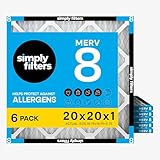
- Universally Compatible: Measuring 20" x 20" x 1", with an actual size of 19.75"x19.75" x 0.75", Simply Filters works with almost any brand. Comparable to 3M Filtrete MPR 600, Filterbuy AFB Silver, and Honey well FPR 5.
- Cleaner Air Everywhere: Our filters capture dust, mold, pet dander, and pollen in homes, offices, schools, hospitals, and commercial spaces, trapping 90% of airborne particles, promoting a healthier living environment with clean and fresh indoor air.
- Advanced Pleated Technology: With a higher pleat count than most retail, our meticulously crafted filters offer superior capture coverage, optimizing airflow and efficiency.
- Long-lasting Filtration & Easy Installation: Enjoy up to 3 months of resilient filtration. Hassle-free replacement for air conditioning units or HVAC systems. Follow airflow arrows and insert into the filter slot for central units or return grilles.
- Made in USA: Our filters are made using 100% American components, including recycled materials, ensuring superior performance and quality. Experience exceptional filtration and support local manufacturing.
Restore airflow before blaming the refrigerant charge
Cooling performance depends on the correct volume of air crossing a clean coil. A dirty filter or blocked return reduces circulation. A dirty heat exchanger can also restrict airflow. Trane notes that a clogged filter can soil the evaporator coil and contribute to freezing; Panasonic likewise warns that blocked filters or a dirty exchanger can reduce circulation and promote internal condensation.
Filter checks
- Turn the system off at the controller before removing the filter.
- Read the size, airflow direction and permitted filter rating printed on the existing filter or in the equipment manual.
- Install a clean replacement in the correct direction. A filter that is too restrictive for the blower can create a new airflow problem.
- Recheck airflow and listen for abnormal noise after restarting. If the filter becomes dirty unusually quickly, investigate dust sources, construction debris, return-air leakage or a coil that needs professional cleaning.
Trane gives a 30-to-90-day filter-change interval as a maintenance rule that varies with filter type and home conditions, not as a universal failure statistic. Homes with pets, smoke, renovation dust or many occupants may need more frequent inspection.
When a coil needs service
Do not spray household cleaner into an indoor coil or bend its fins. A technician can inspect the coil, blower, condensate pan and sensors together. This is important when icing, repeated dripping or a persistent musty smell remains after a new, correctly fitted filter has restored airflow.
Inspect the condensate pan, drain and pump
All water removed from indoor air has to leave through a correctly designed path. Trane describes the sequence as condensate dripping into a drain pan and then into a drain line. A pan that is cracked or out of level, a hose that is blocked or pinched, or a line that rises instead of falling can return water to the unit or the building.
Rank #3

- MAKE YOUR HOME YOUR SANCTUARY: 2-pack of 3-month pleated Filtrete 20x25x1 MERV 11 MPR 1000 AC Furnace Air Filter helps capture unwanted particles from your household air to contribute to a cleaner, fresher home environment
- EXCLUSIVE TECHNOLOGY: Designed with Filtrete 3-in-1 technology to pull in and trap unwanted particles, allowing cleaner air to flow through
- COUNTLESS MICROPARTICLES: With a 1000 MPR and MERV 11 rating, your Filtrete Filter will help capture many microparticles from the air passing through it
- CERTIFIED: This furnace filter is CERTIFIED asthma and allergy-friendly (2) and helps capture dust, lint and other allergens in your household air
- CHANGE YOUR FILTER OFTEN: For optimal performance, make sure to change your filter at least once every 90 days
What a sound drain installation needs
- A pan intact enough to hold water without seepage.
- A drain line with continuous fall, no unintended rises, sharp kinks or crushed sections.
- A termination that is not submerged or blocked and that discharges where water cannot damage the building.
- A condensate pump that starts when its reservoir fills, where gravity drainage is not possible.
- A working float or overflow switch where the installation uses one.
Guidance on condensate drains specifies continuous slope without rises or bends and checking for pinching and proper flow. Because the exact arrangement differs between wall-mounted, ducted, attic and basement systems, do not alter the slope or connect a hose to an unknown fitting without the installation manual or professional advice.
Safe homeowner checks
You may inspect accessible tubing for obvious kinks, look for a wet patch at the termination and observe whether a pump runs during a normal cycle if the manufacturer provides a safe test procedure. Stop if panels must be removed, electrical components are exposed, the unit is overhead, or water is near wiring. Never open the sealed refrigerant circuit or attempt to add refrigerant.
Set the controls to remove moisture, not just heat
Why very low setpoints can backfire
A lower setpoint can make the coil and nearby surfaces colder, but it does not guarantee better dehumidification. If airflow is restricted, the coil can ice. If the equipment reaches the temperature quickly, it may stop before it has removed enough latent moisture. Choose a comfortable, manufacturer-supported setting and correct the underlying moisture or sizing problem instead of chasing damp with progressively colder air.
Do these 3 things before closing this tab:
1Repair Windows errors before they cause bigger problems2Fix the driver behind crashes, sound loss and screen glitches3Clear out junk files and repair common Windows errorsInternal-dry and coil-dry cycles
Some indoor units run a fan or a special cleaning sequence after cooling to dry the coil and pan. Allow that cycle to complete. Interrupting it can leave water inside the unit, where it may create odours or later drip.
Rank #4

- SIZE & COMPATIBILITY: Nominal 16x20x1 (Actual 15.75 x 19.75 x 0.75 in). Select nominal size based on your current filter's frame or measurements. Fits standard furnaces, ACs & HVAC return grilles
- ENHANCED AIR QUALITY: Merv 8 rating air filters effectively captures household irritants like lint, dust, and pollen, to help provide cleaner and healthier air in your home
- IMPROVED FURNACE EFFICIENCY: Designed to promote furnace efficiency and optimization, this furnace air filter traps particles that can cause system wear and tear
- DURABLE CONSTRUCTION & EASY INSTALL: Made with a beverage board frame and wire mesh support, this home air filter provides reliable, long-lasting performance. Insert with the airflow arrow pointing toward the furnace/blower (away from the return grille) for a snug fit
- ELECTROSTATICALLY CHARGED MATERIAL: The air filters are made with synthetic material that is electrostatically charged to attract and capture allergens as small as 3 microns
Inverter operation
LG explains that once an inverter system reaches its set temperature, the outdoor unit may slow to a lower frequency or temporarily stop. At that point the coil can warm and produce less condensate. The room may feel cool while its humidity remains high. Record humidity and run time rather than assuming a continuously running compressor is required.
When a dehumidifier is appropriate
A portable or whole-house dehumidifier can help when the moisture load is genuinely high and the heat pump, filter and drain are operating correctly. It should not be used to conceal a blocked drain, frozen coil, leaking duct or cracked pan. Otherwise the appliance may reduce the symptom while water continues damaging the building.
Choose the arrangement around the building
- Match capacity to the room or home and the measured moisture load, following the dehumidifier manufacturer’s sizing information.
- Provide a safe continuous drain where the model permits it, or empty the reservoir often enough to prevent overflow.
- Keep clear airflow around the dehumidifier and avoid placing its discharge directly at a cold wall or heat-pump sensor.
- For a central unit, confirm that the duct connection, control strategy and condensate disposal are compatible with the heat-pump system.
If humidity remains high despite source control and correct operation, a professional can assess whether dedicated dehumidification, ventilation changes or equipment replacement is the appropriate long-term solution.
Check duct leakage, insulation and equipment sizing
Duct leakage and missing insulation
Cold supply air in a humid ceiling void or wall cavity can make the outside of a duct sweat. Leaky return ducts can draw humid air into the system; leaky supply ducts can deliver less conditioned air and leave rooms damp. Missing, compressed or wet insulation allows the duct surface to approach the dew point. An HVAC or building professional should inspect accessible ducts, seal appropriate joints with approved materials and restore insulation without blocking service access.
Best Value

- Universally Compatible: Measuring 16" x 25" x 1", with an actual size of 15.75"x24.75" x 0.75", Simply Filters works with almost any brand. Comparable to 3M Filtrete MPR 600, Filterbuy AFB Silver, and Honey well FPR 5.
- Cleaner Air Everywhere: Our filters capture dust, mold, pet dander, and pollen in homes, offices, schools, hospitals, and commercial spaces, trapping 90% of airborne particles, promoting a healthier living environment with clean and fresh indoor air.
- Advanced Pleated Technology: With a higher pleat count than most retail, our meticulously crafted filters offer superior capture coverage, optimizing airflow and efficiency.
- Long-lasting Filtration & Easy Installation: Enjoy up to 3 months of resilient filtration. Hassle-free replacement for air conditioning units or HVAC systems. Follow airflow arrows and insert into the filter slot for central units or return grilles.
- Made in USA: Our filters are made using 100% American components, including recycled materials, ensuring superior performance and quality. Experience exceptional filtration and support local manufacturing.
Oversized equipment
The EPA warns that an oversized cooling system can satisfy the sensible temperature load before it removes enough moisture. Short cycles leave a home cool but clammy. Correcting this requires a load calculation and review of controls, airflow and duct design; replacing equipment based only on the nameplate size or the presence of condensation is not reliable.
Building-envelope moisture
Condensation may be a symptom of a cold bridge, damp masonry, roof or plumbing leak, or air leakage around windows and penetrations. If the same patch stays wet when the heat pump is off, have the building envelope and plumbing checked rather than attributing all dampness to cooling.
When to call a qualified HVAC professional
Arrange service promptly when any of the following occurs:
What’s actually slowing this PC down?
Pick the symptom - the matching free tool is one click away.
- Water is dripping from the indoor unit, ceiling or wall, or has reached electrical components.
- The coil repeatedly freezes, or ice returns after the filter and airflow are corrected.
- A drain line blocks again, a pan is cracked, a pump fails or an overflow switch trips.
- You suspect low refrigerant, a refrigerant leak, a sensor fault or a compressor/control problem.
- Humidity stays high after moisture sources are controlled and the drain is sound.
- Ducts are inaccessible, uninsulated or leaking inside walls, ceilings or confined spaces.
- There is visible mould, damaged plaster, swollen flooring or repeated water damage.
Trane identifies frozen coils and defective pans or drains as conditions requiring professional diagnosis or repair. A qualified technician should test airflow, inspect the coil and pan, verify drain fall and pump operation, check controls and measure the refrigeration system before recommending a repair. Do not open the refrigerant circuit, bypass safety switches or use a flame or heat gun to thaw a coil.
Quick Recap
A practical prevention schedule
During every cooling season
- Keep return grilles and supply outlets clear.
- Check the filter at least monthly and replace it according to the manufacturer’s specification and the actual loading.
- Confirm that bathroom and kitchen exhaust fans discharge outdoors and are used during moisture-producing activities.
- Look at the indoor unit and drain termination for early signs of water, staining or algae-like buildup.
After a leak or freeze-up
- Turn off cooling and protect finishes.
- Record when the water or ice appeared and whether it followed cooking, bathing, heavy rain or a long run cycle.
- Replace a dirty filter with the correct approved type.
- Do not restart repeatedly if water returns; schedule service and correct the source before repairing cosmetic damage.
For a persistent damp room
- Keep a humidity log with room, time, outdoor conditions and heat-pump operating state.
- Control windows, doors, cooking, bathing and laundry moisture.
- Have airflow, coil cleanliness, drain integrity, duct insulation and sizing evaluated.
- Add dehumidification only after those checks establish that extra moisture-removal capacity is needed.
Key points to remember
- Condensate on the indoor coil is expected; water outside its pan and drain path is a fault.
- Showers, cooking, open windows and indoor laundry raise dew point and make cold surfaces sweat.
- Dirty filters and coils can reduce airflow, cause icing and create excess water when the ice melts.
- A blocked, kinked, poorly sloped or damaged drain can cause serious material damage.
- Inverter operation and oversized equipment can cool a room without removing enough latent moisture.
- Persistent leaks, frozen coils, refrigerant faults, failed pumps and damaged pans require qualified HVAC service.
Product prices and availability are accurate as of the date/time indicated and are subject to change. Any price and availability information displayed on Amazon at the time of purchase will apply.

