Some links on this page are affiliate links: if you buy through them we may earn a commission, at no extra cost to you.
Buy reclaimed bricks, timber and stone through established reclamation yards, architectural-salvage merchants, demolition contractors and specialist directories, then verify every batch before it is installed. Ask for provenance and stock records, inspect representative pieces, confirm structural or durability performance, check compatibility with the existing building and intended load, and confirm the planning, Building Regulations and construction-product rules that apply. Keep the evidence—quotes, photographs, declarations, grading records, test reports, invoices and delivery notes—so the reuse decision can be demonstrated later.
What makes reclaimed material different
Reclaimed material has a previous service history. That history can be an advantage: older bricks, stone and timber may match an existing building better than new products, and reuse can retain useful material. It also creates uncertainty that a new, factory-controlled product normally does not. Pieces may differ in size, moisture content, strength, remaining service life, surface treatment and contamination. A supplier’s description is a starting point, not proof that a product is suitable for your particular wall, roof, floor or landscape work.
As an Amazon Associate I earn from qualifying purchases.
Verification is therefore product-specific. A decorative brick used in a non-structural garden wall has a different evidence burden from a brick forming part of a load-bearing or exposed elevation. A reclaimed beam carrying a floor needs appropriate grading and engineering evidence; a beam used only as a visual feature does not carry the same design consequence, although it still needs checking for rot, insects, contamination and safe handling.
Where to find legitimate stock
| Source | Useful for | What to request before visiting or buying |
|---|---|---|
| Specialist reclamation yards | Bricks, roof tiles, stone, timber and mixed architectural components held as stock | Current quantities, dimensions, batch photographs, previous-use information, treatment history, storage conditions and return terms |
| Architectural-salvage merchants | Period details and materials selected for appearance or historic character | Provenance, original location where known, evidence of sorting, and whether pieces have been cleaned, cut or coated |
| Demolition contractors and deconstruction networks | Larger quantities recovered from one building or project | Recovery method, contamination controls, batch consistency, collection or delivery arrangements and who is responsible for defects discovered after loading |
| Specialist directories | Finding suppliers by region and material | Use the directory to create a shortlist, then obtain evidence directly from each merchant. Salvo is one UK directory for reclamation and salvage businesses. |
| Local conservation contacts | Repairs to historic or locally distinctive buildings | Ask the local conservation officer about appropriate brick, stone, tile or lime products. Historic England’s guidance on materials for historic buildings is available at historicengland.org.uk/advice/your-home/maintain-repair/materials/. |
For a listed building, a conservation area or a repair where appearance and fabric compatibility matter, involve the designer or conservation officer before ordering. A visually similar material can still be unsuitable if its porosity, strength, movement or mortar compatibility differs from the original.
#1 Best Overall
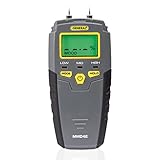
- HUMIDITY SENSOR: Our handy meter tool can quickly determine what level of remediation is needed to keep your family safe from black mold. High levels of dampness that go untreated are the leading cause of harmful fungus growth in the home.
- WATER LEAK DETECTOR: Finding the moisture content in your wood or drywall is the first step in early prevention. Continuously check and test suspicious water stains around the house so you can determine whether the area is wet or has already dried. Low, medium and high moisture tones and on-screen icons, Reading HOLD button
- MOISTURE READER: The mold test features large 0.3" high digits in a backlit LCD for quick and easy detecting. Our mildew scanner includes extra 8mm stainless steel pins, a protective cap that doubles as a calibration checker, and a “9V” battery.
- MOLD TESTER: For an accurate test read, stick the stainless steel pins into the surface of what you're measuring. The gauge has a broad range of 5 - 50% for wood and 1.5 - 33% for building materials such as concrete and drywall.
- GENERAL TOOLS: We're a recognized leader in designing and developing specialized precision tools dedicated to delivering exceptional customer service. We encourage artisans and DIYers to work smarter, measure better, and repair more productively.
Build a written requirement before contacting suppliers
Give every supplier the same concise brief. State the intended application, location, exposure, required dimensions, estimated quantity, acceptable variation, finish, delivery address and access constraints. Identify whether the material will be structural, weather-exposed, below ground, in contact with occupants, or purely decorative. Include drawings or photographs of the existing work when matching is important.
Set a tolerance for wastage rather than assuming every recovered piece is usable. Reclaimed stock is commonly sold by counted pieces, linear metres, square metres or weight; confirm which measure the quote uses and whether breakages, rejects and sorting time are included. Ask whether the quoted quantity is all from one recovery batch or assembled from several sources.
Free tools Windows power users keep installed
One-click scans. No signup required.
The eight-stage sourcing and verification workflow
1. Shortlist suppliers with traceable records
Contact several yards, merchants and demolition suppliers. Ask who owns the stock, where it was recovered, when it was dismantled, how it was stored and who inspected it. A supplier that can provide a written stock description and batch photographs gives you a better basis for comparison than an advert showing only a representative piece.
2. Obtain a written stock description
Before paying a deposit, request the material type, species or geological description where relevant, dimensions, quantity, batch or lot reference, previous use, treatment history and known defects. Ask for photographs of representative pieces and of the storage area, not only a carefully selected sample. Confirm delivery access, lead time, acceptable defects, inspection rights and the process for rejecting unsuitable pieces.
3. Inspect representative samples
Inspect enough pieces to reveal variation across the batch. Look for cracking, frost damage, spalling, delamination, rot, insect attack, corrosion, embedded metal, incompatible coatings, excessive moisture and staining. Check edges and hidden faces, because a clean visible face can conceal damage. For timber, use a moisture meter as screening evidence only; a reading does not grade the timber or prove that it is fit for a load-bearing use.
Rank #2
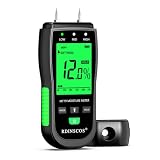
- FIND HIDDEN WALL MOISTURE EARLY — Check suspicious drywall and building surfaces after a leak, water stain, or other moisture concern. Detect abnormal moisture before a small issue develops into more extensive damage and costly repairs
- CHECK BEFORE YOU REPAIR — Don't rely on a wall looking or feeling dry. Use the moisture meter to check questionable areas before painting, repairing, or covering the surface, helping you make decisions based on actual moisture readings.
- CHECK FIREWOOD BEFORE YOU BURN — Test firewood before placing it in your fireplace or wood stove. Knowing the moisture level of your firewood helps you choose wood that is ready for burning and avoid relying on appearance alone.
- PIN-TYPE TESTING FOR DIRECT MEASUREMENTS — The contact pins penetrate the material to measure moisture inside wood and building materials. This makes it useful for checking areas where surface conditions may not tell the whole story.
- ONE TOOL FOR TWO IMPORTANT HOME CHECKS — Keep it ready for two practical jobs: checking walls for hidden moisture and checking firewood before burning. A simple way to make informed decisions before a moisture problem becomes expensive or wood goes into the fireplace.
If there is a credible possibility of chemical, oil, asbestos or other contamination, stop and obtain competent advice. Material that presents a significant risk to health or the environment may be regulated as waste rather than a reusable product. The government’s decision guidance is at gov.uk/guidance/check-if-your-material-is-waste.
Windows Errors? Fix Them Before They Spread
Repair common Windows errors and clear accumulated junk for a smoother, more stable PC - no reinstall needed.Free scan · no reinstallOutdated Drivers Are Slowing You Down
One free scan finds every outdated or missing driver and matches the right update for your exact hardware.Free scan · exact hardware match4. Confirm performance and compatibility
Match the evidence to the design requirement. Confirm dimensions and tolerances, strength or durability evidence where the design requires it, moisture and treatment history, fixing requirements, exposure conditions and compatibility with adjacent materials. Do not substitute a reclaimed product because it looks similar while leaving the designer to discover later that its physical properties differ.
5. Obtain structural advice where loads are involved
For a reclaimed beam, joist, rafter, column, lintel or other load-bearing component, ask for species, grade, dimensions, span or load information and an assessment by an engineer or other competent person. Existing marks or a seller’s visual opinion are not a substitute for appropriate grading. If the available evidence is inadequate, arrange independent inspection or testing before installation and allow for pieces that fail the assessment.
6. Check timber legality and sustainability evidence
For timber purchases, retain evidence showing legal and sustainable sourcing through the supply chain. UK Timber Procurement Policy guidance recognises Category A certification schemes including FSC, PEFC and Grown in Britain, as well as Category B credible evidence of legality and sustainability. The current guidance is at gov.uk/guidance/timber-procurement-policy-tpp-prove-legality-and-sustainablity. Keep supplier declarations, chain-of-custody information and purchase records together. Authorities can request independent verification when the evidence supplied is not satisfactory.
7. Check project and market rules
Where a reclaimed product is placed on the Great Britain market as a construction product, review the applicable conformity and marking requirements rather than assuming that reuse removes them. Government guidance on the Great Britain regime is at gov.uk/guidance/construction-products-regulation-in-great-britain. Separately, confirm Building Regulations, planning permission, listed-building consent and conservation-area controls with the relevant building-control body, planning authority or appointed professional. Requirements can depend on the nation of the UK, the building’s designation and the way the product is used.
The Tool Desk
Outbyte PC Repair FREERepair Windows errors before they cause bigger problemsFix Now →Outbyte Driver Updater FREEScan for outdated or missing drivers - takes under a minuteDriver Scan →Rank #3
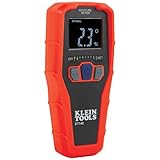
- WATER LEAK DETECTOR detects relative moisture content from leaks and flooding
- PINLESS MOISTURE METER measures relative moisture content in building materials
- NONDESRUCTIVE DETECTION up to 3/4-Inch deep using Electromagnetic field (EMF) technology
- USE ON DRYWALL, MASONRY, HARDWOOD, AND SOFTWOOD; calibrated for these materials only
- REVERSE-CONTRAST DISPLAY for easy viewing of reading and nine LED bars to indicate moisture range
8. Quarantine and document the delivery
Reinspect the load before it is distributed around site. Compare the delivered batch with the agreed description and photographs, record damaged or rejected pieces, and quarantine anything questionable. File the invoice, delivery note, photographs, supplier declarations, grading certificates, test reports, correspondence and any professional assessment under the project reference. Do not mix accepted and rejected stock in a way that makes later identification impossible.
How to verify reclaimed bricks
Check dimensions and batch consistency
Measure length, width and height across several pieces, including pieces from different pallets or areas of the stack. Record the range, not just one average. Check that the quantity of usable bricks covers the setting pattern and the allowance for cutting and breakage. If the project requires a close visual match, compare colour, texture, arris condition and weathering under the lighting in which the wall will be seen.
Check durability and previous exposure
Look for frost damage, cracking, spalling, powdering faces, salt deposits and friable edges. Ask where the bricks were previously used and whether they were exposed to severe weather, heat or aggressive contaminants. Confirm strength or durability evidence when the design, exposure or building-control assessment requires it; appearance alone cannot establish those properties.
Check mortar and wall compatibility
Confirm that the reclaimed brick will work with the proposed mortar and the existing masonry. Hard, impervious mortar can be incompatible with softer historic brick, while a brick with different suction or movement characteristics can affect jointing and drying. The designer should specify the mortar and exposure approach; do not choose it solely from the colour of an existing joint.
How to verify reclaimed stone
Identify, match and assess suitability together
Stone identification, matching and suitability are linked decisions. Compare the proposed stone’s type, colour, grain, bedding, porosity, surface finish and weathering with the existing work. Historic England explains this process in its guidance on identifying and sourcing stone for repair.
Rank #4

- 🌲【Accurate and fast measurements reveal hidden water leaks】: It has 2 high-precision pins that can penetrate the surface to be tested and quickly measure moisture content to estimate potential moisture increase throughout the home. COCZOW moisture meter is the ideal tool for measuring moisture.
- 🌲【Professional Wood Moisture Meter】: 6 calibrated scales. Our moisture meter is a great tool for manufacturers, floorers, inspectors and wood suppliers to quickly and easily measure moisture content (% Mc). You can quickly determine if the moisture content is low (5-12%), medium (12-17%) or high (17-60%). Checking moisture content prevents wood from cracking and warping.
- 🌲【Widely Used】: PM6811A moisture meter is ideal for carpentry, building construction, agricultural restoration and floor laying. Measure moisture content of wood products such as hardwood floors, cabinets, furniture, lumber, lath, beams, plywood, panels, composite boards, window frames, forestry wood, coils, building materials, etc.
- 🌲【User-friendly】: With LCD backlight, the backlight color is divided into three types of green, yellow and red, or display the moisture content of different measurement types. Hold function, maximum/minimum moisture measurement function and 5-minute automatic shutdown function (no power supply required).
- 🌲【Why choose COCZOW Wood Moisture Meter】: LED display function, large measuring range (wood: 2.0%-75.0%. Building materials: 1.5-30%), durable stainless steel needle, heat insulation, light weight and easy to carry. Get professional and accurate results with Peakmeter Wood Moisture Tester.
Inspect for hidden weaknesses
Check for cracks, laminations, open seams, friable areas, previous repairs, embedded metal and signs of freeze-thaw damage. Ask how the blocks were lifted and stored; poor handling can introduce damage that is not obvious until the stone is cut. Confirm dimensions, available face area and the amount that can be safely trimmed. Where the design depends on strength or durability, obtain the evidence or testing specified by the engineer or conservation professional.
Confirm bedding, fixings and exposure
Stone orientation, joints, fixings and exposure affect performance. Give the installer the supplier’s identification and any test information so the detailing reflects the actual material. A stone that matches visually may still react differently to water, salts or mortar than the stone already in the building.
Independent reader supportYour contribution helps us test, update, and keep practical guides available for everyone.How to verify reclaimed structural timber
Establish species, dimensions and service history
Record species where known, cross-section, length, previous use, storage conditions and any alterations such as drilled holes, notches, cuts or removed connections. Measure members at several points because historic sections may taper or vary. Photograph every face and mark each member with an identification reference.
Quick wins for a faster PC:
Fix the driver behind crashes, sound loss and screen glitchesFind Drivers →Clear out junk files and repair common Windows errorsFree Scan →Look for decay, insects and moisture problems
Inspect ends, bearing zones, connection points and areas that were concealed in the original building. Look for soft fibres, fungal decay, insect exit holes, staining, splits, excessive checks and corrosion around fasteners. Moisture readings can help identify areas for closer inspection, but readings vary with species, temperature and the instrument; they do not replace grading or an engineer’s assessment.
Obtain grading and design evidence
Ask for a recognised grading assessment appropriate to the proposed use, together with span, load and connection information. A competent person or structural engineer should determine whether the member’s measured properties and defects satisfy the design. Allow for members that cannot be graded reliably, and never conceal an unassessed defect behind finishes or insulation.
Best Value

- Easy to Read with Large LCD Screen: This wood moisture meter is easy to get an accurate reading from the surface of materials and displays accurate moisture readings on the 2.25" big screen. Use this handheld meter to check the moisture content in firewood or drywall, it can stand up on the table, the moisture content is displayed with a bar graph and percentage (_%RH) on the screen. Date Hold and Max/Min function is used to freezes readings, useful for writing down data
- Tricolor Backlight Display, Easy to Use: TopTes Moisture Meter TS-630 features an HD tri-color backlight to easily know if the wood/wall humidity is Dry, Moist, or Wet. Green backlight for Low moisture, orange backlight for middle moisture, and red moisture for high moisture. After selecting the mode, and putting pins into the firewood, easy and quick to get a visible alert from the clear screen
- Seven Calibration Scales, Two Material Mode: It is designed with built-in characteristic parameters of 7 calibration scales for wood and building material, ranging from 0.0% to 57%. This humidity meter is perfect for woodworking, water damage restoration, building construction, and home renovation. Easily Check and test suspicious water leaks around the wall/floor so you can quickly determine what level of remediation is needed
- Pin Type & Battery Operated: TopTes TS-630 moisture meter is a pin-type moisture meter and operates on batteries. With a high precision multi-material sensor, DON’T need calibration. It’ll support an accurate reading after inserting the stainless steel pins into the surface of the wood or building materials. It will auto shut off after 10 minutes of non-use to help save energy. A low-battery indicator will appear on the screen when the battery is running out
- What's in the Box: One TS-630 Moisture Meter, three AAA Batteries, one User Manual, one Carry Pouch, one Pair of Test Pins, one Mini Wrench
Evidence and records that make reuse auditable
Create a material file for each batch. Include:
- Supplier name, address, contact and stock or lot reference.
- Provenance or previous-use information, including recovery location when supplied.
- Written descriptions, quantities, dimensions, treatment history and storage conditions.
- Photographs taken before purchase, at loading, on delivery and after sorting.
- Invoices, delivery notes, payment records and agreed return or rejection terms.
- Supplier declarations, timber legality or sustainability evidence, chain-of-custody records and any independent verification.
- Grading certificates, laboratory or field test reports and engineer or competent-person assessments.
- A receiving inspection that identifies accepted, rejected, quarantined and subsequently disposed-of pieces.
Link each document to the installed location where practical. For structural components, retain the member reference on drawings or schedules. This creates a clear chain from the recovered item to the design decision and final installation.
Compare the options on more than purchase price
| Decision factor | Questions to answer | Why it changes the decision |
|---|---|---|
| Evidence | Can the supplier show provenance, declarations, grading or test reports? | Weak evidence may require independent inspection, testing or rejection. |
| Condition | How much damage, contamination, moisture, treatment or remaining service-life risk is present? | A low purchase price can be outweighed by sorting, failed pieces or specialist disposal. |
| Compatibility | Do dimensions, strength, durability, mortar, fixings and exposure suit the design and adjacent fabric? | Incompatibility can cause cracking, moisture problems, unsafe loading or an unapproved alteration. |
| Regulatory fit | Are Building Regulations, construction-product requirements, planning controls and conservation conditions addressed? | Material that cannot be lawfully or acceptably used is not a saving. |
| Whole-life cost | What will sorting, cleaning, wastage, transport, storage, testing and returns cost? | The installed cost depends on usable yield and assurance work, not the headline yard price. |
Common warning signs and what to do
- Vague provenance: ask for a written explanation of previous use and recovery. If the supplier cannot provide one, treat the uncertainty as a design and compliance risk.
- Only one perfect sample: inspect the whole batch or make the sale conditional on representative inspection.
- Unmeasured or mixed stock: obtain a counted, measured quantity and identify which pieces come from each batch.
- Fresh coatings or heavy cleaning: ask what was applied or removed and whether it affects bonding, moisture movement or contamination status.
- Stored wet or on bare ground: establish drying and protection arrangements before delivery, especially for timber and porous masonry.
- No clear rejection process: agree inspection, notification and return terms in writing before loading.
- Pressure to install immediately: pause the work until condition, performance and regulatory checks are complete.
If a delivered item fails inspection, isolate it, photograph the defect, notify the supplier promptly and record the decision. Obtain professional advice before attempting repair or alteration. If contamination is suspected, prevent disturbance and follow the applicable waste and health-and-safety advice rather than placing the item in general site storage.
Do these 3 things before closing this tab:
1Fix the driver behind crashes, sound loss and screen glitches2Repair Windows errors before they cause bigger problems3Scan for outdated or missing drivers - takes under a minuteA practical go/no-go decision
Proceed only when the material has a traceable supplier record, its condition has been inspected, its dimensions and performance suit the intended use, any structural assessment has been completed, timber evidence is adequate where applicable, and the project’s regulatory and conservation requirements have been confirmed. If one of those gates remains unresolved, keep the stock quarantined and resolve the evidence gap or select another batch.
Reclaimed construction materials can be bought safely and legally in the UK, but the process is closer to surveying and quality control than ordinary retail purchasing. The best outcome comes from selecting stock for the actual design, proving what it is and where it came from, and preserving that proof through delivery and installation.
Quick Recap
Product prices and availability are accurate as of the date/time indicated and are subject to change. Any price and availability information displayed on Amazon at the time of purchase will apply.

