Windows Errors? Fix Them Before They Spread
Repair common Windows errors and clear accumulated junk for a smoother, more stable PC - no reinstall needed.Free scan · no reinstallOutdated Drivers Are Slowing You Down
One free scan finds every outdated or missing driver and matches the right update for your exact hardware.Free scan · exact hardware matchSome links on this page are affiliate links: if you buy through them we may earn a commission, at no extra cost to you.
Sort construction and demolition (C&D) waste by first preventing avoidable waste, then salvaging intact components, separating the remaining debris into clean material streams, and processing each stream only to the specification of a confirmed reuse or recycling outlet. Concrete, brick, block, asphalt, wood, metals, gypsum, glass, plastics, fixtures, soil and rock can all appear in a C&D load, but no single facility accepts every material or condition.
The practical objective is not simply to crush, bale or remove something from a job site. It is to create a material that a real reuse center, processor, manufacturer or approved on-site application will accept and use in place of virgin material. EPA describes recovery as “a multi-step process that includes material segregation (e.g., separation of wood and aggregate from mixed debris), processing (e.g., size reduction, removal of nails), and end-use of the material in lieu of virgin material.” U.S. EPA, Sustainable Materials Management Options for Construction and Demolition Debris (November 2018).
As an Amazon Associate I earn from qualifying purchases.
What counts as construction and demolition waste?
C&D debris comes from building construction, renovation, repair, demolition and deconstruction, as well as civil-engineering work such as roads and bridges. The U.S. Environmental Protection Agency (EPA) lists concrete, wood, asphalt, gypsum, metals, brick, glass, plastics, salvaged doors, windows and plumbing fixtures, plus trees, stumps, earth and rock from land clearing. EPA accounts for C&D debris separately from municipal solid waste. EPA’s C&D materials overview explains the broad scope.
This mixture matters because a clean load of one material can have a useful market, while a mixed load may require expensive additional sorting or may be rejected. Reusable doors, cabinets or lumber also lose value when they are broken, soaked, painted with unknown products or buried under rubble. Sorting is therefore a quality-control exercise as much as a waste-diversion exercise.
#1 Best Overall

- Large-Capacity & Complete 4-Piece Set for Effortless Sorting:This recycling bin set includes four separate 12-gallon (45-liter) bags, each designed with ample space to sort and contain cans, paper, plastic, and glass. Unlike flimsy or undersized alternatives, these bins reduce frequent emptying and streamline waste management in your home, office, garage, or kitchen. The set comes ready to use with clearly labeled compartments, making it easy to adopt an organized and eco-friendly routine. Whether for household recycling or office sustainability efforts, this comprehensive set meets daily needs while encouraging consistent and correct waste separation.
- Sturdy, Waterproof & Reusable Construction for Long-Term Use:Crafted from high-quality polypropylene and reinforced plastic, these recycling bins are built to last. The waterproof material prevents leaks and resists stains, while the sturdy design ensures the bins won’t tear, break, or deform even with regular use. Easy to clean and fade-resistant, they offer a reliable and sanitary solution for sorting recyclables. Their reusable design supports sustainable living by replacing disposable bags, making them both an economically smart and environmentally responsible choice for any modern space.
- Intuitive Color-Coded System & Secure Hook-and-Loop Organization:Each of the four bins features a bright, distinct color—orange, green, blue, and yellow—allowing for instant visual identification and reducing sorting errors. The bins can be neatly connected side-by-side using the convenient hook-and-loop adhesive borders, keeping your floor space tidy and your recycling system compact. This design not only enhances kitchen or office aesthetics but also promotes consistent recycling habits through clear, color-coordinated organization for cans, paper, plastic, and glass.
- Versatile, Practical & Thoughtful Gift for Sustainable Living:Ideal for homes, offices, dorms, and garages, this set combines functionality with an eco-conscious message. It serves as a practical and meaningful gift for family, friends, or colleagues who value organization and sustainability. By simplifying waste separation with a durable, well-designed system, it encourages long-term recycling habits and supports a greener lifestyle. Help others contribute to a cleaner environment while enhancing their space with this affordable, reusable, and user-friendly recycling solution.
- Service Guarantee:We always ensure 100% customer's satisfaction, if you have any questions, please feel free to send me a message, we will surely help you solve the problem within 24 hours.
Use the waste hierarchy before sorting anything
EPA places source reduction first, followed by reuse and recycling after material has been generated. Apply that order to the project rather than treating recycling as the first response.
Prevent unnecessary material use
Accurate takeoffs, protected storage, coordinated deliveries and design decisions that preserve existing work reduce the amount of material that becomes waste. Keeping an existing wall, floor, door set or structural element in service usually avoids the impacts of manufacturing and transporting a replacement.
Salvage before demolition
When removal is unavoidable, use deconstruction or selective removal where practical. Take out intact, valuable components before mechanical demolition starts. Doors, windows, cabinets, plumbing fixtures, lumber, millwork, flooring, hardware, brick and fencing are common reuse-center categories, although each outlet has its own inventory and acceptance rules. EPA’s best-practices guidance recommends identifying reuse and recycling outlets early.
Recycle the remainder
After reusable items have been removed, separate the remaining material into streams that can be processed to a defined end use. Disposal is the last destination for material that cannot be safely reused or accepted for recovery.
Plan outlets before work begins
A sorting plan is only useful when it is connected to an actual destination. Contact potential reuse centers, material exchanges, recyclers, aggregate processors and disposal facilities before demolition or renovation starts.
Record the outlet’s requirements
- Materials accepted and prohibited.
- Maximum particle size or required dimensions.
- Allowed levels of soil, trash, paint, treated wood, fasteners or other contamination.
- Whether the outlet requires separate loads or accepts mixed C&D.
- Packaging, loading, appointment and documentation requirements.
- Service area, hours and transportation arrangements.
Reuse centers may handle doors, windows, cabinets, plumbing fixtures, lumber, millwork, metals, flooring, hardware, brick and fencing. Materials exchanges can operate as warehouses or online buyer-and-seller networks. Availability and service area vary, so confirm acceptance before hauling material. EPA identifies reuse centers and materials exchanges as potential outlets.
Rank #2

- The Perfect Solution: Looking for a way of creating a functional and effective recycling system in your home or office? Tired of always using poor quality waste bags or improvisations in order to sort your waste? The ANUANT garbage cans for kitchen are an excellent choice for any modern living space!
- Sturdy and Durable Construction: Our recycle bins are made employing premium grade, highly durable materials, a combination of waterproof polypropylene and hook & loop securing system, designed to last for many years of use.
- Large Capacity: Unlike similar products on the market, this recycling trash can features a 10 gallon/38 liter holding capacity, ideal for your household’s needs. An excellent choice also for your office or garage, these recycling bins save up on time and energy, requiring fewer emptying trips!
- Efficient Sorting: The ANUANT waste bin comes in sets of 4, with each bin being properly labeled for a smooth and easy organization of your everyday waste. Efficiently sort can, paper, glass and plastic with these durable, reusable recycling bags!
- Double Stitch Handle Straps: This waterproof storage bin features an upgraded design with double handles for an ergonomic and reliable grip, ensuring no unpleasant spills or messy accidents. The bins are easily interconnected on the sides with a hook and loop band, for better organization of your space.
Estimate quantities by stream
Use drawings, waste audits, demolition inventories and contractor experience to estimate volumes of concrete, asphalt, wood, metal, fixtures and mixed residuals. These estimates help determine container types, pickup frequency and whether a clean-load option is worthwhile. They are planning figures, not proof that every estimated ton will become a finished product.
Assign responsibility
Name the person who will inspect loads, keep containers labeled, contact receiving facilities and record final destinations. A plan without an accountable operator often ends with recyclable material being placed in a mixed container.
How to sort C&D waste on the job site
- Inspect the work area. Walk the building or civil-work area before removal. Mark reusable components, identify different materials and flag unknown or suspect substances. Do not handle a material simply because it resembles a familiar product.
- Remove reusable components intact. Disconnect utilities, remove fasteners carefully and protect items from weather and impact. Photograph or label assemblies when their installation context matters to a future buyer.
- Set up clearly identified collection areas. Keep separate areas or containers for reusable components, concrete and masonry, asphalt, wood, metals and residual mixed debris when the project and receiving facilities support those streams. Container choice is project-specific; EPA does not endorse a particular product.
- Prevent cross-contamination. Keep soil, food waste, insulation fragments, household trash and hazardous or unknown materials out of clean commodity loads. Put a cover on materials that must stay dry, such as reusable millwork or some gypsum products.
- Inspect each load before it leaves. Remove visible wrong-material items, confirm the load matches the facility’s acceptance rules and record the material type and approximate quantity.
- Send material to the confirmed outlet. Use the receiving facility’s instructions for delivery, paperwork and rejection procedures. If a load is rejected, isolate the problem material and obtain revised instructions instead of blending it into another stream.
Prepare each stream only for its intended use
Processing can include size reduction, sorting, screening, cleaning and removal of nails or other attachments. It may be performed on site, by a contractor or by the receiving facility. Ask the buyer or processor what preparation is required before spending money on extra handling.
Concrete, brick and block
Separate concrete and masonry from wood, drywall, insulation, soil and general trash. Remove reinforcing steel or other embedded material when the processor requires it. Crushing and screening can produce aggregate, but the acceptable size range and contamination limits are local specifications. A load that is visually clean may still fail a facility’s gradation or contaminant test.
The Tool Desk
Outbyte PC Repair FREERepair Windows errors before they cause bigger problemsFix Now →Outbyte Driver Updater FREEFix the driver behind crashes, sound loss and screen glitchesFind Drivers →Asphalt and asphalt shingles
Keep asphalt concrete distinct from general rubble. Asphalt shingles may follow a manufactured-products route rather than an aggregate route, depending on the local market and product requirements. Confirm whether roofing felt, flashing, insulation and other attached materials are allowed.
Wood
Pull reusable lumber, beams, doors and millwork out before processing. Separate clean untreated wood from painted, coated, glued, pressure-treated or otherwise restricted material because outlets may handle those grades differently. EPA identifies wood as highly recoverable in many locations and gives separation of wood from mixed debris as a recovery example. Remove nails and other fasteners when the processor requires it; do not assume every facility wants them removed before delivery.
Rank #3
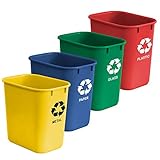
- Efficient Recycling Solution: The Acrimet Wastebasket Bin for Recycling comes in a set of 4, each designated for a specific recyclable material: Metal (Yellow), Paper (Blue), Glass (Green), and Plastic (Red), making it a highly efficient recycling solution for offices, schools and home (printed on both sides with the Universal Recycling Symbol)
- Durable Plastic Construction: Crafted from high-quality plastic, thick walls, no sharp edges and a Universal Recycling Symbol in each one matching the color and product that will be recycled; These wastebaskets are built to last, ensuring long-term use and durability
- Stackable Design: When not in use, these wastebaskets can be conveniently stacked to save space, making them perfect for small living spaces, offices, or any area with limited storage
- Easy to Clean: Cleaning is a breeze with these wastebaskets; The smooth, easy-to-wipe surfaces ensure that maintaining them is hassle-free, helping to keep your recycling area tidy and hygienic
- Product Dimensions: 14 1/4" X 10 3/8" X 15 1/8” , approximate 6.75 Gallon/ 27 Quart/ 24 Liter ; This set of recycling bins simplifies the recycling process and contributes to a greener environment by promoting responsible waste disposal
Metals
Keep steel, aluminum, copper and other metals as free as practical from concrete, wood and trash. A scrap or recycling outlet determines which grades it accepts and whether wires, appliances, tanks or composite assemblies need additional preparation. Recovering metal before demolition equipment mixes it into rubble generally preserves more value.
Gypsum, glass and plastics
These materials are within EPA’s C&D scope, but there is no universal route or acceptance list. Keep them separate when a local processor requests clean loads, and verify whether painted gypsum, laminated glass, insulated glass units, films or mixed plastics are accepted.
Soil, rock, trees and stumps
Land-clearing materials may be suitable for approved fill, soil amendment, compost or mulch outlets, but the destination depends on composition and jurisdiction. Keep soil and rock separate from demolition debris when possible; mixed loads are harder to characterize and may lose an otherwise useful outlet.
Material-to-destination guide
| Material or component | Typical preparation | Potential destination | What must be confirmed |
|---|---|---|---|
| Concrete, brick and block | Separate from trash and organics; remove embedded material as required; crush or screen only to a requested size | Processed aggregate or other local construction product | Contaminant limits, gradation, delivery format and facility capacity |
| Asphalt pavement | Keep separate from soil and mixed rubble; size reduction may be performed by the processor | Aggregate or manufactured product | Accepted asphalt types, foreign-material limits and size specification |
| Asphalt shingles | Separate roofing accessories and prohibited materials | Manufactured product or another local market | Shingle composition, contamination limits and current outlet availability |
| Reusable wood and components | Deconstruct carefully; protect from weather; remove fasteners when required | Reuse center, direct resale or materials exchange | Condition, dimensions, species or grade, moisture and pickup rules |
| Non-reusable wood | Separate clean grades from painted, glued or treated material; process only as specified | Wood recycling or another approved local outlet | Accepted coatings, treatments, fasteners and particle size |
| Metals | Keep separate from rubble; sort grades when practical | Scrap or metal-recycling facility | Accepted grades, attached materials, preparation and payment or fee terms |
| Doors, windows, cabinets, fixtures, flooring and hardware | Remove intact, clean, dry and safely; label sets where useful | Reuse center or materials exchange | Condition, dimensions, code-related limitations and receiving schedule |
| Gypsum, glass and plastics | Keep clean and separated if an outlet requires it | Local specialty recycler where available | Material-specific acceptance; no universal route is established |
| Soil, rock, trees and stumps | Separate from demolition debris; characterize material | Approved fill, soil amendment, compost or mulch outlet | Jurisdictional rules, contamination status and facility specifications |
EPA names concrete, asphalt, wood, metals, brick and block as highly recoverable in many locations, not in every location. Local recycling markets and reuse opportunities described by EPA should be treated as starting points for confirmation, not guarantees.
Where reusable materials can go
Reuse centers
Reuse centers may accept intact building components for resale or redistribution. They commonly handle doors, windows, cabinets, plumbing fixtures, lumber, millwork, metals, flooring, hardware, bricks and fencing. Ask whether the center accepts donations, buys material, requires deconstruction by appointment or limits dimensions and quantities.
Materials exchanges
Materials exchanges connect buyers and sellers of reusable or recyclable commodities. Some are physical warehouses; others operate online. Provide accurate descriptions, measurements, quantities, photographs and condition notes so a prospective recipient can decide whether the material fits its project.
What’s actually slowing this PC down?
Pick the symptom - the matching free tool is one click away.
Rank #4

- Package Contain: Two high quality recycling waste bags can be folded and stored without taking up space, easy to carry. Large capacity allows you to organize items perfectly, sorting recyclable cans, paper, glass and plastic, ect. Size: 11.8L× 11.5W× 17.0H
- Premium Material: Our recycling bins are made of high quality polypropylene, which is waterproof, easy to clean and sturdy for a long service life! Weighing capacity is enhanced by double-stitched carrying handles, making the recycle bins for kitchen bag more easy to use
- Garbage Classification: This indoor recycling bins for kitchen has a simple appearance, a set of recycling bins can basically meet the needs of garbage classification, whether it is food waste or other garbage, can be very well differentiated
- Widely Used: As a foldable recycle bins, not only can be used in the kitchen and home, but also can be carried on at all times. Whether you go out for a picnic or a family barbecue, it is a perfect partner for waste separation
- After-Sales Service: Our recycle waste bag for kitchen have a specialized quality control team to ensure that all customers receive the best quality products. If there is any problem, please feel free to contact us. Professional after-sales team will be 24h for you
Processors and manufacturers
Aggregate plants, wood processors, metal recyclers and specialty facilities may accept material directly or through a hauler. Their specifications control the preparation step. A processor may prefer to remove nails, sort grades or crush material itself, so obtain written or clearly documented instructions before changing the load.
Can material be reused on site?
Some nonhazardous C&D materials may be reused at the same project, but EPA advises following state and local requirements. Examples can include approved aggregate or fill applications, salvaged components incorporated into the building and suitable soil or wood materials used in planned site work. The fact that a material is nonhazardous does not by itself authorize placement, burial, crushing or use in a structural application.
Check three conditions first
- Jurisdiction: Identify the state, local or other authority whose rules govern the project and obtain any required approvals.
- Material suitability: Confirm that composition, contamination, strength, gradation, moisture and other project specifications match the proposed use.
- Documentation: Keep records showing the source, quantity, testing or characterization and location of use when project rules require them.
Neither EPA’s national guidance nor the available material categories supplies a universal permit, code or engineering specification. Those details depend on the location, material and proposed application.
Independent reader supportYour contribution helps us test, update, and keep practical guides available for everyone.Safety and unknown materials
C&D streams are heterogeneous and can occasionally contain harmful substances. Stop work and obtain a qualified assessment when a material is unknown, suspect, damaged or inconsistent with the project inventory. Do not sort, reuse, crush, transport or process it merely because it is mixed with ordinary debris.
Practical controls
- Keep workers away from unidentified containers, residues, unusual dust, suspect coatings and damaged building materials until they are evaluated.
- Use the project’s required personal protective equipment, dust control, lifting practices and traffic controls.
- Prevent reusable items from being stored where they can collapse, become wet or expose workers to sharp edges.
- Keep hazardous or regulated materials out of ordinary C&D containers and follow the applicable handling and disposal requirements.
- Train workers to recognize the project’s designated material streams and the stop-work procedure for unknowns.
The appropriate inspection, testing and regulatory response depends on the substance and jurisdiction; there is no single universal inspection protocol.
What the U.S. numbers show—and what they do not
EPA estimated 600.33 million U.S. tons of C&D debris generated in 2018. The figures below are national EPA estimates for that year, not current-year totals, local diversion rates or a guarantee that each material was accepted by every facility.
Best Value
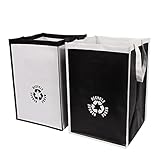
- 2 RECYCLE BIN BAGS:(W) 12 x (L) 12 x (H) 17 in. Spacious compartments allow you to neatly organize, perfect for sorting recyclable can, paper, glass & plastic. There's a plastic covered piece of cardboard in the bottom that is removable to wash it if necessary.
- PREMIUM QUALITY MATERIAL: Recycling bin can is made of waterproof polypropylene which is easy to care, wipe clean with a damp cloth and easy to clean. Sturdy double stitch handle straps to ensure durable.
- SORTS HOME RUBBISH: The recycle bag clean look, efficiently to handle your waste and recyclables, perfect refuse solution, for sorting recyclables, compost, and other garbage.
- VERSATILE USES: These bins are great for kitchen, home, office, garages. Their easy care makes them a great choice for garden clean up or waste bins.
- SERVICE: We'd love to be more eco-friendly. Each of our recycle bin was well checked to ensure an efficient shopping experience for every customer. Your suggestion is really welcomed to make us better, not only the quality, but also the service and more.
| 2018 U.S. C&D destination reported by EPA | Estimated tons |
|---|---|
| Aggregate | 313.07 million |
| Manufactured products | 131.59 million |
| Soil amendment | 1.89 million |
| Compost and mulch | 2.46 million |
| Fuel | 7.54 million |
| Landfill | 143.78 million |
| Total generated | 600.33 million |
EPA’s sustainable-management page says demolition accounted for more than 90 percent of total C&D debris generation in its cited 2018 fact sheet, while construction accounted for less than 10 percent. Those shares describe the national 2018 estimate and should not be applied automatically to a particular building, contractor or region. See EPA’s Construction and Demolition Debris: Material-Specific Data for the table and methodology.
How to choose between reuse, recycling and disposal
When two or more destinations are possible, compare the same five factors for each material:
Do these 3 things before closing this tab:
1Scan for outdated or missing drivers - takes under a minute2Repair Windows errors before they cause bigger problems3Fix the driver behind crashes, sound loss and screen glitches- Condition and contamination: Intact, clean components normally have a different outlet from broken or contaminated material.
- Required separation and processing: Include labor, equipment, testing, packaging and the risk of a rejected load.
- Receiving specifications: Match dimensions, grades, particle size, moisture and contaminant limits exactly.
- Distance and market availability: A technically suitable outlet may be impractical if transport is excessive or the market is not operating.
- Jurisdiction and project requirements: Check rules for on-site use, hauling, records, permits and approved facilities.
Use the highest-value feasible option that meets safety and acceptance requirements. An outlet that accepts a material but cannot use it as intended is not a successful recovery route.
Documentation that proves where material went
Keep a simple disposition log for each load when the contract, owner or jurisdiction requires tracking. Record the date, project area, material stream, estimated or weighed quantity, hauler, receiving facility, destination category and any rejection or correction. For reusable components, add item descriptions, quantities, condition and recipient when available.
Separate “sent to an intended outlet” from “confirmed as a finished product.” EPA’s national accounting distinguishes destinations such as aggregate, manufactured products and landfill, but a project-level shipment record alone does not prove that every load became a finished product.
Troubleshooting common sorting failures
A clean load was rejected
Ask the facility for the specific rejected material, contaminant or size problem. Quarantine that fraction, update the container label and revise the next-load inspection. Do not dilute a rejected load by mixing it into another commodity.
Free tools Windows power users keep installed
One-click scans. No signup required.
Reusable items were damaged during removal
Move salvage identification earlier, use selective removal and protect items during staging. If an item no longer meets reuse condition, redirect it to the appropriate material stream rather than presenting it as reusable.
Containers keep becoming mixed
Reduce the number of simultaneous streams if the crew cannot maintain them, place labels at eye level, assign an inspector and review the first loads at the end of each shift. A smaller number of clean streams is more useful than many contaminated ones.
The processor asks for preparation the crew did not plan
Compare the additional labor and equipment with the processor’s specification and transport alternatives. Processing is worthwhile only when it produces a material the identified outlet can use; otherwise, send it to a facility that performs the required preparation or select another compliant destination.
Quick Recap
Job-site checklist
- Existing elements evaluated for preservation or selective removal.
- Reusable components identified before demolition.
- Unknown or suspect materials isolated for qualified assessment.
- Receiving facilities contacted and acceptance rules recorded.
- Containers or staging areas labeled for the project’s actual streams.
- Concrete, masonry, asphalt, wood, metals and residuals kept separate where outlets require it.
- Processing limited to the confirmed specification.
- Loads inspected before dispatch.
- State and local requirements checked for transport and on-site reuse.
- Quantities and final destinations documented when required.
Product prices and availability are accurate as of the date/time indicated and are subject to change. Any price and availability information displayed on Amazon at the time of purchase will apply.
Recommended Free Tools

