Set an extension ladder at about 75 degrees. The practical way to check that angle is the 4-to-1 rule: position the base one foot away from the wall for every four feet of working ladder length or vertical height to the upper support. Place the top on a secure, non-breakable surface, keep both feet on level and dry ground, inspect the ladder before use, and climb with three points of contact.
This setup prevents the most common avoidable failure: the feet sliding away from the wall. CDC’s National Institute for Occupational Safety and Health (NIOSH) states that in about 40% of ladder-related injury cases, the cause is the ladder sliding out at the base because of an incorrect setup angle. That figure is the proportion stated on its Ladder Safety page, not a current annual injury rate.
As an Amazon Associate I earn from qualifying purchases.
Why the ladder angle matters
An extension ladder relies on the friction and support at its feet, the strength of its rails and rungs, and the contact at its upper support. If it is too shallow, your weight creates a strong outward force at the base. The feet can slide away from the wall, taking the ladder with them. If it is too steep, the ladder is more likely to tip backward or feel unstable when you climb.
NIOSH’s direct guidance is: Set up extension ladders at about a 75-degree angle.
The 4-to-1 rule is a field check that approximates this angle. It is not a substitute for the ladder manufacturer’s instructions, a site-specific risk assessment, or workplace requirements, but it gives you a repeatable starting point when a built-in angle indicator is not available.
#1 Best Overall

- Reduced Wobble: After repeated tests, we added two new triangle stabilizers on the telescopic ladder, which can reduce the shaking amplitude from 30° to 10° and effectively improve the stability by 36% compared with the same product.
- Safety of Use: The high quality construction of the telescoping ladder ensures that each part retracts safely. Smart locking pins hold the parts in place and prevent sliding, and the ladder will retract smoothly and slowly.
- Quality Material: The sturdy frame of the telescopic ladder is made of high-quality aluminum alloy, which is resistant to wear and corrosion, rust, high and low temperatures and aging, and can withstand up to 330 pounds of weight.
- Multi-Scene Application: Changing light bulbs and going up to the attic indoors, or repairing roofs or climbing into RVs outdoors, our aluminum retractable ladders can be used in any scenario where you need a ladder.
- Easy Portability and Storage: Retractable ladder, tied with a fixed belt, easily pick up, no matter where to take it is very convenient. The ladder 19 * 33 size can also be placed in the trunk or in various corners of the house at will.
The 4-to-1 rule: how far the base should be from the wall
Measure the ladder’s working length or the vertical distance from the base to the upper support. Divide that measurement by four. Place the feet that many feet out from the wall.
| Working ladder length or height to support | Base distance from wall using 4-to-1 | Approximate setup angle |
|---|---|---|
| 8 feet | 2 feet | About 75° |
| 12 feet | 3 feet | About 75° |
| 16 feet | 4 feet | About 75° |
| 20 feet | 5 feet | About 75° |
| 24 feet | 6 feet | About 75° |
| 28 feet | 7 feet | About 75° |
| 32 feet | 8 feet | About 75° |
For example, if the ladder’s working length to the point of contact is 20 feet, set the base approximately 5 feet from the wall. If the available landing point is 16 feet above the ground, a 4-foot base offset is the corresponding check. The measurement is horizontal: measure from the wall or upper support line straight out to the ladder feet, not along the ground following a slope.
What “working length” means
Use the section of ladder that actually spans from the feet to the upper support. On a telescoping or overlapping extension ladder, do not automatically use the longest number printed on the ladder. Account for the ladder’s configuration and the point where it rests. Follow the manufacturer’s method for determining usable length, and never exceed the ladder’s highest permitted standing rung.
Do these 3 things before closing this tab:
1Repair Windows errors before they cause bigger problems2Scan for outdated or missing drivers - takes under a minute3Clear out junk files and repair common Windows errorsA quick visual check
When a tape measure is impractical, stand facing the ladder with your toes at the feet. Place your toes against the ladder rails and extend your arms straight ahead. With the ladder near the recommended angle, your palms should contact a rung at approximately shoulder height. This body method is only an estimate; use the 4-to-1 measurement or an approved angle indicator whenever you can.
Rank #2
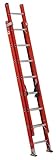
- NON-CONDUCTIVE: Crafted with fiberglass for non-conductive safety assurance, this extension ladder combines strength and durability.
- MAXLOCK RUNG LOCK: Engineered with your safety in mind, custom engineered specifically for our extension ladders from a patented, advanced molecular polymer.
- QUICKLATCH SYSTEM: Seamlessly offers a straightforward and intuitive solution for our extension ladders, securing both the fly and base sections during extension.
- SAFE AND STABLE: Steel Swivel Safety Shoe with metal shield specifically designed for extension ladders, ensures stability and safety even on uneven surfaces.
- STURDY AND STRONG: With its 300-Pound capacity, elegant design and smooth finish, you won’t find a more durable, reliable 16-foot Extension Ladder.
Choose a ladder that fits the job before you position it
Safe positioning starts with selecting a ladder that is long and strong enough for the task. NIOSH identifies size, duty rating, and material as selection considerations.
- Reach and configuration: Choose a length that lets you perform the work without standing on prohibited top steps or leaning beyond the rails. A ladder that is too short encourages overreaching; one that is unnecessarily long can be harder to control and may not fit the work area.
- Duty rating: The rating must cover your body weight, clothing, tools, and any materials you carry. Treat the rating as a maximum load, not a target. The ladder label and manufacturer’s instructions control.
- Electrical environment: Use a material appropriate to the electrical hazards. NIOSH identifies nonconductive material as an important consideration where contact with energized equipment is possible. A nonconductive ladder does not make electrical work safe: maintain required clearances and have qualified personnel handle electrical systems.
- Condition and accessories: Use only components approved for that ladder. A stabilizer or standoff may help with a particular contact problem, but an accessory does not correct an incorrect angle, defective ladder, weak support, or poor footing.
Inspect the ladder and work area before lifting it
Do the inspection before carrying the ladder to the wall and again after it is positioned. A ladder that is defective must be removed from service rather than placed where someone might use it accidentally.
Ladder inspection checklist
- Look for bent, cracked, split, warped, or corroded rails.
- Check every rung for looseness, damage, contamination, or missing tread.
- Verify that extension locks engage fully and are not bent, missing, or obstructed.
- Inspect ropes, pulleys, guides, fasteners, feet, end caps, and other hardware for wear or damage.
- Confirm that labels and warning markings are legible enough to read.
- Make sure the two sections move and lock as the instructions require; never improvise a repair or tie a damaged part into service.
- Clean off oil, mud, wet paint, ice, grease, or other substances that could reduce grip.
Ground and surroundings
- Both feet must sit on a level, clean, dry, supportive surface.
- Do not place a foot on loose fill, stacked materials, a box, a pallet, a scaffold, or any other object to gain height.
- Remove debris, cords, hoses, and tools from the base area.
- Check for doors, vehicle routes, pedestrians, machinery, overhead lines, and changing weather that could strike or move the ladder.
- Keep the setup away from live electrical conductors and other overhead hazards in accordance with applicable clearances and site rules.
Set up the extension ladder: a step-by-step procedure
- Plan the access. Identify the exact work point, the upper support, the intended landing area, and how you will get on and off. Decide whether the task can be done from the ground or with a safer access system. Confirm that the ladder’s size, duty rating, material, and condition match the work.
- Clear and secure the area. Establish a level, dry, clean base. Keep vehicles, pedestrians, doors, and equipment from contacting the ladder. Use a barricade, spotter, or other control required by the site when traffic cannot be eliminated.
- Position the closed ladder. With help for a long or heavy ladder, place its feet near the intended base and lean the top toward the support. Lift and walk the base out only when the area is clear. Use the manufacturer’s handling method; do not drag a ladder with the extension section unlocked.
- Use a secure upper support. Rest both rails against a firm, stable, vertical surface that can carry the load. Do not rest the ladder on a window, glazing, a loose panel, a door that can open, a temporary object, or another breakable or movable surface. If the contact point is not structurally reliable, choose another access method.
- Extend the ladder safely. Raise or extend the sections according to the manufacturer’s instructions while keeping your body and the ladder clear of electrical conductors and other hazards. Ensure the extension locks are fully seated on the same rung level and that the overlap meets the manufacturer’s minimum requirement.
- Set the angle. Measure the working ladder length or vertical height to the support. Divide by four and move the base that distance from the wall. For a 16-foot working length, the base offset is approximately 4 feet. Adjust until the ladder is about 75 degrees, with both rails making equivalent contact.
- Check the feet. Confirm that both feet are flat on the same supportive surface and that the anti-slip shoes are clean and correctly oriented. Never level the ladder by placing objects beneath one foot. If the ground cannot provide stable contact, stop and change the setup or use a suitable access system.
- Secure the ladder. Secure the top, base, or both where the manufacturer and site rules require it, especially where movement, wind, vibration, or traffic is possible. Ties, anchors, or other restraints must be attached to sound points and must not damage the ladder. A restraint supplements correct angle and footing; it does not replace them.
- Check the complete setup from the side. Confirm the 4-to-1 offset, firm upper contact, locked sections, level feet, clear access, and absence of overhead or traffic hazards. Push lightly from the side only as a controlled stability check while standing clear of the fall path; do not climb to test an uncertain setup.
- Provide roof or platform access. If the ladder is used to access a roof or structure, NIOSH says to extend it at least 3 feet above the edge. The extension must be secured and used in accordance with the ladder instructions and applicable safety rules. The extra length provides a handhold for the transition; it does not authorize standing on the top cap or prohibited rungs.
Climb and work without undoing a safe setup
Keep three points of contact
Maintain two hands and one foot, or two feet and one hand, in contact with the ladder while ascending and descending. Face the ladder. Move one limb at a time and keep your body between the rails. Wear footwear with clean, slip-resistant soles and check each rung before transferring your weight.
Outdated Drivers Are Slowing You Down
One free scan finds every outdated or missing driver and matches the right update for your exact hardware.Free scan · exact hardware matchPC Slower Than It Used to Be?
A free scan shows the junk files, broken settings and background clutter dragging Windows down - then fixes them in one click.Free scan · Windows 10 & 11Keep your hands free
Do not carry materials in your hands while climbing. Tools and materials can shift your center of gravity and prevent a hand from catching the ladder. Use a tool belt, hoist line, or another method that leaves both hands available, while keeping the load within the ladder’s duty rating and site rules.
Rank #3

- NON-CONDUCTIVE: Crafted with fiberglass for non-conductive safety assurance, this extension ladder combines strength and durability.
- MAXLOCK RUNG LOCK: Engineered with your safety in mind, custom engineered specifically for our extension ladders from a patented, advanced molecular polymer.
- QUICKLATCH SYSTEM: Seamlessly offers a straightforward and intuitive solution for our extension ladders, securing both the fly and base sections during extension.
- SAFE AND STABLE: Steel Swivel Safety Shoe with metal shield specifically designed for extension ladders, ensures stability and safety even on uneven surfaces.
- STURDY AND STRONG: With its 300-Pound capacity, elegant design and smooth finish, you won’t find a more durable, reliable 16-foot Extension Ladder.
Stay centered and avoid overreaching
Keep your belt buckle between the rails. If you cannot reach the work without leaning, climb down and reposition the ladder. Never walk the ladder sideways while standing on it. Do not jump from a roof or platform onto the ladder; face the ladder and maintain hand contact during the transition.
Respect the standing limits
Follow the labels and instructions for the highest permitted standing rung. The top cap and any rung marked “do not stand” are not work platforms. A longer ladder or a different access system is the answer when the required reach exceeds the standing limit.
Common setup errors and how to correct them
| What you observe | Why it is dangerous | Corrective action |
|---|---|---|
| The base is almost directly below the upper support. | The ladder is too steep and can tip backward or feel unstable. | Descend, reset the base using the 4-to-1 check, and verify the support. |
| The base is far out from the wall. | A shallow angle increases outward force and the chance of the feet sliding. | Descend and move the base closer until the angle is about 75 degrees. |
| One foot is on a slope or soft ground. | Unequal or sinking support can twist the ladder or make a foot slip. | Stop. Move to level, dry, supportive ground; never shim with loose objects. |
| The top rests on a window, loose siding, or an unlocked door. | The contact can break, move, or release unexpectedly. | Choose a sound structural support or use another access method. |
| The ladder rocks when lightly loaded. | Movement indicates inadequate footing, contact, locking, or restraint. | Do not climb. Reinspect, reset, secure, or remove the ladder from service. |
| The extension locks are at different heights or not fully engaged. | The sections can shift or collapse under load. | Lower the ladder safely and engage both locks exactly as instructed. |
| A worker carries a bucket or long tool while climbing. | Hands and balance are compromised, and the load may exceed the rating. | Descend, arrange a hoist or belt, and keep three points of contact. |
| The ladder is near a doorway or vehicle route. | A door, vehicle, or person can strike the ladder. | Lock or control the door and barricade or reroute traffic before use. |
What to do when the wall or ground is not suitable
Uneven ground
Do not compensate for a slope by placing a board, brick, bucket, or other loose item under one foot. Relocate the ladder to a level surface, have the area properly prepared, or select equipment designed for the conditions and approved by its manufacturer. If neither is possible, do not use an extension ladder there.
Fragile or irregular upper surfaces
A ladder should not bear on a surface that can crack, move, or release. A window, temporary covering, unsecured panel, or door is not a reliable upper support. Arrange a sound contact point, use a properly designed accessory only when the ladder manufacturer permits it, or select scaffolding or another access system.
Rank #4
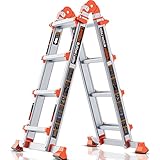
- REINFORCED AND THICKENED UPGRADE, More secure and reliable aluminum ladders, aluminum thickness of 2mm, is double the thickness of other Multi Position Ladders on the market, the weight therefore increased but will not affect its portability, more secure security escort to you
- PRACTICAL AND FLEXIBLE, Multi Position Ladder can be quickly converted into different types of ladders: extended A frame ladder, stair ladders, tall ladders, outdoor long ladders, Storable folding ladders, thus improving efficiency for different work needs
- BALANCE UPGRADE, With 2 Anti-slip balance bars, effectively strengthen the stability of the ladders, with sloping mesh design, more grip, more stable and solid than other Multi Position Ladder, and the soft pad will not wear the floor and walls
- DETAILS UPGRADE, The whole body of the ladder aluminum manufacturing, we use high-strength plastic components wrapped local metal, metal edge polishing and plastic protection, effectively prevent the use of being cut
- SAFETY CERTIFICATION, EN131 standards and ANSI standards. ISO9001 BSCI GS TUV facility certification. our reinforced thickened aluminum Multi Position Ladder easily load 300 pounds, experimental testing load up to 450KG, please pay attention to identify other inferior ladders, responsible for safety
Roof edges and transitions
For roof access, extend the ladder at least 3 feet above the edge as NIOSH advises. Secure it and plan the transition before climbing. The roof edge, roof covering, weather, and fall-protection requirements may make a ladder inappropriate even when the angle is correct.
Electrical exposure
First eliminate or control the electrical hazard under the applicable rules. Select ladder material appropriate to the environment, maintain required clearances, and use qualified workers for electrical tasks. Do not assume that a fiberglass or other nonconductive ladder protects you from energized equipment.
Independent reader supportYour contribution helps us test, update, and keep practical guides available for everyone.When to remove a ladder from service
Tag or otherwise identify a ladder as defective and remove it from the work area when you find a damaged rail, rung, foot, lock, rope, pulley, fastener, spreader, label, or other part that affects safe use. Do not return it to service after a makeshift repair. Have repairs performed only as the manufacturer permits and verify the completed ladder before use. A ladder that cannot be placed on level, clean, dry, supportive footing should also be taken out of that task rather than forced into an unsafe position.
What’s actually slowing this PC down?
Pick the symptom - the matching free tool is one click away.
Workplace controls and homeowner planning
Homeowners should tell other people in the area that a ladder is in use and keep children and pets away. Workers should follow the employer’s ladder program, training, inspection records, fall-protection rules, and any jurisdiction-specific requirements. A general angle check cannot replace a site-specific assessment of weather, wind, overhead conductors, traffic, simultaneous work, rescue planning, or the need for a scaffold, platform, lift, or fall-arrest system.
Best Value

- 🏗️【High-Strength Aluminum, Holds Up to 330 lb】Built with high-strength 6063 aluminum alloy with an oxidized surface, holds up to 330 lb. Resists wear, corrosion, rust, and aging. Reinforced nylon fiber in plastic parts enhances strength. Features 40 cm (15.7 inch) step spacing. Lightweight at only 35 lb.
- 🔗【Detachable Top Hooks & Non-Slip Feet for Secure Fixing】Equipped with 2 detachable hooks that securely grip roof edges, gutters, or wall tops — greatly increasing stability on attics, lofts, roofs, RVs, and trees. Non-slip bottom caps and angled feet protect your safety during use. For indoor use, simply turn the hooks toward you. Need more storage space? Remove the hooks in seconds.
- 🔒【Two Locks Per Rung, Prevents Pinching & Collapse】Each rung features two independent auto-locking mechanisms. You’ll hear a solid “click” when they lock — your clear signal that the ladder is secure. Helps prevent accidental collapse and pinching, while allowing flexible height adjustment.
- 🧳【Lightweight & Portable, Fits Anywhere】Lightweight at only 35 lb and folds down to just 19″×3.7″×42″. Includes storage straps and a carrying handle for easy transport. Toss it in your car trunk, slide it under your bed, or stand it in a closet corner. No more bulky ladders eating up your space.
- 🏠【One Ladder for Roof, Attic, and Job Site】From roof repairs and second-story window cleaning to warehouse shelving and RV roof access — this ladder reaches up to 20.3FT, going where others can‘t. Need something mid-height? Just extend the bottom few sections where you stand, no need to open it all the way.
Stop work when wind, rain, ice, lightning, poor visibility, fatigue, medication, or time pressure changes your ability to control the ladder. Repositioning the ladder takes less time than recovering from a slip, and no access point is worth climbing an unstable setup.
Using a digital angle aid
NIOSH describes an angle-measuring tool and other safety resources in its Ladder Safety App. The current NIOSH app page states that the app is not receiving updates at this time
. Treat it as an optional aid, not as proof that a ladder is safe. A measured 75-degree angle cannot compensate for a damaged ladder, an unsecured top, slippery feet, a weak wall, an electrical hazard, or a person carrying a load. The manufacturer’s instructions and applicable safety requirements remain controlling.
A final pre-climb check
- The ladder is the correct length, duty rating, and material for the task.
- No rail, rung, lock, rope, pulley, foot, fastener, or other part is missing or damaged.
- The base is level, clean, dry, and supportive, with both feet flat.
- The top bears on a secure, stable, non-breakable surface.
- The angle is about 75 degrees, checked by the 4-to-1 rule or an appropriate angle aid.
- Extension locks are fully engaged and the sections overlap as instructed.
- The ladder is secured against movement, and doors, traffic, machinery, weather, and overhead hazards are controlled.
- For roof or structure access, the ladder extends at least 3 feet above the edge where NIOSH guidance applies.
- Your hands will remain free, your body will stay between the rails, and you can maintain three points of contact.
- You can reach the work without overreaching or standing above the permitted rung.
If any answer is no, do not climb. Correct the condition, choose a safer access method, or postpone the task. Correct angle is essential, but it is only one part of a stable ladder system.
Free tools Windows power users keep installed
One-click scans. No signup required.
Quick Recap
Product prices and availability are accurate as of the date/time indicated and are subject to change. Any price and availability information displayed on Amazon at the time of purchase will apply.

