Do these 3 things before closing this tab:
1Repair Windows errors before they cause bigger problems2Scan for outdated or missing drivers - takes under a minute3Clear out junk files and repair common Windows errorsA roof management program turns scattered drawings, emergency callouts and uncertain replacement dates into controlled decisions. Its objectives should define which roof assets are covered, the performance and quality expected, who is accountable, how condition will be measured, how inspections and repairs are scheduled, how failure risks are ranked, and how lifecycle costs enter the budget.
The right scope depends on your portfolio, locations, organization and available expertise. A small owner may need a disciplined inventory and maintenance calendar; a multi-building portfolio may also need design standards, construction quality controls, condition indices and multi-year capital forecasts.
As an Amazon Associate I earn from qualifying purchases.
Start with a scope that can be managed
Write the program boundary before collecting data. State the buildings, roof sections and associated elements included, the geographic area, and the decisions the program must support. The National Bureau of Standards describes three useful scope models: total roof management; design-and-construction management; and maintenance management. Total management follows the roof through design, material selection, installation, maintenance and quality control. Design-and-construction management concentrates on new or replacement work. Maintenance management concentrates on inspection, repair and continued service of existing systems. See the National Bureau of Standards roof-management report.
| Program mode | Primary decisions | Typical objective wording |
|---|---|---|
| Total roof management | Design, procurement, installation, maintenance, renewal and quality across the service cycle | Maintain every roof at the performance and risk level set by the owner from design through replacement. |
| Design and construction management | System selection, specifications, workmanship, testing, commissioning and warranty handover | Deliver roof systems that meet owner criteria and have complete records for future maintenance. |
| Maintenance management | Inventory, inspections, preventive work, repairs, risk ranking and renewal planning | Keep existing roofs watertight and serviceable while directing funds to the highest consequences first. |
Translate the chosen scope into owner criteria. Specify acceptable system types, performance expectations, design and material standards, workmanship requirements, documentation, warranty obligations and whether maintenance is included. Criteria should be clear enough to guide a project team yet reviewed when technology, regulations or operating needs change. Do not assume that a manufacturer’s warranty alone defines acceptable performance; the owner still needs measurable requirements and assigned responsibilities.
#1 Best Overall

- No Registration Needed - Under 249 g, this drone with camera for adults 4K does not require FAA registration or Remote ID for recreational use. Visit the FAA's official website for requirements related to drone registration and Remote ID. [1]
- 4K Ultra HD & 3-Axis Gimbal for Cinematic Quality Shooting - Capture stunning moments in any light—sunrises, sunsets, and night scenes with crystal-clear 4K resolution. Thanks to the 3-axis gimbal, you can achieve cinematic-quality footage with this advanced drone with camera.
- 38kph (Level 5) Wind Resistant - This drone for adults has a stable flight even in Level 5 winds. Brushless motors enhance power and allow takeoff at altitudes up to 4,000 meters.
- Due to platform compatibility issue, the DJI Fly app has been removed from Google Play. To ensure a better product usage experience, please log in to the DJI official website to download the latest version of DJI Fly.
- Uninterrupted Creation with Extended Battery Life - There are three sets available for you to choose from: 1-battery set (31-min), 2-battery set (62-min), or 3-battery set (93-min). [3] Say goodbye to battery anxiety and let nothing hold you back.
Build a defensible roof baseline
Your first operational objective is to determine what and how much must be managed. The initial survey can require substantial effort, but most of the work is one-time data capture followed by controlled updates. The exact-topic guidance recommends assembling available drawings, specifications, repair and maintenance records and photographs, then inspecting each roof to identify work needed to bring it to maintainable condition. Read the practical discussion of roof-management objectives.
Collect records before opening the roof
Search facilities, project and accounting files for original drawings, specifications, change orders, contracts, warranties, closeout documents, leak logs, invoices, previous surveys and photographs. Record the document date and confidence level: an as-built drawing, an old proposal and an unverified recollection should not be treated as equivalent evidence.
Warranty terms can affect whether intrusive investigation is appropriate. The IIBEC article on roof asset management recommends assembling warranties, drawings, specifications, contracts and maintenance records before field surveys. Check notice requirements, inspection obligations, exclusions and who is authorized to perform repairs before core sampling, cutting or other intrusive testing.
Survey every roof section consistently
Give each building and roof section a unique identifier. During the field assessment, document roof type and layers when known, approximate installation date, dimensions, drainage, penetrations, edges, walls, flashings, rooftop equipment, access conditions and visible defects. Observe both exterior and interior conditions: staining, damp insulation, corrosion, damaged finishes and evidence of active leakage can reveal consequences not visible from the roof surface. Photograph defects with a location reference and link them to a plan or map.
Make the record a living asset
Store the inventory, inspection findings, work orders, costs, photographs and warranties where maintenance and capital-planning staff can retrieve them. Each update should carry a date, author, source and status. When a repair changes a roof assembly or drainage detail, update the plan and the record immediately rather than waiting for the next survey. A database or roof-management system can begin with roof type, age and general condition, then expand to defect quantities, condition ratings, cost estimates, remaining-life assumptions, repair priorities and reports as the owner’s needs grow.
Rank #2

- No Registration Needed - Under 249 g, this drone with camera for adults 4K does not require FAA registration or Remote ID for recreational use. Visit the FAA's official website for requirements related to drone registration and Remote ID. [1]
- 4K Ultra HD & 3-Axis Gimbal for Cinematic Quality Shooting - Capture stunning moments in any light—sunrises, sunsets, and night scenes with crystal-clear 4K resolution. Thanks to the 3-axis gimbal, you can achieve cinematic-quality footage with this advanced drone with camera.
- 38kph (Level 5) Wind Resistant - This drone for adults has a stable flight even in Level 5 winds. Brushless motors enhance power and allow takeoff at altitudes up to 4,000 meters.
- 10km Max HD Video Transmission-up to 10 km (32,800 feet) [2] of HD video transmission and has excellent anti-interference capabilities, giving you the ability to freely explore vast landscapes and see clearer.
- Due to platform compatibility issue, the DJI Fly app has been removed from Google Play. To ensure a better product usage experience, please log in to the DJI official website to download the latest version of DJI Fly.
Define the information each roof record must contain
A useful objective is not “collect data”; it is “collect enough verified data to make the next decision.” Set mandatory fields and distinguish observed facts from estimates. The following structure covers the decisions most owners need.
| Data group | Minimum content | Decision enabled |
|---|---|---|
| Identity and geometry | Building, section ID, address, roof area, access and plan reference | Assign work, compare sections and locate defects |
| Construction | System type, layers when known, installation or last-renewal date, drainage and edge details | Select compatible repairs and estimate renewal timing |
| Evidence | Inspection date, inspector, photographs, drawings, test results and confidence notes | Separate verified condition from assumptions |
| Condition and defects | Leak evidence, membrane, flashing, insulation, penetration and drainage observations; quantities where measurable | Estimate urgency, scope and likely causes |
| Commercial records | Warranty terms, contracts, prior work, invoices and repair history | Preserve rights and calculate actual cost trends |
| Planning fields | Condition rating, operational consequence, repair estimate, replacement estimate, service-life assumption and priority | Build budgets and repair-versus-replacement cases |
Do not force an unknown date or assembly into a precise value. Mark it as unknown, estimated or unverified and create a task to improve the evidence. This prevents false precision from driving a capital decision.
Set inspection, repair and preventive-maintenance procedures
Make routine prevention an explicit objective, not an informal promise. The operating process should connect inspection findings to competent material selection, accurate repairs, verification and record updates. Sources support regular or periodic inspections, but they do not establish one interval suitable for every climate, system, warranty, occupancy or jurisdiction. Set intervals using roof condition, system guidance, owner policy, access constraints and qualified advice.
- Plan the inspection. Review the roof record, open work orders, weather history where relevant, warranty conditions and known critical spaces. Confirm safe access and the qualifications required for the task.
- Inspect consistently. Use a repeatable route and checklist covering field areas, seams, flashings, penetrations, drains, edges, walls, rooftop equipment and interior evidence. Record defect location, extent, probable cause and photographs.
- Triage immediately. Escalate active water entry, unsafe conditions or damage threatening equipment, inventory or occupied areas. Temporary protection is a response measure, not a completed repair.
- Specify and execute the repair. Select materials and methods compatible with the existing assembly, warranty and environmental conditions. Define preparation, application, weather limits and acceptance criteria in the work order or specification.
- Verify and close. Check the completed work, document materials and quantities, record any residual risk, update photographs and drawings, and set the next monitoring action.
Maintenance personnel need practical knowledge of roof materials, defect diagnosis and application methods. Where internal capability is limited, define when a qualified consultant or contractor is required and who accepts the work. A simple process that is followed and documented is more valuable than a sophisticated schedule no one can execute.
Prioritize by condition and consequence
A roof with similar defects can deserve a different response depending on what lies below it. Rank work using both physical condition and the consequences of failure. Consider production equipment, stored inventory, critical services, occupied spaces, business continuity, environmental sensitivity and the time needed to obtain a repair.
Rank #3

- No Registration Needed - Under 249 g, this drone with camera for adults 4K does not require FAA registration or Remote ID for recreational use. Visit the FAA's official website for requirements related to drone registration and Remote ID. [1]
- 4K Ultra HD & 3-Axis Gimbal for Cinematic Quality Shooting - Capture stunning moments in any light—sunrises, sunsets, and night scenes with crystal-clear 4K resolution. Thanks to the 3-axis gimbal, you can achieve cinematic-quality footage with this advanced drone with camera.
- 38kph (Level 5) Wind Resistant - This drone for adults has a stable flight even in Level 5 winds. Brushless motors enhance power and allow takeoff at altitudes up to 4,000 meters.
- 10km Max HD Video Transmission-up to 10 km (32,800 feet) [2] of HD video transmission and has excellent anti-interference capabilities, giving you the ability to freely explore vast landscapes and see clearer.
- Due to platform compatibility issue, the DJI Fly app has been removed from Google Play. To ensure a better product usage experience, please log in to the DJI official website to download the latest version of DJI Fly.
Use a transparent triage classification
The exact-topic guidance suggests grouping roofs after the initial investigation:
Free tools Windows power users keep installed
One-click scans. No signup required.
- Problem: active failure, severe deterioration or a credible near-term threat requiring corrective work or close control.
- Suspect: evidence of deterioration or uncertainty that warrants investigation, monitoring or planned repair.
- Acceptable: currently serviceable with documented preventive tasks and a defined review date.
Mark the classification and its rationale on roof plans or in the asset record. A one-line reason such as “active leak over electrical room” is more useful than a color with no explanation.
Combine technical and operational factors
| Factor | Questions to ask | Effect on priority |
|---|---|---|
| Condition | How extensive, active or progressive are the defects? | More severe or spreading defects move work forward. |
| Consequence | What equipment, stock, occupants or services could be affected? | Higher business or safety consequence increases priority. |
| Urgency | Can the roof remain stable until planned work, or is temporary protection needed? | Immediate threats require response before routine projects. |
| Cost and access | What is the repair estimate, and can work be coordinated with other projects? | Enables sequencing without allowing low cost to conceal high risk. |
| Evidence quality | Is the decision based on current inspection data or an assumption? | Uncertainty may justify targeted investigation before commitment. |
For portfolio comparisons, use a documented condition scale chosen by the owner. The National Research Council Canada publication notes that the U.S. Army Corps of Engineers ROOFER Roof Condition Index expresses a numerical value from 0 to 100 based on defects in membrane, flashing and insulation. That is an example, not a universal scale; define your own rating method, thresholds and weighting before comparing buildings. See Effective Roof Management – Understanding the Life Cycle of Your Roof Systems.
Assign governance, quality assurance and quality control
Objectives fail when ownership is vague. The National Bureau of Standards identifies four essential elements: an owner roof-system criterion, a quality-assurance plan, a quality-control plan and explicit responsibility assignments. Assurance is the planned set of actions that gives the owner confidence the roof conforms to requirements; it can include design review, certification, testing and inspection. Quality control is the implementation of those actions by the parties responsible for design, manufacture or application.
| Role | Accountability to define |
|---|---|
| Owner or asset manager | Approve criteria, risk tolerance, funding priorities and acceptance of residual risk. |
| Facilities or maintenance lead | Maintain records, schedule inspections, control work orders and verify closeout. |
| Designer or consultant | Develop compatible details, specifications, testing requirements and review responses. |
| Contractor or applicator | Follow approved methods, document materials and workmanship, and report deviations. |
| Quality-assurance reviewer | Independently check design, installation evidence, tests and acceptance documentation. |
Assign responsibility from the earliest design decision through the intended service life. Require suitable experience and training for key roles, and define who can authorize deviations, emergency measures and warranty notifications. Coordinate the owner, maintenance staff, consultant and contractors so that field findings reach the person who controls the budget and the person who controls the work.
Rank #4

- MULTIPLE FUNCTIONS: Based on the newest upgraded chip compared to others, this drone has multiple interesting functions. Such as trajectory flight, gravity control, 3D flip, headless mode, 3-speeds mode, one-key takeoff/landing, gesture photo, and even VR! Whether you're a beginner or a skilled player, our drone promises an enjoyable flying adventure. (Some functions are controlled by the app.)
- ELECTRIC ADJUSTABLE 1080P HD Camera: This Oddire drone equips an HD 1080P camera, which assists you in catching every wonderful moment from a birds-eye perspective. The camera angle can be adjusted remotely up to 90 degrees. Combined with the upgraded hover system and optical flow positioning technology, the camera drone is more stable when shooting. You can enjoy a real-time panoramic view and share it on your social media with ease.
- STABLE HOVER & USER FRIENDLY: Equipped with an Optical Flow Positioning Camera, to make the drone have a more stable hover altitude ability, it does not have the function of automatic following. Just calibrate it before takeoff (Turn on the drone, place it on flat ground, and move both joysticks inwards 45 degrees at the same time). Super suit for beginners! One-key takeoff/landing function can help users to start flying easily, and the altitude hold feature allows the drone to hover in the air.
- LONG BATTERY LIFE: With two rechargeable drone batteries, this kid's drone extends the flight time to approximately 25-28 minutes, providing a worry-free flying experience. Features with over-current protection and an emergency stop to ensure a safe and reliable flight. It is also a great present for birthdays and holidays.
- APP CONNECTION: Download the APP "ODDIRE GO". Place the drone on the ground, then turn on the drone and controller(they will connect automatically). Open the mobile phone's wifi list, look for the wifi starting with "ODDIRE_X-28_XXXXXX", and connect directly. The photos & videos will be saved to your phone directly, you don't need an SD card, convenient and economical. If you suffer from any problems, please contact us and we will help you within 24 hours.
Connect objectives to budgets and lifecycle decisions
Accounting and scheduling are operating functions, not an afterthought. Track inspection labor, preventive materials, emergency callouts, repair estimates, completed work, consultant fees and replacement forecasts by roof section. Use actual invoices to improve future estimates and distinguish recurring maintenance from capital renewal.
Set a budget objective that protects preventive work while reserving funds for high-consequence failures. An inadequate budget prevents adequate preventive maintenance, so present unfunded risks explicitly rather than quietly reducing inspection or repair scope. Show the consequence of deferral, the temporary controls required and the date by which the decision should be revisited.
Use remaining-life forecasts cautiously
More detailed systems can support repair-versus-replacement comparisons and lifecycle cost analysis. However, the Canadian publication cautions that empirical expected-service-life data for a given roof system are limited and that available industry data vary. A remaining-life number is therefore a planning estimate, not a guarantee. State the assembly, inspection evidence, assumed environment, replacement-cost basis and uncertainty with every forecast. Update the estimate when new inspections, testing, leaks or repairs change the evidence.
Independent reader supportYour contribution helps us test, update, and keep practical guides available for everyone.Implement the program in a practical sequence
- Authorize the charter. Name the executive sponsor, program manager, included buildings, scope mode, risk tolerance and reporting audience.
- Assemble records. Gather drawings, specifications, warranties, contracts, photos, work history and cost data; identify missing or conflicting documents.
- Create the inventory. Assign section IDs, map roof areas and capture construction, access, occupancy and critical-space information.
- Perform baseline inspections. Use a consistent checklist, document interior and exterior evidence, and identify work needed to reach maintainable condition.
- Classify and rank. Apply the approved condition method, consequence assessment and problem/suspect/acceptable triage. Put priorities and reasons on plans or in the database.
- Stabilize urgent risks. Complete temporary protection and critical repairs, then verify and document the permanent scope.
- Publish the maintenance plan. Set inspection triggers and intervals appropriate to each roof, assign staff or contractors, define materials and acceptance checks, and schedule record updates.
- Build the rolling budget. Combine preventive tasks, prioritized repairs, investigations and renewal scenarios with stated cost and service-life assumptions.
- Review and improve. At least annually, examine missed inspections, repeat leaks, estimate accuracy, warranty outcomes, condition changes and unresolved risks; revise criteria or procedures where evidence shows they are not working.
Measure whether the objectives are working
Choose a small dashboard that reflects decisions rather than activity alone. Useful measures include the percentage of roof area with a current inspection, the share of assets with verified records, overdue high-priority work, repeat leaks after repair, preventive work completed on schedule, spending by maintenance and renewal, and the number of roofs whose priority changed after new evidence. Report the denominator and time period so a percentage cannot be mistaken for portfolio-wide coverage.
Recommended Free Tools
Review exceptions with the accountable owner. A high inspection-completion rate does not compensate for unaddressed active leaks, and a low emergency-repair count may simply indicate under-reporting. Pair every metric with the action it triggers, such as a field reinspection, specification change, additional training or budget escalation.
Best Value
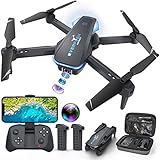
- Drone with 1080P Camera: A camera mounted on it can be manually adjusted to see what's in front of the drone while it's flying, or it can be aimed down to see what's directly below it. I'm sure you can take some interesting photos & videos, or even use it to inspect the roof of a house or other hard-to-reach areas. Friends can shoot each other skating & capture really cool videos. Please charge the product using the provided charging cable. Before using this item, make sure to fully charge it.
- Play Longer: The FPV drone has two rechargeable batteries, each providing approximately 12 minutes of flight time. 2 batteries can be swapped & charged in rotation, greatly extending the fun time. Note that more flips & faster speeds will reduce the flight time per battery
- Remote Control & App: You can fly the mini drone with remote control or a smart phone. But in order to capture video or images, you must be connected to the drone via WiFi & the ''Hiturbo FPV'' app. If you need to use the voice control, trajectory flight & other functions which under the ''control switch'' button in the app, you need to disconnect the remote control from the drone, connect the drone with the app individually.
- Discover new adventures: 2 batteries provide you with up to 24 minutes of flying experience. Features such as altitude hold, 3D flip, headless mode, one key take off/landing, speed adjustment & voice control make it easy & fun for beginners or novices.
- Suitable for Beginners: This drone is a little easier to operate than other drones (it has fewer steps to fly, no manual pairing required), so it's suitable for people just starting out. If you're considering learning how to fly a drone, make this drone your first one. You'll be surprised at how easy it is to take your imagination to the next level with this starter drone
Common failure modes and corrective actions
The inventory is incomplete
Symptom: staff cannot identify roof boundaries, assemblies or warranties when a leak occurs. Correction: make a section ID and evidence source mandatory, reconcile plans with field observations and flag unknowns for follow-up.
Inspections produce descriptions but no decisions
Symptom: reports list defects without quantities, consequences, urgency or an owner. Correction: require each finding to include location, extent, consequence, recommended action, priority and responsible party.
Repairs create repeat leaks
Symptom: the same area returns to the emergency log. Correction: review probable cause, compatibility, preparation, workmanship and acceptance evidence; escalate recurring defects to a broader investigation or replacement option.
Quick wins for a faster PC:
Repair Windows errors before they cause bigger problemsFix Now →Scan for outdated or missing drivers - takes under a minuteDriver Scan →Clear out junk files and repair common Windows errorsFree Scan →Budgets are driven by age alone
Symptom: an older but low-consequence roof outranks a newer roof over critical operations. Correction: combine condition with consequence, evidence quality, repair urgency and cost, and document the weighting.
Forecasts imply false certainty
Symptom: a precise replacement year is treated as a promise despite limited service-life evidence. Correction: publish assumptions and ranges, identify uncertainty, and update the forecast after each meaningful inspection or intervention.
Use a decision framework when choosing tools or outside help
Whether you use spreadsheets, a dedicated roof-management system, consultants or internal staff, evaluate the approach against the same questions:
- Scope fit: Does it support the full service cycle, design and construction, maintenance, or the specific combination you need?
- Information quality: Can it preserve drawings, warranties, inspection detail, photographs, work history and cost records with dates and sources?
- Risk visibility: Can users see condition, operational consequence, urgency, priority rationale and unresolved uncertainty together?
- Quality and accountability: Does it assign assurance, quality-control checks, approvals and qualifications to named roles?
- Planning usefulness: Can it compare repair and replacement scenarios while exposing service-life and cost assumptions?
- Owner fit: Is it proportionate to portfolio size, building locations, internal expertise, organizational responsibilities and available resources?
The best program is the one that keeps evidence current, sends the right work to the right person and makes risk-and-cost trade-offs visible before a failure forces the decision.
What’s actually slowing this PC down?
Pick the symptom - the matching free tool is one click away.
Quick Recap
Product prices and availability are accurate as of the date/time indicated and are subject to change. Any price and availability information displayed on Amazon at the time of purchase will apply.

