Report suspected illegal construction to the building or code-enforcement agency that governs the property, not to a contractor or a general hotline. Give the exact address, describe only what you personally observed, state when and whether the work is continuing, attach lawful photographs or video if the local form accepts them, and save the confirmation or case number. An apparent violation is a concern for an inspector to assess—not proof that a permit or code rule was broken.
The correct route depends on the property’s city, county, state, building type and condition. The examples below show how the process works in New York City, Washington, DC and Pennsylvania; they are not nationwide rules.
As an Amazon Associate I earn from qualifying purchases.
Start with urgency and jurisdiction
Call emergency services for an immediate threat
Do not wait for a routine inspection when there is an immediate danger to people or property. Leave the area and use your local emergency number. In New York City, NYC311 specifically directs people to 911 for urgent hazards such as falling debris, suspected gas leaks and accidents. Other locations may use a different emergency number or route, so follow the instructions for the property’s jurisdiction.
Free tools Windows power users keep installed
One-click scans. No signup required.
Do not enter the site, confront workers, move materials or try to shut down work yourself. A report can be made from a place you may lawfully access.
#1 Best Overall

- GET MORE VALUE with our 5-PACK of Field Note Books. GET MORE, SPEND LESS!
- 240 PAGES IN TOTAL - Each book contains 48 PAGES (24 sheets)
- POCKET SIZED - This mini memo pad is 3.5x5.5 inches. HIGH QUALITY, acid-free paper
- LINED / RULED pattern (graph & dot graph also available above)
Identify the agency with authority
Find the official government page for the property’s location and select the complaint category that matches the facts. Municipal building departments or code-enforcement offices commonly handle active construction, permit questions, unsafe conditions and improper building use. A historic-preservation commission may handle work affecting a designated landmark. A state office may oversee how local code officials administer a state code without having authority over the builder or the work itself.
Search the local government’s official website for terms such as “building complaint,” “code enforcement,” “illegal construction,” “unsafe building,” “landmark violation” or “permit complaint.” Confirm that the page is current before filing. Permit exemptions, contact rules, privacy policies, deadlines and appeal rights vary by location.
What to report: facts, not a verdict
Use neutral, observable language. You can report that workers removed exterior windows, demolished an interior wall, added plumbing, excavated near a property line or posted a permit number that appears inconsistent with the work. You generally cannot establish from the street whether a permit is required, whether an exemption applies or whether hidden work complies with code. Let the agency make those determinations.
Possible complaint categories include:
- Active construction: work that is occurring now, such as demolition, structural alterations, excavation or additions.
- Past conversion or occupancy: a completed change in the number or use of dwelling units, a basement conversion or another apparent change in use.
- Unsafe conditions: unstable walls, falling materials, blocked exits, exposed utilities or other conditions that may endanger people.
- Demolition: full or partial demolition that may require a separate permit or review.
- Historic-property work: alterations, demolition or disrepair affecting a designated landmark or historic district.
- Local code-official conduct: in some states, a separate process for complaints about how a municipal or third-party code official administered the state construction code.
Do not assume that a complaint about a contractor, a zoning dispute, a landmark alteration and a code-official investigation go to the same office.
Build a concise, usable record
1. Pin down the location
Write the complete street address, apartment or unit if known, side or portion of the building, nearest cross street and any visible landmark. If the address is uncertain, explain exactly which property you mean and provide a nearby intersection. A precise location is more useful than a long narrative with no identifying details.
2. Create a dated observation log
For every observation, record the date, approximate time, weather only if it explains visibility, and what was visible. Note whether the work was ongoing when you looked. Describe actions and effects in plain language, for example: “On 18 October at about 10:00 a.m., workers removed three exterior windows on the third floor facing the east side.” Avoid statements such as “the owner is violating the code” unless an agency has already made that finding.
Rank #2

- Crafted from the highest quality materials
- Built for performance and durability
- Made in United States
Record recurring observations as separate entries rather than relying on memory. A simple notebook, spreadsheet or dated digital note is sufficient; a purchased field notebook is optional. The agency’s complaint form and confirmation record matter more than the format of your notes.
3. Note visible permits and job information
Look for a permit card, posted notice, contractor information, inspection placard or job number that can be read from a lawful viewpoint. Copy the number exactly and note where it was displayed. Do not climb fences, enter a locked area, move a sign or ask workers to reveal documents that are not publicly posted.
4. Describe effects that an inspector can verify
Include visible debris, blocked sidewalks or exits, exposed wiring or pipes, dust, noise, water intrusion, changes in entrances, or other effects. State what you saw and where. If you do not know whether an effect violates a rule, describe it without labeling it illegal.
5. Add photographs or video only when lawful and safe
Take clear, contextual images from a public area or another place where you are permitted to be. A wide image can show the property and location; closer images can show a posted permit, demolition or a blocked access route. Keep the original files and do not edit them in a way that removes relevant context. Avoid unrelated people, private interiors and identifying information where possible. Local forms may set their own file-size, format or privacy requirements, so follow those instructions.
Official examples support visual documentation, but there is no universal rule about metadata, disclosure or retention. Do not use a camera, drone or other device to enter restricted airspace or to observe areas you could not lawfully see.
Quick wins for a faster PC:
Clear out junk files and repair common Windows errorsFree Scan →Fix the driver behind crashes, sound loss and screen glitchesFind Drivers →Choose the reporting path
| Path | Best fit | What it can investigate | Information commonly requested |
|---|---|---|---|
| Municipal building or code-enforcement department | Active work, suspected work without a permit, unsafe conditions, improper use or a past conversion | Local building, permit and occupancy matters within the department’s authority | Exact address, description of work, dates, current status, visible permit or job number and supporting images when accepted |
| Historic-preservation or landmarks commission | Alteration, demolition or disrepair at a designated landmark or in a protected district | Potential unauthorized landmark work and listed-property disrepair | Address, borough or equivalent locality, cross street, observed condition, exact location, whether work is ongoing and whether it is visible from a public thoroughfare |
| State code-administration complaint office | Allegations about how a municipal or third-party code official administered a state construction code | The specified conduct of the code official under the state process | Detailed allegations on the state form, with relevant inspection reports, permits, photographs or certificates |
| Emergency services | Immediate danger such as falling material, a suspected gas leak or an accident | Immediate life-safety response | Location, nature of the danger and any information needed to reach the site safely |
These paths are not interchangeable. A state office that reviews code-official conduct may have no authority to order a builder to correct work, while a local building department may not decide a historic-preservation violation.
Rank #3

- Hardcover Small Journal Notebook: The pocket notebook set includes 3 small notebooks and 3 black pens. The pocket notebooks are double-stitched and resistant to tearing. Black PU leather hardcover, waterproof and stain-resistant. There's a date/page/weather/week column on the top of every page. These small journal notebook for men & women work business travel study.
- Portable Size: 3.7" x 5.7" A6 small notebook can be used as a notepad, small travel notebook, or daily diary. It can be easily put into a pocket or wallet for jotting down notes anytime, anywhere.
- Pocket Notebook Function: 1. Elastic pen holder loop, double stitching will not fall off. 2. Elastic Hand attached to back cover keeps journal closed. 3. Two bookmark ribbons can mark the position of your writing.
- High-Quality Thick Paper: The small notebook is made of 100gsm ivory thick paper, the paper is smooth, the writing is smooth, and the ink will not bleed. Each book has 136 pages (68 sheets), with lined pages.
- Perfect Gift : These beautifully pocket notebooks come in lovely gift boxes and are perfect as gifts for Christmas, Thanksgiving, birthdays, Valentine's Day, Mother's Day, Father's Day, Children's Day, and back to school for men, women, teenagers, moms, dads, girls, boys, friends, colleagues, bosses, students, teachers, family members, etc.
Submit the complaint accurately
- Open the official form or phone route. Use the property jurisdiction’s current government page. If the site offers separate categories for active work, past conversion, unsafe conditions, demolition or landmark work, choose the closest factual match.
- Enter the location first. Check every address field, unit number and cross street. A wrong address can send an inspector to the wrong property.
- Write a short chronology. State when you first noticed the activity, what you observed on each relevant date and whether it is still happening.
- Identify visible records. Include a posted permit, job or complaint number exactly as displayed. If no permit was visible, write “no permit was visible from my lawful vantage point,” not “there is no permit.”
- Attach accepted material. Add photographs, video, inspection reports, permits or occupancy documents only when the form allows them and they relate to the allegation. Pennsylvania instructs complainants to detail allegations on the form; attachments do not replace that explanation.
- Review contact and anonymity choices. Some categories allow anonymous reports, while others require a name, telephone number or email for follow-up. Read the form’s notice before submitting.
- Submit and preserve the record. Save the confirmation page, email, date submitted, text entered, attachments and any service-request or case number.
- Use the published status channel. Follow the agency’s instructions rather than repeatedly filing the same complaint. Provide the existing case number when adding a material new observation.
New York City: official routes and limits
Building Department and NYC311
New York City’s Department of Buildings accepts complaints about illegal or unsafe construction and improper building use through 311 or 311ONLINE. After filing, the department says callers and online filers receive a Service Request number that can be used to check status in 311ONLINE.
NYC311 separates categories, including active construction and past conversion or occupancy complaints. The category determines which details are requested. For some reports of work without permits in occupied buildings of three or more units, the listed instructions require contact information. Do not assume that an anonymous submission is available for every NYC complaint type.
Describe the work, its location in the building, when it occurred and whether it continues. If the form asks about access, occupants, permit postings or conditions such as debris, answer from your direct observations. Keep the Service Request number even if the activity stops; the agency may still need the chronology.
What’s actually slowing this PC down?
Pick the symptom - the matching free tool is one click away.
Urgent New York City hazards
NYC311 directs reports of immediate dangers such as falling debris, suspected gas leaks and accidents to 911. A routine construction complaint is not a substitute for an emergency call.
Construction hours
New York City construction-hours rules include specific weekday and weekend provisions and an after-hours variance map. Because those rules and maps are local and can change, consult the current city guidance before alleging an hours violation. Do not apply NYC hours rules to another city or state.
Landmarks Preservation Commission
For potential illegal work or disrepair involving a New York City landmark, use the Landmarks Preservation Commission complaint form. The form asks for the address, borough, cross street, observed conditions, exact location when possible, whether work is ongoing and whether the condition is visible from a public thoroughfare. Photographs are helpful. The commission accepts anonymous complaints, although contact information is required if you want an email acknowledgment. Those rules apply to this complaint category; other city forms may require different information.
Rank #4

- You will receive a set of high-quality A5 Kraft paper notebooks, each with 30 sheets (60 pages). These notebooks offer exceptional value at an affordable price, making them a smart choice for everyday use
- Designed for convenience, these notebooks feature a 180° lay-flat design, allowing you to easily write or take notes on both sides. The secure binding ensures pages stay intact, while the durable Kraft paper cover provides long-lasting protection
- The beige inner pages are lined for neat and organized writing, reducing visual fatigue and making them perfect for extended use. The thick, high-quality paper prevents ink bleed-through, so you can write with confidence
- With compact dimensions of 8.15 x 5.5 inches, these notebooks fit perfectly in handbags, backpacks, or even pockets, making them ideal for on-the-go use
- The ruled pages are perfect for students, professionals, or anyone who prefers structured writing. Whether you're taking class notes, journaling, or planning your day, these notebooks help keep your thoughts organized and easy to read. Versatile and practical, these lined notebooks are perfect for offices, classrooms, or home use. They’re also a thoughtful and practical gift for friends, family, or colleagues.
Washington, DC: illegal-construction inspection request
The District of Columbia Department of Buildings provides an Illegal Construction Inspection Request form for a witnessed possible illegal construction. Its instructions request available photographs or videos. Use the property address and describe what you witnessed, where it occurred and when. The form is a local reporting route, not a general rule for other jurisdictions.
DC also points users to the Scout database for property, permit, licensing, regulatory and enforcement information. Checking publicly available records can help you report a visible permit or identify the correct property, but it does not prove that hidden work is unauthorized. Include your factual observations in the form even when a database entry appears incomplete.
Independent reader supportYour contribution helps us test, update, and keep practical guides available for everyone.Pennsylvania: a narrower statewide complaint process
Pennsylvania’s Uniform Construction Code (UCC) complaint process addresses specified complaints about how municipal or third-party code officials carry out and enforce the UCC. It is not a general complaint channel for every construction problem.
The Commonwealth states: “The Department has no authority to take actions against builders or contractors, nor do we have authority or ability to mandate that sloppy construction work or code violations be corrected.” A complaint about a builder’s work, local zoning enforcement or a permit issue may therefore belong with the municipality instead. Confirm the local route before using the state form.
Pennsylvania instructs complainants to detail the allegations on the form. Supporting photographs, inspection reports, permits and certificates may be attached when relevant, but attachments do not replace the required narrative. Explain which code-official action or omission you are challenging, identify the property and include dates and documents that support that specific allegation.
Write a complaint an inspector can use
A strong narrative is brief, chronological and specific. You can adapt this structure to the agency’s fields:
Best Value
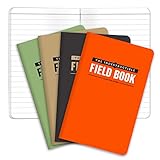
- BUILT TO LAST – WATERPROOF, TEAR-RESISTANT, WEATHERPROOF – Completely Indestructible! Suitable for any condition.
- GET MORE VALUE 4-PACK consists of 192 PAGES IN TOTAL - Each book contains 48 PAGES (24 sheets). GET MORE, SPEND LESS!
- STONE PAPER – WATERPROOF so you can write in the rain or even under water.
- POCKET SIZED - This mini memo pad is 3.5x5.5 inches and contains LINED pattern. NO SPECIAL PENS REQUIRED use regular ball point pens or pencils
- Location: “The property is [address], on the [side or unit], near [cross street].” Put any variable text such as an address in the form’s actual fields or in
codewhen showing a template. - Observation: “On [date] at approximately [time], I observed [visible action] from [lawful vantage point].”
- Continuing status: “The work was [ongoing or not ongoing] when observed; I also observed it on [other dates], if applicable.”
- Visible records: “A permit or job number displayed was [number],” or “No permit was visible from my vantage point.”
- Effect or risk: “The visible result was [debris, blocked access, exposed utility or other condition] at [specific location].”
- Supporting material: “I have attached [photographs or video] taken from [location],” if the form accepts it.
Do not include rumors as facts. If a neighbor told you something, identify it as unverified information and distinguish it from what you personally saw. Avoid guessing the owner’s motive, the contractor’s license status or the permit requirement.
Safety, privacy and evidence pitfalls
Do not trespass or interfere
Entering a construction area can expose you to falls, unstable structures, machinery, dust, electrical hazards and legal consequences. Stay outside barriers and obey posted restrictions. Never move debris, open a gate, handle materials or direct workers.
Protect unrelated people and private spaces
Frame images toward the work and property. Avoid photographing private interiors, children, medical information, vehicle plates or passersby when they are not relevant. Follow the local form’s rules about disclosure and retention; those rules differ by jurisdiction.
The Tool Desk
Outbyte PC Repair FREERepair Windows errors before they cause bigger problemsFix Now →Outbyte Driver Updater FREEFix the driver behind crashes, sound loss and screen glitchesFind Drivers →Keep originals and a submission copy
Retain original images or videos, your dated log, the exact narrative submitted, attachments and confirmation. Do not overwrite files or rely on a social-media post as your only record. If the agency asks for a different format, preserve the originals while providing the requested copy.
Do not file duplicate or exaggerated complaints
Repeated submissions can make a case harder to track. Update the existing case through its published channel when you have a material new observation. Correct an error promptly and identify which statement was corrected.
What happens after filing
The agency may review the information, check permits or property records, inspect from a lawful location, contact you for clarification or refer the matter to another office. A complaint does not guarantee a particular inspection date, enforcement action or correction order. The outcome depends on local authority, available evidence, urgency and the agency’s procedures.
Use the case or service-request number when checking status. If the published process provides an online tracker, email address or telephone line, use that channel and keep a record of follow-up dates. If the agency says the matter belongs elsewhere, submit the same factual chronology to the identified office rather than changing the facts to fit a different category.
Do these 3 things before closing this tab:
1Repair Windows errors before they cause bigger problems2Fix the driver behind crashes, sound loss and screen glitches3Clear out junk files and repair common Windows errorsWhen a specialist may help
Most straightforward observations can be reported without hiring anyone. A local building-code professional or legal adviser may be useful when the dispute involves a complex structural question, a historic designation, a property-line issue, repeated agency referrals or a formal appeal. Ask what authority the professional has and what the engagement covers. Do not hire someone to enter, test or alter an active site merely to create evidence for a complaint.
Quick Recap
Product prices and availability are accurate as of the date/time indicated and are subject to change. Any price and availability information displayed on Amazon at the time of purchase will apply.

