Recommended Free Tools
Some links on this page are affiliate links: if you buy through them we may earn a commission, at no extra cost to you.
Leaf stains are usually tannin-rich organic discolorations, not permanent damage to the slab. Remove debris, wet the concrete, apply an oxygen-based cleaner mixed to its label, keep it wet for 5–30 minutes, scrub with a stiff non-metal brush, and rinse thoroughly. Vinegar is unnecessary and can be a poor choice for concrete-care work.
Why leaves leave brown marks on concrete
Leaves and wood chips release tannin, a plant compound that can produce brown or reddish-brown discoloration. The pigment can settle into concrete’s microscopic pores and voids, which is why ordinary hosing may not remove it immediately. Organic stains generally respond better to cleaners formulated for organic material than to generic degreasers or acidic products.
As an Amazon Associate I earn from qualifying purchases.
Free tools Windows power users keep installed
One-click scans. No signup required.
What you need
- Stiff-bristle deck or patio brush with non-metal bristles
- Broom, leaf blower or garden hose for loose debris
- Oxygen-based cleaner labeled for outdoor hard surfaces, such as OxiClean Versatile Stain Remover
- Bucket, warm water and a measuring scoop
- Garden hose for a cool-water rinse
- Eye and hand protection
Do not use a wire brush: metallic bristles can scratch concrete. Never mix cleaning products unless the label expressly permits the combination.
Step-by-step: the vinegar-free method
-
Clear leaves and soil
Sweep or hose away every leaf, twig and loose deposit. Cleaning over organic debris wastes solution and can spread the stain.
#1 Best Overall
 CHOMP! Concrete Oil Stain Remover: Pull It Out Removes and Cleans Oils, Greases from Garage Floors & Driveways 32 Fl Oz
- INDUSTRY'S MOST POWERFUL OIL STAIN LIFTING FORMULA: Chomp! Pull It Out uses a deep penetrating formula to lift stains from porous flooring surfaces like concrete and brick. It is effective on oil or petroleum-based stains (transmission fluid, brake fluid, etc. ) commonly found on concrete and paver driveways, garage floors, parking lots, and drive-through lanes.
- SIMPLE & SAFE: Unlike other stain removers that use harmful chemical compounds to attack tough oil and grease stains, Pull It Out stain remover helps to address these problems safely and simply. Although it goes a long way in removing difficult stains from concrete and other porous surfaces, Pull It Out does not contain bleach, acid, or other potentially hazardous materials.
- EASY TO USE: This cleaning formula is convenient and easy to use. Simply pour a small amount of the formula onto any oil or petroleum-based stain to cover it and allow it to dry. As it dries, the Pull It Out formula draws out the contamination causing the stain. Once the cleaning formula is dry, you can easily brush it away like chalk dust, revealing a stain-free surface.
- VERSATILE FORMULA: Concrete make up varies widely and oil stains may require different cleaning techniques. Pull It Out utilizes a 'poultice' technology and is effective across the widest variety of concrete conditions and types.
- BETTER FOR YOUR HOME/BUSINESS: Oil stains on your driveway, garage floor, or other surfaces are not just detrimental to your home’s appearance. These stains can also hurt the value of your home or business. In order to help retain or even increase the value of your home, take care of these pesky stains with Chomp! Pull It Out Concrete Oil Stain Remover.
-
Pre-wet the slab
Wet the stained concrete with clean water before applying cleaner. Work in manageable sections rather than flooding the entire patio at once.
-
Mix the oxygen cleaner to its current label
For the manufacturer’s outdoor patio method for OxiClean Versatile Stain Remover, fill the scoop to line 4 for each gallon of warm water. Use the product label supplied with your container if its directions differ.
Special offer. See more information about Outbyte and uninstall instructions. Please review EULA and Privacy policy. -
Apply without allowing it to dry
Spread the solution evenly over the section. Keep it wet for 5–30 minutes, following the label and the severity of the stain. On larger surfaces, divide the work so no area dries before you scrub and rinse.
-
Scrub gently but thoroughly
Use a stiff, non-metal brush and work across the stain. Concentrate on edges, joints and textured areas where tannin-laden residue can collect, but avoid gouging the surface.
Rank #2
 Overnight Stain Remover for Cleaning Oil Stains on Concrete, Driveway, Pavers & Garage Floors,White, AOD3232301
- POWERFUL OIL STAIN REMOVER - oil-eating microbes clean deep beneath the surface to remove oil stains on hard & porous surfaces like concrete, asphalt, brick & stone. Works great on all types of oil, grease and petroleum-based automotive leaks.
- RESTORES DRIVEWAYS, GARAGE FLOORS & PAVERS - product cleans stains at a molecular level, leaving surfaces looking like-new, improving curb appeal at home and work. Works great on fresh stains and older stains - multiple applications may be necessary for severe & older stains
- 3 EFFORTLESS STEPS - pour, dry, sweep away! Simply pour on a small amount of product to cover the stain, wait overnight for the to dry to a powder, and sweep away without any scrubbing or rinsing. As the formula dries, the oil stain is pulled up from beneath the surface where it can be seperated from the concrete and swept away.
- SAFE & SIMPLE - biodegradable formula uses no harsh acids, bleaches or hazardous materials.
- VERSATILE - designed to work on various types of concrete, asphalt, stone & more to keep homes and offices looking their best. Also great on patios & decks to clean up grease spills from BBQ grills!
-
Rinse with cool water
Rinse until the solution and loosened residue are gone. Direct runoff away from plants, walls and neighboring materials. Repeat the cleaner cycle if a brown shadow remains.
-
Blend the cleaned area
Spot cleaning can leave a noticeably lighter patch, especially on older slabs. If the cleaned section contrasts with the surrounding concrete, treat the whole slab or a larger contiguous area using the same process.
Recommended: Crashes or Glitches? A Free Driver Scan Usually Finds the Culprit →Recommended: PC Feels Slow? A Free Scan Shows What's Dragging Windows Down →Special offer. See more information about Outbyte and uninstall instructions. Please review EULA and Privacy policy.
Choosing between cleaning options
| Option | Best use | Main risk or limitation |
|---|---|---|
| Oxygen-based cleaner | Brown leaf and other organic stains on ordinary cured concrete | Requires correct dilution, wet dwell time, brushing and thorough rinsing; repeat applications may be needed |
| Plain hose | Fresh leaves, dust and loose residue | Usually insufficient for tannin embedded in pores |
| Pressure washer | Loose debris or a stain that remains after chemical cleaning | Excessive pressure can erode concrete or expose aggregate and can damage weak, decorative, coated or weathered surfaces |
| Acidic or chlorine products | Only when a product label and the concrete-care guidance specifically support that use | Different chemistry can discolor, attack or damage the surface; do not substitute it casually for an organic-stain cleaner |
When pressure washing is appropriate
A hose or pressure washer can remove leaf matter and loosened debris. Treat pressure washing as an escalation, not the first aggressive step. If you use one, choose the lowest pressure that works, keep the nozzle moving, and avoid concentrating the spray in one spot.
For extremely stubborn patio dirt, QUIKRETE lists 2,500 PSI in its patio-cleaning guidance. That figure is not a universal setting for every slab: protect plants and nearby house surfaces, wear eye and hand protection, and reduce pressure for weak, decorative, sealed, painted or weathered concrete. Power washing can erode the cement surface, so an aggressive nozzle or close pass may leave damage that is harder to repair than the original stain.
Rank #3

- DEEP PENETRATING FORMULA: Chomp! Pull It Out Concrete Oil Stain Remover uses a deep penetrating formula to lift stains from porous flooring surfaces like concrete and brick. It is effective on oil or petroleum-based stains (transmission fluid, brake fluid, etc.) commonly found on concrete and paver driveways, garage floors, parking lots, and drive-through lanes.
- SIMPLE & SAFE: Unlike other stain removers that use harmful chemical compounds to attack tough oil and grease stains, Pull It Out stain remover helps to address these problems safely and simply. Although it goes a long way in removing difficult stains from concrete and other porous surfaces, Pull It Out does not contain bleach, acid, or other potentially hazardous materials.
- EASY TO USE: this cleaning formula is convenient and easy to use. Simply pour a small amount of the formula onto any oily or petroleum-based stain to cover it and allow it to dry. As it dries, the pull it out formula draws out the contamination causing the stain. Once the cleaning formula is dry, you can easily brush it away like chalk dust, revealing a stain-free, safer surface.
- VERSATILE FORMULA: concrete make up varies widely and oil stains may require different cleaning techniques. Pull it Out utilizes a 'poultice' technology and is effective across the widest variety of concrete conditions and types.
- BETTER FOR YOUR HOME/BUSINESS: Oil stains on your driveway, garage floor, or other surfaces are not just detrimental to your home's appearance. These stains can also hurt the value of your home or business. In order to help retain or even increase the value of your home, take care of these pesky stains with Chomp! Pull It Out concrete oil stain remover.
Protecting different concrete finishes
Plain, fully cured concrete
Use the labeled oxygen-cleaner dilution, a non-metal brush and a complete rinse. Test a hidden spot first because even a compatible cleaner can leave a lighter area.
Sealed, stamped or painted concrete
Check the sealer or coating manufacturer’s cleaning instructions before applying any product. Test in an inconspicuous location and avoid pressure that could lift coatings or change the texture.
Weak, weathered or damaged slabs
Favor gentle brushing and low-pressure rinsing. Cracks, scaling and exposed aggregate can trap solution and make uneven color more visible. A professional concrete-cleaning service is sensible when the surface has high value or is already deteriorating.
Independent reader supportYour contribution helps us test, update, and keep practical guides available for everyone.Safety and runoff controls
- Read the cleaner’s current label and follow any concrete-manufacturer instructions.
- Wear gloves and eye protection during mixing, scrubbing and pressure washing.
- Keep detergent solution off plants and adjacent finishes; control and dilute runoff as the label requires.
- Rinse until no cleaner remains on the slab.
- Do not let oxygen-cleaner solution dry on the surface.
- Never combine cleaners, especially acidic, chlorine or ammonia products, unless the label explicitly allows it.
Detergents and liquids can discolor concrete or drive soluble staining deeper when they are left in place. Thorough rinsing is part of the treatment, not an optional final touch.
Rank #4
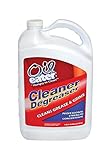
- Powerful Cleaning: Dissolves Grease, Oil And Dirt From Any Washable Surface
- Usda Approved: For Use At Food Service Facilities (A1, A4, A8)
- Biodegradable Formula: No Harsh Solvents And Is Noncorrosive
- Ultra Concentrated: Use For Cleaning Floors, Walls, Driveways, Grills, Exhausts, Patios, Outdoor Furniture, Tile, Boats, Automotive Wheels, Laundry Prewash, Parts Cleaning, Tools And Carpet Stains
If the stain does not disappear
Repeat the oxygen-cleaner dwell-and-scrub cycle before increasing pressure or changing chemistry. Organic stains often need more than one application, particularly when leaves remained wet against the slab for a long period. A generic inorganic degreaser or an acid is not automatically a stronger solution for tannin.
If repeated, label-compliant cleaning leaves widespread discoloration, or if the concrete is decorative or costly to replace, obtain an assessment from a professional concrete-cleaning specialist. Stop experimenting when the surface begins to etch, flake, lose its finish or show a distinct lighter patch.
PC Slower Than It Used to Be?
A free scan shows the junk files, broken settings and background clutter dragging Windows down - then fixes them in one click.Free scan · Windows 10 & 11Outdated Drivers Are Slowing You Down
One free scan finds every outdated or missing driver and matches the right update for your exact hardware.Free scan · exact hardware matchPreventing new leaf stains
- Remove wet leaves regularly instead of allowing them to decompose on the slab.
- Keep gutters and downspouts from discharging leaf-filled water onto the patio.
- Rinse fresh tannin residue promptly before it dries into the pores.
- Maintain compatible sealers according to their manufacturer’s schedule, recognizing that a sealer does not eliminate the need for routine cleaning.
Frequently Asked Questions
Will an oxygen-based cleaner remove tannin stains from concrete?
It is the supported first approach for leaf-related organic staining when mixed and applied according to the product label. Keep the solution wet during the stated dwell time, scrub with non-metal bristles and rinse completely; stubborn stains may require repeat applications.
Can I pressure wash leaf stains off a concrete patio?
You can use pressure washing cautiously for loose debris or as an escalation after cleaning. Use the lowest effective pressure, avoid aggressive nozzles and protect plants and nearby surfaces. Excessive pressure can erode concrete.
Should I clean only the visible leaf mark?
Not always. Spot treatment can leave a lighter patch, so clean the whole slab or a larger contiguous section when an even appearance matters.
The Bottom Line
For brown leaf stains, skip vinegar: clear the debris, use a correctly diluted oxygen-based cleaner, keep it wet for 5–30 minutes, scrub with a stiff non-metal brush and rinse thoroughly. Repeat before resorting to pressure, and test first on any sealed, painted, stamped or weathered concrete.
What’s actually slowing this PC down?
Pick the symptom - the matching free tool is one click away.
Quick Recap
Product prices and availability are accurate as of the date/time indicated and are subject to change. Any price and availability information displayed on Amazon at the time of purchase will apply.

