PC Slower Than It Used to Be?
A free scan shows the junk files, broken settings and background clutter dragging Windows down - then fixes them in one click.Free scan · Windows 10 & 11Outdated Drivers Are Slowing You Down
One free scan finds every outdated or missing driver and matches the right update for your exact hardware.Free scan · exact hardware matchTurn the oven off, let the door cool completely, and check the cleaning section of the exact model manual before applying anything. For grease on the outside or otherwise accessible glass, begin with warm water and mild detergent on a soft cloth. If that does not lift the baked-on film, a paste of baking soda and warm water, left on for at least 20 minutes where the manual permits it, is the safest broadly supported next step.
Use a soft microfiber cloth or non-abrasive pad, remove all residue with a damp cloth, and dry the glass. Scrapers are model-dependent: some manufacturers describe a plastic scraper, while others specifically warn against sharp metal tools and abrasives. Grease trapped between panes is a different repair problem; do not take the door apart unless the manual gives an exact procedure or a qualified service provider is helping.
| # | Preview | Product | Price | |
|---|---|---|---|---|
| 1 |

|
ARM & HAMMER Baking Soda, 2.7 Lbs | $7.99 | Buy on Amazon |
| 2 |
|
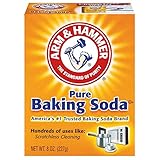
Arm & Hammer Pure Baking Soda, 8oz, Pack of 2 | $3.30 | Buy on Amazon |
| 3 |

|
Amazon Grocery, Baking Soda, 4 Lb | $3.08 | Buy on Amazon |
| 4 |
|
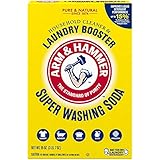
Church & Dwight Co 03020 Arm & Hammer Super Washing Soda | $5.38 | Buy on Amazon |
As an Amazon Associate I earn from qualifying purchases.
Why the oven model matters before cleaning
Oven-door glass is tempered and engineered as part of a door assembly. The coating, edge seals, vents, and number of panes vary by model, so a method that is acceptable for one appliance can damage another. The manual for your exact model is the controlling instruction for cleaners, pads, scrapers, door removal, and disassembly.
Find the model number on the oven frame, storage drawer area, side trim, or the original documentation. Use that number to open the manufacturer’s care-and-cleaning instructions. If the manual is unavailable, stay with the least aggressive method described here: a cool door, warm water, mild detergent, a soft cloth, and—only after a spot test—a baking-soda-and-water paste. Do not escalate to a chemical cleaner or tool simply because the stain is difficult.
#1 Best Overall
- A HOUSEHOLD CLASSIC: This 2.7 lb resealable bag of ARM & HAMMER Baking Soda unlocks 100+ uses across your home—from kitchens and laundry rooms to crafting tables and beyond
- PURE & NATURAL: America’s Most Trusted Baking Soda Brand is safe to use around kids and pets; no additives or chemicals, no cornstarch, and no fragrance
- FOOD-GRADE FOR BETTER RESULTS: USP-grade 1 crystals create fluffier cakes, muffins, cookies, and breads; use it in gluten free, kosher, vegan, paleo-friendly, and organic baking recipes
- DIY HOME HACKS: A multi-purpose essential to help freshen carpets, brighten laundry, freshen drains, scrub sinks, clean jewelry, craft kids’ sensory play & science experiments with one ingredient
- SUSTAINABLY MADE IN THE USA: Proudly made and packaged in Green River, Wyoming, using 100% certified renewable energy for a more sustainable, quality baking soda you can trust
Basic safety checks
- Switch the oven off and wait until the door and surrounding trim are cool to the touch. Never spread water or paste on a hot glass panel.
- Keep liquid out of the door’s vents, hinges, control openings, and the gap between panes.
- Wear household gloves if your skin is sensitive to detergent, and keep children away while the door is open or wet.
- Open the door only as far as it remains stable. Do not lean, sit, or place heavy containers on it.
- Stop if the glass is chipped, cracked, loose in its frame, or making a new sound when the door moves. A damaged panel needs appliance service rather than more scrubbing.
Supplies that are appropriate for accessible glass
Gather only what your model’s instructions allow. The following kit covers the gentle process without committing you to a potentially damaging product.
- Warm water: loosens ordinary grease and carries away detergent and baking-soda residue.
- Mild dish detergent: use a small amount in warm water for routine soil. Fisher & Paykel recommends warm water and mild detergent applied with a soft cloth for oven-door glass (Fisher & Paykel user guide).
- Baking soda: mix with enough warm water to make a spreadable paste. It provides gentle soil-lifting action without requiring a strong solvent.
- Microfiber or other soft cloth: reserve one cloth for applying and a clean one for the final wipe and drying.
- Non-abrasive cleaning pad: use only if the manual permits it and the pad is free of embedded grit or metal fibers.
- Plastic scraper: a conditional tool, not a default. Use it only when your own manual expressly allows one and only with light pressure.
- Plain water in a bowl or spray bottle: apply it to the cloth rather than flooding the door. Excess liquid can migrate into seams.
Do not substitute steel wool, a metal scouring pad, powdered abrasive, razor blade, or a strong oven-cleaning chemical for these supplies. Those choices can scratch the panel or attack finishes and seals.
Step-by-step: remove baked-on grease without scratching the glass
1. Identify the surface you can safely reach
Most removable grease is on the outside surface or on the inside face exposed when the door is open. Shine a light across the panel at an angle to see whether the film is on the surface. If the haze changes when you wipe one side, continue with surface cleaning. If it remains in exactly the same place and appears to sit behind the glass, jump to the section on grease between panes instead of forcing a tool into a seal.
2. Remove loose dust and cool the door
With the oven off and cold, wipe loose crumbs and dust away with a dry soft cloth. Removing grit first reduces the chance that a particle will be dragged across the glass during wet cleaning. Do not begin while the panel is warm; rapid temperature changes and moisture in seams are unnecessary risks.
Rank #2
3. Wash with warm water and mild detergent
- Put warm water in a bowl and add a small amount of mild detergent.
- Dip a soft cloth, wring it until damp rather than dripping, and wipe the glass in overlapping passes.
- Work around the perimeter without pushing liquid into vents, hinges, or the gap between panes.
- Rinse the cloth in clean water and wipe again to remove the detergent film.
- Dry with a clean microfiber cloth and inspect under angled light.
This first pass is important even when the stain looks severe: it removes loose grease and shows whether the remaining brown or black marks are actually baked-on deposits.
4. Apply a baking-soda paste to stubborn marks
If the manual permits baking soda, combine it with warm water until it has a toothpaste-like consistency. Spread a thin layer only over the affected accessible glass. Keep the paste away from vents, seals, painted trim, and the space between panes.
Maytag’s instructions for brown stains, baked-on grease, and oil call for leaving the paste in place for at least 20 minutes before wiping with a wet microfiber cloth (Maytag’s oven-glass cleaning steps). That 20-minute period is a cleaning instruction, not a guaranteed time for every model or stain. If your manual specifies a different dwell time or prohibits the method, follow the manual instead.
What’s actually slowing this PC down?
Pick the symptom - the matching free tool is one click away.
- Allow the paste to sit for the permitted time; do not let it dry into a hard crust.
- Loosen it with a damp soft cloth using small, overlapping strokes.
- For a stubborn patch, repeat the damp-cloth pass rather than immediately increasing pressure.
- Rinse with a clean damp cloth until no powdery residue remains.
- Dry completely and inspect for remaining film, scratches, or cracks.
5. Use a non-abrasive pad only if allowed
Some manuals permit a non-abrasive pad for heavy soil. Wet the pad, keep pressure light, and make short strokes rather than aggressive circular scrubbing. A pad that feels rough, contains metal, or has trapped grit is not non-abrasive in practice. If the manual is silent, stay with the cloth.
Rank #3
- One 4-pound resealable bag of Baking Soda
- Great for baking, cleaning & freshening
- Amazon Grocery has all the favorites you love for less. You’ll find everything you need for great-tasting meals in one shopping trip
- Feed your every day with Amazon Grocery
6. Consider a plastic scraper only under model-specific instructions
KitchenAid and Whirlpool describe plastic scrapers as an option for residual grease on some oven-door windows (KitchenAid’s oven-door glass guidance; Whirlpool’s glass-window guidance). This does not make every plastic scraper safe for every oven. Confirm that your model allows it, use a clean scraper with a broad intact edge, keep the glass wet, and hold the blade nearly flat. Push gently in one direction; never dig into an edge, gasket, printed marking, or corner.
Fisher & Paykel warns against sharp metal scrapers and abrasive tools on door glass. Its care instructions caution that scratches can contribute to cracking and shattering (Fisher & Paykel user guide). If your scraper catches, leaves a line, or requires force, stop and return to a damp cloth.
7. Rinse, dry, and check the finished surface
Use several passes with a clean damp cloth to remove all detergent or baking soda. Dry the panel fully. Look across it from different angles: a remaining dull film usually needs rinsing, while a fixed line or pit may be a scratch or heat damage that cleaning cannot remove. Do not keep escalating pressure to chase a mark that is no longer grease.
Quick wins for a faster PC:
Repair Windows errors before they cause bigger problemsFix Now →Fix the driver behind crashes, sound loss and screen glitchesFind Drivers →What each manufacturer’s published guidance allows
The table shows why one universal recipe is unsafe. It summarizes the cited instructions, not a substitute for the manual for your appliance.
Rank #4
- One 55 oz box of ARM & HAMMER Super Washing Soda Household Cleaner and Laundry Booster
- 100% fragrance-free and phosphate-free washing soda neutralizes and eliminates odors naturally without the use of heavy fragrances, leaving a long-lasting fresh and neutral clean scent
- As a laundry additive, it improves liquid laundry detergent performance by up to 15% (1), giving you cleaner, whiter and brighter laundry and upholstery (1) For mustard and blood stains vs leading value detergent alone
- Great general purpose cleaner for a wide variety of indoor and outdoor hard surfaces like sinks, stainless steel, bathtubs, garage floors and more, a must-have addition to your household cleaning supplies
- Use as a silver polish to remove tarnish from silver, gold, brass or copper to keep your jewelry, silverware and precious items looking their best
| Manufacturer guidance | Methods or tools described | Important limits |
|---|---|---|
| Fisher & Paykel | Warm water and mild detergent on a soft cloth; baking-soda-and-water cleaning is included in its care guidance. | Avoid oven cleaners, harsh or abrasive cleaners, scouring pads, steel wool, and sharp metal scrapers. Scratches may contribute to cracking or shattering. Read the guide. |
| KitchenAid | Baking soda and water for stubborn soil; a plastic scraper is described for residual material. | Use the exact model instructions before applying a scraper or cleaner. See KitchenAid’s instructions. |
| Whirlpool | A baking-soda mixture and a plastic scraper are described for glass-window residue. | Plastic does not mean force is safe; follow the model manual and protect seals and edges. See Whirlpool’s instructions. |
| Maytag | Baking-soda paste for brown stains, baked-on grease, and oil; wipe with a wet microfiber cloth. | Its procedure specifies at least 20 minutes of contact time and cautions against door disassembly without appropriate help. See Maytag’s four-step method. |
| GE Appliances | Non-abrasive cleaner and a plastic scouring tool or sponge for heavy soil on the window. | Use only products and tools approved for your model’s window and finish. Read GE Appliances’ window guidance. |
Cleaners and tools to avoid unless your manual explicitly approves them
Fisher & Paykel’s warnings are especially specific: do not use oven cleaners, harsh or abrasive cleaners, scouring pads, steel wool, or sharp metal scrapers on the door glass. Scratching is not merely cosmetic; the manufacturer warns that it can contribute to cracking and shattering. Other manufacturers may list a narrow exception, such as a plastic scraper or non-abrasive cleaner, but that exception belongs to the named model and should not be generalized.
- Metal razor blades and knife edges: they can score the glass and damage seals or trim.
- Steel wool and abrasive scouring pads: their fibers or grit can leave permanent scratches.
- Powdered or gritty cleaners: undissolved particles act like abrasive dust under a cloth.
- Strong oven-cleaner sprays: fumes and chemicals can reach finishes, gaskets, and door gaps; use only if the model manual specifically says they are suitable.
- Unapproved household mixtures: combining cleaners creates unnecessary chemical and surface risks and is not supported by the cited appliance guidance.
When the grease is between the panes
A haze or brown spot that remains after both accessible surfaces are clean may be trapped inside the door. It cannot be wiped away from the outside. Many doors use multiple panes held by trim, clips, and seals, and reaching the inner surfaces can require partial disassembly.
Do not pry the panes apart, remove screws in an improvised order, or spray cleaner into the gap. Maytag cautions that door disassembly without appropriate help is not recommended (Maytag’s cleaning guidance). Use this decision path:
- Check the exact model manual for an approved inner-glass cleaning procedure.
- If the manual gives no procedure, contact the manufacturer’s service support or a qualified appliance technician.
- Ask whether the door can be serviced in place, whether the inner panel or seal needs replacement, and whether opening the assembly affects any warranty or safety requirement.
- Keep using the oven only if the door closes, seals, and operates normally and the glass is undamaged. A crack, loose pane, failed seal, or abnormal heat escaping around the door requires service before further use.
Troubleshooting by symptom
| What you see | Likely interpretation | Next safe action |
|---|---|---|
| Greasy smear disappears when wiped wet | Surface soil remains. | Repeat the warm-water-and-mild-detergent wash, then rinse and dry. |
| Brown or black patch remains on accessible glass | Baked-on residue. | Use permitted baking-soda paste; Maytag’s published method uses at least 20 minutes before a wet microfiber wipe. |
| Paste leaves a cloudy film | Powder residue, not necessarily damage. | Rinse repeatedly with a clean damp cloth and dry; do not add a harsher chemical. |
| A plastic scraper skips or catches | The surface is too dry, the angle is wrong, or the tool is not suitable. | Stop scraping, wet the area, and return to a soft cloth. Do not switch to metal. |
| A fixed line remains after cleaning | Possible scratch, etching, or heat damage. | Stop increasing pressure. Inspect for cracks and ask service support if the mark affects the glass or seal. |
| Haze appears behind clean outer surfaces | Residue is likely between panes. | Follow the model’s inner-glass instructions or arrange qualified service; do not inject cleaner into the gap. |
| Glass is chipped, cracked, loose, or rattles | Structural or mounting damage. | Do not continue cleaning or use the oven until the door is assessed and repaired. |
How to finish the job without leaving new damage
After the final rinse, dry the glass and the surrounding trim. Check the lower edge and corners for pooled water or paste, but do not push a cloth into a gasket or vent. Leave the door open only as long as needed for the surfaces to dry, then close it gently. Store the scraper or pad separately so trapped grit cannot scratch the panel during the next cleaning.
Record the model number and the method that the manual permits. That small note prevents a future cleaning attempt from relying on a different oven’s instructions. For recurring grease, clean ordinary splashes with the warm-water-and-mild-detergent method before they harden; reserve the paste for spots that actually need it. If the door repeatedly develops residue between panes, treat that as a service issue rather than a signal to use stronger chemicals.
Quick Recap
Key decision rules
- Start with the least aggressive method: cool glass, warm water, mild detergent, and a soft cloth.
- Use baking soda and warm water for stubborn accessible grease only when the exact model’s instructions permit it.
- Allow the Maytag-described paste to sit for at least 20 minutes only as that model’s published instruction; it is not a universal timing guarantee.
- Use a plastic scraper or non-abrasive pad only when the model manual names that tool, and apply light pressure.
- Never assume a metal scraper, steel wool, abrasive pad, or oven-cleaner spray is safe for your oven door.
- For residue between panes or any damaged glass, follow the manual or use qualified appliance service instead of improvising disassembly.
Product prices and availability are accurate as of the date/time indicated and are subject to change. Any price and availability information displayed on Amazon at the time of purchase will apply.

