What’s actually slowing this PC down?
Pick the symptom - the matching free tool is one click away.
The most effective way to reduce pressure on a limited landfill is to prevent waste before it enters the waste stream. Plan purchases and meals, store food so it gets eaten, use leftovers, reuse sound items, then send only correctly prepared recyclables and locally accepted organics to collection or composting. Disposal should be the last route for material that cannot be prevented, reused, recycled, or composted.
No national statistic can tell you how much capacity remains at your local landfill or when it will close. The practical response is to reduce the amount your household sends for disposal while checking your local waste authority’s rules, services, and restrictions.
As an Amazon Associate I earn from qualifying purchases.
Why prevention matters more than diversion
Waste management is not a choice between “recycle everything” and “throw everything away.” The U.S. Environmental Protection Agency’s waste hierarchy places source reduction and reuse among the preferred strategies, ahead of recycling, energy recovery, and disposal. The reason is straightforward: preventing an item from becoming waste avoids the materials, transport, processing, and final disposal associated with it. Reuse keeps an existing item in service without requiring a new purchase. Recycling and composting are valuable, but they manage material that has already been generated.
Outdated Drivers Are Slowing You Down
One free scan finds every outdated or missing driver and matches the right update for your exact hardware.Free scan · exact hardware matchPC Slower Than It Used to Be?
A free scan shows the junk files, broken settings and background clutter dragging Windows down - then fixes them in one click.Free scan · Windows 10 & 11EPA reported that the United States generated 292.4 million short tons of municipal solid waste in 2018, equal to 4.9 pounds per person per day. That same year, almost 94 million tons were recycled or composted, a combined rate of 32.1%. These are national estimates from 2018, not a measurement of your household or a forecast for a particular landfill.
#1 Best Overall

- #1 Brand Pick for Meal Prep Containers: Bentgo is the top pick for meal prep containers!* This lightweight, portable 20-piece set includes tennmnnmake portioning easy to support balanced, healthy meal plans. Clear, stackable lids help keep food fresh and organized in your fridge or pantry.
- Perfect for Portion-Control: Each container’s 4-cup capacity and embossed measurements make portioning easy to support balanced, healthy meal plans. Clear, stackable lids help keep food fresh and organized in your fridge or pantry.
- Durable & Reusable: Made from tough, PFAS- and BPA-free materials, these meal prep containers are built to last through repeated use. Say goodbye to single-use plastics with these reusable containers you can take to work, school, or the gym.
- Microwave, Freezer & Dishwasher Safe: Easy to heat, store, and clean! Safely reheat food from fridge or freezer—microwave trays only. Top-shelf dishwasher safe for hassle-free cleanup; hand-wash lids for best results.
- What You Get: 10 one-compartment trays, 10 custom-fit lids, and caring customer support.
Food is an especially important prevention target. EPA’s 2018 analysis found that food made up 24.1% of municipal solid waste in U.S. landfills. Food, yard trimmings, wood, and paper and paperboard together accounted for 51.4%. In a separate 2019 estimate covering the retail, food-service, and residential sectors, 66.2 million tons of food were wasted and only 5% was composted. About 96% of households’ wasted food went to landfills, combustion facilities, or the sewer system.
Organic material can generate methane when it decomposes under the oxygen-free conditions found in a landfill. Keeping avoidable food out of the waste stream prevents that material from being created in the first place; keeping unavoidable scraps out through an eligible organics program can provide an additional reduction in landfill disposal.
Prevent food waste at the point of purchase
Plan meals around food you will actually use
Start with a short inventory of the refrigerator, freezer, and cupboards. Note food that is already open, close to its use-by date, or likely to be forgotten. Build the next few meals around those items before adding more to the shopping list. Planning does not require a rigid menu: a list of two or three meals, flexible ingredients, and one “use-it-up” meal can be enough to prevent duplicate purchases.
The Tool Desk
Outbyte PC Repair FREERepair Windows errors before they cause bigger problemsFix Now →Outbyte Driver Updater FREEScan for outdated or missing drivers - takes under a minuteDriver Scan →- Check what you have before leaving for the store.
- Choose quantities that match the number of people eating and the meals you expect to prepare.
- Account for meals away from home, travel, and nights when cooking is unlikely.
- Keep a running list so an impulse purchase does not replace an ingredient you already own.
EPA specifically identifies meal planning, preparation, and food storage as household actions that can reduce wasted food. The agency also reports that an average family of four spends almost $3,000 each year on food that is not eaten. That figure is an EPA average estimate, not a guaranteed saving for an individual family; your result depends on what you buy, how much you waste, and local food prices.
Prepare with a use in mind
Before cooking, decide how the ingredients will be used across the meal and the next meal. Portioning ingredients before preparation can prevent an entire package from being opened when only part is needed. If a recipe creates a surplus ingredient, assign it a second use immediately—for example, plan a later soup, salad, sauce, or side that uses it. The objective is not to make every meal elaborate; it is to give perishable food a destination before it becomes unidentifiable in the refrigerator.
Store food so it remains visible and usable
Storage is a waste-prevention step, not merely an organization project. Place foods that need to be eaten soon where they can be seen. Label leftovers with the date and a brief description, and use a consistent shelf or container area for food that should be eaten first. Divide a large cooked batch into portions that match likely meals so only the amount needed is opened or reheated.
Rank #2

- Versatile Shapes and Sizes: With 20 airtight food storage containers in 2 shapes, including 6 rectangle containers (1X 50.7OZ, 1X 33.8 OZ, 2X 16.9 OZ, 2X 8.1 OZ), 8 round containers (2X 40.6 OZ, 2X 23.7 OZ, 2X 13.5 OZ, 2X 6.1 OZ), and 6 round sauce cups (3X 2 OZ, 3X1 OZ), our set offers a variety of sizes to suit your storage needs. From 8 OZ to 51 OZ, we have you covered
- BPA-Free and Safe: Crafted with upgraded food-grade materials, our food storage containers set are BPA-free and safe for your health. Our food storage containers are also microwave(without the lid), dishwasher, and freezer safe, adding convenience to your daily routine
- Enhanced Design for Ease: Our storage containers with lids feature upgraded designs, including 4 enhanced rounded lock mechanisms for ergonomic use, durable non-slip bottoms, and stackable, nestable shapes for space efficiency. They are much Lighter than glass containers, very easy to carry, they fit any lifestyle
- Superior Airtight Seal & 100% Leak Proof: With the airtight seal enhanced by food-grade silicone rings, our food containers set ensures your food stays fresh, preserving flavors and nutrition. Say goodbye to fridge odors, and even liquid foods like soups remain securely contained
- Versatile Storage Solution: These space-saving pantry organizers accommodate various food types – from fruits, veggies, and salads to meats, snacks, leftovers and condiments. The transparent box makes it easy to check the status of your food at any time. Perfect for indoor and outdoor use, from home meal prep to outdoor picnics and BBQs
Use storage practices appropriate to the food and the container. Keep dry goods sealed and dry, refrigerate or freeze foods that require cold storage, and follow the product’s safety instructions. Reusable containers can make leftovers easier to see, portion, and carry, but EPA’s guidance supports the storage practice generally rather than endorsing a particular product.
Make leftovers the next planned meal
Give leftovers a place on the schedule instead of treating them as optional. A household can designate one evening for leftovers, pack them for lunches, or freeze portions that will not be eaten soon. If a prepared dish is no longer appealing in its original form, use it as an ingredient in another meal when it remains safe and suitable. Keep food-safety decisions separate from waste goals: food that is unsafe should not be eaten merely to avoid disposal.
Reuse household items before replacing them
After prevention, look for safe, practical reuse. Reuse is higher in the waste hierarchy than recycling because it extends an item’s service without first processing it into a new material. It does not mean every object should be kept forever. An item that is damaged, contaminated, unsafe, or no longer useful should not be forced into a second use.
Set a reuse check
Before discarding an item, ask three questions:
- Can it perform its original function again after cleaning, repair, or a simple adjustment?
- Can it serve another household purpose without creating a safety or hygiene problem?
- Can someone else use it if it is clean, intact, and honestly described?
Examples include reusing sturdy containers for appropriate storage, keeping packaging for a planned protective or organizational use, repairing a household item instead of replacing it, and passing on usable goods through a local reuse channel. Keep food-contact, chemical, and heat-related uses within the limits of the item’s design; a container that is unsuitable for a new use should not be retained simply to avoid the bin.
Create a small “use again” zone
Designate one shelf, drawer, or box for sound items awaiting a specific reuse. Give each item a purpose and a time limit. If the household has not used it by the review date, move it to the correct donation, recycling, organics, or disposal route. This prevents reuse from becoming indefinite storage that eventually creates a larger clear-out.
Recommended Free Tools
Choose the right route for material already created
Prevention, reuse, recycling, and composting solve different problems. The table below shows how to decide among them; acceptance, preparation, and service availability are determined locally.
Rank #3
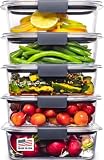
- 100% Leak-proof: Guaranteed no-spill seal and secure latches
- Crystal-clear Tritan Built: Stain-resistant and odor-resistant material for a clear view of contents
- Lightweight & Sturdy: Easy to carry, yet durable for everyday use
- Built-in Vents: Convenient microwave heating without removing the lid
- Space-saving: Stackable design for organized fridge or pantry
| Route | What it does | Typical material question | Main limitation |
|---|---|---|---|
| Source reduction | Stops waste from being created | Do we need to buy, print, prepare, or accept this item? | Requires a decision before purchase or use |
| Reuse | Keeps a usable item in service | Can it be safely used again or passed to someone else? | Not suitable for damaged, contaminated, or unsafe items |
| Recycling | Routes accepted materials into a recycling system | Does the local program accept this material, and is it prepared correctly? | Rules and accepted materials vary by locality |
| Organics collection or composting | Diverts eligible food or yard material and can produce a soil amendment | Does a local service or suitable home system accept this scrap? | Availability, accepted items, and restrictions vary by locality |
| Disposal | Handles material with no practical higher route | Is there no safe, accepted prevention, reuse, recycling, or organics option? | Uses landfill or another disposal facility and does not reduce the amount generated |
Recycle accurately instead of recycling by guesswork
Recycling only helps when the material belongs in the local program and is presented in the required condition. A national description of recycling cannot substitute for the instructions issued by your city, county, regional authority, or service provider. One program may accept an item that another rejects, and the same material may require different preparation.
Verify acceptance first
Use your local waste authority’s current list for curbside recycling, drop-off sites, special collections, and items excluded from the ordinary stream. Check the list when a package, appliance, or unusual household item is new to you rather than assuming a recycling symbol guarantees acceptance. Confirm whether the instruction applies to households or only to commercial or larger generators.
Prepare materials exactly as instructed
Follow the local requirements for emptying, rinsing, flattening, separating, bagging, or leaving items loose. Do not place a questionable object in the recycling cart merely because it is made of a recyclable material in theory. Contamination can cause an otherwise useful load to be rejected or require additional handling. When the local authority says an item belongs in trash, a special drop-off, or a separate collection, use that route.
Keep a short household reference
Post the accepted-material list near the bin or save the authority’s instructions where everyone can check them. Include the collection day and any preparation rules. A visible reference reduces last-minute guesses and helps guests, children, and other household members sort consistently.
Divert eligible organics through composting or collection
Understand what composting can do
EPA describes composting as “nature’s way of recycling and is one of the most powerful actions we can take to reduce trash in landfills and build healthy soil.” Composting can divert eligible food scraps and yard material from landfill disposal and create a useful soil amendment. It is a complement to prevention, not a reason to buy more food or allow avoidable leftovers to accumulate.
Composting does not answer how much capacity remains at a specific landfill. It reduces the amount your household sends to disposal and can reduce the methane-generating organic fraction, while local capacity questions require information from the responsible waste authority.
Rank #4

- 🍱SINGLE 1 COMPARTMENT MEAL PREP CONTAINERS, LEAK PROOF, STRONG DURABLE CONSTRUCTION – Advance meal prep containers, diet portion control, healthy nutritious meals and to-go meals are super convenient to prepare in these durable FOOD STORAGE CONTAINERS for meal prepping. The hard-plastic construction will ensure no cracks or breaking along the way. The leak proof lids will tightly seal the food containers for meal prepping, preventing any annoying leaks or spills in your bag or freezer.
- 🍱 FREEZER SAFE FOOD STORAGE BOX - Prepare and package up your meals ahead of time. These safe to freeze food containers ensure that your prepared cooked meals retain their flavor, color, and texture. These plastic boxes with lids will prevent freezer burn and any absorbing of other odors from the freezer.
- 🍱 MICROWAVE SAFE FOR WARMING FOOD – Enjoy the ease and efficiency of using a microwave safe meal prep container. Whether you are in a rush at home, or warming up food in the microwave at the office or in your college dorm room, make your life simple by preparing, packaging and warming up your food all in the same dish. From the freezer to your hungry belly all in one serving container.
- 🍱 SAFE MATERIAL - REUSABLE - RECYCLABLE - BPA-Free and Food-Grade Safe PP material. You can reuse these durable to go containers as many times as you like. Clean these portion control boxes easily by placing on the top rack of the dishwasher. If you don’t want to reuse them you can simply throw these containers into a recycling bin or trash.
- 🍱 PACK OF 50 TAKE-OUT BENTO BOXES BULK PACK, ONE COMPARTMENT MEAL PREP FOOD CONTAINERS, GREAT FOR CATERING SERVICES – These stackable serving containers are perfect for packaging food at your deli, kiosk, food truck, catering service or restaurant for to-go meals. they stack neatly on top of each other allowing for completely mess free transportation and making all your customers happy as well.
Use the option available in your area
Depending on location, an organics route may be a curbside collection service, a drop-off site, a community program, or a suitable home composting method. State and local governments set composting policies and regulations. Some restrictions apply to households, while others apply only to larger generators.
- Check which food scraps, yard trimmings, and other organics are accepted.
- Confirm whether the service requires a particular container, liner, preparation method, or collection schedule.
- Ask where the drop-off site is, when it is open, and whether it accepts household quantities.
- If considering home composting, verify that the method fits your space, local rules, and ability to manage it properly.
Do not assume every “organic” item belongs in the stream
“Organic” in everyday language is broader than the accepted list for a specific program. Food scraps, yard trimmings, packaging, treated materials, and other items may follow different routes. Use the local authority’s list for each item, and keep rejected materials out of the organics container. If no approved organics option exists, continue preventing food waste and use the disposal instruction for unavoidable scraps.
Independent reader supportYour contribution helps us test, update, and keep practical guides available for everyone.Build a household system that works every week
A waste-reduction plan succeeds when it is easier than guessing. Set up the system once, then make the routine short enough to repeat.
- Audit one week of waste. Without judging the contents, note the main categories: uneaten food, packaging, paper, yard material, reusable goods, and items with no known route. This identifies where prevention will have the greatest effect.
- Choose one prevention target. If uneaten produce is the largest category, start with smaller purchases and a planned use-it-up meal. If leftovers dominate, change portioning, labeling, or the meal schedule. One focused change is easier to maintain than a dozen rules.
- Set up four clearly marked destinations. Use separate, convenient locations for reuse, recycling, organics, and residual disposal. Follow local requirements for containers and liners; the physical arrangement should support the authority’s instructions.
- Post the local rules. Keep accepted-material lists, preparation requirements, collection days, and special-drop-off information where the sorting decision happens.
- Add a food check to shopping and cooking. Review the inventory before shopping, assign leftovers a meal, and move food that needs attention to a visible location.
- Review the system after two collection cycles. Look for repeated mistakes, overflowing categories, or items no one knows how to route. Update the layout or the reference list rather than adding complicated rules.
Fix common failure points
“We buy food with good intentions, then plans change.”
Make the plan flexible. Keep a small number of meals that use interchangeable ingredients, and schedule one meal around food that is already open. Buy a quantity that fits the actual week, not an ideal week. Freezing a portion when you know it will not be eaten soon can preserve the food and avoid a later disposal decision.
“The recycling bin is full of uncertain items.”
Stop sorting by material alone. Check the local list for the specific item and its required preparation. Put unknowns in a temporary “verify” area so they do not contaminate a confirmed recycling load. Resolve the item before collection day through the waste authority’s instructions or an approved drop-off route.
“The organics program rejects items we thought were compostable.”
Separate the program’s accepted-material list from general composting advice. Remove rejected items, follow the required preparation method, and ask the authority whether the rule applies to household participants or a different type of generator. If the item has no approved organics route, do not place it in the container as a guess.
Best Value

- 【Sturdy & Reusable】Made of premium thick plastic and strong construction, Dealusy meal prep containers with lids ensure no cracks for your take out meals. They can also be easily cleaned for reuse with hand wash or on the top rack of the dishwasher.
- 【Leakproof & Stackable】: These food prep containers come with tight sealed lids, you can easily stack them and won’t worry that the food would leaks or spills.
- 【Microware Safe & Freezer Safe】: Made of premium food grade plastic, these BPA-free disposable food containers can withstand a temperature from -4℉to 248℉, totally Microware Safe & Freezer Safe.
- 【Convenient Use】: With the pre-set volume of these disposable food containers, you can easily pack your healthy meals, vegetables and fruits without measuring your portions. Great for taking your meals out for school, work, gym or a camping trip.
- 【50 Value Package】: This value package includes 50 pack (100-Piece) 24 oz meal prep containers with lids. They are the perfect choice for your daily meal preparation.
“Reusable items are accumulating.”
Require a specific next use and a review date. Keep only the number of containers, bags, or packaging pieces the household can realistically use. Send clean, sound surplus through an appropriate reuse route or follow local disposal guidance rather than creating a permanent storage problem.
“There is no convenient collection service.”
Use the highest practical option available locally: a scheduled curbside service, a drop-off, a community program, or an appropriate home method. If none is available, prevention and reuse still reduce the amount requiring disposal. Do not transport material to an unverified site or place it in a collection stream that does not accept it.
Measure progress without pretending to know landfill capacity
Track household behavior, not an invented landfill countdown. For four collection cycles, record the number of residual trash bags or the approximate volume sent for disposal, along with the main reason material was discarded. Also note meals rescued from leftovers, items reused, and correctly diverted recycling or organics. These simple observations show whether a change is working without claiming laboratory precision.
Quick wins for a faster PC:
Repair Windows errors before they cause bigger problemsFix Now →Scan for outdated or missing drivers - takes under a minuteDriver Scan →Clear out junk files and repair common Windows errorsFree Scan →National figures provide context but cannot establish a local capacity forecast. EPA’s municipal solid waste overview reports data through 2018, and its food-waste estimates cited above use 2019 data. Neither tells you when a particular landfill will reach capacity. For a local capacity question, contact the responsible waste authority and ask for its current facility status, permitted capacity information, disposal alternatives, and household guidance.
A practical priority order
- Prevent: buy and prepare only what the household can use.
- Store: keep food visible, dated, and assigned to a meal.
- Reuse: repair or safely use sound items again before replacing them.
- Recycle: follow the local accepted-material and preparation list.
- Divert organics: use an approved collection, drop-off, or suitable home composting method.
- Dispose: send only the remaining material through the route specified by the local authority.
This order reduces waste at its source, keeps usable materials in service, and reserves landfill space for material that has no better practical route.
Quick Recap
Product prices and availability are accurate as of the date/time indicated and are subject to change. Any price and availability information displayed on Amazon at the time of purchase will apply.

