Nearby demolition is easiest to manage when controls are applied at the worksite, before dust and sound reach your home. Ask the contractor to dampen dusty work, contain and screen the site, control debris drops, use suitable acoustic barriers, maintain quieter equipment, and publish a predictable schedule. Inside your home, close openings during dusty periods, check affected outdoor-air intakes with your building manager, and use a portable HEPA cleaner only as a supplementary measure.
If conditions remain disruptive, keep a dated record and make a specific request to the site manager or property manager. Unresolved public-nuisance concerns normally go to the local authority responsible for environmental health or construction noise; the applicable hours, permits, hazardous-material rules, and complaint process depend on your location.
As an Amazon Associate I earn from qualifying purchases.
Start with the controls that work at the source
A resident can reduce the amount of dust and noise entering a home, but cannot fully control emissions from a demolition site. Source controls affect everyone around the project and continue working as the demolition sequence changes. Indoor measures protect a limited area and should supplement, not replace, competent site management.
Quick wins for a faster PC:
Fix the driver behind crashes, sound loss and screen glitchesFind Drivers →Clear out junk files and repair common Windows errorsFree Scan →| Approach | Where it acts | Best for | Important limitation |
|---|---|---|---|
| Resident-side protection | Inside the dwelling | Reducing entry through windows, doors, and air pathways; limiting settled dust | It cannot stop emissions at the source and may affect ventilation or combustion safety if applied incorrectly |
| Site-side source control | At the demolition area and its boundary | Preventing airborne dust and reducing sound before it travels | Requires contractor planning, suitable equipment, maintenance, and cooperation from the site operator |
Use the two approaches together: protect the most exposed rooms while asking the site to correct the emission or noise pathway. A request that identifies the exact task, time, room, and desired control is more actionable than a general complaint.
#1 Best Overall

- 𝗪𝗛𝗬 𝗖𝗛𝗢𝗢𝗦𝗘 𝗔𝗛𝗔𝗠 𝗩𝗘𝗥𝗜𝗙𝗜𝗗𝗘 𝗔𝗜𝗥 𝗣𝗨𝗥𝗜𝗙𝗜𝗘𝗥𝗦: AHAM (Association of Home Appliance Manufacturers) is an ANSI-accredited organization that sets strict standards for appliance performance. Air purifiers with the AHAM VERIFIDE seal have been independently tested for air cleaning performance, safety, and energy efficiency. When you choose an AHAM certified air purifier, you're choosing a product trusted for reliable and effective indoor air quality improvement
- 𝗥𝗘𝗠𝗢𝗩𝗘 𝗣𝗢𝗟𝗟𝗨𝗧𝗔𝗡𝗧𝗦 𝗘𝗩𝗘𝗥𝗬𝗪𝗛𝗘𝗥𝗘: Our Pre-Filter and Main Filter capture lint, hair, pet dander, fine airborne pollutants, and smoke particles, helping achieve a cleaner environment for you
- 𝗛𝗘𝗟𝗣𝗦 𝗠𝗔𝗞𝗘 𝗢𝗗𝗢𝗥𝗦 𝗢𝗗𝗢𝗥𝗟𝗘𝗦𝗦: The air purifier helps neutralize smoke, odors, and fumes. You'll love the feeling of breathing clean air at home
- 𝗨𝗦𝗘 𝗜𝗧 𝗔𝗡𝗬𝗪𝗛𝗘𝗥𝗘: With the Levoit Core Mini-P, you can focus on your activities in the bedroom, kitchen, or office. It offers an auto-off display, sleep mode for fewer interruptions, and relaxing aromatherapy, all while operating more quietly than a whisper
- #𝟭 𝗔𝗜𝗥 𝗣𝗨𝗥𝗜𝗙𝗜𝗘𝗥 𝗕𝗥𝗔𝗡𝗗: Levoit has sold over 6.5 million products worldwide and has been a pioneer in air purification technology for 6 years.
How to keep demolition dust out of your home
Close the openings closest to the work
During visibly dusty activity, close windows and exterior doors on the side facing the demolition whenever practical. Keep them closed for the affected task and for the short period afterward when airborne material may still be settling. If a room has to remain ventilated, use an opening on a less-exposed side only when that does not draw air across the work area.
Do not seal a dwelling indefinitely or disable ventilation equipment without building-specific advice. Ask the property manager, facilities team, or HVAC professional whether outdoor-air intakes face the site and whether the system has a safe temporary setting. Healthcare construction guidance from the U.S. Centers for Disease Control and Prevention (CDC) emphasizes assessing air intakes and sealing openings where appropriate, but that guidance is not a universal instruction to shut down household HVAC systems.
Check outdoor-air intakes and pressure effects
Look for fresh-air grilles, heat-recovery units, bathroom make-up air, and other intakes that may be on the demolition-facing elevation. Ask who controls each system and what temporary adjustment is approved. Do not block an intake with improvised materials unless the responsible building professional confirms that it is safe.
Outdated Drivers Are Slowing You Down
One free scan finds every outdated or missing driver and matches the right update for your exact hardware.Free scan · exact hardware matchPC Slower Than It Used to Be?
A free scan shows the junk files, broken settings and background clutter dragging Windows down - then fixes them in one click.Free scan · Windows 10 & 11Exhaust fans can depressurize a home. The U.S. Environmental Protection Agency (EPA) warns that depressurization may backdraft combustion appliances, drawing combustion products into occupied rooms. If your home has a fuel-burning boiler, furnace, fireplace, water heater, or stove, obtain advice before running unusual combinations of exhaust fans, sealed windows, or temporary barriers. A short-term dust reduction measure is not worth creating a carbon-monoxide or ventilation hazard.
Use filtration as a supplement, not a promise of elimination
A portable room-sized air cleaner with a genuine HEPA filter can be considered for the room where people spend the most time, with doors and windows managed as described above. CDC construction and demolition infection-control guidance includes portable industrial-grade HEPA filters for adjacent healthcare areas. That establishes the category as a useful supplemental control in some settings; it does not establish the performance of a particular consumer model in an ordinary home or prove that it will remove all demolition dust.
Place the unit where air can circulate freely, follow the manufacturer’s filter-change instructions, and size it for the room. Keep it away from wet work, loose debris, and blocked corners. Do not describe a consumer purifier as a substitute for containment, dampening, or safe handling of hazardous material.
Clean settled dust without putting it back into the air
When dust reaches the interior, wipe hard surfaces with a damp cloth or use a suitable vacuum rather than dry sweeping. Work from higher surfaces toward the floor and avoid actions that create a visible plume. Clean the air cleaner’s exterior and pre-filter according to its instructions. These housekeeping steps reduce re-suspension of settled material; they do not stop new emissions while demolition continues.
The Tool Desk
Outbyte PC Repair FREEClear out junk files and repair common Windows errorsFree Scan →Outbyte Driver Updater FREEScan for outdated or missing drivers - takes under a minuteDriver Scan →Rank #2
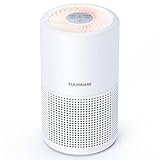
- Efficient Particle Filtration: FULMINARE air purifier uses an H13 HEPA filter. Simply turn it on and maintain a clean and peaceful environment and give families health.
- High Circulation Rate: The air purifier for home adopts dual-channel technology with a 360° air outlet, evenly covering rooms up to 1,086 ft² (based on 5 air changes per hour). The small portable air purifier is easy to place anywhere you want. One is enough to effectively improve your indoor air quality.
- Low Decibel Operation: FULMINARE H13 air purifiers for bedroom is so nice to light sleepers, allowing investors to sleep soundly each night. Set your air purifiers to sleep mode and, the air purifier will run at a near-silent noise level is around 20db at low fan speed. Ultra-quiet but enough to clean your room air at night, bringing you a smooth and sweet sleep.
- Independent Night Light and 5 Timers: It is designed to serve both as an air purifier and a night light. Dual function design makes it a good choice for babies and young children, who can find the softly glowing light or a soothing night time companion. Besides, the air purifiers come with 2-4-8-10-12 five-timers that fit your needs while you're away from home.
- Notice:1. Please open the bottom base cover to get the charging adapter(Plug-in design no battery required). 2 Remove the plastic packaging of the filter before running the air purifier. 3. The air purifiers for pets in time to replace them (3 Months Normally, Search FULMINARE PU-P05 Air Purifier Replacement Filters to get independent filter replacements).
Recognize when ordinary dust advice is not enough
Demolition can disturb painted coatings, insulation, masonry, timber, or other materials with hazards that ordinary dust suppression does not address. In the United States, EPA notes that its general remodeling practices are not approval for disturbing lead paint and points to special lead-safe requirements for applicable pre-1978 housing. That is a U.S.-specific requirement, not a worldwide rule. If the building is older or the material is uncertain, ask the owner or contractor what hazardous-material survey and controls apply. Do not undertake your own cleanup of suspected hazardous dust.
What to ask the demolition contractor to do about dust
Ask for the site manager or the person responsible for environmental controls. The following measures are described in construction guidance from the City of London and in UK Health and Safety Executive (HSE) soft-strip demolition material. Their legal status varies by jurisdiction, but they explain the controls a competent contractor should consider.
- Dampen dusty operations: apply water or another approved suppression method during dry conditions, while managing runoff and electrical safety.
- Screen or wrap the work: use properly designed enclosures, sheeting, or other containment to prevent dust escaping the site.
- Control debris drops: minimize the height from which rubble is released and use chutes or controlled transfer where appropriate.
- Consider wind: sequence or pause exposed dusty work when wind carries material toward homes, schools, care facilities, or other sensitive receptors.
- Separate dusty work from sensitive receptors: locate stockpiles, cutting, crushing, and loading as far from occupied premises as the project allows.
- Plan the sequence: identify materials and quantities before removal, because dust risk depends on what and how much is being demolished.
- Use task controls: water suppression or on-tool extraction may be appropriate for cutting and breaking; workers need suitable respiratory protection under the site’s risk assessment.
- Communicate with neighbors: provide a contact, expected timing, and updates when the work changes or controls fail.
Worker respiratory equipment is an occupational control. It does not make it acceptable for dust to escape toward neighboring homes, and residents should not be told to rely on occupational respirators as a substitute for site containment.
Questions that produce a useful answer
- What dust-suppression and containment measures are active during demolition today?
- How are debris drop heights, stockpiles, and loading controlled on dry or windy days?
- Which windows, doors, and outdoor-air intakes near my building are likely to be affected?
- When are the dustiest tasks scheduled, and how much notice will neighbors receive?
- Who is the on-site contact when visible dust leaves the boundary?
Request a specific change, such as dampening a particular task, moving a stockpile, or notifying residents before a high-dust sequence. Give the date, time, location, wind or weather condition if relevant, and the room or outdoor area affected.
What’s actually slowing this PC down?
Pick the symptom - the matching free tool is one click away.
How to block or reduce demolition noise
Use a real acoustic barrier, not ordinary debris netting
Noise barriers work only when their material and construction are suited to sound. Singapore’s National Environment Agency (NEA) states: “Effective noise mitigation requires sufficient mass/density or absorptive properties to reduce sound transmission.” A barrier should be close to the source where practicable, have sealed gaps and joints, and form as complete an enclosure as the work allows.
Thin tarpaulin or canvas used for weather protection or dust control is generally too thin to provide effective sound shielding. Debris netting is designed to catch falling material and provide visual screening, not to absorb sound. Depending on its arrangement, a light sheet can reflect sound toward some buildings and make the disturbance seem worse in those directions. Ask what the proposed barrier is made of, how gaps will be sealed, and where it will stand in relation to the machinery and your building.
Reduce noise at the machinery
Source reduction is usually more reliable than trying to block sound after it has traveled. Ask whether quieter equipment can perform the task. NEA gives crushers instead of breakers as an example of choosing lower-noise equipment where feasible. Properly fitted mufflers, routine maintenance, and prompt repair of loose panels or damaged components also matter.
Rank #3

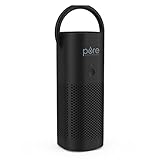
- Personal Air Purifier: Designed for small space use, this convenient, portable travel air purifier cleans 6ft² of air in 12 minutes*, so you can breathe fresher air in your personal space and tackle common issues, such as allergies, sinus problems, colds, nasal swelling, and more.
- True HEPA Filter: The 2-stage filtration system eliminates 99.97% of germs. Stage 1 is an Activated Carbon Pre-Filter that traps odors and harmful gasses, while the Stage 2 True HEPA Filter eliminates dust, dander, pet hair, pollen, mold spores, and smoke in the air.
- CORDLESS & TRAVEL-FRIENDLY: The rechargeable lithium-ion battery lasts up to 12 hours on low setting, so you can use the purifier with or without an outlet. You can even purify the air inside your car for cleaner air to and from any location. Weighing less than 1 pound, it’s a lightweight and portable option for anyone on-the-go.
- Customized Features: The adjustable handle allows you to place the air purifier either upright or on its side to find the best position, or even remove the handle when you don’t need it. Choose from 3 fan speeds (low, medium, or high) to find the air purification that works best for you. Place the fan speed on high and the purifier can even double as your own personal cooling fan.
- 5-Year Manufacturer's Warranty: This mini air purifier comes with a 2-in-1 filter, USB charging cable, and Pure Enrichment’s guaranteed 5-Year Manufacturer’s Warranty. Our customer support team provides daily quality service and peace of mind to millions worldwide all from a brand you can trust. *Coverage area based on AHAM standard of CADR (4 CFM) x 1.55.
Other practical controls include orienting noisy equipment away from homes, limiting the number of machines operating at once, and placing generators, compressors, and other fixed sources behind a suitable enclosure. A barrier that is far from the source may leave a direct sound path underneath or around it; close placement and sealed construction are more important than simply adding a large visible sheet.
Recommended Free Tools
Manage the schedule and sequence
Ask for the planned hours of the loudest work, including breaking, crushing, loading, reversing alarms, and truck movements. The site may be able to schedule the most disruptive tasks when fewer people are sleeping, working from home, or using a school or care facility nearby. Maintenance, deliveries, and noisy machinery should be coordinated so that unnecessary simultaneous noise is avoided.
Schedule rules are local. Do not assume that a work period allowed in one city is allowed in another. Ask for the permit conditions or published construction hours that apply to this project, and request advance notice of unusually noisy operations.
What you can do inside the home
During the noisiest period, move sleep, study, or remote-work activities to a room farther from the site if one is available. If practical, spend that short period elsewhere. Household curtains, foam panels, and consumer headphones may improve comfort or reduce perceived sound for an individual, but the available official guidance does not establish that they materially block demolition noise entering a home. They should not be presented as a replacement for site barriers, quieter equipment, or schedule controls.
Dust and noise troubleshooting
| What you observe | Likely control to request | Immediate household step |
|---|---|---|
| Visible dust plume reaches a window or balcony | Dampen the task, increase containment, control debris drops, and consider wind direction | Close the affected opening; protect nearby intake pathways; damp-wipe settled dust |
| Dust appears mainly when trucks load or rubble falls | Reduce drop height, use controlled transfer, and dampen loading or stockpiles | Keep doors and windows closed during that sequence |
| Dust enters through a mechanical ventilation system | Inspect the outdoor-air intake and approve a safe temporary setting | Ask building management before changing or blocking the system |
| Noise is strongest from one machine | Maintain or replace the machine, fit a proper muffler, orient it away, or enclose it | Move activities to the quietest room during the scheduled task |
| Noise increases when several machines operate together | Limit simultaneous noisy equipment and revise the sequence | Record the exact combination and time so the request is specific |
| A sheet fence is visible but noise is unchanged | Check whether it is debris netting or thin tarpaulin; request a dense or absorptive barrier with sealed gaps | Do not assume the visible screen is an acoustic control |
Keep a record that supports a solution
Record each significant incident in a simple log. Include the date, start and end time, the task you could see or hear, rooms or outdoor areas affected, whether windows or ventilation were open, visible dust direction, and the response from the site. Photographs or short recordings can document a recurring pattern where lawful and safe, but never enter the worksite or approach machinery to collect evidence.
A log is not a measurement of exposure and should not be presented as one. It gives the site manager and authorities a clear description to investigate. Separate dust and noise entries so that a request for dampening is not confused with a request for an acoustic barrier.
Independent reader supportYour contribution helps us test, update, and keep practical guides available for everyone.How to raise a demolition concern
First contact: site or property management
Start with the site manager, contractor’s neighbor liaison, landlord, strata or homeowners’ association, or building manager, depending on who controls the relevant area. State the pattern and the requested remedy: for example, dust escaping during rubble drops between two and three in the afternoon, or a breaker operating beside a bedroom with no notice.
Rank #4
- Personal Air Purifier: Designed for small space use, this convenient, portable travel air purifier cleans 6ft² of air in 12 minutes*, so you can breathe fresher air in your personal space and tackle common issues, such as allergies, sinus problems, colds, nasal swelling, and more.
- True HEPA Filter: The 2-stage filtration system eliminates 99.97% of germs. Stage 1 is an Activated Carbon Pre-Filter that traps odors and harmful gasses, while the Stage 2 True HEPA Filter eliminates dust, dander, pet hair, pollen, mold spores, and smoke in the air.
- CORDLESS & TRAVEL-FRIENDLY: The rechargeable lithium-ion battery lasts up to 12 hours on low setting, so you can use the purifier with or without an outlet. You can even purify the air inside your car for cleaner air to and from any location. Weighing less than 1 pound, it’s a lightweight and portable option for anyone on-the-go.
- Customized Features: The adjustable handle allows you to place the air purifier either upright or on its side to find the best position, or even remove the handle when you don’t need it. Choose from 3 fan speeds (low, medium, or high) to find the air purification that works best for you. Place the fan speed on high and the purifier can even double as your own personal cooling fan.
- 5-Year Manufacturer's Warranty: This mini air purifier comes with a 2-in-1 filter, USB charging cable, and Pure Enrichment’s guaranteed 5-Year Manufacturer’s Warranty. Our customer support team provides daily quality service and peace of mind to millions worldwide all from a brand you can trust. *Coverage area based on AHAM standard of CADR (4 CFM) x 1.55.
Ask for the work schedule, the person responsible for complaints, and the control that will be used. Keep the request factual and give a reasonable opportunity for the site to respond, unless there is an immediate safety concern.
Escalate to the responsible local authority
Complaint rules differ by country and municipality. The authority may be called environmental health, public protection, construction-noise control, building control, or nuisance enforcement. Confirm which office handles construction dust and noise in your area and what information it requires.
For the United Kingdom, HSE says it does not handle environmental-health matters and directs public-nuisance dust and noise complaints to the local authority Environmental Health Department. Its public guidance states: “If the dust is causing a public nuisance you can contact your local authority Environmental Health Department.” It gives the same route for noise. Many UK local authorities set construction hours, and planning permission may include conditions.
For England, GOV.UK says councils must investigate complaints that may be statutory nuisance. A council can issue a notice for construction or demolition work specifying a noise level, machinery, hours, or measures to minimize noise. Those powers should not be assumed to apply outside England; elsewhere, the applicable test and enforcement route may be different.
What to include in a complaint
- The project address and, if known, the contractor or developer.
- Dates and times, including whether the event is recurring.
- The type of disturbance: visible airborne dust, settled dust, impact noise, tonal machinery, alarms, or truck movements.
- The rooms, balconies, neighboring premises, or public areas affected.
- Steps you took indoors and any response from the site.
- The specific control or investigation requested.
- Photographs, recordings, or your incident log where accepted by the authority.
Ask whether the project has permit conditions, approved hours, hazardous-material controls, or a designated complaints process. An authority may need to inspect while the activity is occurring, so provide the most likely times rather than only a general description.
Protect vulnerable occupants and plan around the work
People with asthma, chronic respiratory disease, allergies, or sensitivity to noise may need an individualized plan from a clinician or building manager. Keep prescribed medication available and identify a cleaner-air room, but do not treat household measures as proof that exposure is safe. If anyone experiences severe breathing difficulty, chest pain, confusion, or other urgent symptoms, seek medical help.
For schools, care settings, healthcare premises, and multi-unit buildings, coordinate with facilities staff before changing ventilation. The same demolition task may affect several intakes, pressure zones, or shared corridors. A building-wide plan is more reliable than each occupant improvising a different seal or fan setting.
A practical daily checklist
- Check the posted schedule or contact the site before the day’s dusty or noisy task.
- Close exposed windows and doors before the task starts.
- Confirm that any temporary ventilation setting has been approved by the responsible building professional.
- Run a properly sized portable HEPA cleaner in the occupied room if you choose to use one, without blocking its airflow.
- Keep children, pets, and visitors away from balconies, open windows, and any area where demolition debris could fall.
- Note visible dust, wind direction, machinery, and times in your log.
- Damp-wipe settled dust instead of dry sweeping.
- Send one specific control request to the site contact when a control fails.
- Escalate through the local environmental-health or nuisance route if the problem remains unresolved.
When professional advice is warranted
Contact a qualified HVAC or building professional before altering shared ventilation, sealing a dwelling with combustion appliances, or changing pressure controls. Ask the building owner or contractor about a hazardous-material survey when older paint, insulation, or unknown materials are involved. For persistent or severe noise, an authority or qualified acoustic professional may need to assess the site; do not infer a legal violation from a phone recording or from the presence of a temporary fence alone.
The most effective request is usually concrete: control the dustiest task at its source, use a barrier with sufficient mass or absorption and sealed gaps for noise, change the sequence or equipment where feasible, and provide a contact and schedule. Indoor filtration and closed openings then serve as limited, temporary protection while the work proceeds.
Quick Recap
Product prices and availability are accurate as of the date/time indicated and are subject to change. Any price and availability information displayed on Amazon at the time of purchase will apply.
Free tools Windows power users keep installed
One-click scans. No signup required.

