Quick wins for a faster PC:
Scan for outdated or missing drivers - takes under a minuteDriver Scan →Clear out junk files and repair common Windows errorsFree Scan →Fix the driver behind crashes, sound loss and screen glitchesFind Drivers →The most effective jobsite waste program prevents excess material first, salvages usable components before demolition, separates remaining debris where it is generated, and verifies that every load reaches an appropriate outlet. A written plan, clearly labeled bins, trained crews, and documented hauler destinations turn those principles into lower disposal volume, safer work areas, and more reliable recycling.
Why construction-waste reduction deserves a jobsite plan
Construction and demolition activity produces enormous volumes of material. The U.S. Environmental Protection Agency reported approximately 600 million tons of construction and demolition debris in the United States in 2018—more than twice the amount of municipal solid waste generated that year. Keeping material out of disposal can also support employment: EPA’s 2012 Recycling Economic Information Report cited about 175,000 jobs associated with recycling construction and demolition materials.
As an Amazon Associate I earn from qualifying purchases.
Waste decisions should follow a priority order:
- Source reduction: avoid creating surplus, damaged, or unusable material.
- Reuse: keep products and components in service, on the same project or elsewhere.
- Recycling: send separated materials to processors that can turn them into new feedstock.
- Disposal: use a landfill or other permitted disposal outlet only for material that cannot reasonably be prevented, reused, or recycled.
EPA identifies source reduction as the highest-priority strategy. Recycling is not a substitute for accurate estimating, careful storage, or selective demolition. Local markets, facility rules, transportation distance, labor availability, and contamination charges determine which option is practical for a particular project.
Write the waste-management plan before mobilization
A plan makes waste handling a project requirement rather than an informal cleanup task. Complete it during estimating and revise it as the schedule, subcontractors, or available outlets change.
#1 Best Overall
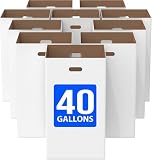
- PERFECT FOR EVENTS & HIGH-TRAFFIC SPACES: These 40-gallon corrugated cardboard trash and recycling containers are designed for large gatherings, outdoor events, weddings, festivals, trade shows, corporate functions, temporary workspaces, construction sites, and busy venues where convenient waste collection is needed
- HEAVY-DUTY CORRUGATED CARDBOARD BUILD: Made from thick, durable corrugated cardboard, these disposable trash cans provide a strong yet lightweight waste bin solution for high-volume trash and recycling. The reinforced structure helps maintain stability during use, even when handling event waste, paper, cups, bottles, and general debris.
- QUICK POP-UP ASSEMBLY & FOLDABLE STORAGE: Designed for fast setup, each cardboard trash container opens quickly with a simple pop-up style design. When not in use, the flat-folding structure makes storage, transport, and event preparation easier, helping save space before and after use.
- RECYCLABLE & EVENT-FRIENDLY WASTE SOLUTION: These cardboard recycling and trash bins offer a practical alternative to traditional plastic waste containers. The recyclable cardboard design supports responsible disposal after events, parties, work sites, offices, fairs, and other temporary waste management needs.
- 10-PACK BULK VALUE FOR LARGE EVENTS: Includes ten 40-gallon cardboard trash and recycling containers, making it easy to place multiple waste stations across crowded venues, catering areas, construction zones, warehouses, trade shows, festivals, offices, and temporary event spaces.
Inventory expected materials and quantities
List the materials expected from demolition, excavation, structural work, framing, roofing, drywall, finishes, packaging, and site operations. Estimate quantities using the same units used by your haulers—tons, cubic yards, loads, pallets, or containers. Identify materials that may need special handling, including treated or painted products, asbestos-containing materials, lead-painted components, chemicals, oily rags, and other regulated wastes. Do not place regulated or hazardous material in ordinary recycling bins.
Assign responsibilities
Name a waste coordinator and identify a backup. The plan should state who orders containers, checks signs, inspects contamination, schedules pickups, receives weight tickets, and communicates with subcontractors. Add waste requirements to bid documents, subcontracts, purchase orders, orientation materials, and toolbox or safety meetings. Require each subcontractor to keep its debris in the designated stream instead of creating unplanned piles or mixed loads.
Map containers and service intervals
Show bin locations on the site logistics plan. Place them where crews can reach them without carrying debris across active work areas, but keep them clear of emergency routes, lifting zones, and vehicle conflicts. State the expected fill level that triggers a pickup and identify who can authorize an extra service. A container that regularly overflows will encourage dumping in the wrong stream.
Define records to retain
Keep the written plan, supplier take-back confirmations, salvage receipts, donation records, hauler licenses or registrations where required, manifests for regulated materials, weight tickets, and facility receipts. Record the material, date, quantity, carrier, destination, and whether the load was accepted, rejected, or reclassified.
Prevent waste through design and procurement
Every material that never arrives, never becomes damaged, or never becomes surplus is more valuable than one that must later be recycled. Coordinate the architect, engineers, purchasing staff, superintendent, and major subcontractors before orders are released.
Design around standard dimensions
Use standard sheet, panel, stud, pipe, and finish dimensions where they fit the design. Coordinate structural grids, room layouts, openings, and service runs so installers make fewer offcuts. Modular or prefabricated assemblies can reduce cutting and packaging when transportation and site conditions support them. Detail connections that permit disassembly and future replacement instead of destroying adjacent components during maintenance.
Preserve existing construction when feasible
Evaluate whether walls, floors, doors, windows, cabinets, fixtures, and structural elements can remain in place. Retaining a sound assembly avoids the waste and energy associated with removal, transport, processing, and replacement. Document the condition of existing components so the team can distinguish intentional preservation from accidental damage.
What’s actually slowing this PC down?
Pick the symptom - the matching free tool is one click away.
Order accurately and by phase
Use current takeoffs, coordinated drawings, approved substitutions, and realistic waste factors. Release materials in quantities that match the work sequence rather than buying the entire project at once. Just-in-time purchasing can reduce on-site damage and double handling, but it requires dependable suppliers and protected storage. Confirm lead times before reducing inventory; a rushed replacement order can create more packaging and surplus than a planned delivery.
Prevent damage after delivery
Protect materials from rain, ground moisture, sunlight, wind, theft, forklifts, and incompatible storage. Keep gypsum products dry, stack lumber on supports, secure lightweight items, and maintain clear labels so opened packages are used before new ones are opened. Establish a return area for unopened, excess, or substandard products instead of allowing them to be mixed with debris.
Reduce packaging and arrange take-back
Ask suppliers about returnable pallets, reusable crates, bulk delivery, minimal packaging, and collection of pallets, containers, off-cuts, or unused products. Put take-back terms in the purchase order, including who pays transportation, the condition required for return, and the deadline. A verbal promise is difficult to enforce after delivery.
Salvage before demolition or strip-out
Demolition by machine is fast, but it mixes and damages components that may have a higher value as products than as scrap. Selective deconstruction takes planning and labor, so decide early whether the recovered value and avoided disposal justify the effort.
Rank #2

- PCR: Made of post-consumer recycled resin for commercial recycling use
- BUILT-IN HANDLES: Enable easier lifting and carrying
- DESIGNED TO EASILY STACK: Designed to stack or nest for increased productivity
- DURABLE: Commercial grade construction to withstand years of indoor and outdoor use
- EASY TO CLEAN: Texture and design prevent liquid and debris build up for easy cleaning
Conduct a pre-demolition assessment
Walk the building or work area with the demolition contractor, superintendent, and a salvage or reuse outlet. Record quantities, dimensions, condition, access constraints, hazards, and the time required for removal. Photograph items and mark what is to remain, what is to be salvaged, and what is to be discarded. Check for utilities, structural hazards, mold, pests, and regulated materials before anyone begins removal.
Remove high-value components intact
Schedule salvage before destructive work. Depending on condition and local demand, candidates can include doors, windows, cabinets, plumbing and electrical fixtures, flooring, lumber, brick, hardware, and other reusable components. Remove fasteners carefully, protect edges and glazing, label sets, and store items on pallets or racks. Keep matching pieces together and record dimensions so an outlet can determine whether it can use them.
Secure an outlet before removal
Contact a reuse center, architectural-salvage buyer, charity, materials exchange, or another approved recipient before the demolition date. Confirm what it accepts, preparation requirements, pickup or delivery arrangements, documentation, and whether rejected items return to the project. Without a confirmed outlet, salvaged material can become another mixed waste pile.
Build a practical container and separation system
Separate material at the point where it is generated. A worker is more likely to use the correct container when it is visible, close, clearly labeled, and no harder to reach than the trash bin.
The Tool Desk
Outbyte PC Repair FREERepair Windows errors before they cause bigger problemsFix Now →Outbyte Driver Updater FREEFix the driver behind crashes, sound loss and screen glitchesFind Drivers →Choose source-separated or commingled collection deliberately
| Consideration | Source-separated collection | Commingled collection |
|---|---|---|
| Contamination risk | Lower when each stream is clean and clearly defined; a mistake can affect a whole load. | Higher because incompatible materials share one container and sorting occurs later. |
| Space requirement | Needs several containers or a planned swap area. | Uses fewer containers and can suit constrained sites. |
| Labor at the site | More sorting effort by crews and supervisors. | Less sorting at the point of generation, but the service may charge for processing or rejected loads. |
| Accepted materials | Can target a high-volume stream such as clean wood, drywall, metals, or concrete when an outlet accepts it. | Depends on the facility’s exact list; materials that look recyclable may still be prohibited. |
| Pickup frequency | Each stream may fill at a different rate, requiring coordinated swaps. | Fewer service types, but one full container can interrupt several work areas. |
| Documentation | Usually provides clearer material-specific quantities and destinations. | May provide a combined weight with less detail unless the hauler supplies sorting reports. |
| Cost drivers | Additional containers, space, labor, and pickups can increase service cost. | Lower site complexity may be offset by sorting, contamination, or tipping charges. |
Ask local haulers to price both approaches using the same expected volumes. The cheapest container is not necessarily the lowest-cost program if rejected loads, excess handling, or long-distance transport erase the savings.
Use a three-bin baseline
A practical starting arrangement is:
- Commingled recyclables: only the materials named by the receiving facility.
- Garbage: non-recyclable, non-hazardous residuals.
- One phase-specific stream: for example, clean wood during framing or drywall during finishing.
On a small site, begin with two or three high-volume streams rather than many partly filled bins. Add a separate container when a material is generated in enough quantity to justify its own outlet and the crew can keep it clean. During demolition, the third stream might be concrete or brick; during framing, clean wood; during finishing, drywall or cardboard.
Place and label bins for correct use
Use a secure, designated area with stable ground and enough clearance for collection vehicles. Put small collection containers or carts near work faces, then consolidate them into the larger labeled bins. Signs should use large words, pictures, and examples of both accepted and prohibited items. State what happens to contaminated loads so the requirement is understood as a project control, not a suggestion. Use the same color and wording on every floor, cart, chute, and container.
Train crews and control contamination
Give every worker and subcontractor a short orientation before work begins and whenever the container arrangement changes. Demonstrate the route from the work area to each bin; do not rely on a map that workers never see.
Recommended Free Tools
Cover four points in the briefing
- Which materials belong in each container.
- Which materials are prohibited or require a separate procedure.
- Where containers are located and how full they may become.
- Who to contact when a material is uncertain, a bin is full, or a spill occurs.
Inspect routinely
The waste coordinator or a designated supervisor should inspect bins at a set frequency and after major deliveries, demolition shifts, or weather events. Look for visible contamination, overflowing containers, damaged signs, blocked access, unsecured lightweight material, and liquids. Photograph recurring problems when useful, correct them promptly, and note the action taken.
Fix the system, not only the individual mistake
If the same prohibited item appears repeatedly, ask why. The bin may be too far away, the sign may be unclear, the material may be generated on another floor, or the subcontractor may not have received the instructions. Move or duplicate a container, change the sign, add a small collection cart, or revise the subcontract. Give crews specific feedback at toolbox talks and recognize clean loads. Do not wait until a hauler rejects a container to address a pattern.
Verify haulers, recyclers, and final destinations
Choose outlets before the first load leaves the site. For each hauler, recycler, salvage company, reuse center, or materials exchange, confirm:
Rank #3

- Recycling & Garbage Bin: This spacious blue bin makes waste disposal and recycling easy. With a generous capacity, it’s designed to help you collect and sort rubbish efficiently.
- Blue Waste Bin: Measuring 22.25" L x 17.25" W x 14.25" H, this recycling trash can offers a 17-gallon capacity and weighs only 3.92 lbs. It has a low profile and fits discreetly in any space.
- Home Recycling Tote: Built with tall side walls, carry handles, and injection-molded construction with a cross-stacking design, this bin ensures durability, ease of use, and easy storage.
- Versatile Bin: Ideal for home, office, garage, or outdoor use, this versatile recycling container features an easy-to-identify Mobius loop symbol and address bar for simple sorting and organization.
- Create a Gracious Home: At Gracious Living, we’re committed to making innovative and high-quality products to help people live more organized and gracious lives in homes they love.
- Which materials and forms it accepts, including restrictions on painted, treated, wet, mixed, or contaminated material.
- Whether the company and facility are licensed or registered where local law requires it.
- Container sizes, loading limits, pickup windows, swap procedures, and emergency contact details.
- Pricing structure, including delivery, pickup, processing, contamination, rejected-load, and minimum-load charges.
- Where the material goes after collection and whether it is processed, reused, transferred, or disposed.
- What receipts, weight tickets, photographs, sorting reports, or destination records will be provided.
Keep a written acceptance confirmation. Facility rules can change, and a material accepted at one location may be rejected at another. If a load is rejected or reclassified, record the reason and update the plan rather than reporting it as recycled.
Meet OSHA housekeeping requirements
Waste separation is also a safety control. OSHA’s construction standard, 29 CFR 1926.25, requires orderly work areas and regular removal of debris. Section 1926.25(c) states: “Containers shall be provided for the collection and separation of waste, trash, oily and used rags, and other refuse.”
Apply the requirement in daily operations:
- Keep scrap lumber with protruding nails, loose metal, packaging, and other debris out of work areas, passageways, and stairs.
- Remove combustible scrap regularly instead of allowing piles to accumulate near ignition sources.
- Provide containers for collection and separation where waste is generated.
- Use covers for garbage and for oily, flammable, caustic, acidic, or harmful-dust wastes when required by the applicable rule and material-safety procedure.
- Keep access to fire equipment, exits, ladders, lifts, and emergency routes clear.
- Coordinate waste removal with the competent person and site safety plan, especially during demolition and cutting operations.
Recycling containers do not replace hazardous-material procedures. Identify regulated wastes before work, use the required labels and containers, and send them through authorized channels.
Handle common construction streams correctly
The receiving facility’s acceptance list controls, but the following setup helps crews understand how streams are commonly organized:
| Material stream | Preparation at the site | Important check |
|---|---|---|
| Clean wood | Keep separate from soil, concrete, drywall, food waste, and hazardous coatings where required. | Ask whether painted, treated, engineered, or laminated wood is accepted. |
| Drywall | Keep gypsum products dry and free of insulation, metal, wood, and general trash. | Confirm whether new off-cuts and demolition gypsum have different rules. |
| Metals | Separate bulky pieces when practical; remove attached non-metal components if the outlet requires it. | Ask about appliances, cables, tanks, and metal with coatings or residues. |
| Concrete and brick | Keep free of garbage, soil, wood, and hazardous residues when marketed as clean aggregate. | Confirm size limits and whether mixed masonry is accepted. |
| Cardboard and packaging | Flatten boxes and keep them dry; use supplier return programs for pallets and reusable packaging. | Check whether waxed, laminated, or contaminated packaging is excluded. |
| Fixtures and components | Protect, label, and store doors, windows, cabinets, fixtures, flooring, lumber, brick, and hardware for reuse. | Arrange an outlet before removal and document items that are accepted. |
| Residual garbage | Use only for material with no approved prevention, reuse, or recycling route. | Keep hazardous and regulated wastes out of ordinary garbage. |
Decide among reuse, recycling, and disposal
| Option | Best fit | Advantages | Limitations |
|---|---|---|---|
| Reuse | Intact, functional components with a confirmed recipient. | Preserves the product, can avoid purchasing a replacement, and often avoids processing. | Requires careful removal, storage, transport, quality evaluation, and a willing outlet. |
| Recycling | Clean material with a local processor and sufficient volume. | Turns material into feedstock and can provide measurable diversion records. | Contamination, transport, sorting, and market conditions can reduce value. |
| Disposal | Contaminated, damaged, mixed, or otherwise unusable residuals. | Provides a controlled endpoint when no higher-use route is feasible. | Consumes disposal capacity and usually provides no material value; fees may rise with weight or rejected loads. |
Condition, local outlet availability, handling effort, transportation distance, and expected value should guide the decision. Do not remove a component for reuse if doing so creates an unsafe operation or causes more damage than value.
Crashes, No Sound, or Screen Glitches?
Random freezes, missing sound and display glitches usually trace back to one bad driver. Find and replace yours safely.Free scan · under a minuteWindows Errors? Fix Them Before They Spread
Repair common Windows errors and clear accumulated junk for a smoother, more stable PC - no reinstall needed.Free scan · no reinstallAdapt the program to each construction phase
Demolition and strip-out
Complete the salvage assessment, isolate regulated materials, and establish separate containers before destructive work. Use selective deconstruction for reusable components, then keep concrete, brick, metals, wood, and residuals from being mixed unnecessarily.
Earthwork and structural work
Plan cut-and-fill quantities to reduce export and imported material. Protect reusable soil or aggregate from contamination. Keep concrete and masonry clean if a local processor accepts them, and coordinate concrete washout through the site’s environmental and safety procedures rather than a recycling bin.
Framing and enclosure
Provide a clean-wood stream where accepted, collect metal separately when volumes justify it, and keep packaging dry. Use cut lists, optimized layouts, standard lengths, and returnable pallets to reduce off-cuts and packaging.
Drywall and insulation
Stage a drywall container near the finishing areas, keep gypsum dry, and use carts or small bins on upper floors. Prevent insulation, joint compound containers, wood, and general trash from entering a gypsum-only stream unless the facility explicitly permits them.
Do these 3 things before closing this tab:
1Fix the driver behind crashes, sound loss and screen glitches2Repair Windows errors before they cause bigger problems3Scan for outdated or missing drivers - takes under a minuteFinishes and closeout
Return unopened products, consolidate partial containers safely, and separate cardboard, plastic film, metals, and fixtures according to the facility’s list. Schedule final pickups before demobilization so leftover material is not rushed into a mixed load.
Measure performance and improve it
Track enough information to make decisions, not just a single diversion percentage. Useful indicators include:
Rank #4

- Space Saving Profile - The Highboy bin is perfect for tight or compact spaces; its narrow design and sleek shape make it ideal for the kitchen, garage, office, or other areas where space is limited while still large enough for household recycling.
- Easy Bag Removal - This indoor or outdoor recycle bin was designed with a tapered shape and vented sides to make it simple to remove a trash bag. Eliminate the struggle to remove a full bag of waste. The recommended bag size for ideal use is 33 gallons.
- Dustpan Edge - Sweep debris directly into the slim trash can with a dustpan edge that eliminates the need for a separate dustpan, making it easy and efficient to clean. The waste container is also made with smooth plastic to ensure easy cleaning.
- Swing Top Lid – The Highboy comes with the premium feature for functionality; a swing top lid to conceal trash while also providing easy access to discard waste. Remove the lid to empty the receptacle and reattach it with ease.
- Easy to Carry - Designed with you in mind, the Highboy durable plastic recycling bin has sturdy pass-through handles on top and a hand groove on the bottom. This makes moving the heavy-duty garbage can easier than ever.
- Quantity purchased, returned, salvaged, recycled, and disposed by material.
- Number of containers, pickups, rejected loads, contamination notices, and overflow events.
- Disposal and recycling cost by stream, including extra handling or rejected-load charges.
- Weight or volume per project area, unit, or major phase.
- Subcontractor compliance with sorting and reporting requirements.
When reliable weights are available, calculate a diversion rate as:
diversion rate = (reused material + recycled material) ÷ (reused material + recycled material + disposed material) × 100
Free tools Windows power users keep installed
One-click scans. No signup required.
State the measurement basis and exclusions. A commingled load without a documented recovery quantity should not automatically be counted as recycled. Compare results by phase and investigate changes in material mix, container service, or facility reporting before concluding that performance improved or worsened.
Troubleshoot common jobsite failures
Bins fill too quickly
Check whether the container is correctly sized, whether pickups match the production rate, and whether bulky material is being compacted or placed inefficiently. Add a smaller collection cart at the work face, increase service frequency, or create a separate high-volume stream. Never allow overflow to block access or create a fall, fire, or wind hazard.
Recyclable bins contain trash
Inspect where contamination enters. Add pictures and prohibited examples, move the bin closer, provide a paired trash container, and repeat the briefing with the responsible crew. If contamination continues, use a more controlled source-separated system or revise the subcontractor requirement.
The outlet rejects a load
Keep the rejection notice, photograph the load if permitted, and record the added cost and final destination. Determine whether the cause was a wrong material, moisture, prohibited coating, mixed debris, or an inaccurate acceptance list. Correct the plan and do not report the rejected load as diverted.
There is no nearby recycling market
Revisit source reduction and reuse first. Consolidate clean material only when the transportation and processing costs are justified, ask regional facilities about scheduled backhauls or transfer options, and compare the total cost with disposal. Document the market limitation rather than mixing material under an unsupported recycling claim.
Materials are damaged before use
Inspect storage, weather protection, stacking, security, and handling routes. Move vulnerable materials under cover, improve dunnage, restrict access, and coordinate deliveries with installation dates. Damage prevention often produces a faster return than adding another recycling container.
Subcontractors ignore the system
Put sorting obligations, container rules, reporting, and responsibility for contamination charges in the subcontract. Review them at orientation, inspect performance, and address violations promptly through the project’s contract and safety-management process.
A phased implementation checklist
- Before bidding: identify likely material streams, salvage opportunities, local outlets, and project-specific constraints.
- Before contracting: include sorting, source-reduction, take-back, housekeeping, and documentation requirements in bid and subcontract language.
- Before mobilization: complete the written plan, reserve containers, map locations, verify facility acceptance, and assign the waste coordinator.
- Before each phase: forecast quantities, adjust the number and type of bins, confirm pickup dates, and brief the crews and subcontractors.
- During work: inspect containers, correct contamination, protect materials, remove debris regularly, and keep required safety routes clear.
- At every pickup: retain the ticket or receipt, record the destination and material, and investigate rejected or reclassified loads.
- At closeout: reconcile purchased, returned, reused, recycled, and disposed quantities; document lessons for the next project.
The strongest program is simple enough to follow under production pressure: prevent surplus through design and purchasing, salvage before demolition, provide nearby labeled containers, inspect and coach continuously, and verify every final destination. That sequence reduces waste before disposal costs and contamination risks are created.
Quick Recap
Product prices and availability are accurate as of the date/time indicated and are subject to change. Any price and availability information displayed on Amazon at the time of purchase will apply.

