The fastest way to reduce construction noise at home is to treat the path it uses: move to a room on the less-exposed side, close exterior openings, and seal gaps around windows, doors, pipes and cables. If noise still enters, evaluate the window assembly or obtain a professional building-envelope assessment. These measures can reduce particular leak paths; they cannot guarantee silence because sound may also travel through walls and the structure.
What construction noise is doing to your home
Construction sound reaches a room through the weakest parts of the exterior envelope. Open or poorly sealed windows and doors are common paths, while small penetrations around utility pipes and cables can also let sound through. A room facing the work may receive more noise than a room on the opposite side, so the first useful question is not “Which product should I buy?” but “Which path is open?”
As an Amazon Associate I earn from qualifying purchases.
Construction noise can interfere with conversation, concentration, routines and sleep. The Federal Highway Administration (FHWA) states in its Construction Noise Handbook, section 3.0, “Construction noise in the community may not pose a health risk or damage peoples’ sense of hearing, but it can adversely affect peoples’ quality of life.” That statement describes community effects; it is not a finding that every exposure is harmless, nor does it establish a residential hearing-safety limit.
Start with the room, not a product
Use the least-exposed room
If your layout permits, work, rest or sleep in a room farther from the construction or on the side of the home facing away from it. FHWA noise-planning guidance discusses room arrangement and building orientation as ways to reduce noise impacts. This is an adaptation that changes your distance and exposure; it is not a guaranteed decibel reduction.
#1 Best Overall

- Press-In Kerf Fit: This weather stripping door seal fits 1/8" kerf slots and 1/4"–1/2" closed door gaps. For pre-cut kerf frames only; not self-adhesive. Measure before ordering
- Block Drafts & Energy Loss: The flexible door frame seal strip helps reduce cold drafts, light leaks, outside noise and heating or cooling loss for year-round comfort
- Replace Worn Exterior Door Seals: Ideal for replacing old, cracked, compressed or pet-damaged door weather stripping on front, back and garage entry doors
- Easy Press-In Installation: Remove the old seal, clean the kerf groove, measure and cut, then press the flange firmly into place. The 40FT roll can be cut to fit multiple doors
- Durable PE-Covered Foam: Resilient PU foam with a tough PE cover compresses and rebounds to help maintain a snug, long-lasting seal
- Choose a room with fewer exterior openings on the construction-facing wall.
- Move a bed or desk away from the wall or window closest to the work.
- Keep the quieter room available for sleep or calls during the loudest scheduled periods.
- Do not move into a space that lacks required ventilation, safe egress or suitable heating and cooling.
Find and close the obvious leaks
Inspect windows, exterior doors and penetrations
With the room quiet, look and feel for visible gaps around window frames, door jambs, thresholds and trim. Check where pipes, cables or other services pass through an exterior wall. A gap that admits air is a plausible sound-leak path, although sealing it will not stop sound transmitted through an intact wall, glass pane or structural connection.
The federal homeowner guide Quieting: a home owner’s practical guide to noise control recommends caulking or gaskets for windows, resilient gaskets and threshold seals for exterior doors, and sealing penetrations around pipes and cables. It gives this rule for windows: “Existing windows should be caulked or equipped with gaskets to provide an air-tight seal.”
Keep openings closed while work is loud
Close exterior windows and doors when construction is active, if doing so is safe and practical. A closed window with a continuous seal generally blocks more airborne sound than an open sash. Do not block a required ventilation opening, combustion-air supply or emergency exit. If closing an opening conflicts with indoor-air or equipment-safety requirements, ask a qualified professional how to resolve the conflict rather than disabling an exhaust system or appliance safeguard.
What’s actually slowing this PC down?
Pick the symptom - the matching free tool is one click away.
Install door seals where a gap exists
Weatherstripping and a threshold seal
Door weatherstripping and a threshold seal are the clearest low-cost interventions when an exterior door has an air gap. Measure the gap and the door stop before purchasing a seal. Install the gasket continuously along the jamb and head, then fit the threshold or door sweep so it contacts the sill without dragging excessively.
Rank #2

- No light penetration: Our door seals are made of high-density foam core material, which effectively blocks light from penetrating around the door.
- Lower Energy Costs: This weather stripping protects your home from air leakage in both winter and summer, while increasing comfort and saving energy.
- Fits Most Doors: Door seal strip are flexible to fit slots from 0.35" to 0.59" and will fit most doors. Please check the slot you need to seal before ordering.
- Easy to Install: The door seal requires no adhesive and will not leave marks. Simply insert the door strips into the grooves or recesses to complete a tight seal that will not fall off easily.
- Enhance Your Living Space: The weather strip offers good resilience and sound insulation, effectively sealing gaps to block dust, water, and reduce noise, creating a comfortable and serene living environment.
- Close the door and inspect daylight, loose trim and uneven contact around all four sides.
- Measure the width and depth of the gap; choose a gasket sized for that range.
- Apply the weatherstrip to clean, dry surfaces according to the product instructions.
- Adjust or install the threshold seal so the latch still engages and the door opens without binding.
- Test the door from inside and outside. It should close, latch and unlock normally.
A door seal treats the air path around the door. It does not soundproof the adjoining wall, glazing or floor, and it will not correct noise that is arriving through the building structure. If the door no longer latches, remove or reposition the seal before relying on it as an emergency exit.
Improve a weak window assembly
Windows often combine several potential weaknesses: perimeter gaps, a thin or damaged pane, a frame that does not close tightly, and a need to remain operable for ventilation. FHWA lists several window approaches, including interior glass sash, temporary clear vinyl curtains, full replacement acoustical windows and exterior storm sash. The suitable choice depends on the existing window’s condition, the air space available for an insert, installation cost and effort, and how the change affects ventilation, heating, ventilation and air-conditioning (HVAC) operation.
Interior glass sash or insert
An interior insert can be a cost-effective option when the existing window is in good condition and there is enough air space for the added layer. It is usually more reversible than replacing the entire window and may suit a renter if the landlord permits it. Confirm that the insert can be removed for cleaning and that it does not obstruct required emergency escape or ventilation functions.
Temporary clear vinyl curtain
A clear vinyl curtain can provide a temporary layer when a seasonal or removable treatment is needed. Its usefulness depends on how well the surrounding opening is sealed and whether the curtain can be installed without leaving a large perimeter gap. Treat it as an evaluated window treatment, not as a guarantee of a quiet room.
Rank #3

- Complete Package: no need for any additional purchases, our weather stripping door seal comes with 4 42-inch strips and 1 36-inch strip within one package; The weather stripping material is quality and comes with all necessary accessories for quick installation
- Accommodating Design: our weather door seal strip comes in a versatile size package; Thanks to the accommodating design, it easily adapts to curved and uneven doors, providing a snug fit; You will no longer have to worry about wind and noise leaking into your home
- Efficient Sealing Solution: the exterior door weather stripping offers a quality solution to keeping your indoors free of dust, rain, and cold; Made of reliable aluminum and foam, the door seal is inherently corrosion resistant and offers efficient sealing capabilities, ensuring your home stays warm
- Install Without Fuss: the exterior door weatherstripping features predrilled, slotted screw holes for easy installation; All you need to do is align it with your door, and you can install it directly; package includes mounting screws, 84" sides, 36" top
- Special Features: not only is this front door weather stripping rainproof, it is also successful in blocking out wind, light, draft, and snow; With this door seal, enjoy peaceful, isolated indoors, away from external elements and noise
Exterior storm sash
An exterior storm sash adds another layer outside an existing window. The frame and building facade must be able to accept the installation, and the change may affect maintenance, drainage and appearance. Obtain permission before altering a rented property or a shared building exterior.
Replacement acoustical window
A full replacement is the most invasive option and may be appropriate when the existing window or frame is damaged, cannot close tightly or lacks the space needed for an insert. It requires a careful review of opening dimensions, installation details, ventilation strategy, condensation risk and HVAC implications. Ask for a written scope that identifies the noise path being addressed instead of accepting an unconditional “soundproof” promise.
Compare practical interventions before spending money
| Intervention | Primary path addressed | Cost and effort information | Reversibility and occupancy | Systems and professional issues |
|---|---|---|---|---|
| Use a room farther from the work | Room orientation and exposure | No product cost is established; usually immediate | Fully reversible; works for owners and renters | Do not use a room without safe egress or adequate ventilation |
| Caulk or gasket a window | Perimeter air leakage | Current consumer pricing is not stated; effort ranges from minor maintenance to specialist work | Often reversible if removable gaskets are used; obtain permission before permanent caulking in a rental | Keep the sash operable and preserve required ventilation |
| Door weatherstripping and threshold seal | Air gap at an exterior door | Current consumer pricing is not stated; generally a small installation project | Usually removable; door must continue to latch and open normally | Do not compromise an exit door or combustion-air path |
| Interior glass sash or insert | Window assembly and interior air space | Cost varies with dimensions and system; no current price is stated | Potentially removable and suitable for some renters with approval | Existing window must be sound; check escape, cleaning and ventilation needs |
| Temporary clear vinyl curtain | Additional layer over a window opening | Cost and measured performance are not stated | Temporary and removable | Perimeter gaps, condensation and window operation require attention |
| Exterior storm sash | Additional exterior window layer | Cost and measured performance are not stated | Less reversible; exterior permission may be required | Review facade attachment, drainage and maintenance |
| Replacement acoustical window | Damaged or intrinsically weak window and frame | Highest installation scope among these options; no current price or guaranteed reduction is stated | Least reversible; normally an owner-led project | Assess HVAC, ventilation, condensation, opening dimensions and code requirements |
The sources do not establish a universal price or decibel reduction for any row. A treatment’s value depends on the condition of the opening and whether it addresses the dominant path.
Protect ventilation and building safety
Sealing a room more tightly can change how fresh air, exhaust and combustion air move. Before adding caulk, an insert or a curtain, identify every vent, exhaust fan, flue and appliance air supply serving the space. Never cover a required combustion-air opening, block an exhaust outlet or disable a safety interlock to make a room quieter.
Rank #4
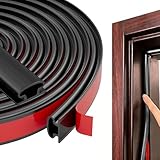
- 【THICKENED SILICONE MATERIAL - COMPLETELY BARRIERING AIR AND NOISE】:The weather stripping is made of thickened TPE material with good sealing and anti-deformation properties, with this weather stripping you can completely seal the gaps, keep the room warm in winter and cool in summer, Helps To Reduce Energy Consumption ,and blocking the entry of noise, light, rain, dust, wind, leaves, snow, and odor, and no reptile will sneak in.
- 【CUSTOMIZABLE IN A VARIETY OF SIZES】This weatherstripping is easy to customize, can be cut to size with scissors, and can be easily bent into any shape. Overall length 50 feet, width: 0.35 inch; thickness: 0.23 inch; fits gaps and spacing from 0.1 to 0.22 inch.NOTE: Please measure the width of the gap before purchase
- 【STRONG ADHESION - WON'T FALL OFF】This door weather stripping is covered with a strong adhesive substance. Simply remove the red film from the surface and install. After 24 hours of bonding, everything is securely bonded and there is no need to worry about peeling or adhesive residue, ensuring that this door seal strip in place long after use (and is no longer affected by extreme temperatures).
- 【EASY INSTALLATION】Measure the length of the groove to be sealed, cut the Universal Weatherstrip to the desired length, clean and dry the surface, and insert the Soundproof Weatherproof Weather strip into the groove.(Note:Low Temperature Will Result In Poor Adhesive Performance,Please Use A Hair Dryer To Heat The Adhesive Backing To Increase The Bonding Effect Before Installation)
- 【WIDELY USED】The Door Insulation Strip is a tough, long-lasting self-adhesive tape with minimal compression that helps prevent rattles, vibrations and squeaks. It is widely used as weather stripping, gaskets or cushioning and stabilizes major appliances such as doors, windows, furniture, electrical cabinets, speakers, toys, crafts, sports equipment, vents, air conditioning, plumbing, HVAC. Also, in cars, trucks and boats.
- Keep bathroom and kitchen exhaust systems usable.
- Maintain any required clearance around fuel-burning equipment.
- Preserve an operable emergency-escape window where one is required.
- Ask a qualified HVAC or building professional to review conflicts between noise control and indoor-air requirements.
When a professional assessment is worthwhile
Consider an assessment before paying for invasive work when the window or frame is damaged, several rooms remain noisy after sealing, the noise seems to travel through walls or floors, or the proposed treatment changes the building envelope. FHWA notes that receiver-side treatments can have unpredictable outcomes and recommends weighing cost and implications. A competent assessor should identify the dominant entry path, document existing conditions, explain ventilation and moisture consequences, and separate an expected reduction from a guarantee.
Questions to ask an installer
- Which opening or transmission path is this proposal intended to treat?
- What existing condition makes this option suitable?
- How will window operation, emergency egress and ventilation be preserved?
- What installation details prevent perimeter gaps?
- Is the quoted result a measured test under stated conditions or only an estimate?
- What happens if the noise is arriving through the wall or structure rather than the opening?
Do not mistake decorative treatments for envelope work
Acoustic foam and decorative curtains may change reflections inside a room, but the cited federal and FHWA guidance focuses on sound transmission through the building envelope and window treatments. They are not substitutes for sealing an exterior gap or addressing a weak window assembly. Likewise, adding furniture or soft finishes may make a room feel less reverberant without materially blocking construction sound entering through a closed window.
Use “may reduce noise” for a specific path. “Soundproof” implies an absolute result that these household measures cannot promise.
Free tools Windows power users keep installed
One-click scans. No signup required.
Coordinate with the construction project
Ask for the work schedule and contact
Request the project’s daily schedule, the site or property manager’s contact information and notice procedures for unusually loud activities. Knowing when demolition, drilling or deliveries are expected lets you reserve the quieter room, plan calls and avoid unnecessary exposure without asserting that every project follows the same hours.
Best Value

- Premium Thickened Flexible Silicone Material - Heat And Cold Resistant: OXRQ Door Draft Stopper is made from high-quality silicone, which is flexible and durable & easy to bend and rebound in one second, superior in performance and durability to other rigid plastic products on the market. Smoothly surface, high resilience. Strong Adhesive stick firmly and won't damage your door and floor, you can easily open the door along the door bottom seal or against daily wear.
- Saving Money & Energy - Warm In Winter and Cool in Summer: OXRQ Draft Stopper for Bottom of Door can effectively prevent the leakage of air conditioning and heating from escaping during summer and winter. Especially for reducing heat and cooling costs and energy consumption, maintaining good usability for environmental protection. Self-adhesive door draft blocker is very suitable for covering gaps in exterior/interior doors,door bottom, threshold, windows, basement and furniture.
- Easy Installation In Under 1 Minute & Long-Lasting Hold: Door Sweep for Bottom of Door just need a few steps to install on interior and exterior doors within 1 minute. Just: 1) Clean and dry the surface; 2) Measure and cut the strip; 3) Peel and stick. 4)It bonds firmly after 24 hours. (Note: In cold weather, We recommend to using a hair dryer to heat the door draft stopper for 2 minutes before installation.)
- Waterproof & Soundproof Backing Adhesive-Strong Adhesion - Draft Multiple Blocking: OXRQ Door Sweep is specially designed structure not only blocks cold drafts but also effectively Noise-Reducing & making it ideal for bedrooms, offices, or anywhere a quiet environment is needed. It can also well prevent cold drafts, dust, odors, rain, light, and insects from entering.Multi-Purpose & Pet-Friendly.
- Wide Applications to Different Material Doors: 1.96"W x 39" L, seal the gap up to 1.5 inches, multiple sizes to choose from: 1 PACK (39inch), 2 PACK (78inch), 5 PACK, including black, white, brown, gray and transparent colors. Thanks for strong adhesive of OXRQ Door Draft Stopper, It’s ideal for various materials like wood, glass, metal, and plastic for blocking noise, dust, and pests. (Note: the Under Door Draft Stopper may not work well on rough or textured doors.)
Check the rules where you live
Construction hours, permits, mitigation plans and complaint procedures are local. Contact your city or county noise-control office and the project contact for the rules that apply to your address. New York City is one example, not a national standard: its Department of Environmental Protection construction-noise page describes local weekday hours, authorization for after-hours work and required mitigation planning. The page also notes new monitoring-rule requirements effective April 21, 2026. A reader outside New York City should not apply those hours or requirements to another jurisdiction.
When reporting a problem, record the date, start and end time, location, type of activity and whether the work appears to have a permit or posted contact. A factual log is more useful to an agency or project manager than a general claim that the site is “always loud.”
Temporary personal comfort measures
Earplugs or earmuffs can provide temporary personal comfort while you are inside the home, especially during a short, predictable task. They do not seal the building or protect other occupants, and they should not be used in a way that prevents you from hearing alarms, instructions or approaching hazards.
Quick wins for a faster PC:
Scan for outdated or missing drivers - takes under a minuteDriver Scan →Clear out junk files and repair common Windows errorsFree Scan →Fix the driver behind crashes, sound loss and screen glitchesFind Drivers →The National Institute for Occupational Safety and Health’s Noise and Hearing Protection Toolbox Talk, published and reviewed September 14, 2026, addresses hearing protection for people working on construction sites. It is not a residential exposure threshold and cannot be used to declare a particular sound level in your home safe or dangerous.
A practical decision sequence
- Map the exposure. Note which rooms, windows and doors face the work and when the loudest activities occur.
- Choose the quieter room. Relocate sleep, work or calls to the less-exposed side when the layout allows.
- Close openings safely. Shut exterior windows and doors during loud work without blocking required ventilation, combustion air or egress.
- Seal visible gaps. Inspect and address window perimeters, door jambs, thresholds and utility penetrations.
- Re-test during the same activity. Compare the room after each change so you know which path was affected; do not infer a universal reduction from one home.
- Evaluate the window. If leakage remains, compare an insert, temporary clear vinyl curtain, storm sash or replacement based on condition, space, reversibility and system impacts.
- Get advice before invasive work. Use a qualified professional when the frame is damaged, ventilation is involved or sound appears to travel through the wall or structure.
- Use local channels for disruptive hours. Confirm rules with the city or county and the project contact, then keep a dated activity log if a complaint is necessary.
Common mistakes and their fixes
| Mistake | Why it fails | Better response |
|---|---|---|
| Sealing one window and expecting silence | Noise may be entering through another opening, the wall or the structure | Map all openings and treat the dominant path first |
| Using a seal that prevents the door from latching | An improperly sized gasket can compromise normal operation and egress | Measure first and verify the latch after installation |
| Blocking a vent or combustion-air opening | Noise control cannot justify an unsafe building-system change | Preserve required openings and consult a qualified professional |
| Installing an insert in a damaged frame | The surrounding frame may remain the principal leak | Repair or replace the assembly based on an assessment |
| Assuming NYC hours apply everywhere | Noise rules and permits vary by jurisdiction | Check the local authority for your address |
| Using occupational limits as a home diagnosis | Construction-site guidance is not a residential exposure standard | Use NIOSH material for worker-protection context only |
| Calling a treatment “soundproof” | Receiver-side results vary with construction and installation | Describe the path treated and say the change may reduce noise |
What success should look like
A successful first phase is specific: the door no longer has a visible air gap, the window closes continuously, or the quieter room is usable for sleep during a scheduled noisy period. If those changes do not alter the experience, the remaining sound may be using a different path. At that point, further caulk or decorative material is unlikely to answer the problem; reassess the window, wall, ventilation constraints and project schedule before spending more.
Quick Recap
Product prices and availability are accurate as of the date/time indicated and are subject to change. Any price and availability information displayed on Amazon at the time of purchase will apply.

