The Tool Desk
Outbyte Driver Updater FREEFix the driver behind crashes, sound loss and screen glitchesFind Drivers →Outbyte PC Repair FREEClear out junk files and repair common Windows errorsFree Scan →Some links on this page are affiliate links: if you buy through them we may earn a commission, at no extra cost to you.
The most effective way to reduce cement or construction dust indoors is to use several controls together: limit entry through windows, doors and gaps; filter airborne particles with a properly sized portable air cleaner and a compatible HVAC filter; remove settled dust with damp cleaning; and ask the construction operator or building manager to control dust at the source. These steps can reduce indoor particles, but they cannot establish what the dust contains or guarantee that every particle has been removed.
What “cement dust” indoors can—and cannot—tell you
Dust from a nearby cement plant, demolition project, road project or building site may enter as ordinary outdoor particulate matter. The U.S. Environmental Protection Agency (EPA) describes particulate matter (PM) as a mixture whose particles differ in size, shape and composition. Particles 10 micrometers or smaller can travel deeper into the lungs than larger particles.
As an Amazon Associate I earn from qualifying purchases.
Recommended Free Tools
The phrase cement dust does not, by itself, prove that a particular home contains a specific contaminant or that a resident has experienced a particular exposure level. Concrete and mortar can contain respirable crystalline silica, but determining whether neighborhood dust contains silica, and at what concentration, requires evidence about the material and the site. Household cleaning and filtration are sensible exposure-reduction steps; they are not a substitute for source testing, professional assessment or medical advice.
1. Reduce the routes by which outdoor dust enters
Close windows and exterior doors when outdoor pollution is elevated
Outdoor particles can enter through open windows and doors as well as through small cracks and crevices. When a dusty operation is visible, nearby work is underway, or local air-quality information indicates elevated outdoor pollution, keep windows and exterior doors closed as much as practical. This is especially useful on the side of the home facing the plant, stockpiles, haul roads or construction activity.
Popular on Amazon

- 𝗪𝗛𝗬 𝗖𝗛𝗢𝗢𝗦𝗘 𝗔𝗛𝗔𝗠 𝗩𝗘𝗥𝗜𝗙𝗜𝗗𝗘 𝗔𝗜𝗥 𝗣𝗨𝗥𝗜𝗙𝗜𝗘𝗥𝗦: AHAM (Association of Home Appliance Manufacturers) is an ANSI-accredited organization that sets strict standards for appliance performance. Air purifiers with the AHAM VERIFIDE seal have been independently tested for air cleaning performance, safety, and energy efficiency. When you choose an AHAM certified air purifier, you're choosing a product trusted for reliable and effective indoor air quality improvement
- 𝗥𝗘𝗠𝗢𝗩𝗘 𝗣𝗢𝗟𝗟𝗨𝗧𝗔𝗡𝗧𝗦 𝗘𝗩𝗘𝗥𝗬𝗪𝗛𝗘𝗥𝗘: Our Pre-Filter and Main Filter capture lint, hair, pet dander, fine airborne pollutants, and smoke particles, helping achieve a cleaner environment for you
- 𝗛𝗘𝗟𝗣𝗦 𝗠𝗔𝗞𝗘 𝗢𝗗𝗢𝗥𝗦 𝗢𝗗𝗢𝗥𝗟𝗘𝗦𝗦: The air purifier helps neutralize smoke, odors, and fumes. You'll love the feeling of breathing clean air at home
- 𝗨𝗦𝗘 𝗜𝗧 𝗔𝗡𝗬𝗪𝗛𝗘𝗥𝗘: With the Levoit Core Mini-P, you can focus on your activities in the bedroom, kitchen, or office. It offers an auto-off display, sleep mode for fewer interruptions, and relaxing aromatherapy, all while operating more quietly than a whisper
- #𝟭 𝗔𝗜𝗥 𝗣𝗨𝗥𝗜𝗙𝗜𝗘𝗥 𝗕𝗥𝗔𝗡𝗗: Levoit has sold over 6.5 million products worldwide and has been a pioneer in air purification technology for 6 years.
Do not treat permanent closure as a complete ventilation plan. Homes need adequate ventilation, and the best balance depends on climate, the building’s mechanical system and outdoor conditions. Use local air-quality information to decide when opening windows is least likely to bring in particles, and ask a qualified professional about ventilation if the building becomes stuffy or moisture accumulates.
Look for obvious infiltration points
Inspect the areas where the building envelope meets the outdoors: exterior doors, window frames, service penetrations and other visible gaps. Weatherstripping, properly fitted door sweeps and repairs to obvious cracks can reduce drafts that carry dust. Use materials and methods appropriate to the building; do not block equipment openings or ventilation paths that the building system requires.
A simple check can help identify priorities. On a dusty day, look for visible deposits on interior sills, tracks and the floor immediately inside exterior doors. Compare those locations with rooms farther from the opening. This does not measure exposure, but it can show where cleaning and sealing efforts are most useful.
Manage outdoor-air intakes with the building manager
If your home has central heating, ventilation or air conditioning, ask the landlord, facilities team or HVAC professional where the system’s outdoor-air intakes are located. An intake close to a dusty façade, roof work or a construction staging area may need attention during active work. Only a person familiar with the equipment should decide whether an intake can be relocated, shielded or temporarily managed; do not obstruct it on your own.
2. Filter airborne particles indoors
Use a portable air cleaner as one layer of control
EPA identifies portable air cleaners as an option for reducing indoor particulate matter that enters from outdoors. A portable unit with a HEPA filter is a sensible product category for this purpose. Place it in the room where people spend the most time or where dust is most noticeable, and use the manufacturer’s stated room-size and clean-air performance information when choosing a unit.
Run the cleaner according to its instructions and keep its air inlet and outlet unobstructed. A portable cleaner treats the air that passes through it; it does not seal cracks, remove dust that has settled on surfaces or control emissions at the construction site. It also cannot guarantee that every particle is removed or that the source exposure is harmless. No specific portable model was evaluated for this guidance.
Also popular on Amazon
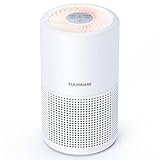
- Efficient Particle Filtration: FULMINARE air purifier uses an H13 HEPA filter. Simply turn it on and maintain a clean and peaceful environment and give families health.
- High Circulation Rate: The air purifier for home adopts dual-channel technology with a 360° air outlet, evenly covering rooms up to 1,086 ft² (based on 5 air changes per hour). The small portable air purifier is easy to place anywhere you want. One is enough to effectively improve your indoor air quality.
- Low Decibel Operation: FULMINARE H13 air purifiers for bedroom is so nice to light sleepers, allowing investors to sleep soundly each night. Set your air purifiers to sleep mode and, the air purifier will run at a near-silent noise level is around 20db at low fan speed. Ultra-quiet but enough to clean your room air at night, bringing you a smooth and sweet sleep.
- Independent Night Light and 5 Timers: It is designed to serve both as an air purifier and a night light. Dual function design makes it a good choice for babies and young children, who can find the softly glowing light or a soothing night time companion. Besides, the air purifiers come with 2-4-8-10-12 five-timers that fit your needs while you're away from home.
- Notice:1. Please open the bottom base cover to get the charging adapter(Plug-in design no battery required). 2 Remove the plastic packaging of the filter before running the air purifier. 3. The air purifiers for pets in time to replace them (3 Months Normally, Search FULMINARE PU-P05 Air Purifier Replacement Filters to get independent filter replacements).
Check central HVAC filter compatibility before upgrading
EPA recommends higher-efficiency HVAC filters where the equipment supports them, together with following the system’s filter-replacement instructions. Filter performance is only useful if air can move through the filter without overloading the equipment. Before installing a higher-efficiency filter, check the air handler or furnace documentation, ask the landlord or facilities team, or have an HVAC professional verify compatibility.
Record the filter size, installation direction and replacement guidance supplied for your system. A filter that is too restrictive, installed backward or left in service beyond its instructions can reduce system performance. Because equipment designs differ, a universal MERV recommendation cannot be made from the available evidence.
Compare controls by the job they perform
| Control | Primary job | Who normally implements it | Important limitation |
|---|---|---|---|
| Closing windows and doors during dusty conditions | Reduces direct entry | Resident or building occupant | Homes still need an appropriate ventilation strategy |
| Sealing obvious gaps and improving weatherstripping | Reduces infiltration through cracks and door or window edges | Resident, landlord or building professional | Do not block required ventilation or equipment openings |
| Portable HEPA air cleaner | Filters airborne particles in a room | Resident or building operator | Room coverage and stated clean-air performance determine usefulness |
| Compatible higher-efficiency HVAC filter | Filters air circulated by the central system | Resident, landlord or HVAC professional | Equipment compatibility and replacement instructions must be checked |
| Damp wiping and HEPA-filtered vacuuming | Removes settled dust while limiting some resuspension | Resident or cleaning staff | Vacuuming can still stir dust into the air |
| Wetting disturbed ground and using wind barriers | Reduces dust at the outdoor source | Construction or site operator | A household air cleaner cannot replace source controls |
3. Remove dust that has already settled
Use damp methods for surfaces
EPA recommends frequent cleaning and damp dusting. A slightly damp cloth holds settled particles better than a dry cloth and reduces the amount kicked back into the air. Work from higher surfaces toward lower ones, and rinse or replace the cloth as it becomes dirty so that dust is not redistributed from one surface to another.
Pay attention to window sills and tracks, the floor just inside exterior doors, hard floors, shelves and other horizontal surfaces where deposits are visible. Clean surfaces that people touch often, but avoid creating a strong airflow that blows dust from one room into another while you work.
Use a HEPA-filtered vacuum carefully
EPA advises considering a HEPA-filtered vacuum. Its filtration can limit some dust escaping from the vacuum, but vacuuming itself may resuspend particles. Use the machine according to its instructions, move slowly and avoid striking surfaces or letting the exhaust blow across an undisturbed dust layer.
People with asthma or allergies should leave the area while vacuuming, as EPA advises. Keep children and other sensitive occupants away until the work is finished and airborne dust has had time to clear through normal filtration and ventilation.
Also popular on Amazon

- Personal Air Purifier: Designed for small space use, this convenient, portable travel air purifier cleans 6ft² of air in 12 minutes*, so you can breathe fresher air in your personal space and tackle common issues, such as allergies, sinus problems, colds, nasal swelling, and more.
- True HEPA Filter: The 2-stage filtration system eliminates 99.97% of germs. Stage 1 is an Activated Carbon Pre-Filter that traps odors and harmful gasses, while the Stage 2 True HEPA Filter eliminates dust, dander, pet hair, pollen, mold spores, and smoke in the air.
- CORDLESS & TRAVEL-FRIENDLY: The rechargeable lithium-ion battery lasts up to 12 hours on low setting, so you can use the purifier with or without an outlet. You can even purify the air inside your car for cleaner air to and from any location. Weighing less than 1 pound, it’s a lightweight and portable option for anyone on-the-go.
- Customized Features: The adjustable handle allows you to place the air purifier either upright or on its side to find the best position, or even remove the handle when you don’t need it. Choose from 3 fan speeds (low, medium, or high) to find the air purification that works best for you. Place the fan speed on high and the purifier can even double as your own personal cooling fan.
- 5-Year Manufacturer's Warranty: This mini air purifier comes with a 2-in-1 filter, USB charging cable, and Pure Enrichment’s guaranteed 5-Year Manufacturer’s Warranty. Our customer support team provides daily quality service and peace of mind to millions worldwide all from a brand you can trust. *Coverage area based on AHAM standard of CADR (4 CFM) x 1.55.
Avoid dry sweeping when visible dust is present
Dry sweeping can put settled particles back into the air. Damp wipe hard surfaces instead, and use a suitable vacuum for floors and crevices. Do not use compressed air to blow dust from rooms, furniture or equipment.
4. Protect the HVAC system and ducts during construction
Construction near a home can affect HVAC equipment even when the work is not inside the living space. EPA’s Indoor airPLUS Technical Bulletin: Duct Protection During Construction states: “Although a fiberglass filter can be installed to keep large debris from entering the mechanical system, it does not prevent fine dust from getting into the mechanical equipment components or ducts.”
This distinction matters when construction is occurring in or around the building, or when the system may have been exposed during the work. A basic fiberglass filter may catch larger debris while allowing fine dust to reach equipment and duct surfaces.
Ask what protection was used during the work
For an occupied building, ask the landlord, building manager or contractor whether supply and return openings were protected during dusty phases and whether the HVAC system was operated in a way that could draw construction dust through the building. The appropriate protection depends on the system and the work; residents should not tape over grilles, shut down equipment or alter controls without authorization.
After construction, arrange the right follow-up
EPA’s bulletin discusses cleaning ducts and replacing filters after construction is complete. If dust was generated inside the building, entered open ductwork or visibly accumulated around mechanical equipment, ask a qualified HVAC professional or building manager to assess the system. A filter change alone may not address dust already deposited on equipment or in ducts.
Independent reader supportYour contribution helps us test, update, and keep practical guides available for everyone.5. Ask the source operator for dust controls
Start with a specific, documented request
For active construction, contact the site manager or property manager and describe what you are observing: the date and time, the location of visible dust, which openings or rooms are affected and whether dust increases during particular activities. Ask what dust controls are being used and how residents can report problems. Keep copies of responses and photographs if you need to explain a recurring pattern.
Also popular on Amazon
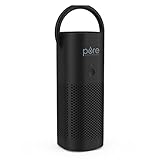
- Personal Air Purifier: Designed for small space use, this convenient, portable travel air purifier cleans 6ft² of air in 12 minutes*, so you can breathe fresher air in your personal space and tackle common issues, such as allergies, sinus problems, colds, nasal swelling, and more.
- True HEPA Filter: The 2-stage filtration system eliminates 99.97% of germs. Stage 1 is an Activated Carbon Pre-Filter that traps odors and harmful gasses, while the Stage 2 True HEPA Filter eliminates dust, dander, pet hair, pollen, mold spores, and smoke in the air.
- CORDLESS & TRAVEL-FRIENDLY: The rechargeable lithium-ion battery lasts up to 12 hours on low setting, so you can use the purifier with or without an outlet. You can even purify the air inside your car for cleaner air to and from any location. Weighing less than 1 pound, it’s a lightweight and portable option for anyone on-the-go.
- Customized Features: The adjustable handle allows you to place the air purifier either upright or on its side to find the best position, or even remove the handle when you don’t need it. Choose from 3 fan speeds (low, medium, or high) to find the air purification that works best for you. Place the fan speed on high and the purifier can even double as your own personal cooling fan.
- 5-Year Manufacturer's Warranty: This mini air purifier comes with a 2-in-1 filter, USB charging cable, and Pure Enrichment’s guaranteed 5-Year Manufacturer’s Warranty. Our customer support team provides daily quality service and peace of mind to millions worldwide all from a brand you can trust. *Coverage area based on AHAM standard of CADR (4 CFM) x 1.55.
Understand what site operators can control
EPA construction-site guidance describes measures such as wetting disturbed ground and using wind barriers. These are source controls and belong to the site operator. They can reduce emissions before particles reach neighboring buildings, whereas a portable air cleaner only treats air that has already entered a room.
Local complaint and reporting routes vary by jurisdiction. If the operator does not respond, contact the appropriate local environmental or building authority for your area and ask what information is needed to report dust. Do not assume that a visible plume identifies its composition or proves a regulatory violation.
6. Treat silica as a conditional concern, not an automatic diagnosis
Concrete and mortar can contain respirable crystalline silica. The National Institute for Occupational Safety and Health (NIOSH) 2026 guidance for work around these materials describes wet methods, local exhaust ventilation, enclosure and avoiding dry sweeping or compressed air during dusty work.
That guidance is written for worker safety. It does not prove that dust reaching a particular neighborhood home contains silica, nor does it establish a concentration in your rooms. If you are involved in construction work yourself, follow the site’s required respiratory and dust-control procedures rather than relying on household measures.
What’s actually slowing this PC down?
Pick the symptom - the matching free tool is one click away.
Know when to seek medical or environmental advice
The available evidence cannot determine how much cement-related dust enters a particular home, what it contains or whether it caused a specific person’s symptoms. Persistent breathing problems, eye irritation or other health concerns warrant a conversation with a clinician, especially for people with asthma or allergies. Concerns about a site’s emissions can be directed to the property manager or the appropriate local environmental authority.
7. A practical plan for a dusty period
Before or during visible outdoor work
- Check local air-quality information and note when dust-producing work is occurring.
- Close windows and exterior doors on the affected side of the home during elevated outdoor pollution.
- Confirm that doors and windows close tightly and arrange repairs for obvious gaps through the landlord or building manager when needed.
- Ask where central HVAC outdoor-air intakes are and what filter the equipment supports.
- Place a correctly sized portable HEPA air cleaner in the room used most often, following the manufacturer’s room-coverage information.
After dust has entered
- Keep occupants who are sensitive to dust out of the area while cleaning.
- Damp-wipe sills, tracks, hard floors and other visibly dusty surfaces.
- Use a HEPA-filtered vacuum carefully for floors and crevices; avoid dry sweeping and compressed air.
- Allow normal filtration and appropriate ventilation to clear remaining airborne particles before resuming normal room use.
- If dust has reached HVAC equipment or ducts during building work, ask the building manager or a qualified HVAC professional about inspection, duct cleaning and filter replacement.
While the project continues
- Keep a simple log of dates, wind or work conditions, visible deposits and any actions taken.
- Ask the site manager what wetting, wind-barrier or other source controls are in place.
- Report recurring problems through the property’s stated complaint process and retain the responses.
- Reassess the plan if the building becomes poorly ventilated, damp or unusually warm after windows are kept closed.
Common mistakes that make indoor dust worse
- Relying on a single air cleaner: Filtration cannot seal openings, remove settled dust or control emissions at the source.
- Installing any high-efficiency HVAC filter: A filter upgrade without an equipment check can be unsuitable for the system.
- Assuming a fiberglass filter stops fine construction dust: EPA specifically says it does not prevent fine dust from reaching mechanical components or ducts.
- Dry sweeping or blowing surfaces with compressed air: These actions can resuspend particles.
- Keeping every opening closed indefinitely: Ventilation needs depend on the building, climate and outdoor conditions; plan for adequate air exchange.
- Calling all visible dust silica: Material composition and concentration require evidence.
- Expecting residents to solve a site problem: Wetting disturbed ground and using wind barriers are source-side responsibilities.
How to judge whether your controls are working
Look for practical changes rather than treating household observations as an exposure measurement. Fewer deposits on window tracks and door thresholds, less visible airborne dust during work and a cleaner HVAC filter at the expected replacement point can show that entry or accumulation has changed. These observations do not identify the particles or establish a safe concentration.
If dust remains heavy despite closed openings, compatible filtration and damp cleaning, revisit the building’s outdoor-air intakes and construction pathways with the property manager or HVAC professional. Persistent source emissions should be addressed with the site operator and, where appropriate, the relevant local authority.
Quick Recap
Product prices and availability are accurate as of the date/time indicated and are subject to change. Any price and availability information displayed on Amazon at the time of purchase will apply.
Do these 3 things before closing this tab:
1Scan for outdated or missing drivers - takes under a minute2Repair Windows errors before they cause bigger problems3Fix the driver behind crashes, sound loss and screen glitches
