What’s actually slowing this PC down?
Pick the symptom - the matching free tool is one click away.
At the lumber rack, three pieces of information determine whether a board belongs in your project: the grade stamp, the species or species group, and the board’s physical dimensions. Read them separately. A stamp normally identifies the wood species or recognized combination, the grade, the grading agency, and a mill number. The size printed on a shelf label is usually nominal—a trade name—so verify the actual or minimum surfaced dimensions before cutting. For a beam, joist, rafter, header, or other load-bearing member, use the specified species and grade and calculate with the member’s net actual dimensions, not its nominal label.
This approach prevents the most common buying errors: treating an agency code as a grade, assuming “S-P-F” names one species, expecting a 2×4 label to guarantee a physically two-inch-by-four-inch board, or choosing structural lumber by appearance alone. The American Wood Council’s weights-and-measurement guidance explains how nominal labeling relates to actual surfaced size, while its floor-joist guidance describes the information carried by a grade mark.

As an Amazon Associate I earn from qualifying purchases.
What a lumber grade stamp tells you
A lumber grade stamp is a compact identification record, not a single rating. The American Wood Council (AWC) identifies four principal elements: species or species combination, grade, grading agency, and mill number. Read the fields as a set because each answers a different question.
| Stamp field | What it identifies | Why it matters at the rack |
|---|---|---|
| Species or species combination | The wood species, or a recognized group sold under one designation | It tells you which species rules and design values may apply; a combination is not necessarily one botanical species. |
| Grade | The lumber’s grade category assigned under recognized grading rules | It communicates the quality classification relevant to the product’s intended use; it is not the same thing as the species name. |
| Grading agency | The organization responsible for applying or supervising the grading rules | It provides a path for verifying an unfamiliar mark and the rules behind it. |
| Mill number | The producing mill’s identification number | It supports traceability and helps distinguish the source from the grade itself. |
Most 2×4 dimension lumber is visually graded and marked with an ink stamp at the mill, according to AWC. The mark is therefore an identification and traceability tool. It is not a substitute for checking the project specification, the board’s actual dimensions, or the design requirements for a structural member.
#1 Best Overall

- 13 ft. Of reach*: allows for easy measurements when working alone (*based on maximum extension of average professional user)
- Compact size: easy to grip and store in any tool belt
- Easy grip design: extensive rubber overmold provides a comfortable grip and impact resistance
- Easy read fractions: fractions printed on the blade in alternating colors and heights for quick, easy measurements
- Includes: (1) CMHT37443S Tape Measure
Do not read the stamp as one combined word
A common mistake is to see several characters together and assume they are all part of the grade. Separate the species line from the grade line, then identify the agency and mill information. The agency name or symbol does not tell you that the board is, for example, “No. 2” or another grade; it tells you who is associated with the grading mark. Likewise, the mill number is not a strength rating.
How species and species combinations are shown
Species may appear as an abbreviation or as a recognized species combination. AWC states that lumber species or species-combination notation—usually abbreviated—is generally a standard component of softwood lumber grade stamps under the American Softwood Lumber Standard, PS 20. Its example is S-P-F, meaning Spruce-Pine-Fir. The mark describes a recognized group, not one single species.
That distinction matters when you are matching a specification. If plans call for a particular species or species group, compare the stamp’s species field with the plans rather than assuming that every softwood board is interchangeable. A group designation may cover more than one species, so do not expand an abbreviation into a more specific species than the stamp establishes.
Quick wins for a faster PC:
Scan for outdated or missing drivers - takes under a minuteDriver Scan →Repair Windows errors before they cause bigger problemsFix Now →Fix the driver behind crashes, sound loss and screen glitchesFind Drivers →What to do with an unfamiliar abbreviation
Do not guess from color, grain, weight, or a nearby bin label. Write down the complete stamp, including the agency symbol and mill number, and use the inspection agency or official grade-rule material to decode it. AWC directs readers to ALSC resources for certified grading rules, accredited agencies, and sample stamps. Its species-identification FAQ also recommends contacting the grading or inspection agency when a notation is unclear: How can I determine lumber species or lumber species combination from the lumber grade stamp?
Keep a photo of the mark if you need to ask for help. Photograph the entire stamp rather than only the abbreviation; surrounding fields can identify the agency and mill and make an answer more reliable.
Rank #2

- AUTOMATIC LOCK - Self locking mechanism allows blade to lock automatically and retract at the push of a button.
- NYLON COATED BLADE - Provides maximum blade protection.
- IMPACT RESISTENT CASE - ABS plastic with rubber over mold protects the case from accidental drops.
- STUD MARKINGS - Printed every 16 inches.
- HIGH CARBON STEEL - Provides the most durable blade and retraction spring.
Species and grade answer different questions
Species identifies the wood. It may be a named species or a recognized combination such as S-P-F. Grade identifies the lumber’s category. Two boards can share a species designation but carry different grades, and boards with the same grade label can belong to different species groups. Neither field replaces the other.
For a nonstructural project, you may be selecting for appearance, workability, or a specified product class. For a structural project, the plans or design must identify the required species and grade, and the lumber must carry recognized identification. A familiar-looking board, a high price, or a clean face does not prove that it meets a span or load requirement.
Recommended Free Tools
Why appearance alone is unreliable for structural buying
Visual inspection is useful for rejecting a board that is obviously unsuitable for your immediate work—such as one that will not lie straight enough for your assembly—but it cannot establish the design properties assigned to a particular species-and-grade combination. Use the grade mark and the project specification first. If the required designation is absent or unreadable, set the board aside until the supplier or grading agency can verify it.
Nominal, actual, and net actual dimensions
Dimension labels use three different concepts that should not be conflated:
- Nominal dimension: the familiar trade label used to describe a size category, such as 2×4.
- Actual or minimum surfaced dimension: the physical size after the lumber has been surfaced, or the minimum surfaced size shown in retail labeling information.
- Net actual dimension: the member dimension used for structural calculations after applicable surface treatments, deductions, or other conditions recognized by the design reference.
The 2×4 example is important because the label is not a promise that the board measures exactly two inches by four inches. AWC’s weights-and-measurement guidance explains that its uniform method-of-sale rules permit a nominal label only when “nominal” or “nom” is used and the actual or minimum surfaced dimensions are prominently displayed. State requirements can vary, so treat that page as general guidance and check the rules that apply where you are buying.
Rank #3

- Mr. Pen tape measure is an essential tool for anyone from homeowners and interior designers to professional handypersons, carpenters, metal or woodworkers, and architects.
- This retractable tape measure is perfect for anyone who needs to take quick, accurate measurements. The casing is made of a top-grade rubberized material that is conveniently shock-absorbent, making it durable and long-lasting.
- The tape measure has a length of 25' and features both metric and imperial measurements, including inch, cm, and mm, making it perfect for professional carpenters.
- The hook slot can be latched onto a protruding nail or screw head, which will hold the tape in place more steadily. Extend the blade, use the thumb lock to stop where you need it, and unlock the thumb to retract the blade.
- The belt clip on the back of the case allows hooking the tape measure conveniently onto a belt, tool belt, or pocket.
| Term on a label or plan | What you should expect | How to use it |
|---|---|---|
| Nominal size | A trade name for a size category | Use it to locate and discuss the product, not as the sole measurement for a cut or calculation. |
| Actual or minimum surfaced size | The physical size shown in retail labeling guidance for the surfaced board | Compare it with the clearance, joint, or opening your project requires; verify with a tape measure when fit is tight. |
| Net actual size | The actual member dimension recognized by a structural design reference | Use it for structural sizing and calculations instead of relying on the nominal label. |
Measure the board, but know what a tape measure cannot tell you
A tape measure can check thickness and width and can reveal whether a board will fit a joint, shelf, or opening. It cannot identify the species, grade, grading agency, or mill. Those facts come from the stamp and its associated rules. Measure the actual board when a small dimensional difference affects your assembly, and record the measured value before cutting a group of boards.
Why structural calculations use net actual dimensions
The cited 2018 National Design Specification for Wood Construction, Chapter 4, states that calculations for required member sizes are based on net actual dimensions rather than nominal dimensions. The excerpt is from the 2018 edition; structural work should use the currently adopted code and the design reference required for your jurisdiction. Do not size a joist, beam, rafter, or header from a nominal label alone.
A step-by-step check at the lumber rack
Use the following sequence before placing a board in your cart. It separates identification, fit, and structural suitability so one reassuring detail does not hide another problem.
- Start with the project requirement. Write down the required species or species group, grade, nominal category, minimum physical dimensions, length, and intended use. For a load-bearing member, use the plan or engineer’s specification rather than creating a grade from visual preference.
- Find the complete grade stamp. Look for the ink mark on the face or edge. Photograph it if it is faint. Do not rely on a bin label when an individual board carries a different mark.
- Separate the fields. Identify the species or species-combination notation, the grade, the grading agency, and the mill number. Treat agency and mill information as identification, not as grade or strength values.
- Decode the species field. If it uses an abbreviation such as S-P-F, read it as the recognized combination stated by the grading rules. If the abbreviation is unfamiliar, pause and consult the inspection agency or official stamp references before buying.
- Match the grade to the requirement. A board is acceptable only when its grade meets the project’s stated grade. A cleaner face or straighter edge does not upgrade an unmarked or differently graded board for structural purposes.
- Check the labeled surfaced dimension. Read the actual or minimum surfaced size shown with the nominal label where required. This is especially important for cabinets, built-ins, stair parts, and any joint with limited clearance.
- Measure critical dimensions. Use a tape measure to verify thickness and width on boards that must fit a jig, dado, opening, or hardware. Measure enough boards to account for variation within the lot.
- Confirm length and physical condition. Select the length the cut list requires, then inspect straightness and visible defects for the intended use. These observations help you choose among boards that already meet the specified species and grade; they do not replace the grade mark.
- Compare price only after specification. When two boards satisfy the required grade, species or species group, actual dimensions, length, and condition, price can break the tie. A lower price is not a reason to accept a different grade or an unreadable mark.
- Record anything you need to verify. Keep the stamp photo, supplier information, and measured dimensions with the project notes. Ask the supplier or grading agency before installation if a required field cannot be confirmed.
Choosing lumber for structural applications
Structural buying begins with the design requirement, not with the most attractive board in the rack. The specified species and grade are part of the design assumptions. The grade mark provides recognized identification, while the actual member dimensions determine the section used in calculations.
Joists, rafters, beams, and headers
For these members, verify all of the following before purchase:
PC Slower Than It Used to Be?
A free scan shows the junk files, broken settings and background clutter dragging Windows down - then fixes them in one click.Free scan · Windows 10 & 11Crashes, No Sound, or Screen Glitches?
Random freezes, missing sound and display glitches usually trace back to one bad driver. Find and replace yours safely.Free scan · under a minuteRank #4
- The species or species combination matches the design specification.
- The grade shown on the board matches the grade used by the designer.
- The stamp is from a recognized grading system and includes identifiable agency information.
- The actual dimensions satisfy the design’s required net section.
- The purchased length is sufficient for the required span, bearing, cuts, and connections.
The stamp alone does not prove that a board suits a particular span or load. Span tables, engineering calculations, connection details, and the locally adopted code may impose requirements beyond the basic identity shown on the board. If the plan calls for a specific designation and the rack offers only a different one, obtain a formal substitution approval rather than assuming equivalence.
Nonstructural projects
For shelving, trim, shop furniture, or blocking, the consequences of a grade mismatch may differ, but dimensions still control fit. Nominal labels are convenient for shopping; actual measurements control joinery. Species and grade can also affect how the board machines, accepts fasteners, or looks when finished, so read the stamp before assuming two bins contain interchangeable stock.
Independent reader supportYour contribution helps us test, update, and keep practical guides available for everyone.How to compare boards that meet the specification
Once boards satisfy the required species or species group and grade, compare them on the characteristics that affect your particular project. This is a selection process, not a laboratory ranking.
| Comparison axis | Question to ask | When it matters most |
|---|---|---|
| Species or species combination | Does the stamp match the project requirement? | Structural members, specified finishes, and projects where machining or appearance differs by species. |
| Grade | Is the marked grade at least the one specified? | Any load-bearing use and any project with a written material schedule. |
| Actual dimensions | Will the measured surfaced size fit the joint or opening? | Cabinet parts, built-ins, stair work, and assemblies with tight tolerances. |
| Length | Does the board cover the cut list without an unsuitable splice? | Long rails, joists, rafters, and parts where end joints are undesirable. |
| Visible defects and straightness | Is the individual board workable for the intended cut and assembly? | Long, exposed, or precision parts, and any operation where bow or twist complicates assembly. |
| Price | Among boards that already meet the specification, which is the better purchase? | Budget decisions after technical requirements are satisfied. |
Do not turn this checklist into an informal grading system. A board that looks straighter cannot be relabeled as a higher structural grade, and a lower-priced board cannot compensate for an unverified species or dimension.
What to do when the stamp is damaged or missing
Faint but partly readable stamp
Clean dust from the surface without sanding away the mark. Photograph the full impression in angled light, record every visible character, and compare it with official sample stamps. Ask the seller to identify the grading agency and mill if the agency symbol is incomplete.
Best Value
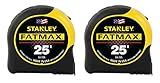
- 11-foot Standout; 16-inch and 19.2-Inch stud center markings simplify framing jobs
- Blade arm our coating on the first 3" maximizes durability of the blade
- Mylar polyester film extends life of entire blade
- Top-forward blade lock makes locking and unlocking easy
- High-impact ABS case with durable rubber-holds up to heavy use
No stamp on the individual board
Do not infer grade from the rack location. Ask whether the board is sold as a graded product and request documentation that connects the stock to a recognized grading agency. For a structural application, use only material whose required species and grade can be verified.
Stamp and shelf label disagree
Treat the discrepancy as a stop sign. Set the board aside and ask the supplier which identification applies to that piece. A shelf tag may describe a product category, while the individual mark identifies the board’s species group, grade, agency, and mill.
Official references for grade rules and stamps
When a mark is unfamiliar, start with primary sources rather than crowdsourced abbreviation lists. AWC’s page on lumber grade rules and grade stamps points readers to ALSC resources covering certified grading rules, accredited agencies, and sample stamps. AWC’s species FAQ, dated September 15, 2022, explains how species or species combinations appear in stamps and directs questions to the relevant inspection agency.
Do these 3 things before closing this tab:
1Clear out junk files and repair common Windows errors2Scan for outdated or missing drivers - takes under a minute3Repair Windows errors before they cause bigger problemsFor dimensional labeling, consult AWC’s Weights & Measurement explanation. It describes the conditions under which a nominal label may be used with actual or minimum surfaced dimensions and notes that individual state requirements can vary. For structural sizing, use the currently adopted code and design standards in your jurisdiction; the cited NDS Chapter 4 excerpt supports the limited point that calculations use net actual dimensions, not nominal labels.
Common mistakes and their fixes
- Mistake: treating “S-P-F” as one species. Fix: Read it as Spruce-Pine-Fir, a recognized species combination, and verify the applicable grading rules.
- Mistake: reading the agency symbol as the grade. Fix: Locate the separate grade field; use the agency field to identify who stands behind the mark.
- Mistake: cutting from a nominal measurement. Fix: Check the labeled actual or minimum surfaced size and measure the board when fit matters.
- Mistake: using nominal size in a structural calculation. Fix: Use net actual dimensions and the current adopted design reference.
- Mistake: selecting a structural board by appearance. Fix: Match the specified species and grade first, then inspect condition and straightness.
- Mistake: guessing an unfamiliar abbreviation. Fix: Consult official grading-rule or inspection-agency resources with the complete stamp.
- Mistake: assuming one state’s labeling practice applies everywhere. Fix: Check local requirements when legal compliance or sale labeling is at issue.
A practical decision rule before checkout
Buy the board only when you can answer four questions clearly: What species or species group is it? What grade is marked? Which agency and mill are identified? What is the actual physical size, and does it meet the project’s requirement? If the project carries load, add a fifth question: does the specified design use this species, grade, and net actual dimension for the span and load?
That discipline keeps the familiar 2×4 label in its proper place—as a convenient trade description rather than a complete technical specification. The stamp establishes identity, the tape measure checks fit, and the design documents determine structural suitability.
Quick Recap
Product prices and availability are accurate as of the date/time indicated and are subject to change. Any price and availability information displayed on Amazon at the time of purchase will apply.

