Quick wins for a faster PC:
Repair Windows errors before they cause bigger problemsFix Now →Scan for outdated or missing drivers - takes under a minuteDriver Scan →Clear out junk files and repair common Windows errorsFree Scan →Some links on this page are affiliate links: if you buy through them we may earn a commission, at no extra cost to you.
The safest way to reduce pothole damage on a construction detour is to slow down, follow every work-zone control, keep your tires correctly inflated and in good condition, scan well ahead, and avoid a last-second swerve or hard brake. If a hole cannot be avoided legally and safely, reduce speed, keep the steering straight and release the brakes just before the wheels reach it. After any hard impact, check for tire, wheel, steering, alignment and suspension damage, then document the location and evidence before arranging an inspection.
Why construction detours increase pothole risk
A detour can put traffic on pavement that is uneven, recently patched, narrowed or carrying vehicles in unfamiliar patterns. Lane shifts, temporary barriers, standing water, construction equipment and vehicles entering or leaving the work area can all reduce the time available to see a pothole and choose a safe response. A detour does not guarantee that a pothole is present, and no driving technique or accessory can guarantee that an impact will not damage a vehicle. The practical goal is to lower the chance and severity of an impact while protecting people first.
As an Amazon Associate I earn from qualifying purchases.
Free tools Windows power users keep installed
One-click scans. No signup required.
AAA Club Alliance says drivers spent $26.5 billion on pothole-related vehicle repairs in 2021. Its automotive engineering director, Greg Brannon, explains: “When a vehicle hits a pothole with any kind of force, the tires, wheels and suspension get the brunt of the impact, and fixing any of those items is pricey.” That exposure is why preserving a few seconds or avoiding a small deviation is never worth violating a work-zone control or creating a collision.
Prepare before you enter the work zone
Check the route and an available detour
Look at current route information before setting out. If an official detour around the work zone is available and practical, using it can reduce time in a narrow or changing traffic pattern. Build in extra travel time so you are not tempted to speed or make a sudden maneuver. Once you reach the site, the signs and traffic-control devices in front of you take priority over a route app or an earlier plan.
Popular on Amazon

- Accurate, Dependable Readings: Factory‑calibrated to ±1 PSI, so you can confidently match your vehicle’s recommended PSI (check the door jamb sticker). Ideal for monthly checks and road trips — consistent results every time, cold or warm.
- Bright Backlit Display & Nozzle Light: The illuminated nozzle helps you find the valve stem in the dark, while the backlit LCD makes readings crystal clear in dim garages or at night. No more squinting or holding a flashlight.
- 4 Measurement Units, One Button: Quickly switch among PSI, Bar, Kgf/cm², and KPA with a single press. No complex settings — just press and cycle to your preferred unit. Perfect for drivers who need multiple scales.
- Broad Compatibility for Everyday Vehicles: 0–150 PSI covers cars, SUVs, motorcycles, and spare tires (often 60 PSI). Fits standard Schrader valves; just press on for a reading.
- Auto‑Off to Extend Battery Life: The gauge automatically powers down after 30 seconds of inactivity, so the included batteries last longer. Always ready for your monthly checks without surprise dead batteries.
Make the tires road-ready
Check cold tire pressure against the pressure listed on the vehicle’s information label or in its owner’s manual, not the maximum pressure molded into the tire sidewall. A properly inflated tire is not armor against a pothole, but incorrect pressure can leave less protection for the wheel and tire when an impact occurs. Check all four tires and the spare when the tires are cold, and replace or repair a tire that will not hold the specified pressure.
Inspect the tread and sidewalls. Michigan Department of Transportation pothole guidance specifically warns that excessive wear and visible sidewall bulges can fare worse when a wheel drops into a hole. A bulge, cut, exposed cord or severe wear is a reason to have the tire assessed before driving through a construction route. Do not assume that adding pressure above the vehicle recommendation will make a tire safer.
Carry a simple pressure-checking tool
A digital or analog tire-pressure gauge is a modest maintenance aid. It lets you verify pressure at home or after an impact, but it cannot prevent pothole damage. Choose a gauge that is easy for you to read, covers the pressure range used by passenger-car tires, has a chuck that fits your valve stems and can be stored where it will not become a loose object in the cabin.
| Gauge type | Useful characteristics | Limitations to consider |
|---|---|---|
| Digital | Large numerical display and straightforward reading for drivers who prefer a precise number | Needs a battery; display and controls can be harder to use in rain or low light |
| Analog | No battery, immediate operation and often a simple dial or sliding scale | Reading a small scale can take more care; accuracy depends on the individual gauge |
Whichever type you use, press it squarely onto the valve and compare the result with the vehicle’s recommended pressure. Recheck after a suspected leak rather than treating one reading as proof that the tire is undamaged.
Also popular on Amazon
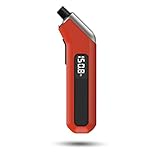
- PROCESS LEVEL ACCURACY: Each ETENWOLF’s digital tire pressure gauge is calibrated manually to ANSI B40.7 Grade 2A(plus-minus 1 PSI).Presta valve adapter not included, if used for bicycles, it must be purchased separately
- ACCURACY IN EXTREME PRESSURE RANGE: Whether tire pressure is below 12 PSI or above 140 PSI, ETENWOLF’s digital tire gauge is accurate as well
- ACCURACY IN EXTREME WEATHER: Built-in AI chip with thermal compensation inside, ETENWOLF’s tire gauge works normally even in extreme cold or hot weather(-4°F-130°F/-20°C-54°C)
- PRESSURE RANGE 3-200 PSI : ETENWOLF’s digital tire pressure gauge can measure pressure of all types of vehicles
- REPLACEABLE AAA BATTERIES: Batteries are easy to replace and helps to extend the tire pressure gauge’s life span, with LED light to illuminate dark areas for easy tire pressure reading
Drive through the detour as a controlled work zone
Obey the temporary controls
Reduce speed to the posted work-zone limit and follow cones, barricades, lane arrows, flaggers and other signs. Expect lane shifts, uneven pavement, workers close to traffic and construction vehicles joining or leaving the route. Colorado Department of Transportation maintenance guidance asks drivers to respect repair work zones and keep crews safe; its executive director, Shoshana Lew, said, “Patching potholes is an essential part of the work we do to maintain our system so it’s safe and reliable for the traveling public. In addition to plowing snow and keeping the road clear in the winter, our maintenance team plays a key role in making these critical repairs to roads across the state. Please respect their work zones and keep them safe on the job.”
Increase attention and following distance
Put the phone away and remove other distractions before entering the detour. Leave more space than usual behind the vehicle ahead. That gap gives you time to see a hole instead of having it hidden beneath the lead vehicle, and it provides room to slow smoothly if traffic changes. Keep both hands available for steering and scan beyond the nearest car for changes in pavement, water and lane position.
Stay in an open, legal lane
Never use a closed lane, shoulder, emergency area or a gap behind a barrier merely to avoid rough pavement. Change lanes only where markings and traffic controls permit, after checking mirrors and blind spots. A collision with another vehicle, worker or barrier is a greater danger than the vehicle damage you are trying to avoid.
How to respond when you see a pothole
Look through water, not just at the surface
A puddle can conceal the depth and edges of a pothole. Treat an unfamiliar puddle in a work zone as a possible depression until you can pass it safely. Keep scanning for patched areas, abrupt shadows and low spots, but do not fix your gaze so narrowly on one hole that you miss a worker, barrier or traffic change.
Also popular on Amazon

- PRO ACCURACY - mechanic recommended, performance tested, & calibrated accurate to professional ANSI 2A standards - with dual pressure sensors certified to ±0.50% FS (0.50 PSI), offering reliable readings up to 100 PSI w/ precise readout resolution of 0.10 PSI - so you can now maintain your tires with a shop-grade mechanic trusted tool
- STRONG & RUGGED - feels solid in the hand & built to last from 100% solid brass & steel parts shielded by our shock-resistant gear-style protective guard to protect against drops & impact. Features ultra soft & strong 10" fully rotational, leak-proof HybridFlex air hose w/ 360 swivel angled air chuck that can be swapped out w/ any 1/4" NPT chuck
- ADVANCED ENGINEERING - all readings lock-on to the display until the "ON" button is pressed once to reset to zero. Features built-in air bleeder valve that bleeds pressure in real time without needing to reset the display - ideal for cars, trucks, motorcycles, bikes, RV & trailers, spare tires, and much more
- SMART DISPLAY - features high-resolution digital 2.5 inch LCD display screen w/ battery life indicator & bright LED backlight for high visibility in the dark. Gauge is programmed to auto shut-off after 150 seconds of inactivity to save battery (2x AAA batteries included)
- 100% Lifetime Warranty by JACO - serving the automotive industry for 35+ years. Enjoy longer-lasting tires, improved fuel economy, and superior vehicle performance & handling with properly inflated tires.
When a safe avoidance path exists
First check the lane beside you, the vehicle behind you and the work-zone controls. If there is enough room and a lane change is permitted, steer smoothly around the hole and return to the lane only when it is safe. Avoid a sudden swerve or a hard brake. A last-second move can send the car into a neighboring vehicle, a worker-protection barrier or a closed lane.
When the pothole cannot be avoided
Reduce speed in a straight line as soon as you recognize that the hole cannot be safely avoided. Michigan DOT and AAA guidance recommends straightening the steering wheel and releasing the brakes just before the wheels reach the pothole, allowing the vehicle to roll through rather than striking it under maximum braking. Use this technique only when there is sufficient room, it does not conflict with a lane closure or direction from a worker, and no safer escape path exists. Do not accelerate toward the hole, cross a barrier or drive onto the shoulder.
Higher impact speed generally increases damage risk. The technique cannot make hitting a pothole harmless, and it does not replace the posted speed limit, a safe following distance or a legal lane position.
What a pothole can damage
The tire and wheel are the most obvious victims, but the force can travel into other components. A bent wheel may leak slowly or create a vibration. A tire can develop an internal injury that is not visible from the tread. Suspension parts, steering components, alignment settings and, in some impacts, exhaust components can also be affected. A car that still moves under its own power is not necessarily undamaged.
Also popular on Amazon

- Enhanced Visibility in Low Light: Features a green backlit LCD screen and integrated flashlight, allowing for clear reading of tire pressure even in dark or dimly light conditions.
- Durable & Heavy-Duty Design: Constructed from robust stainless steel, specially engineered for RV and truck use. Helps maintain proper tire pressure to reduce wear and extend tire lifespan.
- Nozzle easily forms a seal with the valve stem giving quick and accurate readings in 0.1 increments; 4 settings with longer range: 0-230 PSI / 0-16 Bar / 0-16 Kg/cm² / 0-1585 Kpa
- Wide Pressure Range & Easy Operation: Covers 0-230 PSI / 0-16 Bar / 0-16 Kg/cm² / 0-1585 Kpa. Simply press the “ON/UNIT/OFF” button to turn on, select your unit, and it auto-shuts off after 30-40 seconds to conserve battery.
- User-Friendly & Versatile: Ergonomic non-slip texture ensures a firm grip. Includes batteries and comes with a 1-year warranty. Suitable for cars, trucks, motorcycles, bicycles, and more.
| What you notice | Possible concern | What to do |
|---|---|---|
| Pressure falls or a tire is visibly flat | Puncture, bead damage or a bent wheel causing an air leak | Stop in a safe place, avoid driving on a deflated tire and use roadside help or a spare according to the owner’s manual |
| Steering wheel is off-center or the car pulls | Alignment change or steering/suspension damage | Arrange a qualified inspection before normal-speed driving |
| New shaking or vibration, especially with speed | Wheel deformation, tire damage or a rotating assembly problem | Reduce speed, stop when safe and have the tire and wheel checked |
| Clunking, scraping or another new noise | Loose or damaged suspension, wheel or exhaust component | Do not dismiss the noise; obtain an inspection |
| Excessive bouncing or bottoming out | Damaged shock, strut, spring or related suspension part | Have the suspension inspected before continuing ordinary driving |
| No immediate symptom | Slow leak, internal tire damage or alignment change can still be present | Check pressure again and monitor handling; schedule an inspection if anything changes |
What to do immediately after an impact
- Reach a safe stopping place. Do not stop in a travel lane, a closed lane or on a shoulder that the work-zone plan does not permit you to use. If the car is disabled, activate hazard lights and follow the work zone’s emergency instructions.
- Check the tires and wheels visually. Look for a flat or underinflated tire, a sidewall bulge or cut, tread separation, a cracked or visibly bent rim and body parts hanging near the wheel. Do not put your hands near hot, moving or unstable components.
- Check pressure for a leak. Compare the reading with the vehicle recommendation. A pressure loss is a reason not to continue at normal speed; a gauge reading does not rule out hidden structural damage.
- Notice how the car behaves. Pay attention to pulling, shaking, an off-center steering wheel, unusual vibration or noise, repeated bouncing and bottoming out. A change in handling warrants a qualified mechanic’s inspection of the tire, wheel, suspension and alignment.
- Use assistance if it is unsafe to proceed. A roadside-assistance provider or a tow service may be appropriate when the car has a flat, severe vibration, damaged steering or another condition that makes driving unsafe. Follow the vehicle manufacturer’s instructions for a spare tire and lifting points.
Document damage before arranging repairs
If the impact caused damage, evidence collected promptly can help an insurer or road authority understand what happened. Only take photographs from a safe location and never walk into moving traffic or a closed work area.
- Photograph the pothole from several angles, including a view that shows its relationship to the lane, signs, barriers or other landmarks.
- Photograph the tire, wheel, body damage and any warning indicators without removing parts or disturbing the scene.
- Record the date, approximate time, direction of travel, road name, lane, nearest intersection or landmark and the construction project or detour signs present.
- Write down weather and visibility conditions, including whether water concealed the hole.
- Keep the inspection report, repair estimate, itemized invoice, receipts and any towing record. Preserve proof of ownership if an insurer or agency requests it.
- Note the road’s apparent owner or maintainer: a state department of transportation, city, county or a contractor working on a specific project.
Do not repair or discard a damaged tire or wheel before asking the insurer or potential claimant administrator whether it needs to be inspected or retained. A mechanic can document the failed part and whether alignment or suspension work is required.
Who may handle a pothole-damage claim?
Responsibility depends on the road’s location, ownership, maintenance agreement and the facts of the incident. There is no nationwide rule that guarantees reimbursement. Contact your own insurer promptly and ask how collision coverage, deductibles, towing and documentation apply to a single-vehicle pothole incident. AAA describes pothole impacts as generally treated as single-vehicle crashes for collision-insurance purposes, subject to the individual policy and deductible; that is not a promise that a particular claim will be paid.
Then identify the road authority that maintains the exact segment. Michigan provides a useful example of the distinction: reports for city or county roads go to the local authority, while state trunkline reports go to the Michigan Department of Transportation. Colorado’s transportation department maintains interstates and highways, not every local road. These examples show why a state agency may not be the correct contact for a city street.
Also popular on Amazon

- Digital Tire Pressure Gauge 2 Pack, Industrial Tire Gauge 3-200 PSI, Calibrated to ANSI B40.7 Grade 2A(plus-minus 0.5%), Air Pressure Gauge with Replaceable AAA Batteries
- ACCURACY IN EXTREME PRESSURE RANGE: Whether tire pressure is below 12 PSI or above 140 PSI, ETENWOLF’s digital tire gauge is accurate as well
- ACCURACY IN EXTREME WEATHER: Built-in AI chip with thermal compensation inside, ETENWOLF’s tire gauge works normally even in extreme cold or hot weather(-4°F-130°F/-20°C-54°C)
- PRESSURE RANGE 3-200 PSI : ETENWOLF’s digital tire pressure gauge can measure pressure of all types of vehicles
- REPLACEABLE AAA BATTERIES: Batteries are easy to replace and helps to extend the tire pressure gauge’s life span, with LED light to illuminate dark areas for easy tire pressure reading
North Carolina describes another jurisdiction-specific process. Its transportation department says it forwards claims for damage occurring in a contracted-project work zone to the contractor responsible for road conditions. That process applies to the circumstances and jurisdiction North Carolina describes; drivers elsewhere should locate their own agency’s claim instructions rather than assuming the same handoff.
Submit the requested photographs, precise location, repair documents and ownership information, and keep copies of everything. An agency or insurer may deny a claim, and a road authority’s notice that it received a report is not an admission of liability.
Choosing post-impact inspection help
Use a qualified tire or automotive repair shop when symptoms appear or when the impact was severe even without an obvious symptom. When calling, ask whether the shop can inspect tires and wheels, measure alignment and evaluate suspension components rather than merely rebalance a wheel. Compare practical factors before booking:
| Factor | Questions to ask |
|---|---|
| Proximity and safe access | Can you reach the shop without driving a car that may be unsafe, or is towing needed? |
| Inspection capability | Can the shop check the tire casing, wheel runout, steering, suspension and alignment? |
| Appointment availability | Can the vehicle be inspected promptly, especially if it has a leak or handling change? |
| Estimate terms | Is the diagnostic or alignment fee explained before work begins? |
| Documentation | Will the shop provide photographs, measurements and an itemized estimate for an insurance or road-authority claim? |
A compact construction-detour checklist
- Check the route and use an official detour when practical.
- Set tire pressure to the vehicle manufacturer’s recommendation while the tires are cold.
- Replace or assess worn tires and any tire with a sidewall bulge, cut or exposed cord.
- Put away the phone and allow extra following distance.
- Follow the posted work-zone speed, signs, lane controls and worker directions.
- Scan beyond the vehicle ahead and treat puddles as possible hidden potholes.
- Never use a closed lane or shoulder to save the car from rough pavement.
- If avoidance is safe and legal, check traffic and steer smoothly.
- If avoidance is not safe, slow down, keep the wheels straight and release the brakes immediately before the impact when conditions allow.
- Afterward, stop safely, check pressure and visible damage, and arrange an inspection for any handling change or warning sign.
- Photograph the pothole and vehicle, record the precise location and retain estimates and receipts.
- Ask your insurer and the correct road authority about the applicable claim process; reimbursement is not automatic.
What this approach can—and cannot—do
Careful preparation, correct tire maintenance, lower speed and early scanning can reduce risk. They cannot eliminate potholes, predict a hidden depression under water or guarantee that a wheel, tire or suspension part will survive an impact. Treat the work zone as a changing traffic environment, not as a vehicle-protection exercise: a legal, controlled maneuver and the safety of workers and other road users always come first.
Quick Recap
Product prices and availability are accurate as of the date/time indicated and are subject to change. Any price and availability information displayed on Amazon at the time of purchase will apply.

