The best way to protect a vulnerable young tree from the expected 2027 Brood XXII cicada emergence is to cover its entire canopy with fine insect netting—preferably mesh with openings of 1/4 inch or smaller—and secure the bottom tightly before the cicadas emerge. Do not spray mature trees or cover every plant in the yard. Periodical cicadas are harmless to people, do not bite or sting, and usually cause little lasting damage to established trees. The plants that deserve attention are newly planted and young woody plants, particularly fruit trees, ornamental trees, shrubs, grapevines, and nursery stock.
The 2027 emergence is expected to be regional rather than nationwide, affecting portions of eastern Louisiana and southwestern Mississippi. Local intensity and timing can vary, so homeowners should confirm conditions with their state extension service as spring approaches.
As an Amazon Associate I earn from qualifying purchases.
What the “2027 cicada invasion” means for your property
The next major U.S. periodical-cicada event relevant to this topic is the expected emergence of Brood XXII, sometimes called the Lower Mississippian Brood. Current extension guidance places the expected activity in parts of eastern Louisiana and southwestern Mississippi.
Recommended Free Tools
Mississippi guidance identifies Claiborne, Jefferson, Adams, and Wilkinson Counties as areas to plan for. Louisiana guidance identifies East and West Baton Rouge, East and West Feliciana, and Iberville Parishes, while also describing a broader eastern-Louisiana range. These boundaries are forecasts based on historical records and habitat; development, local conditions, and occasional early or late stragglers can change what individual neighborhoods experience.
#1 Best Overall

- Protect Your Vegetables and Fruits: LCHUANG Garden Netting is great for orchards, greenhouses, gardens, nurseries, patios, and shrubs. This Bird Netting with a zipper can protect blueberries, tomatoes, trees, fruits, flowers, vegetables, and potted plants from insects, birds, and bugs, which helps the plants grow normally.
- Easy to Use and Adjust: With a new upgraded drawstring design, the sturdy and durable Garden Netting is easy to use and put up. Simply place the Bird Netting over the plant and tighten the rope to securely protect the plant.
- Lightweight and Durable: This transparent Bird Netting plant cover screen is made of PE material, which is super durable for protecting your plants. Additionally, the Garden Netting is lightweight and will not press your tree, which can retard plant growth.
- Perfect Permeability: The ultra-fine 0.8mm x 1mm mesh of the Garden Netting allows air and moisture to pass through, so you don't need to remove the Bird Netting when watering or feeding liquids.
- Lifetime Exchange Service: Please recommend LCHUANG brand bird netting to your family and friends when purchasing. Compared to other brands’ one-year after-sales service, genuine LCHUANG garden netting can be exchanged for life. If there are any product quality problems, we will send you a new one at no cost. You don't need to worry about product damage.
In other words, this is not a reason for homeowners across the United States to wrap every tree. It is a reason for people near the expected 2027 emergence area to identify vulnerable plants and prepare a practical barrier before spring.
Which plants actually need protection?
Prioritize plants that are both young and woody:
- Newly planted trees and shrubs.
- Trees approximately four years old or younger, especially young fruit trees.
- Small ornamental trees with many pencil-thick branches.
- Young apple, peach, pear, cherry, maple, oak, hawthorn, and redbud trees.
- Grapevines and other young woody vines.
- Nursery stock and trees whose permanent scaffold limbs are still developing.
- Small trees located close to a known emergence area.
Cicadas can lay eggs in more than 200 kinds of trees, so no short species list is exhaustive. The most important factors are the plant’s age, size, branch diameter, and location—not simply its species.
Plants that usually do not need protection
Annual vegetables, herbs, flowers, and other herbaceous garden plants are not the main target. Adult cicadas may climb them temporarily for support, but they do not feed on their leaves or use them as the normal site for egg laying.
The Tool Desk
Outbyte Driver Updater FREEScan for outdated or missing drivers - takes under a minuteDriver Scan →Outbyte PC Repair FREERepair Windows errors before they cause bigger problemsFix Now →Large, healthy, established shade trees generally need observation rather than treatment. They have enough mature structure to tolerate the loss of some small peripheral twigs, and they usually replace that growth. Covering a large mature canopy can be difficult, expensive, and potentially harmful if the covering restricts airflow or remains in place too long.
What cicadas do to trees
Adult cicadas do not chew leaves. The meaningful injury occurs when females use their ovipositor to cut slits in small woody twigs and branches and deposit eggs. The affected branch tips may turn brown, droop, break, or die back. This is commonly called flagging.
A mature tree normally loses only some outer twig growth. A young tree has a much higher proportion of branches in the preferred size range and has fewer established limbs to spare. Heavy egg laying can therefore:
Rank #2
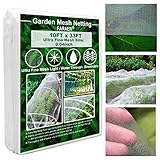
- 【Ultra-Fine Mesh Netting】Large Size 10x33 Feet provide more security, Ultra Fine Garden Netting has a 0.8mm x 1mm ultra-fine mesh, effective protect vegetable plants fruits flowers crops.
- 【Air, Water & Light Through】Unique oblong hole construction creates very fine protections for great results, and others while allowing air and moisture through. Even better, there is no need to remove it when watering or giving a liquid feed, just apply directly through the mesh.
- 【All-Purpose Garden Netting】Garden netting covers are widely used in pastures, orchards and gardens, protect your veggie investment with this simple shelter, also used indoors and windows at home. Its fine mesh keeps tree leaves out even the smallest dust — but provides some respite from the intense sun too.
- 【Stabilized & Durable】The garden netting is made of high-quality see-through mesh netting with PE stabilized. Durable for long time use and can be reused year after year.
- 【Protect Plants Easily】Easy to use-You can put the netting covers over plants directly and then secure with stones, soil, or stakes, and it can be cut into any size as needed. Protect your plants, trees and shrubs such as peaches, cherries, grapes, tomato, etc.
- Stunt the tree’s growth.
- Deform the developing canopy.
- Damage future fruiting wood.
- Reduce or destroy important scaffold branches.
- In severe cases, kill a newly planted or very small tree.
Cicada nymphs feed underground on fluids from plant roots, but extension guidance characterizes this feeding as minor for most established plants. The above-ground egg-laying injury is the reason to protect young woody plants.
The most reliable protection: fine insect netting
For a backyard tree, choose 1/4-inch insect netting for trees or a finer mesh. Some guidance reports good results with openings from 1/4 to 3/8 inch, but a 1/4-inch maximum is the safer, simpler homeowner rule. Do not assume that ordinary bird netting will work: many bird-netting openings are too large to exclude cicadas.
When comparing products, check the actual opening size rather than relying on words such as “protective,” “garden,” or “bird netting.” The netting must prevent a female cicada from reaching a small twig through the mesh.
Brand matters less than three installation details:
- The mesh is fine enough—1/4 inch or smaller is the conservative target.
- The complete canopy and small branches are enclosed.
- The mesh is secured so cicadas cannot crawl underneath or reach branches pressed against it.
For readers shopping for the material, look for 1/4-inch insect netting for trees, not a product advertised only as coarse bird netting.
How to install cicada netting correctly
- Install before emergence. Put the barrier in place before spring 2027 activity begins. If preparation runs late, install it by the time the first male cicadas are heard. Do not wait until the canopy is full of adults.
- Cover the whole canopy. The netting should enclose the small branches and branch tips, not merely hang around the trunk. Leave enough material for the cover to reach below the lowest branches.
- Keep mesh away from branch tips. If a cicada can sit on the outside of the net and reach a twig through it, the barrier has failed at that point. Use hoops, stakes, a lightweight frame, or other supports to create space between the mesh and the canopy where necessary.
- Close the bottom edge. Emerging cicadas can crawl up the trunk and enter through a gap at the soil line. Gather and secure the lower edge around the trunk or at the base of the enclosure. Do not cinch anything so tightly that it cuts into the trunk.
- Use safe fasteners. Landscape pins for garden netting, garden netting clips, soft ties, clips, rocks, or similar methods can hold the material down. Fasteners should stabilize the net without puncturing or girdling the trunk.
- Inspect after weather. Check the enclosure after storms and periodically as foliage expands. Repair holes, retighten loose edges, and make sure growing branch tips have not pushed against the mesh.
A net that is fine enough but loosely installed is not reliable. The bottom, seams, tears, and contact points around branch tips deserve as much attention as the mesh specification.
When to put the netting on—and when to remove it
Periodical cicadas commonly emerge after the soil warms. In Louisiana, early May through early June is a useful observation window, but the exact 2027 date will depend on local soil temperature and weather. Male calls can provide a useful local warning, yet the netting should already be available and preferably installed before those calls begin.
Rank #3

- Ultra-Fine Mesh Netting: Large Size 2pack 10x33 Feet provide more security, Ultra Fine Garden Netting has a 0.04in ultra-fine mesh, It also allows sunlight | artificial light as well as air and rain to pass through. Light material, no burden for plant buds. Provide healthy growth environment for plants. Tip:(Not two packages, it's one package with two 10*33FT garden nets inside)
- High Permeability: Unique oblong hole construction , insect, animal, UV and frost protection, but also allows air, water and light to pass through, and some dust-blocking effect. Even better, there is no need to remove it when watering or giving a liquid feed, just apply directly through the mesh. The white garden plant covers with ultra-dense mesh will not affect the photosynthesis of the plant.
- Protection of plants: Garden netting covers are widely used in pastures, orchards and gardens.Protect cabbage, cauliflower, cabbage and tomato, peaches, cherries, grapes from range chickens and other animals. It keeps squirrels, chipmunks, and rabbits away from germinating seeds. It creates a good and harmless environment for your crops.
- Easy to Install&Use: Simply Cover The Plant Then Put Heavy Stuffs Like Stones, Soils On The Edge. Also Can Matching Garden Stakes, Steel Staples, Clips to Build Plant Screen Barrier. See Through Feature Netting Allow You to Observe The Growing Condition to Make Sure The Plant Health Of Every Growing Stage. Can Be Cut to The Size and Shape You Required Easily. Can be used as a mosquito net.
- Stabilized & Lightweight: The garden netting is made of high-quality see-through mesh netting with PE stabilized. Sturdy for long time use and can be reused year after year.mesh insect netting also can be used indoors or on windows. When not in use, it should be folded and stored away from sunlight and humidity
Leave the cover in place through the period when adults are present and females are laying eggs. The local emergence may last roughly four to eight weeks, although duration varies by location and weather. Remove the netting after adult activity and egg laying have ended.
Do not leave it on indefinitely. Prolonged enclosure can:
- Restrict new growth.
- Reduce airflow and increase fungal-disease risk.
- Shade foliage.
- Cause heat buildup, depending on the material.
- Make foliage more vulnerable to sunburn when the cover is suddenly removed.
- Interfere with pollination if the plant is flowering.
Removing the netting promptly also lets the tree resume normal growth and reduces the chance that the barrier becomes tangled in expanding branches.
Can tulle or fabric be used instead?
Breathable tulle or another lightweight, fine garden fabric can work for a very small plant if its weave is fine enough to exclude cicadas and it allows adequate light and airflow. This is an alternative—not an automatic substitute for purpose-made insect netting.
Before using fine garden tulle or breathable tree protection fabric, check that it will not overheat the plant, trap moisture, restrict growth, or rest directly on branch tips. Heavy fabric can block light and airflow. Burlap or thick wrapping may discourage egg laying on selected branches, but fine canopy netting is generally the clearer homeowner solution for a small tree.
Why routine pesticide spraying is usually the wrong approach
For ordinary residential landscapes, insect exclusion is generally more practical and less disruptive than spraying. Cicadas continue arriving from nearby untreated areas, so insecticides may require repeated applications during a prolonged emergence. They can also affect beneficial insects, birds, pets, people, and other wildlife.
Quick wins for a faster PC:
Fix the driver behind crashes, sound loss and screen glitchesFind Drivers →Repair Windows errors before they cause bigger problemsFix Now →Do not treat an established tree simply because cicadas are present. Do not use a routine whole-yard spray for a few vulnerable plants. And do not recommend homemade vinegar sprays: vinegar can burn foliage, and a household mixture is not a reliable cicada-control treatment.
Rank #4
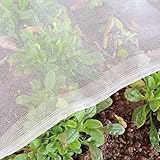
- 🥬Effective Bug Barrier: Protecting plants and vegetables from a wide range of pest insects and animals, such as cicadas, carrot fly and many species of aphids, you will get a healthier and happier garden
- 🥬All-Purpose Garden Netting: Covering ponds will have unexpected results, it also can be used indoors or on windows
- 🥬Extra High Quality: Made of 100% new HDPE material, UV-resistant, light enough and completely safe for plants, tight selvedge does not unravel, durable and strong
- 🥬Convenient to Use: Air, water and light enter through the net easily, you can put it on any garden hoops, beds or fruits or vegetable cages, no need to remove it when watering
- 🥬Features: 100% NEW HDPE fine mesh net, UV stabilized, 40 Mesh, 3 years warranty, can be cut into any sizes as needed
Only use a pesticide if it is legally labeled for the intended plant and situation, and follow the label exactly. Large commercial orchards are a separate case. Commercial growers may consider scouting-based pesticide programs when netting is impractical, but those decisions involve crop timing, application restrictions, worker and pollinator protection, and label compliance. Commercial orchard advice should not be generalized into a homeowner spray recommendation.
What to do after the cicadas disappear
Do not assume the tree is dying if brown tips or hanging twigs appear weeks after the adults are gone. Those symptoms are often flagging caused by egg laying.
- Inspect the tree. Look for browned, drooping, split, or broken twig tips rather than judging the entire tree by its outer canopy.
- Wait until adult activity ends. Pruning during the emergence can create fresh exposed growth while cicadas are still laying eggs.
- Prune damaged twigs when appropriate. Remove badly damaged tips with clean pruning tools, particularly where a young fruit tree’s structure has been affected. Use normal pruning hygiene and avoid removing more healthy wood than necessary.
- Restore the shape of young trees. If an important developing scaffold branch was damaged, assess the remaining structure and use ordinary young-tree training practices. A qualified arborist or local extension service can help with valuable or severely damaged trees.
- Maintain normal care. Water the tree appropriately for its soil, season, and species. There is no general requirement for extra fertilizer or a special “cicada treatment.”
- Clear fallen tips if desired. Rake up fallen branch pieces for appearance and convenience. They generally do not pose a continuing tree-health threat.
Commercial growers sometimes use timing-specific practices intended to reduce the chance that newly hatched nymphs return to the soil. That level of intervention is not automatically needed for a backyard tree.
Do these 3 things before closing this tab:
1Fix the driver behind crashes, sound loss and screen glitches2Clear out junk files and repair common Windows errors3Scan for outdated or missing drivers - takes under a minuteOther property concerns during a heavy emergence
Cicadas are harmless to people and pets in ordinary contact. Pets should not be encouraged to eat large numbers, however.
On some properties, large numbers may accumulate in ornamental ponds. Decomposing insects can contribute to oxygen depletion, so screening or plastic mesh may help protect a small pond. Swimming-pool skimmers and filters may also need frequent cleaning during heavy activity. These are secondary property-management concerns; protecting young trees remains the principal landscaping issue.
Independent reader supportYour contribution helps us test, update, and keep practical guides available for everyone.A practical preparation checklist for spring 2027
- Confirm whether your county or parish is within or near the expected Brood XXII area.
- Inventory trees, shrubs, grapevines, and nursery stock planted within approximately the last four years.
- Give priority to young fruit trees and plants with many pencil-thick branches.
- Delay planting new woody plants until after the emergence if your schedule is flexible.
- If planting cannot wait, choose well-established stock with substantially thicker stems where local extension guidance supports that approach.
- Buy 1/4-inch-or-finer insect netting before spring activity begins.
- Prepare hoops, supports, clips, landscape pins, soft ties, or other safe fasteners.
- Install the complete enclosure before the first substantial egg laying.
- Inspect the cover after storms and as the plant grows.
- Remove the netting when adult activity and egg laying have ended, usually after about four to eight weeks.
- Inspect for flagging and prune damaged tips after the emergence, if needed.
When professional help makes sense
A homeowner can usually cover a small young tree. Professional advice becomes more useful when a tree is too large to enclose safely, a young orchard has many trees, a valuable specimen has extensive structural damage, or you need help confirming whether your property is in the expected emergence area.
Best Value
- Protect Your Vegetables and Fruits: LCHUANG Garden Netting is great for orchards, greenhouses, gardens, nurseries, patios, and shrubs. This Bird Netting with a zipper can protect blueberries, tomatoes, trees, fruits, flowers, vegetables, and potted plants from insects, birds, and bugs, which helps the plants grow normally.
- Easy to Use and Adjust: With a new upgraded drawstring design, the sturdy and durable Garden Netting is easy to use and put up. Simply place the Bird Netting over the plant and tighten the rope to securely protect the plant.
- Lightweight and Durable: This transparent Bird Netting plant cover screen is made of PE material, which is super durable for protecting your plants. Additionally, the Garden Netting is lightweight and will not press your tree, which can retard plant growth.
- Perfect Permeability: The ultra-fine 0.8mm x 1mm mesh of the Garden Netting allows air and moisture to pass through, so you don't need to remove the Bird Netting when watering or feeding liquids.
- Lifetime Exchange Service: Please recommend LCHUANG brand bird netting to your family and friends when purchasing. Compared to other brands’ one-year after-sales service, genuine LCHUANG garden netting can be exchanged for life. If there are any product quality problems, we will send you a new one at no cost. You don't need to worry about product damage.
For large trees, do not climb or install unstable coverings simply to avoid cicada damage. A qualified arborist can help distinguish normal flagging from a separate tree-health problem and can recommend safe pruning. Local nurseries, garden centers, orchard suppliers, and tree-care professionals in eastern Louisiana and southwestern Mississippi may also be useful sources for regionally appropriate materials and timing, but availability and service terms should be checked locally.
Free tools Windows power users keep installed
One-click scans. No signup required.
Bottom line
Protect the plants that can be hurt, not every plant on the property. For the expected regional 2027 Brood XXII emergence, focus on young woody plants and use fine insect netting with openings of 1/4 inch or smaller. Enclose the entire canopy, keep the mesh away from branch tips, seal the bottom, inspect it during the emergence, and remove it after the adults and egg laying are finished.
Established mature trees, annual vegetables, herbs, and most herbaceous plants generally need no special treatment. Routine insecticide spraying and homemade vinegar remedies add risk without solving the main problem.
Frequently Asked Questions
Will cicadas kill my mature shade trees?
Usually not. Established mature trees generally tolerate the loss of small outer twigs and replace the damaged growth. Young trees have less structure to spare and are the higher priority for protection.
Is ordinary bird netting enough to keep cicadas out?
Not necessarily. Many bird-netting products have openings that are too large. Choose insect netting with openings of 1/4 inch or smaller, and keep the mesh from resting against branch tips.
Windows Errors? Fix Them Before They Spread
Repair common Windows errors and clear accumulated junk for a smoother, more stable PC - no reinstall needed.Free scan · no reinstallOutdated Drivers Are Slowing You Down
One free scan finds every outdated or missing driver and matches the right update for your exact hardware.Free scan · exact hardware matchWhen should I cover a young tree for the 2027 emergence?
Install the netting before emergence begins, preferably before the first male calls. Louisiana guidance identifies early May through early June as a useful observation window, but local soil temperature and weather will determine the exact timing.
Should I spray insecticide on my trees?
Routine homeowner spraying is generally not recommended. Netting is usually more practical for vulnerable small trees and avoids repeated applications and potential effects on beneficial insects, wildlife, people, and pets. Commercial orchards have separate, label-based management options.
What should I do when branches turn brown after the cicadas leave?
The damage may be flagging from egg laying rather than whole-tree decline. After adult activity ends, inspect the tree and prune badly damaged tips with clean tools when needed. Maintain normal watering and care.
Quick Recap
Product prices and availability are accurate as of the date/time indicated and are subject to change. Any price and availability information displayed on Amazon at the time of purchase will apply.

