Preventing a utility strike is a process, not a single piece of equipment: contact 811 or the local one-call center before every U.S. excavation, provide an accurate work area and start date, wait through the applicable state or local notice period, confirm that affected facilities have responded and been marked, and expose utilities by safe means as your work approaches their estimated locations. Treat paint and flags as limits that require controlled excavation—not as permission to use a machine without further locating. Pipeline markers show only a general route or right-of-way, never an exact line or burial depth. If a pipeline is damaged or leaking, leave immediately, warn others, avoid ignition sources and traffic, stay upwind, and call public safety officials and the pipeline operator.
Why utility-strike prevention deserves a formal procedure
Underground facilities can include gas, hazardous-liquid, electric, telecommunications, sewer and water lines. A strike can cause fire, explosion, electrocution, flooding, service outages, environmental damage, injuries or death. The consequences also extend beyond the excavation site: PHMSA estimates nearly $30 billion in annual U.S. economic cost across all utility types. That estimate covers the national impact, not the price of any individual incident.
As an Amazon Associate I earn from qualifying purchases.
PHMSA’s 2026 811 Day page says callers who contact 811 before digging have a 99 percent chance of avoiding an incident, injury, environmental harm or death. PHMSA attributes that figure to research but does not identify the underlying study, so it should be read as the agency’s reported result rather than a guarantee for a particular job. The practical lesson is still clear: the call, waiting period and careful locating are the highest-value controls available to an excavator.
Free tools Windows power users keep installed
One-click scans. No signup required.
PHMSA reported 85,606 damages to gas-distribution facilities across 35,813,977 excavation tickets in 2025, or 2.39 damages per thousand tickets. Excavator-related events accounted for 33,609 of those damages, approximately 39.3 percent of the gas-distribution total. These figures cover gas distribution only; they are not a count of every type of underground utility strike.
#1 Best Overall
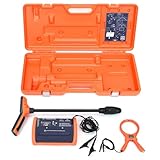
- PROFESSIONAL-GRADE UTILITY LOCATOR – Locate underground electrical lines, telecom cables, irrigation wires, and metallic pipes with precision over 1 mile (1.6 km) and depths up to 20 feet (6 m) with the 551 underground wire locator.
- DUAL FREQUENCIES + INTELLITRACK NOISE REJECTION – Simultaneously transmit two frequencies and eliminate AC interference with proprietary IntelliTrack digital filtering for accurate readings in noisy environments with the 551 cable locator.
- PEAK & NULL RECEIVER MODES – Choose between peak or null response to fine-tune your search and detect anomalies with confidence, even in complex underground environments with 551 buried wire locator.
- FLEXIBLE CONNECTION OPTIONS – Use direct wire connection , inductive clamp, or built-in antenna on 551 wire locator for maximum adaptability on active or inactive systems.
- BUILT FOR THE FIELD – Rugged, IP54-rated, and ergonomically designed with a lightweight receiver and durable case for reliable use in demanding job sites.
This guidance addresses work in the United States. State one-call statutes, state-plan OSHA rules and local requirements can change notice periods, ticket validity, marking procedures and duties on a particular site. Use the local one-call center and the authority having jurisdiction for the rules that apply to your address.
How do I prevent hitting a utility line when digging?
Use this sequence for every excavation, including a homeowner’s post hole, tree planting or drainage trench:
- Define the work area. Mark the proposed excavation as accurately as possible and identify the limits, access points, equipment and expected start date. Incomplete or vague information can leave an operator unable to determine whether its facility is affected.
- Contact 811 or the local one-call center. The service routes your information to potentially affected facility operators. PHMSA describes the service and marking process as free for callers.
- Learn the local notice rule. PHMSA’s public guidance commonly describes a 48-to-72-hour lead time, but state law determines how long operators have to respond. The local center can tell you the required notice period, ticket format, hours, validity period and whether a special request is needed.
- Wait for the required responses. Do not start because one operator has replied while another is still outstanding. Wait until the applicable period has passed and the one-call center has explained any unresolved status.
- Review and preserve the marks. Look for paint and flags, compare them with the ticket information and keep them visible. Protect marks from grading, weather, traffic and other site work.
- Approach marked facilities cautiously. Before opening the excavation at an estimated utility location, contact the owner when required and establish the exact location by safe and acceptable means.
- Control the work as conditions change. Stop and reassess if the excavation moves outside the ticket area, marks become unclear, the planned depth or alignment changes, an unmarked facility appears, or the ticket expires under local rules.
PHMSA summarizes the responsibility in plain language: “Don’t assume that you know what’s below. Protect yourself and those around you. Call 811 before you dig, every time.” See PHMSA’s Call Before You Dig guidance.
Call 811 before every excavation, including small home projects
What the one-call center does
Your notification is distributed to operators that may have underground facilities in the proposed area. Depending on the site, that can include gas, hazardous-liquid, electric, telecommunications, sewer and water operators. Each operator determines whether its facilities could be affected and, when applicable, arranges locating and marking.
A previous ticket is not a permanent authorization. PHMSA says every digging project requires a new call, even when the same property was marked for an earlier job. A new call is necessary when the work is a different project, the footprint changes or the earlier ticket is no longer valid under local rules.
Rank #2

- Extended trace range over the Leica DD120 with additional low frequencies (512Hz and 640Hz)
- Kit includes DD130 Locator, DA175 1 Watt Signal transmitter, and carry bag which offers a turn key Package for locating underground utilities
- Safely locate underground power, water, gas, and Cable lines
- Automatic pinpointing at depths up to 33 feet (With Sonde - not included) with power, radio, auto modes
- Health check and start up test each time you turn on the unit to ensure proper functionality
Information to provide accurately
- Street address, municipality, state and a clearly identifiable site description.
- Where the excavation will occur, using the one-call center’s accepted marking method or a marked outline.
- Purpose of the work, such as footing, trench, fence post, tree planting or utility repair.
- Planned start date and the expected duration if requested.
- A reliable caller or site contact who can answer an operator’s questions.
Accuracy matters because operators decide whether a facility is potentially affected from the information you submit. If the project expands, relocates or changes depth, notify the one-call center according to local procedure rather than relying on the original ticket.
How far ahead should you call 811?
Build the local notice period into the schedule before mobilizing excavation equipment. PHMSA’s general public information refers to 48 to 72 hours, but that is not a universal legal deadline. State law controls the response window, and some jurisdictions add rules for weekends, holidays, electronic tickets, emergency work, repeat marks or ticket expiration.
The Tool Desk
Outbyte PC Repair FREERepair Windows errors before they cause bigger problemsFix Now →Outbyte Driver Updater FREEScan for outdated or missing drivers - takes under a minuteDriver Scan →Ask the local one-call center these questions when you submit the ticket:
- What is the minimum advance notice for this address and type of work?
- Are weekends and holidays counted?
- When does the ticket become active, and how long does it remain valid?
- How do I check which operators have responded?
- What is the procedure if a facility is marked “no conflict,” not marked, or cannot be located?
- How must I request a refresh if marks are disturbed or the job is delayed?
Keep the ticket number, submission time, responses and correspondence with the project records. Documentation does not make an unsafe excavation acceptable, but it helps the supervisor verify that the required process was followed and identify unresolved responses before work starts.
Can you dig after utilities are marked?
Marks mean the locating process has provided an estimated position; they do not eliminate the need for controlled excavation. PHMSA says the excavator is responsible for waiting, respecting the marks and digging with care. Paint and flags can be offset, damaged, incomplete or difficult to interpret in congested areas, and a mark does not establish the facility’s depth.
Rank #3

- ACCURATE UNDERGROUND WIRE LOCATOR. Quickly isolate, trace the path and determine the depth of buried conductors (wires or metallic pipes) over distances of 4,000 feet (1.2 km) and depths of 7 feet (2.2 m) with the 501 underground wire locator.
- EASILY LOCATE AND TRACE Electrical lines, Communications cables, Electric dog fence cables, Fish tape and Metallic pipes, Invisible fence wires, Outdoor or Landscape lighting cables with 501 buried wire locator. Trace Electric, Power, Coax, Telephone, and Utility lines with the 501 underground wire locator.
- EFFICIENT: Save yourself hours to trace buried cables, wires, or pipes. With inductive signal detection, this cable and buried wire locator can be used on active or dead systems, making it quick and easy to trace the path and determine the depth of buried wires and trace metallic pipes.
- COMPLETE PORTABLE KIT: 501 buried wire locator comes with a transmitter assembly, receiver assembly, inductive coupler (clamp), built-in inductive antenna, two 8-foot (2.4 m) test leads with heavy-duty alligator clips, and a durable polyethylene case, making it a complete package for all your location needs.
- CONNECTION OPTIONS: Options for direct connection, inductive clamp, and inductive antenna allow active or dead systems location. Transmitter output and receiver sensitivity are fully adjustable for maximum accuracy.
Site check before starting
- Walk the entire marked work area with the person directing the excavation.
- Match each visible mark to the ticket and operator response.
- Confirm that marks remain legible after layout, grading, rain or vehicle movement.
- Identify any response that is missing, contradictory or unclear and resolve it with the one-call center or facility owner.
- Brief operators and spotters on the marked routes, the planned approach and the stop-work signal.
Do not erase, move or cover marks. If site work removes them, stop in the affected area and obtain a refresh or re-mark under the local procedure. A mark is information for planning and locating, not a guarantee that no other facility exists nearby.
Quick wins for a faster PC:
Scan for outdated or missing drivers - takes under a minuteDriver Scan →Clear out junk files and repair common Windows errorsFree Scan →Fix the driver behind crashes, sound loss and screen glitchesFind Drivers →Establish the exact location before the excavation reaches it
OSHA’s excavation enforcement directive says the estimated location of underground installations reasonably expected to be encountered must be determined before opening an excavation, and that utility companies or owners must be contacted before actual excavation. As equipment approaches an estimated location, the exact location must be established by safe and acceptable means.
OSHA states the requirement in 29 CFR 1926.651(b)(3): “When excavation operations approach the estimated location of underground installations, the exact location of the installations shall be determined by safe and acceptable means.” Read the agency’s Inspection Procedures for Enforcing the Excavation Standard together with the standard and any state-plan requirements that apply to your employer.
Nonconductive hand tools and probes
In an October 23, 2003 interpretation, OSHA says suitable nonconductive hand tools, including probes, may be acceptable in the circumstances described by the interpretation when used with appropriate caution. A probe is supplemental locating equipment; it does not replace 811 notification, the waiting period, operator marks or the owner’s instructions. Select equipment appropriate to the utility, soil, depth and work method, and use personnel who understand its limitations.
Hydro-vacuum excavation
OSHA’s interpretation also says hydro-vacuum excavation may be acceptable when adjusted so it will not damage utilities, particularly vulnerable electrical lines. Equipment that cannot be sufficiently adjusted is not acceptable under the standard. “Vacuum excavation” is therefore not an automatic safe harbor: nozzle pressure, flow, distance, soil conditions, utility condition and operator control all matter. Follow the equipment manufacturer’s limits, the utility owner’s requirements and the employer’s safety procedures.
PC Slower Than It Used to Be?
A free scan shows the junk files, broken settings and background clutter dragging Windows down - then fixes them in one click.Free scan · Windows 10 & 11Crashes, No Sound, or Screen Glitches?
Random freezes, missing sound and display glitches usually trace back to one bad driver. Find and replace yours safely.Free scan · under a minuteRank #4

- COMPACT SONDE AND LINE LOCATOR: Perfect for SeeSnake cameras, remote transmitters, or flushable sondes; targets pipes, cables, and energized lines; use with SeeSnake inspection reels or other sondes
- MULTI-DIRECTIONAL TECHNOLOGY: The antenna detects signals from all directions, maximizing signal strength and eliminating false peaks or nulls, ensuring accurate target location
- ENHANCED DETECTION CAPABILITIES: Features 4 Sonde and 5 Line trace mode frequencies; the digital readout delivers real-time signal strength with no false peaks, ensuring fast, accurate locates
- PRECISE TARGETING: Micro-mapping verifies locate positions with on-screen markers for poles in front of and behind your target; depth calculations automatically display when directly over the target
- ALL-IN-ONE PACKAGE: Includes a carrying case for easy transport and protection, plus surface marker chips, an instructional video, an operator’s manual, and 4 C-cell batteries
Mechanical excavation
Mechanical equipment is efficient for bulk removal but can damage a facility before the operator recognizes contact. Keep the machine outside the unresolved area while the exact location is being established, use a trained spotter where required, and stop when the excavation reveals an unexpected line, conduit, duct, coating, warning tape or change in soil that could indicate a facility.
| Method | When it may fit | Critical limitation |
|---|---|---|
| Nonconductive hand tools or probes | Careful exposure or confirmation as work approaches an estimated utility location, when suitable for the conditions | Must be used cautiously and does not replace 811, marks or owner requirements; suitability depends on the utility, soil and jurisdiction |
| Hydro-vacuum excavation | Controlled exposure when the equipment can be adjusted to avoid utility damage | OSHA’s interpretation cautions that insufficiently adjustable equipment is not acceptable, especially around vulnerable electrical lines |
| Mechanical excavation | Bulk excavation after the work area and utility locations have been established and controls are in place | Can strike a facility rapidly; do not use it to guess the exact location of an installation |
The appropriate choice depends on whether the utility has been marked, how close the excavation is to its estimated location, the facility’s damage sensitivity, whether equipment can be adjusted, applicable employer and jurisdiction rules, and the training of the people performing the work.
Pipeline markers are not exact locators
A marker beside a road, field or construction area should trigger caution, not confidence. PHMSA states: “Pipeline markers only show the general location of a pipeline or pipeline right-of-way. Markers do not show the precise pipeline location or depth of burial.” Read the agency’s Fact Sheet: Excavation Damage.
Markers can identify a route or right-of-way while the pipe follows a different alignment within that corridor. They do not tell you how deep the pipe is, whether another facility crosses it, or whether the marker has been moved. Call 811, wait for the required responses and establish the exact location by safe means as excavation approaches.
Supervise the excavation and stop when conditions change
A ticket and initial marks are only one part of the control system. The competent person or site supervisor should verify the plan at the start of each shift and whenever the crew, equipment or excavation alignment changes.
Best Value

- Easy to Use
- Left / Right Arrows Guide You To Buried Utility
- Single Frequency Locator
- 1W Transmitter
- 1 Year Warranty
- Keep the ticket information and operator responses available at the work area.
- Use a clear spotter-to-operator communication method and define an immediate stop signal.
- Maintain visibility of marks; request a refresh when they are no longer reliable.
- Use the planned exposure method as the excavation approaches each estimated installation.
- Stop for an unmarked or unexpected facility, a damaged conduit, an odor, hissing, liquid release, electrical arcing or unexplained soil movement.
- Do not assume a facility is abandoned because it is old, shallow, disconnected-looking or absent from a drawing.
When the project crosses multiple jurisdictions or involves public and private facilities, confirm which lines are covered by the one-call ticket and which require a separate private locating service or direct owner contact. The national guidance does not determine those local or private-utility rules.
What should you do if you hit a gas or other pipeline?
Treat any contact, coating scrape, dent, puncture, odor, hissing sound, vapor, liquid release or suspected damage as an emergency. Do not wait to see whether the line is still operating.
- Abandon the equipment and leave immediately. Move away from the excavation and the suspected release area. Do not operate machinery or vehicles unnecessarily while escaping.
- Warn everyone nearby. Keep workers, pedestrians and the public away without creating additional exposure.
- Eliminate ignition and traffic hazards from a safe distance. Keep vehicles, smoking, flames, sparks and other ignition sources out of the area. Do not use a phone or radio in a suspected gas cloud if doing so could create an ignition hazard; move to a safe location first.
- Stay upwind of a suspected leak. Avoid low areas where gas or vapors may collect.
- Call public safety officials and the pipeline company. Provide the location, what happened, visible damage and any injuries. Follow emergency-dispatch instructions.
- Do not re-enter or attempt a repair. Wait for emergency responders and the facility operator to declare the area safe.
PHMSA’s excavation-damage guidance sets out the core response: leave, warn others, keep traffic and ignition sources away, stay upwind of a suspected leak, and notify public safety officials and the pipeline company. For planning and reporting details, use the PHMSA excavation-damage fact sheet.
Recommended Free Tools
What contractors should document
Record the information that proves the crew had a usable process, not merely a phone call:
- Ticket number, submission date and time, work limits and planned start date.
- Operator responses, no-conflict notices and unresolved responses.
- Dates and times of marks, refreshes and direct owner contacts.
- Pre-excavation briefing, assigned spotter and selected exposure method.
- Changes to the excavation footprint, depth, equipment or schedule.
- Photographs of marks and exposed facilities where permitted by the owner and site rules.
- Any damage, near miss, stop-work decision and notification made after an incident.
Documentation should support, not replace, field control. A complete ticket cannot justify excavation that proceeds before the legal wait period, ignores a missing response or uses equipment that cannot be adjusted to avoid damage.
Official guidance and current data
For the source language and updates behind this procedure, consult:
Quick Recap
- PHMSA, Call Before You Dig! — scope of 811, free marking service and the responsibility to call before every job.
- PHMSA, Fact Sheet: Excavation Damage — pipeline-marker limits and emergency actions.
- OSHA, Use of hydro-vacuum excavation equipment and other acceptable means to locate underground utility installations — October 23, 2003 interpretation of acceptable locating methods.
- OSHA, Inspection Procedures for Enforcing the Excavation Standard, 29 CFR 1926, Subpart P — federal construction enforcement guidance.
- PHMSA, Pipeline Safety: Advisory Bulletin on Preventing Excavation Damage During National Safe Digging Month and Beyond — April 21, 2026 advisory bulletin.
- PHMSA, 811 Day — page last updated May 18, 2026, including the agency’s reported 99 percent figure and 2025 gas-distribution damage data.
Field checklist: before the machine moves
- Is this a new excavation project requiring a new 811 notification?
- Is the work area accurately marked and within the ticket limits?
- Has the local notice period passed for this address?
- Have all potentially affected operators responded or has the one-call center resolved the status?
- Are paint and flags visible, understood and protected?
- Has the crew been briefed on the marked routes, stop signal and exposure method?
- Will exact locations be established by safe and acceptable means as the work approaches?
- Can the selected equipment be adjusted to avoid damage under the actual conditions?
- Does everyone know to leave, warn others and call for help after suspected pipeline damage?
Product prices and availability are accurate as of the date/time indicated and are subject to change. Any price and availability information displayed on Amazon at the time of purchase will apply.

