Quick wins for a faster PC:
Clear out junk files and repair common Windows errorsFree Scan →Fix the driver behind crashes, sound loss and screen glitchesFind Drivers →Some links on this page are affiliate links: if you buy through them we may earn a commission, at no extra cost to you.
Prevent damp and mould in a courtyard house by controlling moisture at its source, extracting humid air from kitchens and bathrooms, keeping air moving around cold surfaces, and investigating any recurring or localised wetness for leaks or building defects. A courtyard does not have a single special remedy: its walls, roof edges, gutters, drainage, windows and ventilation must be assessed as an individual building.
Understand what is making the wall or surface wet
Damp is a description of unwanted moisture in a building, not a diagnosis. Mould is a growth problem that often follows prolonged dampness. The first decision is whether water is being produced inside the house, entering through the building, or both.
As an Amazon Associate I earn from qualifying purchases.
Outdated Drivers Are Slowing You Down
One free scan finds every outdated or missing driver and matches the right update for your exact hardware.Free scan · exact hardware matchWindows Errors? Fix Them Before They Spread
Repair common Windows errors and clear accumulated junk for a smoother, more stable PC - no reinstall needed.Free scan · no reinstall| Likely source | Typical clues | Useful first response |
|---|---|---|
| Condensation from household moisture | Water beads on windows or other cold surfaces; mould appears in corners, behind furniture or in cupboards; the problem is worse after cooking, bathing or indoor laundry. | Improve extraction and air circulation, reduce moisture production, wipe condensation, and avoid prolonged cold rooms. |
| Plumbing or appliance leak | A concentrated wet patch, staining below a pipe or appliance, swollen finishes, or dampness that continues when the room is not being used. | Stop or isolate the leak safely, dry the area, and arrange a plumbing or building inspection. |
| Rain penetration | Wetness follows heavy rain, is concentrated on an external wall, or appears near windows, roof edges, parapets or junctions. | Inspect external walls, seals, roof coverings, flashings, gutters and downpipes; repair the entry point rather than only repainting inside. |
| Drainage or ground-related moisture | Damp at low level, salt deposits, damaged paving or drainage close to walls, blocked gullies, or water collecting in the courtyard. | Clear and repair drainage, check falls and outlets, and obtain a building-focused assessment if moisture persists. |
| Defective damp-proofing or building fabric | Persistent, localised or returning damp despite sensible ventilation and moisture control. | Use an appropriately qualified professional to investigate the construction and moisture path. |
UK government housing guidance describes condensation as one of the most common causes of damp and mould in homes, but it also identifies building deficiencies, inadequate ventilation and other water sources. Do not assume that every patch is caused by lifestyle or that every courtyard behaves the same way.
Carry out a moisture-source check before cleaning
A quick check prevents you from treating the symptom while water continues to enter. Record where the damp appears, when it appears, and what weather or household activity preceded it. Photographs with dates can show whether a mark is spreading.
Popular on Amazon

- Semiconductor dehumidifiers use thermoelectric cooling to remove moisture from the air. They create a drier, more comfortable environment by reducing humidity and improving air quality.
- Our home dehumidifier features intelligent auto-shutoff, automatically powering down when the water tank is full. Set it and forget it, knowing your dehumidifier is working efficiently and safely, giving you true peace of mind.
- Our dehumidifier features a captivating 7-color ambient light, allowing you to bathe your room in a spectrum of soothing hues. Choose from a calming blue, energizing green, romantic red, and more – easily select the perfect color to create your desired atmosphere and enhance your living space. Dehumidify in style and set the perfect mood, every time.
- Sleep Mode creates the perfect sleep sanctuary. The dehumidifier's atmosphere lights automatically turn off, and noise fades to a whisper. Experience truly undisturbed dehumidification for a night of perfect rest.
- Elevate your home's comfort and style with our sleek and compact dehumidifier. Designed to seamlessly blend into any space, from the living room and bedroom to the bathroom, basement, and even your RV. Its modern aesthetics and space-saving footprint make it the perfect dehumidification solution for every corner of your home.
- Map the location. Note whether the patch is on an internal partition, an external wall, a ceiling, a floor edge, around a window, or behind a fixed unit. Check the corresponding space on the other side of the wall and the room above or below.
- Look for active water. Inspect visible pipework, traps, valves, washing-machine connections, boilers, radiators and sanitary fittings. Do not remove electrical covers or disturb gas appliances; use a qualified tradesperson for unsafe or inaccessible areas.
- Inspect the courtyard side. Look for cracked or deteriorating render, open joints, failed sealant, blocked gullies, overflowing downpipes, ponding, damaged paving and water marks below roof edges.
- Compare weather and use. Rain-related wetting and shower- or cooking-related condensation have different patterns. A patch that returns after rain needs an external investigation even if the room also has condensation.
- Check ventilation. Confirm that kitchen and bathroom extractors start, move air and discharge correctly. Make sure grilles and vents are not blocked by dust, paint, storage or furniture.
If wetness is active, stop the water source as soon as it is safe to do so. Surface cleaning is not a substitute for repairing a leak, rain entry, drainage defect or failed building component.
Ventilate kitchens and bathrooms during moisture-producing activities
Cooking, showers, baths and washing release water vapour. If that vapour remains indoors, it can condense on colder walls, window reveals, ceilings and furniture. Use the installed extractor or another suitable ventilation system while the activity is taking place and for the period recommended in its operating instructions.
Kitchen practice
- Start the extractor before or as cooking begins and keep it running long enough to clear the steam.
- Cover pans where practical; lids reduce the amount of moisture released into the room.
- Keep the extractor grille and filters clean according to the manufacturer’s instructions.
- Keep background air paths and vents clear. Closing every internal door and blocking transfer grilles can prevent extracted air being replaced.
Bathroom practice
- Run the extractor during bathing and continue operation afterwards as directed by the system instructions.
- Keep the fan, grille and any trickle or background vents unobstructed.
- Close the bathroom door while showering if that keeps humid air from spreading, but ensure the ventilation system has a route to replace extracted air.
- Wipe pooled water from floors and ledges so it does not evaporate into the rest of the house.
UK guidance recommends that extractor fans and mechanical ventilation systems be inspected and maintained by qualified professionals. A fan that is noisy, weak, intermittent or apparently venting into a roof void rather than outside needs investigation; simply leaving it switched on will not correct a defective installation.
Reduce indoor moisture without making the home uncomfortable
Small routine changes can lower the moisture load that ventilation must remove. They work best as part of a wider plan rather than as a replacement for repairs.
- Dry laundry outdoors when practical. If clothes must be dried indoors, use a ventilated room and keep the door closed while extracting the moisture. Avoid placing wet clothes directly on radiators, where rapid evaporation can raise room humidity.
- Deal with spills promptly. Dry wet floors, window sills and worktops instead of allowing water to evaporate.
- Use pan lids and sensible cooking settings. Less steam means less condensation risk.
- Do not overfill cupboards. Leave gaps around stored items so air can circulate and inspect enclosed corners periodically.
- Wipe visible condensation. Removing water from windows and cold surfaces reduces the time those materials remain wet. Treat this as a control measure, not proof that the underlying cause has been solved.
Keep cold rooms and surfaces from becoming condensation traps
Condensation is more likely when warm, moist air meets a cold surface. A consistently cold spare bedroom, unheated corridor, external corner or cupboard can therefore develop mould even when the rest of the house feels comfortable.
Also popular on Amazon
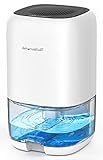
- High Efficient Dehumidifiers for Home: Still annoyed about the muggy weather? Just Take it easy! have a try at TABYIK 35OZ Peltier dehumidifier, in a closed small room with humid environment of 86°F and 80% RH, it can collect a max of 16oz(450ml) of water in 24 hours, and with very low energy consumption (no more than 1-kilowatt hour a day).
- Small Dehumidifiers with Colorful Light: There is a separate light button, which can emit 7-color romantic atmosphere lights for you, and the ultra-quiet operation (28dB) creates a comfortable and peaceful environment for your bedroom and office.
- 35OZ Dehumidifiers for Bathroom: With 1000ml (35OZ) large transparent tank, you can see the water collection volume of the dehumidifier in real-time, and there is a groove design at the bottom of the water tank, you can easily take it out, pour water and clean it!
- Auto Shut Off Protection: When the water tank is 700~800ml full, dehumidifiers will auto shut off work, and the light will flash red to inform you. It is also very safe and convenient to use when you are not at home.
- Portable Dehumidifier for Bedroom: With a compact size of 5.9X5.9X10.1 inch and a built-in handle on the back, it is very convenient to be placed everywhere. Helping to get the excess moisture out of the air for you in bedroom, bathroom, RV, closet.
Where it is affordable and suitable for the household, steady background warmth can reduce cold surfaces more effectively than allowing a room to become very cold and then heating it briefly. Energy costs, occupancy, health needs and the building’s heating system all matter; do not treat a particular temperature or heating schedule as a universal requirement. Heating cannot repair a leak, defective damp-proofing, failed pointing or rain penetration.
Improve air movement around furniture
- Leave a modest gap between large furniture and colder external walls so air can circulate.
- Avoid packing wardrobes and cupboards tightly against cold surfaces.
- Keep curtains, blinds and stored items from sealing off air movement at damp-prone corners.
- Inspect behind beds, sofas and cabinets during colder months, especially where an external wall meets a floor or ceiling.
Air movement is not the same as uncontrolled draughts. The aim is to prevent stagnant pockets of humid air while retaining safe, practical ventilation and reasonable warmth.
Inspect the courtyard, roof edges and drainage
A courtyard can create several close wall, roof and drainage junctions, but the available evidence does not establish a universal courtyard-house design rule or a special product that prevents damp. Treat the courtyard as an important inspection zone for the actual property.
External walls and openings
- Check render, masonry joints, copings, parapets and seals around doors and windows for cracks, gaps, staining or deterioration.
- Look for damp marks that align with a particular wall, window head, sill or roof junction after rain.
- Keep air bricks, vents and other designed openings clear; do not seal them simply to stop a draught without understanding their function.
Gutters, downpipes and roof edges
- Remove leaves and debris from gutters and courtyard outlets before wet seasons and after storms.
- Check for overflow marks, split joints, loose connections and downpipes discharging against walls or foundations.
- Inspect roof edges, flashings and parapet details where water could run into the wall rather than away from it.
Courtyard surfaces and drainage
- Watch for standing water after rain and confirm that paving falls toward a functioning drain rather than the house.
- Keep gullies, channels and grates clear of soil, leaves and stored objects.
- Do not raise paving or soil against a wall without checking how it affects existing damp-proofing and drainage.
Recurring low-level damp, rain-linked staining or deterioration that continues after drainage is cleared deserves a building-focused diagnosis. Repainting or applying a surface coating before the moisture path is understood can conceal evidence and delay the correct repair.
Decide whether a dehumidifier is appropriate
A dehumidifier can reduce indoor humidity as needed, particularly during wet weather, indoor laundry or periods when ventilation is limited. US Environmental Protection Agency guidance lists dehumidifiers as a possible humidity-control tool. It does not, however, stop water entering through a leaking pipe, roof, wall, gutter or drain.
Recommended Free Tools
Also popular on Amazon
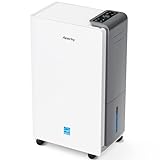
- 【ENERGY STAR 25 ≠ ENERGY STAR Most Efficient 2025】Don't fall for competitors' word games. With only 2.6% of ENERGY STAR models earning "Most Efficient 2025" title, these options are exceptionally rare on the market. RHEA-001 is one of the few to truly hold this top-tier certification. Many brands use misleading phrases like "Energy Star Efficient 25" or "Energy Star 25" to imply a standard they haven't met. Choosing them is a risk.With AEOCKY, you get verified performance and the peace of mind of authentic, top-tier efficiency.
- 【True ENERGY STAR Most Efficient 2025 Compressor Dehumidifier for homes (5500 sq.ft)】80 pint/day in the humid Mid-summer (95℉, 95%RH); 56 pint/day in the warm, damp basement (86℉, 80%RH)! Among all ENERGY STAR dehumidifiers, only an elite 2.6% earn the ENERGY STAR "Most Efficient 2025" certification. It is this top-tier capability that allows the RHEA-001 to completely outperform its competitors in both performance and energy efficiency.(Dehumidification capacity≠Water Tank Volume)
- 【Top-Rated Efficiency - Save More Energy】Breaking industry barriers, one of the first brands to achieve ENERGY STAR Most Efficient 2025. Compared to non-Energy Star inefficient products,RHEA-001 efficiency is increased by ≤50%, saving ≤1000 on electricity bills annually (running 24/7 year-round). Energy efficiency is the domain of absolute dominance for our RHEA-001. This relentless pursuit of technological innovation in efficiency is the ironclad moat that has established AEOCKY as the leading dehumidifier brand.
- 【Powered by Exceptional Core Components】AEOCKY utilizes Cutting-Edge High-Efficiency Rotor Compressor Pro+ to RHEA-001, whose core components evaporator and condenser adopt“3+2”structure with one more row than others. Never use aluminum tubes, we unswervingly use 7mm diameter high-tooth internal thread pure copper pipes.We also equipped with advanced blue hydrophilic aluminum foil, achieving breakthrough heat exchange efficiency meeting the most rigorous energy efficiency standards in history.
- 【Cutting-Edge Smart Humidity Control for Unprecedented Precision】Newly designed architecture breaks industry's decade-long lack of innovation, enabling it have high-performance chip. Millisecond-level dynamic detection keep humidity within ideal range,with full-stack proprietary humidity compensation algorithm ensuring RHEA-001 exceeds industry standard for humidity accuracy.Exclusive power-off memory function can be used with smart socket, automatically resuming function after power restoration, suitable for smart home or special area like RV.
| Situation | What a dehumidifier can do | What still needs attention |
|---|---|---|
| High humidity from cooking, bathing or laundry | Remove some moisture from room air when correctly sized and operated. | Use kitchen and bathroom extraction and reduce moisture production at source. |
| Cold room with recurring window condensation | Lower humidity and reduce the amount of vapour available to condense. | Improve air circulation and consider practical, affordable background warmth. |
| Active plumbing or roof leak | Help dry the room after the leak is stopped. | Repair the leak and dry wet materials; do not rely on the machine to hide continuing ingress. |
| Persistent damp in one wall or floor area | Provide temporary humidity control. | Arrange investigation for rain penetration, drainage, building fabric or defective damp-proofing. |
Place the appliance where air can circulate, follow its electrical and operating instructions, empty or drain it safely, and keep doors and windows managed according to the intended drying strategy. A machine that runs continuously without resolving a localised wet patch is a sign to investigate the source rather than simply buying a larger unit.
Independent reader supportYour contribution helps us test, update, and keep practical guides available for everyone.Dry wet materials quickly and clean mould safely
The US Environmental Protection Agency advises: “Completely dry any damp or wet surfaces within 24 – 48 hours, and fix the source of the water problem or leak.” This interval is a practical target after a spill, minor escape of water or other wetting event; it is not permission to ignore materials that remain damp.
- Stop the source. Isolate the leak or prevent further rain entry where safe. If water is near electrics, leave the area and obtain qualified assistance.
- Remove standing water. Use suitable towels, extraction equipment or a qualified restoration service. Move wet contents away from walls and floors.
- Promote controlled drying. Use working ventilation and, where appropriate, a dehumidifier. Avoid blowing contaminated dust through occupied rooms.
- Assess porous materials. Wet plasterboard, insulation, carpets, timber and furnishings may need specialist assessment if they cannot be dried fully.
- Clean only after the cause is controlled. Follow appropriate protective and cleaning procedures for the extent of mould. Do not disturb extensive growth unnecessarily.
England’s official guidance states: “Simply removing surface mould will not prevent the damp and mould from reappearing.” If mould returns in the same place, treat that recurrence as evidence that moisture, ventilation or the building fabric still needs attention.
Know when to obtain professional help
Use an appropriately qualified professional when the cause is unclear, the affected area is extensive, damp keeps returning, or the pattern suggests a building failure rather than ordinary condensation. Suitable expertise may include a qualified ventilation contractor for extractor or mechanical-system faults, a plumber for concealed water leaks, and a building professional experienced in diagnosing rain penetration, drainage and damp-proofing.
Free tools Windows power users keep installed
One-click scans. No signup required.
- Escalate promptly when water is active, reaches electrical installations, follows a roof or plumbing failure, or causes structural materials to deteriorate.
- Seek a diagnosis when a localised patch persists despite sensible ventilation and moisture reduction.
- Keep records of dates, weather, photographs, repairs and recurrence. This helps distinguish a seasonal condensation pattern from rain or plumbing ingress.
- Ask for the cause and proposed repair, not only a mould-washing or repainting service. The remedy should explain how moisture will be prevented from returning.
Landlord duties, housing standards and building regulations vary by jurisdiction. UK government guidance applies within its stated England context, while US EPA advice is general moisture-control guidance; neither should be treated as a universal legal rule for every country.
Quick Recap
A practical maintenance routine for a courtyard house
Every day or after moisture-producing activities
- Run kitchen and bathroom extraction as instructed.
- Cover pans and wipe visible condensation or spills.
- Keep wet laundry away from radiators and use outdoor drying when practical.
Each week
- Check that extractor grilles and visible vents are clear.
- Look behind furniture and inside cupboards at known cold spots.
- Empty and clean a dehumidifier according to its instructions if one is being used.
After heavy rain
- Walk the courtyard and look for ponding, blocked gullies, overflowing gutters and new wall staining.
- Check roof-edge and window-junction areas from safe viewpoints.
- Photograph any change and arrange repairs if water has entered.
Seasonally
- Have mechanical ventilation inspected and maintained by a qualified professional when performance is poor or servicing is due.
- Clear gutters, downpipes and drainage channels.
- Review furniture placement and cupboard loading in rooms that become cold.
- Recheck any previously repaired area to confirm that damp has not returned.
Troubleshoot by the pattern you see
| Observed pattern | Most useful next step |
|---|---|
| Condensation on several windows after showers or cooking | Improve extraction, keep vents clear, reduce steam and wipe surfaces; then review cold-room airflow. |
| Mould behind a wardrobe on an external wall | Move the furniture to create an air gap, reduce room humidity and inspect the wall externally for rain entry or defects. |
| A single patch grows after rain | Inspect the corresponding roof edge, window, wall, gutter, downpipe and courtyard drainage; arrange repair rather than relying on cleaning. |
| Damp below a bathroom, kitchen or appliance | Check plumbing and fittings, isolate an active leak safely, dry the materials and obtain a plumbing or building assessment. |
| Mould returns after washing and repainting | Stop repeating cosmetic treatment and investigate the underlying moisture or ventilation cause. |
| A dehumidifier runs constantly but one area stays damp | Treat the localised persistence as a possible leak or building defect and arrange diagnosis. |
Product prices and availability are accurate as of the date/time indicated and are subject to change. Any price and availability information displayed on Amazon at the time of purchase will apply.

