Place your desk so the monitor is directly in front of you and its screen is at a right angle to the nearest window. Daylight then comes from the side instead of shining into your eyes or reflecting on the display. Keep the screen at least 20 inches (50 cm) away, with its top line at or below eye level, and use blinds or curtains to control direct sun. For video calls, turn the camera toward the room—not a bright window—and put soft, even light in front of your face.
That arrangement is a starting point, not a compass-direction rule. Check the screen from your normal seated position in the morning, afternoon and evening, because the angle and intensity of daylight change. Adjust the desk, monitor, coverings and task lighting until you can read comfortably without squinting, leaning forward or seeing bright reflections.
As an Amazon Associate I earn from qualifying purchases.
The best starting layout
For most computer work, put the desk beside—not directly in front of or directly behind—the main window. The monitor should face a wall or another relatively even background, with the display surface perpendicular to the window. This is the arrangement recommended by the Occupational Safety and Health Administration (OSHA) workstation-environment guidance: “Place the face of the display screen at right angles to windows and light sources.”
Quick wins for a faster PC:
Clear out junk files and repair common Windows errorsFree Scan →Fix the driver behind crashes, sound loss and screen glitchesFind Drivers →Keep the display centered on your body rather than offset to one side. OSHA’s monitor guidance also says to “Put monitor directly in front of you and at least 20 inches away.” Treat 20 inches (50 cm) as a minimum starting point, then move the screen farther away if its size, text scaling or your corrective lenses make that more comfortable. The Canadian Centre for Occupational Health and Safety (CCOHS) describes monitor angles and distances as starting points that should be adapted to the individual.
#1 Best Overall

- 2-IN-1: You can either stand this lamp up on its own or with the adjustable c-clamp, you can clamp it onto any surface either vertical or horizontal up to 2” wide. For places like the school, dorm room, office, bedroom
- FLEXIBILITY: Light up a large area and move its position with the flexible spring-balanced adjusted arm that can extend up to 18" and the rotatable base and shade
- PREMIUM QUALITY: The lamp stands firmly thanks to the weighted base and the swing arm and lamp shade are made from solid metal with a black finish, making them durable and exquisite to look at. The power plug is UL-listed, making it safe to use
- USER-FRIENDLY: Its slim shape and 55” power cable means you can place it anywhere without taking up too much space and the easy to use on/off rocker switch ensures day-to-day use
- BULB REPLACED: This desk lamp without the bulb, it fits both E26 and E27 bases for proper installation. We highly recommend an A19 bulb and G25 bulb is also compatible as an alternative. Please note that other bulb models are not recommended. Using non-specified bulbs may result in suboptimal lighting effects, unstable performance, or a poor user experience
| Layout check | What good looks like | What to change if it fails |
|---|---|---|
| Window and screen | The screen is at right angles to the window and the glass is not visible as a bright reflection. | Rotate the desk, move the monitor, or adjust blinds until the reflection disappears. |
| Sun exposure | Direct sun does not enter your eyes or land on the display during any regular work period. | Use adjustable blinds or curtains, or choose another orientation. |
| Monitor posture | The display is centered, readable at a comfortable distance and low enough that you do not look upward. | Change monitor height and distance before adding more light. |
| Paper and screen | Documents are readable without a lamp reflecting in the display. | Add a shaded, adjustable task light aimed at the paper from the side. |
| Video calls | Your face is evenly lit and no bright window is behind you or in the camera’s view. | Turn the desk or camera, control the window, or add controllable frontal light. |
Position the desk step by step
1. Map the room’s changing light
Before moving heavy furniture, note every window, glass door, skylight and strong artificial light. Observe where direct sun falls at the times you normally work. A window that is comfortable at 9 a.m. may put a bright stripe across the monitor at noon, while a west-facing window can become difficult late in the day. Also note whether neighboring buildings, pale walls or glossy cabinets reflect light into the screen.
Sit in your usual chair and look at the monitor from the position you will actually use. Do not judge glare while standing or from the doorway. Turn the monitor off briefly if necessary; a dark display makes reflections easier to see.
2. Put the window to the side
Rotate the desk until the window is roughly 90 degrees from the face of the monitor. A side window gives you useful ambient daylight without placing the brightest source directly in your line of sight or behind the screen. If there are windows on two walls, use the one with less direct sun for the side position and control the other with a shade.
The Tool Desk
Outbyte Driver Updater FREEScan for outdated or missing drivers - takes under a minuteDriver Scan →Outbyte PC Repair FREERepair Windows errors before they cause bigger problemsFix Now →There is no evidence in the cited ergonomic guidance that north, south, east or west is universally best. The correct orientation depends on the room, season, latitude, glazing, shade and schedule. Judge the actual reflection and eye comfort instead of selecting a direction by name.
3. Center and level the monitor
Place the primary monitor directly in front of your torso and chair. If you use two screens, center the one you use most; if both are equally important, place their meeting point close to your nose rather than twisting toward one side for hours.
Set the top line of the display at or below eye level, as OSHA advises in its monitor guidance. CCOHS describes about 15 degrees below the horizontal line of sight as a reasonable starting point and discusses a natural downward-gaze range of roughly 15 to nearly 30 degrees. Those figures are ergonomic starting points, not a productivity statistic. Lower or raise the screen enough to keep your neck relaxed while you read the middle of the display.
Rank #2

- Stepless Dimming Mode: The desk light offers effortless switching of color temperatures (2700K-6500K) and stepless dimming (1% - 100%) to meet your arbitrary color temperature and brightness needs, providing you with a healthy and comfortable office lighting experience. It is perfect for you and your child to read, work, study, unwind, draw, knitting, sew, craftwork, etc
- 360° Adjustable & Long Flexible Gooseneck: The long flexible gooseneck with 360° adjustable, easy adjustment to your preferred position, giving you full control over the direction of light. Our LED table lamp is made of aluminum and ABS material for excellent heat dissipation and a long lifespan of up to 60,000 hours. Additionally, the office lamp includes a built-in wire management feature, allowing you to neatly collect and conceal the wires, ensuring a clean and organized desk setup
- Big Size & Fit Models: Our table lamp features a 17-inch extra-wide lamp bar that can fully light up your workspace, providing you with enough brightness to complete any task. It is suitable for a maximum work height of about 31 inches, making it compatible with 30-inch monitors (backward compatible with 29-inch, 27-inch, 24-inch, and other monitors). Office desk lamp with easy installation and an adjustable metal clamp design, the sturdy metal clips can support desktops up to 2.36 inches thick
- Energy Saving & Eye Care: Our eye care light is composed of 100 high-quality lamp beads, it consumes a remarkable 85% less energy than traditional incandescent lamps. This clip lamp experience uniform brightness, a wide lighting range, and an absence of bothersome strobes, blue light hazards, and glare. Our lamp emits soft, eye-friendly light that safeguards your eyesight and minimizes eye fatigue even during extended periods of use.
- Reliable USB Adapter & Customer Service: To ensure a seamless experience, office desk lamp come with a complimentary 5V/3A reliable adapter, providing you with everything you need right out of the box. The package includes: 1x Eye-caring Desk Lamp, 1x Metal Clamp, 1x Power Adapter(5V/3A), 1x User Manual. our dedicated customer support team is here to assist you promptly and effectively
4. Set a readable distance
Start with at least 20 inches (50 cm) between your eyes and the screen. Increase the distance if you can still read without leaning forward; enlarge text or change display scaling rather than bringing a large monitor too close. Reduce the distance only when the screen remains readable, your head stays upright and you are not moving toward the display to see details. Bifocals, progressives and other corrective lenses can change the most comfortable height and distance, so use the number as a baseline rather than a rigid prescription.
5. Remove the reflection path
With the monitor on, look for a rectangular image of the window, a bright patch from a lamp, or a band of sky on the display. Move the light source, not just your chair, when possible. A small change in monitor tilt or desk angle can remove a reflection, but avoid tilting the screen so far that text looks distorted or you must bend your neck.
Use adjustable blinds or curtains to reduce direct sunlight after you have tried reorienting the desk. Adjustable coverings let you keep useful daylight while cutting the beam that reaches your eyes or screen. OSHA’s workstation-environment guidance and CCOHS’s eye-discomfort guidance both support controlling glare and reflections rather than simply increasing brightness.
When the desk cannot sit at a right angle
Desk facing the window
A desk that faces a window can provide pleasant daylight, but the window may be reflected in the display and may force you to squint when the sky is bright. First try turning the monitor 90 degrees while keeping the desk mostly in place. If that is not possible, lower a shade, diffuse the light with a curtain, or move the monitor farther from the glass. Check that the covering still blocks the direct beam during your brightest work period.
Desk with the window behind you
A window behind the chair can put daylight directly toward the monitor. The display may look washed out, and your eyes may repeatedly adapt between the bright background and the darker screen. Close or angle the blinds, move the monitor away from the window, or rotate the desk so the window is beside you. A matte wall behind the screen is generally easier to manage than a bright window.
Free tools Windows power users keep installed
One-click scans. No signup required.
Corner or narrow-room setup
In a corner, place the screen on the wall that is least exposed to a window and keep the chair aligned with the monitor. If the desk must remain diagonal, prioritize a clear screen reflection test over a perfectly square furniture arrangement. Leave enough space to sit centered rather than turning your shoulders toward the screen.
Rank #3

- Long Flexible Goose-Neck & Extended Lifespan: This desk lamp features a 360° long flexible goose neck, allowing you to direct the light precisely where you need it. the high-quality aluminum light board ensures superior heat dissipation and extends the lamp's service life up to 50,000 hours.
- Versatile Lighting Modes: With 3 color modes (2700K-warm, 4500K-warm white light, and 6500K-cool light) and 10 brightness levels, you can tailor the lighting to suit your preferences and activities, creating an optimal and eye-friendly environment.
- Eye-Caring & High Brightness: Equipped with high-quality lamp beads, this light prevents glare, flickering, and ghosting, ensuring a uniform, soft light with large coverage to protect your eyes during prolonged use. The ultra-thin light bar design improves light transmittance for optimal brightness.
- Easy Installation & Energy Efficient: Pre-assembled and ready to use, this lamp plugs into any USB port for immediate illumination; energy-efficient LED technology ensures long-lasting performance. For any issues, our customer support is available to assist you.
- Memory Function & Reliable USB Adapter: Featuring a memory function, this lamp restores your previous settings when turned on again; comes with a safe and reliable 5V/2A adapter, eliminating the need for an additional purchase.
Several windows or glass walls
Choose the side with the most controllable light. If one window has blinds and another does not, orient the monitor at right angles to the covered window and use the coverings on the other side to reduce contrast. A temporary curtain, shade or room divider can be more effective than adding a brighter lamp.
Balance screen brightness with room light
Do not make the monitor the brightest object in an otherwise dark room. A very bright display against a dark background can feel harsh, while a bright window behind the screen can make the display appear dim. Aim for a moderate, even field of light around the desk and adjust display brightness to the room rather than leaving it at a maximum setting.
Reduce overhead glare by switching off a fixture that shines on the screen, diffusing it, or changing its position. Nearby matte surfaces are preferable to glossy white boards, glass tops and polished cabinets when you have a choice. These changes reduce reflected highlights without requiring a brighter screen.
Add task lighting for paper and plans
If your work alternates between a monitor and paper documents, drawings or printed schedules, add light to the document—not to the display. An adjustable or shaded desk lamp can provide a soft task light from the side. Aim it across the paper and away from the monitor so the lamp, shade and illuminated page do not appear as bright reflections.
- Place the lamp on the opposite side from your writing hand when that prevents your hand from casting a shadow; reverse the position if the other side gives better screen comfort.
- Use the shade or diffuser to keep the bulb out of your direct line of sight.
- Set the lamp only bright enough to read the paper comfortably.
- Check the monitor from the seated position and move the lamp if a bright patch appears on the display.
Do not solve a reflection by pointing a bare, bright lamp at the screen. If daylight is adequate for documents, leave the lamp off and use the window coverings only when direct sun becomes uncomfortable.
Set up the desk for video calls
For calls, the camera should see your face with even light from the camera side. A window can work as a large, soft source when it is in front of you, provided it does not make you squint or create a reflection on the monitor. If the window is behind you, the camera often exposes for the bright background and leaves your face dark. Logitech’s setup guidance says, “Make sure you have good lighting in front of you rather than behind you.” Microsoft’s Virtual Event Playbook gives the more direct instruction: “Do not sit in front of a window.”
Rank #4
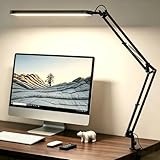
- Comfortable Light for Long Working Hours – Designed for home office and study desks, this LED desk lamp provides bright yet comfortable lighting to reduce eye strain during long hours of reading, working, or studying
- Memory Function, No Repeated Adjustments – The built-in memory function remembers your last brightness and color setting, so you don’t need to reset the light every time you turn it on
- Flexible Swing Arm Fits Any Desk Setup – Featuring an adjustable swing arm and rotatable lamp head, the light easily adapts to different desk sizes and angles, directing light exactly where you need it without glare
- Multiple Lighting Options for Daily Use – With 5 color modes and 11 brightness levels, you can easily switch between focused work, reading, or relaxed lighting. Built-in 45-minute timer adds extra convenience
- Ideal Desk Lamp for Home Office & Study – Perfect for home office desks, study tables, and reading corners. Powered by USB, it works with laptops, power banks, or USB adapters
Place the camera at the right height
Put the webcam at eye level or slightly above it. Raise a laptop on a stable stand if its built-in camera points up from the desk. Keep your face near the center of the frame and leave enough distance that the camera does not exaggerate features or force you to lean toward it. The Logitech environment guidance also emphasizes controlling the room background and light direction.
Use the window without sacrificing screen comfort
If the best call lighting places the window in front of you but creates monitor glare, separate the two jobs: turn the monitor slightly or use a movable shade while keeping the camera facing the window. A translucent curtain can soften direct sun. If you must close the window covering, add a dimmable video-call light near the webcam and lower it until your face is even without a bright hotspot on your forehead or glasses.
Check glasses, shadows and background
Reflections in glasses usually come from a light source that is too low, too close to the camera axis or too bright. Raise or move the light to one side, reduce its intensity, or diffuse it. Check for shadows from shelves, window mullions and overhead fixtures. The background need not be bright; it should be tidy enough that the camera can expose your face without a high-contrast light source behind you.
Independent reader supportYour contribution helps us test, update, and keep practical guides available for everyone.A practical test routine
Use the following routine whenever you move the desk, install a new monitor or change window coverings:
- Start in your normal chair. Sit with your feet supported and your hands where they would be during work.
- Check the display while it is on. Look for window, lamp and ceiling reflections across the entire screen.
- Check the display while it is dark. A black screen reveals reflections that may be hidden by a bright image.
- Read ordinary work. Use the text size, drawings or spreadsheets you actually handle; do not judge comfort from a large test word.
- Look up at the camera preview. Confirm that your face is bright enough without a window or lamp dominating the background.
- Repeat at different times. Test the periods when you normally work, especially the hour when direct sun reaches the room.
- Change one variable at a time. Rotate the monitor, adjust the shade or move the lamp, then test again so you know which change helped.
If glare remains after these changes, move the desk before buying equipment. A new lamp cannot remove a window reflected directly in the screen, and a brighter screen cannot correct a silhouette on a video call.
Do these 3 things before closing this tab:
1Fix the driver behind crashes, sound loss and screen glitches2Clear out junk files and repair common Windows errors3Scan for outdated or missing drivers - takes under a minuteHow lighting affects visual comfort and focus
Glare, reflections and large brightness differences make screen content harder to see. They can lead you to squint, lean forward, tilt your head or repeatedly change posture. OSHA and CCOHS guidance addresses these visual and workstation conditions, but the cited sources do not establish a measured causal effect or a percentage improvement in concentration from any particular desk orientation.
Best Value

- Metal Material: The lamp is integrated with well-made metal lampshade and base, enduring and aesthetic, brightening your living room, bedroom or study room
- On/Off Switch: The switch is located on the base of the lamp for quick and easy use
- Dissipation Desiqn: LEPOWER Desk Lamp with an E26 size screw base. can be installed as desired. Excellent heat dissipation design avoids overheating during long-term use
- Adjustable Angle: The flexible swing arm which makes it easy to find the ideal lighting angle. Simple and lightweight. For office, kids room, or college dorm
- Stylish Design: A nice, low-cost, and functional metal desk lamp to meet your basic lighting needs, for reading, also an elegant decoration
“Better focus” is therefore a practical target: remove distracting reflections, make text readable, keep the neck in a neutral position and provide enough light for paper work. If discomfort continues, check text size, monitor brightness, viewing distance, corrective lenses and breaks as well as the desk angle.
Choose the layout with this decision framework
| Question | If the answer is yes | Next action |
|---|---|---|
| Does the window appear in the monitor? | The display has a bright reflected shape or sky band. | Rotate the monitor or desk to put the window at a right angle; then adjust the shade. |
| Does direct sun enter your eyes? | You squint or the beam crosses your chair during work. | Use adjustable blinds or curtains, or select an orientation with less direct exposure. |
| Do you look upward to read? | Your chin lifts or your neck tightens. | Lower the monitor so its top line is at or below eye level. |
| Is paper too dark? | Documents are difficult to read even though the screen is comfortable. | Add a shaded task lamp aimed at the paper, not the screen. |
| Is your face dark on calls? | The window or a bright lamp is behind you. | Turn toward the light, control the window, or add soft frontal light near the camera. |
| Does glare return later? | The setup works at one time but not another. | Repeat the test at the changing sun angle and use adjustable coverings. |
Common mistakes and fixes
Putting the monitor directly in front of a bright window
The window becomes a large reflected rectangle, especially when the display is dark. Move the screen so the window is beside it, or diffuse and control the window.
Putting the window directly behind the chair
The monitor faces the brightest source and your call camera sees a backlit subject. Turn the desk, close the covering, or place controllable light in front of your face.
Recommended Free Tools
Using a lamp to overpower daylight
A bright lamp can add another reflection and increase contrast. Remove or redirect the source that causes glare first; add only the soft task light needed for paper.
Raising the monitor to avoid a reflection
Height changes can create neck strain without solving the optical problem. Keep the top line at or below eye level and change the desk angle, shade or lamp instead.
Choosing a compass direction as a rule
Sun path, season, glazing and work schedule vary too much for one direction to work in every room. Use the seated reflection and video-preview tests.
Testing only once
Daylight changes. A setup that looks perfect in the morning may fail when the sun moves across the glass. Schedule a second check during the brightest or most direct period.
Quick setup checklist
- Monitor directly in front of your chair and body.
- Monitor face at right angles to the window where possible.
- At least 20 inches (50 cm) from eyes to screen as an initial OSHA reference.
- Top line of the display at or below eye level.
- About 15 degrees below horizontal as a CCOHS starting point for viewing angle, adapted to your comfort.
- No window, lamp or bright ceiling fixture reflected in the screen.
- Adjustable blinds or curtains ready for direct sun.
- Soft, shaded task light aimed at documents when needed.
- Camera at eye level or slightly above.
- Even light on your face, with no bright window behind you.
- Glare checked from the actual seated position at more than one time of day.
This arrangement gives you the most reliable starting point for comfortable screen work and clear calls: side daylight, a centered and low monitor, controlled reflections, and frontal light for the camera.
Quick Recap
Product prices and availability are accurate as of the date/time indicated and are subject to change. Any price and availability information displayed on Amazon at the time of purchase will apply.

