Quick wins for a faster PC:
Clear out junk files and repair common Windows errorsFree Scan →Fix the driver behind crashes, sound loss and screen glitchesFind Drivers →The best way to plant grass seed is to treat it like a small construction project: correct the soil, fix drainage, create seed-to-soil contact, protect the surface from erosion, and water consistently until the roots are established. Scattering seed over hard dirt or thin turf rarely works for long.
For most cool-season lawns in the United States, the best planting window is late summer to early fall. For warm-season grasses such as bermudagrass, zoysia, and centipedegrass, seed in late spring to early summer after the soil has warmed. From there, the process is straightforward: choose the right seed, prepare the soil, grade and loosen the seedbed, spread seed at the correct rate, cover and roll it, then water lightly and often until germination.
As an Amazon Associate I earn from qualifying purchases.
On our job sites, lawn seeding usually succeeds or fails before the seed ever comes off the spreader. Compacted subsoil, buried debris, poor final grading, and runoff from downspouts can ruin a new lawn no matter how good the seed is. The six steps below are the same basic checkpoints we use when stabilizing bare soil after construction or repairing a yard that has been disturbed by equipment.
What’s actually slowing this PC down?
Pick the symptom - the matching free tool is one click away.
Step 1: Choose the Right Season and Grass Type
Start with timing. Grass seed needs the right soil temperature, not just a nice-looking weekend on the calendar. Cool-season grasses establish best when days are mild, nights are cooler, and weed pressure is lower. In much of the U.S., that means late summer through early fall. Common cool-season choices include tall fescue, fine fescue, Kentucky bluegrass, and perennial ryegrass.
#1 Best Overall

- OPERATION: Adjustable arm support on this seed, salt and fertilizer spreader helps provide maximum comfort
- HAND-HELD SPREADER: Perfect hand-held fertilizer, salt and seed spreader for small yards
- CAPACITY: A seed, fertilizer and salt spreader that holds up to 1,500 sq. ft. of Scotts lawn products for year-round lawn care
- USAGE: These hand spreaders for lawns are great for year-round use to seed, fertilize, salt and ice melt
- COVERAGE: These salt, fertilizer and seed spreaders for lawns are engineered for smooth, even coverage
For cool-season lawns, a useful target is a soil temperature of about 50 to 70 degrees Fahrenheit at roughly 1 inch deep. That is the zone where germination is reliable and the new plants have time to root before heat or winter stress arrives. Spring seeding can work, but it is less forgiving because young grass often runs into summer heat before it has a mature root system.
Warm-season grasses are different. Bermudagrass, zoysia, and centipedegrass want warmer soil and active growing conditions. Seed them in late spring to early summer after the soil is consistently warm. Planting warm-season seed too early can leave it sitting in cold soil, where germination is slow and washout risk increases.
Pick a Seed Mix for the Site, Not Just the ZIP Code
Match the seed to the way the yard will actually be used. A sunny front lawn with irrigation, a shaded side yard, and a hard-wearing backyard used by kids and pets may need different mixes. Blends are often better than a single species because they can balance traffic tolerance, shade tolerance, disease resistance, drought performance, and recovery speed.
For many cool-season residential lawns, turf-type tall fescue blends are a practical choice because they handle heat and foot traffic better than older fescues. Kentucky bluegrass can make a dense, attractive lawn, but it usually needs more patience and water. Perennial ryegrass germinates quickly and is often included in mixes for faster cover, but it should not be chosen only because it is fast.
Step 2: Test, Clean, and Prepare the Soil
Good grass starts in the top 6 to 8 inches of soil. If that layer is compacted, full of construction debris, low in organic matter, or chemically out of balance, seed may sprout and still fail later. Before seeding, remove rocks, concrete chunks, roots, old plastic, construction scraps, and dead vegetation. Do not bury debris and assume topsoil will hide it. It will show up later as dry spots, settlement, mower hazards, and weak turf.
A soil test is the cleanest way to know whether the yard needs lime, phosphorus, potassium, or organic matter. Guessing wastes money and can create nutrient runoff problems. Many county extension offices and private labs offer soil testing for a modest fee. For a homeowner, it is one of the better values in the whole project.
If the soil is hard from equipment traffic, loosen it before seeding. On bare dirt, that may mean tilling or incorporating amendments into the upper several inches. On an existing lawn, core aeration is usually better than aggressive tilling because it opens the soil without destroying the entire surface. If the ground is dry, water before aeration so the machine pulls real plugs instead of bouncing across the surface.
Do these 3 things before closing this tab:
1Scan for outdated or missing drivers - takes under a minute2Repair Windows errors before they cause bigger problems3Fix the driver behind crashes, sound loss and screen glitchesPost-Construction Soil Needs Extra Attention
New homes and remodels often leave the lawn area looking clean but structurally poor. Heavy equipment strips topsoil, smears clay, creates compacted haul paths, and leaves low pockets where water collects. Grass seed cannot fix those conditions. Before planting, check topsoil depth, drainage, compaction, and final grade.
Where topsoil is thin, plan for imported topsoil or compost-blended soil. For a new lawn, a 4-inch depth is a bare minimum in many residential situations, and 6 inches or more is better when the budget allows. If you are only topdressing an existing lawn, use a much thinner layer, often around 1/4 to 1/2 inch, so you do not bury the crowns of existing grass.
Rank #2

- NO ASSEMBLY REQUIRED: Scotts spreader comes pre-calibrated and ready-to-use; use it year-round including as an ice melt spreader or salt spreader for snow
- CAPACITY: Broadcast spreader holds up to 15,000 sq. ft. of Scotts lawn products, and can be used as a lawn food, salt, ice melt or grass seed spreader
- OPERATION: These fertilizer spreaders for lawns feature a hopper and agitator designed for smooth product funneling and consistent coverage
- SIDE SHIELD: Scotts exclusive EdgeGuard Technology on these broadcast spreaders for lawns keeps lawn product off landscaping, driveways, and sidewalks
- BROADCAST SPREADER: Use the Scotts Turf Builder EdgeGuard DLX Broadcast Lawn Spreader to apply Scotts lawn care products, like grass fertilizer for lawns
Step 3: Grade and Loosen the Seedbed
Final grading is where a construction mindset pays off. Before seed goes down, the lawn should shed water away from the house, garage, patios, and walks. A common target is a 1% to 2% slope away from buildings, which equals about 1 to 2 feet of fall over 100 feet, or roughly 1/8 to 1/4 inch per foot. The grade does not need to be dramatic, but it does need to be consistent.
Walk the yard after a rain or run a hose in problem areas. Look for ponding, water flowing toward the foundation, ruts from tires, and low seams along sidewalks or driveways. Fix those before seeding. If you seed first and grade later, you pay twice.
Once the rough grade is right, loosen the top 2 to 4 inches of soil for a bare-soil installation. Break up clods larger than about 1 inch, rake out stones, and create a firm but not hard surface. A good seedbed should hold a footprint about 1/4 to 1/2 inch deep. If your boot sinks deeply, it is too loose and may settle unevenly. If your boot barely marks it, it is too compacted for reliable rooting.
Overseeding an Existing Lawn
If you are planting grass seed over an existing lawn, the goal is to get seed down to soil. Mowing short, removing excess clippings, dethatching if the thatch layer is heavy, and core aerating can all help. Seed sitting on leaves or thatch dries out and becomes bird feed. Seed lodged in aeration holes or slit-seeded into the soil has a much better chance.
For thin but living turf, core aeration followed by overseeding is often enough. For severely damaged lawns with more weeds than grass, bare renovation may be the better route. As a practical threshold, if less than half the lawn is desirable turf, we usually look hard at full renovation instead of patching forever.
Step 4: Spread Seed at the Correct Rate
Grass seed is not applied by eye. The right amount depends heavily on the species, the seed mix, and whether you are seeding bare soil or overseeding existing turf. Too little seed leaves thin cover and invites weeds. Too much seed creates crowded seedlings that compete for light, water, and nutrients, often producing a weak stand.
Measure the area before buying seed. For rectangles, multiply length by width. For irregular lawns, break the space into smaller rectangles and triangles, then add them together. Most seeding rates are listed per 1,000 square feet, so a 5,000-square-foot lawn needs five times the listed rate.
| Grass type | Typical seeding rate per 1,000 sq ft | Best use |
|---|---|---|
| Kentucky bluegrass | 2 to 3 lb | Dense cool-season lawns with good care |
| Tall fescue | 6 to 8 lb | Durable cool-season lawns, traffic areas |
| Fine fescue | 3 to 5 lb | Shade, lower-input cool-season areas |
| Perennial ryegrass | 3 to 5 lb | Fast germination, cool-season mixes |
| Hulled bermudagrass | 1 to 2 lb | Sunny warm-season lawns |
| Zoysiagrass | 1 to 2 lb | Warm-season lawns, slower establishment |
| Centipedegrass | 0.25 to 0.5 lb | Lower-maintenance warm-season lawns |
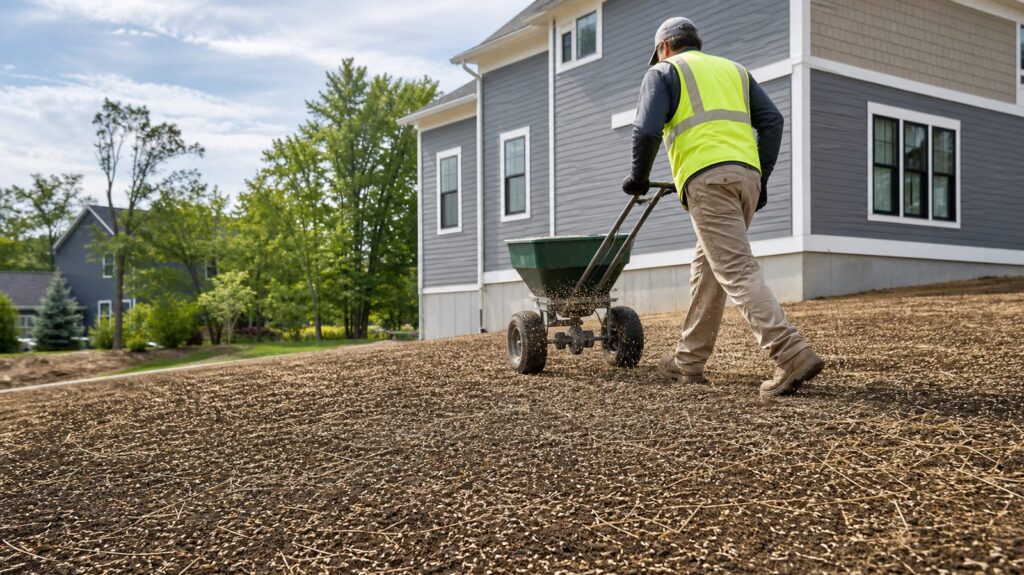
For even coverage, split the total seed into two equal portions. Spread the first half north-south and the second half east-west. This simple crosshatch pattern reduces skips and heavy bands. Use a broadcast spreader for larger lawns and a handheld spreader for small patches. Avoid seeding on a windy day, especially with lighter seed such as fine fescue or coated warm-season seed.
If you are using starter fertilizer, apply it according to the soil test and label. Do not assume more fertilizer is better. Young seedlings can be stressed by excess nitrogen, and some regions have restrictions on phosphorus use unless a soil test shows a need.
Rank #3
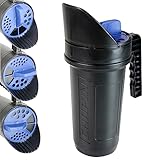
- 64-OUNCE BOTTLE: high-capacity poly bottle with a wide opening and easy screw top, quickly remove the lid to add your preferred seed, salt, fertilizer, etc. and simply screw back into place
- TURF AND SALT: year-round use; for steps, sidewalks and small paths in the winter; grass patches, shaded areas, gardens, and small sections the rest of the year
- 3 OPENINGS IN LID: twist lid to choose small, large and wide openings; each designed to fit different particulates like ice melt, salt, fertilizer, grass seed, sand and most pelletized products
- LARGE HANDLE: easy to grip, scoop and fill; accommodates small and large-sized hands, with or without gloves for use any time of the year
- PORTABLE: keep it on a shelf, in a closet or in the car and pull it out when it’s needed; you can even store it with product inside when not in use
Step 5: Cover, Roll, and Protect the Seed
After broadcasting, the seed needs contact with soil and protection from drying out. On bare soil, lightly rake the surface so seed is worked into the top 1/8 to 1/4 inch. Most turfgrass seed should not be buried deeply. If you cover it under an inch of soil, you will reduce germination.
The Tool Desk
Outbyte PC Repair FREEClear out junk files and repair common Windows errorsFree Scan →Outbyte Driver Updater FREEFix the driver behind crashes, sound loss and screen glitchesFind Drivers →Light rolling helps press seed into the soil. Use an empty or partially filled lawn roller. The goal is firm contact, not compaction. If the roller leaves deep tracks or water squeezes out of the soil, stop and let the area dry.
Mulch is useful, especially on bare soil. Clean straw is common for small areas. Apply it thinly enough that you can still see soil through the straw. Heavy mulch blocks light, traps too much moisture, and can smother seedlings. On slopes, drainage swales, and larger disturbed areas, erosion-control blankets or hydroseeding may be a better choice than loose straw.
Broadcast Seeding vs Hydroseeding
Broadcast seeding is usually the most economical option for small to medium residential lawns with manageable slopes and access to water. Hydroseeding costs more than simple broadcast seeding, but it can be efficient for large bare areas, slopes, and post-construction stabilization. The slurry typically includes seed, mulch, fertilizer, tackifier, and water, which helps hold the seed in place and reduce erosion.
For a flat 1,500-square-foot backyard patch, broadcast seeding is usually fine. For a 12,000-square-foot disturbed lot with slopes draining toward a street or ditch, hydroseeding or erosion blankets may be the smarter construction solution.
PC Slower Than It Used to Be?
A free scan shows the junk files, broken settings and background clutter dragging Windows down - then fixes them in one click.Free scan · Windows 10 & 11Outdated Drivers Are Slowing You Down
One free scan finds every outdated or missing driver and matches the right update for your exact hardware.Free scan · exact hardware matchStep 6: Water Until Germination, Then Train the Roots
Watering new seed is different from watering an established lawn. New seed needs frequent, light watering to keep the top layer of soil slightly damp. In hot, dry, or windy conditions, that may mean light irrigation up to 3 to 4 times per day during establishment. The surface should stay moist, but not muddy. Puddles, runoff, and floating seed are signs you are applying water too fast or too long.
Once the grass germinates and begins rooting, gradually shift to deeper, less frequent watering. That transition matters. If you keep watering lightly forever, roots stay shallow and the lawn struggles during heat. Established cool-season lawns generally need about 1 to 1.5 inches of water per week for active green growth, including rainfall. As a scale reference, 1 inch of water over 1,000 square feet is about 620 gallons.
Germination time varies by species. Perennial ryegrass can show in about 5 to 10 days. Tall fescue often takes 7 to 14 days. Kentucky bluegrass can take 14 to 30 days. Warm-season grasses vary by species, temperature, and moisture. Keep watering based on the slowest seed in the mix, not the first green haze you see.
Wait to mow until the new grass is tall enough to cut without pulling. A common rule is to mow when it reaches about one-third taller than the intended mowing height. For many cool-season lawns, that means first mowing around 3.5 to 4 inches, cutting back to about 3 inches with a sharp blade. Never remove more than one-third of the grass blade at one mowing.
Rank #4
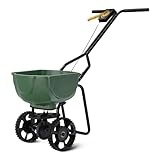
- Lawn fertilizer spreader for evenly distributing grass seed, fertilizer, salt, and ice melt in outdoor areas
- Broadcast spreader can cover up to 5000 square feet in one load
- Multi-purpose garden spreader design with multi-gear operation and precision control
- Durable steel frame and plastic lawn spreader bin stands up to all-season weather use
- Easy assembly with release cable pre-installed
Delay broad weed-control programs until the new turf is established and the product label allows use on seedlings. Many herbicides interfere with germination or injure young grass. If weeds appear during establishment, mowing and patience are often better than spraying too early.
What Grass Seeding Costs in 2026
For a typical professional lawn seeding project in the U.S., 2026 pricing commonly falls in the $400 to $1,800 range. Many average residential jobs land near $950 to $1,200, but the final number depends less on the seed bag and more on site preparation, access, grading, soil quality, and watering logistics.
Professional seeding often runs about $0.07 to $0.23 per square foot, with many basic jobs clustering around $0.09 to $0.15 per square foot. A simple overseeding job on a fairly healthy lawn costs much less than renovating compacted post-construction soil, importing topsoil, correcting grade, and installing erosion protection.
| Project type | Typical 2026 cost range | What usually drives the price |
|---|---|---|
| DIY seed materials | Seed often $2 to $6 per lb | Seed species, blend quality, lawn size |
| Basic professional seeding | About $0.07 to $0.23 per sq ft | Labor, seed rate, access, prep level |
| Typical residential seeding project | About $400 to $1,800 | Size, slope, aeration, soil amendments |
| Quarter-acre lawn | Often around $1,200 | Prep, seed type, irrigation, mulch |
| Major renovation or post-construction lawn | Often $1,500 and up | Topsoil, grading, debris removal, erosion control |
Add-on services can exceed the seed cost. Core aeration, dethatching, starter fertilizer, lime, compost, imported topsoil, straw, erosion blankets, weed control, old turf removal, and temporary irrigation setup should be priced as separate line items. That makes estimates easier to compare and prevents a cheap seeding quote from hiding missing work.
Free tools Windows power users keep installed
One-click scans. No signup required.
When to DIY and When to Hire a Pro
DIY seeding makes sense when the area is small, the grade already drains properly, the soil is not heavily compacted, and you can water consistently. A homeowner can usually handle a 200- to 1,000-square-foot patch with a rake, spreader, hose timer, seed, starter fertilizer if needed, and straw. The material cost may be modest, especially if no topsoil or equipment rental is required.
Hire a pro when the project involves grading, drainage, large bare areas, slopes, compacted construction soil, poor access, or erosion risk. Also bring in help if runoff could leave your property, reach a storm drain, or affect a neighboring lot. In those cases, the job is no longer just lawn care. It is site stabilization.
For post-construction work, we look at downspout discharge, swales, sidewalk elevations, driveway edges, patio runoff, foundation clearance, and where water will go during a hard storm. Grass is part of the solution, but it is not a substitute for correct grading. If the yard sends water toward the house, seed will not solve the real problem.
Independent reader supportYour contribution helps us test, update, and keep practical guides available for everyone.Safety, Drainage, and Permit Notes
Most simple residential overseeding does not require a permit. Regrading can be different. If you are moving significant soil, changing drainage patterns, disturbing a large area, working near a wetland or drainage channel, or tying into stormwater infrastructure, check local requirements before work starts.
Federal stormwater rules can apply to construction activity disturbing 1 acre or more, and smaller areas may be regulated when they are part of a larger common plan of development. States and municipalities can also have their own thresholds and erosion-control requirements. Some local programs address disturbances under 1 acre, especially where sediment could leave the site.
Best Value

- Chapin Garden Spreader: Designed for all your residential lawn and garden seed, pest control and fertilizer spreader needs, this 25 lb. spreader is suitable for small areas and hard to reach places
- How to Use and Convenience: Easily adjust the gate for different materials and control the flow rate for precise spreading. The rear baffle keeps product off your clothes and legs for a cleaner, more comfortable experience
- Comfort and Control: The padded shoulder strap makes carrying easy, even in tight spaces, while simple gate and flow adjustments give you precise control over spreading
- Durable Components: This all-round spreader is waterproof and built to last, with heavy-duty materials and enclosed gears. The zippered bag keeps your seed or fertilizer protected from rain and wind while you work
- Chapin Warranty: This spreader is backed by Chapin's 2-year limited warranty and supported by a dedicated US-based customer service and technical help center
Use basic jobsite safety. Call 811 before digging, tilling deeply, driving stakes, or doing irrigation work. Wear eye protection when spreading lime or fertilizer, follow product labels, and keep children and pets off treated areas until the label says it is safe. On slopes, do not operate rental equipment where footing or rollover risk is questionable.
Common Mistakes That Ruin New Grass
The biggest mistake is planting at the wrong time. Cool-season seed planted into summer heat often germinates unevenly and then burns out. Warm-season seed planted before the soil warms may sit too long and wash away. Timing is not cosmetic; it is part of the specification.
The second mistake is seeding over compacted soil. This is common after construction. Seed may germinate during the first week of careful watering, but roots fail to penetrate the hard layer below. A month later the lawn looks thin, drought-stressed, and patchy.
Recommended Free Tools
Other common problems include skipping the soil test, burying seed too deep, applying straw too heavily, using the wrong seed rate, watering hard enough to create runoff, mowing too soon, and spraying weed control before seedlings are mature. Each one is avoidable if you slow down and work through the steps in order.
The Bottom Line
A strong lawn comes from preparation and follow-through. Choose seed that matches your climate and use, plant in the right season, correct the soil, establish a smooth draining grade, spread seed at the proper rate, create firm seed-to-soil contact, and water lightly until germination. After that, shift to deeper watering and mow only when the grass is ready.
If the lawn is part of a larger construction or drainage project, solve the site conditions first. Seed is the finish layer. The work underneath determines whether that finish becomes a durable lawn or another repair project.
Frequently Asked Questions
What is the best month to plant grass seed?
For cool-season grasses, late summer to early fall is usually best in much of the U.S. For warm-season grasses such as bermudagrass, zoysia, and centipedegrass, seed in late spring to early summer after soil temperatures are warm.
Crashes, No Sound, or Screen Glitches?
Random freezes, missing sound and display glitches usually trace back to one bad driver. Find and replace yours safely.Free scan · under a minutePC Slower Than It Used to Be?
A free scan shows the junk files, broken settings and background clutter dragging Windows down - then fixes them in one click.Free scan · Windows 10 & 11How much grass seed do I need per 1,000 square feet?
It depends on the species. Common rates include tall fescue at 6 to 8 lb per 1,000 sq ft, Kentucky bluegrass at 2 to 3 lb, perennial ryegrass at 3 to 5 lb, hulled bermudagrass at 1 to 2 lb, and centipedegrass at 0.25 to 0.5 lb.
Should I put topsoil over grass seed?
Do not bury grass seed under a thick layer of topsoil. On bare soil, lightly rake seed into the top 1/8 to 1/4 inch and roll lightly. If the yard lacks good soil, add and grade topsoil before seeding.
How often should I water new grass seed?
Keep the seed zone lightly moist until germination. In dry weather, that may require light watering 3 to 4 times per day. After germination, gradually water deeper and less often so roots grow downward.
Can I plant grass seed over an existing lawn?
Yes, but the seed must reach soil. Mow short, remove debris, dethatch if needed, and core aerate before overseeding. Seed left sitting on thatch or grass blades usually dries out or washes away.
Recommended Free Tools
Do I need a permit to seed or regrade my lawn?
Simple overseeding usually does not require a permit. Regrading, disturbing large areas, changing drainage, or work tied to construction stormwater rules may require local approval or erosion-control measures.
Quick Recap
Product prices and availability are accurate as of the date/time indicated and are subject to change. Any price and availability information displayed on Amazon at the time of purchase will apply.

