Yes, you can grow an oak tree from an acorn. The reliable method is to collect a fresh, mature acorn from a locally adapted tree, plant it promptly, keep it moist but not waterlogged, and protect it from rodents and other animals. Plant the acorn on its side about ½ to 1 inch deep, or roughly one to one-and-a-half times its diameter.
The main complication is that oak species do not all germinate the same way. White-oak-group acorns usually germinate soon after falling and are best planted fresh in fall. Red-oak-group acorns commonly need a winter period of moist chilling, either naturally outdoors or through 30–90 days of moist cold stratification at 32–41°F (0–5°C). Bur oak is a notable exception with regional requirements that can range from about 30 to 120 days.
As an Amazon Associate I earn from qualifying purchases.
Quickest general procedure: Choose the permanent site first, collect several sound acorns in early fall, sort them by appearance and—when appropriate—a water-float test, plant them on their sides, and cover them with a wire cage or screen. If you are planting a red-oak-group acorn in spring, refrigerate it in a barely moist medium before planting. For container growing, use one acorn per deep pot at least 12 inches tall so the developing taproot does not become sharply kinked or circling.
First, identify the oak—or choose the simplest method
You do not need perfect botanical identification to plant an acorn, but knowing the oak species or at least its oak group makes the timing much more predictable. Look at the parent tree’s leaves, bark, acorn shape, cup, and location, or ask a local extension office, native-plant group, or arborist for help.
#1 Best Overall

- EASIER SEED STARTING: Our Burpee SuperSeed tray with 36 flexible pop-out cells is designed to simplify indoor seed starting for all your favorite vegetables, flowers and herbs. Just add seed starting mix, seeds, water and light to get growing! Rows are labeled alphanumerically for seedling identification with included Plant-o-Gram diagram. Tray dimensions: 11.5" x 10-3/8" x 2-1/4"
- SMARTER WATERING SYSTEM: Molded corner slots in each cell improve drainage and soil aeration to set your seeds up for germination success. Deep channels in the watering tray draw excess away from the cells, while the raised perimeter edge keeps water contained in the tray - no spills! Seed tray side handles make it easy to lift and pour off excess water or check seedlings daily.
- SIMPLER TRANSPLANTING: Soft food-grade silicone cells cradle seedlings and gently flex to pop out when it’s time to transplant into your outdoor garden! This system is specially designed to reduce stress on your seedlings, so you don't damage their roots. After transplanting, trays are easy to clean and reuse or simply store for next growing season. Top shelf dishwasher safe.
- SEED STARTER TIP: Many favorite vegetables, including peppers and tomatoes, must be started indoors before warmer weather arrives. Start pepper seeds 8-10 weeks before your area’s average last frost date, and tomato seeds 6-8 weeks before last frost. Check your Burpee seed packets for instructions on when and how to plant any of your herb, flower and vegetable seeds.
- 100% GUARANTEED: Burpee is committed to the success of all gardeners. We treat each order with care to ensure healthy seeds, plants, soil mixes and gardening supplies are packaged and sent in excellent condition. If you are unsatisfied with your purchase, we aim to make it right!
| Oak type | Examples | Usual acorn treatment |
|---|---|---|
| White-oak group | White oak, swamp white oak, chestnut oak, chinkapin oak, and Oregon white oak | Plant fresh in fall. Many begin germinating soon after seedfall and usually need little or no artificial stratification. |
| Live oak | Southern live oak | Plant soon after seedfall while the acorn remains moist and conditions are warm. The common name live oak does not automatically indicate red-oak-group behavior. |
| Red-oak group | Northern red oak, pin oak, black oak, willow oak, water oak, and related species | Fall sowing usually supplies natural chilling. For spring planting, provide about 30–90 days of moist cold stratification. |
| Bur oak | Bur oak populations across the central and northern United States and Canada | Variable. About 30–60 days is common in some extension recommendations, while northern populations may require approximately 60–120 days. |
| Unknown | An acorn from an unidentified or mixed planting | If collected in fall, fresh outdoor sowing is generally safer than storing it for months and guessing at the treatment. |
White-oak-group acorns commonly germinate shortly after falling, while many red-oak-group acorns overwinter and germinate the following spring. The USDA Forest Service white-oak profile, northern red-oak profile, and bur-oak review explain these differences in more detail.
If the acorn has already produced a healthy root, plant it immediately rather than putting it through additional storage. When in doubt, do not let a fresh acorn dry while you try to identify it. Plant several acorns in fall, label them, and accept that the first year may reveal which ones were viable.
An acorn is a sexually produced seed, not a clone of the parent tree. The resulting oak may differ in growth, form, and tolerance from the tree that produced it. Collecting locally is still useful because the parent tree has demonstrated some ability to grow in a similar climate and soil; it is not a guarantee of identical performance.
What’s actually slowing this PC down?
Pick the symptom - the matching free tool is one click away.
Choose the permanent planting site before starting
An oak can be small enough to hold in your hand and still be destined to become a very large tree. Choose the final site before germinating the acorn, especially if you plan to sow it directly.
- Sun: Most landscape oaks perform best with at least 6–8 hours of full sun each day. Light requirements vary by species and habitat, so a woodland oak and a landscape oak should not be treated identically.
- Room for the mature tree: Check the expected mature height, crown spread, trunk size, and root zone. An acorn from a large oak does not produce a naturally small tree.
- Structures and infrastructure: Keep the future canopy and root system away from buildings, pavement, overhead wires, septic systems, and underground utilities. Before digging, use the utility-locating service appropriate to your area.
- Drainage: Most oaks need soil that drains reasonably well. Avoid permanently saturated or compacted ground unless you have selected a species adapted to wet conditions, such as a swamp-associated oak.
- Competition: Plan to remove perennial grass and weeds from a planting circle at least 2–4 feet across. Turf can outcompete a small oak for water and nutrients and can conceal rodents.
- Seed source: For restoration or long-term planting, collect from a healthy tree growing in a climate and soil similar to the planting site. Obtain permission before collecting on private, public, or protected land.
Utah State University Extension’s oak guidance and University of California Agriculture and Natural Resources guidance cover mature size, light, soil, irrigation, and long-term site planning.
Collect fresh, mature acorns
Acorns usually mature and begin falling in early fall, although the date varies with species, climate, elevation, and the individual tree. Collect them when they are fully colored and firm and are falling naturally, or shortly before they drop if you can remove them without damaging the tree.
Acorns gathered directly from the tree or soon after falling are generally preferable to acorns that have lain exposed on hot, dry pavement or soil. Ground-collected acorns can still grow, but heat, drying, mold, and insects reduce the odds of success.
Choose more than one
Viability varies even among acorns from the same branch. Collect several—often dozens if you want a reliable number of seedlings—rather than depending on a single acorn.
Choose acorns that are:
- firm and heavy for their size;
- fully colored and mature;
- free from cracks, holes, mold, and soft spots; and
- not obviously shriveled, bleached, or dried out.
Do not use acorns from a diseased, heavily stressed, or chemically treated tree when the goal is restoration or a long-lived landscape planting. Label each batch with the collection date, location, parent tree, and suspected species. Mixing batches can make later diagnosis and selection much harder.
Should you remove the acorn cap?
For many oaks, a loose cap and bits of leaf litter can be removed by hand. Do not force a cap that is tightly attached: tearing the shell can injure the seed.
Bur oak and overcup oak commonly retain their caps. The USDA NRCS Direct Seeding Handbook advises processing these acorns with the caps on and not relying on the ordinary float test for them. A cap that remains attached is not, by itself, evidence that the acorn is dead.
Do these 3 things before closing this tab:
1Repair Windows errors before they cause bigger problems2Fix the driver behind crashes, sound loss and screen glitches3Clear out junk files and repair common Windows errorsTest acorns without treating the result as a guarantee
Visual inspection
Discard acorns with obvious holes, deep cracks, mold covering much of the shell, soft areas, or a foul smell. A small exit hole often indicates insect damage, such as an acorn weevil, although no home test detects every damaged seed.
The water-float test
A float test is a useful screening tool, not a definitive viability test.
Rank #2

- Upgraded with Adjustable Ventilation - Gardzen seed starter tray has been newly upgraded with two air vents added to the top, allowing you to easily adjust the ventilation for optimal seed growth. Say goodbye to stagnant air and hello to thriving plants!
- High Quality and Durable - These seedling starter trays are made from premium plastic material, ensuring long-lasting use for all your seed starting needs. Comes with thoughtfully attached stickers, you can achieve a tighter fit of dome and base for maximum efficiency.
- 40-Cell Capacity - Each seed starter kit in our set comes with a generous 40-cell capacity, providing ample space for all your seeds to sprout and thrive. Whether you're a beginner or experienced gardener, this plant starter kit is perfect for starting your own garden paradise.
- Easy to Manage Kits - The 40-cell insert tray provides a simple, straightforward way to start seeds and grow plants from cuttings. The drain hole at the bottom of the seed tray prevents over watering. The clear dome allows you to clearly see the growth status.
- Versatile and User-friendly - This seed germination kit is not only suitable for starting seeds but also perfect for propagating cuttings and nurturing young plants.
- Place the acorns in water for approximately 4–24 hours.
- Remove any acorns that are visibly cracked, moldy, or soft.
- Treat acorns that sink as more likely to be sound.
- Do not automatically discard every floater. Bur oak and overcup oak acorns may naturally float because of their cap or structure.
For most white-oak-group acorns, the NRCS handbook recommends discarding most floaters. For bur and overcup oak, sort by hand instead. The Iowa State University acorn-germination guide also presents floating as a probability-based test rather than a guarantee.
Do not leave acorns soaking for days. The goal is to screen them, not to store them in water. After washing or soaking, surface-dry them briefly if necessary, but do not air-dry them until they become light, hard, and dry internally.
Recommended Free Tools
Do not dry acorns for ordinary home storage
Many oak acorns are moisture-sensitive seeds. Substantial drying can destroy viability, particularly in white-oak-group acorns. In one Forest Service study, white-oak germination fell from 70% at 48% moisture content to 3% at 20%. Northern red oak tolerated drying somewhat better in that experiment, but its germination also declined as moisture content fell. See the Forest Service moisture-content research.
There is an important difference between allowing the outside of a washed acorn to stop dripping and desiccating the seed. For a home grower, the safe rule is to keep acorns naturally moist and plant them promptly. Species-specific forestry storage protocols sometimes use controlled drying or specialized conditions, but those methods should not be generalized to an unidentified acorn. Published guidance is not uniform; an Oregon white-oak protocol, for example, reports storage results under conditions that are not a universal home-gardening recipe. Immediate planting remains the least risky option.
Decide between fall planting and cold stratification
Cold stratification means keeping a viable seed moist and cold for a defined period so physiological dormancy can end. It is not simply putting a dry acorn in the refrigerator.
| Situation | Best general choice |
|---|---|
| Fresh white-oak-group acorn collected in fall | Plant outdoors promptly. Little or no artificial chilling is usually needed. |
| Fresh southern live oak acorn | Plant soon after seedfall while warm and moist. |
| Fresh Oregon white oak acorn | Plant in fall. The taproot may begin within weeks while the shoot does not appear until spring. |
| Northern red, pin, black, willow, water, or other red-oak-group acorn | Plant outdoors in fall, or provide 30–90 days of moist cold stratification for spring planting. |
| Bur oak | Use a species- and region-specific treatment. About 30–60 days is common in some guidance; northern populations may need 60–120 days. |
| Unknown species | Fresh fall sowing is generally safer than prolonged storage and a guessed refrigerator schedule. |
How to cold-stratify acorns in a refrigerator
- Confirm that the species benefits from cold treatment. Do not assume every oak needs it.
- Place sound acorns in a clean, barely moist medium such as peat, vermiculite, or sand. It should feel damp but not drip when squeezed.
- Put the acorns and medium in a labeled bag or container that retains moisture while allowing some gas exchange.
- Refrigerate at approximately 32–41°F (0–5°C). Do not freeze the acorns unless a species-specific protocol explicitly calls for it.
- Inspect the container weekly for mold, rot, drying, and root emergence.
- If an acorn remains firm but has surface mold, rinse it gently, remove contaminated medium, and replace the medium. Discard soft or foul-smelling acorns.
- Plant as soon as a healthy radicle—the first root—begins to emerge. Do not allow it to become long, tangled, dry, or brittle.
If the root has started, handle the acorn by the shell and avoid touching the root tip. A radicle that dries or breaks may fail even when the rest of the acorn looks healthy.
How deep should an acorn be planted?
Plant an ungerminated acorn on its side, generally ½–1 inch deep. For a particularly large acorn, covering it to about one to one-and-a-half times its diameter is a useful adjustment. The objective is to keep it moist and hidden while leaving the emerging shoot a reasonable distance to the surface.
If a radicle has emerged, point the root downward and keep it as straight as possible. Do not bend the root into a J shape or force a long root into a shallow hole.
Do not bury acorns several inches deep solely to defeat squirrels. Deep burial can delay emergence and produce weak or unsuccessful seedlings. A screen, cage, or hardware-cloth barrier is usually a better solution. Some direct-seeding research on northern red oak has found poor results with deeper treatments, reinforcing the value of physical protection instead of excessive planting depth.
Method 1: Plant the acorn directly outdoors
Direct sowing is usually the best option when the permanent site is ready, the acorn is fresh, and you can protect the planting from wildlife. It avoids transplant shock and gives the first root uninterrupted access to the soil.
Direct-sowing steps
- Prepare the site. Remove turf and perennial weeds from a circle at least 2–4 feet across. Loosen compacted soil without creating a deep pocket that can hold water.
- Make a shallow planting hole. Set the acorn on its side, or position a sprouted acorn with its radicle pointing down.
- Cover it with soil. Use about ½–1 inch of soil, adjusted for acorn size. Do not compact the soil heavily over the seed.
- Water thoroughly. Moisten the entire planting zone, then keep it consistently moist during germination without flooding it.
- Mark the location. A label or stake helps prevent mowing, digging, and accidental trampling.
- Install protection immediately. Use hardware cloth or a mesh cage that prevents squirrels, mice, and chipmunks from digging up or carrying away the acorn.
- Maintain the area. Keep grass and weeds down, monitor moisture, and add a larger cage or tree shelter if deer, rabbits, livestock, or lawn equipment are a risk.
Direct seeding is inexpensive and produces natural root development, but it is less predictable than nursery production. Rodent predation alone can make the number of surviving seedlings highly variable. The Forest Service review of direct oak seeding discusses this uncertainty in restoration settings.
Method 2: Grow the oak in a deep container
A container is useful when the final site needs preparation, wildlife pressure is high, or you want to monitor germination. It also lets you delay planting until a suitable dormant-season window. The trade-off is root management: a short pot can damage the rapidly growing taproot before the shoot looks large enough to worry about.
Container requirements
- Use one acorn per container.
- Choose a container at least 12 inches tall. A narrow, deep container is generally more suitable than a shallow, wide flowerpot.
- Use a deep tree pot, root-training pot, air-pruning container, or bottomless tube where practical. Standard short nursery pots are more likely to create circling or kinked roots.
- A container about 3–4 inches wide can be sufficient initially if it is genuinely deep, but check it frequently.
- Ensure the container has generous drainage holes and never stands in a tray of water.
Container-planting steps
- Fill the container with a well-draining potting mix. A suitable potting mix blended with some native soil may be used, but avoid heavy, compacted soil in a small pot.
- Place the acorn on its side and cover it with about ½–1 inch of mix.
- If the acorn has sprouted, point the radicle down and keep it straight without stretching or folding it.
- Water until the entire mix is moist and excess water drains from the bottom.
- Place the pot outdoors in a protected location or provide strong light indoors. An indoor-grown seedling must be acclimated gradually to outdoor sun and wind before permanent planting.
- Inspect the drainage holes frequently. If the taproot is approaching the bottom or beginning to circle, move the seedling to a deeper container or transplant it during the next suitable dormant-season window.
The USDA Forest Service guide to planting native oak explains why deep containers and careful taproot handling matter. A taproot is normal early oak growth, but the practical goal is not to preserve one perfect root shape at any cost; it is to prevent severe drying, kinking, circling, and breakage.
Rank #3

- 【Keep an eye on your plant】: The only design in the market- High quality clear plastic trays of this seed grow kit make it easier to observe your plants without interrupting the process.
- 【Total control】: Adjustable vents of this seed trays allow you to regulate the temperature and humidity of your seedling environment, so you have total control over the germination process.
- 【Perfect for the heat mat】: With its excellent resistance to high and low temperature, these seedling trays are strong enough to be used on a heat mat and no-worry melting.
- 【Perfect size for large seed】: 1.5 inch square for each cell makes these seed trays are suitable for large seeds, such as potatoes,tomates,perpers, eggplants and so on. 6 trays equivalent to a 1020 flat.
- 【Package include】5 x Seed Tray, 5 x Watertight Base Tray, 5 x Humidity Dome, 10 x Plant Labels (A must have for seedling).
Potting mix, soil, and fertilizer
The mix must drain freely while holding enough moisture for germination. Ordinary quality potting mix is usually adequate for a home seedling if it does not remain soggy. Do not use dense clay soil by itself in a container.
Free tools Windows power users keep installed
One-click scans. No signup required.
Some forestry guidance notes that commercial potting mixes may contain few of the mycorrhizal fungi commonly associated with native oak roots. A small amount of soil from beneath a healthy local oak stand may help in some situations, but this is optional and region-specific, not a requirement for germination. Avoid moving soil if local plant-health rules or disease concerns make it inappropriate.
Do not put fresh manure or large amounts of fertilizer in the planting hole or container. An acorn supplies the seedling’s initial reserves, and fertilizer is generally unnecessary at planting. If growth later appears poor, use a soil test and local extension recommendations rather than applying fertilizer by guesswork.
Care during germination and the first growing season
Water consistently, not constantly
Keep the medium consistently moist while the acorn is germinating. Saturate the entire container when you water, then allow excess water to drain. Constantly saturated mix excludes oxygen and encourages rot.
Check a small container daily during hot, dry weather. Field-planted seedlings need deeper, less superficial watering, with frequency adjusted for rainfall, soil texture, temperature, and root-zone depth. Sandy soil may require more frequent watering; clay or compacted soil may need less frequent watering because it drains slowly.
Windows Errors? Fix Them Before They Spread
Repair common Windows errors and clear accumulated junk for a smoother, more stable PC - no reinstall needed.Free scan · no reinstallCrashes, No Sound, or Screen Glitches?
Random freezes, missing sound and display glitches usually trace back to one bad driver. Find and replace yours safely.Free scan · under a minuteFor seedbeds, Iowa State recommends watering about twice weekly during the first two months, followed by a heavy weekly soaking when rainfall is low or irregular. That is a starting point rather than a universal calendar: check the soil below the surface and adapt to local conditions. The Iowa State seedling-watering guidance and Penn State’s newly planted tree guidance provide useful context.
Expect root growth before shoot growth
An acorn may produce a radicle while the shoot remains underground. White-oak-group acorns planted in fall can root before winter and send up a shoot in spring. Red-oak-group seedlings commonly show shoot growth after winter chilling. Do not dig up a sound acorn every few days to see what is happening; disturbing the root is more harmful than waiting.
The acorn shell or cap may remain attached as the shoot emerges. Do not pull it off. Let it loosen naturally.
Protect the seedling from more than squirrels
Acorn predators include squirrels, mice, chipmunks, birds, and insects such as weevils. After emergence, rabbits, deer, cattle, and other browsers can remove the terminal shoot or repeatedly set the seedling back. Grass, weeds, drought, waterlogged soil, mowing, and string trimmers are equally capable of killing a young oak.
The Tool Desk
Outbyte PC Repair FREERepair Windows errors before they cause bigger problemsFix Now →Outbyte Driver Updater FREEFix the driver behind crashes, sound loss and screen glitchesFind Drivers →Use the barrier appropriate to the threat:
- fine mesh or hardware cloth to stop rodents from digging;
- a small cage for rabbits and close-range browsing;
- a larger cage or properly installed tree shelter in deer or livestock country; and
- a visible marker or protective ring where lawn equipment is used.
A plastic tree tube is not a universal solution. It may reduce some browsing, but it needs correct staking, ventilation, inspection, and eventual maintenance or removal. A shelter reduces selected risks; it does not guarantee survival. The Forest Service research on deer protection describes the value and limitations of barriers.
When should a potted oak be transplanted?
The best general windows are:
- fall, after the soil has been moistened and while the seedling is becoming dormant;
- winter in mild climates; or
- early spring, before vigorous top growth begins.
A seedling may be planted after its first growing season if its root system is sound and undisturbed. Some forestry programs grow seedlings for two years before field planting, which can produce a more substantial plant, but leaving an oak too long in a shallow container can create a root defect that outweighs the benefit of extra top growth.
Do not wait until the taproot has become densely bound around the bottom. A severely circling or sharply kinked root should not simply be stuffed into a planting hole. A different, deeper container strategy is preferable; corrective root pruning may be necessary in serious cases and is best handled with species- and nursery-specific advice.
Independent reader supportYour contribution helps us test, update, and keep practical guides available for everyone.How to plant the seedling in its permanent site
- Clear the planting area. Remove grass and perennial weeds from at least a 2–4-foot-wide circle.
- Dig the hole. Make it no deeper than the root system or root ball and approximately 2–3 times wider than the root ball. A shallow, wide hole is safer than a deep hole that settles the tree too low.
- Inspect the roots. Spread them naturally. Do not fold a long taproot upward or bend it into a J shape.
- Set the correct height. Place the root collar and root flare at ground level or just slightly above the surrounding soil. Never bury the stem to compensate for a deep hole.
- Backfill with excavated soil. Firm it enough to remove major air pockets, but do not pack it into a hard mass.
- Water deeply. Soak the entire root zone immediately after planting.
- Mulch correctly. Apply approximately 2–4 inches of organic mulch over the root zone, extending outward rather than piling it against the stem. Keep several inches of bare space around the trunk and root flare. See Penn State’s tree-mulching guidance.
- Install protection. Use a cage or shelter where rodents, rabbits, deer, livestock, or mowing equipment could damage the seedling.
Continue checking soil moisture through the first summer. The goal is a moist root zone, not daily shallow sprinkling or permanently wet soil.
Quick wins for a faster PC:
Clear out junk files and repair common Windows errorsFree Scan →Fix the driver behind crashes, sound loss and screen glitchesFind Drivers →Rank #4
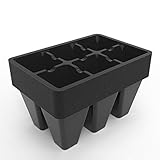
- High Quality and Durable - Our Gardzen Seed Start Trays are made from premium plastic material, ensuring long-lasting use for all your seed starting needs. These trays are designed to withstand daily wear and tear, making them perfect for avid gardeners.
- Healthy Growth - With the dimensions of 5.4*3.7 inches of the seedling tray, each cell measures 1.5 inches square by 2.2 inches deep, providing ample space for the healthy development of your plants' root systems. This allows your seedlings to grow strong and vibrant, giving you a head start in your gardening journey.
- Intimate Design - Drain holes at the bottom of the seed tray prevent over watering and promote suitable soil moisture for seed germination and seedling growth. There are guide channels at the top to ensure water reaches every cell.
- Reusable and Eco-friendly - Simply clean the seedling starter trays after each use, and they will be ready for your next batch of seeds. By opting for these seed starting trays, you are not only saving money but also reduce waste and contribute to a greener environment.
- Versatile and Practical - Our seed trays are suitable for various types of plants, making them a versatile choice for any gardener. Whether you're starting flowers, vegetables, or herbs, these trays provide the ideal growing environment.
Common problems and what to do
| Problem | Likely cause | Response |
|---|---|---|
| The acorn floats | An empty or insect-damaged seed is possible, but some species naturally float. | Inspect it. Do not reject a bur or overcup acorn solely because it floats. Sow several sound-looking acorns rather than relying on one. |
| The acorn becomes soft or smells bad | Rot, failed viability, or stagnant wet storage | Discard it. A soft acorn is unlikely to recover. |
| Mold appears in the refrigerator bag | Excess water, poor ventilation, or contaminated medium | Remove affected acorns, rinse firm ones, replace the medium, and improve ventilation. Discard soft acorns. |
| A root emerges but no shoot appears | Normal timing, especially in some white oaks and red-oak-group species | Keep the acorn moist and wait. Do not repeatedly dig it up. |
| The radicle dries or breaks | Delayed planting or rough handling | Plant immediately if the acorn remains firm, avoid further handling, and plant backup acorns because survival is uncertain. |
| The seedling wilts outdoors | Transplant shock, drought, root damage, or sudden exposure to sun and wind | Water the root zone deeply, provide temporary protection from harsh exposure, and inspect for damaged or circling roots. |
| The seedling disappears | Squirrel, mouse, chipmunk, deer, rabbit, livestock, or mowing | Install a physical barrier and mark the planting. Reduce dense grass that provides cover for rodents. |
| Leaves yellow in wet soil | Overwatering, poor drainage, or compacted soil | Reduce irrigation and improve drainage where possible. Do not keep the container standing in water. |
| The root circles the pot | A container that is too shallow or delayed transplanting | Move the seedling to a deeper container or plant during the next suitable dormant-season window before the defect becomes severe. |
| The acorn cap remains attached | Normal attachment, especially in some oak species | Leave it alone. Do not pull or cut it off if it is still tight. |
How long does it take to grow an oak from an acorn?
Under favorable conditions, a radicle may emerge within weeks. A fall-planted white-oak-group acorn may root before winter and produce a shoot the following spring. A red-oak-group acorn commonly waits through winter before its shoot develops.
Growing a transplantable seedling can take one or two growing seasons, depending on the species, container, climate, and planting goal. Growing a mature shade tree is a much longer project. Oaks often grow slowly to moderately, and the age at which they begin producing acorns varies by species, genetics, climate, and site; for some trees, acorn production is measured in decades rather than a few years.
Direct sowing, container growing, or buying a seedling?
| Option | Advantages | Risks | Best use |
|---|---|---|---|
| Direct sowing | Low cost, natural root development, no transplant shock | Rodents, drought, weeds, deer, mowing, and uncertain survival | A protected permanent site that is ready in fall |
| Deep container | Easier monitoring and protection; final site can be prepared first | Taproot circling, drying, and transplant shock | A home garden or wildlife-exposed site |
| Refrigerator stratification | Allows spring planting and is useful for many red-oak-group acorns | Mold, drying, premature sprouting, or applying the wrong treatment | Acorns that cannot be planted outdoors in fall |
| Nursery seedling | More predictable species, size, and planting outcome | Higher cost and possible container-root defects | Projects where establishment certainty matters more than growing from seed |
If the site is ready and wildlife can be excluded, direct sowing is usually the simplest and most root-friendly approach. If the site is not ready, use a deep container rather than a shallow household flowerpot. If the project has a strict restoration schedule, uncertain seed supply, or a high value on predictable survival, a properly grown nursery seedling may be the better choice.
Important mistakes to avoid
- Do not assume every acorn needs cold stratification. Many white-oak-group acorns should be planted fresh instead.
- Do not assume every floater is dead. Bur and overcup acorns are important exceptions.
- Do not dry acorns until they are hard and light. Moisture loss can sharply reduce germination.
- Do not bury acorns several inches deep to defeat squirrels. Use a cage or screen.
- Do not use any convenient shallow pot. The first root grows quickly and can become permanently defective.
- Do not stop caring for the seedling after it sprouts. Establishment, especially through the first summer, is often harder than germination.
- Do not fertilize automatically. Start with suitable soil and use soil-test-based recommendations if nutrition becomes a concern.
- Do not plant a future large oak beside a structure or utility. Plan for the mature tree, not the acorn-sized seedling.
- Do not treat a tree shelter as maintenance-free. Inspect cages and tubes for browsing, damage, constriction, and weeds.
If pruning becomes necessary, oak-wilt risk and recommended pruning periods vary by region. Readers in areas where oak wilt occurs should follow local extension or qualified arborist guidance, such as the regional advice summarized by Penn State Extension.
The Tool Desk
Outbyte PC Repair FREERepair Windows errors before they cause bigger problemsFix Now →Outbyte Driver Updater FREEFix the driver behind crashes, sound loss and screen glitchesFind Drivers →Frequently Asked Questions
Can I plant an acorn from a sidewalk?
Yes, if it is firm, mature, and collected soon after falling. Reject acorns with cracks, holes, mold, soft spots, or signs of severe drying. Acorns that have spent time on hot pavement are less reliable, so plant several and protect them from animals.
Should I soak an acorn before planting it?
A 4–24-hour water soak can be used as a quick screening test, with sinkers generally more likely to be sound. It is not a guarantee, and bur and overcup acorns should not be rejected solely because they float. Do not leave acorns soaking for days.
Can I plant an acorn that has already sprouted?
Yes. Plant it immediately, with the radicle pointing down and kept straight. Do not let the root dry, bend it into a J shape, or try to untangle a long root aggressively.
Can I grow an oak indoors?
You can start an acorn indoors in a deep container, but an oak is not a permanent houseplant. Provide strong light, protect the seedling from drying, and gradually acclimate it to outdoor conditions before transplanting.
Crashes, No Sound, or Screen Glitches?
Random freezes, missing sound and display glitches usually trace back to one bad driver. Find and replace yours safely.Free scan · under a minuteWindows Errors? Fix Them Before They Spread
Repair common Windows errors and clear accumulated junk for a smoother, more stable PC - no reinstall needed.Free scan · no reinstallWhat if an acorn’s root breaks?
A broken radicle is serious, but a firm acorn may still survive. Plant it immediately in moist, well-draining mix, avoid further disturbance, and sow additional acorns because the outcome is uncertain.
How do I stop squirrels from digging up my acorn?
Use a rigid screen, hardware-cloth cover, or mesh cage secured over the planting area. Do not compensate by planting the acorn unusually deep, which can reduce emergence and seedling strength.
Can I plant an oak near my house?
Do not choose the site based on the seedling’s current size. Check the mature height and crown spread, and account for roots, pavement, septic systems, overhead wires, and underground utilities. If the site is close to construction or infrastructure, consult a local arborist before planting.
Will the new oak be identical to the parent tree?
No. An acorn is the product of sexual reproduction, so the seedling is genetically different from its parent. A local acorn is often a sensible choice for regional adaptation, but it is not a clone or a guarantee of identical traits.
Recommended Free Tools
The Bottom Line
To give an oak the best start, choose the final site first, collect several fresh acorns from a healthy local tree, and match the treatment to the oak group. Plant most white-oak-group and live-oak acorns promptly; provide moist cold stratification for many red-oak-group acorns when spring planting is necessary. Set each acorn on its side about ½–1 inch deep, use a container at least 12 inches deep if growing in a pot, and protect both seed and seedling from wildlife, weeds, drought, waterlogging, and equipment. The acorn may sprout in weeks, but producing a mature oak is a long-term commitment measured in years and often decades.
Quick Recap
Product prices and availability are accurate as of the date/time indicated and are subject to change. Any price and availability information displayed on Amazon at the time of purchase will apply.




