Reliable campus utilities are planned as one continuity system, not as three independent equipment purchases. Begin by defining the functions that must continue, the minimum service each requires, the time available for recovery, and the systems those functions depend on. Then map utility and communications dependencies, test realistic outage scenarios, coordinate with providers, and select power, water and network measures that meet those service objectives.
This approach matters because a failure in one utility can disable another. A power outage can stop water pumps, treatment controls, network equipment, access control, elevators and HVAC. A communications failure can prevent operators from coordinating an electrical or water response. CISA describes resilience as “the ability to prepare for threats and hazards, adapt to changing conditions, and withstand and recover rapidly from adverse conditions and disruptions.” For a commercial campus, that means designing the operating process and the infrastructure together.
As an Amazon Associate I earn from qualifying purchases.
Start with the campus functions that must continue
Bring campus leadership, facilities, information technology, security, health and safety, business continuity, and major occupants into the first planning sessions. The objective is not to declare every building mission-critical. It is to decide which activities can stop, which can operate in a degraded mode, and which must remain available during an outage.
Free tools Windows power users keep installed
One-click scans. No signup required.
FEMA’s business outage guidance asks whether an organization can operate if phone, internet or cable service is lost, and whether employees can work without HVAC, water heating or distribution, elevators, lighting, or production systems. Use those questions to start a function-by-function inventory rather than beginning with a generator size or a second internet circuit.
#1 Best Overall

- Whole House Protection: Keep your family comfortable and connected during power outages. Avoid the disruption of losing refrigeration, heating/cooling, lights and connectivity of your devices with a Home Standby Generator that automatically detects an outage and delivers backup power to your home.
- Lowest Total Cost Of Ownership: Electronic fuel & ignition control optimizes fuel use for a more cost-efficient and lower emission back-up power solution* and financing options that offer you solutions that meet your budget *On average versus Generac Guardian Series standby generators
- Remote Monitoring & Control: Built-in Cellular Connectivity allows you to monitor performance and control your generator with Mobile Link app whether you're home or away. Provides real-time updates and maintenance alerts right on your device.* *Requires Mobile Link premium subscription
- Superior Reliability: Oil level sensors monitor oil level to help ensure generator readiness, support in cold climates with improved cold start performance and sloped roof & rear intake to reduce risk of ice or snow intrusion
- Compatible with the Generac Home Energy Ecosystem: Compatible with ecobee by Generac thermostats and Generac PWRcell battery systems to seamlessly monitor & control your home’s energy. Reviews on this project may contain feedback based on the 14 kW Generac Guardian Home Standby Generator.
Define service and recovery objectives
For every important function, record the minimum acceptable service, the maximum tolerable downtime, the recovery priority, and the people authorized to make decisions. “Continue” may mean full operation for one function, safe shutdown for another, and a manual workaround for a third.
| Planning field | Question to answer | Example evidence |
|---|---|---|
| Essential function | What activity has a safety, operational, contractual or financial consequence if interrupted? | Life-safety systems, security operations, trading or production areas, data rooms, laboratories, tenant services |
| Minimum service level | What is the least capability that still allows the function to operate safely? | Emergency lighting only, limited ventilation, selected pumps, reduced network capacity |
| Maximum tolerable downtime | How long can the function be unavailable before consequences become unacceptable? | Set by the owner and occupants; do not substitute a generic industry number |
| Recovery priority | Which loads, buildings and systems must be restored first? | Safety systems before comfort loads; control systems before noncritical outlets |
| Dependencies | What must be available for the function to work? | Electricity, water, wastewater, network, fuel, controls, staff access and vendor support |
Ready.gov recommends developing the information-technology disaster-recovery plan together with the business continuity plan. Apply the same principle to facilities: an IT recovery target is meaningless if the building lacks power, cooling, access control or telecommunications.
Map every utility, building and dependency
Create a campus-level inventory that shows how services enter the site, where they are transformed, and which loads rely on them. Use drawings, equipment schedules, utility bills, carrier records, control-system diagrams and interviews with operators. Mark unknowns for field verification instead of assuming that two pieces of equipment are independent.
What’s actually slowing this PC down?
Pick the symptom - the matching free tool is one click away.
Power and electrical distribution
- Utility service entrances, meters, substations, transformers, switchgear and distribution pathways
- Normal and alternate feeds, transfer equipment, protective devices and critical-load panels
- Permanent generators, portable-generator connection points, batteries, uninterruptible power supplies and fuel systems
- Fuel storage, delivery access, contracts, testing records, maintenance staff and emissions or fire-protection constraints
- Electrical loads for pumps, controls, telecommunications rooms, HVAC, elevators, lighting, security and production
Water and wastewater
- Domestic, process, fire-protection and irrigation supplies, including pressure-reducing or booster stations
- Storage tanks, pumps, treatment equipment, valves, backflow devices and electrically powered controls
- Wastewater lift stations, treatment interfaces, discharge points and alarms
- Water-quality, public-health, fire-code and utility notification requirements applicable to the jurisdiction
- Manual operating procedures and the power, fuel, communications and staffing needed to execute them
Communications and information technology
- Carrier entrances, demarcation rooms, outside plant routes, risers, internal fiber and copper pathways
- Carrier contracts, circuit identifiers, service-level commitments and outage escalation contacts
- Network rooms, core and edge equipment, wireless systems, phones, radios, security systems and building controls
- Rack power, UPS capacity, generator-backed receptacles, cooling and physical access
- Cloud, data-center and software dependencies that may be outside the campus boundary
Record dependency types
CISA notes that dependencies can be physical, geographic, cyber or logical, and that failures can cascade across infrastructure sectors. For each connection, record the shared element: a substation, duct bank, bridge crossing, building, fuel supplier, control network, cellular tower, cloud service or staff group. Two circuits that enter through one duct or terminate in one room are not fully diverse. Two generators that use the same fuel delivery route may fail in the same regional event.
Model credible outage scenarios
Use the campus and regional hazard assessment to examine both isolated failures and combinations. The purpose is to expose assumptions about duration, access, staffing and replenishment—not to predict one exact disaster.
Rank #2
- Whole House Protection: Keep your family comfortable and connected during power outages. Avoid the disruption of losing refrigeration, heating/cooling, lights and connectivity of your devices with a Home Standby Generator that automatically detects an outage and delivers backup power to your home.
- Lowest Total Cost Of Ownership: Electronic fuel & ignition control optimizes fuel use for a more cost-efficient and lower emission back-up power solution* and financing options that offer you solutions that meet your budget *On average versus Generac Guardian Series standby generators
- Remote Monitoring & Control: Built-in Cellular Connectivity allows you to monitor performance and control your generator with Mobile Link app whether you're home or away. Provides real-time updates and maintenance alerts right on your device.* *Requires Mobile Link premium subscription
- Superior Reliability: Oil level sensors monitor oil level to help ensure generator readiness, support in cold climates with improved cold start performance and sloped roof & rear intake to reduce risk of ice or snow intrusion
- Long Term Assurance: Every Generac Standby Generator comes with a 5-year limited warranty and 24/7/365 customer support
Scenario categories
- Utility power loss: Examine transfer time, critical-load pickup, generator operation, battery ride-through, fuel delivery and safe shutdown of loads that cannot be supported.
- Internal electrical failure: Consider a failed transformer, switchgear fault, fire or flooded electrical room that removes a portion of the campus while the utility remains available elsewhere.
- Communications loss: Test the loss of a carrier, fiber route, network room, phone system or remote-management link, including how operators coordinate without normal applications.
- Water interruption: Consider loss of municipal pressure, a broken campus main, pump failure, contamination notice, wastewater lift-station failure or controls that cannot be operated.
- Severe weather or regional event: Assume restricted site access, competing demand for fuel and repair crews, and simultaneous impacts to power, communications and water.
- Combined dependency failure: For example, a storm removes utility power, disables a shared communications route and prevents fuel delivery while electrically powered water pumps are operating on backup.
Build each scenario around degraded operations: which buildings remain occupied, what services are reduced, what can be shut down safely, how operators communicate, and what restoration sequence is used. FEMA provides a power-outage toolkit for business planning, while CISA encourages multi-threat and cross-system resilience planning.
Design power continuity around service objectives
Power measures should be selected only after the critical-load inventory and operating requirements are approved. A standby generator is a possible measure for critical loads, but no generic generator capacity, runtime or configuration can be specified without a site load study, hazard profile, fuel plan, jurisdictional review and service target.
Outdated Drivers Are Slowing You Down
One free scan finds every outdated or missing driver and matches the right update for your exact hardware.Free scan · exact hardware matchPC Slower Than It Used to Be?
A free scan shows the junk files, broken settings and background clutter dragging Windows down - then fixes them in one click.Free scan · Windows 10 & 11Coordinate with the electric utility
Ask the electric provider about service configuration, outage communications, restoration priorities, planned work, available alternate feeds and the conditions for connecting customer-owned generation. Document who can authorize switching, who receives status updates, and how the campus will operate if utility restoration is delayed.
CISA identifies interconnections and alternate providers as potential ways to create redundant sources of key services. Treat an alternate feed as a resilience measure only after verifying its physical route, substation, protection scheme, right of way and regional exposure.
Compare generation, batteries and protected distribution
| Measure | What it can support | Questions that determine suitability |
|---|---|---|
| Permanent generator | Selected critical loads for the period supported by fuel, maintenance and safe operation | Which loads start first? Where is fuel stored? How is fuel replenished if roads or suppliers are disrupted? Who tests and operates the system? |
| Portable generator connection | Temporary support where connection points, transfer equipment and a suitable unit are available | Can equipment reach the site? Is there a safe connection and grounding method? Is a trained operator available? What happens if regional demand exhausts rental inventory? |
| Battery or UPS system | Ride-through, orderly shutdown, short-duration continuity or bridging until another source is available | What is the required transition time? How are batteries monitored, cooled, maintained and replaced? Which equipment is actually connected? |
| Protected distribution and load controls | Isolation of critical circuits and reduction of demand during constrained operation | Can operators shed noncritical loads safely? Are controls powered and accessible during the event? Has the sequence been tested? |
CISA advises asking what a backup system depends on. Apply that test to every option: generators need fuel, cooling, exhaust, controls, maintenance and access; batteries need charging, thermal management and replacement; transfer equipment needs protection settings, testing and trained personnel.
Rank #3
- Whole House Protection: Keep your family comfortable and connected during power outages. Avoid the disruption of losing refrigeration, heating/cooling, lights and connectivity of your devices with a Home Standby Generator that automatically detects an outage and delivers backup power to your home.
- Lowest Total Cost Of Ownership: Electronic fuel & ignition control optimizes fuel use for a more cost-efficient and lower emission back-up power solution* and financing options that offer you solutions that meet your budget *On average versus Generac Guardian Series standby generators
- Remote Monitoring & Control: Built-in Cellular Connectivity allows you to monitor performance and control your generator with Mobile Link app whether you're home or away. Provides real-time updates and maintenance alerts right on your device.* *Requires Mobile Link premium subscription
- Superior Reliability: Oil level sensors monitor oil level to help ensure generator readiness, support in cold climates with improved cold start performance and sloped roof & rear intake to reduce risk of ice or snow intrusion
- Long Term Assurance: Every Generac Standby Generator comes with a 5-year limited warranty and 24/7/365 customer support
Verify that redundancy is genuinely independent
Do not label two generators, utility feeds or carriers “redundant” until the team checks shared substations, rights of way, buildings, fuel sources, control networks, maintenance contractors and regional hazards. CISA’s dependency guidance makes this a central planning task: systems that share a hidden upstream dependency can fail together.
The Tool Desk
Outbyte PC Repair FREEClear out junk files and repair common Windows errorsFree Scan →Outbyte Driver Updater FREEFix the driver behind crashes, sound loss and screen glitchesFind Drivers →Plan water and wastewater continuity with utilities
Water reliability is more than having a second pipe. Determine which water functions are essential, how much pressure and flow they require, which pumps and controls are electrically powered, and what happens to wastewater if power or communications are lost.
Coordinate with water and wastewater providers
Establish direct contacts with the water and wastewater utilities. Confirm outage-notification procedures, emergency connections, pressure or quality restrictions, conservation instructions, tanker or temporary-supply arrangements where permitted, and the utility’s expectations for customer generators. EPA water-sector resources emphasize relationships with electric providers and address generator needs and telecommunications during prolonged power outages.
Protect the campus pumping and control chain
- Identify every pump, booster, lift station, valve actuator, telemetry device and alarm that requires electricity or network access.
- Place critical equipment on appropriately protected power and provide a manual fallback where practical.
- Document safe shutdown and restart sequences to avoid pressure surges, contamination or equipment damage.
- Confirm who can operate systems if normal building-management or remote-control interfaces are unavailable.
- Include fire-protection water requirements, testing obligations and authority-having-jurisdiction approvals in the design review.
Water and power plans must be tested together. A generator that supports a data room but not the pump that supplies that building does not deliver the promised continuity.
Build resilient internet and communications
Start by defining what communications each function needs: emergency voice, dispatch, building controls, security video, access control, business applications, tenant service, remote support and public information. Then trace each service to its carrier, physical entrance, power source, network room and upstream platform.
Rank #4
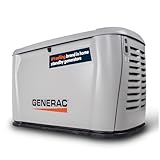
- Whole House Protection: Keep your family comfortable and connected during power outages. Avoid the disruption of losing refrigeration, heating/cooling, lights and connectivity of your devices with a Home Standby Generator that automatically detects an outage and delivers backup power to your home.
- Lowest Total Cost Of Ownership: Electronic fuel & ignition control optimizes fuel use for a more cost-efficient and lower emission back-up power solution* and financing options that offer you solutions that meet your budget *On average versus Generac Guardian Series standby generators
- Remote Monitoring & Control: Built-in Cellular Connectivity allows you to monitor performance and control your generator with Mobile Link app whether you're home or away. Provides real-time updates and maintenance alerts right on your device.* *Requires Mobile Link premium subscription
- Superior Reliability: Oil level sensors monitor oil level to help ensure generator readiness, support in cold climates with improved cold start performance and sloped roof & rear intake to reduce risk of ice or snow intrusion
- Long Term Assurance: Every Generac Standby Generator comes with a 5-year limited warranty and 24/7/365 customer support
Evaluate carrier and route diversity
Request route and entrance information from each carrier and have the design team compare it with campus drawings. Separate carriers may share a conduit, pole line, street crossing, central office, cellular site or regional backhaul. Separate circuits that terminate in one unpowered room are also not independent.
Where feasible, use physically diverse entrances and paths, independent equipment rooms, separately protected power and more than one method of contacting providers. Confirm whether each carrier offers outage escalation, restoration updates and access arrangements during emergencies. CISA recommends examining alternate providers and the dependencies of redundant systems; provider labels alone do not establish independence.
Keep communications working during utility outages
- Place carrier demarcations, core switches, wireless controllers, radios and critical security systems on tested UPS and generator-backed power.
- Provide an out-of-band method for facilities and IT teams to communicate if normal internet or phone service fails.
- Maintain printed contact lists, circuit identifiers, network diagrams and manual operating instructions in accessible locations.
- Define how operators will manage access control, elevators, HVAC and building controls if network management is unavailable.
- Include cloud and remote-service dependencies in the exercise; a campus network can be powered while an essential external application remains unreachable.
Choose measures with a consistent decision framework
Compare every proposed measure against the same criteria so that a larger generator is not selected merely because it is easy to describe. Record the evidence and owner for each decision.
| Decision criterion | Questions for the planning team |
|---|---|
| Function supported | Which defined critical function receives service, and at what minimum level? |
| Continuity and transition | How long can the measure operate, and how quickly does it take over or shut down? |
| Independence | Does it share a hazard, route, provider, fuel source, building, control network or regional dependency with the primary system? |
| Operations | Who tests, maintains, staffs, refuels, monitors and repairs it? |
| Provider coordination | What restoration commitment, outage notification and emergency access does the utility or carrier provide? |
| Safety and compliance | What permits, environmental controls, fire protection, water-quality rules and electrical approvals apply? |
| Lifecycle complexity | What are the acquisition, maintenance, replacement, training and operating burdens over the asset’s life? |
Write the activation and recovery playbook
Infrastructure performs only when people know who acts and in what order. The continuity plan should name decision owners, escalation triggers, safe-shutdown steps, communications methods, utility contacts, fuel and vendor arrangements, restoration priorities and criteria for returning to normal operation.
- Detect and assess: Confirm the affected services, buildings, hazards and immediate life-safety concerns. Do not dispatch staff into unsafe areas to verify equipment.
- Declare the operating mode: The authorized leader selects normal, degraded, emergency or recovery status and records the time and affected functions.
- Protect people and equipment: Secure unsafe areas, preserve fire and life-safety functions, shed noncritical loads, and follow approved electrical, water and equipment shutdown sequences.
- Start the communications plan: Notify occupants, executives, emergency services, utilities, carriers, vendors and affected tenants through the channels that remain available.
- Stabilize critical services: Transfer power, verify pumps and controls, confirm network-room temperatures and connectivity, and establish manual workarounds where automation is unavailable.
- Track resources: Record fuel, battery state, staffing, spare parts, access restrictions, vendor arrival times and unresolved hazards.
- Restore in priority order: Coordinate with utilities and carriers, test each restored system, and bring loads back in a sequence that avoids overloads or pressure problems.
- Close and learn: Document decisions, equipment performance, communications failures, costs, near misses and changes required before the next event.
Exercise, test and maintain the plan
Ready.gov identifies training, testing and exercises as essential preparedness activities. Use a progression that starts with a discussion and advances to operational tests when safe and authorized.
Best Value
- Whole House Protection: Keep your family comfortable and connected during power outages. Avoid the disruption of losing refrigeration, heating/cooling, lights and connectivity of your devices with a Home Standby Generator that automatically detects an outage and delivers backup power to your home.
- Lowest Total Cost Of Ownership: Electronic fuel & ignition control optimizes fuel use for a more cost-efficient and lower emission back-up power solution* and financing options that offer you solutions that meet your budget *On average versus Generac Guardian Series standby generators
- Remote Monitoring & Control: Built-in Cellular Connectivity allows you to monitor performance and control your generator with Mobile Link app whether you're home or away. Provides real-time updates and maintenance alerts right on your device.* *Requires Mobile Link premium subscription
- Superior Reliability: Oil level sensors monitor oil level to help ensure generator readiness, support in cold climates with improved cold start performance and sloped roof & rear intake to reduce risk of ice or snow intrusion
- Long Term Assurance: Every Generac Standby Generator comes with a 5-year limited warranty and 24/7/365 customer support
Tabletop exercise
Give leaders a scenario such as a regional storm with a power outage, a failed communications route and limited fuel access. Ask who declares the emergency, which functions are reduced, how occupants are informed, and what information each utility needs.
Functional and equipment tests
Verify transfer sequences, UPS alarms, generator start and load acceptance, pump operation, network failover, radio or out-of-band communications, manual valve procedures and access to electrical and telecommunications rooms. Coordinate with utilities and authorities before any test that could affect public service or life-safety systems.
Correct the gaps
- Replace unreachable contacts and define alternates.
- Correct runtime assumptions that were not supported by fuel, battery or staffing plans.
- Resolve equipment that cannot be accessed during the scenario.
- Remove supposed diversity where systems share a route or upstream provider.
- Train personnel on manual operation and safe restoration.
Update the plan after exercises, actual outages, construction, provider changes, new buildings, occupancy changes and modifications to critical processes. Store current diagrams, procedures and contact information where authorized staff can reach them during a network or building outage.
Quick wins for a faster PC:
Repair Windows errors before they cause bigger problemsFix Now →Fix the driver behind crashes, sound loss and screen glitchesFind Drivers →Clear out junk files and repair common Windows errorsFree Scan →Assemble the campus planning brief before procurement
A concise planning brief gives engineers, utilities, carriers and contractors the same basis for design. Include:
- Campus site plan, buildings, occupancy, operating hours and critical functions
- Minimum service and recovery objectives for each function
- Utility bills, service information, outage history and provider contacts
- Electrical load inventory, one-line diagrams, protection information and critical-load schedules
- Water, wastewater, fire-protection and pumping diagrams with control dependencies
- Telecommunications routes, carrier information, room locations, equipment power and cooling requirements
- Hazard scenarios, access constraints, environmental conditions and jurisdictional requirements
- Fuel, staffing, maintenance, vendor, testing and replenishment assumptions
- Activation authority, communications procedures, restoration priorities and exercise schedule
- Open questions requiring field verification, utility confirmation or professional design
Use this brief to request site-specific studies and coordinated design, not to skip them. The available federal guidance establishes a planning method; it does not establish a universal campus load, generator capacity, runtime, water-demand calculation, network topology or cost.
Know when specialist and jurisdictional review is required
Electrical interconnections, generators, fuel systems, fire protection, water quality, wastewater discharge, telecommunications pathways and structural or environmental work may require permits, code review and utility approval. Requirements vary by state, municipality, utility territory and campus use. Engage qualified electrical, civil, mechanical, water and telecommunications professionals, and obtain written coordination from the relevant providers before procurement or construction.
The final design should show not only what operates during an outage, but also what can be safely shut down, how operators communicate, how fuel and replacement parts arrive, and how the site returns to normal. That is the difference between equipment ownership and dependable continuity.
Recommended Free Tools
Quick Recap
Product prices and availability are accurate as of the date/time indicated and are subject to change. Any price and availability information displayed on Amazon at the time of purchase will apply.

