Quick wins for a faster PC:
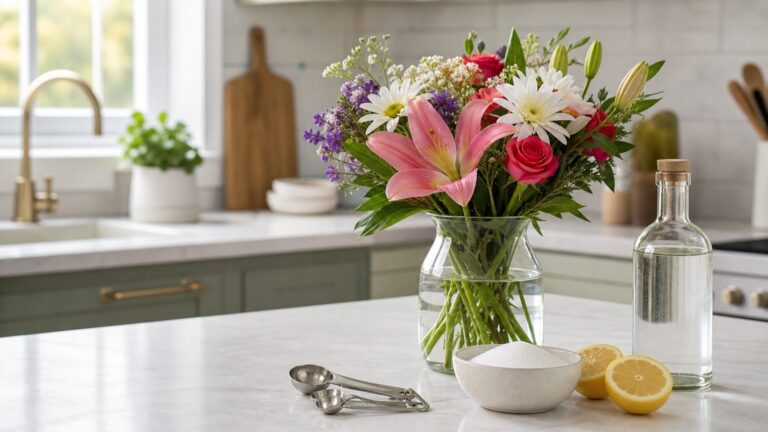
Repair Windows errors before they cause bigger problemsFix Now →Scan for outdated or missing drivers - takes under a minuteDriver Scan →Clear out junk files and repair common Windows errorsFree Scan →The most reliable way to make roses last longer is simple: use a clean vase, remove leaves below the waterline, recut the stems with a sharp tool, add commercial flower food as directed, refresh the water regularly, and keep the arrangement cool and away from fruit and drafts.
With good care, about 7–10 days is a reasonable target for many commercial roses. Some last less and some last longer because cultivar, maturity at harvest, shipping, temperature, and the condition of the flowers when you receive them all matter.

As an Amazon Associate I earn from qualifying purchases.
The five-minute setup
- Wash the vase thoroughly and rinse away all soap.
- Unwrap the roses promptly. Remove plastic, rubber bands, and any leaves that would sit below the waterline.
- Using a clean, sharp knife, floral snips, or bypass pruners, recut each stem by about ½–2 inches.
- Place the stems immediately into clean water with commercial flower food mixed according to the packet instructions.
- Put the vase in a cool, stable location away from direct sun, heat, drafts, fans, and ripening fruit.
- Check the water every day. Top it up when necessary and replace it completely every 2–3 days—or immediately if it becomes cloudy or smells bad.
If a rose is already drooping, recut the stem under water and place the flower in warm water for one to two hours. That can restore a dehydrated rose, but it cannot reverse mold, rot, severe petal decay, or a physically broken neck.
Recommended Free Tools
How long do roses last in a vase?
Vase life is not a fixed property of every rose. A reasonable household expectation is roughly a week to 10 days for many florist or grocery-store roses. The University of California’s postharvest guidance says properly handled commercial roses can often last about 10 days, while NC State Extension gives healthy cut flowers a broader 10–14-day range. Neither figure is a guarantee.
Controlled research shows why expectations vary. A study of 33 rose cultivars recorded vase lives from 5.5 to 15.5 days under controlled conditions. A rose may also arrive with part of its potential vase life already used up by harvesting, dry storage, warm transport, shipping delays, or poor hydration. Cultivar, bloom maturity, stem anatomy, bacterial blockage, ethylene exposure, temperature, humidity, and drafts all affect the result. See the UC Davis rose postharvest guidance and the cultivar research for the technical background.
1. Start with fresh roses at the right maturity
The best roses for a vase are generally just beginning to open: the bud is showing some color and the outer petals are loosening, but the flower is not fully open. Avoid blooms that are already soft, badly bruised, moldy, or shedding petals.
Do not assume that the tightest possible bud is the freshest or best choice. Roses harvested too early—before the sepals have reflexed and the bloom is physiologically ready to open—may remain closed or develop bent neck. The best maturity stage varies by cultivar, but a bud that is beginning to open is a safer consumer-level choice than either a fully open bloom or an extremely tight bud.
For loose or boxed roses
Do not leave shipped roses dry while you look for a vase or decide how to arrange them. Unwrap them promptly, inspect the stems and petals, and hydrate them as soon as possible. Remove only damaged outer petals, obvious mold, or material that is slimy or decaying.
For roses cut from the garden
Cut in the early morning, when the stems and foliage are naturally well hydrated. Carry a clean bucket of water into the garden, cut the stems at the desired length, and put them into water immediately. A cool period of conditioning before arranging can help, but avoiding hot, water-stressed parts of the day is the priority. Iowa State Extension provides additional harvesting and conditioning guidance.
Rank #2
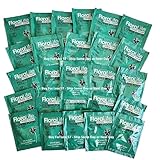
- Floralife Flower Food 300 5gm
- flower preservative
- each pkg makes 1 pint of solution
What are the brown outer petals?
The outermost petals are called guard petals. They protect the inner bloom during growth and shipping, so they may be darker, dry-edged, bruised, or less attractive than the petals inside. Removing a damaged guard petal is mainly cosmetic; it does not significantly extend vase life. Remove it gently rather than pulling apart the bloom.
2. Use a clean vase and clean tools
Bacteria thrive in vase water, especially when submerged leaves, old solution, or decaying flowers provide food. Microbial growth can make the water cloudy or smelly and may obstruct the stem’s water-conducting tissue.
Before arranging the roses, wash the vase with hot water and dish soap, rinse it well, and use a clean work surface. Clean your knife, floral snips, or bypass pruners as well. Wash the vase again whenever you completely change the water, particularly if the previous solution was cloudy or slimy.
Strip off every leaf that would be underwater. Submerged foliage decays quickly and encourages microbial growth. Leave healthy leaves above the waterline; there is no need to strip every leaf from a rose. Also avoid aggressively stripping thorns, scraping stems, or creating extra wounds. If thorns must be removed for handling or arrangement, remove only those below the waterline and do it carefully. The University of Florida IFAS and UC Davis both emphasize keeping submerged plant material to a minimum.
3. Recut the stems correctly
- Use a clean, sharp knife, floral snips, or bypass pruners. A dull tool crushes the stem instead of making a clean opening.
- Remove approximately ½–2 inches from the base of each stem. Take off more if the end is discolored, slimy, split, or visibly damaged.
- Make the cut immediately before the rose goes into water.
- A cut of about 45 degrees is practical because it reduces the chance that the stem will sit flush against the bottom of the vase. The angle is not a magic vase-life treatment, and it should not be credited with dramatically increasing water uptake by itself.
- Move the freshly cut stem straight into water.
If it is convenient, cut the stems under water in a clean bowl or sink and then transfer them directly to the vase. This is a sensible, low-risk precaution because it may reduce the chance of air entering the water-conducting tissue, but the extra benefit has not been conclusively demonstrated in every situation. Bent neck has several possible causes, including bacterial or particulate blockage, air or other embolisms, water stress, cultivar anatomy, and ethylene sensitivity. A fast, clean cut followed immediately by hydration is still worthwhile if underwater cutting is impractical.
Do not smash, split, hammer, scrape aggressively, or burn the stem. Those popular techniques damage vascular tissue and can increase the area available for contamination rather than improving hydration. See NC State Extension’s cutting guidance for the evidence-qualified view of underwater recutting.
Rank #3

- FLOWER FOOD: Just like us, fresh-cut flowers need to eat!! Feed them the right nourishment and they stay fresh, vibrant, and looking fabulous.
- EXPRESS: Our multi-nutrient premium and revolutionary product allows fresh-cut flowers to be fed and fully hydrated, with or without cutting the stems. It suits all flower and foliage types, and contains 97% naturally derived ingredients make it an excellent flower care option for your favorite plants.
- DEPENDABLE PACKAGING: Ensure your flower care products stay fresh and protected with durable, moisture-resistant packaging that maintains quality from shipping to storage. Trusted by floral professionals, FloraLife delivers consistent results for fresh flower care.
- GLOBALLY POSITIONED: We provide full post-harvest solutions to the entire floral industry. Our extensive range of flower care products is specifically formulated to feed, hydrate, nourish, and protect fresh-cut flowers at every stage of their journey.
- INSPIRED BY FLOWERS: FloraLife is dedicated exclusively to the care and handling of fresh-cut flowers from plant to vase. As pioneers, we share our knowledge and expertise with those who share our passion for bunches, bouquets, and arrangements
4. Add flower food—or use clean water
Use the commercial flower-food packet supplied with the bouquet, or buy a properly formulated cut-flower preservative. Mix it at the stated dilution; more concentrate is not better.
Most flower foods combine three useful functions:
- Sugar: supplies carbohydrate that supports flower opening and continued longevity.
- Acidifier: adjusts the solution and can improve water movement through the stem.
- Antimicrobial ingredient: limits bacterial growth that can obstruct the stem.
A 2014 rose study found commercial preservatives gave longer average vase life than tap or deionized water across the cultivars tested, although the response varied by cultivar. A separate FloraLife study reported improvements across tested varieties, but that testing was conducted by a flower-food manufacturer; its reported percentage increases should therefore be understood as company testing, not a universal independent result.
If you do not have flower food, clean water is the safest fallback. Keep the vase clean and change the water regularly rather than guessing at quantities of sugar, bleach, vinegar, soda, aspirin, vodka, mouthwash, or other kitchen ingredients. Some older extension publications describe carefully measured homemade preservative recipes, but current consumer guidance commonly favors commercial food or plain clean water because improvised formulas are easy to over- or under-dose. Never mix bleach with other cleaners.
What’s actually slowing this PC down?
Pick the symptom - the matching free tool is one click away.
Flower food and clean water are not contradictory options: correctly diluted flower food is the better default, while fresh plain water is preferable to a contaminated vase or an inaccurately mixed recipe. Iowa State’s cut-flower guidance explains this practical trade-off.
What water temperature is best?
Use clean, fresh water. Tepid or mildly warm water is commonly used for initial conditioning and for reviving a wilted rose. Do not pour boiling water over ordinary rose stems. Once the roses are hydrated and arranged, a cool room and clean solution matter more than chasing an exact household water temperature.
In one controlled study of ‘Sonia’ roses, vase water at 10°C produced longer vase life than water at 23°C. That does not mean you need to fill a home vase with refrigerated water; stable, moderately cool display conditions are the practical lesson. A laboratory treatment using 52°C water for 15 minutes was a specific research experiment, not a general home instruction.
Rank #4

- Made for Fresh Cut Flowers - Our Fresh Cut Flowers Plant Food formula is created for all types of fresh cut flowers including Roses, Carnations, Gladiolus, Heather, English Lavenders, Lilies, Sunflowers, and other common vase flowers
- Easy to Use - The fertilizer comes in an 8 fl oz. sealed bottle with a dispensing pump designed to measure out the perfect amount of solution needed in each vase of flowers. The convenient pre-mixed liquid formula is ready to use right out of the package. Simply use 3-5 pumps directly into the vase water. Add 3-5 pumps to every 8 oz. cups of water, and replace the water every 2-3 days
- Enhance Growth - Keep your bouquet looking fresh and healthy with a gentle and well-balanced formula of all the essential nutrients for the full development of buds and blooms
- Value - The product includes an 8 fl oz. bottle with flowers solution formula, the dispensing pump features a locking system that reduces leaking and spills. Only a few pumps are needed for each vase to keep blooms looking fresh longer
- Made in the United States - Our plant fertilizers are made and packed in the USA to ensure quality. If you don’t absolutely love our Fresh Cut Flower Plant Food we’ll refund your entire purchase amount within 30 days. Please contact us with any questions or concerns
5. Keep the water fresh on a schedule
Check the water level every day. Top it up if evaporation or thirsty stems have lowered it, making sure all stem bases remain submerged. Do not simply add water to a solution that has become cloudy, slimy, or foul-smelling.
Windows Errors? Fix Them Before They Spread
Repair common Windows errors and clear accumulated junk for a smoother, more stable PC - no reinstall needed.Free scan · no reinstallCrashes, No Sound, or Screen Glitches?
Random freezes, missing sound and display glitches usually trace back to one bad driver. Find and replace yours safely.Free scan · under a minuteFor a healthy arrangement, replace the water completely about every 2–3 days. Change it sooner if the vase is warm, crowded, cloudy, or odorous. At each complete change:
- Remove the roses and set them on a clean surface.
- Wash and rinse the vase.
- Rinse any slime from the lower stems.
- Recut about 1–2 inches from each stem, especially if the ends are discolored or blocked.
- Remove any newly submerged leaves or damaged material.
- Refill with fresh water and correctly diluted flower food.
- Return the roses immediately.
Different extension services phrase the timing slightly differently: some prioritize changing water whenever it becomes low or cloudy, while others recommend a two- to three-day routine. The practical rule is to follow the more frequent option whenever the solution deteriorates. A clean vase and fresh solution can be more important than the exact number of hours since the last change.
6. Keep the arrangement cool and away from ethylene
Place roses in a cool, stable part of the room—roughly 65–72°F is a practical household display range cited by Kansas State Extension. Avoid:
- Direct sunlight and hot windowsills.
- Radiators, fireplaces, heating vents, and warm appliances.
- Air-conditioning vents, ceiling fans, open windows, and strong drafts.
- Ripening fruit, especially apples, bananas, pears, and other fruit in a kitchen.
- Dying flowers, fallen petals, and other decaying plant material.
Heat and moving air increase water loss from petals and leaves. Ripening fruit and decaying plant material can release ethylene, a plant hormone that accelerates aging in ethylene-sensitive flowers. Keep the bouquet away from fruit even if the water is perfectly clean.
Should roses go in the refrigerator overnight?
Refrigeration is optional, not essential. Cooling can slow flower aging, and some extension guidance permits overnight refrigeration, but a cool room is simpler and less risky for most homes. If you try it, keep the roses above freezing, away from ripening fruit and strong food odors, and do not allow the flowers to freeze. Do not rely on the claim that refrigeration will double vase life; household refrigerators vary and the result is not a dependable guarantee.
Best Value

- FLORALIFE CRYSTAL CLEAR: A powder flower food that creates a clear vase solution, designed as the final step before display, helping fresh-cut flowers open properly and enhance flower color. Ideal for vase and floral foam arrangements, keeping flowers looking optimal for maximum enjoyment.
- FLOWER FOOD POWDER: Encourages blooms to open beautifully while supporting longer-lasting freshness. Promote strong, free-flowing stems so flowers stay hydrated, nourished, and vibrant, while performing well in all water qualities and maintaining a clean, clear presentation.
- HYDRATE & NOURISH: Dissolve powder into water, mix solution well, recut cut flower stem ends and place directly into solution to begin immediate feeding. Suitable for buckets, vases, and floral foam, helping maintain freshness, color, and overall appearance from preparation to display.
- GLOBALLY POSITIONED: We provide full post-harvest solutions to the entire floral industry. Our extensive range of flower care products is specifically formulated to feed, hydrate, nourish, and protect fresh-cut flowers at every stage of their journey.
- INSPIRED BY FLOWERS: FloraLife is dedicated exclusively to the care and handling of fresh-cut flowers from harvest to vase. As pioneers, we share our knowledge and expertise with those who share our passion for fresh-cut flowers.
7. Rescue a drooping rose quickly
“Bent neck” is a water-balance problem: the flower head bends because the stem cannot deliver water quickly enough to replace water lost through the leaves and petals. Bacterial growth, blocked xylem, air or other embolisms, particles or plant compounds in the stem, heat, dry air, drafts, ethylene, cultivar-specific anatomy, and physical stem weakness can all contribute. It is not accurate to blame every bent neck on a single air bubble. UC Davis discusses the connection between bent neck and bacterial blockage, while rose research describes multiple possible mechanisms.
Try this recovery procedure as soon as the problem appears:
- Remove the rose from the arrangement.
- Recut ½–1 inch from the stem under water with a sharp, clean tool.
- Place it in a clean container of warm water.
- If necessary, support or submerge the entire rose—including the flower head—in a shallow pan or clean sink of warm water.
- Leave it for roughly one to two hours.
- If the head becomes firm again, return the rose to fresh, correctly diluted flower-food solution.
Recovery is most likely when the rose is dehydrated or temporarily blocked. Remove it instead if the neck remains soft, the stem is mushy, the petals are rapidly collapsing, there is gray mold, or the flower has a physical break. A decaying rose can contaminate the water and shorten the life of the healthier flowers.
Free tools Windows power users keep installed
One-click scans. No signup required.
Troubleshooting common rose problems
| Problem | Likely cause | First response |
|---|---|---|
| Bent neck or drooping head | Dehydration, poor water movement, bacterial or particulate blockage, heat, drafts, cultivar susceptibility, or stem damage. | Recut under water and place in warm water for 1–2 hours. Discard it if the stem is mushy or the neck is physically broken. |
| Cloudy, slimy, or smelly water | Microbial growth, submerged leaves, old solution, or decaying plant material. | Do not top it up. Wash the vase, rinse the stems, recut 1–2 inches, remove submerged leaves, and refill. |
| Bud never opens | Harvested too tightly, cultivar behavior, dehydration, blocked stem, shipping stress, temperature stress, ethylene, or age. | Improve hydration and move the rose to a cool, stable location. Do not force the petals open. |
| Brown outer petals | Normal guard petals, bruising, age, or production and transport damage. | Remove only unattractive outer petals if desired. Brown guard petals alone do not prove the whole rose is unusable. |
| Gray fuzzy growth or spreading brown spots | Botrytis or another form of fungal decay. | Remove the affected flower and any contaminated debris immediately. Do not keep a moldy rose in the arrangement. |
| Slimy or yellowing leaves | Leaves sitting below the waterline. | Remove the submerged foliage and replace the water. |
| The whole bouquet wilts quickly | Heat, drafts, dehydration, poor prior handling, blocked stems, or flowers that arrived near the end of their vase life. | Recut all stems, rehydrate in fresh solution, clean the vase, and move the arrangement to a cooler location. |
Rose-care myths and questionable hacks
- “Smash the stem so it drinks more water.”
- Do not do this. Crushing damages the water-conducting tissue and creates a rough, contaminated stem end.
- “A penny will preserve roses.”
- A penny is not a reliable modern flower preservative. It does not replace clean water, a clean vase, or correctly formulated flower food.
- “Aspirin, soda, vodka, or sugar is the same as flower food.”
- These ingredients are not interchangeable with a tested preservative formula. Use the commercial packet as directed, or use clean water when no packet is available.
- “Every stem must be cut underwater or the rose will fail.”
- Underwater recutting is a reasonable precaution, especially for roses, but its additional benefit is not conclusively established in all conditions. A quick, clean cut followed immediately by water is still useful.
- “Remove every leaf and thorn.”
- Remove leaves that would be submerged and thorns only when necessary. Keeping healthy upper foliage and avoiding unnecessary stem wounds is preferable.
- “Put the roses in the refrigerator and they will last twice as long.”
- Cooling can slow aging, but overnight refrigeration is optional and conditional. Never freeze roses, and keep them away from ripening fruit.
Sources and further reading
- UC Davis Postharvest Research and Extension Center: Roses, spray roses, and sweetheart roses
- UC Davis: Bent neck and bacterial blockage
- Kansas State Research and Extension: Extending the life of Valentine’s roses
- NC State Extension: Selecting and caring for cut flowers
- UMass Extension: Care for cut flowers
- HortTechnology rose postharvest and preservative study
Frequently Asked Questions
Can I use tap water for roses?
Yes. Clean tap water is a safe fallback when flower food is unavailable. The important factors are a clean vase, submerged stem ends, and regular water changes. If the water is cloudy, slimy, or smelly, replace it rather than simply topping it up.
Why are my rose buds not opening?
The roses may have been harvested too tightly, or they may have experienced dehydration, blockage, temperature stress, ethylene exposure, shipping damage, or cultivar-specific behavior. Keep them hydrated and cool, but do not force the petals apart. Roses cut before they are physiologically ready to open may never develop normally.
Should I remove the brown outer petals from roses?
You may gently remove damaged guard petals for appearance. These outer petals protect the bloom and often look darker or bruised after shipping. Removing them is mainly cosmetic and does not substantially extend vase life.
Can a drooping rose recover?
Often, if the cause is dehydration or temporary blockage. Recut ½–1 inch under water and place the rose in warm water for one to two hours. If the neck is broken, the stem is mushy, or the bloom has mold or advanced decay, recovery is unlikely and the rose should be removed.
The Bottom Line
The highest-value rose-care routine is not a household hack: begin with a healthy, partly open bloom; use a washed vase and sharp clean tool; recut the stems immediately; keep leaves out of the water; use flower food at the correct dilution; change deteriorating water promptly; and keep the arrangement cool and away from fruit, sun, heat, and drafts. Those steps give many commercial roses their best realistic chance of lasting about a week to 10 days.
Quick Recap
Product prices and availability are accurate as of the date/time indicated and are subject to change. Any price and availability information displayed on Amazon at the time of purchase will apply.