Quick wins for a faster PC:
Clear out junk files and repair common Windows errorsFree Scan →Fix the driver behind crashes, sound loss and screen glitchesFind Drivers →Yes—you can make successful compost in a hot, dry climate. The decisive adjustment is moisture management: keep the pile as damp as a wrung-out sponge while preserving airflow. Put it in partial shade, build it with roughly two to three volumes of brown material for every volume of green material, and check its condition often rather than relying on a calendar.
A pile about 3 × 3 × 3 feet or larger can become a managed hot pile. Smaller piles and passively maintained bins still decompose, but usually more slowly and less predictably. The method below shows how to choose a setup, balance ingredients, retain water, supply oxygen, troubleshoot failures and recognize finished compost.
As an Amazon Associate I earn from qualifying purchases.
Why hot, dry weather changes composting
Compost is an aerobic microbial process. Bacteria, fungi and other decomposers need organic food, oxygen and water. In desert and other arid climates, evaporation removes water faster than most new material supplies it, so a pile can look active one day and become biologically dormant a few days later. University of Arizona Cooperative Extension identifies keeping a pile moist as one of the biggest desert-composting challenges.
Heat by itself is not a substitute for water. A very hot, dry pile will not decompose efficiently, while a cooler pile with adequate moisture and oxygen can continue working. Treat temperature as one diagnostic, not as the sole definition of success.
#1 Best Overall
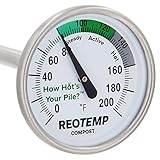
- Perfect for the Beginner Composter - Free PDF Digital Compost Guide Included - Expert instructions on how to get started composting and managing your compost pile for the most efficient compost production.
- Reotemp - Accurate and durable thermometers since 1965
- Quality Construction - 20 inch length, 1/4" diameter stem, stainless steel construction, hermetically sealed to prevent fogging
- Read at a Glance Dial Developed by Compost Experts - 3 temperature zones that indicate compost activity, understand your pile with our compost guide
- 100% Compostable Packaging - Printed with soy-based ink, zero waste, no plastic, no Styrofoam, shred the box to use in your compost pile as a brown
- Target moisture: Arizona guidance gives approximately 40%–60% water by pile weight. For household use, the practical equivalent is a wrung-out sponge: damp throughout, with only a few drops possible when squeezed.
- Protect the water you add: Partial shade, a breathable cover and regular checks reduce evaporation. A sealed or permanently saturated pile creates a different problem by displacing air.
- Build enough mass for heat: A volume near one cubic yard retains heat more effectively than a small kitchen-scrap container.
Successful hot-climate compost is therefore a balancing exercise: retain moisture without flooding, add enough nitrogen-rich material to feed microbes, and keep air pathways open.
Choose a system that matches your material and time
You do not need a manufactured bin. A free-standing pile, a simple three-sided enclosure or a ventilated bin can all work if the material can drain, breathe and be turned. Select the system according to how much organic material you generate and how closely you want to manage it.
| Choice | Best fit | What to expect |
|---|---|---|
| Active hot pile | Households with enough yard material to reach about 3 × 3 × 3 feet or more and time to monitor it | Faster decomposition potential, but it requires moisture checks, turning and enough volume to retain heat |
| Slow or cool pile | Small amounts of scraps, intermittent additions or limited time for management | Easier to run and still viable, but decomposition is slower and the pile may never heat reliably |
| Ventilated bin or enclosure | Anyone who wants containment, easier access control or a neater footprint | Can contain material and discourage animals, but it still needs drainage, airflow and a way to turn or mix contents |
For an actively managed hot batch, University of Nevada, Reno Extension gives 3 × 3 × 3 feet as a minimum useful size; Arizona guidance describes an optimal backyard range from 3 × 3 × 3 to 4 × 4 × 4 feet. A smaller pile is not a failed compost project—it is simply less likely to sustain high temperatures.
Do these 3 things before closing this tab:
1Scan for outdated or missing drivers - takes under a minute2Clear out junk files and repair common Windows errors3Fix the driver behind crashes, sound loss and screen glitchesSite the pile to conserve moisture and preserve drainage
Pick a convenient, well-drained location
Place the pile where you can reach it with a hose or watering can and where runoff will not collect. Convenience matters because a pile that is difficult to reach is less likely to be watered, turned or inspected. Avoid a low spot that stays saturated after irrigation; persistent wetness collapses air space and encourages foul odors.
Use shade strategically
In a desert summer, afternoon shade reduces evaporation and moderates temperature swings. Natural shade from a tree or a structure can help, provided roots and foundations are not threatened by constant moisture. If the only available location is sunny, compensate with more frequent checks and a light cover.
Cover without sealing
A cover can slow water loss and keep wind from stripping moisture from the surface. It also prevents rainfall from contributing water, so uncover or adjust it when rain is useful. Leave ventilation and drainage paths open; do not wrap the pile in an airtight sheet.
Gather and prepare the right ingredients
Brown materials supply carbon and structure
Use dry leaves, shredded newspaper or plain cardboard, straw, sawdust and small twigs. These materials absorb excess moisture and create air channels. Shred or chop bulky pieces so microbes have more surface area, but retain some coarse pieces—such as small twigs or a handful of unshredded leaves—so the mix does not compact into a dense mat.
What’s actually slowing this PC down?
Pick the symptom - the matching free tool is one click away.
Rank #2

- 24" Stem Length, Rugged All Stainless Steel Construction
- 5/16" Diameter Heavy Duty Stem
- Free Digital Compost Guide Included - Expert instructions on how to get started composting and managing your compost pile for the most efficient compost production.
- 2.5" Hermetically Sealed Dial (Won't Fog Up)
- Read at a Glance Dial: Fahrenheit with 3 Temperature Zones that Indicate Compost Activity - Steady, Active and Hot
Green materials supply nitrogen and moisture
Suitable greens include fruit and vegetable scraps, fresh plant trimmings, grass clippings and coffee grounds. They generally contain more water than browns and help drive microbial growth. Chop large scraps when practical; smaller pieces break down sooner, especially in a pile that is turned regularly.
Start with a volume ratio, then adjust by observation
The U.S. Environmental Protection Agency recommends at least two to three times the volume of browns as greens. Nevada Extension describes one part green material to two parts dry or woody material. These are volume-based starting points, not a universal carbon-to-nitrogen calculation by weight. Use the pile’s condition to refine the mix.
| If you have… | Add… | Reason |
|---|---|---|
| Wet food scraps or fresh grass | Extra dry leaves, shredded cardboard or straw | Absorbs water, adds carbon and keeps air spaces open |
| Mostly dry leaves, straw or shredded paper | Fresh trimmings, food scraps or a modest amount of grass | Supplies moisture and nitrogen for microbial activity |
| Large woody pieces | Chop them or mix with finer material while retaining a few coarse pieces | Improves contact with decomposers without eliminating structure |
Keep problem materials out of an ordinary backyard pile
- Do not add meat, bones, dairy, fats or oils; they can attract pests and create persistent odors.
- Exclude pet waste from a standard household compost pile.
- Avoid diseased plants and weeds carrying mature seeds unless you are operating a reliably hot, monitored process designed to address them.
- Cover every new layer of kitchen scraps with four to eight inches of dry leaves or another brown material. This reduces odors and makes the pile less attractive to animals.
Build the pile in layers and wet it evenly
- Create a coarse base. Put a layer of small twigs or other bulky brown material at the bottom. It raises the pile slightly and helps air and excess water move through the lower section.
- Add alternating browns and greens. Spread greens in a thin layer, then cover them with browns. Continue until the pile approaches the planned size, avoiding thick, compacted layers of grass or food scraps.
- Moisten as you assemble. Sprinkle each layer rather than dumping a large quantity of water on top. The interior should be damp, not dripping, before the pile is complete.
- Finish with a brown cap. A dry-leaf or shredded-cardboard top helps hold moisture in and hides food scraps from flies and animals.
When you add material later, open a pocket in the center, place the new greens there and cover them thoroughly with browns. This keeps fresh scraps from forming a wet, exposed layer on the surface.
Monitor moisture in a dry climate
Use the squeeze test
Take a handful from the center, not just the sun-dried surface, and squeeze it. Material that feels like a wrung-out sponge is in the useful range. If it is dusty and produces no sense of dampness, the pile is too dry. If water streams out or the material feels slimy, it is too wet and needs dry browns plus more air.
Water during turning, not only from the top
Surface watering can leave a wet crust over dry material underneath. During a turn, sprinkle water onto each dry section as it is moved, then mix thoroughly. In very dry summer conditions, Arizona Extension notes that weekly watering may be needed, but actual frequency depends on pile size, cover, wind, ingredients and local weather. Inspect the pile rather than following a fixed schedule.
Check more often after weather changes
Inspect after heat waves, windy periods and the addition of a large load of dry leaves. A covered pile may need less water, while an uncovered pile in full sun may need it sooner. Keep a bucket or hose nearby so a small correction is easy; waiting until the pile is completely desiccated makes recovery slower.
Supply oxygen without drying the pile
Aerobic decomposers need oxygen. The coarse base, mixed particle sizes and loose layering provide passive airflow, while turning replenishes oxygen and moves material from the cool outside into the active center.
Rank #3
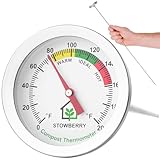
- COMPOST THERMOMETER FOR ACCURATE TEMPERATURE MONITORING: Easily track compost temperature levels with this 20 Inch stainless steel probe that reaches deep into piles for precise core readings
- STAINLESS STEEL LONG PROBE DESIGN: Durable 20 Inch corrosion-resistant composting probe for garden bins, tumblers, and large compost heaps
- EASY TO READ 2 INCH DIAL: Clear analogue dial with F readings and compost activity zones (Steady, Active, Hot) for fast and accurate interpretation
- GARDEN AND BACKYARD COMPOSTING USE: Boost decomposition by monitoring heat and adjusting conditions for optimal organic breakdown and soil enrichment
- NO BATTERIES REQUIRED WEATHER RESISTANT: Bimetal design compost thermometer works without power and withstands outdoor use in all seasons
How often to turn
For the fastest decomposition, Iowa State guidance suggests turning about weekly. Nevada Extension also describes weekly turning for an active hot pile. For many home gardeners, turning every two to four weeks is a workable compromise, especially when the pile is small or the priority is low labor rather than speed. Turn sooner if the center smells sour, feels slimy or has compacted.
The Tool Desk
Outbyte PC Repair FREEClear out junk files and repair common Windows errorsFree Scan →Outbyte Driver Updater FREEScan for outdated or missing drivers - takes under a minuteDriver Scan →How to turn efficiently
- Work from the outside inward, lifting the dry or cool perimeter toward the center.
- Break apart clumps of grass, food scraps or wet cardboard.
- Check moisture as each section moves; sprinkle dry pockets and add brown material to wet pockets.
- Rebuild the pile loosely so air channels remain, then cover the top with browns.
A garden fork is useful but not essential; any safe method that mixes the pile without compacting it can work.
When to pursue a hot batch
Hot composting is an optional management style, not a prerequisite for making compost. It is most realistic when you can assemble enough material to reach the recommended volume at roughly the same time and then manage moisture and turning consistently.
Temperature guidance and its limits
Arizona Cooperative Extension’s low-desert guide says the interior should ideally reach 130°F for seven consecutive days. The EPA reports that a well-maintained backyard pile can reach approximately 130°–160°F and explains that high temperatures help reduce pathogens and weed seeds. These figures describe monitored process conditions, not an automatic guarantee that every part of every pile has been sanitized.
To verify the center, you may use a long-stem compost thermometer. Push it into several locations because edges can remain cooler than the core. If you do not monitor temperature, do not claim that the pile has received a sanitizing heat treatment; simply manage it for healthy decomposition.
Free tools Windows power users keep installed
One-click scans. No signup required.
If the pile will not heat
- Confirm that the pile is close to the 3 × 3 × 3-foot minimum for a hot batch.
- Check moisture at the center and add water if it is dry.
- Add a modest amount of fresh green material if the mix is overwhelmingly dry browns.
- Turn the pile to correct layering and bring active material together.
- Accept a cool process if the volume is small or material arrives sporadically. Cooler compost still breaks down, usually at a slower rate.
Troubleshoot odors, wetness and pests
| Symptom | Likely cause | Correction |
|---|---|---|
| Dry, inactive material; no warming | Insufficient moisture, excessive browns or too little volume | Moisten evenly, mix, add some greens if needed and verify the pile is large enough for the heat goal |
| Sour or rotten smell | Too much water, compacted layers or inadequate oxygen | Add dry browns, turn thoroughly and improve drainage and coarse structure |
| Ammonia smell | Excess nitrogen-rich greens | Mix in additional browns and turn to distribute them |
| Wet, slimy center | Overwatering or dense food/grass layers | Blend in dry leaves or shredded cardboard, break up clumps and restore air spaces |
| Flies or animal interest | Exposed food scraps or prohibited materials | Bury scraps in the center, cap them with four to eight inches of browns and remove meat, dairy, fats and oils |
Do not respond to every problem by adding water. In an arid climate, dryness is common, but a poorly draining pile can become anaerobic after one heavy watering. Always inspect the center and the drainage path before deciding.
Independent reader supportYour contribution helps us test, update, and keep practical guides available for everyone.Know when compost is mature
Finished compost is cooled, stable material rather than a pile that is merely brown on the outside. Look for a dark, crumbly texture, an earthy smell and few recognizable leaves or scraps. The pile should no longer heat after mixing. If recognizable inputs remain or the center reheats strongly, continue composting and keep moisture and airflow in range.
Rank #4

- DURABLE CONSTRUCTION: Solid 20 inch (508 mm) 0.2 inch (5mm) diameter stem; reinforced welded bolt between dial and stem for long-lasting operation and conditions; high quality 304 stainless steel
- CLEAR ACCURATE DIAL: Easy to read 2 inch wide dial with color-coded temperature ranges; 40 - 180 Fahrenheit range and -17.77 - 82.22 Celsius in 2 degree increments for accurate readings
- HIGH QUALITY LENS: High-quality and lightweight PC-coated lens, hermetically sealed to avoid fogging and moisture; IP55 water-resistant rating
- COMPOSTING INSTRUCTIONS: Included to get you started
- LIFETIME WARRENTY, 100% MONEY BACK GARDENER SATISFACTION GUARANTEE: We are here 7 days a week, to answer all your questions
Allow a curing period
The EPA says a maintained pile may be ready in about three to five months and recommends curing for at least four weeks after mixing no longer causes heating and visible scraps have disappeared. Arizona Extension advises aging cooled compost for three to six months. The difference reflects method, climate, pile size and management, so use condition rather than a guaranteed harvest date.
Use it as an amendment
Work mature compost into soil as an amendment, mulch component or planting-area improvement; it is not a complete replacement for garden soil. UConn Extension cautions that repeated heavy applications can contribute to nutrient or salt buildup, particularly when compost is manure-based. Apply sensible amounts and account for the existing soil and irrigation water.
A repeatable hot-climate routine
- Weekly inspection: Check the center with the squeeze test, look for exposed scraps and inspect drainage.
- After each new load: Add greens and immediately cover them with browns.
- Every one to four weeks: Turn according to your speed goal—about weekly for an active hot batch, less often for a low-labor pile.
- During extreme heat or wind: Move the cover, add shade where possible and check for dry pockets more frequently.
- At the end of active heating: Stop adding fresh material to that batch, wait until it no longer reheats, then cure it before use.
This routine works because it treats moisture, oxygen and material balance as ongoing conditions rather than one-time setup decisions. A small shaded pile that is checked and corrected can outperform a larger neglected pile.
Common decisions before you start
Do I need a bin?
No. A bin is optional. Choose one only if containment, appearance, animal access or turning convenience justifies it, and make sure its sides allow ventilation and its base allows drainage.
Should I put the pile in full sun to make it hotter?
Not necessarily. Direct sun can raise surface temperatures while accelerating evaporation. In a hot, dry climate, partial shade often makes moisture control easier. Internal microbial heat comes primarily from sufficient volume and active decomposition.
Is a thermometer essential?
No. A long-stem thermometer can show whether the center approaches published hot-compost targets, but the pile can decompose without one. If you do not measure heat, rely on moisture, odor, texture and time, and avoid making sanitation claims.
What if I only have a small amount of scraps?
Use a cool pile or ventilated bin, mix scraps with plenty of browns and accept a slower timeline. Do not add large quantities of water or greens simply to force heat into a volume that cannot retain it.
Bottom line
Make compost in a hot, dry climate by designing around water loss: choose shade and drainage, build with roughly two to three parts browns to one part greens by volume, moisten every layer, cover food scraps, and turn often enough to restore air. A 3 × 3 × 3-foot-or-larger pile can support a managed hot process, while smaller piles remain useful when you allow more time. Judge readiness by cooled, dark, crumbly, earthy material—not by a promised date or temperature alone.
Quick Recap
Product prices and availability are accurate as of the date/time indicated and are subject to change. Any price and availability information displayed on Amazon at the time of purchase will apply.

