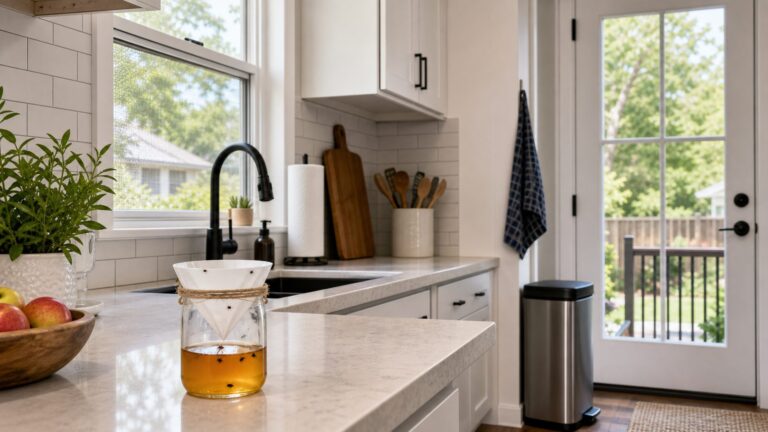
The most reliable homemade yellow jacket trap uses fresh protein bait suspended above soapy water—not a bottle filled with soda and sugar. Put turkey, ham, fish, or liver on a string about 1–2 inches above the water in a stable bucket. Yellow jackets investigate the bait, fall into the water, and are less able to escape because the soap reduces the water’s surface tension.
This design follows the water-trap guidance from UC Integrated Pest Management. It can reduce foraging yellow jackets in a defined area, but it will not reliably eliminate a large colony or make an active nest safe to approach.
Materials
- A sturdy 5-gallon bucket or another stable, deep container
- Water
- A small amount of dish soap or detergent
- Fresh protein bait, such as turkey, ham, fish, liver, or other fresh meat
- String, wire, or another way to suspend the bait
- A wide mesh screen or guard if children, pets, or wildlife could reach the bait
- Gloves and tools for handling the trap without touching live insects
A 5-gallon bucket is a practical choice because it is difficult to tip and provides enough depth for a drowning reservoir. The exact soap-to-water ratio is not standardized by the extension guidance, so do not treat a particular number of drops or spoonfuls as a proven formula. The goal is simply to create visibly soapy water.
As an Amazon Associate I earn from qualifying purchases.
Quick wins for a faster PC:
Scan for outdated or missing drivers - takes under a minuteDriver Scan →Repair Windows errors before they cause bigger problemsFix Now →Fix the driver behind crashes, sound loss and screen glitchesFind Drivers →How to build the trap
- Choose a stable container. Set a sturdy bucket on level ground. Avoid thin containers that can tip when bumped by a pet or raccoon.
- Add the water. Fill the bucket enough to create a substantial drowning reservoir while leaving room above the water for the bait. Do not fill it so high that the bait touches the surface.
- Add a small amount of soap or detergent. Mix it into the water. Soap helps reduce surface tension, making it harder for an insect that lands on the water to remain on top and climb away.
- Prepare fresh protein bait. Tie a small piece of turkey, ham, fish, liver, or other fresh meat to string or wire. The bait should be secure enough that a yellow jacket cannot easily carry it away.
- Suspend the bait. Hang the bait approximately 1–2 inches above the soapy water. This gap is the key part of the design: yellow jackets can investigate the bait from above, then fall into the water.
- Add a guard where necessary. If a dog, cat, child, or wild animal could reach the bait, place a wide mesh screen over or around the trap. The mesh must still allow yellow jackets to reach the bait and must not provide an easy bridge out of the bucket.
- Place the finished trap away from people. Put it at the outer edge of the property or nuisance area, between the likely yellow-jacket flight path and the area you are trying to protect. Keep it away from doors, patios, picnic tables, play areas, paths, and outdoor food.
Where to place a yellow jacket trap
Placement can matter as much as construction. A trap beside the table may catch wasps, but it can also concentrate defensive insects where people are eating or walking. Place it as far from the protected area as practical, preferably near the perimeter of the yard or property.
Do not put the trap beside a doorway, outdoor kitchen, seating area, children’s play space, pet run, or frequently used walkway. Keep it out of reach of pets and wildlife because the meat bait can attract animals as well as insects.
#1 Best Overall

- Lure & Eliminate Yellowjackets – This disposable yellowjacket trap targets and traps all major species of yellowjackets found in Mountain & Pacific States. Please consult the map to ensure you are purchasing the correct trap.
- Most Effective During Summer – This trap is most effective during summer months when the weather is warm and dry. (Please note: this trap only targets yellowjackets; it will not catch wasps or hornets).
- Easy to Use – Just add water to activate the powdered attractant and hang the trap outside! The attractant lasts for weeks, and no rebaiting is necessary. Once it’s full, dispose in the trash.
- Mountain & Pacific Formula – Make sure you choose the right trap! The attractant in this model is specially formulated to lure yellowjacket species found in states that fall in the Pacific and Mountain Time Zones.
- Made in the USA – At RESCUE!, our goal is to design and manufacture the safest and most effective pest control solutions available. We proudly manufacture our products in the USA!
If you keep honey bees, do not place an attractant trap near the hives. Oregon State University guidance cited in the research recommends keeping yellow-jacket traps at least 20 feet from hives and placing them low to the ground, where yellow jackets commonly forage. Avoid sweet bait when protecting honey bees: sugar-based attractants can draw bees, while the cited guidance identifies heptyl butyrate as a yellow-jacket attractant that does not attract honey bees.
Use the right bait for the season
Yellow-jacket colonies change their foraging priorities over the year:
Recommended Free Tools
| Time of year | What workers commonly seek | Best practical approach |
|---|---|---|
| Spring and early summer | Protein for developing larvae | Use fresh meat or fish suspended above soapy water. |
| Late summer and fall | More sugar and carbohydrates, including ripe fruit, human food, and garbage | Consider a commercially formulated lure or a carefully positioned sweet attractant, especially if protein bait stops getting attention. |
Fresh protein is the best general homemade choice for this trap design, particularly in spring and early summer. Meat and fish can dry out or spoil within hours in warm weather, however, so inspect the bait regularly and replace it when it is dry, decomposed, or no longer attracting yellow jackets.
Sweet bait is not automatically better. It can attract honey bees, so do not use sugary attractants near bee hives or where protecting pollinators is a priority. A commercial lure formulated for yellow jackets may be a better late-season option.
Maintenance and safe emptying
- Check the trap periodically from a safe distance.
- Replace meat or fish when it dries out, spoils, or loses its attractiveness.
- Do not lean over the bucket or handle trapped insects while they may still be alive.
- Keep children and pets away during inspection and servicing.
- If the trap is full, damaged, tipped over, or surrounded by active wasps, leave it alone until the insects are no longer active or obtain professional assistance.
- Wash your hands after handling the container, bait, or surrounding equipment.
Sanitation improves the odds that the trap will be useful. Keep garbage covered, clean up food and drink spills, cover outdoor food, and remove ripe or fallen fruit. Otherwise, yellow jackets may have more convenient food sources than the bait you provided.
Rank #2
- Lure & Eliminate Yellowjackets – This disposable yellowjacket trap targets and traps all major species of yellowjackets found in Central & Eastern States. Please consult the map to ensure you are purchasing the correct trap.
- Most Effective During Summer – This trap is most effective during summer months when the weather is warm and dry. (Please note: this trap only targets yellowjackets; it will not catch wasps or hornets).
- Easy to Use – Just add water to activate the powdered attractant and hang the trap outside! The attractant lasts for weeks, and no rebaiting is necessary. Once it’s full, dispose in the trash.
- Central & Eastern Formula – Make sure you choose the right trap! The attractant in this model is specially formulated to lure yellowjacket species found in states falling in Central & Eastern Time Zones.
- Made in the USA – At RESCUE!, our goal is to design and manufacture the safest and most effective pest control solutions available. We proudly manufacture our products in the USA!
Why bottle-and-sugar recipes often disappoint
Many homemade instructions recommend cutting a soda bottle, filling it with sugar water, and adding soap. That may catch some wasps under some conditions, but it is not the best universal recipe for yellow jackets.
Free tools Windows power users keep installed
One-click scans. No signup required.
- The seasonal food source may be wrong. In spring and early summer, workers are strongly motivated to collect protein for larvae, so meat or fish is more appropriate.
- Sugar can attract honey bees. This is a serious drawback near hives or pollinator-friendly areas.
- A small bottle is easy to tip and difficult to maintain. A stable bucket provides a more practical reservoir and makes bait positioning easier.
- Soap is not the attractant. Its useful role is helping create a drowning surface. It does not, by itself, lure yellow jackets.
- There is no proven universal soda, vinegar, or sugar ratio. Avoid treating internet recipes with precise ingredient measurements as established improvements unless they are supported by reliable testing.
When a commercial trap makes more sense
A ready-made yellow jacket trap can be a reasonable alternative when you do not want to handle raw meat or construct a bucket trap. Commercial products may use a formulated lure, disposable trap, or replaceable cartridge. EPA materials cited in the research identify heptyl butyrate as an outdoor attractant for traps targeting wasps and yellow jackets, and commercial manufacturers including TERRO and RESCUE sell products in this category.
Choose a product whose label identifies it for yellow jackets or wasps, and follow the label for placement, lure replacement, disposal, and safety. A commercial lure is not automatically more effective in every yard: species, season, competing food, trap location, and maintenance still matter.
If you already own a compatible reusable trap, a yellow jacket trap refill or attractant cartridge may be more convenient than rebuilding the bait system. Check compatibility before buying; cartridges and lures are not necessarily interchangeable between brands or trap designs.
What trapping can—and cannot—do
Trapping is a localized population-reduction method. It is not dependable colony eradication.
University guidance reports that lure traps can reduce localized foraging workers but generally do not eliminate large populations. Water traps may help reduce localized workers in summer and fall, yet often do not reduce their numbers to an acceptable level when pressure is high. Casual trapping can catch hundreds of yellow jackets without substantially changing the overall population. More intensive trapping around the perimeter may help in a small, clearly defined area when traps are positioned correctly and kept supplied with fresh attractant.
Rank #3

- THE ORIGINAL – There’s a reason you see this trap everywhere: it’s the original, and it works! There are roughly a dozen species of stinging yellow jackets throughout North America, and this trap is designed to lure them all.
- HIGHLY EFFECTIVE – Lured in by our specially formulated attractant, yellowjackets fly in through the holes in the bottom of the trap, continue upward through the interior cone, and become trapped. Once inside, they die from dehydration—no killing agent required.
- NON-TOXIC – Unlike potentially harmful sprays, this trap relies on a non-toxic mode of action to eliminate yellowjackets. Its durable plastic construction is built to withstand many seasons of use. Attractant refills are available.
- SMARTER PEST CONTROL – Our Reusable Yellowjacket Trap is specially designed to attract and kill yellowjackets, not beneficial honeybees. The included attractant lasts for weeks without daily maintenance.
- MADE IN THE USA – At RESCUE!, our goal is to design, manufacture, and market the safest and most effective pest control solutions available for homeowners. We are proud to manufacture our products in the USA!
Do not rely on claims that one trap will kill the queen or wipe out the nest. A spring trap may catch queens, but research cited by Oregon State University found that trapping queens did not necessarily reduce the number of workers caught later in the season.
If yellow jackets continue emerging from one location, treat the trap as a way to reduce exposed foragers—not as a solution to the nest. Trapping is also not recommended as a general treatment for every social wasp species. Correct identification matters.
Identify the insect before choosing a trap
Yellow jackets are usually robust, have sharp yellow-and-black markings, scavenge meat and human food, and defend their nests aggressively. They can sting repeatedly.
Do these 3 things before closing this tab:
1Scan for outdated or missing drivers - takes under a minute2Repair Windows errors before they cause bigger problems3Fix the driver behind crashes, sound loss and screen glitchesPaper wasps are generally more slender, have narrower waists, and build exposed, open-comb nests. Honey bees are hairier and are not generally attracted to meat bait. A trap designed for yellow jackets is not a universal solution for bees or other wasps.
When uncertain, observe from a distance. Do not poke, shake, block, or open a nest to obtain a closer look.
Rank #4
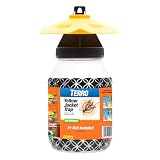
- ATTRACT & KILL YELLOW JACKETS: Attracts and traps yellow jackets outdoors
- INSECTICIDE FREE: Contains no chemical insecticides
- EASY TO USE: The yellow jacket trap is easy to use - add the included bait, fill with water, and hang to catch yellow jackets
- HIDES DEAD INSECTS: The trap bottle's decorative pattern hides trapped insects from view
- REUSABLE TRAP: The T362 is a reusable trap that can be emptied and re-baited once full
Safety: when not to use a homemade trap
Yellow jackets defend nests and can sting repeatedly. Leave the area immediately if wasps begin stinging, and do not try to swat at or crush insects around your face. Keep food and drinks covered and move people and pets indoors.
Do not deliberately disturb a nest. Do not block its entrance, dig into a ground nest, open a wall or ceiling cavity, or spray an inaccessible nest unless you have the appropriate training, equipment, and a product label that specifically permits the use. Nests in walls, ceilings, underground cavities, or other inaccessible locations are often best handled by a licensed pest professional.
PC Slower Than It Used to Be?
A free scan shows the junk files, broken settings and background clutter dragging Windows down - then fixes them in one click.Free scan · Windows 10 & 11Outdated Drivers Are Slowing You Down
One free scan finds every outdated or missing driver and matches the right update for your exact hardware.Free scan · exact hardware matchAnyone with a history of a severe sting reaction should not set up the trap or work near a nest. CDC/NIOSH guidance identifies anaphylactic shock from stinging insects as a severe reaction requiring immediate emergency care. People who have been prescribed epinephrine should carry it as directed and wear medical identification. If someone is stung and develops trouble breathing, swelling of the throat or tongue, dizziness, collapse, or other signs of a severe allergic reaction, use prescribed emergency medication and call emergency services immediately.
Independent reader supportYour contribution helps us test, update, and keep practical guides available for everyone.A practical decision guide
- A few yellow jackets are foraging around outdoor food: cover the food, clean spills, secure garbage, remove fallen fruit, and consider a perimeter trap.
- You want a homemade trap in spring or early summer: use fresh protein suspended 1–2 inches above soapy water.
- It is late summer or fall: inspect whether the insects are seeking sweet food; consider a labeled commercial lure, while avoiding sugar near honey bees.
- The insects are entering one hole, wall, ceiling, or other cavity: do not seal or disturb the entrance; arrange professional inspection and treatment.
- Someone at the property has a serious sting allergy: keep that person away from the trap and nest area, and use professional help for any nest-related problem.
- Trapping has not reduced activity: move the trap farther from people and nearer the perimeter, refresh the bait, remove competing food sources, and reassess insect identification. If pressure remains high, professional control may be necessary.
Commercial alternative
Use a labeled commercial yellow-jacket trap when convenience, containment, or a formulated lure is more important than using kitchen scraps. Keep it at the property perimeter and follow the product label. The trap should supplement—not replace—sanitation, safe placement, and professional treatment of inaccessible nests.
Refills and attractant cartridges
Reusable commercial traps may require periodic replacement of the lure or cartridge. Buy only a refill identified as compatible with your exact trap, and follow its label for handling and disposal. Do not add insecticide to homemade bait. Pesticide baiting is regulated, and using an insecticide in a way the label does not allow can violate pesticide law.
Best Value

- QUICK-DROWN FORMULA: Designed to keep insects submerged for quick drowning.
- QUICK & EASY SETUP: No tools are needed to complete the setup.
- FAST ACTING: Starts working immediately with no activation time. Most effective time to use trap is June – October.
- LOW ODOR: Lure is made with simple food ingredients.
- REUSABLE TRAP: Empty trap after 3-4 weeks or when 2/3 full of insects. Refills available for purchase separately.
When to call a professional
Arrange licensed pest control when the nest is inside a wall, ceiling, attic, or other structure; underground and difficult to reach; close to a doorway or high-traffic area; unusually large or aggressive; or creating a serious risk for a person with a known sting allergy. A professional can identify the insect, locate the nest, select a legal treatment, and work with equipment suited to the situation.
The Tool Desk
Outbyte PC Repair FREEClear out junk files and repair common Windows errorsFree Scan →Outbyte Driver Updater FREEFix the driver behind crashes, sound loss and screen glitchesFind Drivers →Frequently Asked Questions
Will a homemade yellow jacket trap eliminate the nest?
Usually not. A trap can reduce localized foraging workers, but it generally does not eradicate a colony or reliably reduce a large population to a comfortable level. Do not assume it kills the queen.
Can I use sugar water instead of meat?
You can encounter yellow jackets seeking sugar, especially in late summer and fall, but sugar is not the best default bait for this design. It may attract honey bees, so avoid it near hives. Fresh protein is the better general choice in spring and early summer.
How far should the trap be from my house or patio?
Place it at the property edge or as far from the protected area as practical, and never beside a patio, picnic table, doorway, play area, or frequently used path. If you have bee hives, keep the trap at least 20 feet away according to the cited Oregon State University guidance.
Can I add insecticide to the bait?
No. Do not mix insecticide into homemade food bait. Pesticide baiting is regulated, and using an insecticide outside its product label can violate pesticide law.
What’s actually slowing this PC down?
Pick the symptom - the matching free tool is one click away.
What if yellow jackets are entering a hole in the ground or wall?
Do not block, dig into, spray, or otherwise disturb the nest. Nests in structures or underground cavities can be dangerous and difficult to treat safely; contact a licensed pest professional.
Is this trap safe around pets?
Not without precautions. Meat bait can attract pets and wildlife, and the trap can concentrate stinging insects. Use a wide mesh guard, place the trap where animals and children cannot reach it, and keep them away during inspection and servicing.
The Bottom Line
For the most dependable homemade design, suspend fresh meat or fish 1–2 inches above soapy water in a stable bucket and place the trap well away from people, pets, and bee hives. Refresh the bait, remove competing food sources, and keep expectations realistic: trapping may reduce local foragers, but an active or inaccessible nest requires a licensed professional.
Quick Recap
Product prices and availability are accurate as of the date/time indicated and are subject to change. Any price and availability information displayed on Amazon at the time of purchase will apply.