A small home feels more spacious when movement stays easy, furniture fits the room’s proportions, storage is placed where it can actually be reached, and rooms or furnishings can change jobs without constant obstruction. These changes improve use and perception; they do not add floor area. Start by observing circulation and measuring what you already own, then add only the storage, flexible furniture or building work that solves a specific problem.
Start with circulation, not shopping
The quickest way to make a compact home feel cramped is to block the routes people use. A sofa that narrows the path to the kitchen, a table that catches a door, or a storage unit that interrupts the sightline can make an adequately sized room feel difficult. Design guidance from Houzz and Georgia Public Broadcasting stresses arranging furniture around real movement and avoiding the assumption that every small room needs miniature furniture.
As an Amazon Associate I earn from qualifying purchases.
Walk through the home at the times it is busiest. Note where someone carrying laundry turns, where children drop bags, where a chair is pulled out, and which doors need their full swing. Mark those routes on a simple plan or with removable tape on the floor. Keep the routes that are used every day visually and physically clear before deciding where anything new should go.
Make a circulation audit
- Draw each room, including doors, windows, radiators, vents and fixed cabinets.
- Mark the path between entrance, kitchen, bathroom, bedrooms and the main seating area.
- Record where doors, drawers and appliance doors open; include the space needed for a person to stand there.
- Identify furniture that is rarely used, is difficult to pass, or creates a collision with another piece.
- Test a revised arrangement with painter’s tape or cardboard footprints for several days before buying or building anything.
Furniture should be scaled to the room, but “small room means the smallest possible furniture” is an unreliable rule. Many tiny pieces can create a busy, dollhouse-like effect and consume more visual and usable space than one well-proportioned sofa, table or cabinet. Georgia Public Broadcasting’s July 19, 2026 report summarizes designers’ advice that too many small pieces produce this effect and that a coherent arrangement can read as larger. Read the report.
#1 Best Overall

- Enhanced Safety with Dual Hinges: Our storage bench for bedroom is equipped with dual safety hinges; Allowing the lid to open wider and more smoothly. Enjoy quiet operation and protection against finger pinching
- Button Tufting with Diamond Stitching: Our versatile ottoman bench with storage features high-quality, soft and breathable fabric with no unpleasant odors. The lid is adorned with button tufting and delicate diamond stitching; Enhancing its modern design
- Powerful and Versatile: This bench with storage and seating offers ample storage space. This storage ottoman bench for bedroom is perfect for storing board games and controllers that you want to keep within easy reach blankets or magazines
- Superior Quality and Load-Bearing: Enhance your bedroom's style with this storage bench, built with a solid wood frame and sturdy Square legs, It supports up to 330 lbs. Offering added safety for your family
- Assembly Instructions: First, connect the metal connectors to the side panels without tightening the screws to avoid misalignment. After assembling the four frames; Securely tighten all screws; Finally. Attach the cover panel to complete the assembly
Measure the home and the household’s routines
Storage and flexible furniture work only when their dimensions and setup match the people using them. Measure wall lengths, ceiling height, alcoves, stair voids and the depth available behind doors. Measure the furniture you own, including the clearance needed to open it. A tall cabinet that technically fits may still fail if its doors cannot open without blocking a passage.
List what must be stored
Make an inventory by activity rather than by room: cooking, work, school, cleaning, sports, guests and seasonal items. For each group, note how often it is used, whether it needs to stay together, and whether it can be stored high, low or out of sight. Daily items need the easiest access. Occasional items can use higher shelves, under-bed boxes or less convenient compartments.
This inventory prevents a common mistake: adding storage without reducing clutter. Livingetc warns that storage furniture can dominate a small home’s floor plan when it is placed without a strategy. Its commentary explains why storage should be positioned selectively. The objective is not the maximum number of cupboards; it is the shortest, least obstructed path between an item and the activity that uses it.
Quick wins for a faster PC:
Clear out junk files and repair common Windows errorsFree Scan →Fix the driver behind crashes, sound loss and screen glitchesFind Drivers →Repair Windows errors before they cause bigger problemsFix Now →Choose one or two anchor walls
Instead of filling every wall, choose one or two locations that can carry most of the storage. Ideal Home’s 2026 interviews describe this balance: empty walls can help a room feel open, while inadequate storage simply pushes possessions onto floors and surfaces. The same guidance recommends accessible built-ins and making use of architectural areas such as under-stair space. See the storage-planning advice from Ideal Home.
| Storage location | Best use | Check before committing |
|---|---|---|
| One anchor wall | Books, media equipment, work supplies or a coordinated run of cupboards | Keep the wall visually calm; avoid making every surface a display area. |
| Under stairs | Cleaning equipment, coats, shoes or infrequently used household items | Check headroom, access, ventilation and whether a door will obstruct circulation. |
| Behind doors | Shallow supplies, accessories and small tools | Allow for the door swing and handle; do not create a pinch point. |
| Under beds | Seasonal clothing, spare bedding and other low-frequency items | Use labelled containers that can be removed without moving the bed. |
| Ottoman or bench compartments | Throws, games, footwear or other items used in the same room | Make sure the lid can open fully and that the piece remains light enough to move. |
| Wall-mounted shelves | Frequently used books, small equipment and selected display items | Confirm the wall and fixings can support the load; keep shelves from narrowing a route. |
Use vertical and hidden storage selectively
Looking upward can release floor area, but every installation still needs to be reachable and appropriate for the wall. The Guardian’s 2025 expert roundup recommends thinking in three dimensions, including wall-mounted or ceiling-hung options and the space behind doors. Review those space-saving examples. In a rental, ask the landlord before fixing heavy shelves or altering joinery; in a renovation, have the wall construction and services checked before drilling.
Wall-mounted shelves
Floating shelves can keep a small footprint clear for cleaning and can place books or everyday items close to where they are used. Limit the number of objects on them and group items by function or color so the wall does not become a visual backlog. Shelves above a desk, worktop or laundry station are generally more useful than shelves placed where they require a ladder for daily access.
Under-bed boxes and low storage
Low, enclosed storage is useful for items that are needed occasionally but should not occupy a wardrobe. Choose containers with handles or wheels and label them by season or activity. Do not fill every low void automatically: a clear strip under a bed or sofa can make cleaning easier and preserve visual breathing room.
Free tools Windows power users keep installed
One-click scans. No signup required.
Rank #2
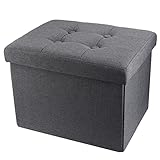
- 【ottoman】Our ottoman has the better size and Relaxed color,Length 17 x width 13 x height 13 inches and Grey,It is also a comfortable footstool,Proper size and thickened sponge pad can make him a good footrest,Sitting on the sofa and putting your feet on the ottoman can relax your legs, relax your whole body and enjoy the pleasant time
- 【Magic storage space】When our storage ottoman is assembled, we have 43L storage space,Put tools, blankets, books, magazines, sports equipment, dog leashes, etc. that can be temporarily used in the room to reduce the clutter.
- 【Multipurpose ottoman】Storage ottoman footstool can be used as a coffee table, small seat, chair stool, bed footstool, fishing stool, catapult good for study, bedroom, living room,dormitory,etc.
- 【Easy to assemble and to fold】Folding storage ottoman design, unfolded size: 17*13*13", only 17 "L x 13 "W x 2.5 "H when folded,Our storage ottoman is very easy to set up, without any tools.
- 【Strong and durable】This storage ottoman is made of quality E1 MDF, strong and durable, has the load bearing capacity up to 400lbs. The solid fixed plate and thicker high quality MDF wood give the bench a sturdy and non-deforming frame, you can safely stand on the bench or use it as a ladder or climbing tool
Ottomans, benches and storage sofas
An ottoman with a compartment can provide seating, a footrest and concealed storage in one footprint. The Interior Design Academy of Ireland lists hidden-compartment ottomans among practical options for compact living. Read its guidance on compact-space storage. Select the size based on the circulation around it and on how often the compartment will be opened; a deep box that requires moving several pieces each time is not efficient storage.
Under-stair and built-in joinery
Built-ins can turn awkward architecture into useful capacity while keeping a consistent line. Use them for items that otherwise spill into circulation, such as coats, shoes, cleaning tools or household paperwork. Include doors, drawers or open niches according to access frequency. A completely open installation can look busy, while a completely sealed run may hide items so well that they are forgotten.
Choose furniture that changes role for a reason
Flexible furniture earns its space when the household genuinely performs more than one activity in the same area. A folding or drop-leaf table can support meals, homework and occasional guests, then reduce in depth when the room returns to everyday use. Houzz discusses expandable and folding tables as well as sofas with storage; the Academy describes modular furniture and concealed compartments. These are categories to evaluate, not guarantees that any particular product will fit your home.
Match the mechanism to frequency
- Daily change: Choose a mechanism that opens quickly, stores chairs or accessories nearby, and can be operated without shifting heavy objects.
- Weekly change: A modular arrangement or folding table may work if the pieces have an obvious parking position when not in use.
- Occasional change: Guest beds, extendable tables or stackable seating can be worthwhile when the stored configuration does not obstruct everyday movement.
Before buying, draw both the compact and expanded footprints on the floor. Check the route to the kitchen, the clearance for chairs, and the location of power outlets or lighting in each configuration. A convertible piece that is technically multifunctional but frustrating to set up will tend to remain in one position and provide no real flexibility.
PC Slower Than It Used to Be?
A free scan shows the junk files, broken settings and background clutter dragging Windows down - then fixes them in one click.Free scan · Windows 10 & 11Crashes, No Sound, or Screen Glitches?
Random freezes, missing sound and display glitches usually trace back to one bad driver. Find and replace yours safely.Free scan · under a minutePlan a room around activities
Give each room a primary job and a secondary job. For example, a living room may be a seating area first and a temporary work area second; a dining corner may be meals first and homework second. Keep the equipment for the secondary activity together in a nearby drawer, ottoman or cabinet so changing roles does not scatter supplies across the home.
| Flexible arrangement | What it can support | Design condition |
|---|---|---|
| Drop-leaf or folding table | Meals, work, homework and occasional entertaining | Provide a clear place for folded chairs and enough room to open the leaf safely. |
| Modular seating | Everyday seating, reading corner or guest configuration | Modules need a stable everyday layout that does not block doors or windows. |
| Storage ottoman or bench | Seating, foot support and concealed storage | Keep the lid accessible and store items used in that room. |
| Wall-mounted work surface | Short work sessions or homework | Include cable management and a way to clear the surface when the room changes role. |
Be cautious about removing walls
Open plan is not an automatic solution for a small home. Removing a wall can improve sightlines, but it also removes a surface that could hold cupboards, shelving, artwork or a door. Lisa Raynes, architect and founder of Pride Road, explains in Ideal Home: “Open plan can still work in a small home, but if you lose too many walls, you lose places to put things, and the space feels more cluttered.” Read the interview.
Compare the storage capacity and furniture positions before and after any proposed opening. Ask whether the wall is structural, whether services run through it, and how heating, ventilation, acoustics, fire separation and approvals will be handled. A construction professional can establish what is feasible for the property; design advice alone is not a substitute for local building regulations or a structural assessment.
Rank #3
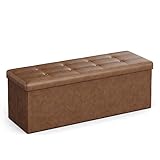
- 【QUICK ASSEMBLY, EASY FOLDAWAY】This storage ottoman from the SONGMICS MAZIE Collection has a foldable design that allows quick setup in seconds by simply inserting the bottom panel. Easily fold and store it under the bed or in a closet when not in use
- 【OODLES OF STORAGE】Unfold this storage box, insert the sturdy base plate, and you have 35 gal. (131 L) space for storing bed linen, books, or clothing
- 【GREAT STRENGTH】Built with thick MDF panels and reinforced with metal corner guards on the lid, this storage chest is strong enough to hold up to 660 lb (300 kg), so you can sit on it with your mind at ease
- 【COMFORTABLE SEATS】Padded with 1" (2.5 cm) thick, high-resilient, high-density foam, this storage bench is resistant to deformation, so you can sit on it comfortably
- 【MULTIPURPOSE】Place this storage chest in the bedroom as a bed end bench, in front of the sofa in the living room as a footrest, or in the hallway as a shoe bench—you have the final say!
Use doors to solve specific conflicts
If a hinged door collides with furniture or narrows a passage, changing its swing may help. Sliding or pocket doors can release floor space where a conventional door is the obstruction, but Ideal Home notes that they can be expensive and depend on the construction of the wall. Treat them as a targeted renovation, not a default feature. Confirm wall depth, services, fire performance, privacy and hardware requirements before specifying one.
Recommended Free Tools
Create visual continuity without pretending the room is larger
Perceived spaciousness is affected by light, color and the number of visual interruptions. The Interior Design Academy of Ireland discusses mirrors as a way to reflect light. Place a mirror where it reflects daylight or a useful view, rather than pointing it at a cluttered storage wall. Georgia Public Broadcasting’s July 2026 report also summarizes designer advice that consistent wall color can make a space feel larger. Designer Lynch is quoted there saying, “Having that consistency throughout makes a space feel larger and has more impact.” Read the full report.
Continuity does not require painting everything white. Use a restrained palette across connected rooms, repeat a flooring or trim tone where practical, and reduce abrupt changes that break the sightline. A darker or more saturated accent can still work when it is deliberate and does not turn every small surface into a separate visual zone.
Keep storage visually quiet
- Use matching fronts or baskets on a run of storage so individual items do not dominate the wall.
- Leave some open space on shelves; an empty section can be more valuable than another object.
- Group frequently seen items by function and hide visual noise behind doors or in boxes.
- Coordinate the finish of large storage with the wall or floor when the goal is continuity.
Mirrors, consistent color and concealed storage change how a room is read. They do not increase its area, improve its structural capacity or remove the need for safe clearances.
Independent reader supportYour contribution helps us test, update, and keep practical guides available for everyone.Avoid the most common small-home mistakes
Adding storage everywhere
More cabinets can make a room feel tighter if they consume the floor plan or create a wall of visual mass. Start with the items that regularly land on the floor or block a work surface. Add capacity at the point of use, then stop when those items have a reliable home.
Buying before measuring
Online dimensions often omit skirting boards, handles, hinges and the space required to open a lid or drawer. Tape the full footprint, including opening arcs, and measure the route from the entrance to the final position. If a piece arrives and cannot be used without moving other furniture, it has not solved the problem.
Using too many tiny pieces
Several narrow tables, stools or cabinets may leave small gaps but create a fragmented layout. Test whether one appropriately scaled piece would provide the same function with fewer edges and clearer sightlines.
Rank #4

- 【QUICK ASSEMBLY, EASY FOLDAWAY】This storage ottoman from the SONGMICS MAZIE Collection has a foldable design that allows quick setup in seconds by simply inserting the bottom panel. Easily fold and store it under the bed or in a closet when not in use
- 【AMPLE STORAGE】Measuring 15"D x 43"W x 15"H (38 x 110 x 38 cm), this storage bench offers a 35-gallon (131 L) volume. Its removable divider keeps your books, clothes, and blankets neatly sorted, or stores larger items like bed sheets
- 【STURDY AND DURABLE】Built with premium MDF panels and reinforced with metal corner guards on the lid, this ottoman is strong enough to support up to 660 lb (300 kg), making it a reliable seating or storage solution that will stand the test of time
- 【ELEGANT DESIGN, ENDURING COMFORT】This ottoman boasts a chic linen-look surface with an elegant tufting design, adding a stylish touch to your space. The double-layer fabric and high-resilience foam ensure lasting comfort for relaxation
- 【VERSATILE USES】This folding ottoman serves as a storage box, a footstool, and even a coffee table! It fits seamlessly into the living room, bedroom, entryway, or dressing room to meet various needs
Choosing inaccessible hidden storage
Storage under a bed, stair or seat is only useful if the container can be removed and the contents identified. Reserve the least convenient locations for seasonal or backup items, not for objects used every day.
Ignoring maintenance
Deep open shelves and complicated mechanisms collect dust and require regular resetting. Choose finishes, handles and moving parts that the household will maintain. A simple cupboard that stays orderly can outperform a clever system that is constantly left open.
Use a staged plan for a rental, refresh or renovation
- Observe for one week. Note bottlenecks, recurring piles and activities that compete for the same surface.
- Measure and inventory. Record room dimensions, fixed elements, furniture footprints and the items that need homes.
- Rearrange first. Remove or relocate rarely used pieces and test a circulation-led layout with temporary markers.
- Add low-commitment storage. Use labelled boxes, an ottoman, a carefully positioned shelf or a behind-door organizer where access is safe.
- Evaluate flexible furniture. Choose a folding, modular or expandable piece only when it solves a documented activity conflict.
- Plan visual continuity. Edit displays, coordinate finishes and place mirrors to reflect useful light.
- Scope building work. For built-ins, altered doors or wall changes, confirm structure, services, ventilation, fire considerations, permissions and budget with an appropriate professional.
- Review after use. After several weeks, remove anything that is rarely used or that has become an obstacle. Storage should adapt to the routine, not force the routine to adapt to storage.
When a small room still feels cramped
The floor is covered despite having storage
Check whether storage is too far from the activity, too difficult to open or too small for the category it holds. Move the highest-use items to an accessible location, consolidate duplicate containers and reserve high or deep storage for low-frequency possessions.
The room has clear paths but still looks busy
Edit visible objects rather than adding another cabinet. Reduce the number of finishes, group display items, close some open storage and use a consistent wall color through adjoining spaces. The aim is fewer visual boundaries, not an entirely empty room.
A flexible table is rarely folded away
Identify the reason: the mechanism may be heavy, chairs may have no parking place, or the expanded footprint may be needed most of the time. Keep it permanently in the configuration that matches the routine, or replace it with a simpler size that does not depend on frequent transformation.
An open-plan change increased clutter
Reassess the storage wall that was removed and the new sightlines into working areas. A partial division, tall cabinet, open shelving or a sliding door may restore useful zoning without recreating the original enclosure. Obtain professional advice before altering structure or services.
The Tool Desk
Outbyte Driver Updater FREEFix the driver behind crashes, sound loss and screen glitchesFind Drivers →Outbyte PC Repair FREERepair Windows errors before they cause bigger problemsFix Now →What success looks like
A successful small-home layout lets people walk, sit, open doors and switch activities without negotiating obstacles. Everyday items are stored close to where they are used; occasional items are out of the way but still findable. Furniture has enough scale to feel intentional, while shelves, cabinets and visual finishes provide continuity instead of competing for attention.
Alexandra Fryer, Home Design Stylist at John Lewis, states in Ideal Home: “A small space means you need to utilise your space better, with practical storage.” The practical part is the qualification: storage is valuable when it supports the household’s actual routines and leaves circulation intact. Read the source interview.
Quick Recap
Product prices and availability are accurate as of the date/time indicated and are subject to change. Any price and availability information displayed on Amazon at the time of purchase will apply.

