Crashes, No Sound, or Screen Glitches?
Random freezes, missing sound and display glitches usually trace back to one bad driver. Find and replace yours safely.Free scan · under a minuteWindows Errors? Fix Them Before They Spread
Repair common Windows errors and clear accumulated junk for a smoother, more stable PC - no reinstall needed.Free scan · no reinstallYou cannot add floor area with decorating, but you can make a small apartment feel more open and work harder. The reliable approach is to plan furniture around the activities the home must support, keep routes and sightlines clear, use wall height for storage, and layer lighting so corners and work areas are not lost in shadow. Mirrors help when they reflect a useful window view or light source.
Start by measuring the apartment and deciding where sleeping, working, dining, relaxing and storage will happen. Then choose only the furniture that solves those needs, place it without blocking circulation, and build a lighting plan around the resulting layout.
As an Amazon Associate I earn from qualifying purchases.
Measure the apartment before buying anything
Small rooms have little tolerance for a sofa that is a few inches too deep or a table that blocks a door swing. Measure the room itself and every item you may keep, move or buy. Record wall lengths, ceiling height, window and door positions, door swings, radiators, vents, outlets and the route from the entrance to each room. Measure the narrowest part of the hallway, stairway and doorway as well as the furniture’s assembled dimensions.
Use masking tape on the floor to mark the proposed footprint of a bed, sofa, desk and dining table. Walk the routes while doors and drawers are open. This reveals conflicts that a floor plan can hide, such as a chair that prevents access to a wardrobe or a table that leaves no comfortable way to pass through the room.
#1 Best Overall

- Enhanced Safety with Dual Hinges: Our storage bench for bedroom is equipped with dual safety hinges; Allowing the lid to open wider and more smoothly. Enjoy quiet operation and protection against finger pinching
- Button Tufting with Diamond Stitching: Our versatile ottoman bench with storage features high-quality, soft and breathable fabric with no unpleasant odors. The lid is adorned with button tufting and delicate diamond stitching; Enhancing its modern design
- Powerful and Versatile: This bench with storage and seating offers ample storage space. This storage ottoman bench for bedroom is perfect for storing board games and controllers that you want to keep within easy reach blankets or magazines
- Superior Quality and Load-Bearing: Enhance your bedroom's style with this storage bench, built with a solid wood frame and sturdy Square legs, It supports up to 330 lbs. Offering added safety for your family
- Assembly Instructions: First, connect the metal connectors to the side panels without tightening the screws to avoid misalignment. After assembling the four frames; Securely tighten all screws; Finally. Attach the cover panel to complete the assembly
List the apartment’s real jobs
Write down the activities that must happen every day and those that happen occasionally. A studio may need a sleeping zone, a work surface, a place to eat, comfortable seating, laundry storage and room to exercise. A one-bedroom apartment may need a living-room work corner but not a permanent dining table. Rank the activities by frequency and by the amount of clear space they require. A rarely used guest function should not consume the circulation needed every day.
Plan zones before selecting pieces
Define sleeping, living and working zones before shopping. This principle is also recommended in IKEA’s studio-apartment guidance. A zone does not need a wall: a rug, a change in lighting or the orientation of furniture can make one area read as distinct from another. Draw the zones on paper, then test whether each still has an unobstructed route.
Protect visible floor area and sightlines
A room generally feels less crowded when you can see more of the floor and look through it without furniture forming a solid barrier. That does not mean every item must be tiny. It means the pieces should have a measured purpose, an appropriate visual weight and enough space around them to use the room.
Quick wins for a faster PC:
Repair Windows errors before they cause bigger problemsFix Now →Scan for outdated or missing drivers - takes under a minuteDriver Scan →Clear out junk files and repair common Windows errorsFree Scan →- Prefer slim arms, narrow depths and raised or legged bases where they provide the comfort you need.
- Use lower seating when it preserves a view across the apartment, but do not sacrifice ergonomic support merely to lower the profile.
- Keep the main path from the entry to the kitchen, bathroom and sleeping area obvious.
- Avoid placing tall, opaque furniture directly in front of a window or in the center of the room unless it is deliberately acting as a divider.
- Leave some wall and floor area unoccupied. Filling every surface creates visual noise and makes useful objects harder to find.
In an open plan, orienting the back of a sofa toward a secondary zone can establish a boundary while retaining a broad view. If the sofa is deep enough to become a barrier, a slimmer console or open-backed shelving behind it may provide definition with less visual mass.
Choose multifunctional furniture only when both functions matter
Furniture that performs two jobs can release valuable floor area, but a second function is useful only if you will actually use it. A complicated mechanism that is never opened is not space-saving; it is a large object with extra hardware. Compare each candidate by its footprint, the functions your household will use, storage access, circulation, ease of moving and whether it replaces another item.
| Furniture | Useful when | Check before buying |
|---|---|---|
| Sofa bed | The room needs daily seating and an occasional or regular sleeping place. | Measure both sofa and opened-bed positions, including the route needed to operate it and store bedding. |
| Storage footstool or storage ottoman | You need a footrest or extra seat and have small items that should disappear quickly. | Check the internal capacity, lid clearance and whether the piece can stay accessible without blocking the main route. |
| Bed with drawers or a lift-up base | There is no practical closet or dresser space for bulky, infrequently used items. | Confirm that drawers can open fully and that the bed can be assembled in the room. |
| Fold-down or wall-mounted desk | Work is occasional or the same area must change function during the day. | Plan chair clearance, cable routing and a place for the chair when the desk is closed. |
| Expandable dining table | Most meals are for one or two people but guests occasionally need more seats. | Measure the expanded footprint and where extra chairs will live between uses. |
When a storage ottoman is the right answer, search by that function rather than by a particular model. It should provide seating or a footrest and storage in the same footprint; otherwise a simple table or chair may be easier to live with.
Use the walls and hidden cavities for storage
Wall height is often the least-used capacity in a small apartment. Tall bookcases, wall-mounted shelves, hooks and narrow shelves in otherwise wasted recesses can hold belongings without taking the floor area required by another cabinet. Keep frequently used items within easy reach and reserve the highest shelves for seasonal or occasional items.
Do these 3 things before closing this tab:
1Repair Windows errors before they cause bigger problems2Fix the driver behind crashes, sound loss and screen glitches3Clear out junk files and repair common Windows errorsConcealed compartments in a bed, footstool or coffee table calm the room by reducing visible objects. They do not eliminate the need to sort: storage that is difficult to open or has no category quickly becomes a pile. Group items by use, label opaque boxes if necessary and leave some spare capacity so the system remains usable.
Rank #2
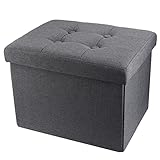
- 【ottoman】Our ottoman has the better size and Relaxed color,Length 17 x width 13 x height 13 inches and Grey,It is also a comfortable footstool,Proper size and thickened sponge pad can make him a good footrest,Sitting on the sofa and putting your feet on the ottoman can relax your legs, relax your whole body and enjoy the pleasant time
- 【Magic storage space】When our storage ottoman is assembled, we have 43L storage space,Put tools, blankets, books, magazines, sports equipment, dog leashes, etc. that can be temporarily used in the room to reduce the clutter.
- 【Multipurpose ottoman】Storage ottoman footstool can be used as a coffee table, small seat, chair stool, bed footstool, fishing stool, catapult good for study, bedroom, living room,dormitory,etc.
- 【Easy to assemble and to fold】Folding storage ottoman design, unfolded size: 17*13*13", only 17 "L x 13 "W x 2.5 "H when folded,Our storage ottoman is very easy to set up, without any tools.
- 【Strong and durable】This storage ottoman is made of quality E1 MDF, strong and durable, has the load bearing capacity up to 400lbs. The solid fixed plate and thicker high quality MDF wood give the bench a sturdy and non-deforming frame, you can safely stand on the bench or use it as a ladder or climbing tool
Rental and installation constraints
Before mounting shelves or a fold-down desk, check the lease, wall construction and permitted fixings. If drilling is not allowed, use freestanding narrow storage, over-door hooks where safe, or furniture that can move with you. Do not choose a wall-mounted solution that cannot carry its intended load or that obstructs an outlet, heater or fire-safety equipment.
Create separation without closing off the room
A studio needs visual cues so sleeping, work and living do not blur into one permanent pile. A rug can mark a zone without taking vertical space. An open-backed bookcase can separate two uses while allowing daylight and views through it. Curtains can provide privacy when drawn and disappear when you want the apartment to feel continuous.
| Divider | What it provides | Trade-off |
|---|---|---|
| Rug | A clear visual boundary and softer surface under a seating or sleeping group. | It does not provide privacy or storage, and its size must fit the furniture around it. |
| Open-backed bookcase | Separation plus display or storage, with some light transmission. | It can become visually heavy if overfilled and must be secured where required. |
| Curtain | Adjustable privacy and a full-height boundary when needed. | It needs a suitable track or rod and can reduce daylight when closed. |
| Low cabinet or sofa back | A subtle boundary that preserves an overhead view. | It provides less privacy and can still interrupt circulation if too deep. |
Choose the least substantial divider that solves the actual problem. If you need only a visual cue, a rug and a change in lamp position may be enough; if you need sleep privacy, a curtain is more appropriate than a low shelf.
The Tool Desk
Outbyte Driver Updater FREEScan for outdated or missing drivers - takes under a minuteDriver Scan →Outbyte PC Repair FREERepair Windows errors before they cause bigger problemsFix Now →Design lighting by job, not by fixture count
Lighting should be planned with the furniture, natural light, ceiling height and room uses. Instead of asking how many fixtures fit, ask what each light needs to do. IKEA UK describes five useful categories:
| Lighting job | Purpose in a small apartment | Typical placement |
|---|---|---|
| General lighting | Provides an even overview so you can move and clean safely. | Ceiling fixture or distributed sources that cover the room without a harsh central hotspot. |
| Task lighting | Supports focused activities such as reading, cooking, grooming or computer work. | At the desk, beside a chair, over a worktop or wherever the activity occurs. |
| Mood lighting | Adds a softer atmosphere and depth when full brightness is unnecessary. | Low table lamps, floor lamps or shaded sources aimed at walls and nearby surfaces. |
| Cabinet lighting | Helps you find items and highlights a shelf, display or work area. | Inside or under cabinets, shelves or other built-ins. |
| Smart lighting | Lets one room change brightness or scenes as its use changes. | Where controls, dimming or scheduled changes will genuinely simplify daily use. |
A single central overhead light can make a small room look flat: the middle is bright while corners remain dark. Sherrell Neal, founder and principal designer of Sherrell Design Studio, says, “Relying solely on overhead lighting is one of the biggest mistakes you can make.” She adds, “Overhead light anchors the room, but table lamps, floor lamps, and wall sconces are what make it feel lived in,” as reported by Homes & Gardens.
Place light to build depth and support the layout
Once the furniture plan is drawn, mark the areas that need light. A desk needs a task source that does not put the worker’s own shadow across the work. A reading chair needs light close enough to read by without lighting the entire room. A dark corner may become more useful when a floor or table lamp sends light across the nearby wall instead of pointing only at the floor.
Different light pools at different heights create depth without adding partitions. A wall-washing lamp can make a narrow wall recede visually; a low lamp near a sofa establishes a comfortable pool; a brighter work light separates the desk from the evening seating area. Dimming allows the same room to support work, meals and rest without changing furniture.
What’s actually slowing this PC down?
Pick the symptom - the matching free tool is one click away.
Match the fixture to ceiling height and power access
- In a low-ceiling room, a shallow flush or semi-flush fixture preserves overhead clearance.
- In a taller room, an upward-casting floor lamp can draw attention toward the ceiling and use the vertical volume.
- Portable or rechargeable lamps can reach awkward corners where new wiring is impossible.
- Integrated lighting in a shelf or built-in can illuminate a work or display area without consuming floor space.
- Use wall sconces only where the wall, wiring and rental rules make them practical.
Do not assume every small room needs miniature fixtures. A deliberately scaled focal light can work when its proportions, position and visual weight suit the room. The right choice depends on geometry, power access, the task and the look you want.
Rank #3
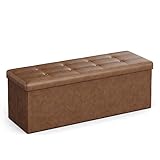
- 【QUICK ASSEMBLY, EASY FOLDAWAY】This storage ottoman from the SONGMICS MAZIE Collection has a foldable design that allows quick setup in seconds by simply inserting the bottom panel. Easily fold and store it under the bed or in a closet when not in use
- 【OODLES OF STORAGE】Unfold this storage box, insert the sturdy base plate, and you have 35 gal. (131 L) space for storing bed linen, books, or clothing
- 【GREAT STRENGTH】Built with thick MDF panels and reinforced with metal corner guards on the lid, this storage chest is strong enough to hold up to 660 lb (300 kg), so you can sit on it with your mind at ease
- 【COMFORTABLE SEATS】Padded with 1" (2.5 cm) thick, high-resilient, high-density foam, this storage bench is resistant to deformation, so you can sit on it comfortably
- 【MULTIPURPOSE】Place this storage chest in the bedroom as a bed end bench, in front of the sofa in the living room as a footrest, or in the hallway as a shoe bench—you have the final say!
Use daylight and mirrors strategically
Start with the daylight you already have. Notice which surfaces receive sun or sky light at different times, and avoid placing tall opaque furniture where it blocks the useful part of a window. Keep privacy and safety measures in place; making a room brighter is not a reason to remove curtains or compromise secure window coverings.
A mirror adds a second sightline and reflects whatever is in front of it. The useful rule is conditional: first identify a window, bright wall or lamp worth reflecting, then position the mirror to catch that source. A large mirror opposite a window can return daylight into the room, while a mirror angled toward a lamp can brighten an evening corner. A mirror facing a cluttered wall or an unattractive view simply duplicates that visual weight, so its size alone does not enlarge every room.
Check the reflection from normal standing and seated positions before fixing the mirror. In a rental, use an approved hanging method and account for the mirror’s weight. Keep its edges clear of doors and routes, and avoid placing it where glare will hit a screen or another person’s eyes.
Compare furniture with a small-space scorecard
When two pieces appear similar, compare them on the factors that affect daily life rather than on appearance alone.
- Measured fit: Does the assembled footprint fit the room, and can the piece pass through every doorway and turn?
- Actual functions: Will the household use the second function often enough to justify the extra mechanism or depth?
- Storage access: Can you reach the compartment without moving another item?
- Circulation and sightlines: Does it preserve the routes and views that make the apartment feel open?
- Reconfiguration: Can one person move or convert it when the room changes from work to rest?
- Replacement value: Does it genuinely remove another piece, or will both still be needed?
A compact item that replaces nothing may be less efficient than a slightly larger item that removes a separate desk, chest or guest bed. Conversely, a multifunctional item that is difficult to convert can reduce usable space because it remains permanently in one position.
Independent reader supportYour contribution helps us test, update, and keep practical guides available for everyone.Compare lighting with the same discipline
- Task served: Identify whether the fixture supplies general, task, mood or cabinet light.
- Coverage: Check whether it reaches the dark corner or activity that prompted the purchase.
- Scale and sightlines: Ensure the fixture does not dominate a narrow path or block a view.
- Ceiling relationship: Select a shallow fitting for low clearance or an upward source when height is an asset.
- Installation: Decide whether portability, a rechargeable battery, a plug or hardwiring suits the apartment.
- Control: Dimming or separate switches matter when one room serves several functions.
- Daylight compatibility: Test the light at the time of day when the room is usually darkest, not only at midday.
Lighting works as a system. A bright ceiling fitting cannot substitute for a reading lamp positioned beside the chair, and a decorative lamp cannot safely provide all-purpose illumination. Build the mix around activities and shadows.
Apply the method to common apartment layouts
Studio apartment
Place the bed where it interferes least with the entry and work route, then use a rug or an open-backed shelf to mark the living area. A fold-down desk can disappear after work, while a sofa bed may be appropriate if seating and occasional sleeping share one footprint. Use a curtain only when privacy is needed; keep it open when daylight and visual continuity matter more.
Free tools Windows power users keep installed
One-click scans. No signup required.
One-bedroom apartment with a small living room
Keep the main seating group compact and use a storage footstool instead of a separate coffee table and extra seat when both functions are needed. Put the work light at the desk rather than increasing overall brightness. A tall, narrow shelf can use wall height, but leave the window wall as open as possible.
Rank #4

- 【QUICK ASSEMBLY, EASY FOLDAWAY】This storage ottoman from the SONGMICS MAZIE Collection has a foldable design that allows quick setup in seconds by simply inserting the bottom panel. Easily fold and store it under the bed or in a closet when not in use
- 【AMPLE STORAGE】Measuring 15"D x 43"W x 15"H (38 x 110 x 38 cm), this storage bench offers a 35-gallon (131 L) volume. Its removable divider keeps your books, clothes, and blankets neatly sorted, or stores larger items like bed sheets
- 【STURDY AND DURABLE】Built with premium MDF panels and reinforced with metal corner guards on the lid, this ottoman is strong enough to support up to 660 lb (300 kg), making it a reliable seating or storage solution that will stand the test of time
- 【ELEGANT DESIGN, ENDURING COMFORT】This ottoman boasts a chic linen-look surface with an elegant tufting design, adding a stylish touch to your space. The double-layer fabric and high-resilience foam ensure lasting comfort for relaxation
- 【VERSATILE USES】This folding ottoman serves as a storage box, a footstool, and even a coffee table! It fits seamlessly into the living room, bedroom, entryway, or dressing room to meet various needs
Rental with limited wiring
Rely on plug-in, portable or rechargeable lamps and furniture that can move without wall work. Use adhesive or freestanding solutions only within their safe load limits. Plan cable paths so they do not cross the walking route, and use a power strip only where its rating and placement are appropriate.
Fix the mistakes that make a small room feel smaller
Buying before measuring
Symptom: Doors, drawers or routes are blocked. Fix: Return to the taped floor plan, measure the actual piece including handles and opened positions, and remove or replace the item that creates the conflict.
Relying on one overhead light
Symptom: The center is bright but corners feel unused and the room looks flat at night. Fix: Add task light at the work or reading zone and a lower or wall-directed source near the darkest edge. Use dimming or separate controls if available.
Placing a mirror wherever a blank wall exists
Symptom: The mirror reflects clutter, glare or a dull wall. Fix: Reposition it to reflect a window, bright surface or useful lamp, and check the view from the positions where you spend time.
Adding storage until every wall is full
Symptom: The apartment holds more but feels visually crowded. Fix: Remove items that have no current use, move occasional belongings higher, and keep a portion of each wall and surface visually quiet.
Choosing a multifunctional mechanism you will not operate
Symptom: A sofa bed, lift-up base or folding desk stays in one position because conversion is inconvenient. Fix: Treat the item as single-purpose and ask whether a simpler, shallower piece would serve that purpose better.
A practical installation sequence
- Measure the apartment, routes, openings, ceiling and fixed obstacles.
- List daily and occasional activities, then rank them by frequency and space need.
- Draw zones for sleeping, living, work, dining and storage.
- Mark furniture footprints with tape and test doors, drawers and walking paths.
- Keep the most important sightlines and the clearest floor route open.
- Select multifunctional pieces only where the second function replaces a real need.
- Move storage upward with safe tall, wall-mounted or narrow solutions, while keeping frequently used items accessible.
- Use a rug, open shelf or curtain only when a zone needs definition or privacy.
- Map general, task, mood and cabinet lighting to the furniture and dark corners.
- Position mirrors to reflect a useful window or lamp, then test the room at different times of day.
- Recheck power access, rental permissions, fixing strength, cable paths and furniture conversion clearances.
- Live with the arrangement for several days before adding another item; change the position first, then buy only what the observed problem still requires.
What this approach can—and cannot—change
Furniture, storage, mirrors and lighting can improve perceived openness, circulation, comfort and the number of activities a room supports. They do not increase the apartment’s actual floor area. No published figure establishes a universal percentage by which one tactic makes a room look larger, so treat the result as a response to your apartment’s dimensions, daylight, ceiling height, existing furniture and habits rather than a guaranteed measurement.
The strongest result comes from coordination: a bed with drawers is more helpful when its drawers can open; a mirror is more effective when it reflects daylight; and a lamp makes a corner usable when the furniture plan already leaves that corner accessible. Plan those relationships before purchasing individual pieces.
Quick Recap
Product prices and availability are accurate as of the date/time indicated and are subject to change. Any price and availability information displayed on Amazon at the time of purchase will apply.

