The most reliable veranda is not covered by one universal product. Match the shade or roof to the veranda’s orientation, dimensions, drainage, and exposure, then operate it within the limits stated for that specific system. A retractable awning is useful when you need adjustable shade and can retract it before strong wind or severe weather. A pergola roof, integrated drainage, and optional screens provide a more permanent shelter approach, but their water and wind performance remain product-specific.
Plan for three separate problems: solar heat, falling water, and moving air. The right combination may be an awning for daytime shade, a roof system for rain, and carefully designed side protection that can be secured or removed when wind rises.
As an Amazon Associate I earn from qualifying purchases.
Start with the veranda’s exposure, not the product name
Before comparing awnings, umbrellas, or pergolas, record how the space behaves. A south- or west-facing veranda may need deep afternoon shade, while an east-facing space can be uncomfortable mainly in the morning. A veranda open to a prevailing wind needs a different solution from one sheltered by neighboring buildings. Roof area, wall construction, drainage outlets, and the path people use to enter the house also affect the design.
PC Slower Than It Used to Be?
A free scan shows the junk files, broken settings and background clutter dragging Windows down - then fixes them in one click.Free scan · Windows 10 & 11Outdated Drivers Are Slowing You Down
One free scan finds every outdated or missing driver and matches the right update for your exact hardware.Free scan · exact hardware matchMeasure the usable area
- Measure the width along the house and the projection from the wall to the outer edge.
- Mark doors, windows, vents, gutters, downpipes, lights, and any swing or sliding paths.
- Note where rain currently lands and whether water can discharge without flooding a path, foundation, or neighboring property.
- Identify the seating and dining positions that actually need shade; covering unused perimeter space can add structure and wind load without improving comfort.
Describe the exposure in practical terms
Write down the direction of the strongest sun, the time of day the veranda is occupied, and whether wind arrives in steady flow or sudden gusts. A sheltered courtyard can tolerate a different arrangement from an elevated, coastal, or corner site. Do not choose a wind sensor setting or assume a roof rating from a general online table; those values belong to the selected model and its installation.
#1 Best Overall
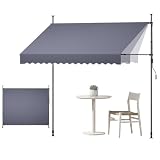
- UPF 80+ Fabric: This manual retractable awning uses 180 g/m² polyester with PU coating. It provides level 4 colorfastness to resist fading, while UPF 80+ shields against sunlight and reduces heat. The water-resistant canopy blocks light rain for comfort
- 43"-59" Adjustable Side Poles: Our 118" retractable awning features adjustable side poles. It allows flexible shade coverage for windows, balconies, or patios. The twist-lock design is more stable than push-button types, reducing wobbling for reliable use
- 0°-90° Adjustable Angle: The retractable patio awning supports flexible angle adjustment from 0° to 90° using the included crank. The side poles adjust to changing sunlight, reducing glare and direct exposure. It can also function as a privacy screen
- Steel & Aluminum Structure: This retractable awning for patio is built with a high-strength steel frame and aluminum roller tube. It withstands level 2 wind. Retract during severe weather and install with 2 people. Use ropes for stability on balconies
- Adjustable Pole Height: Our retractable sun awning features adjustable poles from 82.7"-122" to fit different spaces. The no-drill design reduces wall damage. Adjustable feet and top/bottom non-slip pads improve stability and allow use on uneven ground
Check the building and local requirements
An attached awning may use the house wall, while a substantial pergola can impose loads on posts, footings, masonry, and drainage. The sources available for this guide do not establish permit rules for a particular jurisdiction or veranda. Ask your local authority or a qualified installer whether planning permission, structural calculations, electrical work approval, or boundary clearance is required. Follow the manufacturer’s installation instructions even when the structure looks small.
Compare the main shelter options
Each option solves a different part of the weather problem. The table is a selection framework, not a ranking: actual performance depends on the product, dimensions, fixing method, and site.
| Option | Best suited to | What to verify before ordering | Weather limitation to plan for |
|---|---|---|---|
| Retractable patio awning | Adjustable shade with an open view when retracted; some models can shed light rain | Fabric, projection, pitch and drainage, wall or roof mounting, wind instructions, sensor behavior, warranty, and manual override | Retract for strong wind or gusts, heavy rain, thunderstorms, hail, snow, ice, or any unsafe and unpredictable condition |
| Patio umbrella | Portable or seasonal shade for a small seating area | Canopy coverage, base weight and anchoring, placement, opening mechanism, and the product’s wind instructions | Stability changes quickly with gusts; close and secure it when conditions exceed the product guidance |
| Pergola roof or retractable pergola awning | More integrated shelter, with the possibility of built-in drainage, screens, and automation | Roof material, water-management route, wind performance, post and footing design, controls, screens, maintenance access, and installation method | Do not transfer one manufacturer’s rating to another system; use the selected product’s specifications |
| Side screens or vertical blinds | Reducing low sun, sideways rain, and drafts at the edges | Whether the screen is designed for the site’s wind, its bottom fixing, retraction or stowage method, and clearance from furniture | A screen can catch wind like a sail; stow it when instructed, even if the roof remains deployed |
Professional Awning Manufacturers Association guidance recommends discussing fabric selection with a local awning manufacturer. Fabric openness, color, coating, and construction affect heat, glare, appearance, and cleaning, so a fabric chosen from a photograph alone is unlikely to be a sound specification.
What’s actually slowing this PC down?
Pick the symptom - the matching free tool is one click away.
Use a retractable awning as movable shade
A retractable fabric awning is a movable shade system, not a permanent roof. It can keep direct sun off glazing and seating while preserving an open veranda when retracted. The operating details that matter—sensor thresholds, pitch range, cassette design, fabric, warranty, and manual override—vary by manufacturer. Read the model manual before relying on automatic operation.
When an awning is a good fit
- You want shade only at certain times and an unobstructed view at others.
- The house wall or another approved structure can accept the mounting loads.
- You can reach the control or maintain a working sensor and power supply.
- You are willing to retract it whenever weather becomes unsafe rather than treating it as an all-season roof.
Rain performance is conditional
Manufacturer guidance from Lippert says its awnings can shed light rain under suitable conditions, but they are not designed for sustained heavy downpours or severe storms. A sloped fabric may guide water toward the front edge, yet pooling, blocked drainage, low pitch, or a sudden change in wind can make the arrangement unsafe. Ask the installer how the selected fabric and pitch move water, where the discharge falls, and what conditions require immediate retraction.
Wind is the critical operating risk
Made in the Shade’s care guide advises retracting a retractable awning for strong wind or gusts, thunderstorms, hail, snow, ice, heavy rain, and unsafe or unpredictable weather. A sensor can help, but it is not a substitute for supervision: power failure, delayed readings, a sheltered sensor location, or gusts that arrive between readings can leave a deployed awning exposed. Keep the manual’s wind instructions with the control and teach every user how to retract the system.
Mounting and pitch questions
- Is the fixing point masonry, timber, a beam, or a fascia that needs reinforcement?
- Does the projection clear doors, windows, gutters, and people’s heads through its full movement?
- Can the pitch be adjusted for the chosen fabric, and does the setting still drain light rain?
- Will the cassette remain accessible for inspection, cleaning, and emergency manual retraction?
- Does the warranty require professional installation, specific fasteners, or scheduled care?
Choose a pergola roof when integrated shelter matters
A pergola roof or retractable pergola awning can create a more architectural outdoor room. Some systems combine a roof with posts, integrated gutters, lighting provisions, automation, and optional side screens. Those features can make rain management and daily use easier than a simple fabric awning, but they also create a larger structure that must be designed and installed correctly.
The Tool Desk
Outbyte PC Repair FREEClear out junk files and repair common Windows errorsFree Scan →Outbyte Driver Updater FREEFix the driver behind crashes, sound loss and screen glitchesFind Drivers →Rank #2

- Cool Outdoor Shade: Create a comfortable shaded space with this 13.1 x 9.8 ft manual retractable awning. It reduces direct sunlight and heat buildup, making it ideal for patios, balconies, terraces, windows, as well as cafés, restaurants, and storefronts
- UPF 80+ Fabric: Our retractable patio awning uses 280 g/m² polyester with PU coating. It provides level 6 colorfastness to resist fading, while UPF 80+ helps shield against sunlight and reduce heat. The water-resistant canopy blocks light rain for comfort
- Strong Steel & Aluminum Frame: The retractable sun awning features steel brackets, aluminum arms, and a ribbed roller tube for stable support. It withstands level 4 wind. Retract during severe weather. Install at 8-12 ft on solid walls with two people
- Manual Crank Operation: This retractable awning includes a 4.92 ft hand crank, allowing easy extension and retraction without electricity. It is ideal for areas with limited or unstable power. You can adjust the coverage anytime based on sunlight changes
- Adjustable Shade Angle: Our retractable awning for patio supports 45°-85° adjustment for flexible shading. Easily set the angle for optimal coverage, and have another person hold the front bar during adjustment for added security and stability
Rain management must be traceable
Ask to see the route from roof to outlet: where water enters a gutter, how corners are sealed, where downpipes discharge, and how an overflow is handled. A claim that a pergola is rainproof applies to the specified product and installation, not to every pergola with a similar appearance. The weinor PergoTex II and Griesser PergoTex materials describe their own systems; use their technical documentation for the exact roof, seals, controls, and drainage arrangement you are buying.
Wind ratings are product- and installation-specific
Posts, beams, roof panels, screens, anchors, and foundations act as one system. A screen that is acceptable in calm conditions can increase the force on the frame when deployed, while a partially open roof can behave differently from a closed one. Request the stated wind performance, the test or classification conditions, and the required anchoring details. If no value is stated for the exact configuration, treat it as not stated rather than borrowing a number from another model.
Use the manufacturer’s capacity claims correctly
Griesser states a maximum shaded area of 91 m² for its PergoTex product in 2026. That is a manufacturer product claim, not a general performance statistic for pergolas. It does not determine the allowable size on your site, where footing conditions, snow or wind exposure, drainage, and local structural requirements may govern.
Add side protection without creating a wind trap
Side screens and vertical blinds can block low-angle sun, sideways rain, and cool drafts that pass beneath a roof. They also change the way air moves through the veranda. A fully closed screen can catch gusts, transfer load to its guides and posts, and make an otherwise comfortable roof system vulnerable.
Specify how each screen is secured
- Confirm whether the bottom edge locks into a track, zip, pin, or other restraint.
- Ask what wind conditions require the screen to be raised, rolled, or removed.
- Leave clearance for furniture, heaters, doors, and emergency access.
- Provide a dry, protected storage position if the screen must be removed seasonally.
Do not leave a screen deployed simply because the roof is rated for the current weather. The roof and the side element can have different operating limits.
Design for hot sun
Shade works best when it stops solar radiation before it reaches glass, paving, and furniture. A roof or awning positioned only above the seating may leave west-facing windows exposed to low afternoon sun. Use the sun path at the times the veranda is occupied to set the projection and consider a side screen for low-angle light.
Balance shade and daylight
Darker or more tightly constructed fabrics can reduce glare, while lighter or more open fabrics may preserve daylight and outward visibility. The correct choice depends on the room behind the veranda, the view, and the level of heat you need to reject. Ask the fabric supplier for the relevant openness, color, and solar-performance information instead of assuming that a darker color always produces a cooler space.
Rank #3

- Sunshade & Rain Protection: Beat the heat and stay dry! This 12x10 ft retractable awning is made of durable 280g polyester fabric with a water-resistant PU coating and UV80+ protection, helping to block harmful sun rays while keeping you shaded and comfortable. With fade-resistant color and a sturdy design, it’s built for long-lasting use in your patio, garden, or balcony!
- Strong & Wind-Resistant: No more worries about unexpected gusts! This patio awning features a reinforced steel frame and secure screw connections, giving it great wind resistance up to level 4. The thick aluminum support bars keep the canopy smooth and in place—no sagging, no warping. For extra durability, just retract it during stormy weather.
- Easy Angle Adjustments: Too much sun? Need some extra shade? Just turn the hand crank and adjust the awning angle from 40° to 90° in seconds! The smooth retractable design makes it effortless to use, giving you the right amount of shade whenever you need it.
- Quick & Hassle-Free Installation: Installation is a breeze with three people and just a few basic tools! The recommended height is 8 ft to 12 ft, and it comes with all necessary hardware and an easy-to-follow manual. Best for brick or concrete walls—for other surfaces, check with a pro. What you’ll need (not included): Power drill, measuring tape, and wrench.
- Ideal for Any Outdoor Space: From patios and gardens to cafés, restaurants, and shops, this manual retractable awning is a great way to create a cozy, shaded spot anywhere. Whether you’re relaxing at home or running a business, it keeps things cool and comfortable, no sweat!
Keep air moving
Comfort is not only a lower temperature. A completely enclosed veranda can feel hotter if air cannot escape. Use adjustable shade and screens so you can block the sunward side while leaving a safe opening on the leeward side. Keep heaters, lights, and cooking equipment away from fabric and follow their clearance instructions.
Recommended Free Tools
Manage rain from the roof down
Rain comfort depends on keeping water away from people, doors, and foundations. A sloped awning may handle light rain, but a roof intended for regular wet-weather use needs a deliberate collection and discharge system.
Specify the drainage path
- Identify the high point and slope of the roof or fabric.
- Confirm where the front gutter or edge sends water.
- Connect downpipes to an approved surface drain, soakaway, or other local solution.
- Check that outlets remain accessible for leaf and debris removal.
- Test the route with water before furnishing the veranda and inspect it after the first heavy rain.
Protect the threshold
Keep the roof edge and downpipe discharge away from door thresholds. A narrow splash zone can wet flooring even when the roof itself does not leak. Use suitable flashing and seals at wall connections, and do not drill through a waterproofed component unless the manufacturer specifies the detail.
Allow fabrics to dry
Do not roll a wet fabric awning up for long-term storage unless the manual expressly permits it. Moisture trapped in a cassette can encourage staining or mildew. If the system is retracted during a storm, reopen it when conditions are safe so it can dry, then clean it according to the fabric instructions.
Independent reader supportYour contribution helps us test, update, and keep practical guides available for everyone.Prepare for wind and severe weather
Wind can damage a veranda through uplift, sideways pressure, vibration, and impact from loose objects. The safest operating rule is conservative: retract, close, or stow movable components before strong wind or gusts arrive, and follow the selected product’s instructions even when the sky looks clear.
Use a weather shutdown routine
- Check the forecast before extending an awning or opening a screen.
- Remove lightweight furniture, cushions, umbrellas, and decorations that can become airborne.
- Retract the awning and stow screens when strong or gusty wind is expected.
- Close roof panels or set the pergola to its specified storm position.
- After the event, inspect fabric, arms, tracks, posts, fasteners, gutters, and downpipes before operating anything.
Thunderstorms, hail, snow, ice, heavy rain, and unpredictable conditions warrant the same shutdown even if a sensor has not triggered. An umbrella should be closed and secured rather than left open as a test of its base.
Do not improvise extra restraints
Ropes, improvised straps, or heavy objects placed on a fabric edge can concentrate loads and damage the mechanism. If the manual does not describe a tie-down method, ask the manufacturer or installer for an approved procedure. A fixed roof may still need its screens retracted and furniture secured.
Rank #4

- 【High Quality】The patio retractable awning is crafted from powder-coated aluminum alloy and rust-resistant steel supporting tubes, ensuring wind resistance up to 28MPH. The 280g/m² Polyester with PU coating fabric is water-resistant, ultraviolet and resistant to sun fading, offering 80UV+ solar protection, and tested for wind resistance on the Beauport scale 4.
- 【Versatile Placement】This outdoor retractable awning provides ample shelter, which is a perfect shading solution for outdoor spaces like balconies, courtyards, or commercial areas such as shops, restaurants, patios, and cafes.
- 【Adjustable Slope & Retractable】With a simple clockwise or anticlockwise crank rotation, this manually retractable awning features a hand crank that opens the awning smoothly and quietly. And also allows for adjusting the shaded area up and down based on your preferences.
- 【PracticalL & Decorative】Overall size- 13ft x 8.2ft (L x H);Our sunshade shelteris suitable for most houses and can be mounted on plain cement walls and stable brickwork. To enhance the beauty of outdoor Spaces while providing optimal sun protection.
- 【Easy to Assemble】We provide detailed installation videos and 24-hour customer service. If there is any problem with it we will deal it as soon as possible.
Plan controls, sensors, and power
Automation can make a veranda easier to use, but it does not remove the need for judgment. Wind, sun, and rain sensors have different purposes and settings. Their placement matters: a sensor sheltered by a wall or roof may not detect the same conditions affecting the outer edge.
- Confirm whether the system has a manual control that works during a sensor or power failure.
- Ask what happens after a power cut: does the awning remain deployed, retract, or require a reset?
- Check the sensor’s adjustable thresholds and the delay before movement.
- Provide a safe, accessible isolation switch and protect electrical work from weather as required by local rules.
- Keep children and guests away from moving arms, tracks, and pinch points.
Made in the Shade’s care guidance specifically notes that sensor settings and product features vary by manufacturer. Treat the manual for your model as the controlling document.
Do these 3 things before closing this tab:
1Scan for outdated or missing drivers - takes under a minute2Clear out junk files and repair common Windows errors3Fix the driver behind crashes, sound loss and screen glitchesInstallation and handover checklist
Before approving an installation, ask for a drawing or marked-up plan showing the structure, fixings, drainage, controls, and clearances. A useful handover should include the manual, warranty terms, cleaning instructions, storm procedure, and contact details for service.
Questions for the installer
- What substrate and fasteners are being used, and how were they selected for the loads?
- Which components are structural and which are cosmetic covers?
- What is the stated operating limit for the exact awning, roof, and screen configuration?
- How is water collected and discharged at every corner?
- What inspection or maintenance interval is recommended?
- Which parts are replaceable, and can the fabric or screen be serviced without dismantling the building?
- What local approvals or electrical inspections are needed?
Commission the system before furnishing
- Operate the awning or roof through its full range while watching clearances.
- Run water over the roof or fabric in safe conditions and observe the discharge path.
- Test the manual control, sensor response, emergency stop, and power isolation.
- Check that screens latch, retract, and store without rubbing or snagging.
- Photograph concealed drainage and fixing details for future maintenance records.
Maintain comfort through the seasons
Inspect movable joints, arms, tracks, seals, gutters, and fasteners at the interval stated by the manufacturer and after severe weather. Remove leaves before they block outlets. Clean fabric with the approved method; harsh chemicals, pressure washing, or abrasive brushes can damage coatings and stitching. Look for frayed edges, loose brackets, cracked housings, water marks, and unusual movement. Stop using the system if a structural part is bent or a fixing has pulled away, and obtain qualified service rather than forcing it closed.
At the end of a season, decide whether the fabric, screens, cushions, and umbrellas should be removed and stored dry. A maintenance log with dates, weather events, cleaning, and repairs helps identify gradual movement or drainage problems before they become an emergency.
A practical decision path
- Need occasional shade and an open view? Start with a retractable awning, provided the wall and controls are suitable and you will retract it for unsafe weather.
- Need dependable rain shelter for regular dining? Investigate a pergola roof with a documented drainage route and product-specific wind performance.
- Need low-angle sun or sideways rain control? Add a screen only after confirming its wind limit and stowage method.
- Need a portable, small-area solution? Use an umbrella with a base and operating instructions appropriate to the site, closing it before gusts.
- Facing unusual exposure or a large attached structure? Obtain a site assessment and local structural or permit advice before selecting equipment.
The comfortable veranda is the one that can be adjusted and safely shut down. Specify shade for the sun you actually receive, drainage for the rain that reaches the roof, and a clear wind procedure that every user understands.
Quick Recap
Product prices and availability are accurate as of the date/time indicated and are subject to change. Any price and availability information displayed on Amazon at the time of purchase will apply.

