Keep a generator available through a prolonged outage by treating safety, electrical load, fuel, and maintenance as one operating plan. Put a portable unit outdoors at least 20 feet from the home with its exhaust pointed away from buildings, connect only through correctly rated outdoor equipment or electrician-installed transfer equipment, shut the engine down and let it cool before refueling, and follow the exact maintenance schedule in its owner’s manual.
Start with carbon-monoxide and fire safety
A generator can produce lethal carbon monoxide (CO) even when the exhaust is not obvious. CO has no color or smell, so people may not realize a dangerous concentration is building. The U.S. Consumer Product Safety Commission’s 2026 consumer guidance attributes about 750 generator-associated CO deaths to the period from 2012 through 2022. The Centers for Disease Control and Prevention reports more than 500 CO deaths from all causes in a typical year; that broader figure is not limited to generators.
As an Amazon Associate I earn from qualifying purchases.
Place a portable generator outdoors
Set a portable generator at least 20 feet from the house, with the exhaust directed away from the home and nearby buildings. Keep it away from doors, windows, and ventilation openings. Never operate it in a home, basement, shed, garage, carport, porch enclosure, or any other partly enclosed area. The CPSC’s exact warning is: “Never use a generator inside a home, basement, shed or garage.”
The Tool Desk
Outbyte PC Repair FREEClear out junk files and repair common Windows errorsFree Scan →Outbyte Driver Updater FREEFix the driver behind crashes, sound loss and screen glitchesFind Drivers →Do not move the unit closer because a cord seems too short. Obtain an outdoor-rated cord of the required length and capacity instead. Keep the generator on a stable surface where rainwater cannot pool, while following the owner’s instructions for weather protection. Do not place it under an improvised cover that traps exhaust or restricts cooling air.
#1 Best Overall

- 𝗣𝗼𝘄𝗲𝗿𝗳𝘂𝗹 𝗢𝘂𝘁𝗽𝘂𝘁 - 4400 peak watts and 3400 running watts, perfect for RV camping and home backup
- 𝗠𝘂𝗹𝘁𝗶-𝗢𝘂𝘁𝗽𝘂𝘁 𝗢𝗽𝘁𝗶𝗼𝗻𝘀 - Includes 2*120V AC ports, 1*12V DC port, 1*RV port
- 𝗟𝗼𝗻𝗴 𝗥𝘂𝗻𝘁𝗶𝗺𝗲: Runs for up to 14 hours at 25% load with ECO mode, 2 gallon fuel tank with fuel gauge, allows you to check fuel levels at a glance, keeping you prepared
- 𝐋𝐨𝐰 𝐍𝐨𝐢𝐬𝐞: Under 72 dBA from 23FT away, this generator provides steady power for your home during a power outage or RV nights
- 𝗟𝗶𝗴𝗵𝘁𝘄𝗲𝗶𝗴𝗵𝘁 𝗮𝗻𝗱 𝗣𝗼𝗿𝘁𝗮𝗯𝗹𝗲: Only 56lbs, easy to move around
Use alarms as a second layer
Install working carbon-monoxide alarms and smoke alarms in the home, with battery backup where appropriate. Test them before an outage and replace batteries as directed. An alarm provides an extra warning layer; it does not make an incorrectly placed generator safe. If an alarm sounds or anyone develops headache, dizziness, nausea, weakness, confusion, or unusual sleepiness, leave the building for fresh air and call emergency services from outside.
Decide which loads must remain powered
Long outages are easier to manage when you power essential services rather than trying to run every appliance. Make the list before the next storm or utility failure.
Build a priority list
- Life and health: medically necessary equipment and devices that must remain powered.
- Temperature control: a heating or cooling device only if the generator and connection method can safely support it.
- Food and water: refrigeration, freezer operation, a pump, or other equipment needed for safe water and food storage.
- Communications: phone chargers, internet equipment, radios, and lighting.
- Convenience loads: televisions, workshop tools, laundry equipment, and other items that can wait.
Read each appliance’s nameplate or manual and record its electrical load. The generator must have enough capacity for the equipment connected at the same time, and every extension cord must be rated at least as high as the sum of the connected appliance loads. If the combined demand is greater than the generator’s rated output, remove loads; do not rely on a breaker trip as a planning method.
Operate in planned groups
Divide the priority list into groups that fit the generator’s capacity. Run one group for a planned period, then switch off nonessential items before starting another group. Keep a written schedule so family members do not unknowingly add a high-load appliance while the generator is already carrying its limit. The owner’s manual controls any additional restrictions on simultaneous loads or startup.
Rank #2

- Ultra-Lightweight: At only 7.5 lbs, the Explorer 300 delivers a robust 292Wh capacity while remaining 17% lighter than the industry average. The sleek, integrated handle makes it effortless to carry on long hikes or pack with your camping gear, providing reliable off-grid power without adding bulk to your load.
- Versatile Power for 6 Devices: Equipped with 2 AC outlets, a 100W USB-C PD port, 2 USB-A ports, and a 120W car port. With a 300W rated output (600W peak surge), it easily handles laptops, drones, and cameras, while also serving as a dependable cpap battery for camping or a robust solar powered generator when paired with panels.
- Built to Last: Upgraded with premium LiFePO4 chemistry, this portable generator delivers over 4,000 charge cycles before reaching 70% capacity. This ensures more than 11 years of reliable service life, making it a sustainable and durable energy partner for a decade of exploration.
- Fast Solar Charging: Perfect for off-grid use, this solar powered generator pairs seamlessly with Jackery panels. Reach 80% capacity in approximately 2.8 hours with a 100W solar panel, or maintain your gear with a portable 40W panel (80% in 7.5 hours), making it an essential part of your hunting essentials.
- WHAT YOU GET: 1* Jackery Explorer 300 Portable Power Station, 1*AC adapter, 1* car charger cable, 1* user guide (𝐒𝐨𝐥𝐚𝐫 𝐏𝐚𝐧𝐞𝐥 𝐍𝐨𝐭 𝐈𝐧𝐜𝐥𝐮𝐝𝐞𝐝.)
Portable and permanently installed standby generators are different systems
A portable unit is brought out for an outage, connected to selected equipment with outdoor cords, and refueled as needed. A permanently installed standby generator is mounted in a fixed location and connected to the building through equipment designed for that installation. Neither arrangement removes the need for CO protection, load planning, and maintenance.
| Consideration | Portable generator | Permanently installed standby generator |
|---|---|---|
| Connection | Outdoor-rated cords for individual equipment, or a transfer system installed by a qualified electrician | Fixed wiring and transfer equipment designed and installed under applicable electrical codes |
| Fuel and resupply | Fuel must be stored and replenished safely during the outage; runtime varies by model, load, and fuel source | Uses the installed fuel arrangement specified for the system; resupply and local requirements still apply |
| Capacity planning | Usually assigned to a selected list of essential loads | Can be configured for selected circuits or a larger portion of the home, depending on the installation |
| Location | Must be positioned outdoors at least 20 feet from the home, with exhaust away from buildings | Must follow the manufacturer’s clearance, ventilation, and installation requirements |
| Maintenance | Manual-specific checks and service based on operating hours and elapsed time | Manual-specific service, with additional requirements for the installed system and its fuel supply |
| Weather and access | Must be placed on a suitable outdoor surface and protected only in ways the manual permits | Uses the manufacturer’s enclosure and site design; keep service access clear |
Do not assume that advice for a fixed standby unit applies to a portable model. Fuel type, output, transfer equipment, oil specification, and service intervals are model-specific.
Connect electricity without backfeeding the utility
Using extension cords
Use only cords marked for outdoor use and rated for the connected load. Inspect the jacket, plug, and connections for cuts, crushed sections, heat damage, or loose contacts before each use. Keep connections dry and off the ground where practical, and route cords so doors, vehicles, and foot traffic cannot damage them. Do not use a damaged cord, indoor-only cord, power strip, or improvised adapter.
Do these 3 things before closing this tab:
1Repair Windows errors before they cause bigger problems2Scan for outdated or missing drivers - takes under a minute3Clear out junk files and repair common Windows errorsSupplying household circuits
Never connect a portable generator to a wall outlet or to house wiring with a makeshift cord. A direct connection can energize utility lines through an unisolated system, exposing utility workers and neighbors to lethal voltage. OSHA and the CPSC advise having a qualified electrician install a properly rated transfer switch or other approved transfer equipment in accordance with local electrical codes before a portable unit is connected to household circuits.
Rank #3

- Gasoline: 5300 Running Watts & 6500 Peak Watts; Propane: 4800 Running Watts & 5800 Peak Watts; 4.7 Gallon Fuel Tank with Fuel Gauge; Up to 14.5 Hours of Run Time with 120/240V Volt Selector Switch
- Features One 5–20R 120V 20V Household Duplex Receptacle, One RV-Ready TT-30R 30A Receptacle, and One Transfer Switch Ready L14-30R 30A Receptacle; All Outlets Have Rubber Covers for Added Safety
- Plug-and-Play: Comes with Oil, an Oil Funnel, Propane Hose, Tool Kit, Wheel Kit, and a User’s Manual to Get You Started Right Out of the Box (Minimal Assembly Required)
- Powered by a 274 CC Westinghouse 4-Stroke OHV Engine Featuring a Long-Lasting Cast Iron Sleeve with Automatic Low Oil and Carbon Monoxide (CO) Shutdown
- All Westinghouse Portable Generators are Functionally Tested in the Factory and May Contain Minimum Residual Oil and/or Fuel Odor; EPA Compliant; Backed By 3-Year Limited Service, Labor, and Parts Coverage and Nationwide Customer Service Network
Ask the electrician to document which circuits are supplied, the generator’s allowable output, and the operating procedure. During an outage, follow that procedure exactly; do not move circuit conductors or bypass the transfer equipment. If no approved transfer equipment is installed, power appliances directly with correctly rated outdoor cords instead.
Refuel safely and plan fuel for the entire outage
Shut down and cool before adding fuel
- Turn off or disconnect the loads according to the owner’s instructions.
- Shut the generator engine off.
- Move people, flames, cigarettes, and ignition sources away from the refueling area.
- Allow the engine and hot components to cool before opening the fuel system.
- Refuel in a well-ventilated outdoor area, using only the fuel specified for the model.
- Wipe up any spill before restarting, and inspect for leaks.
- Replace the cap securely, move the approved container away, and then restart according to the manual.
Honda’s operating guidance and CPSC safety alerts both instruct owners not to refuel while the engine is running and to let a recently operated generator cool first. Gasoline spilled onto hot parts can ignite.
Store fuel within local rules
Keep fuel out of living areas and use properly labeled, non-glass safety containers approved for the fuel. Store containers in the location and quantity allowed by local fire rules, container instructions, and the generator and fuel manufacturer. There is no single quantity that is safe or legal everywhere; requirements vary by fuel type and jurisdiction.
Before an expected outage, determine the model’s fuel type, identify an approved storage location, and arrange a lawful resupply plan. Rotate stored fuel as directed by the fuel and engine manufacturers. Do not promise a fixed number of hours per tank: consumption changes with generator model, electrical load, ambient conditions, and fuel source.
Rank #4
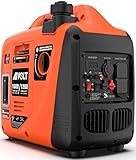
- 🔌 Safe for Sensitive Electronics | <3% THD Clean Power Inverter Generator - This portable inverter generator with advanced inverter tech delivers stable, clean power (THD <3%), safe for your phones, laptops, or small tools. It’s the perfect for home office backups during blackouts or generator for camping - keep your devices charged without worry
- ⚡ Powerful & Fuel-Efficient | Runtime: 8 hrs at 25% load, 2 hrs at full load – This AIVOLT quiet gas inverter generator, powered by a 60cc 4-stroke OHV engine with copper windings, delivers 1600 starting watts and 1260 running watts. The eco-mode switch intelligently adjusts fuel consumption, enabling up to 8 hrs of continuous operation at 25% load for significant fuel savings, while full 1260W operation runs approximately 2 hrs (refuel as needed). Perfect for camping, RV trips, tailgating, job sites, and home backup.
- 🔇 Ultra-Quiet (57 dBA) & Lightweight - This portable quiet generator (57 dBA at 23ft) is quieter than a normal conversation— no more noisy distractions during camping or backyard gatherings, truly a silent gas generator. At just 28lbs, it’s 20% lighter than similar models, a handy small inverter generator easy to carry to campsites or job sites as your go-to quiet generator for camping
- 🔌🔗 Multifunctional Panel & Parallel Capability - This portable inverter generator comes with 2x120V outlets and 2 USB ports (Type-A/C), perfect for charging phones while running a camping fridge. 3 indicator lights and an hour meter let you monitor power status in real time. Need more power? Connect two AIVOLT VS1600101 quiet inverter generators via a parallel kit (not included) to double your output seamlessly
- 🛡️ CO Protect & Comprehensive Safety - This gas powered generator features built-in CO Alert tech that auto-shuts down when unsafe CO levels are detected, protecting your family. Low oil auto-shutdown and overload protection also safeguard both the generator and your electronics - make it a safe for home or RV use, no safety worries
Maintain the engine during a long run
Use the exact owner’s manual as the controlling maintenance schedule. At minimum, review the manual before an outage, verify the correct fuel and oil, inspect the air filter and visible condition as instructed, and monitor operation while the unit runs. Record the engine’s operating hours so you know when a time- or hour-based service is due.
Checks to make during operation
- Look for fuel, oil, or coolant leaks where the manual identifies inspection points.
- Keep cooling-air openings, exhaust outlets, and the surrounding area clear of leaves, snow, debris, and stored materials.
- Watch for unusual vibration, smoke, smell, warning lights, overheating, or changes in sound.
- Stop the generator and investigate any condition the manual identifies as unsafe; do not continue running a unit that is leaking fuel or showing signs of overheating.
- Check oil level and add or change oil only at the interval, temperature condition, and specification stated for that model.
Do not apply one universal oil interval. Some manuals base service on operating hours, others on elapsed time, and many use both. A long outage can reach a service interval much sooner than normal standby use, so write down the starting hour and update the log each time the generator is stopped or refueled.
What the 24-hour guidance does and does not mean
Generac’s July 30, 2026 continuous-use guidance applies specifically to its Next Generation Series 10–28 kW and Guardian Series 10–26 kW air-cooled standby generators approaching or exceeding 24 hours of continuous use. For those identified models, it calls for shutting down for at least 30 minutes after each 24-hour period to perform the applicable maintenance tasks. The tasks depend on accumulated runtime, time since service, and operating environment.
What’s actually slowing this PC down?
Pick the symptom - the matching free tool is one click away.
That instruction is not a universal rule for portable generators, other manufacturers, or every standby system. Follow your own model’s manual and service requirements instead. If the manual requires a qualified technician for an interval service, arrange that support before an extended outage.
Best Value
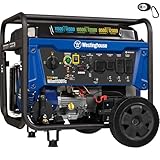
- Automatic Home Backup Made Portable: Pair with the Westinghouse WATS200 Automatic Transfer Switch for automatic backup power. This revolutionary, first-of-its-kind technology combines standby convenience with portable versatility. Exclusive to Westinghouse. Switch sold separately.
- Built for Longer Engine Life: The powerful 550cc engine features a pressure lubrication system that delivers oil to critical components, reducing friction and wear. A reusable oil screen captures abrasive particles and contaminants for cleaner oil and long-lasting engine performance.
- Power for sensitive electronics: Less than 5% THD delivers cleaner power for phones, computers and TVs. Copper windings help it run cooler and last longer. Up to 19 hours at 25% load on a 9.5-gallon gas tank, with push-button and remote start.
- Fuel flexibility: Choose gasoline, propane or natural gas. Delivers 11,500 running/14,500 peak watts on gasoline. 50A and 30A outlets pair well with an interlock kit, manual transfer switch or Westinghouse WATS200 ATS system for home backup (sold separately).
- Built-in safety and support: Automatic low-oil shutdown helps protect the engine, while the CO sensor shuts down the generator when elevated carbon monoxide is detected. Backed by a 3-year limited residential warranty and lifetime technical support.
Use an operating schedule instead of running unattended indefinitely
Assign one person to maintain the log and another to check the living space for alarms and safe cord routing. At each planned stop, turn off loads, stop the engine as directed, inspect the unit, check the required fluid levels, and confirm that the exhaust path and cooling area remain clear. Let the generator cool before any fuel work.
During sleeping hours, use only the operating arrangement permitted by the manual and local rules. Keep CO and smoke alarms active, and never defeat an alarm because it is inconvenient. If the generator must be stopped for maintenance, fuel, severe weather, or a warning condition, use the priority list to decide which loads can be disconnected first.
Average U.S. power loss is about four hours per year according to a CDC preparedness page published in 2024, but that average does not predict a disaster outage. Plan for the actual duration announced by the utility and emergency authorities, and conserve fuel by powering only the loads on your priority list.
Troubleshoot by symptom, not by guesswork
The generator will not start
- Confirm the fuel type and fuel shutoff position match the manual.
- Check the oil level, switches, battery condition, and starting procedure specified for the model.
- Disconnect nonessential loads before attempting another start.
- If fuel is stale, contaminated, or leaking, stop and follow the manufacturer’s service instructions rather than repeatedly cranking the engine.
The generator stops under load
- Turn off nonessential equipment and compare the remaining connected load with the generator’s rated capacity.
- Inspect cords and plugs for heat or damage.
- Check for an overload, low-oil shutdown, overheating, or another warning indicated by the model.
- Restart only after the cause is corrected and the manual permits a restart.
An alarm sounds or exhaust conditions change
Leave the building immediately if a CO alarm sounds or anyone has possible CO symptoms. From outside, call emergency services and do not re-enter until authorities say it is safe. A change in wind, snow accumulation, a new obstruction, or a shifted generator can redirect exhaust toward the home; stop the unit and correct the placement only when it is safe to do so.
Prepare a long-outage kit before the next emergency
- The generator’s owner’s manual and a written operating-hour log
- Outdoor-rated extension cords sized for the connected loads
- Working battery-backed smoke and CO alarms with spare batteries
- Approved, labeled fuel containers and the correct fuel
- Model-compatible oil, filters, and other service parts identified in the manual
- Flashlights, a fire extinguisher suitable for the likely fuel, gloves, and eye protection
- The electrician’s transfer-equipment instructions, if the home has an approved transfer system
Store the manual, cords, alarms, and service items where they will remain dry and accessible, but keep fuel outside living areas in the location permitted by local rules. Test-start the generator and inspect the complete setup before severe weather, not for the first time after the power fails.
When utility power returns
- Turn off or disconnect the powered loads according to the manual and, if applicable, the transfer-equipment procedure.
- Return household circuits to utility power only through the installed transfer equipment and its documented operating sequence.
- Allow the generator to run unloaded or shut it down exactly as the manual directs.
- Let the engine cool before moving it, draining fuel, or performing service.
- Record total operating hours, fuel used, warnings, and any unusual behavior.
- Complete any maintenance that became due during the outage before storing the unit.
A generator is ready for the next outage only after its fuel, oil, filters, cords, alarms, and transfer equipment have been checked and the operating-hour record has been updated.
Quick Recap
Product prices and availability are accurate as of the date/time indicated and are subject to change. Any price and availability information displayed on Amazon at the time of purchase will apply.
Free tools Windows power users keep installed
One-click scans. No signup required.

