What’s actually slowing this PC down?
Pick the symptom - the matching free tool is one click away.
Doveweed (Murdannia nudiflora) is a summer annual that looks enough like grass to hide in warm-season turf. Confirm it by looking for fleshy, creeping stems that root at the nodes, narrow leaves with parallel veins, soft hairs along the upper leaf-sheath margins, and small blue-to-purple flowers. Successful control combines drainage and irrigation corrections, dense turf management, timely treatment, and a herbicide labeled for your specific grass. No single product is safe for every lawn.
What doveweed is
Doveweed is a low-growing monocot in the spiderwort family (Commelinaceae). It behaves as a warm-season, or summer, annual: plants emerge in warm, wet conditions, grow through summer, flower and set seed, then die with unfavorable temperatures. Its stems can creep across the soil surface and root wherever a node touches moist ground, allowing a small patch to become a mat.
As an Amazon Associate I earn from qualifying purchases.
Fred Yelverton, an NC State Extension turfgrass and forage-crop weed-management specialist, describes the central identification problem plainly: “Doveweed closely resembles a grass.” That resemblance is why a patch may be mistaken for thin turf, crabgrass, or another grassy weed until the stems and flowers become visible.
How to identify doveweed in a lawn
Inspect a suspicious patch when the grass is dry enough to part with your fingers. Look at the whole plant rather than relying on leaf shape alone.
#1 Best Overall

- WEED KILLER SPRAY FOR LAWNS: With a simple hose-end application, kill weeds in your lawn, including dandelions, chickweed, clover, crabgrass and foxtail with Ortho WeedClear Lawn Weed Killer Ready-to-Spray
- FAST-ACTING WEED CONTROL: This weed killer hose sprayer kills listed weeds like crabgrass, dandelion, clover, chickweed and creeping charlie down to the root and gets results with 1 application
- COVERAGE: This 32 fl. oz. container of Ortho WeedClear Lawn Weed Killer Ready-to-Spray provides up to 5,000 sq. ft. of lawn care
- HOW TO USE: Apply to listed lawn weeds that are young and actively growing by connecting your garden hose to the weed killer sprayer, sliding the switch to "ON" and spraying evenly until the lawn is wet
- WHERE TO USE: This spray weed killer for lawns won't harm lawn grasses when used as directed - use on northern lawn grasses including Bermudagrass, Buffalograss, Fescues, Kentucky Bluegrass, Ryegrass and Zoysiagrass
| Feature | What to look for | Why it helps |
|---|---|---|
| Growth habit | Low, creeping or prostrate growth; fleshy stems that run along the soil. | Turfgrass usually forms a different crown or stolon pattern. Doveweed stems often make a loose mat. |
| Nodes | Stem joints touching moist soil can produce roots. | Node-rooting is one of the most useful ways to separate doveweed from a random grass seedling. |
| Leaves | Linear, grass-like leaves with parallel veins; generally about 3/4 to 4 inches long and 2 to 5 mm wide, according to NC State Extension. | The leaves explain the name confusion, but their arrangement on a fleshy creeping stem is distinctive. |
| Leaf sheath | Soft hairs along the upper margins of the sheath where the leaf wraps the stem. | Use a hand lens or phone macro mode if the hairs are difficult to see. |
| Flowers | Small blue or purple flowers in clusters on short stalks. | Flowers are a strong confirmation when the plant is mature enough to bloom. |
| Surface | Leaves may look slightly shiny or succulent compared with surrounding turf. | Gloss and fleshy texture support the diagnosis but should not be used alone. |
Use photographs as a check, not a substitute for the lawn context
NC State Extension provides photographs of doveweed’s growth habit, leaf arrangement and other identifying details. Texas A&M AgriLife has enlarged images, and UF/IFAS shows the plant growing in St. Augustinegrass. Compare several parts of the plant in those galleries with what you pull from the lawn. A single distant image can make doveweed look like many other weeds.
What is this grass-like weed in my lawn?
Start by tracing a leaf to its base. If the plant has a fleshy runner with joints that contact the soil, it is not simply a loose blade of your turf. Check the sheath for fine hairs and search for blue or purple flower clusters. If those traits are absent, take a close photograph of the entire plant, including the crown and roots, and have it identified by a county extension office or qualified turf professional before applying an herbicide.
When doveweed emerges and where it thrives
UF/IFAS reports that germination starts as warm, wet weather arrives. Its archived warm-season turf guide identifies a soil-temperature range of 65–70°F for the beginning of seed germination. That threshold comes from a 2015 Florida publication; it is a useful biological marker, not a universal calendar date. In Florida, emergence commonly begins around April or May and continues through summer, but local weather and soil conditions control the actual timing elsewhere.
Early-season preemergence applications made for crabgrass or goosegrass may be losing effectiveness by the time doveweed germinates. A lawn can therefore look clean in spring and develop doveweed after repeated rain or irrigation several weeks later.
Rank #2
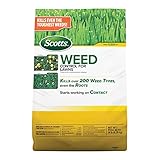
- WHERE NOT TO USE: This weed and dandelion killer for lawns and lawn care product should not be used on Dichondra, Carpetgrass, 'Floratam' St. Augustinegrass, Creeping Bentgrass, or turfgrass where desirable clovers are present
- LAWN WEED KILLER: Scotts Weed Control for Lawns is a weed killer for grass that starts working on contact to kill even the toughest weeds down to the root
- KILLS LISTED WEEDS: This broadleaf weed killer for lawns controls over 200 listed weeds, including dandelion, clover, dollarweed, chickweed, poison ivy, henbit, oxalis, ground ivy, and purslane
- WHEN TO USE: Apply weed killer granules in the spring or early fall when broadleaf weeds are actively growing
- COVERAGE: One 14 lb. bag of Scotts Weed Control for Lawns granular weed killer covers 5,000 sq. ft.
Wet spots are a warning sign
Doveweed favors saturated or persistently damp soil. Common contributing conditions include a low area that drains slowly, a leaking irrigation head, runoff from a downspout, compacted soil, and watering more often than the turf requires. The same moisture that helps doveweed root at its nodes can weaken desirable turf and leave open spaces for new plants.
How doveweed spreads
Doveweed spreads in two ways. It produces seed that can remain in the soil for several years, according to UF/IFAS public guidance, and it can regenerate from stem fragments that root at nodes. Mowing can move fragments or seed from a mature patch into clean turf. Moving water can carry seed or pieces into low areas and along drainage paths.
- Mow infested areas after cleaner sections when practical, and remove clippings if the patch is shedding seed.
- Clean mower decks and string trimmers before working in uninfested areas.
- Avoid raking, edging or blowing wet fragments into adjacent beds or low spots.
- Correct the water movement that is carrying material downhill.
Before treating: identify the lawn and map the problem
Herbicide tolerance depends on the turf species, cultivar, product formulation and application timing. Identify the grass before choosing a control product. Bermudagrass, centipedegrass, St. Augustinegrass and zoysiagrass do not share the same safety margins.
- Confirm the weed. Pull one plant and check stems, nodes, sheath hairs and flowers.
- Identify the turf. Note whether the lawn is bermudagrass, centipedegrass, St. Augustinegrass, zoysiagrass or another species. If you are unsure, ask a local extension office before spraying.
- Mark wet areas. Sketch or photograph where doveweed is concentrated, especially around downspouts, irrigation heads, slopes and compacted paths.
- Estimate coverage. Separate isolated patches from areas where doveweed has displaced most of the turf. The latter may require renovation rather than repeated spot treatments.
- Check the current label. Confirm that the product is registered where you live, lists your turf species, permits the intended application site and states the required rate, interval and protective equipment.
Build conditions that favor turf instead of doveweed
Fix drainage and irrigation first
Repair leaking or misaligned irrigation heads, redirect downspouts, and address depressions that hold water. Adjust watering to the actual needs of the turf and weather instead of maintaining constantly wet soil. If a wet area remains after irrigation is corrected, a drainage assessment may be needed.
Rank #3
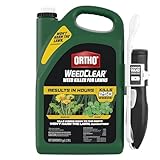
- LAWN FRIENDLY FORMULA: Our lawn friendly weed killer spray formula contains three proven ingredients that specifically target common lawn weeds, so it won't harm your grass (when used as directed)
- EASY APPLICATION: The continuous spray Comfort Wand weed killer sprayer applicator makes it easy to apply for lawn care, allowing for precise spray control and maximum accuracy without any pumping required
- LAWN WEED CONTROL: Use Ortho WeedClear Weed Killer for Lawns with Comfort Wand, a lawn weed killer, to kill weeds down to the root without harming your grass (when used as directed), with visible results in hours
- KILLS OVER 250 WEEDS: This broadleaf weed killer for lawns targets over 250 common broadleaf lawn weeds, including dandelions, clover, poison ivy, chickweed, and dollarweed (see product label for complete weed list)
- FAST VISIBLE RESULTS: See visible results in hours; this lawn care formula that is rainproof in 1 hour after drying, and people and pets may re-enter the treated area after the spray has dried
Keep the turf dense
Healthy, actively growing turf shades soil and leaves fewer gaps for doveweed to occupy. Mow at the height recommended for the grass species, return or remove clippings according to disease and seed-set conditions, and fertilize based on a soil test or local extension schedule rather than applying excess nitrogen. NC State also identifies core aeration and reducing traffic-related compaction as ways to improve turf competition.
Do not wait for a solid mat
NC State notes that late spring or early summer is generally a more favorable control period than waiting until a dense late-season infestation. Small plants are easier to reach, and surrounding turf has more time to recover. Once stems have rooted at many nodes, a contact treatment may miss protected portions and fragments can create new plants.
Choosing between prevention and visible-plant control
| Approach | Best use | Main limitation |
|---|---|---|
| Preemergence prevention | Preventing seedlings before they appear, when a product label includes doveweed and the specific turf. | It will not remove established plants, and application timing must match local soil and weather conditions. |
| Postemergence selective treatment | Managing visible doveweed while preserving a labeled turf species. | Safety and effectiveness vary by grass, product, formulation, plant size and weather. |
| Directed nonselective treatment | Small areas where doveweed has completely displaced turf and renovation is planned. | It can kill desirable grass and other plants if spray drifts or the treated area is misjudged. |
| Physical removal | Very small patches or situations where chemical use is unsuitable. | Every rooted node and fragment must be removed; missed pieces can regrow. |
Herbicide cautions by turf type
The detailed UF/IFAS warm-season turf-control guide is an archival copy originally published in June 2015. It discusses preemergence strategies and several postemergence active ingredients, but its directions are historical technical context, not a current application instruction. Product registrations, formulations, rates, state restrictions and turf tolerances can change.
Windows Errors? Fix Them Before They Spread
Repair common Windows errors and clear accumulated junk for a smoother, more stable PC - no reinstall needed.Free scan · no reinstallOutdated Drivers Are Slowing You Down
One free scan finds every outdated or missing driver and matches the right update for your exact hardware.Free scan · exact hardware match- Bermudagrass: The archived guide specifically states that atrazine should not be used on bermudagrass. Do not treat that statement as permission to use any substitute product; verify the current label for the product and formulation you are considering.
- St. Augustinegrass: The guide describes injury concerns for some postemergence mixtures. St. Augustinegrass can be damaged by products that are tolerated by another warm-season turf, so follow the exact label and observe any temperature or stress restrictions.
- Centipedegrass and zoysiagrass: Safety is product- and formulation-specific. A label that lists one warm-season grass does not automatically authorize use on the other.
- Any turf under stress: Heat, drought, flooding, recent mowing, disease or renovation can increase injury risk. Correct the stress and check the label’s application conditions before treating.
Never copy a rate from the archived publication or from an old container. Use the current product label and local extension guidance, and make a small test application only when the label permits it.
Rank #4

- KILLS 460+ WEEDS AS LISTED: Kills all types of listed broadleaf weeds including dandelion, chickweed, clover and yellow nutsedge.
- VISIBLE RESULTS: This product will give you visible results in 3 hours.
- KILLS BY CONTACT: Spectracide Weed Stop For Lawns Concentrate2 kills by contact and kills weed roots.
- WHERE TO USE: Use this product on lawns – treats bluegrass, fescue, zoysia, Bermuda and perennial ryegrass.
- Do not apply to zoysiagrass just emerging from dormancy.
A practical step-by-step control plan
- Scout as soil warms. Begin checking likely wet spots when soil temperatures approach the 65–70°F germination range cited by UF/IFAS. Continue scouting after heavy rain and irrigation cycles.
- Photograph and confirm. Document the plant and compare it with extension photographs. Do not spray an unidentified grass-like patch.
- Remove favorable moisture. Repair irrigation, improve drainage and reduce unnecessary watering before or alongside chemical control.
- Choose a method for the coverage. Hand removal suits a few plants. A labeled selective product may suit scattered plants in established turf. A fully displaced patch may call for directed renovation.
- Read the entire current label. Check turf species, application site, rate, maximum seasonal amount, weather limits, re-entry interval, personal protective equipment and restrictions on mowing or irrigation.
- Apply only under label conditions. Use calibrated equipment and avoid windy conditions or runoff. A pump sprayer can be useful for spot application only when the selected product’s label allows that method.
- Protect untreated turf. Keep spray off ornamental plants, trees, vegetable beds, ponds and neighboring lawns unless the label specifically permits those uses.
- Recheck the area. Look for surviving rooted nodes and new seedlings. Do not assume one application eliminated the soil seed reserve.
- Thicken the lawn during recovery. Resume species-appropriate mowing, irrigation and fertility so open soil does not invite another flush.
When renovation is the safer long-term choice
If doveweed has replaced most of the turf in a confined area, repeated selective spraying may be less practical than renovation. The archival UF/IFAS guide discusses directed nonselective treatment followed by resodding. This is not a casual spot-spray option: nonselective herbicides can kill desirable grass, and runoff or drift can injure nearby plants. Use only a currently labeled product and method, follow all waiting and replanting directions, or have an extension professional or qualified applicator plan the work.
Renovation will fail if the underlying wet condition remains. Correct drainage and irrigation before installing sod or reestablishing seed, and keep equipment from transporting fragments back into the repaired area.
Common mistakes and how to correct them
- “It looks like grass, so a grass killer is safe.” Doveweed is grass-like but not a turfgrass. Identify the lawn species and read the label before choosing a product.
- “I will spray after the patch fills in.” Late treatment means more rooted nodes and more seed. Scout early and treat at the first practical stage allowed by the label.
- “More water will help the lawn outgrow it.” Excess irrigation can favor doveweed. Water according to turf need and repair wet spots.
- “One treatment should solve it.” Existing plants, stem fragments and soil seed can produce different flushes. Monitor the site and address spread routes.
- “The old extension rate is still current.” The UF/IFAS technical guide is from 2015. Use current label directions and local restrictions instead.
- “Mowing will mulch the problem away.” Mowing can disperse fragments and seed. Clean equipment and manage clippings when the weed is mature.
Frequently asked questions
Can doveweed survive without flowers?
Yes. Vegetative plants may be present before blue or purple flowers appear. Confirm with the creeping fleshy stem, node rooting, leaf arrangement and sheath hairs rather than waiting for bloom.
Recommended Free Tools
Is doveweed a perennial?
No. It is a summer annual, although rooted stem fragments and repeated seedling emergence can make an infestation appear persistent from year to year.
Best Value

- LAWN WEED KILLER: Use Ortho WeedClear Weed Killer for Lawns Concentrate weed killer spray to kill over 250 listed weeds including dandelion and clover down to the root, without harming your lawn (when used as directed)
- HOW TO USE: To use, dilute with water following label directions and apply using in a tank sprayer or apply with the Ortho Dial N Spray hose-end weed sprayer to small, actively growing weeds when daytime temperatures are below 90°F
- WEED SPRAY COVERAGE: This 1 gal. container of Ortho WeedClear Weed Killer for Lawns Concentrate treats up to 64,000 sq. ft.
- FAST-ACTING WEED CONTROL: This concentrated weed killer controls listed weeds like dandelion, clover, and chickweed down to the root; it's rainproof in 1 hour and begins to show visible results in hours
- WHERE TO USE: Use broadleaf weed killer for lawns on St. Augustinegrass (not Floratam), Bermudagrass, Centipedegrass, Zoysiagrass, Buffalograss, Bahiagrass, Kentucky Bluegrass, Ryegrass, Tall Fescue, and Fine Fescue lawns
Will improving drainage alone remove an established patch?
Drainage correction reduces the conditions doveweed prefers, but established plants still need physical removal or a turf-safe, currently labeled control method.
Can I use the same herbicide on every warm-season lawn?
No. Turf tolerance differs. The archived UF/IFAS guide specifically warns against atrazine on bermudagrass and notes injury concerns for some mixtures on St. Augustinegrass; current labels must be checked for every species and formulation.
Bottom line
Identify doveweed by its fleshy, node-rooting runners, grass-like parallel-veined leaves, sheath hairs and small blue or purple flowers. Scout as warm, wet weather arrives, correct drainage and overwatering, keep the turf dense, and select treatment only after confirming the grass species and current label. A targeted, timely plan is safer and more reliable than applying a universal “grass weed” killer.
Do these 3 things before closing this tab:
1Clear out junk files and repair common Windows errors2Scan for outdated or missing drivers - takes under a minute3Repair Windows errors before they cause bigger problemsQuick Recap
Product prices and availability are accurate as of the date/time indicated and are subject to change. Any price and availability information displayed on Amazon at the time of purchase will apply.

