Quick wins for a faster PC:
Repair Windows errors before they cause bigger problemsFix Now →Scan for outdated or missing drivers - takes under a minuteDriver Scan →To harvest rainwater at home, first decide where the water should go: into a protected tank for later use, or into a site-designed structure intended to recharge groundwater. Then assess your roof, local rainfall, household demand, soil and available space before choosing a system. Traditional Indian water harvesting offers durable principles—not one structure to copy everywhere: capture rain where it falls, fit the structure to local conditions and use, and maintain it over time.
How to harvest rainwater at home: start with the roof and the destination
A practical home system begins by identifying what your roof can collect and where the water will go after it runs off. A sound roof and its downpipes can serve as the catchment and conveyance route; the endpoint is either a rainwater storage tank or a properly designed groundwater-recharge system. These are different choices. A tank holds water for later household use; a recharge pit or a connection to a well is intended to help replenish groundwater. One cannot be treated as a substitute for the other.
As an Amazon Associate I earn from qualifying purchases.
This distinction reflects a principle found across Indian water-harvesting traditions: structures were shaped around the source, landscape, scale and intended use. At a household, a rooftop tank is a practical modern analogue for storing collected water. Ponds, tanks, recharge works and linked water bodies may serve broader areas and often require community coordination or site-level design rather than a household-only decision.
Free tools Windows power users keep installed
One-click scans. No signup required.
The Government of India’s Jal Shakti Abhiyan: Catch the Rain campaign used the theme “Catch the Rain Where it Falls When it Falls.” For a homeowner, that means beginning with the rain that reaches the property and planning its route, rather than assuming a historical structure from another region will fit the site.
#1 Best Overall

- 50-Gallon Capacity: Provides ample storage for harvested rainwater, ideal for watering gardens, lawns, and plants.
- Durable Construction: Made from UV-resistant polyethylene for long-lasting durability and protection from the elements. Made of 100% Recycled plastic.
- Overflow Valve: Built-in overflow valve for managing excess water and the option to connect multiple barrels for increased storage.
- Convenient Spigot: Easy-to-use plastic spigot for quick and efficient water retrieval.
- Low Maintenance: Easy to install and maintain, offering a simple, sustainable solution for homeowners.
What traditional Indian water-harvesting methods can I use at home?
India’s systems are region-specific examples, not a universal catalogue of household builds. Their names matter because they point to different purposes and settings. A historical overview credited to Shekhar Raghavan of Akash Ganga Trust describes household collection, community water bodies, recharge works and agricultural tank networks across different regions. Use these examples to understand the design logic; they do not provide current construction dimensions for your property.
Rajasthan: tankas and kundis
Tankas and kundis are identified as household-scale collection and use examples in Rajasthan. They illustrate the principle of capturing water for a household reserve. A modern rooftop storage tank follows a related household-storage logic, but its capacity, location, materials and connection to the roof still need to suit the particular property.
Rajasthan: talabs, nadis, tanks and johads
Talabs, nadis and tanks are described at a broader community scale, while johads are given as a larger-scale recharge example. These structures show why a local water system may serve more than one property or need collective stewardship. They are not interchangeable with a small roof tank or a generic pit dug beside a house.
Gujarat: jhalaras, baoris and kuis
The overview identifies jhalaras and baoris for collection and use, and kuis for recharge. Their different roles reinforce a key planning question: is the project meant to retain water for direct later use, or to direct it toward groundwater? The answer affects what kind of structure and site assessment are needed.
Bihar: ahars and pynes
The ahar-pyne system is a regional example from Bihar. Rather than copy its forms into a residential plot, take the broader lesson that water harvesting can depend on how water is conveyed and managed across a landscape, not simply on the shape of a storage vessel.
Southern India: eri tank chains
Rain-fed or river-fed eri tank chains are noted in Andhra Pradesh, Karnataka and Tamil Nadu. A chain of linked tanks operates at a different scale from a single home installation. It illustrates how water bodies can form part of a larger network and why coordination and local planning may matter when a project changes runoff beyond one property.
Choose household storage or groundwater recharge
Before selecting equipment or asking for a design, decide which outcome matters most. Household storage creates a reserve for later use. Groundwater recharge directs water into a site-designed system with the aim of replenishing the aquifer. The same roof may contribute to either pathway, but the endpoint, design questions and permissions differ.
PC Slower Than It Used to Be?
A free scan shows the junk files, broken settings and background clutter dragging Windows down - then fixes them in one click.Free scan · Windows 10 & 11Outdated Drivers Are Slowing You Down
One free scan finds every outdated or missing driver and matches the right update for your exact hardware.Free scan · exact hardware matchRank #2
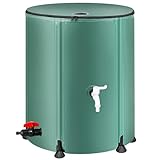
- 【Leak-Proof Design】Unlike typical rain barrels, our product features an integrated design with a straightforward screw-in faucet, eliminating the hassle of assembling multiple parts. This thoughtful construction guarantees a leak-proof system and simple installation
- 【Durable and Sturdy】Our collapsible rainwater collection system is made from premium three-layer PVC material, providing exceptional strength to endure even the toughest conditions. To enhance stability, the rain barrel includes circular footpads, effectively preventing any wobbling or tipping
- 【Easy to Store and Transport】 In contrast to bulky traditional wooden barrels, our rain barrel is foldable, making it easy to carry and store. Say goodbye to heavy, cumbersome containers and embrace convenience. Order our collapsible rain barrel today for effortless water conservation!
- 【Filtering Design】The top of our water storage container is equipped with a mesh design that prevents overflow and keeps leaves and debris out of your clean water. Rainwater collected through the faucet or overflow kit is clearer and can be reused for gardening, farm irrigation, car washing, and more—ideal for eco-conscious individuals
- 【Simple Installation and Exceptional Service】If you encounter any missing or damaged parts during installation, please contact us. We are dedicated to providing prompt replacements to ensure a worry-free experience for our customers
| Decision factor | Household storage | Groundwater recharge |
|---|---|---|
| Intended outcome | Keep collected rainwater in a tank for later household use. | Direct collected water through a properly designed system toward groundwater replenishment. |
| Questions about the site | How much roof catchment is available, how much rain is typical locally, what household demand should the reserve serve, and where can a tank be sited? | What do the soil, geology and groundwater context allow, and is there suitable space for a recharge structure? |
| Design and upkeep | Plan conveyance, debris and silt management, protected storage and maintenance. | Plan conveyance and filtration or desilting as appropriate, with the recharge structure designed for local conditions. |
| Water quality | Use decisions depend on the intended use; drinking or cooking requires local testing and treatment advice. | The project is aimed at recharge, not at creating a household supply that is automatically safe to drink. |
| Rules and coordination | Check current state and local requirements for the property and installation. | Check current requirements and seek local technical advice; larger works may involve coordination beyond one household. |
The table is a decision aid, not a design specification. A roof-to-tank system and a roof-to-recharge system have different endpoints. Do not assume that connecting a downpipe to a tube well or hand pump makes a storage tank unnecessary, or that a tank overflow arrangement is a properly engineered recharge design.
Plan a household system in six stages
The following sequence helps turn the traditional principles into a site-specific residential plan without pretending that one capacity or construction detail applies everywhere.
- Inspect the catchment. Identify the roof area intended to collect rain, check that it is sound, and trace where each relevant downpipe discharges. Note the available route from roof to the proposed endpoint and any space constraints. The roof area and local rainfall are essential inputs to sizing, but the available government references do not establish one universal tank capacity.
- Choose the water’s destination. Decide whether the goal is a household reserve in a rainwater storage tank or groundwater recharge through a properly designed structure. If the intention is recharge through an existing tube well or hand pump, the Kayakalp guide calls for a filter or desilting pit on rooftop inflow. Do not treat that provision as a complete design for every recharge site.
- Plan the route and debris management. Map how roof runoff will travel from the downpipe to the tank or recharge endpoint. Include suitable filtration or desilting so that roof debris and silt do not simply enter the storage or recharge structure. Select components as part of the system design; a retail filter or first-flush component alone does not establish that the collected water is potable.
- Size and locate the endpoint for local conditions. Consider local rainfall, roof catchment, household demand, soil and geology, groundwater context and available space. A storage tank should be sized around the reserve the household wants and the rain it can actually capture. A recharge structure needs local design input because the ground and groundwater conditions affect its suitability. Ask a locally qualified rainwater-harvesting designer or installer to assess permanent work rather than adopting dimensions from an unrelated example.
- Protect the structure and plan maintenance. Include access for inspection and cleaning in the site plan. Keep debris and silt management in view, and ask the designer what maintenance the chosen tank or recharge structure needs and how often local conditions call for it. Traditional systems depended not only on construction but also on continued management; a structure neglected after installation will not reliably serve its intended purpose.
- Confirm intended uses and water safety. Decide how collected water will be used before relying on it. The available government guidance does not certify untreated harvested rainwater as safe to drink and does not provide a complete household drinking-water treatment specification. If you intend to drink or cook with it, obtain current local water-testing and treatment advice for the proposed source and use.
How can I collect rainwater from my roof?
For rooftop collection, the basic route is roof catchment, downpipe conveyance, debris and silt management, and an endpoint chosen for storage or recharge. The sequence is straightforward; the correct dimensions and construction details are not universal. The Government of Meghalaya’s manual index links to material on rooftop design examples, ferrocement tank guidance and tank-sizing references, as well as resources for percolation tanks and check dams. Those references can help frame a local design conversation, but their existence does not mean that a stated dimension automatically suits a different roof, soil, rainfall pattern or property.
For a storage tank
Trace which downpipes will feed the tank and identify a practical tank location before settling on a capacity. A designer will need to consider the roof catchment, local rainfall and the household’s expected demand, as well as available space. Keep the collected water protected and provide a maintenance plan. Do not infer that rain captured from a roof is drinking-water quality simply because it has been stored in a tank.
What’s actually slowing this PC down?
Pick the symptom - the matching free tool is one click away.
For recharge through a well or hand pump
Do not connect rooftop runoff to an existing tube well or hand pump without addressing debris and silt. The Kayakalp guide specifically notes a filter or desilting pit for rooftop rainwater routed through existing tube wells or hand pumps. That is a system consideration, not a substitute for assessing the site or confirming that the recharge arrangement is suitable for local soil, geology and groundwater conditions.
For a larger recharge structure
Seek local design guidance before building a recharge pit, percolation tank or comparable permanent structure. The Meghalaya resources include material on artificial groundwater recharge and on hard-rock and coastal areas, signaling that setting matters. A reference intended for one kind of terrain should not be transferred to another without technical assessment.
Keep debris, silt and water-quality risks separate
Filtration or desilting is about managing what enters the system; it is not proof that the resulting water is safe for every use. The government guide’s filter or desilting recommendation applies to rooftop rainwater entering existing tube wells or hand pumps. The reviewed material does not specify a complete household drinking-water treatment train or certify untreated harvested rainwater as potable.
Rank #3

- RELIABLE LONG-LASTING VERTICAL WATER STORAGE: The Elkhart Plastics 1500 Gallon Water Container is designed for a wide range of applications; Vertical tanks are versatile for bulk water, well water storage, rainwater collection, and fire suppression
- EASY TO USE: 2 16" Manway lids on the water tank give flexibility for top-down plumbing, filtrated catchment, and access; 1.5" fitting at highest point for optimized fill, 2" fittings at lowest point for maximum drainage; Air bleeds allow for max fill
- SAFE FOR DRINKING WATER: UV-resistant HDPE protects against the sun; Dark-colored tank will obstruct light from entering for pure, safe drinking water; Made from virgin polyethylene and compliant with FDA and NSF/ANSI 61 standards
- DURABLE WATER COLLECTION: Banded body and reinforced top make this tough water barrel sturdy and ready for a long service life; Built-in gallon indicators provide easy fill level identification; Rotomolded build is resistant to rust, chips, and cracks
- DELIVERY AND INSTALL: Tank is delivered via freight and may not fit in garage or through small gates; Recommended to sit on reinforced concrete block or pad for stability; Diameter: 72", Height: 94"
For that reason, separate three decisions in the project plan: how runoff is conveyed, how debris and silt are managed, and what treatment or testing is needed for the intended use. If the household plans to drink or cook with collected water, ask local authorities or a qualified water professional what testing and treatment apply. Do not rely on a filter label, a historical example or the appearance of clear water as a substitute for that advice.
Recommended Free Tools
Check state and local rules before construction
Water management in India is a State subject. In an official reply published by the Press Information Bureau on April 6, 2023, the Ministry of Jal Shakti stated: “Water being a State subject, steps for augmentation, conservation and efficient management of water resources are primarily undertaken by the respective State Governments.” The Ministry also said that national policy encourages the revival of traditional water-harvesting structures.
That April 2023 reply reported that provisions for rainwater harvesting in the Model Building Bye-Laws 2016 had been adopted by all States and Union Territories except Sikkim, Lakshadweep and Mizoram at that time. This is a dated national status report, not confirmation of the rule currently applicable to a particular property. Before work begins, check current municipal and state requirements, including any applicable building provisions and local permissions, with the authority responsible for the site.
In the same reply, the Ministry reported 1,228,553 water-conservation and rainwater-harvesting structures for the Jal Shakti Abhiyan: Catch the Rain 2022 reporting period, March 29, 2022 to March 3, 2023. It also reported 267,472 renovations of traditional water bodies over that period. These are program counts, not measurements of water saved per household or proof that a particular home system will meet its demand.
Use design references as starting points, not ready-made plans
The Government of Meghalaya’s manual index covers “Water Harvesting – Our Age Old Tradition,” present practices, structure planning, design and construction, artificial groundwater recharge, and material for hard-rock and coastal areas. A companion page lists rooftop design examples, ferrocement tank guidance, tank-sizing references, percolation tanks and check dams. These resources demonstrate the range of design questions and settings that a practitioner may need to consider; a title or example does not establish that its details fit an individual site.
When consulting a local designer or installer, describe the roof catchment, intended destination, expected use, site constraints and any known ground conditions. Ask which local rainfall and demand assumptions inform the sizing, how debris and silt will be handled, what maintenance is needed and which local rules apply. For recharge, ask how the proposed design accounts for soil, geology and groundwater context. For storage intended for drinking or cooking, separately ask what local testing and treatment advice is required.
Common planning mistakes to avoid
- Copying a structure because it has a traditional name. Tankas, kundis, johads, kuis and eri tank chains belong to different regions, scales and functions. Use them to understand local adaptation, not as interchangeable plans.
- Choosing a capacity before assessing the site. Roof catchment, local rainfall, household demand and available space all affect a storage decision. There is no universal capacity established by the available references.
- Confusing storage with recharge. A tank retains a household reserve; a recharge structure has a different purpose and depends on site conditions. Choose the destination before selecting the structure.
- Sending roof runoff to a well without debris management. The Kayakalp guide calls for a filter or desilting pit when rooftop water is routed through existing tube wells or hand pumps.
- Assuming collection equals potability. The cited material does not certify untreated rainwater for drinking or cooking and does not give a complete household treatment specification.
- Relying on a national policy statement as a current permit. The adoption information was reported in April 2023. Confirm the current state and local rule for the actual property.
- Ignoring maintenance and shared effects. Plan how the household will inspect and maintain the system; for works that affect or depend on a wider water body or shared infrastructure, consider the coordination needed beyond the property boundary.
A practical decision checklist
- Have you identified a sound roof catchment and traced the relevant downpipes?
- Is your priority a stored household reserve or groundwater recharge?
- Have local rainfall, roof catchment, demand, available space and—where recharge is proposed—soil, geology and groundwater context informed the design?
- Does the plan include suitable debris and silt management?
- Have you planned access, inspection and maintenance?
- If water may be used for drinking or cooking, have you obtained local testing and treatment advice?
- Have you checked current state and municipal requirements for this property?
Build around the local logic
The most useful lesson from India’s varied water-harvesting traditions is not to reproduce one historic structure in every home. It is to match capture, conveyance, storage or recharge, and upkeep to the local landscape and the water’s intended use. Start with the roof, choose the destination, and get local design and regulatory advice for permanent work. That approach respects the traditions’ diversity while making a household system more appropriate to its own site.
Quick Recap
Product prices and availability are accurate as of the date/time indicated and are subject to change. Any price and availability information displayed on Amazon at the time of purchase will apply.




