Vinca minor is an evergreen, low-growing perennial ground cover that is easiest to grow in moist, well-drained soil and partial shade. It tolerates full shade and can grow in full sun when moisture is reliable, but its creeping stems root wherever they touch the soil. That makes it useful for quickly covering a managed bed—and potentially difficult to remove when it escapes.
Before planting, check your state, province, county, or local invasive-plant list. Vinca minor is treated as invasive or high-risk in some jurisdictions, including North Carolina, Pennsylvania state lands, and Florida. Do not plant it beside woods, streams, ravines, wetlands, parks, or other unmanaged natural areas. If it is locally listed, prohibited, discouraged, or likely to escape, choose a regional native ground cover instead.
As an Amazon Associate I earn from qualifying purchases.
Vinca minor at a glance
| Feature | What to expect |
|---|---|
| Botanical name | Vinca minor L. |
| Common names | Common periwinkle, lesser periwinkle, dwarf periwinkle, running myrtle, and periwinkle |
| Plant family | Apocynaceae, the dogbane family |
| Growth habit | Evergreen, mat-forming perennial with trailing stems |
| Typical foliage height | About 3–6 inches, although established runners can cover a much wider area |
| Flowers | Usually blue, lavender, purple, or white, with five petals; flowering is generally strongest in spring |
| Best light | Partial shade or light shade; it also tolerates full shade and, with adequate moisture, full sun |
| Main management issue | Stems root at their nodes, allowing the plant to form a dense mat and spread beyond its intended bed |
The short version is simple: plant Vinca minor only where it is locally acceptable, physically manageable, and separated from natural areas. It is low-maintenance after establishment, but it is not no-maintenance. Perimeter inspection, pruning, and fragment-safe disposal are part of caring for it.
Do these 3 things before closing this tab:
1Repair Windows errors before they cause bigger problems2Fix the driver behind crashes, sound loss and screen glitches3Clear out junk files and repair common Windows errorsWhat exactly is Vinca minor?
Vinca minor is native primarily to Europe and the Caucasus; some botanical references describe its range more broadly across parts of Europe and the Mediterranean region. The Royal Botanic Gardens, Kew plant record provides the botanical classification and native-range context.
#1 Best Overall

- CLEAN CUTS FOR LIVE GROWTH: Bypass blade design is ideal for pruning delicate flower stems and green growth, helping reduce crushing and plant damage while cutting stems and small branches up to 5/8” in diameter
- BLADES STAY SHARP: Precision-ground steel blades are engineered to stay sharp through heavy use, & all-steel construction provides lasting durability, delivering consistent cutting performance for regular garden maintenance & detailed pruning tasks
- SMART BLADE FEATURES: Blade coating helps reduce friction for smoother cuts, minimizes sap buildup & gumming, and enhances resistance to rust for longer-lasting performance in outdoor conditions; sap groove keeps the blades from sticking during use
- COMFORTABLE, CONTROLLED GRIP: Ergonomic, non‑slip handle enhances control and reduces hand fatigue during repetitive cuts; easy‑open safety lock secures the blade for safe transport and compact storage
- INCLUDES: (1) Fiskars Bypass Pruning Shears designed for everyday gardening and plant care and backed by a Lifetime Warranty. Product care tips: Wipe pruners clean after each use to prevent sap build-up and lightly oil blade for longer product life
In a landscape, it forms a low evergreen carpet of glossy, opposite, dark-green leaves. Slender stems trail across the ground and produce roots at their nodes—the points where leaves and stems meet. Five-petaled flowers appear above the foliage, most commonly in shades of blue or purple, although white-flowered forms are also grown.
Node-rooting is the plant’s defining advantage and its defining liability:
- As a ground cover: each rooted section helps close gaps, suppress weeds, stabilize soil, and fill a shaded bed.
- As a management problem: a runner that crosses an edging strip can root in the lawn, beneath shrubs, down a slope, or along a drainage route. Small viable pieces can also regenerate if they are moved elsewhere.
For that reason, the plant’s foliage height is a poor measure of its eventual footprint. Virginia Cooperative Extension describes a possible spread of about 8 feet in a ground-cover setting, while USDA guidance notes that runners may trail long distances. North Carolina Extension gives a smaller width for individual plants, roughly 3–18 inches, but those individual plants can multiply into a broad, continuous mat.
PC Slower Than It Used to Be?
A free scan shows the junk files, broken settings and background clutter dragging Windows down - then fixes them in one click.Free scan · Windows 10 & 11Crashes, No Sound, or Screen Glitches?
Random freezes, missing sound and display glitches usually trace back to one bad driver. Find and replace yours safely.Free scan · under a minuteIdentify the right plant before buying
Nursery labels and common names can cause confusion. Confirm the botanical name rather than relying on the word “vinca.” The NC State Extension Plant Toolbox and Clemson Cooperative Extension provide useful comparisons.
Vinca minor versus Vinca major
| Feature | Vinca minor | Vinca major |
|---|---|---|
| Overall size | Smaller and usually about 3–6 inches tall | Larger and coarser, often forming a substantially taller mound |
| Leaves | Smaller and narrower | Larger, broader, and often heart-shaped at the base |
| Leaf margins | Generally without obvious marginal hairs | Often ciliate, meaning small hairs are visible along the margins |
| Flowers | Usually smaller | Usually larger |
| Growth | Trailing stems root at nodes | Also trails and roots at nodes, and is often even more vigorous |
| Management | Can become invasive in some locations | Can be more aggressive and is also treated as invasive in some regions |
Vinca minor versus annual or Madagascar vinca
The colorful bedding plant sold as annual vinca, Madagascar periwinkle, or annual periwinkle is Catharanthus roseus, not Vinca minor. It is a different plant with different temperature, seasonal, and care requirements. Clemson explains this distinction in its periwinkle care guide; NC State’s plant profile for Catharanthus roseus is another way to verify the identity.
Is Vinca minor invasive where you live?
There is no universal yes-or-no answer. “Invasive” is a jurisdiction-specific management designation. A plant can be a contained ornamental in one region and a serious threat to native vegetation in another, depending on climate, habitat, land use, and local regulations.
There are important warnings for U.S. gardeners:
- North Carolina Extension identifies Vinca minor as invasive through the NC Invasive Plant Council.
- Pennsylvania’s Department of Conservation and Natural Resources lists common and bigleaf periwinkle as invasive on state lands.
- Virginia Cooperative Extension describes Vinca minor as a documented invasive plant and notes that it can become a dominant or nearly monotypic understory in portions of the northeastern United States.
- The UF/IFAS 2026 assessment gives Vinca minor a high invasion-risk recommendation against planting in Florida.
The evidence is not identical in every habitat. The U.S. Forest Service FEIS review reports that dense stands can suppress native seedlings and understory plants, while at least one Illinois case study found limited evidence of reduced plant diversity. That regional variation is a reason to check local evidence—not a reason to assume the plant is harmless.
When a managed planting may be reasonable
Consider it only when all or nearly all of these conditions apply:
- It is not prohibited or discouraged locally.
- The planting is in a clearly bounded bed, planter, or container.
- The site is away from woods, wetlands, streams, ravines, parks, and unmanaged property.
- You can inspect and trim the perimeter every year.
- You accept that the plant may suppress other ground-layer plants and that future owners will need to maintain it.
- Your goal is a durable evergreen carpet rather than a diverse native planting or restoration project.
Where does Vinca minor grow best?
Light
Partial shade or light shade is the safest general recommendation. It tolerates full shade, although flowering and density may be reduced compared with a brighter site. More light generally produces more flowers. It can grow in full sun where soil moisture is dependable, but exposed plants may develop pale, discolored, or scorched foliage in hot, dry conditions.
Rank #2

- LONG-LASTING SHARPNESS: Japanese SK5 bypass blade with titanium coating is tested through 5,000 cuts to maintain a sharp edge and deliver clean, consistent cuts on live stems and branches
- BUILT FOR 5X DURABILITY: Heavy-duty 3-layer titanium-coated SK5 blade resists wear and corrosion, while anodized aluminum handles and high-hardness screws reinforce the pruner. Repeated cutting tests show up to 5X the durability of standard pruners
- POWERFUL 4X LEVER CUTTING: The optimized lever-action design multiplies cutting force up to 4X, making thicker branches easier to prune with less hand effort. Cuts branches up to 3/4" with smooth, controlled power for everyday garden pruning
- ARTHRITIS & SENIORS FRIENDLY: Ergonomic non-slip rubber handles cushion pressure and provide a secure, comfortable grip, helping reduce hand and wrist fatigue. A comfortable hand pruner for seniors, arthritis and longer pruning sessions
- ONE-HAND SAFETY LOCK: The easy-access safety lock opens and closes with one hand for faster trimming, then securely holds the blades closed for safer carrying and storage
In hot climates, afternoon shade is preferable to intense western exposure. A north-facing foundation bed, the filtered light beneath established trees, or a shaded slope can suit the plant well—provided drainage is good and the location is not connected to a natural area.
Recommended Free Tools
Soil and drainage
Vinca minor adapts to many soil types and performs best in moist, well-drained soil containing organic matter. Moisture and exposure can matter more than the exact soil texture. Do not treat it as a solution for persistently waterlogged ground: saturated soil increases the likelihood of root and crown problems.
If a proposed bed stays wet, improve drainage before planting. Grading, a properly designed drainage solution, or a raised bed may be more useful than simply adding fertilizer. Avoid creating a route for runners or fragments to move into a ditch, stream, or neighboring natural area.
Useful landscape locations—and important limits
Where locally appropriate, common uses include shaded ground cover, underplanting beneath trees and shrubs, shaded banks, north-facing foundation beds, and some erosion-prone slopes. Containers and planters can also work when stems cannot reach adjacent soil and clippings are collected.
Its ability to stabilize soil is not an ecological free pass. A rooting mat can spread downhill or into riparian and woodland habitat, where it may compete with native plants and interfere with tree regeneration. Use it for erosion control only after considering what lies below the slope and where water carries plant fragments.
Hardiness and winter performance
Published hardiness ranges differ. Virginia Cooperative Extension and Missouri Botanical Garden commonly place the plant in Zones 4–8, while other references list colder limits, including Zone 3. Treat those numbers as guidance rather than a universal guarantee: cultivar, snow cover, wind exposure, winter moisture, and the reliability of local cold temperatures all matter. Check a regional extension source and the label for the specific cultivar you are considering.
How to plant Vinca minor
- Confirm local status. Do this before buying plants or accepting divisions from another gardener.
- Choose a contained site. Keep the bed away from woods, streams, ravines, wetlands, drainage ditches, and unmanaged land. A lawn edge is not a permanent containment system.
- Clear perennial weeds and unwanted roots. Remove competing vegetation before planting so young plants do not have to compete for moisture and light.
- Correct drainage problems. Improve the site if water remains at the root zone. Adding nutrients to a wet bed will not solve root-rot conditions.
- Plant when the soil is workable. Spring or fall is generally practical, especially when natural moisture is available. The USDA notes that planting can occur whenever adequate moisture is available for establishment.
- Set the root ball at its original depth. The crown should be at the same level it was in the container. Do not bury the crown or leave the root ball perched above the surrounding soil.
- Select a spacing strategy. Planting 12–18 inches apart is a conventional approach. USDA establishment guidance uses approximately 18 × 18 inches. Closer spacing fills faster but costs more and produces a dense mat sooner. Clemson reports complete coverage from 6-inch spacing in one year under South Carolina conditions; that is a regional example, not a timetable that applies to every climate.
- Water thoroughly. Soak the planting area after installation so the root ball and surrounding soil are evenly moist.
- Mulch between plants. Use mulch to reduce weed competition while the plants establish, but keep it away from the crown. Mulch does not replace perimeter monitoring.
- Inspect the edge. Look under shrubs, along fences, beside paving, and beyond the bed after wet weather. Pull or cut runners before their nodes root.
Closer spacing is not automatically better. A dense planting may provide faster weed suppression, but it also creates a larger, more connected mat that is harder to inspect and remove. Wider spacing allows you to see the soil surface and intercept runners during establishment.
Ongoing care
Watering
Water consistently during the establishment period. Once established, Vinca minor has some drought tolerance, particularly in shade, but “drought-tolerant” does not mean it thrives in permanently dry, hot soil. Plants in full sun or hot climates require closer monitoring.
Water deeply enough to moisten the root zone, then allow excess water to drain. Avoid frequent shallow watering and avoid keeping the soil saturated. Where practical, use a soaker hose or drip irrigation rather than wetting the foliage overhead. Prolonged leaf wetness and poor air movement can encourage fungal disease.
The Tool Desk
Outbyte Driver Updater FREEScan for outdated or missing drivers - takes under a minuteDriver Scan →Outbyte PC Repair FREEClear out junk files and repair common Windows errorsFree Scan →Fertilizer
Established plants generally need little feeding. Do not apply fertilizer automatically when foliage is healthy. If growth is weak or leaves are unusually pale, check light, moisture, drainage, root competition, weeds, and disease before adding nutrients; a soil test can help identify an actual deficiency.
Rank #3
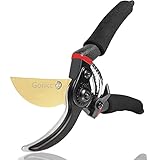
- Drop-forged construction delivers exceptional durability and sturdiness for long-term heavy garden use.
- Premium SK-5 steel blade with titanium coating and ultra-fine polishing ensures sharpness, rust resistance, and smooth cutting.
- Ergonomic non-slip aluminum handles wrapped with PVC offer lightweight strength, comfort, and reduced hand fatigue.
- Built-in sap groove effectively channels away sap to prevent sticking and keep blades clean during pruning.
- Capable of cutting branches up to 3/4 inch in diameter, ideal for live plants, stems, and light woody pruning tasks.
Clemson gives a spring application of 10-10-10 fertilizer at 6–8 pounds per 1,000 square feet as a South Carolina example when fertilization is necessary. That rate is not a universal prescription. Follow the product label and local extension recommendations, and avoid high-nitrogen feeding that produces lush growth without correcting a drainage or disease problem.
Mulch and weed management
Keep mulch shallow enough that stems remain visible and the crown stays dry. Hand-weed carefully while plants are small. Once the mat closes, it suppresses many weeds—but the periwinkle itself can become the weed if runners cross the intended boundary.
Pruning and containment
Routine pruning and containment are different jobs:
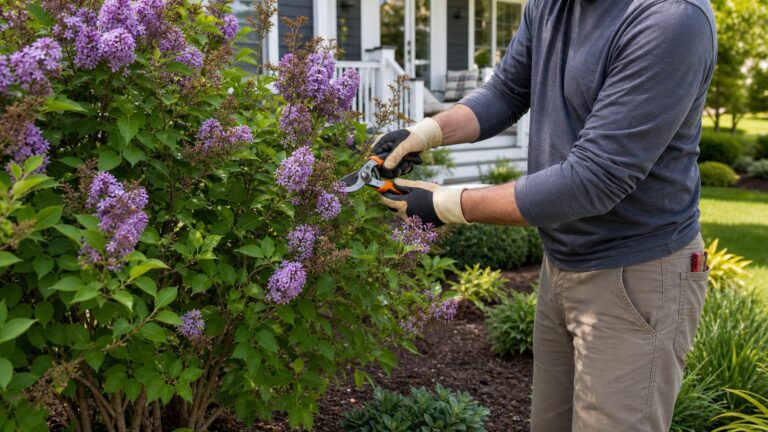
- Routine pruning: Cut back overgrown, thin, or leggy stems in early spring. The Royal Horticultural Society recommends a hard early-spring cutback when growth needs restricting, and Clemson describes occasional shearing close to the ground to encourage fresh growth.
- Containment: Pull or trim runners before they root at the nodes. Check beyond the visible bed edge, beneath shrubs, along fences, and at the bottom of slopes.
Remove dead or diseased stems and dispose of them rather than leaving them in the bed. Edging can define the bed, but it does not reliably stop a stem from crossing the edge and rooting on the other side. If the plant is invasive locally, containment is ongoing management, not a one-time installation detail.
How to propagate it responsibly
Vinca minor is easy to multiply, which is useful horticulturally and increases the risk of accidental spread. Do not share or distribute it where local authorities discourage planting.
- Division: Lift an established section and separate rooted portions, keeping roots attached to each division. Replant promptly at the original depth.
- Tip or stem cuttings: Clemson recommends nonflowering tip cuttings in late spring. Keep the medium evenly moist while roots develop.
- Semi-ripe cuttings: The RHS lists semi-ripe cuttings as another propagation option.
- Natural layering: Stems that have already rooted at their nodes can be detached and transplanted, provided the resulting plant is legally and ecologically appropriate for the site.
Use clean tools, label plants accurately, and collect every unused cutting. Never discard a runner in woods, drainage ditches, waterways, or an informal compost pile.
Common problems and what to do
Serious insect problems are generally less prominent than fungal disease and cultural problems. A large patch can decline when humidity, poor drainage, dense growth, and overhead irrigation create favorable conditions for disease.
| Symptom | Possible cause | First response |
|---|---|---|
| Blackened stems near the soil line | Stem blight or canker | Remove affected material, improve airflow, and avoid overhead irrigation. |
| Large areas suddenly collapse | Fungal dieback or stem disease | Remove diseased growth, check drainage and humidity, and obtain a local diagnosis if the decline continues. |
| Circular brown leaf spots | Leaf-spot disease, including diseases associated with fungal pathogens | Improve spacing and air movement, keep foliage dry, and remove badly affected material. |
| Yellowing followed by decline in wet soil | Root or crown rot | Correct drainage and reduce irrigation; affected roots may not recover. |
| Thin, weedy-looking cover | Low light, poor establishment, weed competition, or root competition from trees | Correct the site problem and weed carefully rather than automatically adding fertilizer. |
| Pale, bleached, or scorched foliage in full sun | Heat, drought, or exposure stress | Increase moisture if drainage is good, or provide afternoon shade. |
| Few flowers | Deep shade, young plants, stress, or cultivar differences | Accept reduced flowering in deep shade or move future plantings to brighter filtered light; do not expose an established patch suddenly to harsh sun. |
Extension references report stem blight, canker, dieback, leaf spot, root rot, Botrytis, Rhizoctonia, Phomopsis, and Phoma-related diseases. The Penn State Vinca diseases reference is useful for Phoma blight context, while Clemson’s guidance emphasizes proper spacing and avoiding overhead irrigation. Chemical control is often unnecessary when sanitation, air movement, watering, and drainage are corrected. If a disease is spreading through a valuable planting, contact a local extension office or plant clinic before applying a fungicide.
Deer, pollinators, and wildlife
Many garden references call Vinca minor deer-resistant, but USDA field guidance notes that deer may consume it seasonally even if they do not prefer it. Use often deer-resistant, not deer-proof.
The flowers can attract bumblebees and other insects. That limited benefit does not make the plant an appropriate choice where it is invasive. A plant can provide nectar in a garden and still reduce native plant diversity when it forms a dense, unmanaged understory. If wildlife value is a priority, favor a locally native, mixed planting selected for the site’s light and moisture.
Rank #4
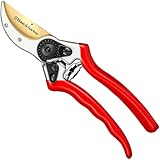
- Sharp, Clean Cuts Every Time – Engineered from Japanese grade, high-carbon steel, ClassicPRO bypass pruning shears for gardening stay sharp and make precise cuts that encourage healthy growth and won’t damage your plants
- No More Hand Fatigue and Wrist Strain – ClassicPRO gardening shears are designed with an ergonomic handle, non-slip grips, and shock-absorbing pads, making them lightweight and comfortable for smaller hands, seniors, and arthritis sufferers
- Rust and Corrosion Resistant – Tired of garden shears that rust after just a few uses? Our heavy duty pruning shears are constructed from anodized aluminum with titanium-coated blades to reduce friction and protect against rust and corrosion
- One Gardening Pruner, Many Uses - Preferred by professional landscapers and master gardeners, ClassicPRO clippers for gardening are adjustable general-purpose secateurs and branch cutters to trim trees, plants, and indoor flowers up to 1” thick
- Designed to Last Season After Season – Tired of cheap, low-quality hand pruners for gardening? Our heavy duty handheld garden clippers are designed for durability and longevity so you always have reliable shears
Safety, children, and pets
Common names create a particular problem with vinca toxicity. The Poison Control article specifically addressing Vinca minor notes that the plant contains vinca alkaloids and advises consulting medical professionals before using periwinkle preparations.
Quick wins for a faster PC:
Clear out junk files and repair common Windows errorsFree Scan →Fix the driver behind crashes, sound loss and screen glitchesFind Drivers →The ASPCA page commonly returned for “vinca toxicity” identifies Vinca rosea, an older name associated with Catharanthus roseus, rather than clearly identifying Vinca minor. It should not be transferred uncritically to common periwinkle as species-specific evidence.
The practical precautions are still straightforward:
- Do not eat Vinca minor or make home remedies from it.
- Keep plant material and clippings away from children and pets.
- Do not leave pulled runners where animals can chew them.
- After a concerning ingestion, contact a poison center or medical professional; contact a veterinarian for a pet exposure.
How to contain an established patch
If you inherited a planting from a previous homeowner, first decide whether it is still appropriate for the site. A patch beside a lawn in a bounded, non-natural bed may be manageable in a region where it is permitted. A patch moving toward woods, water, or a neighboring natural area deserves prompt removal or professional invasive-plant guidance.
Small patch: hand removal
- Work when the soil is moist but not saturated.
- Start at the outer edge and pull stems from their bases.
- Dig out rooted nodes, runners, and underground portions rather than removing only the visible leaves.
- Rake the area and inspect the soil for detached fragments.
- Bag viable plant material securely.
- Monitor the site through the growing season and again in subsequent seasons. Remove new shoots as soon as they appear.
- Replant with a suitable native or noninvasive ground cover only after the area has been checked for regrowth.
The Ontario Invasive Plant Council’s best-management-practice guide emphasizes careful, persistent hand pulling and digging for small patches because every rooted node and fragment matters.
What’s actually slowing this PC down?
Pick the symptom - the matching free tool is one click away.
Large patch: staged control
- Work from the outer edge inward and remove manageable sections rather than scattering runners across the site.
- Repeated cutting or mowing can weaken and slow the plant, but it does not eradicate intact roots and stems by itself.
- After cutting or removal, opaque tarping can suppress regrowth. Plan on at least two growing seasons, secure the edges, and inspect around the perimeter.
- Herbicide may be appropriate for a large infestation, but product legality, labels, timing, waterways, non-target plants, and local regulations vary. Use only a product labeled for that site and use, and follow current local instructions. Avoid generalized herbicide applications near water or desirable native vegetation.
For a large patch beside a waterway, on a steep slope, or intertwined with desirable plants, consult your county extension office, local invasive-plant program, or a qualified land-management professional before choosing a control method.
Disposal
Do not put viable stems, runners, or rooted pieces in a backyard compost pile. Bag them for disposal under local municipal rules. Some municipal facilities accept invasive plant material through controlled high-temperature composting, but acceptance policies differ; verify before delivery. Never dump periwinkle in woods, vacant lots, ditches, streams, or other places where fragments can take root or be transported by water.
Alternatives to Vinca minor
There is no single replacement that works everywhere. Match the alternative to regional climate, winter conditions, light, soil moisture, drainage, slope, and the amount of foot traffic. Locally native plants are generally the best starting point for a planting near natural habitat.
| Potential alternative | Where it may fit |
|---|---|
| Allegheny pachysandra, Pachysandra procumbens | Suitable woodland-style conditions in parts of the eastern United States |
| Foamflower, Tiarella cordifolia | Moist, shaded beds where a clumping native perennial is appropriate |
| Native ferns | Shaded, woodland-like sites; choose species suited to local moisture and soil |
| Partridgeberry, Mitchella repens | Low, shaded woodland conditions with adequate moisture |
| Woodland phlox, Phlox divaricata | Part-shade plantings where seasonal flowers are preferred over an evergreen carpet |
| Bearberry, Arctostaphylos uva-ursi | Sunny, dry, acidic sites; not a universal shade replacement |
| Wintergreen, Gaultheria procumbens | Appropriate woodland conditions with acidic soil and suitable moisture |
These examples come from regional replacement references, including Penn State Extension’s native replacement list, the Master Gardeners of Northern Virginia, and the Ontario Invasive Plant Council guide. They are not universally suitable. A mixed planting of several locally native species often provides better habitat value and resilience than replacing one invasive or potentially invasive carpet with another single-species ground cover.
Free tools Windows power users keep installed
One-click scans. No signup required.
Practical decision checklist
Plant it only if local authorities permit or accept it, the site is contained and away from natural areas, drainage is good, and you will inspect the perimeter.
Best Value

- · ULTRA-SHARP SK5 STAINLESS STEEL - Engineered with premium SK5 stainless steel, these heavy duty pruning shears deliver razor-sharp precision and maximum hardness. The rust-resistant blades are designed to stay sharp longer, effortlessly resisting corrosion and sap buildup for smooth, friction-free garden shears performance year after year.
- · CLEAN CUTS FOR 1 INCH THICK BRANCHES - Say goodbye to crushed stems and ragged bark. Our professional bypass pruning shears slice through thick branches up to 1 inch like butter(as the videoes show). By ensuring perfectly clean cuts without leaving debris, it helps your roses, fruit trees, and indoor plants heal faster and stay healthy.
- · ERGONOMIC COMFORT FOR ARTHRITIS & WEAK HANDS - No more hand fatigue or wrist strain! Featuring a non-slip SoftGrip handle with premium cushioning, these garden clippers absorb pressure with every cut. It is the ultimate arthritis friendly hand pruner for seniors or anyone with limited hand strength to enjoy yard work pain-free.
- · 100% LEFT-HANDED FRIENDLY & SAFETY LOCK - Unlike standard garden scissors that flop and crush stems when used left-handed, our uniquely balanced hand pruners work flawlessly for both right and left-handed users. Equipped with a secure, easy-to-operate safety lock to protect your fingers and ensure safe storage.
- · HIGH-VISIBILITY RED & LIFETIME WARRANTY - Never lose your tools in the grass again! The vibrant high-visibility red handle makes these plant shears pop instantly in any backyard setting. We stand behind our industrial-grade quality—enjoy 100% risk-free shopping backed by our ironclad Lifetime Warranty. Perfect gardening gifts for women and men!
Contain it if an existing patch is healthy but remains inside a managed bed. Remove runners before they root, shear overgrown growth in early spring, collect clippings, and monitor beyond the edge.
Remove it if it is locally listed, spreading toward natural habitat or water, overtopping native plants, or likely to be neglected by future owners. Small patches are usually most manageable by careful digging and repeated monitoring; large patches may require staged removal, prolonged tarping, or locally compliant professional treatment.
Frequently Asked Questions
Can Vinca minor grow in full shade?
Yes. It tolerates full shade, but it usually flowers more heavily and may grow more densely with filtered or partial light. Deep shade can also produce a thinner, less floriferous planting.
Can I grow Vinca minor in full sun?
It can grow in full sun when soil moisture is reliable. In hot or dry locations, however, exposed foliage may discolor or scorch, and the plant will need closer watering attention. Afternoon shade is safer in hot climates.
How far apart should periwinkle plants be?
A conventional spacing is 12–18 inches apart, with USDA guidance using approximately 18 × 18 inches. Six-inch spacing can produce faster coverage under some South Carolina conditions, but it costs more and creates a dense mat that can be harder to contain.
Will mowing get rid of an established periwinkle patch?
No. Repeated mowing or cutting can weaken and slow the plant, but it does not remove rooted nodes and intact stems. Digging, repeated follow-up, prolonged opaque tarping, or a locally compliant treatment plan may be needed.
Can I grow Vinca minor in a container?
Yes, provided runners cannot reach nearby soil and all trimmings are collected. Check the container and surrounding paving for stems that have escaped, and do not place discarded cuttings in compost, woods, ditches, or waterways.
Is common periwinkle toxic to pets?
Species identification matters. Poison Control specifically discusses Vinca minor and its vinca alkaloids, while the commonly cited ASPCA vinca page identifies Vinca rosea, associated with Catharanthus roseus. Do not let pets chew the plant or clippings; contact a veterinarian after a concerning ingestion.
The Bottom Line
Vinca minor is a capable ground cover, not a carefree one. Its evergreen foliage, shade tolerance, and node-rooting stems make it effective in a managed landscape, but those same traits can allow it to form dense mats and escape into natural areas. Check local regulations first, plant only in a contained site with good drainage, monitor the perimeter, and choose a locally native alternative whenever the site borders woods, water, or other unmanaged habitat.
Quick Recap
Product prices and availability are accurate as of the date/time indicated and are subject to change. Any price and availability information displayed on Amazon at the time of purchase will apply.