Recommended Free Tools
Frogfruit (*Phyla nodiflora*) is a low, spreading groundcover for sunny to partly shaded sites. Its creeping stems root where they touch the ground, forming a mat that can support pollinators—but that same growth habit needs room. It tolerates varied soils and some dry spells once established, though prolonged drought can cause dieback. Local conditions and the source of the plant matter: choose regionally appropriate material and confirm its scientific name.
Is frogfruit a good fit for your site?
Frogfruit, also called turkey-tangle frogfruit or matchweed, is the species Phyla nodiflora (L.) Greene. Using the scientific name when you shop helps distinguish it from plants sold under similar common names. Kew records the species across tropical and subtropical regions, but a broad natural range does not mean every seed lot or nursery plant is native to your particular area. Kew’s accepted-name and distribution record.
As an Amazon Associate I earn from qualifying purchases.
It is worth considering where you want a low, spreading plant rather than a tightly contained clump. UF/IFAS lists groundcover, lawn companion or alternative, container, and hanging-basket uses; NC State and UF/IFAS describe it as suitable for full sun through partial shade. Its stems root at nodes and can knit into a dense mat, so allow for spread and plan how you will manage its edges near turf or other plants. UF/IFAS Gardening Solutions: Frogfruit; NC State Extension: *Phyla nodiflora*.
Quick wins for a faster PC:
Clear out junk files and repair common Windows errorsFree Scan →Fix the driver behind crashes, sound loss and screen glitchesFind Drivers →Repair Windows errors before they cause bigger problemsFix Now →- Good potential fit: a groundcover, rock garden, butterfly garden, or mixed lawn planting where spreading growth is acceptable.
- Think twice: a small bed where runners must be kept strictly within a narrow boundary or where neighboring plants cannot tolerate competition.
- Check locally: suitability and availability vary by region; seek local native-plant guidance before choosing a source.
Light, soil, and water
Light
Full sun to partial shade is suitable according to UF/IFAS and NC State Extension. The right balance can depend on local climate and the site; the sources do not establish one universal best exposure.
#1 Best Overall

- FLORIDA NATIVE POLLINATOR FRIENDLY GROUNDCOVER: The tiny but abundant blooms attract native bees, butterflies, and beneficial insects, providing vital foraging support for pollinators and supporting healthy ecosystems and wildlife-friendly gardens throughout the season.
- LOW SPREADING NATIVE GROUNDCOVER MAT: Forms a naturally low, spreading mat of foliage and flowers that adds beautiful native texture and year-round interest to garden beds, sunny paths, and open landscape areas.
- HEAT AND DROUGHT TOLERANT LOW WATER PERFORMER: Thrives in full sun and performs well in loam and well-drained soils with minimal watering, making it a versatile and low-maintenance choice for hot, dry, and drought-resistant garden settings.
- NATIVE LAWN ALTERNATIVE FOR SUNNY SPACES: The low, spreading habit and dense foliage make this native groundcover ideal for planting between stepping stones, along sunny paths, and across open areas as a natural and wildlife-friendly lawn alternative.
- LIVE PLANTS SHIPPED READY TO ESTABLISH: Native to Florida, Georgia, Texas, South Carolina, North Carolina, Virginia, Mississippi, Alabama, Louisiana, Tennessee, and West Virginia — each plant arrives vigorous and well-established, shipped in protective packaging and ready to thrive outdoors from the moment it arrives.
Soil
Frogfruit tolerates a range of soil and moisture conditions. NC State lists tolerance of poor drainage and saline soils. UF/IFAS notes that it can grow in compacted limestone soil with little organic content, although flowering may be reduced in those conditions. Those tolerances describe adaptability, not a guarantee that every planting site will produce the same growth or bloom.
Water
Water while plants are establishing, then adjust to rainfall, soil, and local conditions. Established frogfruit can tolerate some drought, but “drought tolerant” does not mean it never needs water: extended dry conditions may call for supplemental watering and can cause dieback. UF/IFAS describes the plant as able to handle moisture fluctuations but notes that long drought can cause dieback. UF/IFAS Gardening Solutions: Frogfruit.
Rank #2
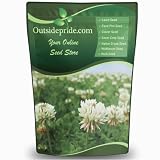
- PREMIUM QUALITY CLOVER SEED: This high-quality white clover seed is perfect for erosion control, creating a lush lawn alternative, enriching pasture mixtures, and supporting seasonal food plot preparation. Ideal for homeowners, gardeners, landscapers, farmers, and wildlife managers, it works well for deer food plots, green manure crops, ground cover, lawns, gardens, and backyards.
- ADVANCED NITROCOATED & INOCULATED SEEDS: Specially treated to support superior germination rates and enhance soil health, these ground cover seeds promote robust plant growth. They naturally boost soil nitrogen by fixing nitrogen from the air into the soil, making them a great clover seed choice for lawns, gardens, pastures, cover crop mixes, and agricultural applications.
- ADAPTABLE TO USDA ZONES 3-10: Thriving in a wide range of climates, from full sun to partial shade, this white clover seed for lawns is suitable for various regions across the country. Great for spring or fall planting, lawn renovation, pasture improvement, and sustainable ground cover, this resilient clover provides lush growth and reliable coverage.
- EASY & EFFECTIVE SEEDING: Simply disperse the white flower seeds on prepared soil, lightly rake them in, and keep them continually moist. Plant alone or mix with grass seed, pasture blends, or cover crop mixes. Expect quick germination within 14 days at 65-70°F, with a seeding rate of 1/4 lb to 1/2 lb per 1,000 square feet or 8 to 10 lbs per acre.
- OPTIMAL GROWTH & AESTHETIC APPEAL: Growing to a manageable height of 8-12 inches, this perennial clover seed features beautiful white blooms that enhance your landscape. Perfect for customers interested in eco-friendly lawn alternatives, soil improvement, reduced yard maintenance, and a drought-tolerant lawn alternative that naturally supports healthier soil.
How it grows and what maintenance to expect
Frogfruit spreads along the ground on creeping stems that root at their nodes. Published size descriptions differ: NC State lists typical dimensions of about 6 inches high and 1 to 2 feet wide, while UF/IFAS describes plants around 1 to 3 inches high, reaching up to 6 inches in flower. UF/IFAS notes that height varies with compaction and wear, so treat these figures as context rather than a fixed mature size.
What’s actually slowing this PC down?
Pick the symptom - the matching free tool is one click away.
Once established in suitable conditions, a dense planting can need little care. The main ongoing task is often deciding where you want the mat to stop, particularly when it grows among turf or other plants. Cut or otherwise manage edges according to your design and local growing conditions. Austin’s municipal guide suggests cutting frogfruit back to about 3 inches in winter; that is regional guidance for Austin, not a universal pruning schedule. City of Austin Grow Green Plant Guide.
Rank #3
- FLORIDA NATIVE POLLINATOR FRIENDLY GROUNDCOVER: The tiny but abundant blooms attract native bees, butterflies, and beneficial insects, providing vital foraging support for pollinators and supporting healthy ecosystems and wildlife-friendly gardens throughout the season.
- LOW SPREADING NATIVE GROUNDCOVER MAT: Forms a naturally low, spreading mat of foliage and flowers that adds beautiful native texture and year-round interest to garden beds, sunny paths, and open landscape areas.
- HEAT AND DROUGHT TOLERANT LOW WATER PERFORMER: Thrives in full sun and performs well in loam and well-drained soils with minimal watering, making it a versatile and low-maintenance choice for hot, dry, and drought-resistant garden settings.
- NATIVE LAWN ALTERNATIVE FOR SUNNY SPACES: The low, spreading habit and dense foliage make this native groundcover ideal for planting between stepping stones, along sunny paths, and across open areas as a natural and wildlife-friendly lawn alternative.
- LIVE PLANTS SHIPPED READY TO ESTABLISH: Native to Florida, Georgia, Texas, South Carolina, North Carolina, Virginia, Mississippi, Alabama, Louisiana, Tennessee, and West Virginia — each plant arrives vigorous and well-established, shipped in protective packaging and ready to thrive outdoors from the moment it arrives.
How to propagate frogfruit
There is more than one documented propagation route, and the available guidance does not establish a single best method for every gardener. UF/IFAS recommends cuttings in wet potting soil or water. A separate UF/IFAS lawn-plant publication also lists divisions and seed as options. UF/IFAS Gardening Solutions: Frogfruit; UF/IFAS: The Florida-Friendly Landscaping™ Guide to Plant Selection and Design.
Start with a cutting
- Take a stem cutting from a correctly identified frogfruit plant.
- Place it in water or wet potting soil, the two cutting methods described by UF/IFAS.
- Keep the medium or water available as the cutting establishes; the cited guidance does not specify a germination or rooting timetable or success rate.
The documented methods do not call for specialized propagation equipment.
Rank #4

- EXTRA LARGE PACKET contains over 1 full ounce of pure live seeds (7,500+ seeds) - Enough to cover 100 square feet.
- THE FRESHEST SEEDS available lead to high germination rates, making your gardening easy, successful, and fun.
- PREMIUM PACKAGING designed for optimal seed storage, with full planting instructions and reusable zipper - Great for gift giving.
- Contains the following - Common Name (Scientific Name): Bachelor's Button (Centaurea cyanus), Siberian Wallflower (Cheiranthus allionii), Shasta Daisy (Chrysanthemum maximum), Plains Coreopsis (Coreopsis tinctoria), Sweet William (Dianthus barbatus), African Daisy (Dimorphotheca aurantiaca), Purple Coneflower (Echinacea purpurea), California Poppy (Eschscholzia californica), Perennial Gaillardia (Gaillardia aristata), Indian Blanket (Gaillardia pulchella)
- Showy Baby's Breath (Gypsohila elegans), Spurred Snapdragon (Linaria maroccana), Blue Flax (Linum lewisii), Sweet Alyssum (Lobularia maritima), Evening Primrose (Oennthera lamarckiana), Corn Poppy (Papaver rhoeas), Rocky Mountain Penstemon (Penstemon strictus), Prairie Coneflower (Ratibida columnifera), Black Eyed Susan (Rudbeckia hirta), Gloriosa Daisy (Rudbeckia hirta), Catchfly (Silene armeria)
Use divisions or seed
Divisions can be transplanted as another way to establish plants. The 2023 UF/IFAS lawn-plant publication recommends transplanting divisions 12 inches apart; this is a spacing recommendation, not a guarantee of a particular coverage rate. The same publication lists seed as an option and describes the fruit as nutlets, but the cited guidance does not provide a germination schedule or success rate.
Windows Errors? Fix Them Before They Spread
Repair common Windows errors and clear accumulated junk for a smoother, more stable PC - no reinstall needed.Free scan · no reinstallOutdated Drivers Are Slowing You Down
One free scan finds every outdated or missing driver and matches the right update for your exact hardware.Free scan · exact hardware matchFlowers, pollinators, and landscape uses
Frogfruit flowers attract butterflies, bees, and moths, according to UF/IFAS. NC State identifies it as a larval host for phaon crescentspot, buckeye, and white peacock butterflies, as well as a plant that attracts pollinators. These qualities make it a useful candidate for a pollinator-oriented groundcover, without implying a measured biodiversity benefit. UF/IFAS Gardening Solutions: Frogfruit; NC State Extension: *Phyla nodiflora*.
Best Value
- FLORIDA NATIVE POLLINATOR FRIENDLY GROUNDCOVER: The tiny but abundant blooms attract native bees, butterflies, and beneficial insects, providing vital foraging support for pollinators and supporting healthy ecosystems and wildlife-friendly gardens throughout the season.
- LOW SPREADING NATIVE GROUNDCOVER MAT: Forms a naturally low, spreading mat of foliage and flowers that adds beautiful native texture and year-round interest to garden beds, sunny paths, and open landscape areas.
- HEAT AND DROUGHT TOLERANT LOW WATER PERFORMER: Thrives in full sun and performs well in loam and well-drained soils with minimal watering, making it a versatile and low-maintenance choice for hot, dry, and drought-resistant garden settings.
- NATIVE LAWN ALTERNATIVE FOR SUNNY SPACES: The low, spreading habit and dense foliage make this native groundcover ideal for planting between stepping stones, along sunny paths, and across open areas as a natural and wildlife-friendly lawn alternative.
- LIVE PLANTS SHIPPED READY TO ESTABLISH: Native to Florida, Georgia, Texas, South Carolina, North Carolina, Virginia, Mississippi, Alabama, Louisiana, Tennessee, and West Virginia — each plant arrives vigorous and well-established, shipped in protective packaging and ready to thrive outdoors from the moment it arrives.
Where to find plants or seed
Start with a native-plant nursery or local native-plant resource, and ask whether the plant is actually Phyla nodiflora and appropriate for your region. UF/IFAS points gardeners to native nurseries and local resources; its lawn-plant publication also identifies divisions as a propagation method. Availability is local and can change, so confirm current stock with the nursery rather than assuming a particular seller has it. If buying seed, search by the scientific name—“Phyla nodiflora frogfruit seeds”—and verify the species and provenance with the seller. No particular listing, seed quality, or seller availability is established here.
Quick Recap
Product prices and availability are accurate as of the date/time indicated and are subject to change. Any price and availability information displayed on Amazon at the time of purchase will apply.

