Jacaranda trees need the right climate before they need special care. The commonly grown blue jacaranda, Jacaranda mimosifolia, is best suited to warm Zones 10–11 and protected Zone 9b locations. Give it full sun, fast-draining soil, room for a canopy potentially 30–60 feet wide, and early structural pruning. It is beautiful, drought tolerant once established, and not especially tidy: surface roots, flower and seed-pod litter, frost damage, and weak branch unions all need to be part of the planting decision.
Jacaranda trees are worth planting only when the climate and site are right. Jacaranda mimosifolia performs best in full sun, heat, and fast-draining soil. It is a large, spreading tree—not a small patio ornamental—with surface roots, seasonal litter, and branches that require formative pruning. It is most dependable in USDA Zones 10–11; a protected Zone 9b site may work, but frost, winter wind, and summer heat will determine whether the tree survives and flowers.
Before planting, confirm that you have room for a mature canopy roughly 25–50 feet tall and potentially 30–60 feet wide. Keep it well away from buildings, pavement, pools, septic systems, overhead utilities, and narrow planting strips. If the site is cold, wet, cramped, or exposed to salt spray, another tree will usually be a better choice.
As an Amazon Associate I earn from qualifying purchases.
PC Slower Than It Used to Be?
A free scan shows the junk files, broken settings and background clutter dragging Windows down - then fixes them in one click.Free scan · Windows 10 & 11Outdated Drivers Are Slowing You Down
One free scan finds every outdated or missing driver and matches the right update for your exact hardware.Free scan · exact hardware matchJacaranda tree basics
The blue jacaranda is Jacaranda mimosifolia D. Don, a subtropical, deciduous or semi-evergreen tree native to South America, particularly northwestern Argentina and adjacent Bolivia. “Jacaranda” can refer to several species, so check the botanical name on the nursery label. The accepted name is J. mimosifolia; Jacaranda ovalifolia is listed as a synonym by the South African National Biodiversity Institute.
Its main ornamental features are:
- Fern-like, finely divided bipinnate leaves.
- Lavender, violet-blue, or occasionally white tubular flowers in terminal clusters.
- An open, spreading, vase-shaped crown that provides light, dappled shade.
- Flat, hard, brown seed capsules containing winged seeds.
- Flower, leaf, and seed-pod litter that can be considerable.
Flowering commonly occurs from spring into summer, but the timing varies with region, weather, tree age, pruning, and the amount of winter and summer heat.
#1 Best Overall
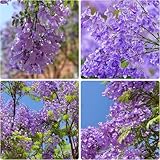
- Premium non-GMO seeds, high germination rate for vibrant purple-blue blooms
- Stunning ornamental tree, perfect for yards, patios & large containers
- Hardy perennial, drought-tolerant and low-maintenance after establishment
- Planting method: Soak seeds 24-48h, sow 1-2cm deep in moist soil, 20-25°C for 2-4 weeks germination
- Suitable for indoor seed-starting & outdoor sowing (warm climates), ideal gift for gardeners
Is jacaranda suitable for your climate?
Climate suitability is the first decision, because a healthy planting technique cannot overcome regular hard freezes or a chronically cold site.
| Climate | What to expect |
|---|---|
| USDA Zones 10–11 | The safest broad range for landscape planting, provided the soil drains well and the tree receives full sun. |
| Protected Zone 9b | Possible, but strongly dependent on microclimate, frost duration, winter wind, and summer heat. |
| Regular freezing climates | Usually unsuitable in the ground. A young tree may be grown temporarily in a container and protected from frost. |
| Cool coastal sites | The tree may produce foliage but few flowers if persistent ocean wind or cool temperatures limit heat accumulation. |
UF/IFAS lists jacaranda for Zones 9B–11, while the Missouri Botanical Garden gives the more conservative range of Zones 10–11, possibly 9b. Treat Zone 9b as a marginal limit, not as a guarantee that every Zone 9 location is suitable.
Do these 3 things before closing this tab:
1Clear out junk files and repair common Windows errors2Scan for outdated or missing drivers - takes under a minute3Repair Windows errors before they cause bigger problemsFrost and cold injury
Young trees are considerably more vulnerable than established trees. A brief freeze may kill shoot tips or part of the canopy; a prolonged freeze can kill the top or the entire young tree. Established trees sometimes survive temperatures near 20°F, according to the Missouri Botanical Garden, but that is a damage-survival observation—not a safe temperature for young trees, flower buds, or reliable performance. UC guidance notes that young trees may be injured below approximately 25°F.
Do not plant jacaranda in a frost pocket, exposed low spot, or location with regular winter freezes simply because a hardiness-zone map appears to include it. After severe frost, the tree may resprout from the base or trunk. Those shoots must later be retrained because freeze recovery can create several weak stems.
Heat, wind, and flowering
Full sun is necessary, but sunlight alone does not guarantee flowers. UF/IFAS reports that flowering may be particularly good after a winter with several nights in the upper 30s. UC sources also identify insufficient summer heat, persistent ocean wind, and cool conditions as reasons a tree may grow leaves without producing a strong bloom.
How much space does a jacaranda need?
Plan for a large tree. Published mature dimensions vary with climate, age, cultivar, pruning, and how the crown is measured:
- Approximately 25–40 feet tall and 40–60 feet wide according to UF/IFAS.
- Approximately 25–50 feet tall and 15–30 feet wide according to the Missouri Botanical Garden.
- Approximately 25–50 feet tall and 15–25 feet wide according to NC State Extension.
For practical planning, allow at least 25–50 feet of eventual height and potentially 30–60 feet of crown spread. The wider figure is important when considering branches, surface roots, maintenance access, and the space the tree will occupy as it matures.
Jacaranda is a poor choice for a narrow planting strip. Its roots can become prominent at the surface, and its flowers, leaves, and hard seed pods can obstruct drains, dirty paving, stain or make hard surfaces slippery, and increase maintenance around pools. Weak branch unions can also split during storms if the tree was poorly trained.
UC Master Gardener guidance recommends planting at least 15 feet from buildings. Treat that as a regional practical minimum, not a universal legal setback; local building, utility, tree-protection, and planning rules may require more. General tree-planning guidance from Iowa State Extension suggests 150–300 square feet of rooting area for medium trees and at least 4 feet between the trunk and pavement or structures where soil is at least 3 feet deep.
Keep the tree clear of:
- Buildings, rooflines, solar panels, driveways, and narrow sidewalks.
- Swimming pools and other areas where litter is especially difficult to remove.
- Overhead power lines and utility-access routes.
- Septic systems and areas where roots could interfere with infrastructure.
- Persistently wet ground or compacted construction fill.
Choose the right site
Light
Plant jacaranda in full sun—approximately six or more hours of direct light daily. Young trees tolerate some light shade, but shade usually means sparser growth and fewer flowers. A south- or west-facing position may provide the heat needed in marginal climates, provided the soil drains well and the tree has enough room.
The Tool Desk
Outbyte PC Repair FREERepair Windows errors before they cause bigger problemsFix Now →Outbyte Driver Updater FREEFix the driver behind crashes, sound loss and screen glitchesFind Drivers →Soil and drainage
Well-drained sandy or loamy soil is ideal. Jacaranda can tolerate a range of soil textures and some acidity or alkalinity, but permanently wet soil is a serious risk. Avoid low spots, compacted soil, and places where irrigation or rainwater remains around the root ball.
Clay can be workable if drainage is improved across the broader root zone, but do not plant into a small raised pocket of amended soil surrounded by dense clay. That can collect water around the roots rather than solve the drainage problem. Test the soil before correcting pH, salinity, or nutrients.
Rank #2

- Vibrant Beauty: Create a stunning garden display with these Jacaranda tree seeds that produce magnificent clusters of lavender-blue trumpet-shaped flowers, creating a breathtaking canopy of color
- Easy Growing: Perfect for both beginners and experienced gardeners, these seeds thrive with basic care and develop into hardy trees that adapt well to various growing conditions
- Drought Resistant: Jacaranda trees demonstrate excellent drought tolerance once established, making them an environmentally conscious choice for sustainable landscaping
- Bonsai Potential: These versatile seeds are ideal for bonsai cultivation, allowing you to create miniature versions of these majestic trees with their distinctive fern-like foliage
- Generous Quantity: Package includes 100 fresh Jacaranda seeds, providing multiple opportunities for successful germination and the creation of your own beautiful flowering trees
Jacaranda has poor aerosol salt tolerance. Coastal salt spray or saline irrigation water may cause leaf scorch and weak growth, especially where the site is already exposed to wind.
How to plant a jacaranda tree
- Locate utilities first. In the United States, contact 811 several business days before digging. Confirm local requirements and wait for lines to be marked.
- Inspect the nursery tree. Choose a straight trunk, a healthy crown, a dominant leader, and no major girdling or circling roots. The root flare should be visible or capable of being exposed.
- Find the true root flare. Soil or nursery media may cover the point where the trunk widens into the major roots. Do not use the top of the container soil as the planting-depth guide.
- Dig wide and shallow. The hole should be no deeper than the root mass once the flare is located and roughly two to three times wider than the root ball. Iowa State explains why planting too deeply damages trees.
- Set the tree correctly. Position the root flare level with or slightly above surrounding grade. Colorado State recommends approximately 1–2 inches above grade to allow for settling. Never bury the trunk flare.
- Remove the container. Take off all plastic, wire, and restrictive material. Correct obvious circling roots before planting; do not leave the container or root restraints around the root ball.
- Backfill with native soil. Use the excavated soil unless a soil test or site-remediation plan identifies a specific amendment. Avoid creating an isolated pocket of rich soil.
- Water thoroughly. Water slowly until the root ball and surrounding soil are fully settled and air pockets are removed. A general container-tree example is 5–7 gallons, but the correct amount depends on root-ball size, soil, drainage, weather, and rainfall.
- Mulch broadly and lightly. Apply no more than about 3–4 inches of mulch over the root zone. Keep mulch away from the trunk and off the top of the root ball; do not create a “mulch volcano.”
- Stake only if necessary. Use flexible ties that allow modest trunk movement, and remove them once the tree is stable. Permanent rigid staking can produce a weak trunk.
- Protect the trunk. Keep lawn equipment, string trimmers, and turf away from the trunk. A mulch ring is safer than grass growing directly against the bark.
Watering: establish deeply, then reduce
Do not follow a fixed calendar such as “water every three days.” Frequency changes with soil texture, rainfall, heat, wind, root-ball size, and whether the tree is newly planted or established.
What’s actually slowing this PC down?
Pick the symptom - the matching free tool is one click away.
During establishment
- Water thoroughly at planting.
- Keep the root ball from drying out during the first growing season.
- Check soil moisture by hand rather than watering automatically.
- Water deeply enough to wet the root zone, then allow excess water to drain.
- Reduce frequency during cool or rainy weather.
- Never solve poor drainage by watering more often.
Young trees need supplemental water during dry periods until their roots extend into the surrounding soil. The most common mistake is maintaining nursery-level moisture indefinitely, especially in clay or poorly drained ground.
After establishment
Established jacarandas are drought tolerant, but drought tolerance does not mean no water in every climate. Mature trees may need deep supplemental irrigation during prolonged drought, extreme heat, unusually dry winters, or when roots are confined by paving or poor soil. Sandy soil may require more frequent watering than heavier soil; wet winters require less.
Water at the outer root zone rather than repeatedly wetting only the trunk. A slow soak is generally more useful than frequent shallow sprinkling. If the soil stays wet for days, investigate drainage before adding irrigation.
Soil and fertilizer
Drainage is more important than a routine feeding program. Do not automatically fertilize a newly planted jacaranda with quick-release fertilizer. General extension guidance recommends using a soil test to determine whether nutrients are actually deficient.
Fertilizer is not a reliable cure for poor flowering. UF/IFAS notes that jacaranda may flower well in relatively poor soil, while excessive nitrogen can produce lush vegetative growth and encourage aphid reproduction. If growth is weak or leaves are unusually pale:
- Check watering and drainage first.
- Inspect roots and the trunk for damage.
- Consider salt injury or compacted soil.
- Obtain a soil test before applying nutrients.
- Apply only the nutrient and rate indicated by the test or local extension advice.
Do not fertilize a drought-stressed, diseased, or severely root-damaged tree until the underlying problem is addressed.
Prune a young jacaranda for strength
Formative pruning is essential because jacaranda can develop co-dominant stems, narrow crotches, included bark, and branches that split under storm load. Early corrective cuts are far safer than removing large limbs after the tree has matured.
Structural goals
- Maintain one dominant central leader where a conventional tree form is appropriate.
- Remove or subordinate competing leaders while they are small.
- Choose well-spaced permanent branches rather than several branches arising at one point.
- Keep major branches proportionate; UF/IFAS recommends branches less than half the diameter of the trunk at the point of attachment.
- Maintain clearance over paths, driveways, and roads.
- Remove branches with narrow, bark-included unions before they become large.
UF/IFAS recommends structural attention approximately every three years during the first 15–20 years. That is a useful development framework, not a rigid schedule: inspect the tree after storms, rapid growth, frost recovery, or changes around the root zone.
Quick wins for a faster PC:
Repair Windows errors before they cause bigger problemsFix Now →Fix the driver behind crashes, sound loss and screen glitchesFind Drivers →When to prune
Remove dead, broken, or hazardous branches whenever necessary. For routine structural pruning, prune after flowering if you want to preserve the current bloom display. In a container or cold climate where the tree does not flower, late winter or early spring may be a practical dormant-season window, but winter is not universally the best time for every landscape jacaranda.
Avoid indiscriminate pruning immediately before the expected flowering period because it may remove developing flower wood. Make proper branch-collar cuts; do not leave long stubs or cut flush against the trunk.
Rank #3

- Planting Season: This blue jacaranda tree can be planted every spring after the last frost
- Blooming Timeline: Starting from seeds, it usually takes 5-10 years for the first bloom, and the dreamy sea of blue-purple flowers is utterly captivating
- Sunlight Requirements: This Jacaranda requires at least 6-8 hours of direct sunlight daily to grow healthily and bloom abundantly
- Watering Needs for Seedlings: This jacaranda sapling requires consistently moist soil during its seedling stage, but avoid waterlogging to prevent root rot
- Drought Tolerance: Once the roots of this jacaranda are well-established in the soil at mature stage, it can tolerate short periods of drought
What not to do
- Do not top the tree to keep it small.
- Do not remove several large limbs merely to force a large tree into a small site.
- Do not leave co-dominant leaders to mature.
- Do not make large flush cuts.
- Do not use pruning to compensate for choosing the wrong planting location.
Hire a qualified arborist for large limbs, storm-damaged leaders, cracks at major unions, branches near utilities, or a tree that threatens a building or public path.
How to encourage flowering
If a jacaranda has leaves but no flowers, first investigate the site and the tree’s age—not fertilizer.
Free tools Windows power users keep installed
One-click scans. No signup required.
- Confirm that the label says Jacaranda mimosifolia.
- Verify that the tree receives at least six hours of direct sun.
- Assess whether the site receives enough summer heat.
- Check for persistent cool ocean wind or a cold microclimate.
- Determine whether the tree is still a young seedling.
- Look for overwatering, root stress, or excessive nitrogen.
- Review whether pruning occurred just before flower formation.
- Consider frost damage to the flowering wood.
- For containers, check whether the plant is root-bound or receiving too little light.
Seed-grown trees may take up to about 10 years to flower. Grafted or cutting-grown plants are generally a better choice when earlier or more predictable flowering matters. Do not treat spring drought stress as a universal bloom-forcing technique; the reliable factors supported by extension sources are sun, heat, maturity, appropriate drainage, and avoiding excessive nitrogen.
Growing jacaranda from seed or cuttings
Seed
Seed propagation is inexpensive but slow and variable. Collect mature, dry pods as they open or become ready to open, then remove the winged seeds.
- Sow the seeds in a sterile, sharply draining seed medium.
- Cover them lightly—commercial seed guidance commonly suggests about ¼ inch.
- Keep the medium evenly moist, never saturated.
- Provide warmth and bright light.
- Pot seedlings up before roots become crowded.
- Acclimate them gradually to outdoor sun.
A germination study found approximately 25°C/77°F to be the optimum tested temperature, with germination limits near 15°C and 40°C under those experimental conditions. Light had a modest promotive effect, while severe water stress sharply reduced germination. A commercial seed supplier reports no stratification requirement, warm conditions above approximately 75°F, and highly variable germination times ranging from 10 days to three months. That timing is supplier guidance, not a guarantee for every seed lot or home setup.
Softwood cuttings
One Japanese horticultural study reported more than 86% rooting from softwood cuttings taken from young shoots without IBA treatment, with 5–10 cm roots forming after approximately two months. Hardwood cuttings did not root in that study. The result demonstrates that vegetative propagation is possible, but home success depends on timing, humidity, sanitation, cultivar, and aftercare.
Nursery, grafted, and rooted plants
Buy a nursery-grown, grafted, or rooted cutting when you want a more predictable tree and earlier flowers. Select a plant with a sound root system, a visible root flare, a single leader, and well-spaced branches. A seedling may be cheaper, but it can take years to reach flowering size and will not necessarily develop the form or bloom performance you expect.
Can jacaranda grow in a container?
Yes, but container culture is best treated as temporary protection, seasonal display, or a way to grow a dwarf cultivar. A full-size jacaranda is not naturally a houseplant.
- Use a pot with drainage holes and a sharply draining growing medium.
- Water when the medium begins to dry, but do not leave the pot standing in water.
- Provide strong outdoor light when weather permits.
- Move young trees under cover before frost and acclimate them gradually when returning outdoors.
- Inspect roots periodically for crowding and repot before the plant becomes unstable.
- Expect leaf drop after abrupt movement indoors.
Ordinary indoor conditions are usually too dark and warm for long-term success or mature flowering. A bright, cool greenhouse or conservatory is more appropriate for overwintering. For a smaller container specimen, UC material identifies ‘Bonsai Blue’ as an option with an approximate mature size of 10–12 feet tall and 6–8 feet wide; even that is not a miniature houseplant.
Independent reader supportYour contribution helps us test, update, and keep practical guides available for everyone.Pests, diseases, and troubleshooting
| Symptom | Likely possibilities | First response |
|---|---|---|
| Yellow leaves with wet soil | Overwatering, poor drainage, root stress, or root rot | Reduce irrigation, improve drainage if feasible, and seek a diagnosis before fertilizing. |
| Sticky leaves, ants, or black sooty mold | Aphids or scale | Inspect new shoots and leaf undersides; begin with a strong water spray and protect beneficial insects. |
| Brown leaf edges | Drought, salt, heat, root damage, scorch, or disease | Check moisture, drainage, irrigation water, recent weather, and exposed roots. |
| No flowers | Young age, shade, insufficient heat, cool wind, wrong species, excess nitrogen, or poorly timed pruning | Correct the site and allow time before applying fertilizer. |
| Branch split | Weak crotch, included bark, co-dominant stems, excessive branch size, or storm load | Keep people away from the area and call an arborist for an inspection. |
| Frost dieback | Cold injury to shoots, leaders, or roots | Wait until additional frost risk passes and the extent of living tissue is clear before severe pruning. |
| Roots lifting pavement | Restricted rooting space or surface-root development | Do not cut major roots casually; consult an arborist about pavement redesign, root-zone expansion, or replacement. |
Aphids and scale
Aphids feed on soft growth and may cause distortion, honeydew, ants, and sooty mold. Light to moderate pressure is often tolerated by established trees. Start with a strong spray of water, prune heavily infested shoots where appropriate, and preserve lady beetles, lacewings, and other natural enemies.
Recommended Free Tools
If treatment is necessary, UC IPM identifies insecticidal soaps and horticultural oils as lower-impact options when applied according to the product label. Do not apply them to drought-stressed plants or during excessive heat. Product legality and availability vary by location. NC State also lists scale as a possible pest; identify it before treating rather than applying a blanket pesticide program.
Root rot and decline
Poor drainage and persistently wet soil are more important risks than routine insect control. UF/IFAS identifies mushroom root rot in poorly drained soil. If the leaves yellow while the soil remains wet, correct the drainage problem instead of adding fertilizer or more water.
Leaf scorch, drought, salt injury, root damage, and bacterial disorders can look alike. NC State notes susceptibility to a jacaranda-specific bacterium, while UC IPM lists oleander leaf scorch among possible disorders. A progressive, one-sided decline, recurring branch dieback, or unexplained canopy loss warrants laboratory or county-extension diagnosis rather than a diagnosis from a photograph alone.
Rank #4

- Jacaranda mimosifolia - Non-GMO, Heirloom, Open-Pollinated, Untreated, Freshly collected for the current growing season
- Stunning purple-blue blooms that are sure to transform any landscape into a fairytale scene with dense flower clusters twice yearly
- Our seeds come from carefully selected for their exceptional flowering characteristics, with each packet containing professionally cleaned and viable seeds ready for germination
- This fast-growing tree reaches heights of 25-40 feet and have an elegant umbrella-shaped canopy that provides dappled shade perfect for subtropical and warm temperate gardens
- Jacaranda's fern-like, bipinnate leaves create a soft, lacy appearance year-round, making it an attractive addition even when not in bloom - plus they're naturally drought-tolerant once established
Is jacaranda invasive?
Invasive status is geographic, not universal. UF/IFAS does not currently consider jacaranda a problem species in Florida. However, the SANBI biodiversity database describes J. mimosifolia as naturalized and invasive in parts of South Africa, including escaped populations along roadsides and watercourses. Brisbane City Council identifies it as an environmental weed in parts of Queensland and New South Wales.
Before planting, check your local invasive-plant regulations and environmental-weed lists. A species that behaves acceptably in one warm region may naturalize in another.
Is jacaranda toxic to pets?
Do not make an unqualified “pet-safe” claim. UF/IFAS says jacaranda is not listed as toxic to pets, but the ASPCA entry returned for “Caroba” concerns Jacaranda procera, not J. mimosifolia. That entry is therefore not definitive evidence about blue jacaranda.
If a pet eats leaves, flowers, pods, or seeds and develops symptoms, contact a veterinarian or animal poison service promptly. Keep plant labels and photographs available for identification.
Seasonal care calendar
Use this as a climate-adjusted framework rather than a fixed schedule:
Free tools Windows power users keep installed
One-click scans. No signup required.
- Late winter or early spring: Inspect for frost damage. Plan routine structural pruning according to flowering timing and local weather.
- Spring: Monitor new growth and aphids. Increase establishment irrigation only as weather dries.
- Flowering season: Avoid unnecessary pruning and prepare for fallen flowers and leaves.
- Summer: Deep-water young trees during dry periods. Inspect storm-prone limbs and maintain clearance over paths and driveways.
- Fall: Collect mature pods if propagating. Reduce irrigation where rainfall and cooler temperatures make it unnecessary.
- Before frost: Protect young or recently planted trees and move container plants under cover before freezing weather.
When to choose another tree
Select a different species if the site regularly experiences hard freezes, stays wet after rain, has only a narrow planting strip, lies beneath power lines, or is exposed to persistent salt spray or cold ocean wind. Jacaranda is also a poor fit if you need an evergreen, low-litter tree or guaranteed flowers quickly from seed.
If the climate is suitable but the site is too small, consider a genuinely smaller ornamental tree rather than trying to keep a full-size jacaranda small through topping and repeated severe pruning.
Frequently Asked Questions
What USDA zone is best for a jacaranda tree?
The safest broad range is USDA Zones 10–11. Protected Zone 9b sites may succeed, but frost duration, winter wind, summer heat, and local microclimate matter more than the zone number alone.
Can I grow a jacaranda tree in a pot?
Yes, young trees can be grown in containers, especially for seasonal display or frost protection. Use a sharply draining medium, strong light, and a pot with drainage holes. A dwarf cultivar such as ‘Bonsai Blue’ is more suitable than the full-size species.
Do these 3 things before closing this tab:
1Repair Windows errors before they cause bigger problems2Scan for outdated or missing drivers - takes under a minute3Clear out junk files and repair common Windows errorsWhy is my jacaranda tree not flowering?
A lack of flowers is usually related to youth, shade, insufficient heat, cool wind, excess nitrogen, overwatering, wrong-species labeling, or pruning at the wrong time. Seed-grown trees may take up to about 10 years to bloom.
The Bottom Line
The right jacaranda site is warm, sunny, well-drained, and spacious. Plant it with the root flare high enough, water deeply while it establishes, avoid routine high-nitrogen fertilizer, and train the structure early. If you cannot accept surface roots, seasonal litter, frost risk, or a canopy potentially 30–60 feet wide, choose another tree.
Quick Recap
Product prices and availability are accurate as of the date/time indicated and are subject to change. Any price and availability information displayed on Amazon at the time of purchase will apply.

