Recommended Free Tools
Fresh runways across a lawn are frustrating, but bark damage around a young tree is the real emergency. Use this sequence: confirm you have voles, reduce their cover, protect valuable plants, and trap current runway activity safely.
The most dependable way to get rid of voles is to combine habitat cleanup, protection for vulnerable trees and planting beds, and covered mouse snap traps placed in fresh surface runways. Do not start by treating every tunnel as a vole problem: moles and pocket gophers need different responses. For a homeowner, the urgent issue is fresh bark chewing on young trees or shrubs; lawn runways are usually repairable once active feeding has stopped.
First, make sure the damage is from voles
Voles, often called meadow mice, are compact rodents with short tails. They travel through shallow, well-worn pathways at the soil surface. Look for a network of narrow runways through grass, mulch, or ground cover, often connecting open burrow holes. Fresh grass clippings and greenish droppings are additional signs that the runways are active.
As an Amazon Associate I earn from qualifying purchases.
Do these 3 things before closing this tab:
1Clear out junk files and repair common Windows errors2Scan for outdated or missing drivers - takes under a minute3Repair Windows errors before they cause bigger problems| What you find | Most likely meaning | Why it matters |
|---|---|---|
| Shallow surface paths through grass or mulch; open holes; clipped vegetation | Vole activity | These are the places to monitor, trap, and reduce cover. |
| Raised ridges or mounds, with little visible surface runway traffic | Possibly moles | Moles mainly eat insects and grubs; vole tactics may not solve the issue. |
| Root damage or bark loss concentrated below ground | Possibly pocket gophers | Gophers can cause similar plant damage but require accurate identification. |
| Bark removed from the lower trunk, especially after winter | Often voles | Voles commonly girdle above ground, including beneath snow cover. Act quickly. |
One animal can complicate the diagnosis: voles may use tunnel systems made by moles. Inspect the chewing, burrows, and travel paths rather than assuming the most visible tunnel tells the whole story.
Prioritize the damage that can kill plants
Voles eat grasses, roots, bulbs, tubers, and bark. The most consequential damage is chewing around the base of a young fruit tree, ornamental tree, or shrub. If bark has been removed all the way around a trunk, the plant has been girdled: its water and nutrient transport is interrupted, and it may die.
#1 Best Overall

- GET RID OF MICE: These wide pedal mouse snap traps deliver reliable rodent control, providing quick and clean elimination when used near along walls or near signs of rodent activity
- 12-PACK VALUE: Complete set of 12 wooden mouse traps offers comprehensive pest control coverage, ensuring you have multiple snap traps ready for immediate deployment throughout your entire property
- PRECISION TRIGGER: Advanced plastic pedal mechanism activates instantly upon contact, with this large trip pedal delivering swift rodent elimination for higher catch rates. Equipped with two settings, you can control the trigger sensitivity to adjust it to your liking
- SUSTAINABLE CONSTRUCTION: Crafted from FSC certified wood sourced from responsibly managed forests, these mousetraps combine environmental responsibility with the durability needed for effective mice control
- REUSE OR DISPOSE: Each reusable mouse offers flexible cleanup options as you can either dispose of the entire trap or clean and reset for continued rodent trap performance as needed to continue ongoing pest control throughout your home
- Inspect the lower trunk, root flare, shrub crowns, bulb beds, and vegetable beds.
- In places with snow, inspect above the usual soil line too. Voles can feed under snow cover, so damage may be higher on the trunk than expected.
- Photograph and monitor partly chewed trunks. If bark loss approaches a complete ring, consult a qualified arborist promptly; trapping alone will not restore a fully girdled trunk.
- Surface runways and patches of flattened or dead-looking turf are usually the lower-priority problem. Once activity is controlled, rake out dead material and reseed bare areas.
Make the yard less attractive before trapping
Voles thrive where they can move under dense cover while feeding. Cleanup does not guarantee that voles will never return, but it reduces shelter, makes fresh activity easier to spot, and improves the results of localized trapping.
- Mow regularly and trim dense grass along foundations, fences, ditches, rock borders, and property edges.
- Reduce weeds, thick ground cover, deep mulch, brush, and woodpiles near planting areas.
- Keep a relatively vegetation-free area around vulnerable young trees.
- Clean up spilled birdseed below feeders. Ground-level seed can support rodents and conceal their activity.
- Check unmanaged neighboring edges and drainage areas. These can serve as reinvasion routes even after a successful cleanup.
For constructed landscapes, this is also a maintenance detail worth protecting: avoid piling mulch directly against tree trunks, and specify a clear inspection zone around newly planted trees rather than letting turf or decorative mulch form a continuous sheltered corridor.
Protect trees, shrubs, and beds now
Guard individual trees and shrubs
Install a supported cylinder of hardware cloth, sheet metal, or heavy plastic around a susceptible trunk. Leave enough clearance for the trunk to grow and for the guard not to rub the bark. Bury the lower edge 4 to 6 inches to discourage digging underneath. In snowy regions, extend the guard above the expected snow depth.
Check guards regularly. A guard that is too tight can injure the tree, while one that is not inspected can shelter a vole inside or allow it to tunnel beneath the bottom edge.
Rank #2

- PROVEN PERFORMANCE: These Victor mouse traps offers reliable rodent control with over 120 years of trusted effectiveness, providing snap traps for mice that eliminate pests quickly and cleanly for indoor home use
- 12-PACK VALUE: Complete mice traps indoor set includes 12 wooden snap traps, offering comprehensive pest control coverage for multiple rooms and ensuring you have backup mousetraps when needed for continuous protection
- METAL PEDAL PRECISION: Advanced metal trigger system provides instant activation when mice interact with the trap, delivering immediate snap mouse trap results that outperform traditional designs for superior rodent elimination
- SUSTAINABLE CONSTRUCTION: Crafted from FSC certified wood sourced from responsibly managed forests, these mousetraps for indoor mice combine environmental responsibility with durable performance for long-lasting pest control
- VERSATILE USAGE: Choose between disposable convenience or reusable functionality after each catch, making these mice traps indoor adaptable to your preferred cleanup method while maintaining consistent trapping effectiveness
Fence a small garden area
For a compact vegetable or ornamental bed, use 1/4-inch mesh or smaller, or aluminum flashing, at least 12 inches above soil level. Bury the bottom 6 to 10 inches. Keep a weed-free strip outside the perimeter so voles have less cover as they approach the barrier.
Trap fresh runways: the practical removal method for a small yard
For localized damage, standard mouse snap traps are the appropriate size. Oversized rat traps are not necessary. Set traps only where there is recent runway activity; placing many traps in old, abandoned trails wastes effort.
Quick wins for a faster PC:
Scan for outdated or missing drivers - takes under a minuteDriver Scan →Clear out junk files and repair common Windows errorsFree Scan →Fix the driver behind crashes, sound loss and screen glitchesFind Drivers →- Find an active route. Gently pull back grass, mulch, or other cover to expose a fresh runway, or work near an open burrow entrance.
- Set across the path. Position the trap at a right angle to the runway, with its trigger end directly in the vole’s travel path.
- Use bait only if helpful. An unbaited trap can work in an established runway. A peanut-butter-and-oat mixture or an apple slice are reasonable bait options.
- Cover the trap safely. Place a protective cover over the set trap that allows it to operate but prevents access by children, pets, and non-target birds. This is especially important with baited traps.
- Check every day. Reset sprung traps, remove captured animals with gloves or a bag over your hand, and dispose of them under local waste rules.
- Move as activity changes. Continue until captures and fresh signs stop, then relocate traps to any other active runway areas. Disrupt old runways afterward so they are less inviting for reuse.
Keep pets and children out of the trapping area. If a trap cannot be covered and placed where it is inaccessible to them, choose another location or a different control strategy.
What usually does not solve a yard vole problem
- Predators alone: Hawks, owls, snakes, cats, and other predators eat voles, but they rarely suppress a residential population enough to prevent damage.
- Repellents: Their real-world value is uncertain because much vole feeding occurs at or below the soil surface.
- Flooding, burrow fumigants, ultrasonic devices, or electromagnetic devices: These are not reliable landscape-vole controls.
Use these observations to avoid spending money on a single “set it and forget it” remedy. The effective work is physical: reduce cover, exclude voles from high-value plants, and remove animals from active runways.
Rank #3

- 🐀【Reusable & Durable】The mouse traps indoor for home is made of high-strength plastic ABS, which can be cleaned and is easy to remove peculiar smells and blood. A nail hole fixing clip is added to the tail to prevent displacement, guarantee mouse trap sensitivity, which can be used multiple times.
- 🐀【High Sensitivity & Quick Kill】 Best mouse traps for home adopts double spring design, strong bite force, compared with the original version mousetrap, the sensitivity and efficiency have been greatly improved, 0.025lbs can quickly trigger mouse snap trap. It does not take up space and can be placed flexibly.
- 🐀[Safe to Use] The new Human Power Mouse Killer non-toxic, safe, non-contact design, you can safely place the bait without worrying about getting your fingers caught. Say goodbye to ineffective pest control methods and protect your home from rats, mice, mouse, small mice, etc. It is recommended to use a small amount of peanut butter as a bait
- 🐀【Easy to Set Mouse Traps] Just put the bait in the bait cup and press the spring of rodent traps outside to complete the setting. You can use mouse traps indoors and outdoor. Do not touch the mice after setting, and keep them away from children, the elderly and pets to avoid injury.
- 🐀【Wide Applications】Our trap has the unique capability to catch both mice and small sized rats, suitable for both indoor and outdoor use, such as kitchen, living room, bathroom, warehouse, garden, garage etc.
Use rodenticides only as a tightly controlled last option
When damage is widespread or severe, a toxic bait program may be an option only if a product is specifically labeled and legal for vole use in that exact location. Registration, allowed sites, certification requirements, and wildlife protections vary by product and jurisdiction. The pesticide label—not general online advice—controls how and whether a product may be used.
If you consider bait, confirm the product and site with your local Extension office or a licensed wildlife or pest-control professional. Keep bait where children and pets cannot reach it; use a tamper-resistant bait station when the label calls for one; and remove dead rodents promptly. Poisoned rodents can expose pets, predators, and scavengers through direct or secondary poisoning.
Free tools Windows power users keep installed
One-click scans. No signup required.
Do not use loose poison, homemade toxic bait, or a bait product that does not expressly permit the intended use. For most small residential problems, cleanup, exclusion, and covered snap traps are the lower-risk starting point.
After the vole activity stops
- Rake out dead grass and reseed bare lawn trails after fresh activity has ended.
- Maintain mowing, vegetation control, and bird-feeder cleanup.
- Inspect young trunks and guards before winter, during thaws where practical, and after snowmelt.
- Recheck for fresh runways periodically. A quiet week is encouraging, but it is not proof that voles cannot return.
Expect management, not permanent eradication. A yard near field edges, drainage corridors, unmanaged lots, or heavy ground cover may need seasonal monitoring. The key is catching new runway activity before it becomes repeated tree or garden damage.
Rank #4
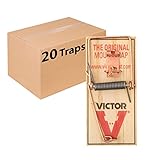
- EFFECTIVE MOUSE CONTROL: Designed specifically for mice traps indoor, this trap delivers a clean and instant kill; ideal for household use
- PRECISION TRIGGER SYSTEM: The snap mouse traps indoor pedal works with precision to immediately trigger the bar, providing quick rodent elimination
- TIME TESTED PERFORMANCE: Relied on for over 120 years, these Victor original wooden snap traps for mice are favored by both consumers and professionals for their consistent results
- REUSABLE MOUSE TRAPS: After a catch, choose the cleanup method that suits your needs best, whether you prefer to dispose of the rodent trap entirely or to reuse the trap
- SUSTAINABLY SOURCED MATERIALS: Made from FSC certified wood, these mouse traps indoor are made of materials harvested from responsibly managed forests
Frequently Asked Questions
How can I tell whether I have voles?
Fresh vole runways are narrow, well-traveled paths at the soil surface, usually beneath grass, mulch, or other cover. Open burrow holes, fresh clipped vegetation, and greenish droppings strengthen the diagnosis.
Will vole runways ruin my lawn permanently?
Usually not. Once current vole activity is controlled, rake away dead grass, loosen compacted spots if needed, and reseed bare areas. The more urgent repair is protecting any tree or shrub with fresh bark chewing.
What kind of trap works for voles?
Standard mouse snap traps are the recommended size for localized vole control. Set them across active runways, cover them so children, pets, and birds cannot access them, and check them daily.
Best Value

- 🐀【Reusable & Durable】The rat control is made of high-strength plastic ABS, which can be cleaned and is easy to remove peculiar smells and blood. A nail hole fixing clip is added to the tail to prevent displacement, guarantee mouse trap sensitivity, which can be used multiple times.
- 🐀【High Sensitivity & Quick Kill】 Best mouse traps for home adopts double spring design, strong bite force, compared with the original version mousetrap, the sensitivity and efficiency have been greatly improved, 0.025lbs can quickly trigger mouse snap trap. It does not take up space and can be placed flexibly.
- 🐀[Safe to Use] The new Human Power Mouse Killer non-toxic, safe, non-contact design, you can safely place the bait without worrying about getting your fingers caught. Say goodbye to ineffective pest control methods and protect your home from rats, mice, mouse, small mice, etc. It is recommended to use a small amount of peanut butter as a bait
- 🐀【Easy to Set Mouse Traps] Just put the bait in the bait cup and press the spring of rodent traps outside to complete the setting. You can use mouse traps indoors and outdoor. Do not touch the mice after setting, and keep them away from children, the elderly and pets to avoid injury.
- 🐀【Wide Applications】Our trap has the unique capability to catch both mice and small sized rats, suitable for both indoor and outdoor use, such as kitchen, living room, bathroom, warehouse, garden, garage etc.
How do I protect a young tree from voles?
A properly sized trunk guard is the fastest protective measure. Use hardware cloth, sheet metal, or heavy plastic, bury its lower edge 4 to 6 inches, leave room for trunk growth, and extend it above expected snow depth where applicable.
Can I permanently get rid of voles from my yard?
No. Voles can reinvade from nearby cover and unmanaged edges. Ongoing mowing, vegetation reduction, inspection, and prompt trapping of fresh runways are more realistic than expecting permanent elimination.
The Bottom Line
Identify the animal first, protect trunks and beds immediately, remove dense cover, and use covered mouse snap traps in fresh vole runways. Repair the lawn afterward; do not wait to address fresh bark chewing.
What’s actually slowing this PC down?
Pick the symptom - the matching free tool is one click away.
Quick Recap
Product prices and availability are accurate as of the date/time indicated and are subject to change. Any price and availability information displayed on Amazon at the time of purchase will apply.

