Quick wins for a faster PC:
Clear out junk files and repair common Windows errorsFree Scan →Scan for outdated or missing drivers - takes under a minuteDriver Scan →Japanese knotweed is removed by managing its underground rhizomes over multiple seasons, not by pulling or cutting the visible canes once. Confirm the identification, map and contain the patch, prevent fragments and contaminated soil from moving, then choose a carefully controlled mechanical program, a label-compliant late-season systemic-herbicide program, or long-term cover for a small isolated infestation.
For large patches, water-adjacent sites, contaminated soil, construction work, or property transactions, involve a qualified local invasive-plant contractor before disturbing the ground. This guide is general U.S.-oriented; local pesticide, soil-transport, and disposal rules control.
As an Amazon Associate I earn from qualifying purchases.
Confirm the plant before treating it
Japanese knotweed (Fallopia japonica) is an herbaceous perennial in the buckwheat family. It is commonly recognized by bamboo-like, hollow canes with raised nodes, reddish-brown markings, triangular leaves with a relatively squared or blunt base, and pale flower clusters that appear in late summer.
Giant knotweed and Bohemian knotweed can look similar and may require a similar management approach. If the identification is uncertain, photograph the stems, leaves, and flowers and ask a local extension service, county noxious-weed office, or invasive-plant authority to confirm it before you disturb the patch.
#1 Best Overall
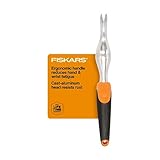
- GARDENING ESSENTIAL: Garden weeder ideal for a variety of gardening tasks like removing invasive weeds, maintaining your herb garden, uprooting dandelions and thistles, and more to encourage overall plant health and appearance
- MAXIMUM POWER AND PRECISION: Cast-aluminum angled head boosts leverage for uprooting in tough soil; Ergonomic handle with SoftGrip allows for more control of scratch tool and reduces fatigue
- LONG-LASTING AND RELIABLE: Aluminum head is rust-resistant and stays sharp through heavy use, providing excellent durability for lasting value; Fiskars hand trowels and garden tools are built to last
- QUALITY GARDEN TOOLS: Designed to help you cultivate a better garden, Fiskars garden and yard tools are equipped with smart technologies and award-winning, ergonomic features that make it easier and more enjoyable to transform your outdoor space
- INCLUDES: 1 Fiskars Ergo Weeder with hang hole; Full lifetime warranty
Do not judge success by the canes alone. The key problem is underground. Japanese knotweed spreads through rhizomes, and small pieces can produce new plants. A patch can therefore return after the visible stems have been cut down or sprayed.
Why Japanese knotweed is difficult to remove
The plant stores energy in an extensive underground rhizome system. Rhizomes can be moved in contaminated soil, on machinery, by people and footwear, through drainage routes, or by water and flooding. Digging, grading, rototilling, mowing, and strimming can turn one contained patch into several smaller infestations if fragments are carried into clean ground.
That biology changes the objective. The practical goal is to prevent spread, progressively weaken the rhizomes, treat or remove new growth, and keep monitoring the site. Established infestations generally require a control program lasting at least two growing seasons, followed by inspection for regrowth.
What’s actually slowing this PC down?
Pick the symptom - the matching free tool is one click away.
First steps: contain and map the infestation
- Mark the visible patch. Photograph it and record its approximate boundaries, nearby drains, watercourses, trees, fences, structures, and areas where soil may have been moved.
- Inspect beyond the standing canes. Look along the edge of the patch and check ground disturbed by construction, flooding, grading, or dumping. Treat the visible stems as an indication of the infestation, not necessarily its full underground extent.
- Stop routine mowing and strimming. Do not run a mower, brush cutter, flail mower, or rototiller through the patch unless a specialist plan specifically addresses fragment containment.
- Keep material and soil contained. Do not drag cut canes through clean ground. Keep tools, boots, vehicles, excavators, buckets, and stockpiled soil away from drainage channels, waterways, and uncontaminated parts of the property.
- Check disposal rules before moving anything. Ask the local waste authority, county noxious-weed office, or state pesticide or environmental agency how plant material and potentially contaminated soil must be handled.
- Start a treatment record. Log photographs, dates, weather, cutting or application dates, products, the treated area, and every follow-up inspection. This record is valuable on a large property and may be important during a sale or construction project.
Construction-site precaution
If the infestation is near a proposed extension, driveway, retaining wall, drainage installation, utility trench, or other earthworks, do not let the project casually move soil from the patch. Mark the area on the site plan, brief every operator, and agree in advance how excavated material, equipment cleaning, temporary storage, and disposal will be managed. Excavation without a containment and disposal plan can spread rhizome fragments far beyond the original patch.
Choose the control method by site and infestation size
| Situation | Most suitable starting point | Main limitation |
|---|---|---|
| A few isolated plants with accessible soil | Careful hand removal of the crown and as much rhizome as possible | One missed fragment can regenerate; digging can spread the infestation |
| An established patch away from sensitive vegetation or water | A planned late-season systemic-herbicide program or carefully managed repeated cutting | Requires label compliance, repeat treatment, and monitoring |
| A small isolated patch where herbicide cannot be used | Long-term cover with suitable heavy-duty landscape fabric | Requires years of inspection and repair and does not prove eradication |
| Large, water-adjacent, construction-linked, or soil-contaminated site | A locally qualified invasive-plant contractor and a written soil and waste plan | Rules, disposal routes, and applicator requirements are location-specific |
Mechanical control: when cutting or digging can work
Hand removal for very small patches
Hand-pulling or digging is most defensible only for a very small, isolated infestation where you can reach the entire crown and remove as much of the rhizome system as possible without scattering pieces. Work slowly, inspect the excavated soil, collect every fragment, and keep the material separate from clean soil.
This method becomes unreliable when the patch is large, the soil is disturbed, rhizomes extend under structures or hardscape, or you cannot guarantee that all fragments will be collected. Do not assume that removing the visible crown means the underground system is gone.
Rank #2

- 2-in-1 Multi-Purpose Garden Tool: Engineered with a dual-function head featuring a 3.75-inch rake and a sharp trapezoid hoe, this weed remover tool makes it easy to loosen compacted soil and pull weeds by the roots. The rake's sharp teeth securely grabs stubborn weeds and dandelions, helping pull them out by the roots to prevent regrowth
- Sturdy Tempered Spring Steel: Built with high-density tempered spring steel, our dual hoe and rake heads handle daily garden use with ease. Unlike carbon steel tools that weaken or break over time, this material delivers superior toughness and spring-back resilience, resisting bending or snapping even under heavy levering
- Adjustable 61-inch Handle for Comfort: Featuring a 4-section locking handle adjustable up to 61 inches, this stand up weed puller tool lets you weed comfortably while standing upright without bending, making it especially helpful for seniors and those with back concerns. Quickly shorten the handle to your preferred length for raised beds, flower pots, and tight spots between plants
- Rust-Proof and Weather-Resistant Design: Featuring a sand texture finish on the weed puller tool heads for improved grip and excellent corrosion resistance, along with 304 stainless steel bolts and nuts for a tight, sturdy connection, CKLT weeding tool is built to withstand harsh outdoor environments
- Versatile for All Garden Spaces: Suitable for precise weed removal between plants in flower beds and vegetable gardens, this versatile garden tool easily handles hard soil and tough weeds across garden beds, lawns, open yards, and gravel driveways. It delivers reliable performance for maintaining both narrow, detailed spaces and larger garden areas with ease
Repeated cutting
Repeated cutting can gradually reduce the plant’s stored reserves and may eventually kill a patch, but a single cut is not eradication. Washington guidance describes frequent cutting over many years as a possible strategy, while Penn State recommends using cutting as part of a broader control plan.
Recommended Free Tools
If cutting is appropriate, use dedicated heavy-duty loppers or pruning shears rather than a mower where practical. Keep the tools dedicated to the infested area, collect the canes without dragging them across clean ground, and clean equipment according to local guidance before it is used elsewhere.
Cutting can also be used to make later herbicide treatment more manageable. If combining the methods, Penn State advises waiting at least eight weeks after cutting before treating the regrowth, giving the plant time to produce enough foliage for a systemic product to move toward the rhizomes. That timing is planning guidance, not a replacement for the current product label or local requirements.
Handling cut material
Do not place Japanese knotweed canes or rhizomes in compost or an ordinary yard-waste stream unless the local authority explicitly confirms that route is permitted. Do not spread chipped material, soil, or loose fragments as mulch or fill. Disposal requirements vary substantially by jurisdiction.
Some U.K. government guidance, for example, describes circumstances involving authorized carriers, permitted facilities, sealed transport, or specific on-site treatment. Those requirements should not be copied as U.S. law, but they demonstrate why you should obtain local instructions before moving plant waste or contaminated soil. Household trash is not automatically an approved disposal route either.
Do these 3 things before closing this tab:
1Repair Windows errors before they cause bigger problems2Fix the driver behind crashes, sound loss and screen glitches3Clear out junk files and repair common Windows errorsHerbicide control: a label-compliant systemic program
For many established U.S. infestations, the strongest general extension recommendation is a systemic herbicide program using a glyphosate product whose current label authorizes the intended weed, site, and application method. Systemic products are used because the objective is to affect the underground rhizome system, not merely scorch the leaves.
The usual planning window is late in the growing season, when the plant has developed substantial foliage and sugars are moving from the leaves toward the roots and rhizomes. Washington guidance places the main window around August through early October, particularly near the flower-bud stage. Oregon State guidance also discusses foliar treatment around the flower-bud-to-flowering stage. Actual timing depends on climate, plant growth, weather, site conditions, and the product label.
Rank #3

- Portable Weeding Tools :Close-range precision weeding, gap cleaning, portable and labor-saving,13.3 inches Weeder tool,It is the perfect length for a gardening tools.Adopting stainless steel polishing process,The durable handle is more comfortable to hold
- Durable All-Steel Design: The four-tooth uprooting weeding tool is made of high-quality anti-rust steel, with high hardness and durability. Has high impact resistance and tensile strength, not easy to deform or break
- Weed Remover Tool: Sharp Durable Garden Weed Tool, Handle weeding and digging tasks with ease. Perfect helper for agricultural work such as weeding, digging, shoveling grass for orchards and gardens. No need to pull those pesky weeds by hands!
- Multi-Functional: Our Gardening tools Great for prying thistles, dandelions, crabgrass, chickweed and common garden weeds. Also suitable for growing flowers and vegetables to make your garden beautiful
- Safety Tips: The blade surface of this garden hoe is relatively sharp, please wear gloves when using it to prevent scratches
Before buying a glyphosate weed killer concentrate labeled for Japanese knotweed, verify the active ingredient, EPA registration information, target-weed authorization, approved site, application method, and any state restrictions. A product that is suitable for a non-crop land area is not automatically suitable for a pond margin, stream bank, wetland, or other aquatic site.
Safe application principles
- Read the entire current label. In the United States, the pesticide label is legally enforceable. EPA states that using a pesticide in a manner inconsistent with its labeling violates federal law. Follow the label for rate, protective equipment, spray conditions, reentry, buffers, storage, spill response, and disposal.
- Confirm who may apply it. State or local law may require a certified or licensed applicator for particular products, sites, or application methods. Do not assume that a product being sold to the public makes every use unrestricted.
- Treat developed foliage. Do not spray bare, freshly cut stems and expect a systemic treatment to reach the rhizomes. If the patch has been cut, wait for suitable regrowth and use the label-compliant timing for that product.
- Prevent drift and overspray. Glyphosate is nonselective and can injure grass, garden plants, shrubs, trees, and other desirable vegetation. Do not spray neighboring property, drains, ponds, streams, wetlands, or plants you intend to keep.
- Use the correct equipment. A manual pump sprayer can support careful spot treatment when the product label permits that equipment and the user can apply it safely. The sprayer itself does not make an off-label application legal, prevent drift, or control the plant.
- Plan the follow-up. New shoots may appear in later seasons. Inspect the patch and its edges and treat regrowth only as permitted by the product label and the site plan.
Do not use a universal internet recipe. Do not publish or follow a generic mixing rate, stem-injection volume, or treatment schedule as if it works everywhere. Formulations differ, labels change, and state law may add requirements. The container label and approved accompanying directions control.
The Tool Desk
Outbyte PC Repair FREEClear out junk files and repair common Windows errorsFree Scan →Outbyte Driver Updater FREEFix the driver behind crashes, sound loss and screen glitchesFind Drivers →What about other active ingredients?
| Active ingredient | Relevant consideration |
|---|---|
| Glyphosate | The most consistently supported active ingredient in the reviewed U.S. extension guidance, provided the particular product is labeled for the target, site, and method. |
| Imazapyr | Can be effective, but its soil activity creates a meaningful risk to nearby trees and other plants through root uptake. Site conditions and the label are critical. |
| Triclopyr | Can cause substantial foliar injury but may be less reliable against the rhizome system when used alone. |
This is not a recommendation to select a product solely by active ingredient. The approved use, site, formulation, application method, environmental restrictions, and local law matter just as much.
Stem injection and targeted stem treatment
Some official guidance discusses stem injection or other targeted stem treatments. These approaches are not universal do-it-yourself shortcuts. They require a product label that specifically permits the method, suitable equipment, accurate treatment of relevant stems, and appropriate training and protective measures. If any of those conditions is missing, use a different approach or hire a qualified applicator.
Near water, desirable trees, and sensitive habitat
Water-adjacent infestations need extra caution. A pond, stream, wetland, ditch, drain, floodplain, or irrigation channel can change which products and methods are legally suitable. Use only a formulation labeled for aquatic or waterside use where required, and obey all buffers, weather restrictions, and application limitations.
Do not assume that a standard glyphosate product is safe or legal near water simply because glyphosate is the active ingredient. Product formulations and labels differ. If Japanese knotweed is growing among desirable trees, on an unstable bank, or in sensitive habitat, targeted work by a qualified professional is usually safer than broad spraying or excavation.
Landscape fabric: a suppression option for small patches
Covering can be considered for a small, isolated patch where herbicide use is unsuitable and the site can be monitored. Washington guidance reports that thick landscape fabric may provide control for up to five years. That is a long-term suppression strategy, not proof that every rhizome has died.
Rank #4

- Easy to Use: The handheld weeder tool removes weeds from your garden, including stubborn weeds like dandelions and thistles. The stainless steel two-pronged fork cuts through weeding roots with ease, allowing surrounding plants to grow healthily and thrive
- Robust and Sturdy: The weed puller tool is made of high-hardness polished stainless steel that is extremely resistant to rust and corrosion, ensuring longevity and reliability. And It won't bend or break during use, and can quickly meet any challenges in gardening
- Ergonomic Soft-Grip Handle: Non-slip and comfortable plastic handle is gentle on hands and improves control while reducing hand and wrist fatigue, which is a good helper for gardening and weeding
- Convenient Size for Storage: Our lightweight gardening weeding tool is 11.5 inches in length and light in weight (5.3 oz), and the practical handle hanging hole design and lanyard allow for convenient storage after use
- Wonderful Gifts for Gardening Lover: The manual weed puller can help you weeding easily in farms, gardens, yards, fields, bonsai, and more. A sharp gardening hand tool for weeding, and digging, it is a practical gift for gardeners or gardening enthusiasts
After cutting and collecting the canes, install suitable heavy-duty landscape fabric or geotextile membrane according to the material and site requirements. The covering should have some slack to accommodate new growth, remain free of debris that could help stems lift it, and be inspected regularly. Repair or weigh down areas where stems puncture, lift, or escape around the edges.
Covering is poorly suited to large colonies, unstable banks, flood-prone ground, or construction sites where the membrane cannot remain intact. It also creates a maintenance obligation: removing or abandoning the fabric after a short period can simply expose surviving growth.
How long does Japanese knotweed removal take?
Plan for seasons, not days. Penn State’s management calendar treats the control phase as taking at least two seasons, followed by monitoring and treatment of new growth. Repeated cutting may take many years, and Washington’s landscape-fabric guidance describes coverage lasting up to five years in suitable circumstances.
The correct stopping point is not the day the patch looks bare. Continue inspecting the original area, its edges, disturbed soil, drainage paths, and places where machinery or contaminated material may have traveled. Photograph the site at each inspection so that small new shoots are noticed rather than dismissed.
Independent reader supportYour contribution helps us test, update, and keep practical guides available for everyone.When to hire a professional
Obtain local professional help when the infestation is large, borders water, is mixed with desirable trees or sensitive habitat, involves contaminated soil, lies near buildings or infrastructure, or must be addressed for construction or a property transaction.
A good contractor should not promise instant eradication because the visible canes were cut or sprayed. Ask for a written plan that identifies:
- the plant identification and mapped treatment boundary;
- the proposed method, product or products, and treatment timing;
- how canes, rhizomes, soil, tools, vehicles, and equipment will be contained;
- any water, tree, habitat, neighbor, or infrastructure precautions;
- the monitoring period and how regrowth will be handled;
- the proposed soil-handling and disposal route; and
- the contractor’s applicable license, certification, insurance, and local waste-authority requirements.
For a difficult site, ask a licensed Japanese knotweed removal contractor or invasive-plant specialist for a site assessment rather than hiring a general gardener to dig or mow the area. Disposal and contractor availability are local; no single national service or facility should be assumed to serve every property.
Free tools Windows power users keep installed
One-click scans. No signup required.
Best Value

- Standup Weeding Tool For A Better Gardening Experience: Get rid of weeds with this long handled lawn weeding tool. The 39” tall handle lets you uproot the weeds without having to bend over or go down to your knees. The foot pedal lets you put enough force on the gardening weed extractor to penetrate the ground and grab the whole weed, including the roots, so it doesn’t grow back. It is good tools for your garden, backyard, frontyard landscaping
- Pointed 3 Claw Design Suitable For Different Soil Types: Three 2.75” Steel teeth are long enough to efficiently uproot grass roots. Please keep stand-up, simply push the tines into the roots of the weeds/flower/grass, let the tine grasps grass roots, tilt to one side and pull out the weed and release the grass. The tool is workable for crabgrass, thistle, tap root, crab grass, taproot, plantain, clover, burdock, bush etc
- Durable And High Strength Materials: This weed removing tool is made from durable stainless high strength steel. This is a durable stainless steel garden weed puller, so you don't have to buy another weeder.
- Labor Saving: Effortlessly pull weeds from your garden without having to bend down or kneel. When you use the weeder to uproot grass/flower which can assure minimum fatigue. It is really a great gift for grandfather, grandmother, grandpa, grandma, father, Mother, husband and wife.
- Service: If you have any questions or need assistance with the product, please feel free to contact us. Note: Keep the land moist before use and do not pull weeds in gravelly soil.
A practical plan for a construction or property project
- Confirm and map: identify the plant and mark the visible infestation, suspected rhizome area, nearby water, and routes used by equipment.
- Freeze unnecessary movement: stop mowing, digging, grading, and soil export until a containment plan exists.
- Choose a route: use careful hand removal only for genuinely small isolated plants; consider a planned systemic-herbicide program for established patches; use cover only where long-term maintenance is realistic.
- Assign responsibility: decide whether the work requires a certified applicator, invasive-plant contractor, environmental consultant, or waste specialist.
- Execute with clean boundaries: keep cut material and soil separate, prevent drift, and follow the product label and local disposal instructions.
- Document everything: keep maps, photographs, treatment records, product labels, waste paperwork, and contractor reports.
- Monitor before closing the file: inspect for regrowth over subsequent growing seasons and address new shoots under the same containment plan.
For a property sale, retain the treatment history and any waste documentation. For construction, include the infestation and handling plan in the site briefing so that a subcontractor does not unknowingly move contaminated soil or plant fragments.
Common mistakes to avoid
- Cutting the stems once and declaring the plant dead.
- Mowing, strimming, or rototilling through the patch.
- Digging without collecting fragments and controlling the excavated soil.
- Putting canes or rhizomes in compost or unapproved green-waste streams.
- Using a glyphosate product near water without checking its aquatic-site authorization.
- Spraying desirable plants, trees, drains, wetlands, or neighboring property.
- Using a generic herbicide rate, injection volume, or mixing recipe from the internet.
- Assuming that fabric, spraying, or excavation provides instant permanent eradication.
- Accepting a contractor’s promise that no monitoring will be needed.
Geography and legal note: This is general U.S.-oriented guidance. Pesticide labels, applicator rules, invasive-plant regulations, soil transport requirements, and waste-disposal routes vary by state, county, country, and site. Readers outside the United States should use their local regulator’s instructions rather than applying the U.S. examples directly.
Frequently Asked Questions
Can I get rid of Japanese knotweed by mowing it?
Usually not. Mowing can distribute viable fragments, and a single cut does not eliminate the underground rhizomes. If cutting is part of the plan, use dedicated loppers or pruning shears, contain the canes, and follow a repeated schedule with monitoring.
How long does Japanese knotweed removal take?
Expect at least two seasons of control and follow-up monitoring for an established patch. Repeated cutting may take many years, while landscape fabric may need to remain in place for up to five years in suitable conditions. The visible disappearance of the canes is not proof of eradication.
What should I do if Japanese knotweed is next to water?
Do not use a generic herbicide recommendation near a pond, stream, wetland, ditch, or drain. Check that the specific product label authorizes the intended aquatic or waterside use, follow buffers and other restrictions, and consider a qualified local applicator.
Should I excavate Japanese knotweed before construction?
Only do so with a site-specific containment and disposal plan. Excavation can spread rhizome fragments through soil, on equipment, and along haul routes. Ask the local waste authority or an invasive-plant specialist how contaminated soil must be stored, transported, treated, or disposed of.
The Bottom Line
Bottom line: The reliable way to get rid of Japanese knotweed is to stop fragments and contaminated soil from spreading, weaken or treat the rhizome system over multiple seasons, and monitor for regrowth. For large, water-adjacent, construction-related, or soil-contaminated infestations, use a qualified local contractor and obtain disposal instructions before moving anything.
Quick Recap
Product prices and availability are accurate as of the date/time indicated and are subject to change. Any price and availability information displayed on Amazon at the time of purchase will apply.

